1
Working Together to Transform End of
Life Care in Acute Hospitals
Maggie Morgan-Cooke
Senior Portfolio Manager
Wendy Gray
Senior Programme Manager
3
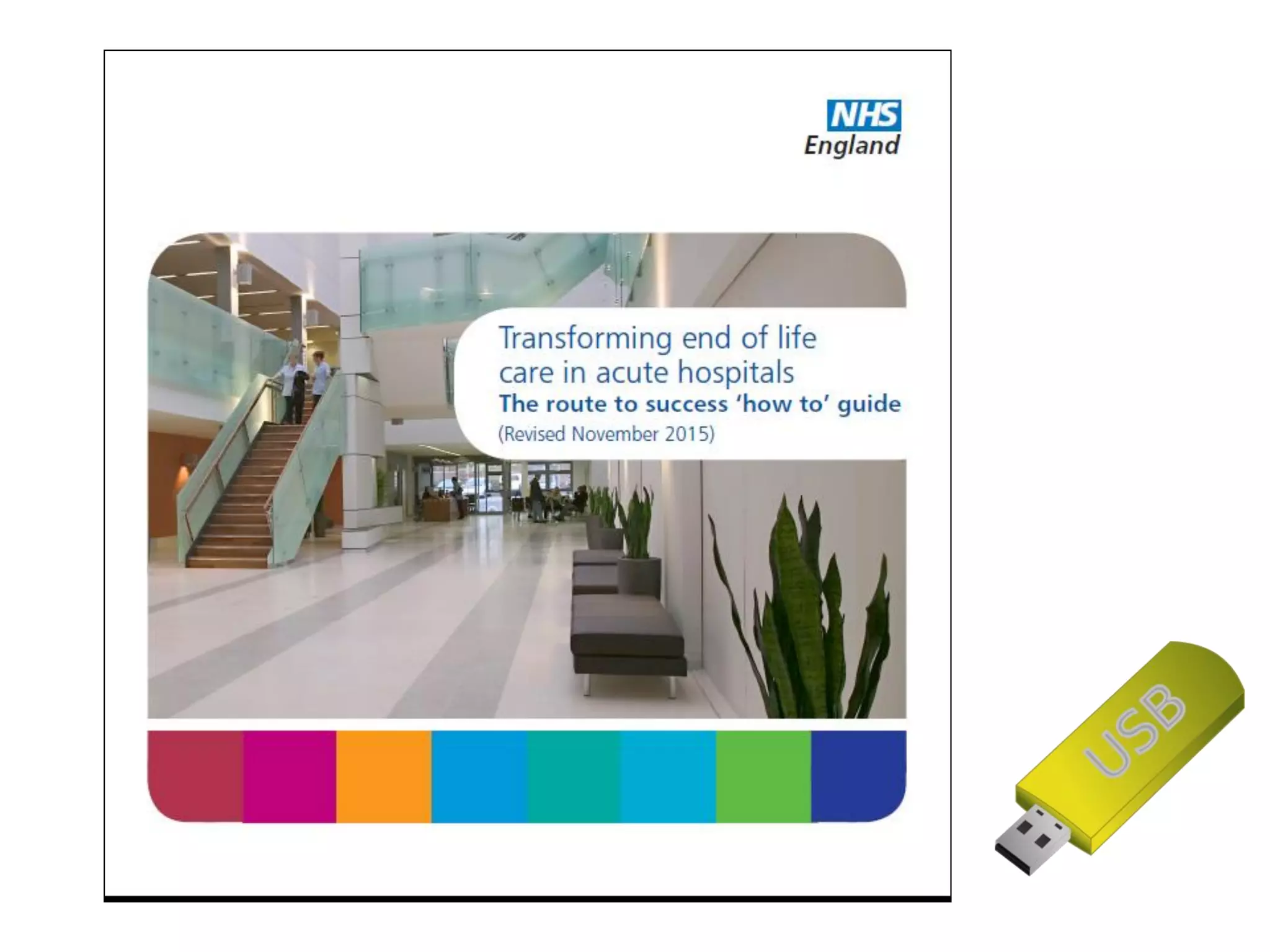
Working Together to Transform End of Life Care in Acute
Hospitals
 Revised and updated for 2015
 Reflects Five Year Forward View and
latest evidence from NICE, PHE and
CQC
 e-publication
 Collaborative venture
 8 sections
 Prepare
 Assess & diagnose
 Plan
 Treat
 Evaluate
 Sustain
 Leading large scale change
 Further resources
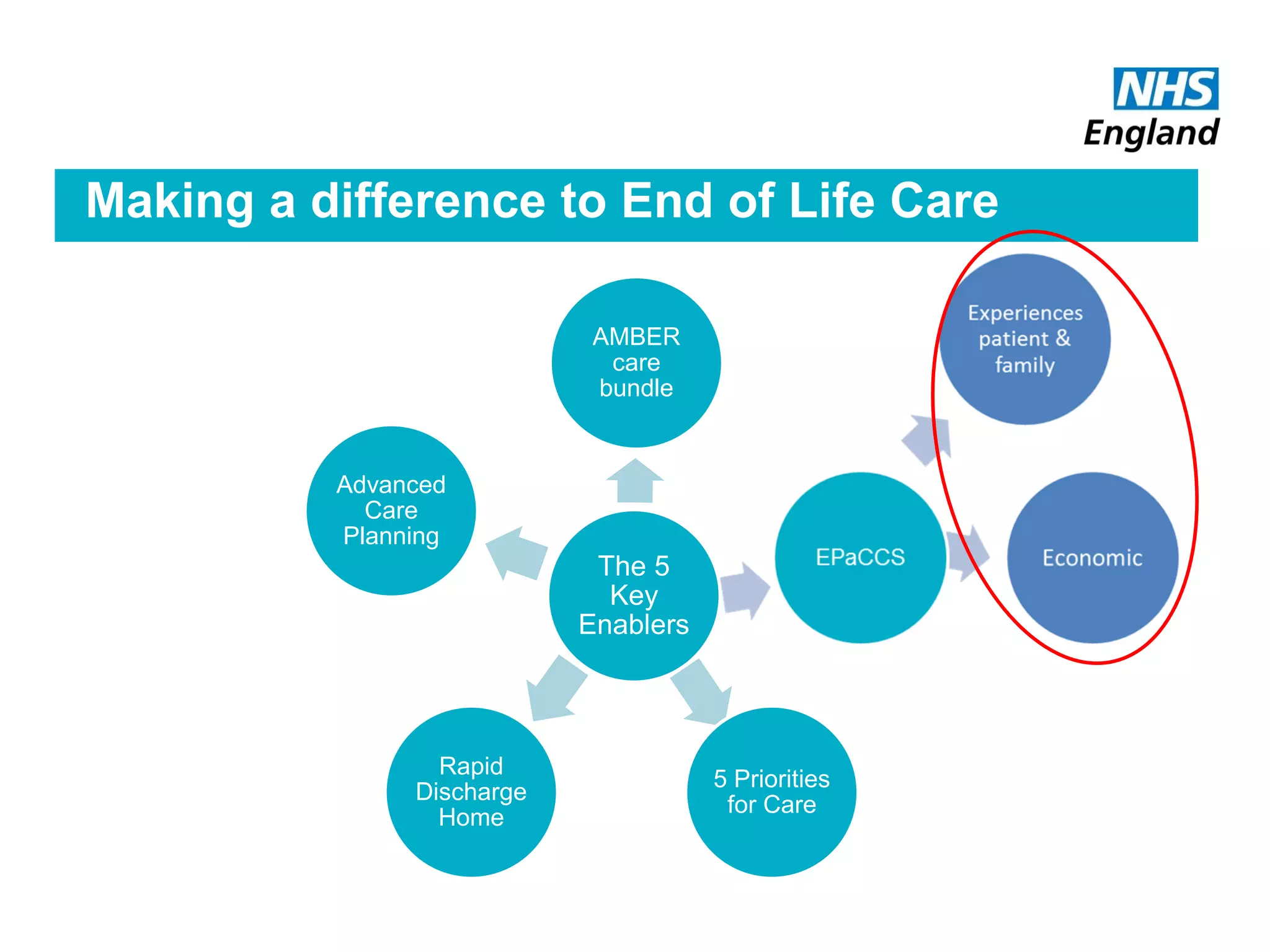
Making a difference to End of Life Care
The 5
Key
Enablers
AMBER
care
bundle
Rapid
Discharge
Home
5 Priorities
for Care
Advanced
Care
Planning
5
Key Enablers
• Advance Care Planning (ACP)
• Identifying and recording a persons wishes and
outcomes of any advance care plan
• Rapid End of Life Transfer
• Developing individual plans of care for anticipatory
management for a predictable clinical event
• The AMBER care bundle
A tool and package of interventions supporting teams
to identify and respond to end of life care needs
when their recovery is uncertain.
6
Key Enablers
• Five Priorities for Care (One chance to get it right, 2014)
• The possibility that a person may die within the coming days and hours is
recognised and communicated clearly, decisions about care are made in
accordance with the person’s needs and wishes, and these are reviewed
and revised regularly
• Sensitive communication takes place between staff and the person who is
dying and those important to them
• The dying person, and those identified as important to them, are involved
in decisions about treatment and care
• The people important to the dying person are listened to and their needs
are respected
• Care is tailored to the individual and delivered with compassion – with an
individual care plan in place
7
Key Enablers
• EPaCCs - Electronic Palliative Care Co-ordination System
• Promoting choice by helping deliver 100% national coverage of
EPaCCS and aligning with the National Information Board agenda
• Sharing key information about end of life wishes, care preferences
and key care details for those identified as likely being near the
end of their life
• Rapid discharge Home
• Conversations as early as possible, preferably, with the GP and the
patient so that the patient’s wishes and preferences are recorded
as soon as possible
• The process starts with excellent clear communication
• Firstly between patient, family and clinical staff
• Secondly cross boundary communication and documentation
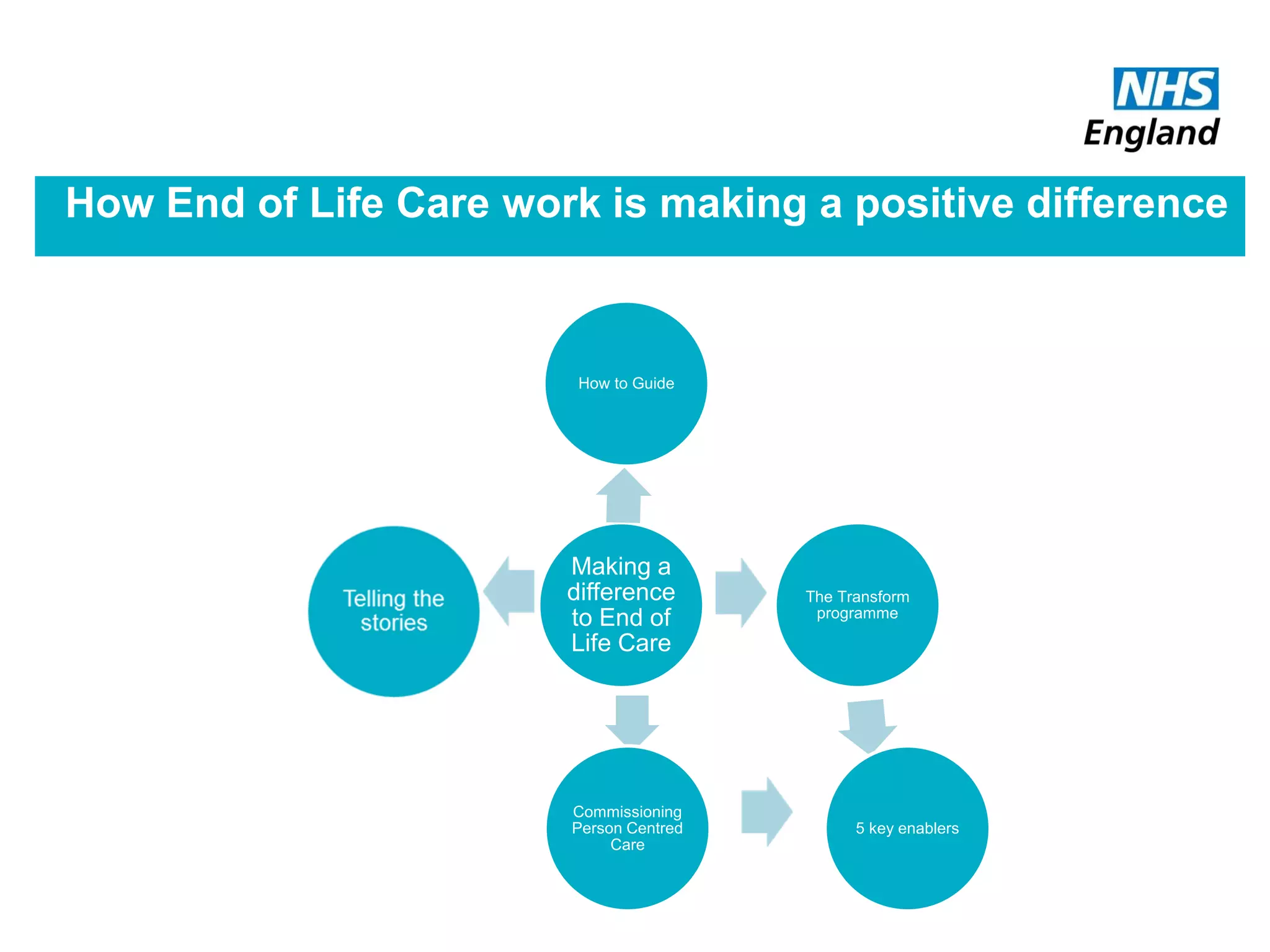
How End of Life Care work is making a positive difference
Making a
difference
to End of
Life Care
How to Guide
The Transform
programme
5 key enablers
Commissioning
Person Centred
Care
9
Key Enablers
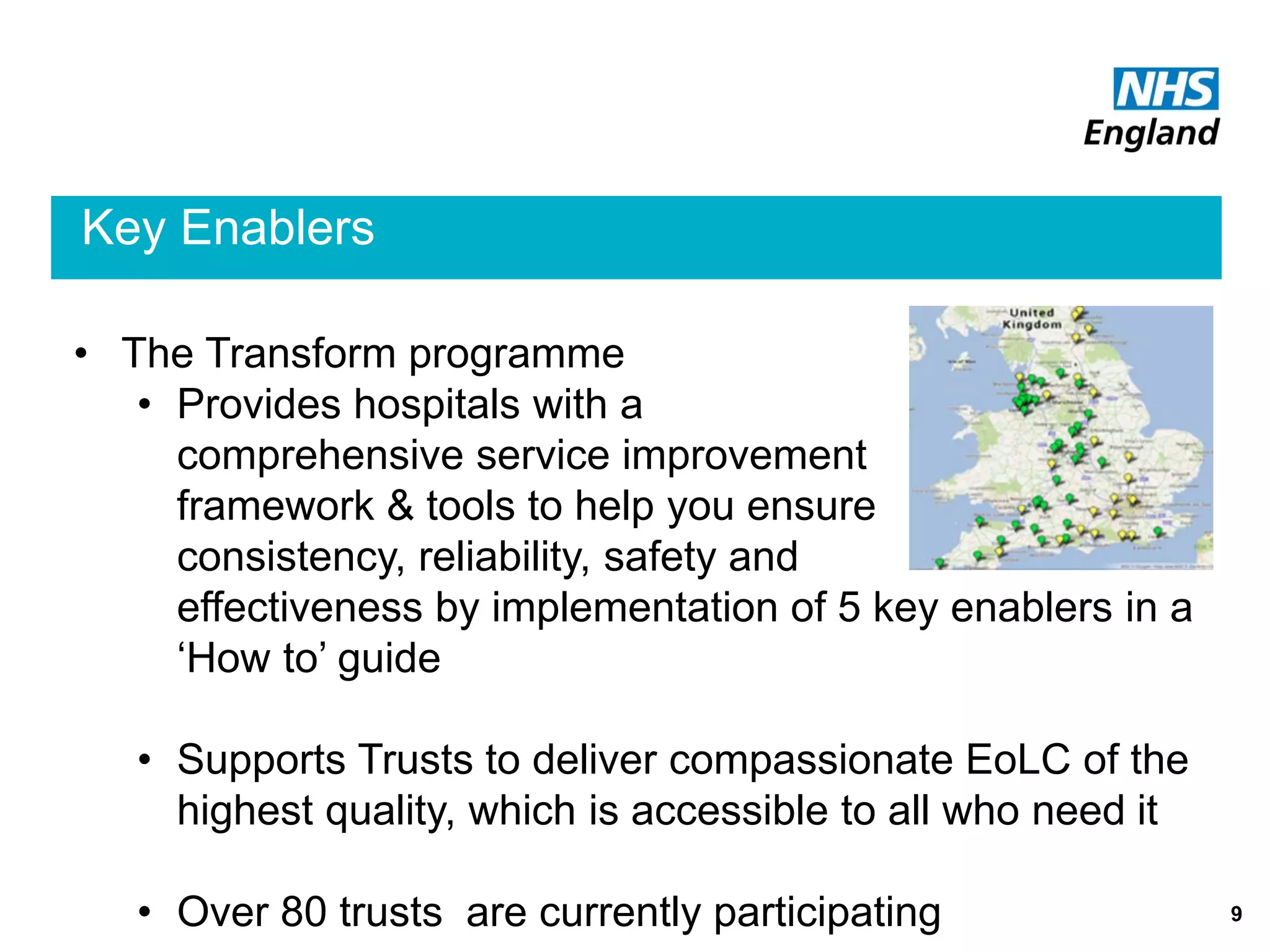
• The Transform programme
• Provides hospitals with a
comprehensive service improvement
framework & tools to help you ensure
consistency, reliability, safety and
effectiveness by implementation of 5 key enablers in a
‘How to’ guide
• Supports Trusts to deliver compassionate EoLC of the
highest quality, which is accessible to all who need it
• Over 80 trusts are currently participating
Working Together to Transform End of Life Care in
Acute Hospitals
Ref: Ambitions for Palliative and end of
Life care - A national framework for
local action
Gaining commitment – to transform end of life care in
acute hospitals – spread and adoption
Shared purpose
a sense of clear purpose is essential to
any successful change:
• At every level
• Individuals
• Organisations
• To connect people and build
commitment
• To create the conditions and climate
for leading the change
Never underestimate the work before the
work – organisational readiness
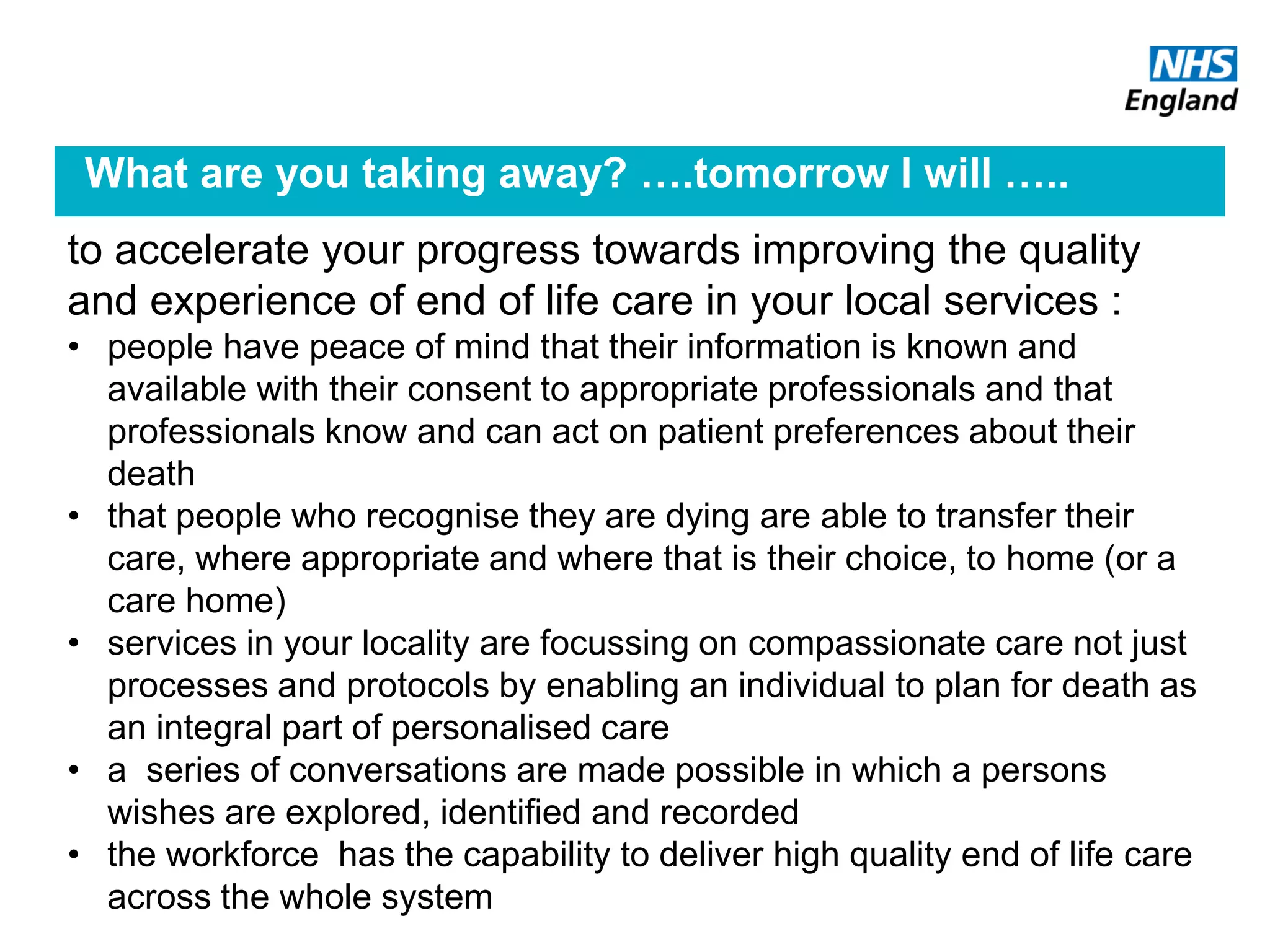
What are you taking away? ….tomorrow I will …..
to accelerate your progress towards improving the quality
and experience of end of life care in your local services :
• people have peace of mind that their information is known and
available with their consent to appropriate professionals and that
professionals know and can act on patient preferences about their
death
• that people who recognise they are dying are able to transfer their
care, where appropriate and where that is their choice, to home (or a
care home)
• services in your locality are focussing on compassionate care not just
processes and protocols by enabling an individual to plan for death as
an integral part of personalised care
• a series of conversations are made possible in which a persons
wishes are explored, identified and recorded
• the workforce has the capability to deliver high quality end of life care
across the whole system
The Challenge – making sure that what patients and
carers tell us really influences how we deliver services
“ You can have it in any colour as long as it’s black” – Henry Ford
How do we use what we learn?
14
Opportunities for engagement
• Transform Programme
• if your hospital would like to be part of Transform contact
debbie.barnhurst@nhsiq.nhs.uk
• EPaCCS & EPaCCS evaluation
• Participate in the evaluation - Contact wendy.gray@nhsiq.nhs.uk
• Find out more about EPaCCS – contact jeri.hawkins@nhsiq.nhs.uk
• Learning and sharing
• End of Life Care Facilitators and Champions Network - 850+ members
and still growing!
• Monthly newsletter - Sign up to receive updates from us
• Share and Learn webinars
• Ambitions framework
• how you plan to use this framework locally to improve end of life care for
patients and families.
• Get in touch with us at nicola.spencer7@nhs.net
“I can make the last stage of my life as
good as possible because everyone
works together confidently, honestly
and consistently to help me and the
people who are important to me,
including my carer(s).”
maggie.morgan-cooke@nhsiq.nhs.uk
wendy.gray@nhsiq.nhs.uk
@wendyjanegray

Transforming End of Life Care in Acute Hospitals PM Workshop 5: How to use the revised and updated ‘Transform How to Guide’

  • 1.
    1 Working Together toTransform End of Life Care in Acute Hospitals Maggie Morgan-Cooke Senior Portfolio Manager Wendy Gray Senior Programme Manager
  • 3.
    3 Working Together toTransform End of Life Care in Acute Hospitals  Revised and updated for 2015  Reflects Five Year Forward View and latest evidence from NICE, PHE and CQC  e-publication  Collaborative venture  8 sections  Prepare  Assess & diagnose  Plan  Treat  Evaluate  Sustain  Leading large scale change  Further resources
  • 4.
    Making a differenceto End of Life Care The 5 Key Enablers AMBER care bundle Rapid Discharge Home 5 Priorities for Care Advanced Care Planning
  • 5.
    5 Key Enablers • AdvanceCare Planning (ACP) • Identifying and recording a persons wishes and outcomes of any advance care plan • Rapid End of Life Transfer • Developing individual plans of care for anticipatory management for a predictable clinical event • The AMBER care bundle A tool and package of interventions supporting teams to identify and respond to end of life care needs when their recovery is uncertain.
  • 6.
    6 Key Enablers • FivePriorities for Care (One chance to get it right, 2014) • The possibility that a person may die within the coming days and hours is recognised and communicated clearly, decisions about care are made in accordance with the person’s needs and wishes, and these are reviewed and revised regularly • Sensitive communication takes place between staff and the person who is dying and those important to them • The dying person, and those identified as important to them, are involved in decisions about treatment and care • The people important to the dying person are listened to and their needs are respected • Care is tailored to the individual and delivered with compassion – with an individual care plan in place
  • 7.
    7 Key Enablers • EPaCCs- Electronic Palliative Care Co-ordination System • Promoting choice by helping deliver 100% national coverage of EPaCCS and aligning with the National Information Board agenda • Sharing key information about end of life wishes, care preferences and key care details for those identified as likely being near the end of their life • Rapid discharge Home • Conversations as early as possible, preferably, with the GP and the patient so that the patient’s wishes and preferences are recorded as soon as possible • The process starts with excellent clear communication • Firstly between patient, family and clinical staff • Secondly cross boundary communication and documentation
  • 8.
    How End ofLife Care work is making a positive difference Making a difference to End of Life Care How to Guide The Transform programme 5 key enablers Commissioning Person Centred Care
  • 9.
    9 Key Enablers • TheTransform programme • Provides hospitals with a comprehensive service improvement framework & tools to help you ensure consistency, reliability, safety and effectiveness by implementation of 5 key enablers in a ‘How to’ guide • Supports Trusts to deliver compassionate EoLC of the highest quality, which is accessible to all who need it • Over 80 trusts are currently participating
  • 10.
    Working Together toTransform End of Life Care in Acute Hospitals Ref: Ambitions for Palliative and end of Life care - A national framework for local action
  • 11.
    Gaining commitment –to transform end of life care in acute hospitals – spread and adoption Shared purpose a sense of clear purpose is essential to any successful change: • At every level • Individuals • Organisations • To connect people and build commitment • To create the conditions and climate for leading the change Never underestimate the work before the work – organisational readiness
  • 12.
    What are youtaking away? ….tomorrow I will ….. to accelerate your progress towards improving the quality and experience of end of life care in your local services : • people have peace of mind that their information is known and available with their consent to appropriate professionals and that professionals know and can act on patient preferences about their death • that people who recognise they are dying are able to transfer their care, where appropriate and where that is their choice, to home (or a care home) • services in your locality are focussing on compassionate care not just processes and protocols by enabling an individual to plan for death as an integral part of personalised care • a series of conversations are made possible in which a persons wishes are explored, identified and recorded • the workforce has the capability to deliver high quality end of life care across the whole system
  • 13.
    The Challenge –making sure that what patients and carers tell us really influences how we deliver services “ You can have it in any colour as long as it’s black” – Henry Ford How do we use what we learn?
  • 14.
    14 Opportunities for engagement •Transform Programme • if your hospital would like to be part of Transform contact debbie.barnhurst@nhsiq.nhs.uk • EPaCCS & EPaCCS evaluation • Participate in the evaluation - Contact wendy.gray@nhsiq.nhs.uk • Find out more about EPaCCS – contact jeri.hawkins@nhsiq.nhs.uk • Learning and sharing • End of Life Care Facilitators and Champions Network - 850+ members and still growing! • Monthly newsletter - Sign up to receive updates from us • Share and Learn webinars • Ambitions framework • how you plan to use this framework locally to improve end of life care for patients and families. • Get in touch with us at nicola.spencer7@nhs.net
  • 15.
    “I can makethe last stage of my life as good as possible because everyone works together confidently, honestly and consistently to help me and the people who are important to me, including my carer(s).”
  • 16.