Logic
  Models,
 Program
Evaluation,
 and other
Frightening
   Topics
What is a logic model?

It’s the graphic depiction of
  the relationship between
  your program’s activities
   and its intended effects.
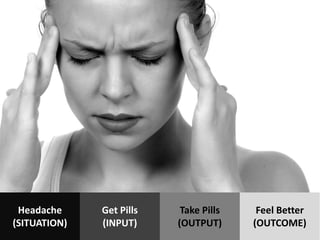
Headache     Get Pills    Take Pills    Feel Better
(SITUATION)   (INPUT)     (OUTPUT)      (OUTCOME)
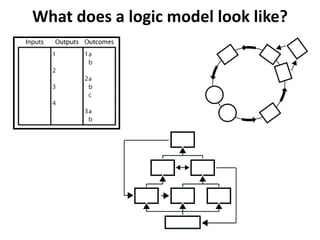
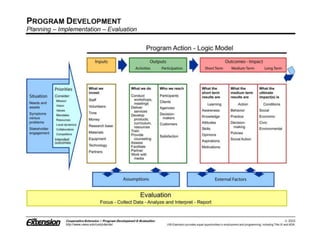
What does a logic model look like?
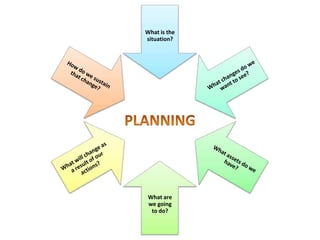
What is the
situation?


 What are
 we going
  to do?
Why use a logic model?
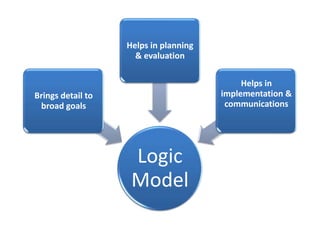
Helps in planning
                     & evaluation

                                            Helps in
Brings detail to                       implementation &
 broad goals                            communications


                    Logic
                    Model
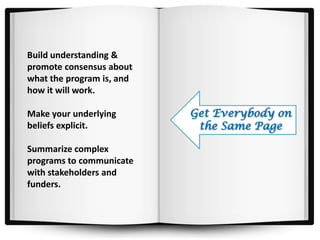
Build understanding &
promote consensus about
what the program is, and
how it will work.

Make your underlying       Get Everybody on
beliefs explicit.           the Same Page
Summarize complex
programs to communicate
with stakeholders and
funders.
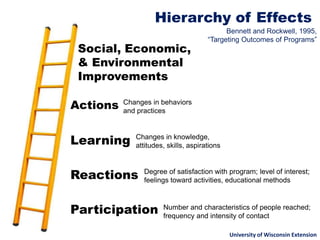
Hierarchy of Effects
                                            Bennett and Rockwell, 1995,
                                      “Targeting Outcomes of Programs”
 Social, Economic,
 & Environmental
 Improvements

Actions   Changes in behaviors
          and practices


Learning     Changes in knowledge,
             attitudes, skills, aspirations


Reactions       Degree of satisfaction with program; level of interest;
                feelings toward activities, educational methods


Participation         Number and characteristics of people reached;
                      frequency and intensity of contact

                                              University of Wisconsin Extension
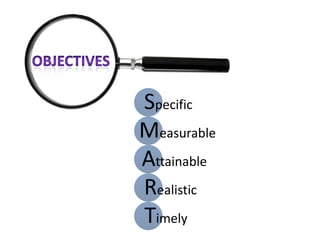
Specific
Measurable
Attainable
Realistic
Timely
WHO is going to do
  WHAT, WHEN, WHY,
and TO WHAT STANDARD?
Limitations of Logic Models
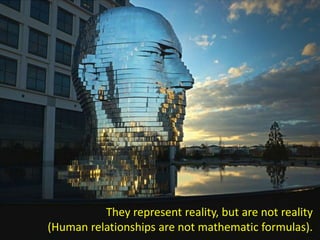
They represent reality, but are not reality
(Human relationships are not mathematic formulas).
Programs/projects are not linear
(Nothing ever goes exactly as planned).
They focus on expected outcomes, not on actual outcomes.
      (positive or negative unintended consequences)
They have a tendency to assess what is easiest to measure
           rather than what is most valuable.
There can be causal attribution issues (Variables may not be
   isolated and many factors are influencing outcomes).
They don’t address whether you are doing the right thing,
                   only what you did
Some Things to Remember
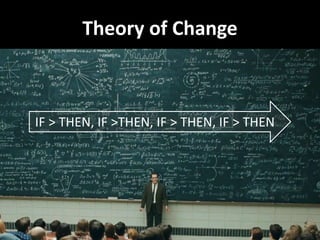
Theory of Change


IF > THEN, IF >THEN, IF > THEN, IF > THEN
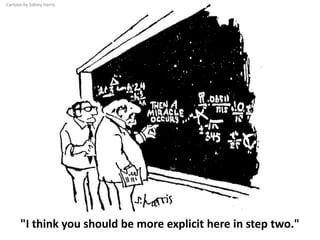
Cartoon by Sidney Harris


      "I think you should be more explicit here in step two."
We measure what we value
and value what we measure.
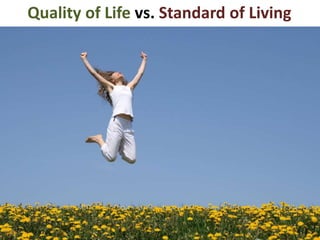
Quality of Life vs. Standard of Living
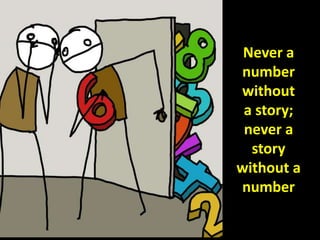
Never a
number
without
 a story;
 never a
  story
without a
number
Asset
Based
Community
Development
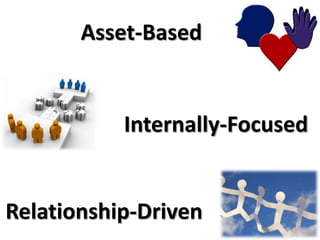
Asset-Based


           Internally-Focused


Relationship-Driven
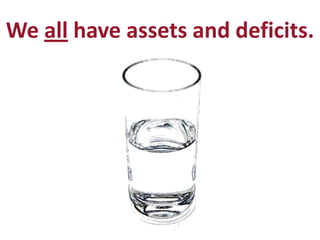
We all have assets and deficits.
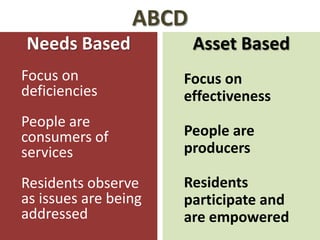
ABCD
Needs Based             Asset Based
Focus on              Focus on
deficiencies          effectiveness
People are
consumers of          People are
services              producers

Residents observe     Residents
as issues are being   participate and
addressed             are empowered
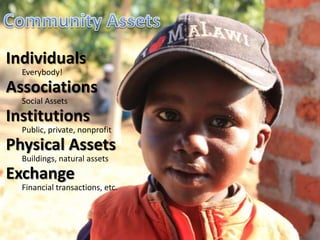
Individuals
  Everybody!
Associations
  Social Assets
Institutions
  Public, private, nonprofit
Physical Assets
  Buildings, natural assets
Exchange
  Financial transactions, etc.
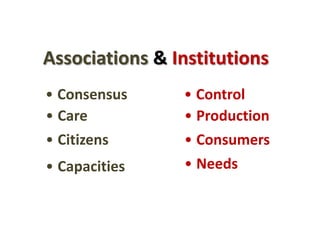
Associations & Institutions
• Consensus     • Control
• Care          • Production
• Citizens      • Consumers
• Capacities    • Needs
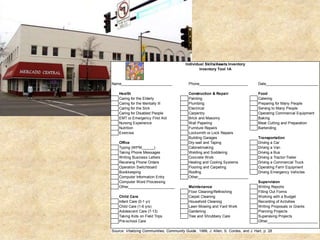
Individual Skills/Assets Inventory
                                                   Inventory Tool 1A


Name_________________________                Phone________________________            Date__________________________

    Health                                   Construction & Repair                    Food
    Caring for the Elderly                   Painting                                 Catering
    Caring for the Mentally Ill              Plumbing                                 Preparing for Many People
    Caring for the Sick                      Electrical                               Serving to Many People
    Caring for Disabled People               Carpentry                                Operating Commercial Equipment
    EMT or Emergency First Aid               Brick and Masonry                        Baking
    Nursing Experience                       Wall Papering                            Meat Cutting and Preparation
    Nutrition                                Furniture Repairs                        Bartending
    Exercise                                 Locksmith or Lock Repairs
                                             Building Garages                         Transportation
    Office                                   Dry-wall and Taping                      Driving a Car
    Typing (WPM______)                       Cabinetmaking                            Driving a Van
    Taking Phone Messages                    Welding and Soddering                    Driving a Bus
    Writing Business Letters                 Concrete Work                            Driving a Tractor-Trailer
    Receiving Phone Orders                   Heating and Cooling Systems              Driving a Commercial Truck
    Operation Switchboard                    Flooring and Carpeting                   Operating Farm Equipment
    Bookkeeping                              Roofing                                  Driving Emergency Vehicles
    Computer Information Entry               Other_________________________
    Computer Word Processing                                                          Supervision
    Other_______________________             Maintenance                              Writing Reports
                                             Floor Cleaning/Refinishing               Filling Out Forms
    Child Care                               Carpet Cleaning                          Working with a Budget
    Infant Care (0-1 yr)                     Household Cleaning                       Recording of Activities
    Child Care (1-6 yrs)                     Lawn Mowing and Yard Work                Writing Proposals or Grants
    Adolescent Care (7-13)                   Gardening                                Planning Projects
    Taking Kids on Field Trips               Tree and Shrubbery Care                  Supervising Projects
    Pre-school Care                                                                   Other_________________________

Source: Vitalizing Communities, Community Guide , 1999, J. Allen, S. Cordes, and J. Hart, p. 28
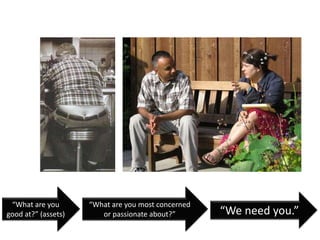
“What are you       “What are you most concerned
good at?” (assets)      or passionate about?”       “We need you.”
COYOTE & BADGER
?
“The best way
to have a good
idea is to have
 lots of ideas.”
  - Linus Pauling
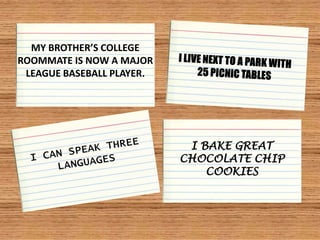
MY BROTHER’S COLLEGE
ROOMMATE IS NOW A MAJOR
 LEAGUE BASEBALL PLAYER.


                            I BAKE GREAT
                           CHOCOLATE CHIP
                               COOKIES
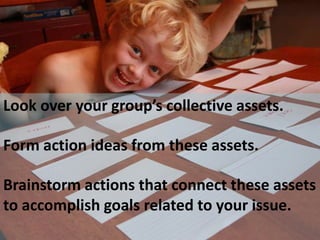
Look over your group’s collective assets.

Form action ideas from these assets.

Brainstorm actions that connect these assets
to accomplish goals related to your issue.
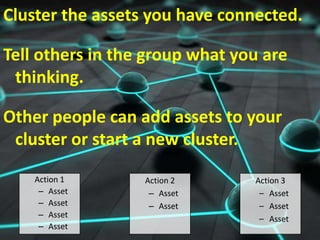
Cluster the assets you have connected.

Tell others in the group what you are
 thinking.

Other people can add assets to your
 cluster or start a new cluster.
    Action 1      Action 2      Action 3
     – Asset       – Asset       – Asset
     – Asset       – Asset       – Asset
     – Asset                     – Asset
     – Asset
John Hamerlinck
john@mncampuscompact.org
320-308-4271
www.mncampuscompact.org

Logic Models, Program Evaluation, and other Frightening Topics

  • 1.
    Logic Models, Program Evaluation, and other Frightening Topics
  • 3.
    What is alogic model? It’s the graphic depiction of the relationship between your program’s activities and its intended effects.
  • 4.
    Headache Get Pills Take Pills Feel Better (SITUATION) (INPUT) (OUTPUT) (OUTCOME)
  • 6.
    What does alogic model look like?
  • 8.
    What is the situation? What are we going to do?
  • 9.
    Why use alogic model?
  • 10.
    Helps in planning & evaluation Helps in Brings detail to implementation & broad goals communications Logic Model
  • 11.
    Build understanding & promoteconsensus about what the program is, and how it will work. Make your underlying Get Everybody on beliefs explicit. the Same Page Summarize complex programs to communicate with stakeholders and funders.
  • 12.
    Hierarchy of Effects Bennett and Rockwell, 1995, “Targeting Outcomes of Programs” Social, Economic, & Environmental Improvements Actions Changes in behaviors and practices Learning Changes in knowledge, attitudes, skills, aspirations Reactions Degree of satisfaction with program; level of interest; feelings toward activities, educational methods Participation Number and characteristics of people reached; frequency and intensity of contact University of Wisconsin Extension
  • 13.
  • 14.
    WHO is goingto do WHAT, WHEN, WHY, and TO WHAT STANDARD?
  • 15.
  • 16.
    They represent reality,but are not reality (Human relationships are not mathematic formulas).
  • 17.
    Programs/projects are notlinear (Nothing ever goes exactly as planned).
  • 18.
    They focus onexpected outcomes, not on actual outcomes. (positive or negative unintended consequences)
  • 19.
    They have atendency to assess what is easiest to measure rather than what is most valuable.
  • 20.
    There can becausal attribution issues (Variables may not be isolated and many factors are influencing outcomes).
  • 21.
    They don’t addresswhether you are doing the right thing, only what you did
  • 22.
  • 23.
    Theory of Change IF> THEN, IF >THEN, IF > THEN, IF > THEN
  • 24.
    Cartoon by SidneyHarris "I think you should be more explicit here in step two."
  • 25.
    We measure whatwe value and value what we measure.
  • 26.
    Quality of Lifevs. Standard of Living
  • 27.
    Never a number without astory; never a story without a number
  • 30.
  • 31.
    Asset-Based Internally-Focused Relationship-Driven
  • 32.
    We all haveassets and deficits.
  • 33.
    ABCD Needs Based Asset Based Focus on Focus on deficiencies effectiveness People are consumers of People are services producers Residents observe Residents as issues are being participate and addressed are empowered
  • 34.
    Individuals Everybody! Associations Social Assets Institutions Public, private, nonprofit Physical Assets Buildings, natural assets Exchange Financial transactions, etc.
  • 35.
    Associations & Institutions •Consensus • Control • Care • Production • Citizens • Consumers • Capacities • Needs
  • 37.
    Individual Skills/Assets Inventory Inventory Tool 1A Name_________________________ Phone________________________ Date__________________________ Health Construction & Repair Food Caring for the Elderly Painting Catering Caring for the Mentally Ill Plumbing Preparing for Many People Caring for the Sick Electrical Serving to Many People Caring for Disabled People Carpentry Operating Commercial Equipment EMT or Emergency First Aid Brick and Masonry Baking Nursing Experience Wall Papering Meat Cutting and Preparation Nutrition Furniture Repairs Bartending Exercise Locksmith or Lock Repairs Building Garages Transportation Office Dry-wall and Taping Driving a Car Typing (WPM______) Cabinetmaking Driving a Van Taking Phone Messages Welding and Soddering Driving a Bus Writing Business Letters Concrete Work Driving a Tractor-Trailer Receiving Phone Orders Heating and Cooling Systems Driving a Commercial Truck Operation Switchboard Flooring and Carpeting Operating Farm Equipment Bookkeeping Roofing Driving Emergency Vehicles Computer Information Entry Other_________________________ Computer Word Processing Supervision Other_______________________ Maintenance Writing Reports Floor Cleaning/Refinishing Filling Out Forms Child Care Carpet Cleaning Working with a Budget Infant Care (0-1 yr) Household Cleaning Recording of Activities Child Care (1-6 yrs) Lawn Mowing and Yard Work Writing Proposals or Grants Adolescent Care (7-13) Gardening Planning Projects Taking Kids on Field Trips Tree and Shrubbery Care Supervising Projects Pre-school Care Other_________________________ Source: Vitalizing Communities, Community Guide , 1999, J. Allen, S. Cordes, and J. Hart, p. 28
  • 38.
    “What are you “What are you most concerned good at?” (assets) or passionate about?” “We need you.”
  • 40.
  • 41.
  • 42.
    “The best way tohave a good idea is to have lots of ideas.” - Linus Pauling
  • 46.
    MY BROTHER’S COLLEGE ROOMMATEIS NOW A MAJOR LEAGUE BASEBALL PLAYER. I BAKE GREAT CHOCOLATE CHIP COOKIES
  • 48.
    Look over yourgroup’s collective assets. Form action ideas from these assets. Brainstorm actions that connect these assets to accomplish goals related to your issue.
  • 49.
    Cluster the assetsyou have connected. Tell others in the group what you are thinking. Other people can add assets to your cluster or start a new cluster. Action 1 Action 2 Action 3 – Asset – Asset – Asset – Asset – Asset – Asset – Asset – Asset – Asset
  • 50.

Editor's Notes

  • #27 “Standard of living is generally measured by levels of consumption and thus, by levels of income. . . Quality of life is related to feeling good about one's life and one's self.
  • #29 introductions
  • #30 That’s where the light is shining story
  • #32 Asset-Based: discovers gifts & talents in the community right nowInternally-Focused: Relies on community’s strengths, not on outside resourcesRelationship-Driven: Seeks to connect local people, associations and institutions
  • #39 EVERYBODY is a potential ally.Everyone has gifts& talents and IDEASWelcome people at the margins.Invite them to join your work.
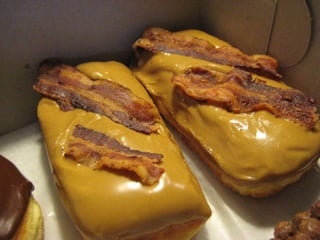
  • #40 Bacon Maple Bar at VooDoo Doughnuts in Portland, OregonStrange bedfellows, “I never thought I’d be working with . . . “
  • #41 CoyoteAsset – fastDeficit – can’t get small mammals burrowed undergroundBadgerAsset – great at diggingDeficit – too slow to get many small mammals
  • #42 Don’t map assets simply as an exercise to create a databaseAssets are not staticThey can atrophyNew ones (relationships) are being added constantly
  • #45 What are some gifts or assets you might take for granted?What are some assets that allow you to survive?What are some assets you dislike, but rely on anyway?What did you used to be good at?What are some assets you use only on special occasions?What are some “far-away” assets?Special places?Surprising groups of people?
  • #47 You will write one asset per index card, finishing with a small stack of assets.
  • #48 Then your table will learn what you already know