MANAGMENT BY OBJECTIVE
( M B O )
PRESENTED BY :
ABHISHEK SHARMA
MBA1ST ( 17PBA003 )
 Introduction to Management by Objectives
 Management by Objectives, often shortened to MBO, is
simply one of several management models that have been
used, and are still being used even today.
 This approach is based on concept Joint setting of goals
and objectives.
 In other words, it operates on the assumption that, if the
goals of the organization are aligned with that of the
employees, then achieving these goals through work
performance will be more successful.
 Definitions Of Management By
Objectives MBO :-
According to George Odiome,
“ MBO is "a process whereby
superior and subordinate managers of an Organisation jointly
define its common goals, define each individual's major
areas of responsibility in terms Of results expected of him
and use these measures as guides for operating the unit and
assessing the contribution of each of its members.”
 What is Management By Objectives?
 Management By Objectives (MBO) is an performance
management approach in which a balance is sought between the
objectives of employees and the objectives of an organization.
 The essence of Peter Drucker ’s basic principle: Management By
Objectives is to determine joint objectives and to provide feedback
on the results.
 Setting challenging but attainable objectives promotes motivation and
empowerment of employees.
 By increasing commitment, managers are given the opportunity to
focus on new ideas and innovation that contribute to the development
and objectives of organizations.
 Principles of Management by objectives
(MBO)
 Cascading of organizational goal and objective
 Specific objective for each members
 Participative decision making
 Explicit time period
 Performance evaluate and feedback
 Management By Objectives steps -
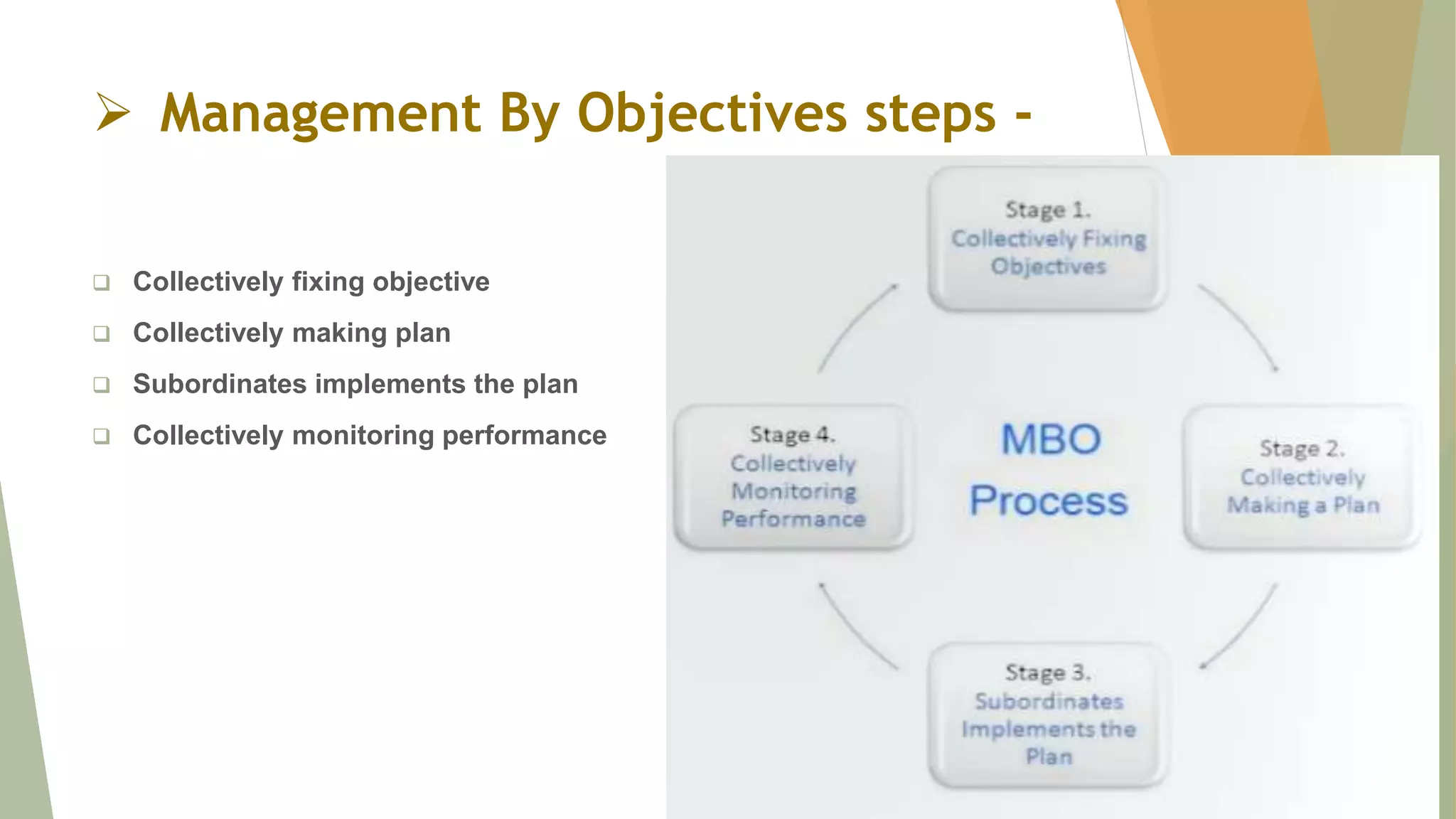
 Collectively fixing objective
 Collectively making plan
 Subordinates implements the plan
 Collectively monitoring performance
 What are objective ?
Objectives should be S M A R T
 Uses of MBO
 Advantages of MBO
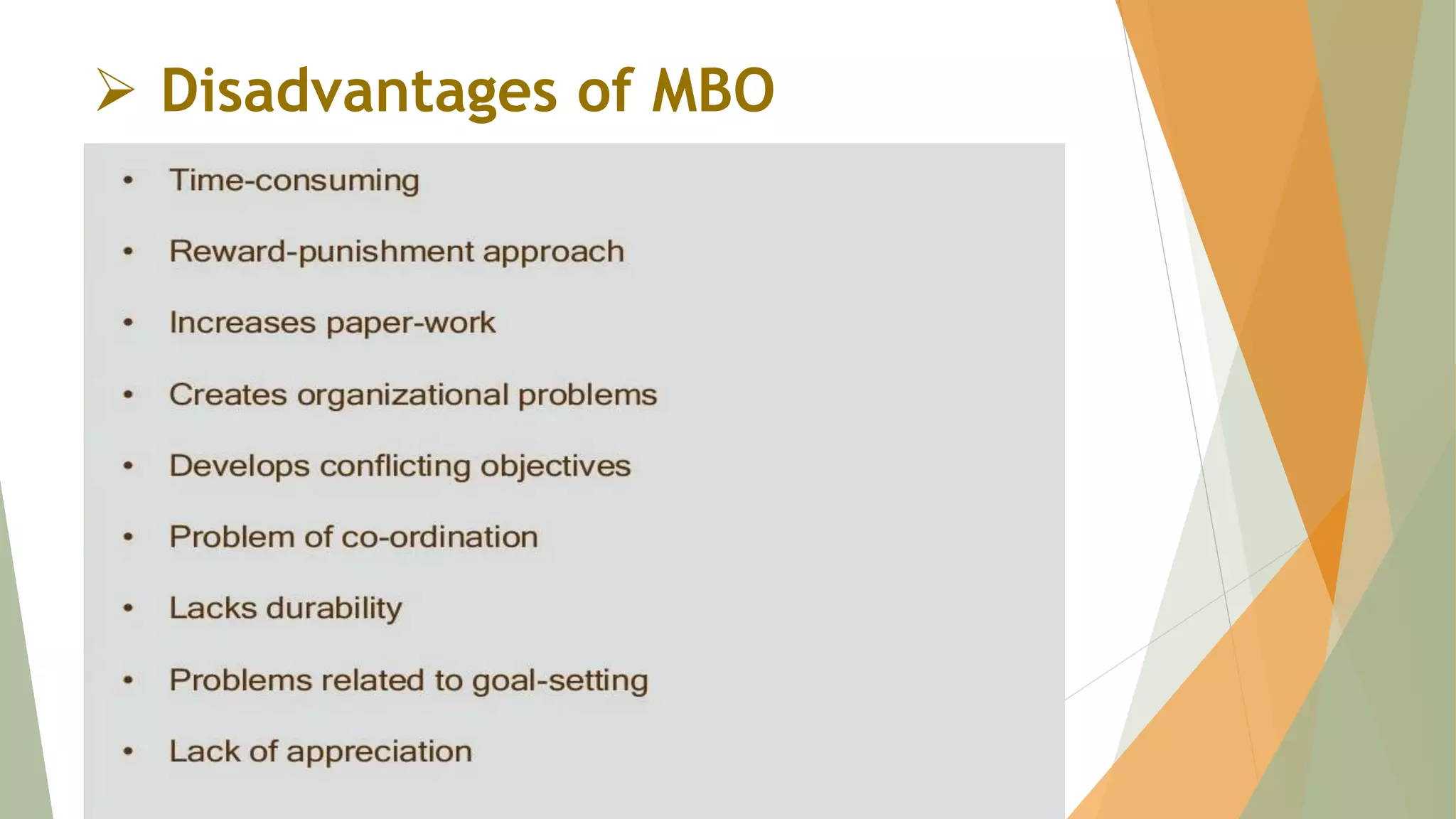
 Disadvantages of MBO
THANK
YOU

Managment by objective

  • 1.
    MANAGMENT BY OBJECTIVE (M B O ) PRESENTED BY : ABHISHEK SHARMA MBA1ST ( 17PBA003 )
  • 2.
     Introduction toManagement by Objectives  Management by Objectives, often shortened to MBO, is simply one of several management models that have been used, and are still being used even today.  This approach is based on concept Joint setting of goals and objectives.  In other words, it operates on the assumption that, if the goals of the organization are aligned with that of the employees, then achieving these goals through work performance will be more successful.
  • 3.
     Definitions OfManagement By Objectives MBO :- According to George Odiome, “ MBO is "a process whereby superior and subordinate managers of an Organisation jointly define its common goals, define each individual's major areas of responsibility in terms Of results expected of him and use these measures as guides for operating the unit and assessing the contribution of each of its members.”
  • 4.
     What isManagement By Objectives?  Management By Objectives (MBO) is an performance management approach in which a balance is sought between the objectives of employees and the objectives of an organization.  The essence of Peter Drucker ’s basic principle: Management By Objectives is to determine joint objectives and to provide feedback on the results.  Setting challenging but attainable objectives promotes motivation and empowerment of employees.  By increasing commitment, managers are given the opportunity to focus on new ideas and innovation that contribute to the development and objectives of organizations.
  • 5.
     Principles ofManagement by objectives (MBO)  Cascading of organizational goal and objective  Specific objective for each members  Participative decision making  Explicit time period  Performance evaluate and feedback
  • 6.
     Management ByObjectives steps -  Collectively fixing objective  Collectively making plan  Subordinates implements the plan  Collectively monitoring performance
  • 7.
     What areobjective ? Objectives should be S M A R T
  • 8.
  • 9.
  • 10.
  • 13.