
Work Life Balance Gaining a competitive edge by balancing the demands of employees’ work and home lives
Finding innovative ways to organize our working lives is vital: For a healthy, successful and balanced future, as Individuals Elderly and Child Carers Companies Communities
Innovative ways of working: To help stay ahead in a competitive world To attract a wide range of employees To demonstrate social responsibilities to stakeholders and the wider communities in which we operate
Why Work Life Strategies are an increasingly competitive tool in a globalized economy. Necessary because of trends in: Demographics Technology Social and educational structures Stakeholder concept Legislation Stress and health
Changing families: Demise of male breadwinner Rise in single parent families Many employees perform essential caring roles at home. This part of the workforce is growing tremendously
Target group encompasses more: Work Life balance is important for EVERYONE, not just those with caring responsibilities Respect for life outside working hours is a BASIC RIGHT that every employee deserves from their employer at different ages and stages of life
Family Family friendly policies are most successful in organizations that have a clear understanding of the BUSINESS RATIONALE and who respect the importance of Work Life Balance for ALL EMPLOYEES Different ways of working to meet the needs of the modern workforce and modern organization
Business rationale: W/L policies - Build employee morale and commitment Increase retention and cut staff turnover and its associated costs of recruitment, training and productivity Make W/L policies part of you RETENTION and CHANGE strategy
Measure the difference: Many costs associated with Work Life Balance policies can readily be measured such as:  better recruitment figures  higher retention  lower levels of absenteeism Higher productivity Reduced retraining costs
Measure the difference What does it cost to do  NOTHING?!
Not as easy to measure, but just as valid: Increased employee loyalty and commitment Enhanced company image with customers and investors
Work Life Balance: High returns for relatively little investment!
Work /Life Policies Innovative work organization Employee development Leave provision Employee back-up support
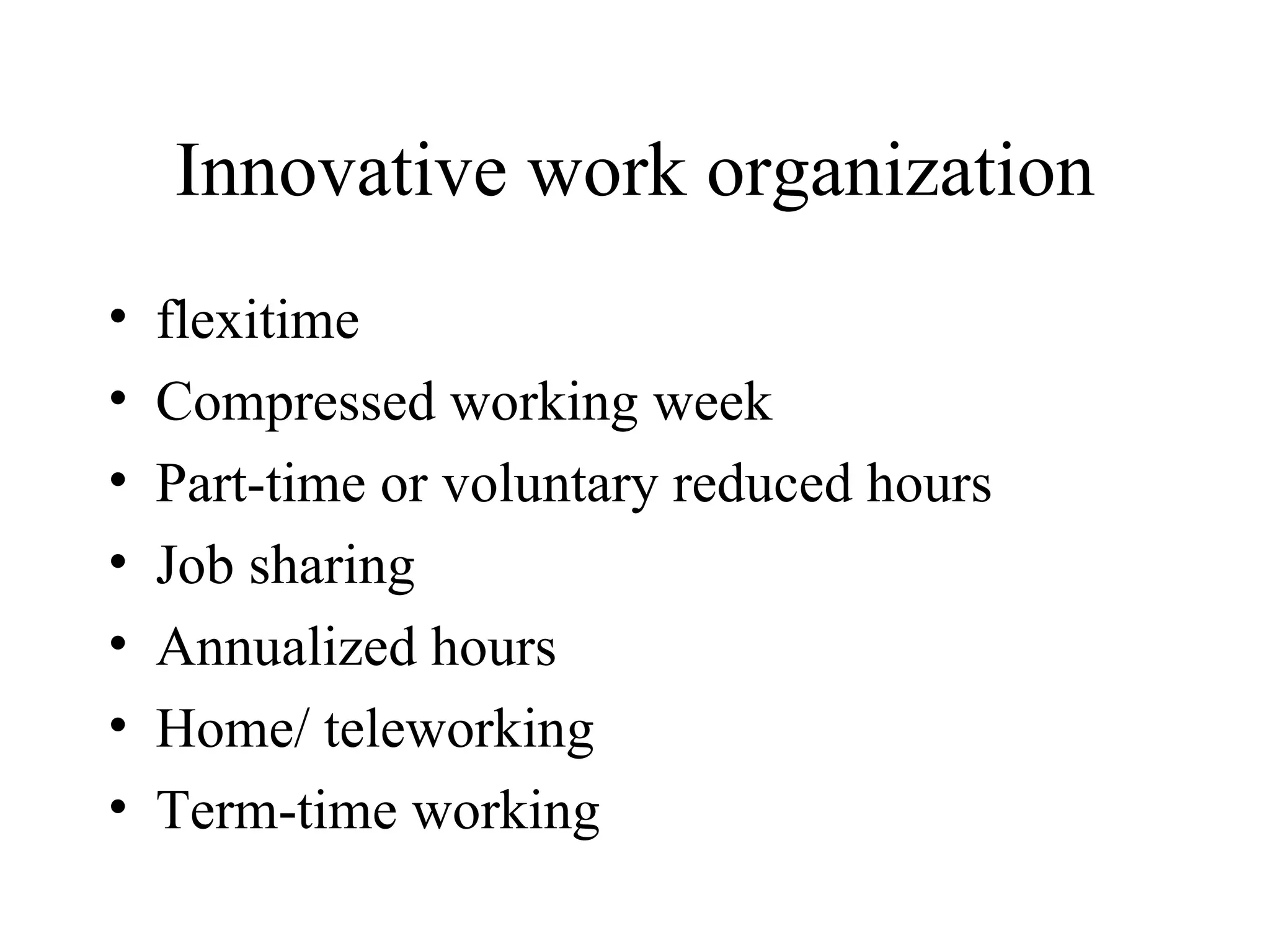
Innovative work organization flexitime Compressed working week Part-time or voluntary reduced hours Job sharing  Annualized hours Home/ teleworking Term-time working
Employee Development Personal development plans and appraisals provide you with an opportunity to review work/life balance Also, 360 degree appraisals and employee satisfaction surveys can be used to measure progress
Leave provision Maternity / new parental and familyleave Career break for carers Study leave Additional holiday leave in lieu of other employee benefits Emergency leave
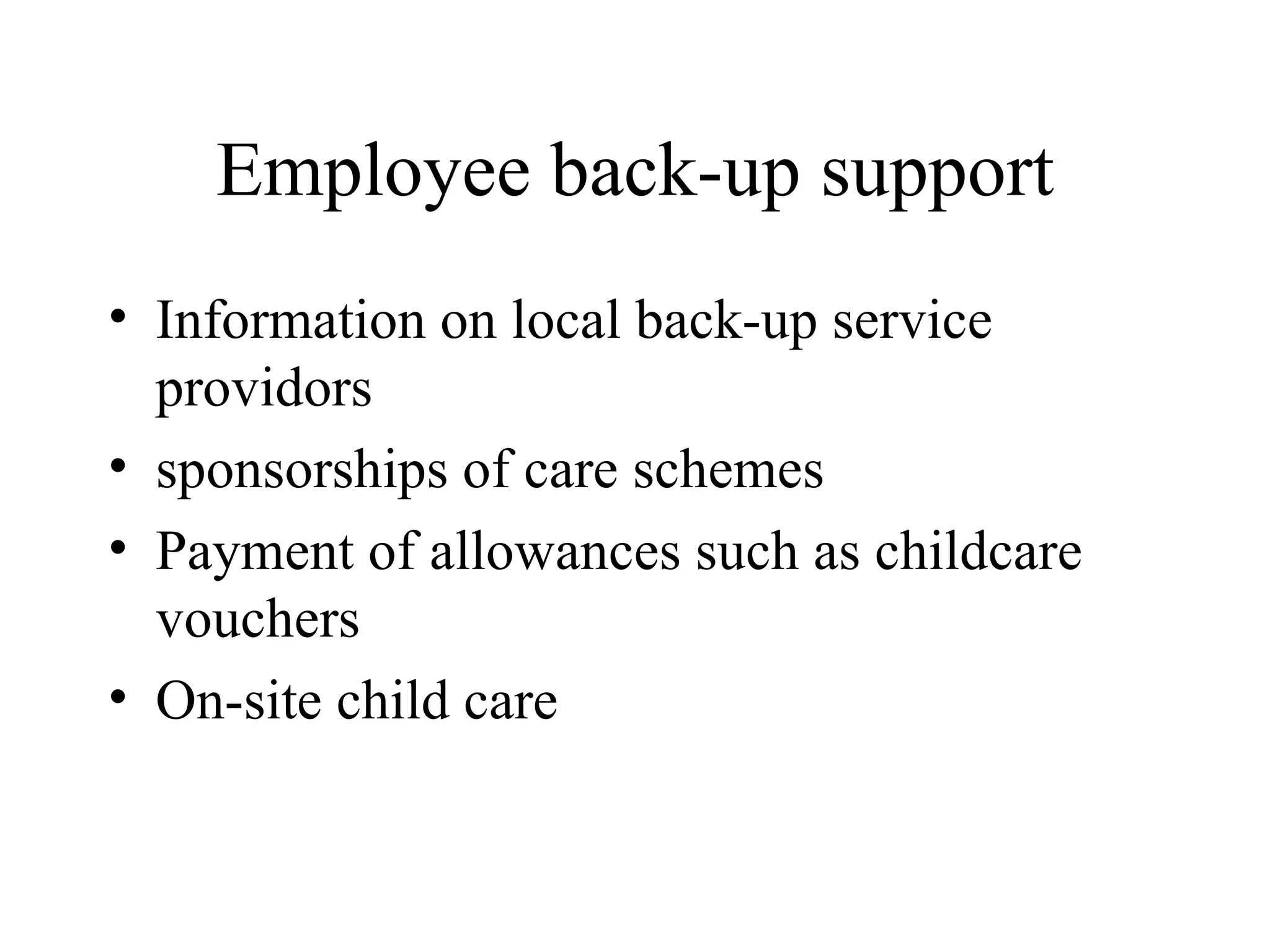
Employee back-up support Information on local back-up service providors  sponsorships of care schemes  Payment of allowances such as childcare vouchers On-site child care
Critical Success Factors Core strategy and objectives Organizational culture and attitudes Policies and resources Employee communications Management support and buy-in Work re-organization

Work Life Balance

  • 1.
    Work Life BalanceGaining a competitive edge by balancing the demands of employees’ work and home lives
  • 2.
    Finding innovative waysto organize our working lives is vital: For a healthy, successful and balanced future, as Individuals Elderly and Child Carers Companies Communities
  • 3.
    Innovative ways ofworking: To help stay ahead in a competitive world To attract a wide range of employees To demonstrate social responsibilities to stakeholders and the wider communities in which we operate
  • 4.
    Why Work LifeStrategies are an increasingly competitive tool in a globalized economy. Necessary because of trends in: Demographics Technology Social and educational structures Stakeholder concept Legislation Stress and health
  • 5.
    Changing families: Demiseof male breadwinner Rise in single parent families Many employees perform essential caring roles at home. This part of the workforce is growing tremendously
  • 6.
    Target group encompassesmore: Work Life balance is important for EVERYONE, not just those with caring responsibilities Respect for life outside working hours is a BASIC RIGHT that every employee deserves from their employer at different ages and stages of life
  • 7.
    Family Family friendlypolicies are most successful in organizations that have a clear understanding of the BUSINESS RATIONALE and who respect the importance of Work Life Balance for ALL EMPLOYEES Different ways of working to meet the needs of the modern workforce and modern organization
  • 8.
    Business rationale: W/Lpolicies - Build employee morale and commitment Increase retention and cut staff turnover and its associated costs of recruitment, training and productivity Make W/L policies part of you RETENTION and CHANGE strategy
  • 9.
    Measure the difference:Many costs associated with Work Life Balance policies can readily be measured such as: better recruitment figures higher retention lower levels of absenteeism Higher productivity Reduced retraining costs
  • 10.
    Measure the differenceWhat does it cost to do NOTHING?!
  • 11.
    Not as easyto measure, but just as valid: Increased employee loyalty and commitment Enhanced company image with customers and investors
  • 12.
    Work Life Balance:High returns for relatively little investment!
  • 13.
    Work /Life PoliciesInnovative work organization Employee development Leave provision Employee back-up support
  • 14.
    Innovative work organizationflexitime Compressed working week Part-time or voluntary reduced hours Job sharing Annualized hours Home/ teleworking Term-time working
  • 15.
    Employee Development Personaldevelopment plans and appraisals provide you with an opportunity to review work/life balance Also, 360 degree appraisals and employee satisfaction surveys can be used to measure progress
  • 16.
    Leave provision Maternity/ new parental and familyleave Career break for carers Study leave Additional holiday leave in lieu of other employee benefits Emergency leave
  • 17.
    Employee back-up supportInformation on local back-up service providors sponsorships of care schemes Payment of allowances such as childcare vouchers On-site child care
  • 18.
    Critical Success FactorsCore strategy and objectives Organizational culture and attitudes Policies and resources Employee communications Management support and buy-in Work re-organization