WOOD FUEL David Gilloughley
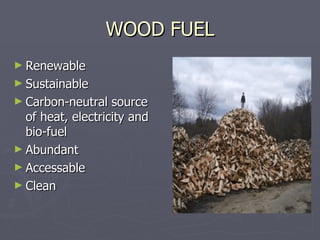
WOOD FUEL Renewable Sustainable Carbon-neutral source of heat, electricity and bio-fuel Abundant Accessable Clean
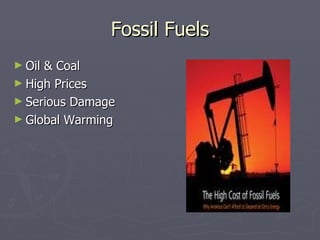
Fossil Fuels Oil & Coal High Prices Serious Damage Global Warming
Disadvantages of Wood Fuel  Wood must be dry Storage problems Chimney fire-hazard Inefficiency of heating units Methods of wood fuel preparation
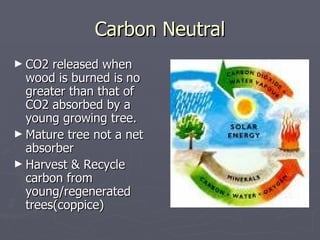
Carbon Neutral CO2 released when wood is burned is no greater than that of CO2 absorbed by a young growing tree. Mature tree not a net absorber Harvest & Recycle carbon from young/regenerated trees(coppice)
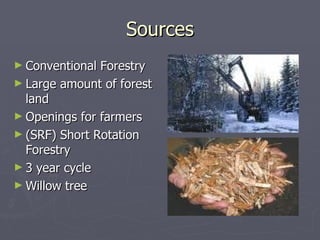
Sources Conventional Forestry Large amount of forest land Openings for farmers (SRF) Short Rotation Forestry 3 year cycle Willow tree
How Wood Burns Water is removed through evaporation Chemically – wood breaks down into charcoal, gas and volatile liquids with CO2 and water being the main end products Charcoal burns forming CO2 directly or with an intermediate conversion to carbon monoxide
Wood Fuel 86% total energy requirement € 5 billion spent on energy per year Large outflow of cash Help reduce our import dependance Improve our trade balance
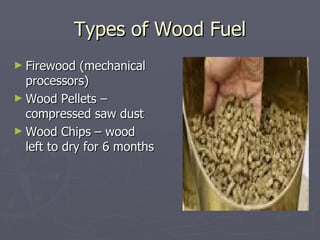
Types of Wood Fuel Firewood (mechanical processors)  Wood Pellets – compressed saw dust Wood Chips – wood left to dry for 6 months
Some Interesting Facts 1000 litres of home-heating oil = 6 tonnes of dried chips = 2.5 tonnes wood pellets Large detached house (200 sq m) 14 tonnes of wood chips per year or 6 tonnes of wood pellets
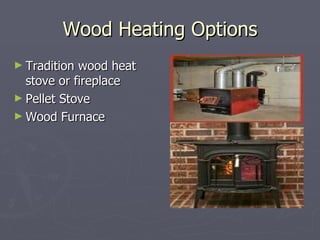
Wood Heating Options Tradition wood heat stove or fireplace Pellet Stove Wood Furnace
Conclusion Long term alternative heat source More common in recent years A lot of work Play a big part in heating homes in the future
Any Questions?
Thank you for your time

Wood fuel presentation

  • 1.
    WOOD FUEL DavidGilloughley
  • 2.
    WOOD FUEL RenewableSustainable Carbon-neutral source of heat, electricity and bio-fuel Abundant Accessable Clean
  • 3.
    Fossil Fuels Oil& Coal High Prices Serious Damage Global Warming
  • 4.
    Disadvantages of WoodFuel Wood must be dry Storage problems Chimney fire-hazard Inefficiency of heating units Methods of wood fuel preparation
  • 5.
    Carbon Neutral CO2released when wood is burned is no greater than that of CO2 absorbed by a young growing tree. Mature tree not a net absorber Harvest & Recycle carbon from young/regenerated trees(coppice)
  • 6.
    Sources Conventional ForestryLarge amount of forest land Openings for farmers (SRF) Short Rotation Forestry 3 year cycle Willow tree
  • 7.
    How Wood BurnsWater is removed through evaporation Chemically – wood breaks down into charcoal, gas and volatile liquids with CO2 and water being the main end products Charcoal burns forming CO2 directly or with an intermediate conversion to carbon monoxide
  • 8.
    Wood Fuel 86%total energy requirement € 5 billion spent on energy per year Large outflow of cash Help reduce our import dependance Improve our trade balance
  • 9.
    Types of WoodFuel Firewood (mechanical processors) Wood Pellets – compressed saw dust Wood Chips – wood left to dry for 6 months
  • 10.
    Some Interesting Facts1000 litres of home-heating oil = 6 tonnes of dried chips = 2.5 tonnes wood pellets Large detached house (200 sq m) 14 tonnes of wood chips per year or 6 tonnes of wood pellets
  • 11.
    Wood Heating OptionsTradition wood heat stove or fireplace Pellet Stove Wood Furnace
  • 12.
    Conclusion Long termalternative heat source More common in recent years A lot of work Play a big part in heating homes in the future
  • 13.
  • 14.
    Thank you foryour time