PAIN IN THE BRAIN: TEEN LIBRARY(MIS) BEHAVIOR 101 Presented by Beth Gallaway for WMRLS, May 2009
Beth Gallaway: Contact & Slides Email: informationgoddess29@gmail.com Cell: 603.247.3196  Slides: http://slideshare.net/informationgoddess29/ Links: http://delicious.com/informationgoddess29/brain
Do you have Ephebiphobia?
Drawing Exercise Group 1: Draw a TEEN, from a LIBRARIAN pov Group 2: Draw a LIBRARIAN, from a TEEN pov Group 3: Draw a TEEN, from a TEEN pov Group 4: Draw a LIBRARIAN, from a LIBRARIAN pov
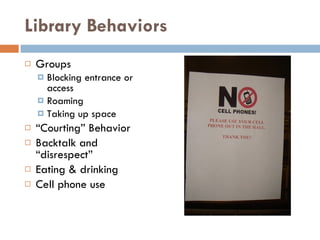
Library Behaviors Groups  Blocking entrance or access Roaming Taking up space “ Courting” Behavior Backtalk and “disrespect” Eating & drinking Cell phone use
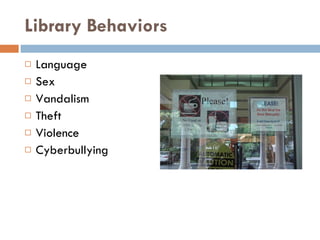
Library Behaviors Language Sex Vandalism Theft Violence Cyberbullying
Differentiate between the 2 Ds: Disruptive Normal Annoying Dangerous  Abnormal Harmful to self & others Illegal
Why Do Teenagers Act That Way? They hate the library? They hate YOU (the librarian)? It’s a contest? Their hormones? The weather? Their age?
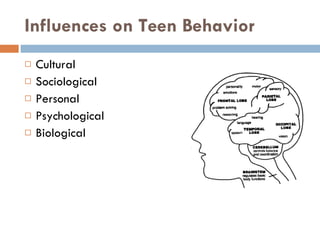
Influences on Teen Behavior Cultural Sociological  Personal Psychological Biological
Cultural Who taught you how to behave in the library? How do patrons know how to behave in the library
Sociological Who do teens spend their time with?
Personal What are some personal issues teens face the might influence behavior?
Psychological What are teens going through during adolescence? What are the unique experiences that characterize them?
On Rules Create a behavior policy  Same rules for everyone No rules set up to fail The less rules, the better  Word rules in a positive way  Leave rules open ended
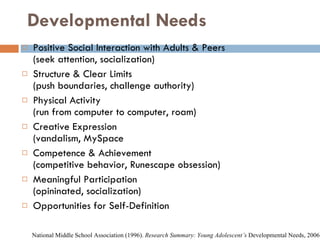
Developmental Needs Positive Social Interaction with Adults & Peers Structure & Clear Limits Physical Activity Creative Expression Competence & Achievement Meaningful Participation Opportunities for Self-Definition Source: National Middle School Association (1996). Research Summary: Young Adolescent’s    Developmental Needs, 2006
Developmental Needs Positive Social Interaction with Adults & Peers (seek attention, socialization) Structure & Clear Limits (push boundaries, challenge authority) Physical Activity (run from computer to computer, roam)  Creative Expression (vandalism, MySpace Competence & Achievement (competitive behavior, Runescape obsession) Meaningful Participation (opininated, socialization) Opportunities for Self-Definition National Middle School Association (1996).  Research Summary: Young Adolescent’s  Developmental Needs, 2006
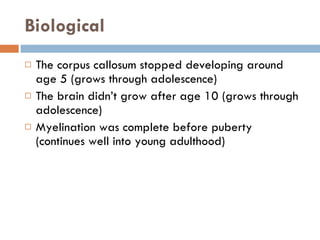
Biological The corpus callosum stopped developing around age 5 (grows through adolescence) The brain didn’t grow after age 10 (grows through adolescence) Myelination was complete before puberty (continues well into young adulthood)
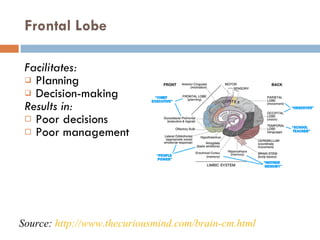
Frontal Lobe Facilitates:  Planning Decision-making Results in: Poor decisions Poor management Source:  http://www.thecuriousmind.com/brain-cm.html
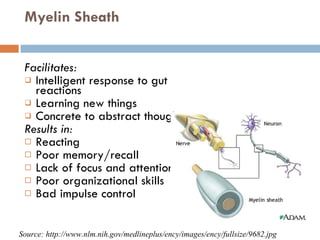
Myelin Sheath  Facilitates:  Intelligent response to gut reactions Learning new things  Concrete to abstract thought Results in: Reacting Poor memory/recall Lack of focus and attention Poor organizational skills Bad impulse control Source: http://www.nlm.nih.gov/medlineplus/ency/images/ency/fullsize/9682.jpg
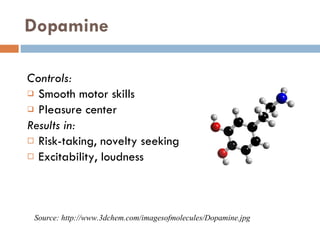
Dopamine Controls: Smooth motor skills Pleasure center Results in:  Risk-taking, novelty seeking Excitability, loudness Source: http://www.3dchem.com/imagesofmolecules/Dopamine.jpg
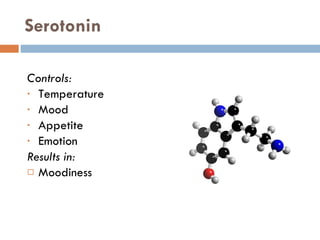
Serotonin Controls:  Temperature Mood Appetite Emotion Results in:  Moodiness
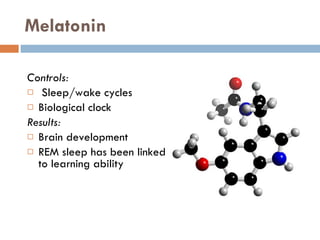
Melatonin Controls: Sleep/wake cycles Biological clock  Results:  Brain development REM sleep has been linked to learning ability
Behavioral Strategies Boundary setting is extremely important Address behavior in terms of actions and consequences in a matter of fact, non-threatening manner
Set Boundaries State unacceptable behavior Optional: explain why it’s unacceptable State consequence of continued unacceptable behavior Ask patron to make a choice
Examples “ John, it’s too noisy over here, and some people are trying to study. If you continue to be disruptive, I will need to ask you to leave. You can choose to lower the volume level and stay or you can choose to leave. Mary, your computer time is up, we have someone waiting. If you continue to violate the time limit, I will have to suspend your computer privileges. You can choose to log off now and get more time tomorrow, or lose your computer access for 2 days.”
Keep in Mind… “ Librarians do not kick teens out of the library. Teens get themselves kicked out of the library, because of their behavior.” ~ Nick Buron, NYPL, Queens Branch
Correcting Behavior 3 Strikes & You’re Out!  Target the Group Leader Good Cop, Bad Cop Invade Personal Space
Follow Through Welcome back Introduce  Discuss behavior incident Reinforce consequences of actions Start with a clean slate
Nip Undesirable Behavior in the Bud! Create raving fans of the library   Develop personal relationships Give them a space of their own  Program them to death Deliver excellent reference & reader’s advisory, and practice excellent customer service
Create Raving Fans Meaningful participation Foster ownership of the library and teen space  Evaluate!
Develop Personal Relationships Talk to teens when they do something RIGHT Introduce yourself, repeatedly  Greet patrons by name Get out from behind the desk Get out of the library 
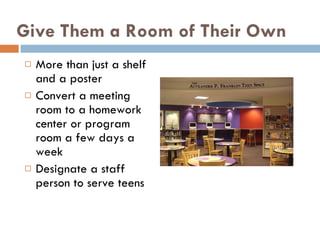
Give Them a Room of Their Own More than just a shelf and a poster Convert a meeting room to a homework center or program room a few days a week Designate a staff person to serve teens
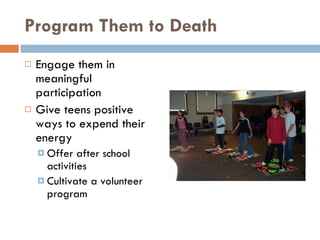
Program Them to Death Engage them in meaningful participation Give teens positive ways to expend their energy Offer after school activities Cultivate a volunteer program
Be an Excellent Librarian! Customer Service Reference Reader’s Advisory
Reminders for Librarians Stay calm It’s not personal Teens are job security Learn to RAP   
Moment of Truth R emember A ccept  P roject
Thank You! Slides: http://infogdss.wordpress.com Email: informationgoddess29@gmail.com  603.247.3196

Wmrls09brain

  • 1.
    PAIN IN THEBRAIN: TEEN LIBRARY(MIS) BEHAVIOR 101 Presented by Beth Gallaway for WMRLS, May 2009
  • 2.
    Beth Gallaway: Contact& Slides Email: informationgoddess29@gmail.com Cell: 603.247.3196 Slides: http://slideshare.net/informationgoddess29/ Links: http://delicious.com/informationgoddess29/brain
  • 3.
    Do you haveEphebiphobia?
  • 4.
    Drawing Exercise Group1: Draw a TEEN, from a LIBRARIAN pov Group 2: Draw a LIBRARIAN, from a TEEN pov Group 3: Draw a TEEN, from a TEEN pov Group 4: Draw a LIBRARIAN, from a LIBRARIAN pov
  • 5.
    Library Behaviors Groups Blocking entrance or access Roaming Taking up space “ Courting” Behavior Backtalk and “disrespect” Eating & drinking Cell phone use
  • 6.
    Library Behaviors LanguageSex Vandalism Theft Violence Cyberbullying
  • 7.
    Differentiate between the2 Ds: Disruptive Normal Annoying Dangerous Abnormal Harmful to self & others Illegal
  • 8.
    Why Do TeenagersAct That Way? They hate the library? They hate YOU (the librarian)? It’s a contest? Their hormones? The weather? Their age?
  • 9.
    Influences on TeenBehavior Cultural Sociological Personal Psychological Biological
  • 10.
    Cultural Who taughtyou how to behave in the library? How do patrons know how to behave in the library
  • 11.
    Sociological Who doteens spend their time with?
  • 12.
    Personal What aresome personal issues teens face the might influence behavior?
  • 13.
    Psychological What areteens going through during adolescence? What are the unique experiences that characterize them?
  • 14.
    On Rules Createa behavior policy Same rules for everyone No rules set up to fail The less rules, the better  Word rules in a positive way  Leave rules open ended
  • 15.
    Developmental Needs PositiveSocial Interaction with Adults & Peers Structure & Clear Limits Physical Activity Creative Expression Competence & Achievement Meaningful Participation Opportunities for Self-Definition Source: National Middle School Association (1996). Research Summary: Young Adolescent’s Developmental Needs, 2006
  • 16.
    Developmental Needs PositiveSocial Interaction with Adults & Peers (seek attention, socialization) Structure & Clear Limits (push boundaries, challenge authority) Physical Activity (run from computer to computer, roam) Creative Expression (vandalism, MySpace Competence & Achievement (competitive behavior, Runescape obsession) Meaningful Participation (opininated, socialization) Opportunities for Self-Definition National Middle School Association (1996). Research Summary: Young Adolescent’s Developmental Needs, 2006
  • 17.
    Biological The corpuscallosum stopped developing around age 5 (grows through adolescence) The brain didn’t grow after age 10 (grows through adolescence) Myelination was complete before puberty (continues well into young adulthood)
  • 18.
    Frontal Lobe Facilitates: Planning Decision-making Results in: Poor decisions Poor management Source: http://www.thecuriousmind.com/brain-cm.html
  • 19.
    Myelin Sheath Facilitates: Intelligent response to gut reactions Learning new things Concrete to abstract thought Results in: Reacting Poor memory/recall Lack of focus and attention Poor organizational skills Bad impulse control Source: http://www.nlm.nih.gov/medlineplus/ency/images/ency/fullsize/9682.jpg
  • 20.
    Dopamine Controls: Smoothmotor skills Pleasure center Results in: Risk-taking, novelty seeking Excitability, loudness Source: http://www.3dchem.com/imagesofmolecules/Dopamine.jpg
  • 21.
    Serotonin Controls: Temperature Mood Appetite Emotion Results in: Moodiness
  • 22.
    Melatonin Controls: Sleep/wakecycles Biological clock Results: Brain development REM sleep has been linked to learning ability
  • 23.
    Behavioral Strategies Boundarysetting is extremely important Address behavior in terms of actions and consequences in a matter of fact, non-threatening manner
  • 24.
    Set Boundaries Stateunacceptable behavior Optional: explain why it’s unacceptable State consequence of continued unacceptable behavior Ask patron to make a choice
  • 25.
    Examples “ John,it’s too noisy over here, and some people are trying to study. If you continue to be disruptive, I will need to ask you to leave. You can choose to lower the volume level and stay or you can choose to leave. Mary, your computer time is up, we have someone waiting. If you continue to violate the time limit, I will have to suspend your computer privileges. You can choose to log off now and get more time tomorrow, or lose your computer access for 2 days.”
  • 26.
    Keep in Mind…“ Librarians do not kick teens out of the library. Teens get themselves kicked out of the library, because of their behavior.” ~ Nick Buron, NYPL, Queens Branch
  • 27.
    Correcting Behavior 3Strikes & You’re Out! Target the Group Leader Good Cop, Bad Cop Invade Personal Space
  • 28.
    Follow Through Welcomeback Introduce Discuss behavior incident Reinforce consequences of actions Start with a clean slate
  • 29.
    Nip Undesirable Behaviorin the Bud! Create raving fans of the library   Develop personal relationships Give them a space of their own  Program them to death Deliver excellent reference & reader’s advisory, and practice excellent customer service
  • 30.
    Create Raving FansMeaningful participation Foster ownership of the library and teen space  Evaluate!
  • 31.
    Develop Personal RelationshipsTalk to teens when they do something RIGHT Introduce yourself, repeatedly  Greet patrons by name Get out from behind the desk Get out of the library 
  • 32.
    Give Them aRoom of Their Own More than just a shelf and a poster Convert a meeting room to a homework center or program room a few days a week Designate a staff person to serve teens
  • 33.
    Program Them toDeath Engage them in meaningful participation Give teens positive ways to expend their energy Offer after school activities Cultivate a volunteer program
  • 34.
    Be an ExcellentLibrarian! Customer Service Reference Reader’s Advisory
  • 35.
    Reminders for LibrariansStay calm It’s not personal Teens are job security Learn to RAP   
  • 36.
    Moment of TruthR emember A ccept P roject
  • 37.
    Thank You! Slides:http://infogdss.wordpress.com Email: informationgoddess29@gmail.com 603.247.3196

Editor's Notes

  • #2 Thank you YALSA!