WK12.1 AgendaProject presentationOlympic EvaluationExam Part II next Friday August 27, 20101MIB, BBA 2010
WK12.2 AgendaEvaluation & SuggestionExam Part II next Friday August 27, 2010LectureMind mapMIB, BBA 20102
Strategy ImplementationFormulation vs. Implementation~ Idea vs. Work ResultSuccess  story, Failure story?A strategic plan which is executed through programs, budgets, and procedures.Key Implementation QuestionsWho will implement the plan?What must be done to align with the company’s operations in the new direction?How is strategy to be implemented?MIB, BBA 20103
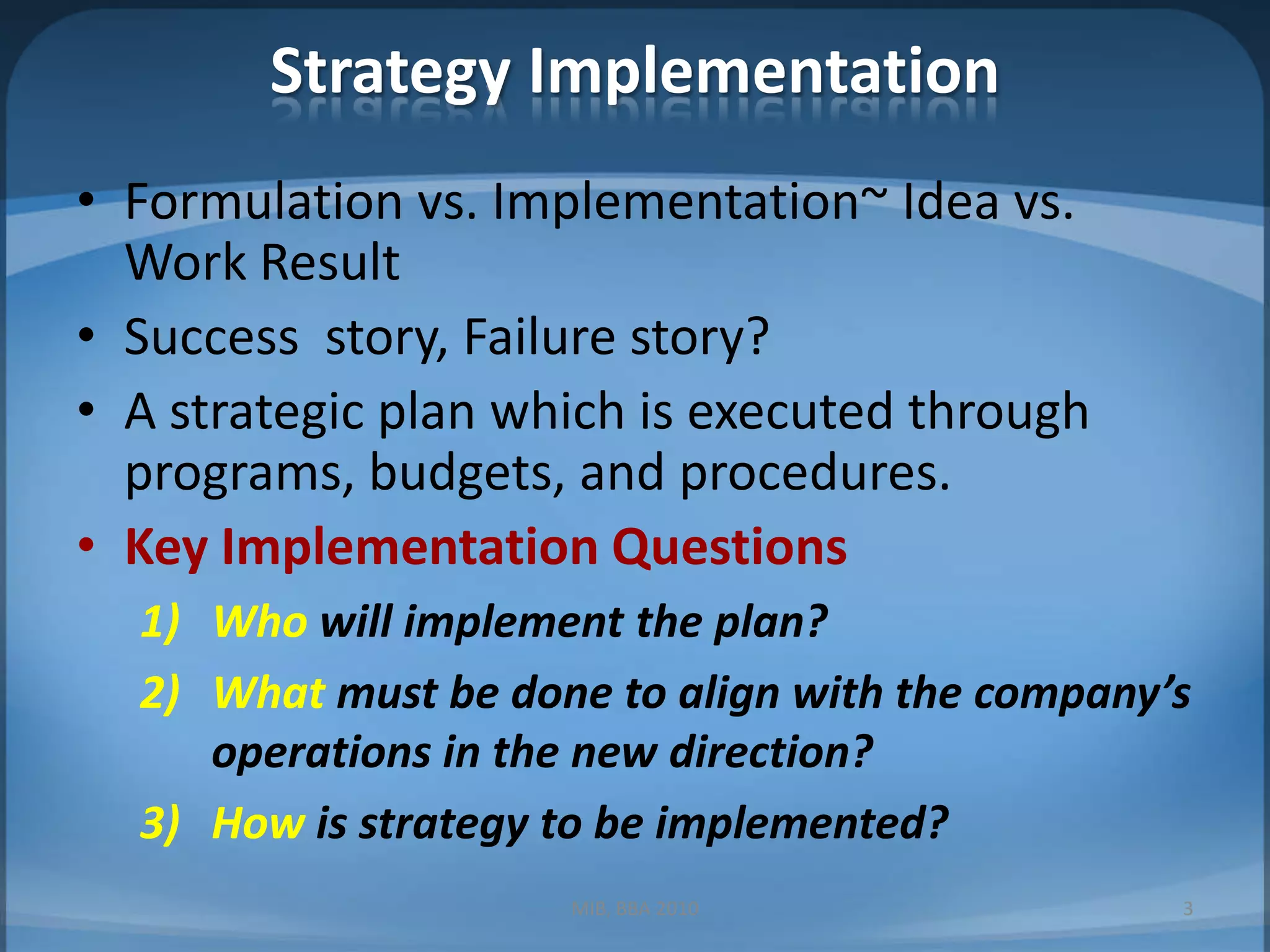
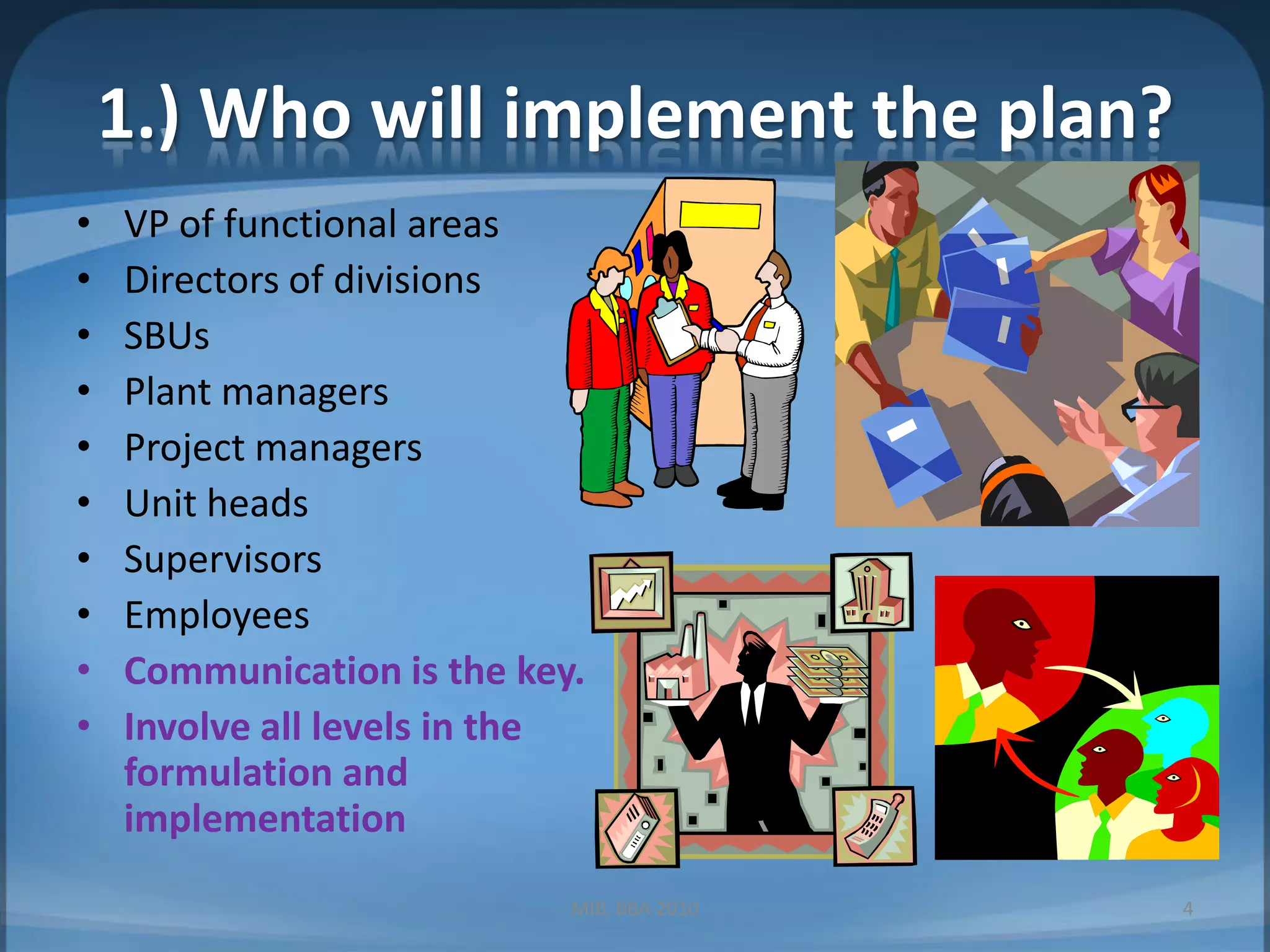
1.) Who will implement the plan?VP of functional areasDirectors of divisionsSBUsPlant managersProject managersUnit headsSupervisorsEmployeesCommunication is the key.Involve all levels in the formulation and implementation MIB, BBA 20104
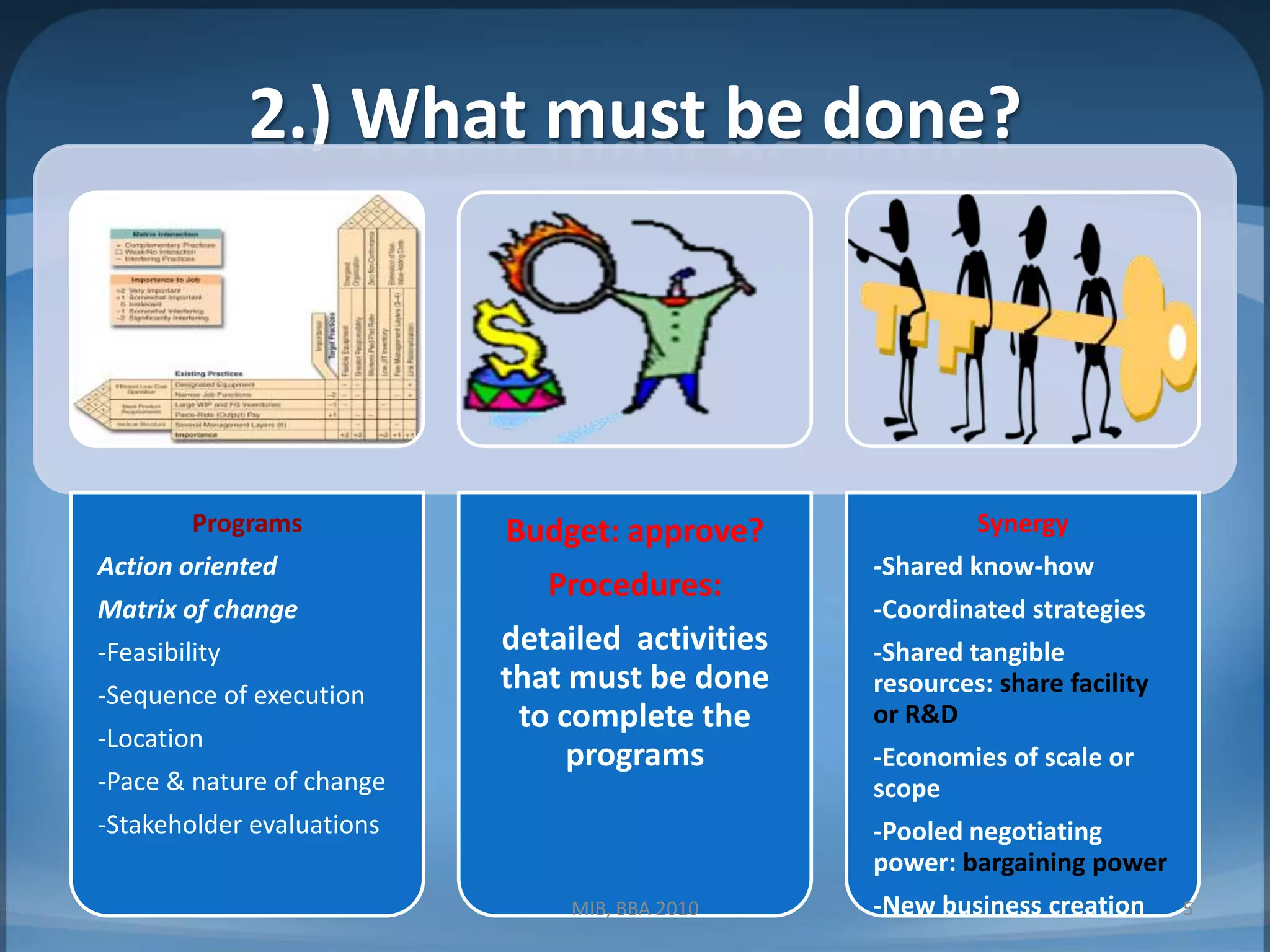
2.) What must be done?MIB, BBA 20105
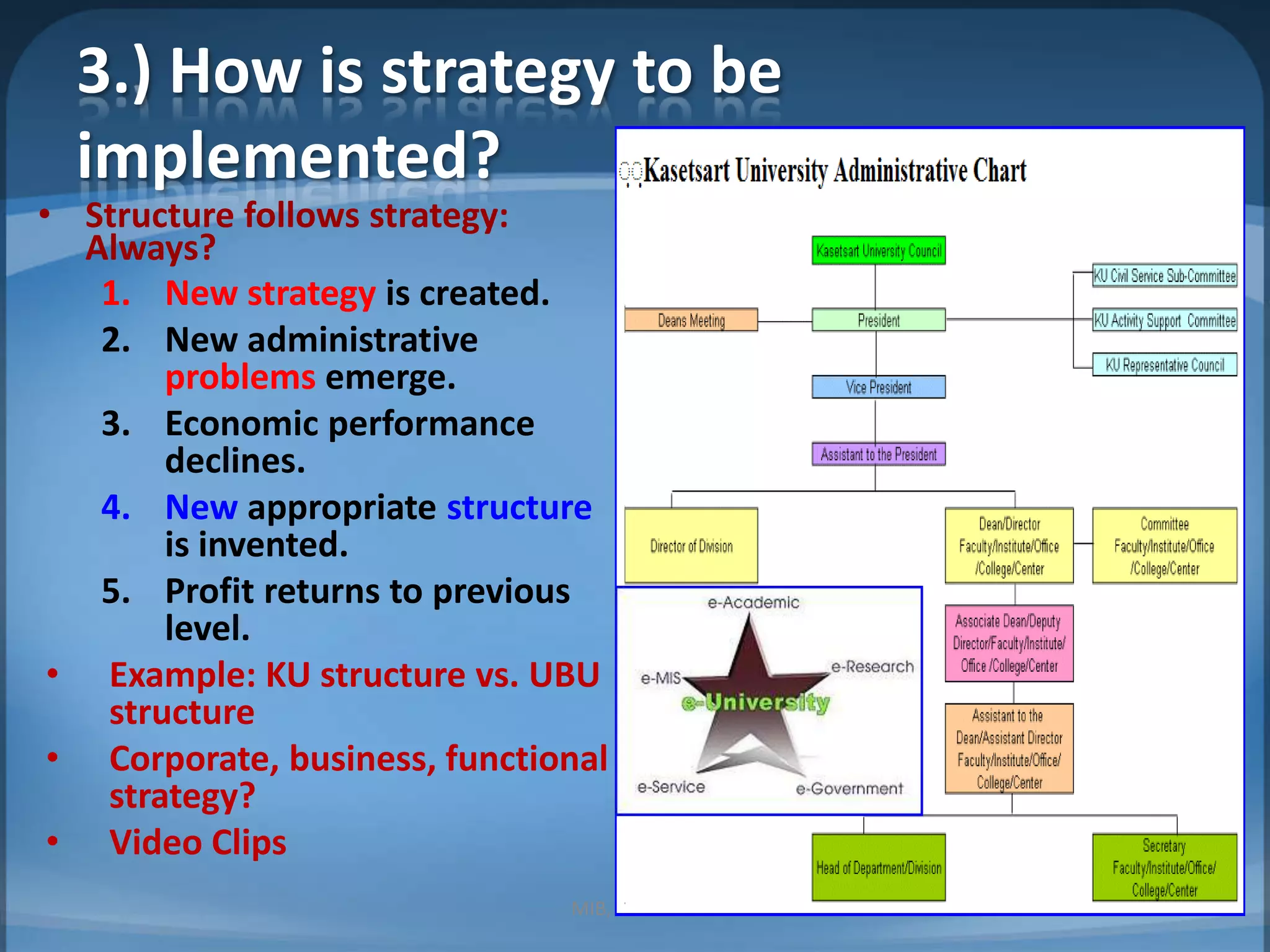
3.) How is strategy to be implemented?Structure follows strategy: Always?New strategy is created.New administrative problems emerge.Economic performance declines.New appropriate structure is invented.Profit returns to previous level.Example: KU structure vs. UBU structureCorporate, business, functional strategy?Video ClipsMIB, BBA 20106
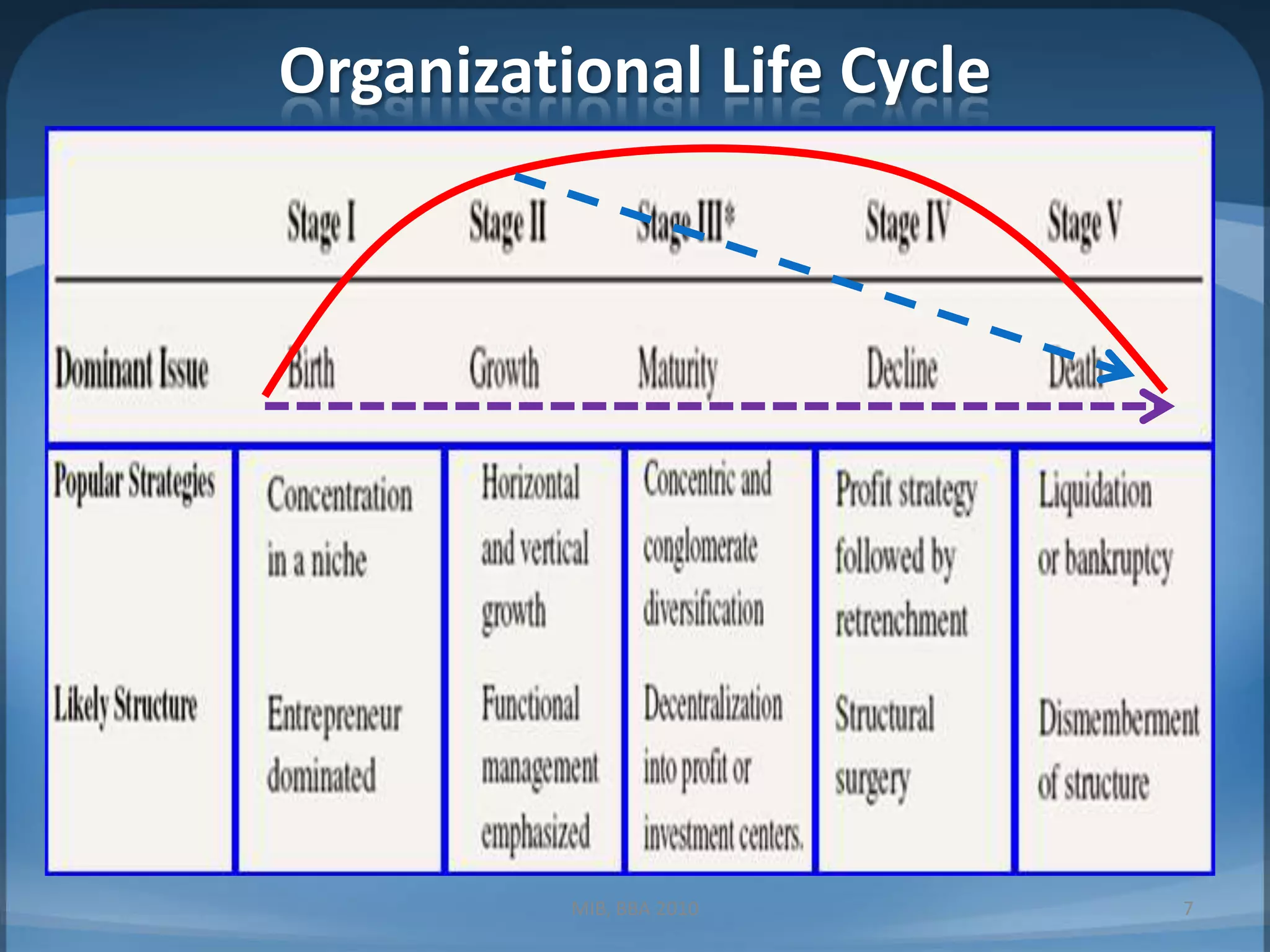
Organizational Life CycleMIB, BBA 20107
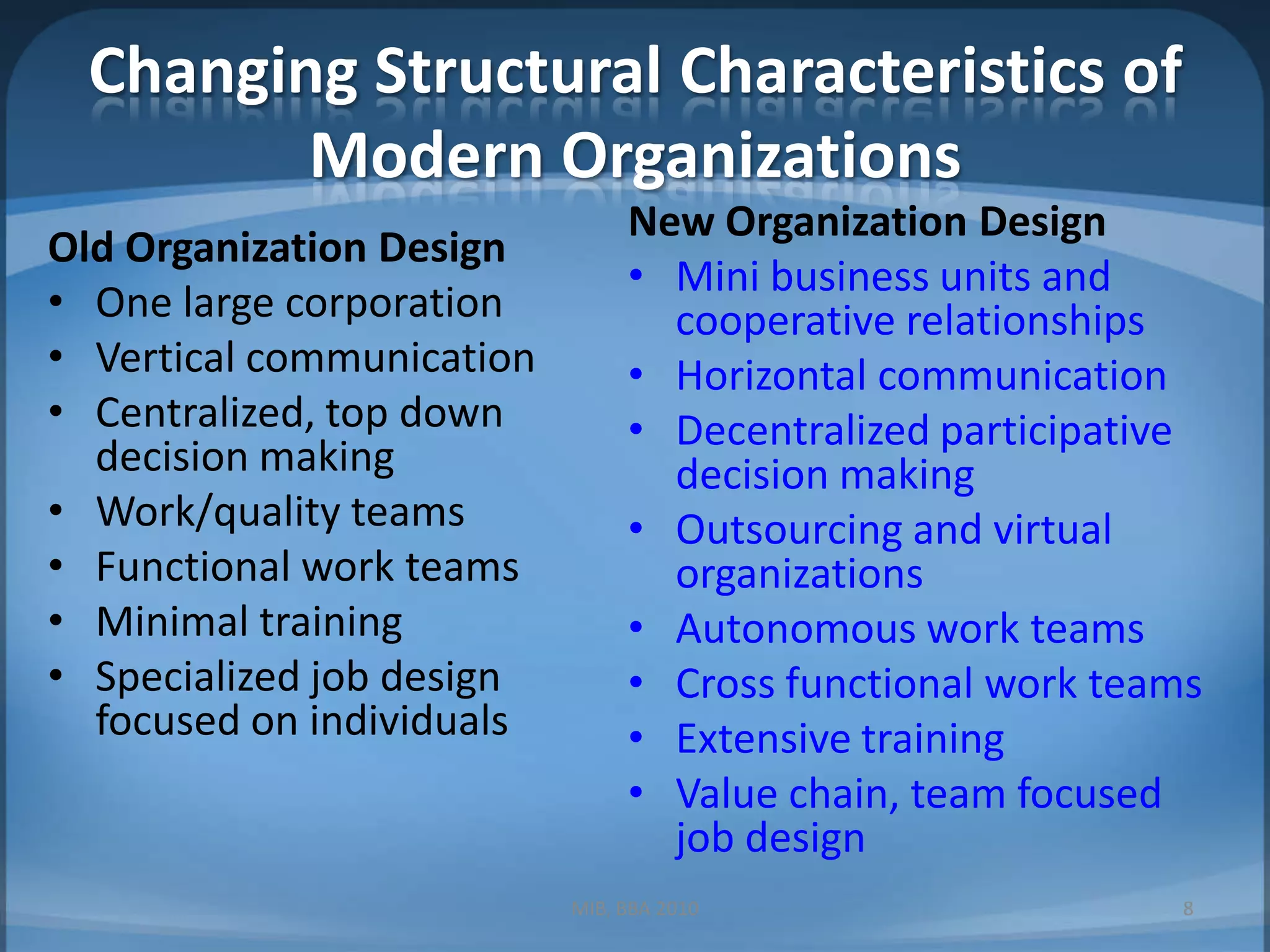
Changing Structural Characteristics of Modern OrganizationsOld Organization DesignOne large corporationVertical communicationCentralized, top down decision makingWork/quality teamsFunctional work teamsMinimal trainingSpecialized job design focused on individualsMIB, BBA 20108New Organization DesignMini business units and cooperative relationshipsHorizontal communicationDecentralized participative decision makingOutsourcing and virtual organizationsAutonomous work teamsCross functional work teamsExtensive trainingValue chain, team focused job design
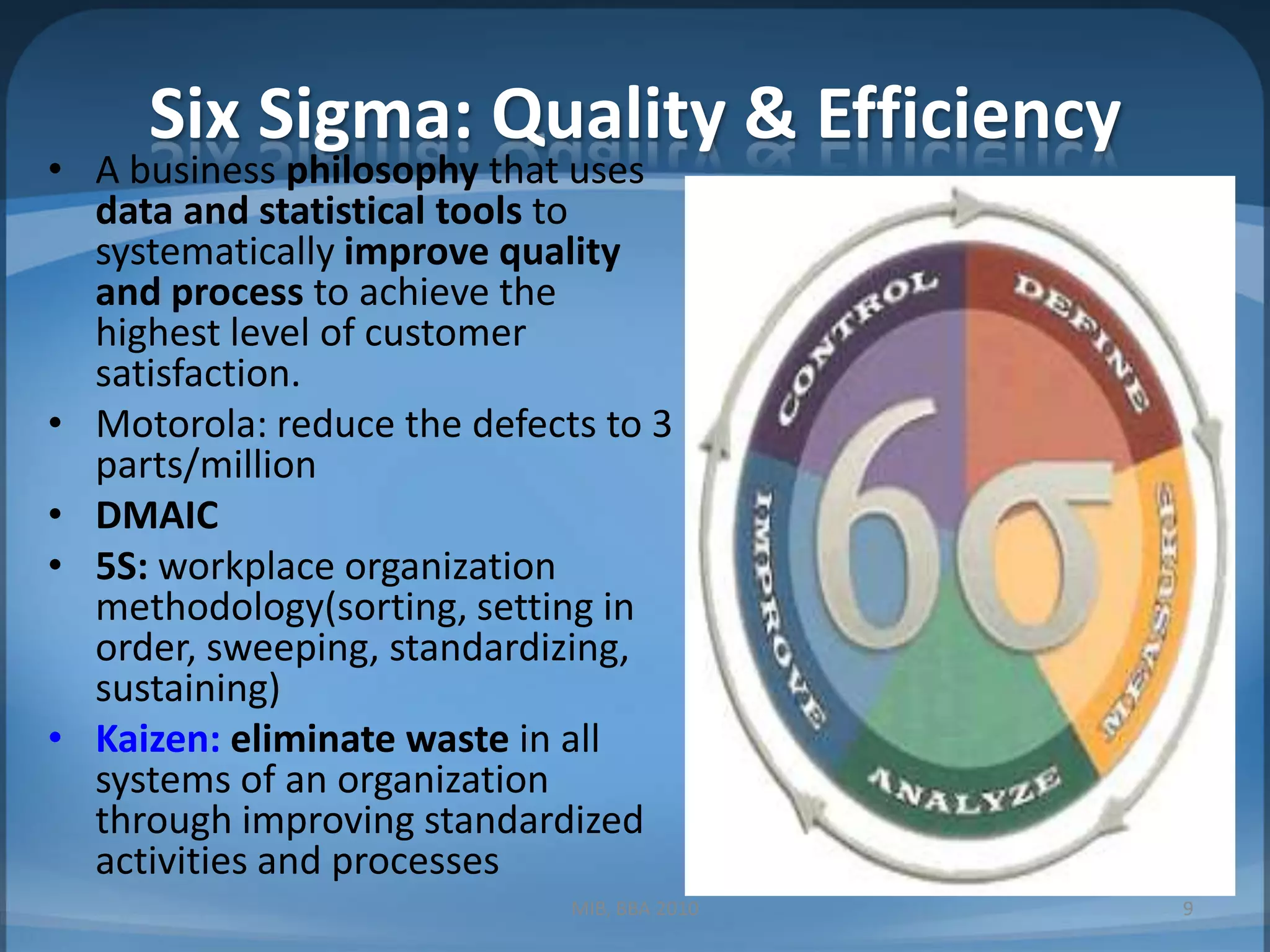
Six Sigma: Quality & EfficiencyA business philosophy that uses data and statistical tools to systematically improve quality and process to achieve the highest level of customer satisfaction.Motorola: reduce the defects to 3 parts/millionDMAIC5S: workplace organization methodology(sorting, setting in order, sweeping, standardizing, sustaining)Kaizen:eliminate waste in all systems of an organization through improving standardized activities and processesMIB, BBA 20109
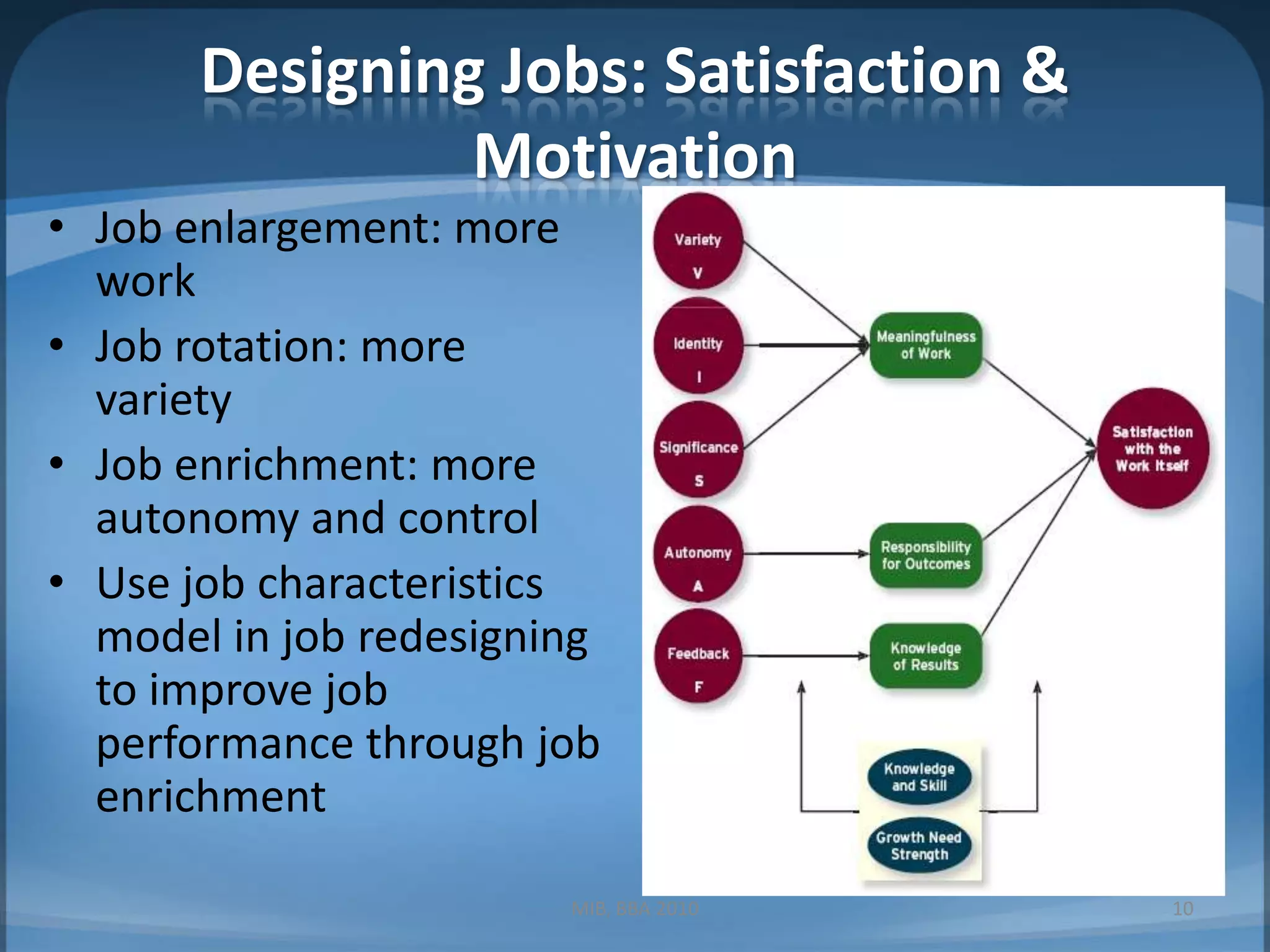
Designing Jobs: Satisfaction & MotivationJob enlargement: more workJob rotation: more varietyJob enrichment: more autonomy and controlUse job characteristics model in job redesigning to improve job performance through job enrichmentMIB, BBA 201010
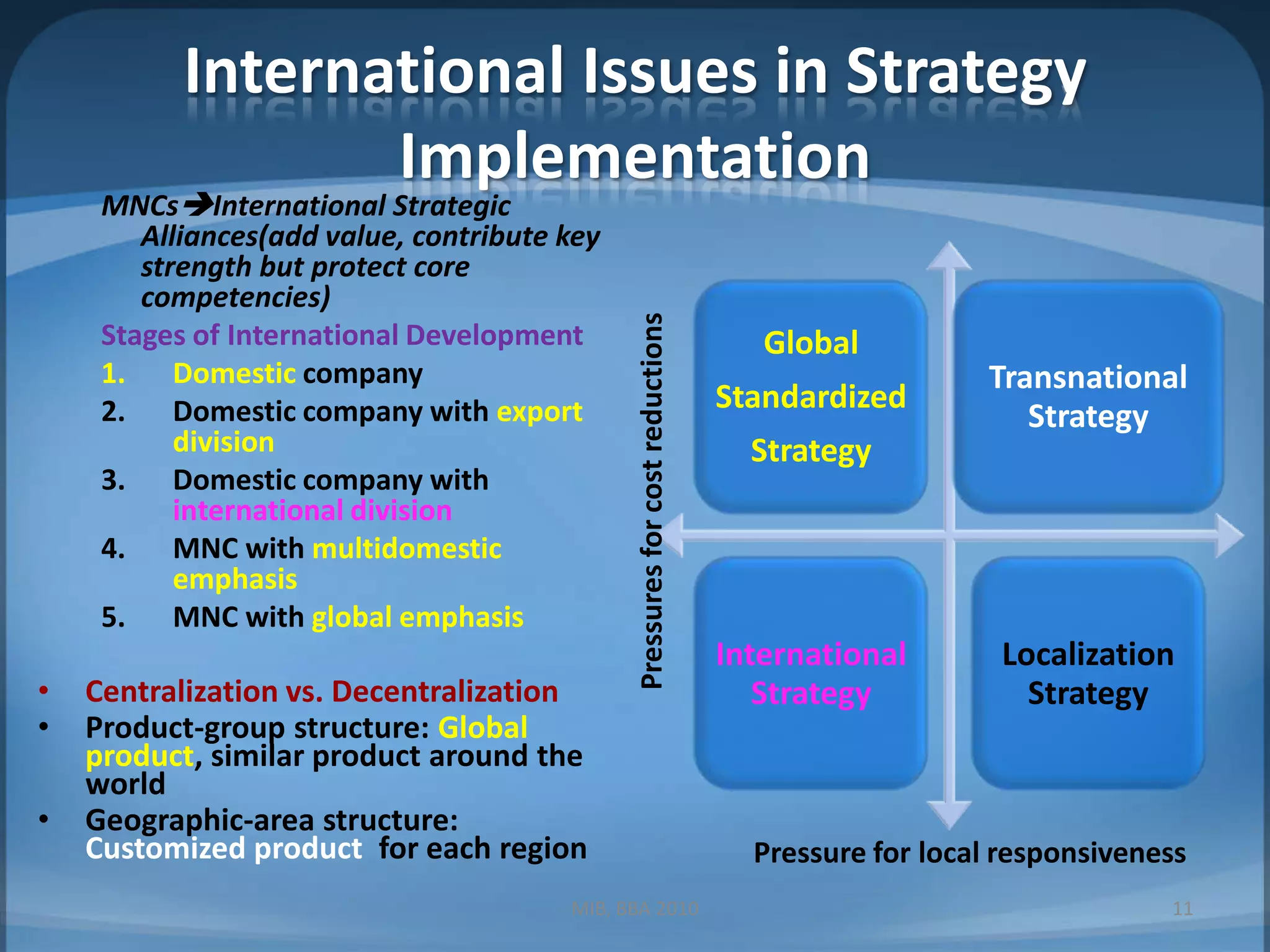
International Issues in Strategy ImplementationMNCsInternational Strategic Alliances(add value, contribute key strength but protect core competencies)Stages of International DevelopmentDomestic companyDomestic company with export divisionDomestic company with international divisionMNC with multidomestic emphasisMNC with global emphasisCentralization vs. DecentralizationProduct-group structure: Global product, similar product around the worldGeographic-area structure: Customized product  for each regionMIB, BBA 201011Pressures for cost reductionsPressure for local responsiveness
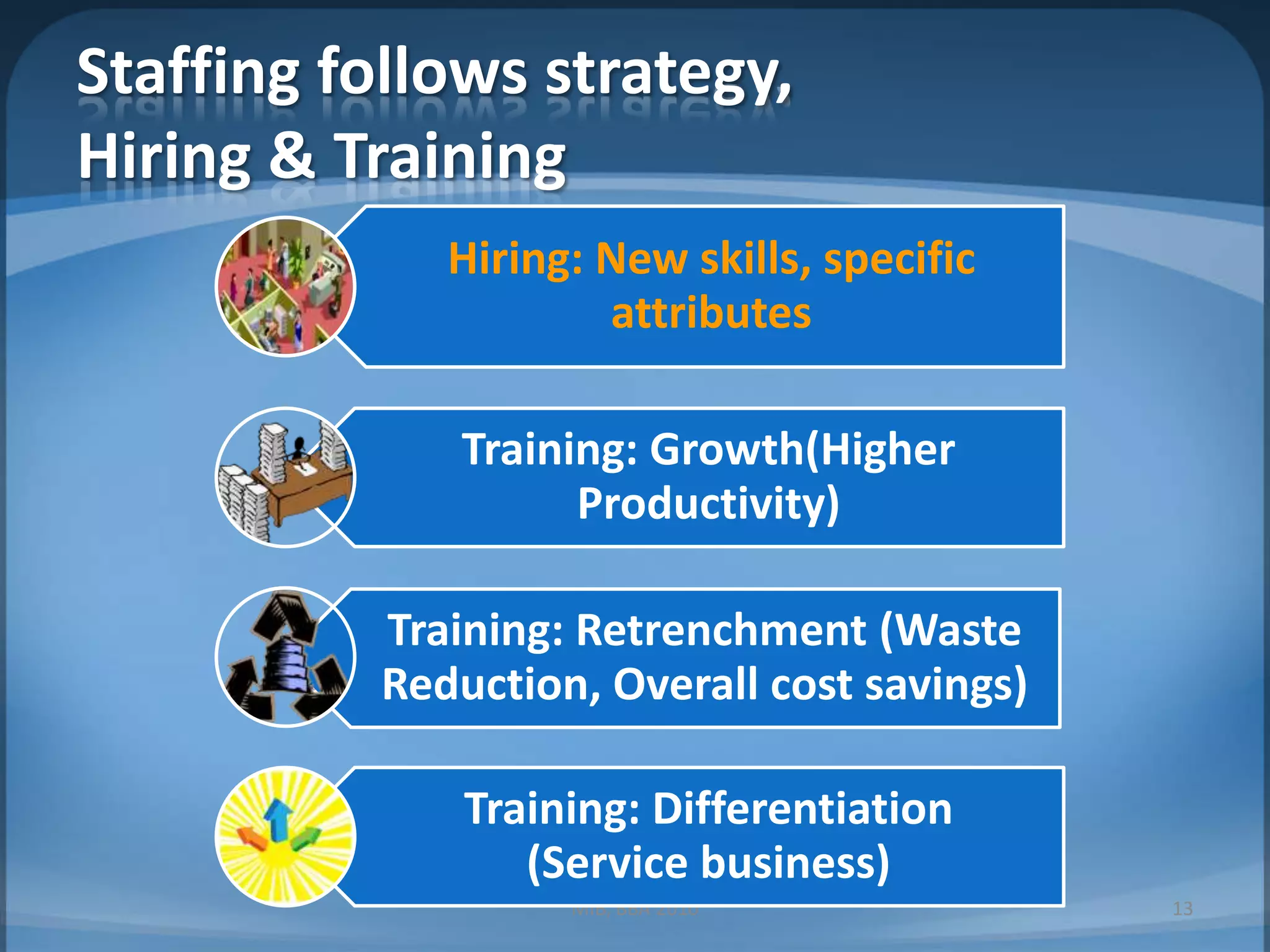
Strategy Implementation: Staffing and LeadingStaffing: focuses on the selection and use of employees (hiring, firing, and training).Leading: emphasizes the use of programs to better align employee interests and attitudes with a strategy.MIB, BBA 201012
Staffing follows strategy, Hiring & TrainingMIB, BBA 201013
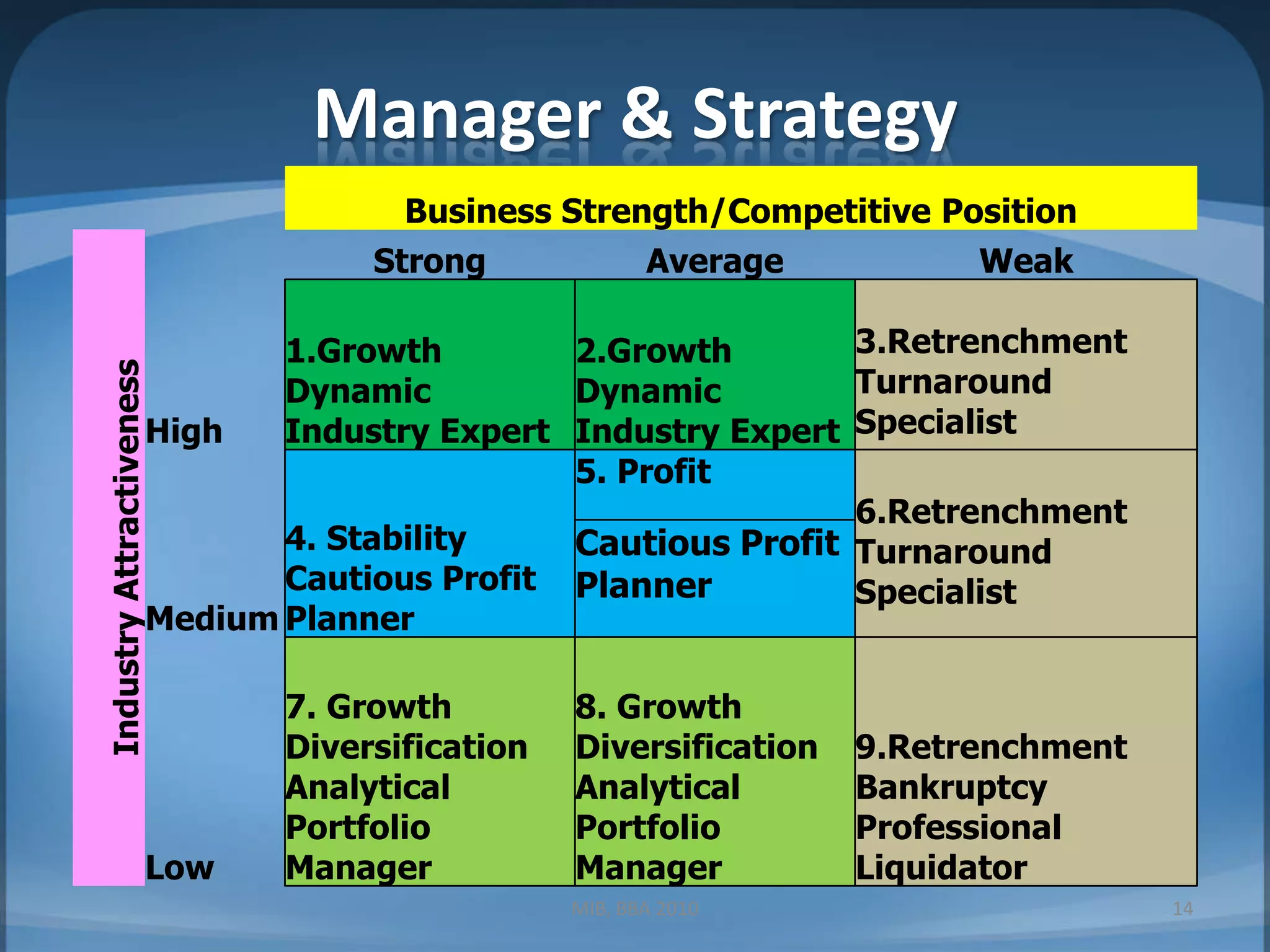
Manager & StrategyMIB, BBA 201014
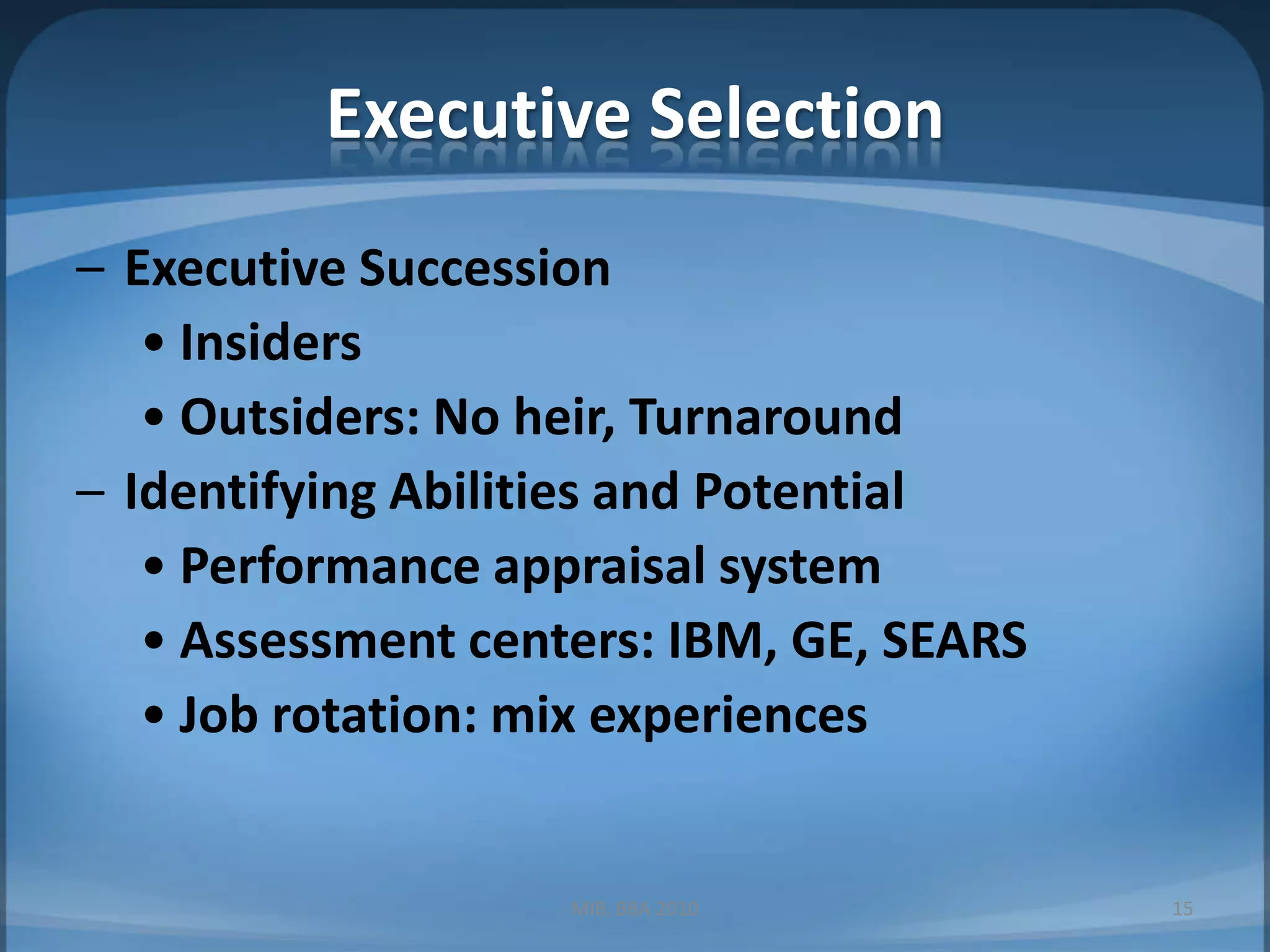
Executive SelectionExecutive Succession
Insiders
Outsiders: No heir, Turnaround
Identifying Abilities and Potential
Performance appraisal system
Assessment centers: IBM, GE, SEARS
Job rotation: mix experiencesMIB, BBA 201015
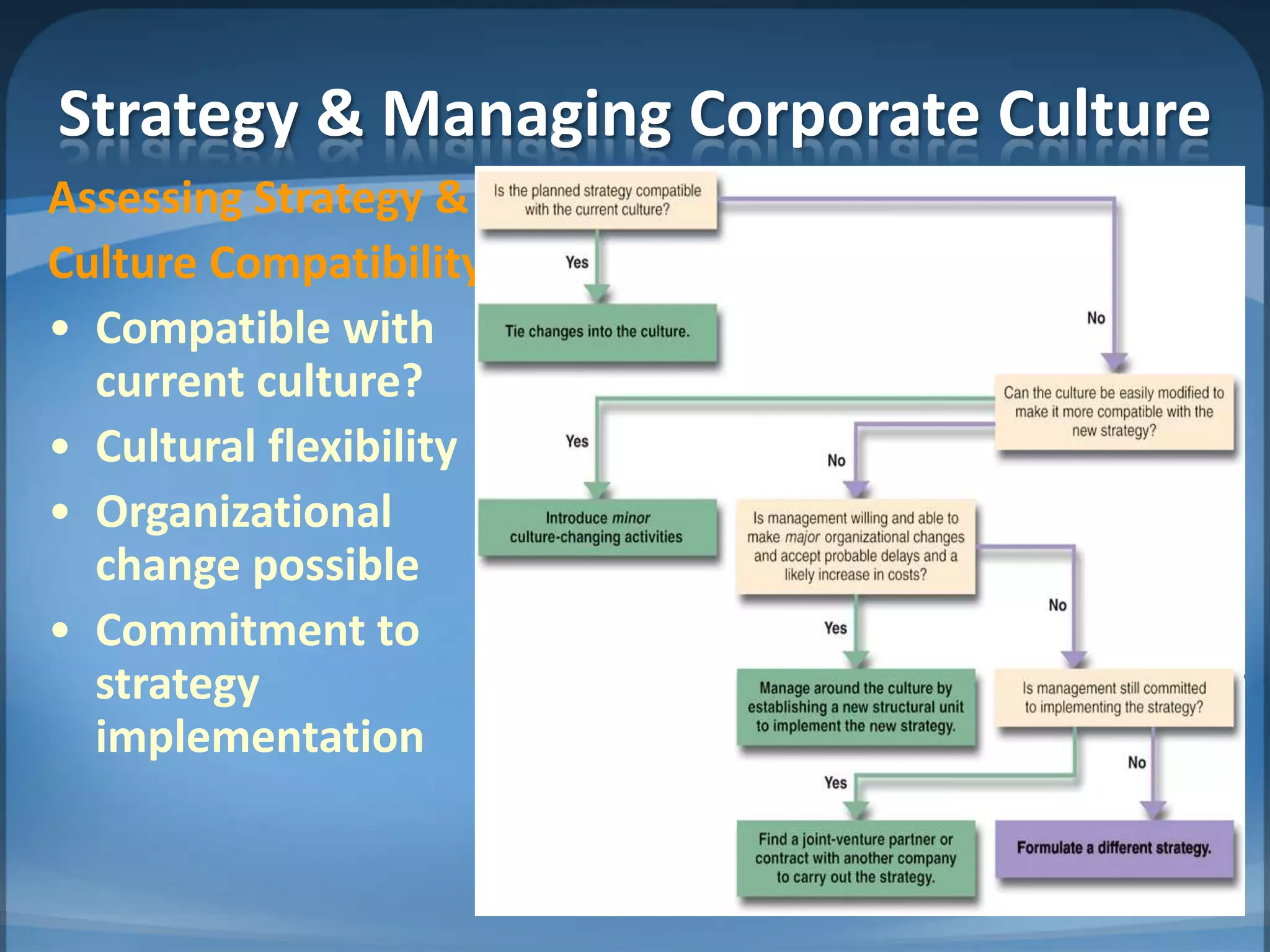
Strategy & Managing Corporate CultureAssessing Strategy &Culture CompatibilityCompatible with current culture?
Cultural flexibility
Organizational change possible
Commitment to strategy implementationMIB, BBA 201016
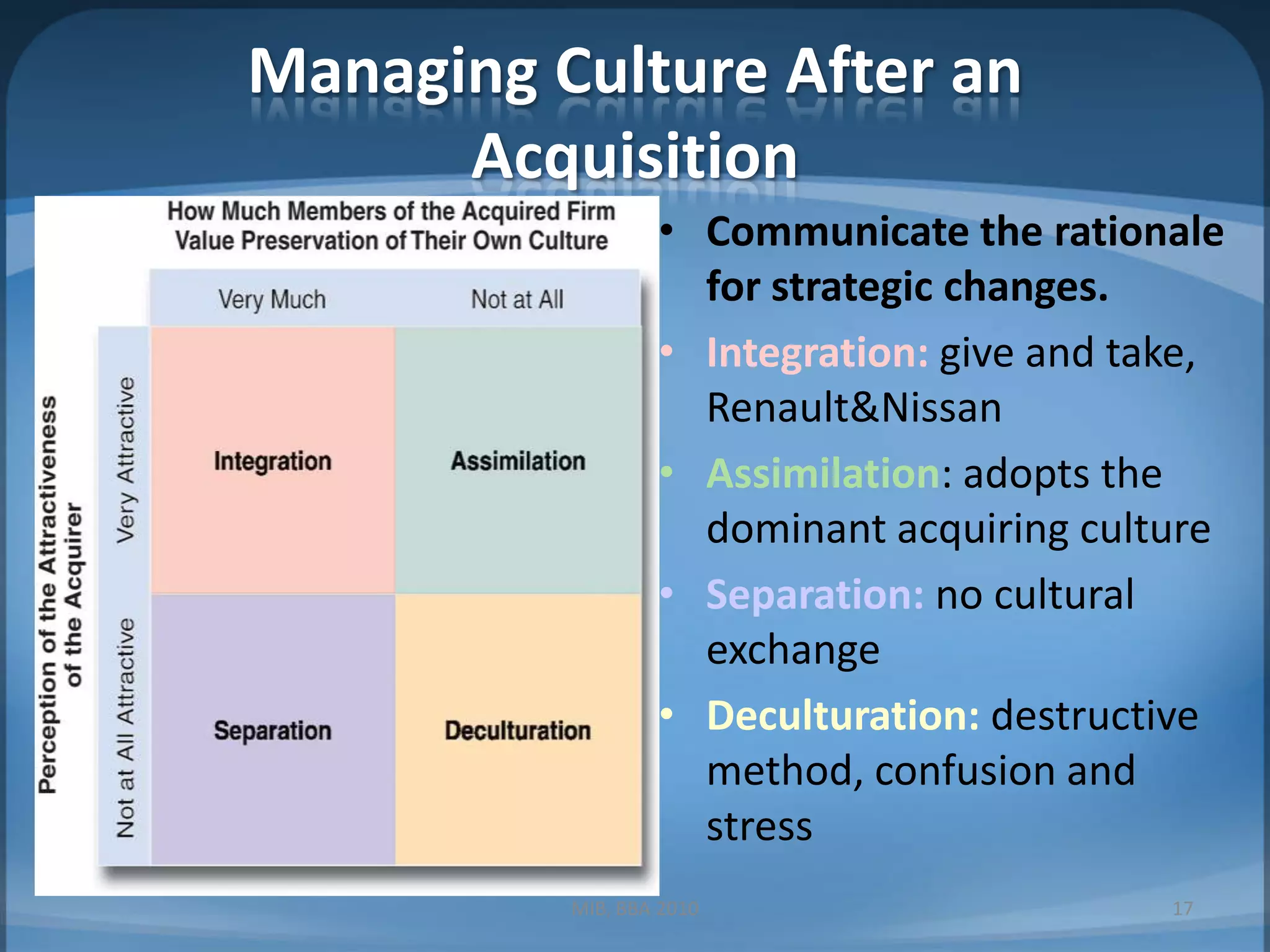
Managing Culture After an AcquisitionCommunicate the rationale for strategic changes.Integration: give and take, Renault&NissanAssimilation: adopts the dominant acquiring cultureSeparation: no cultural exchangeDeculturation: destructive method, confusion and stressMIB, BBA 201017
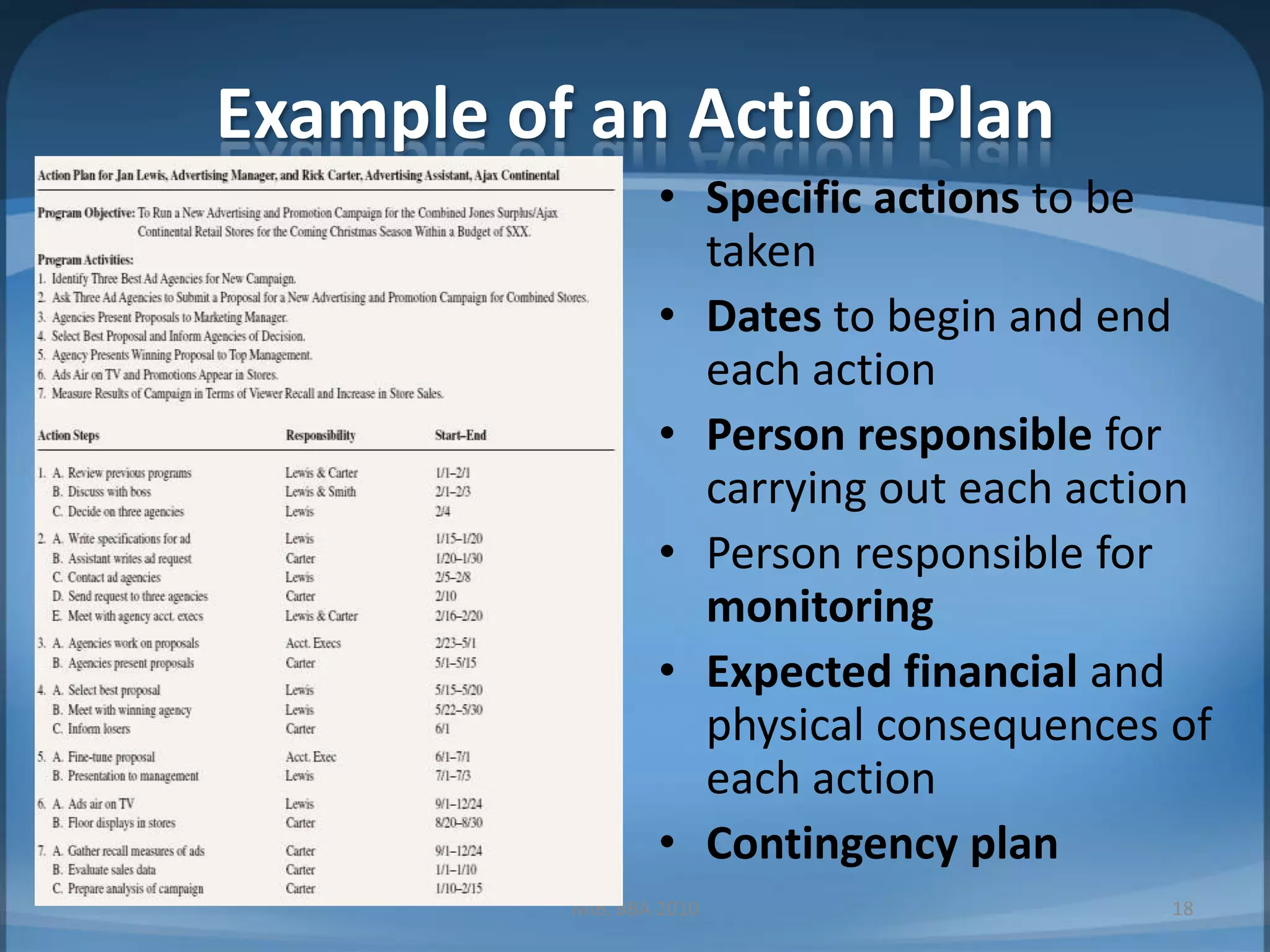
Example of an Action PlanSpecific actions to be takenDates to begin and end each actionPerson responsible for carrying out each actionPerson responsible for monitoringExpected financial and physical consequences of each actionContingency planMIB, BBA 201018
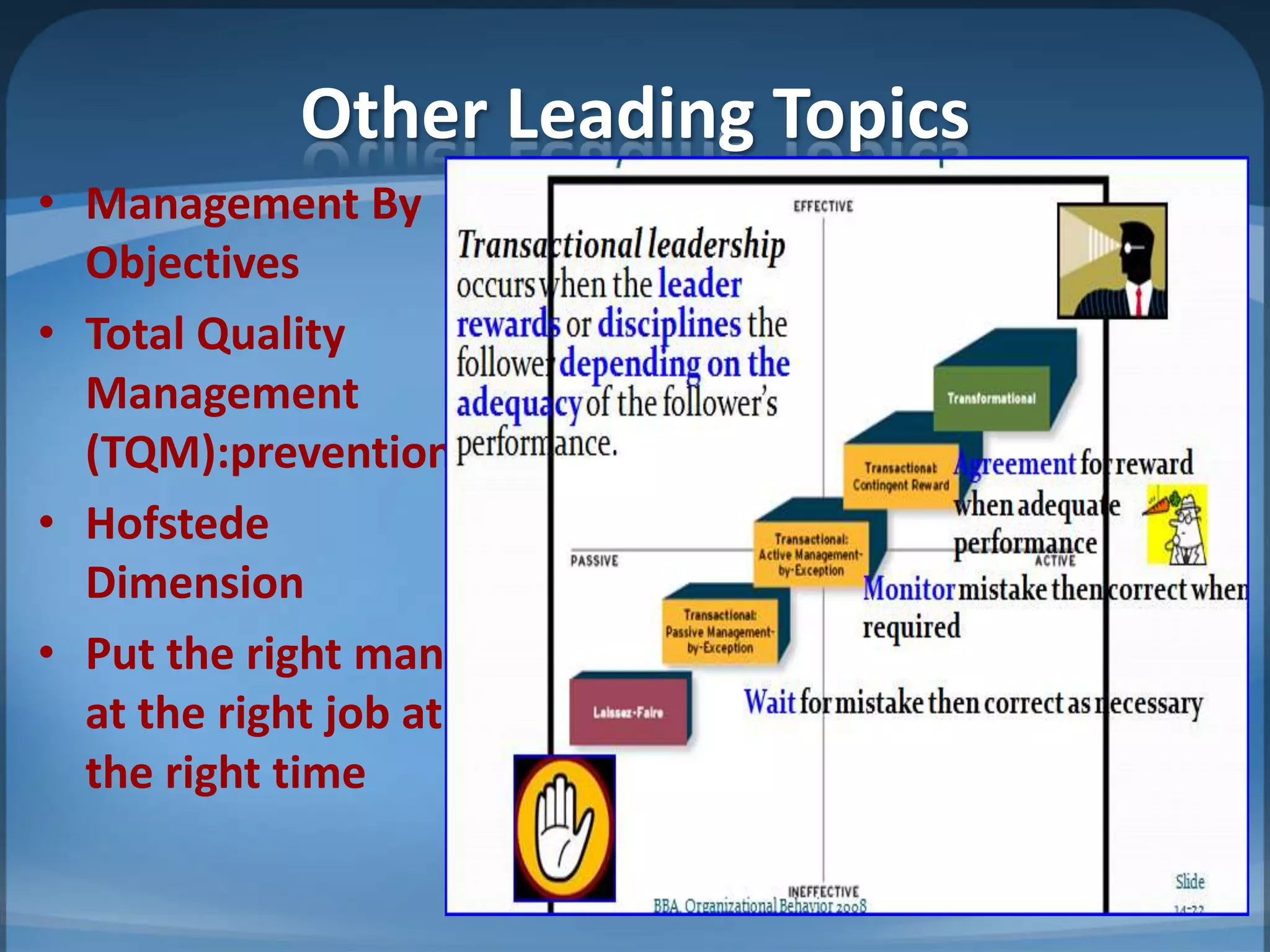
Other Leading TopicsManagement By ObjectivesTotal Quality Management (TQM):preventionHofstede DimensionPut the right man at the right job at the right timeMIB, BBA 201019
WK12.3 AgendaLecture on evaluation & controlMind mapMission Possible ExerciseMonday bring your note book for case study.Exam part II next Friday August 27, 2010.MIB, BBA 201020
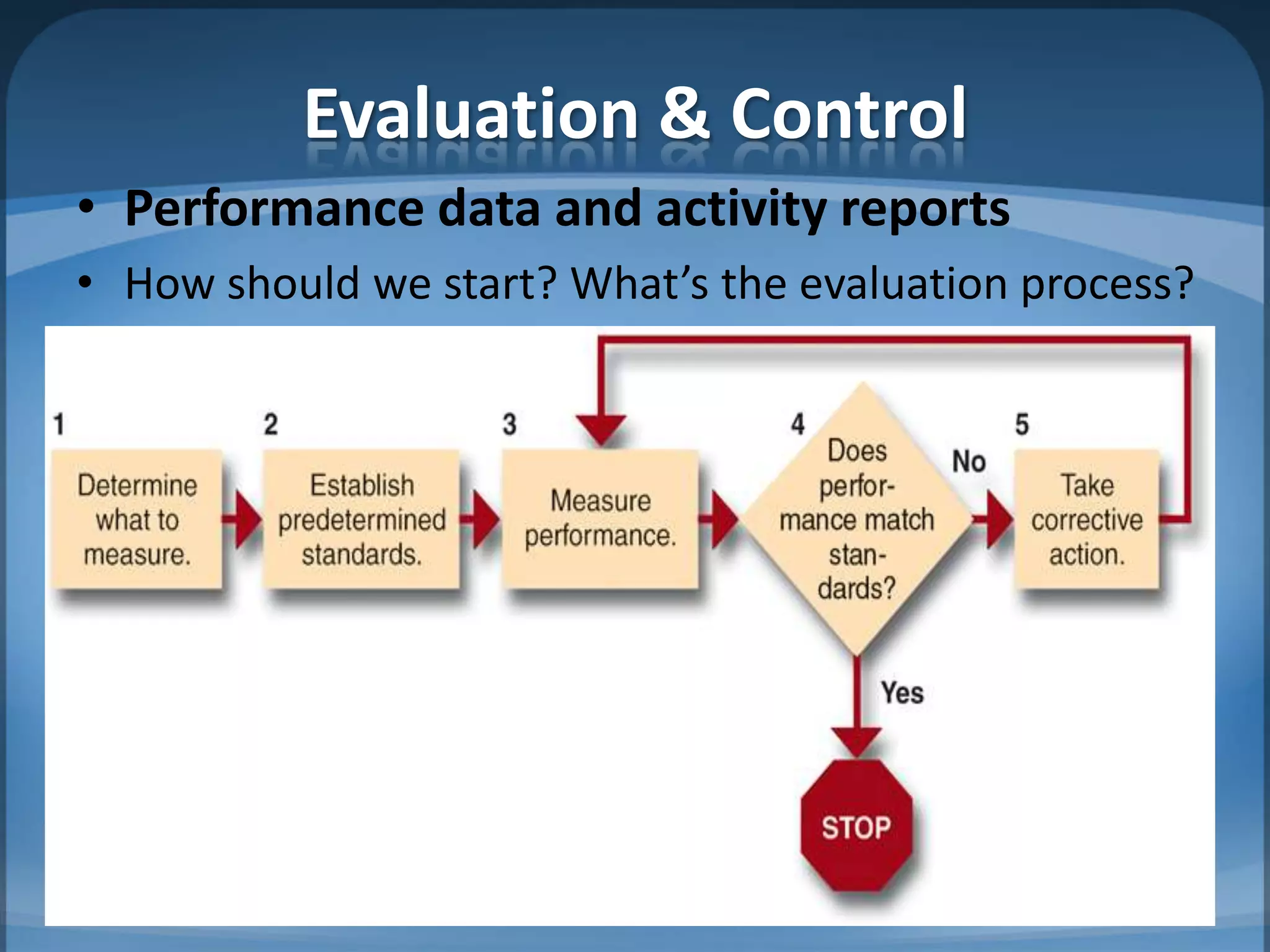
Evaluation & ControlPerformance data and activity reports How should we start? What’s the evaluation process?MIB, BBA 201021
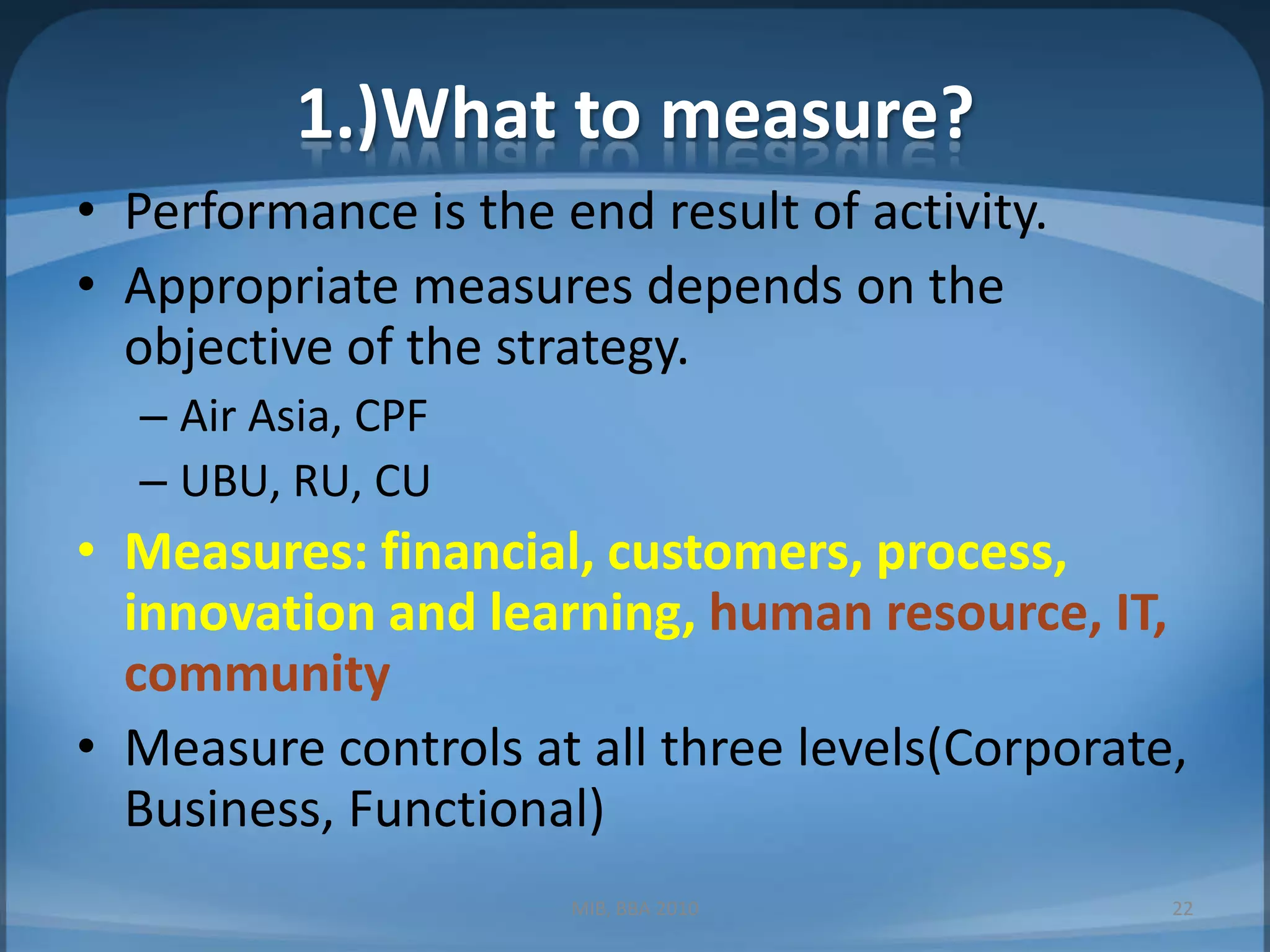
1.)What to measure?Performance is the end result of activity.Appropriate measures depends on the objective of the strategy.Air Asia, CPFUBU, RU, CUMeasures: financial, customers, process, innovation and learning,human resource, IT, communityMeasure controls at all three levels(Corporate, Business, Functional)MIB, BBA 201022
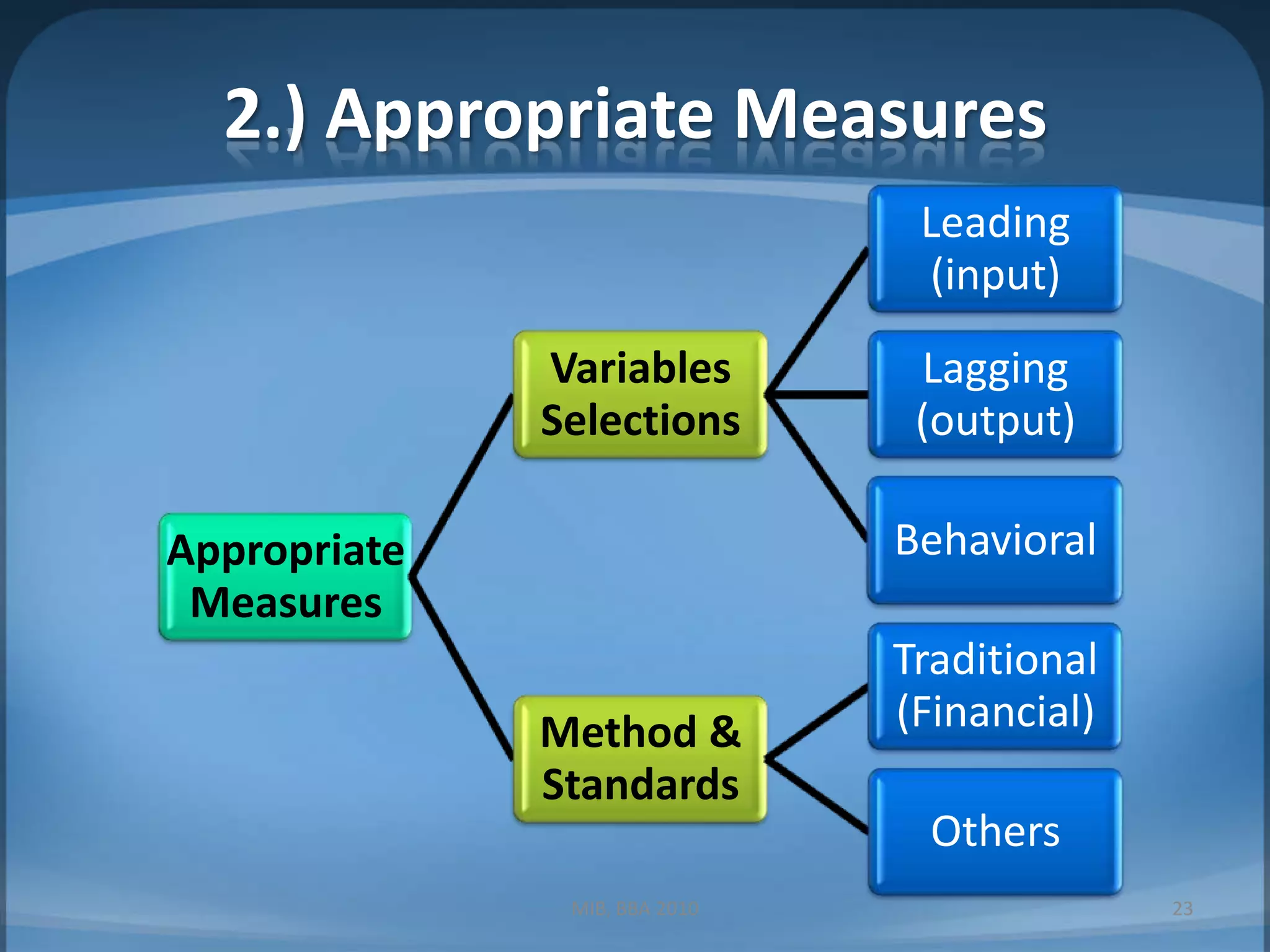
2.) Appropriate MeasuresMIB, BBA 201023
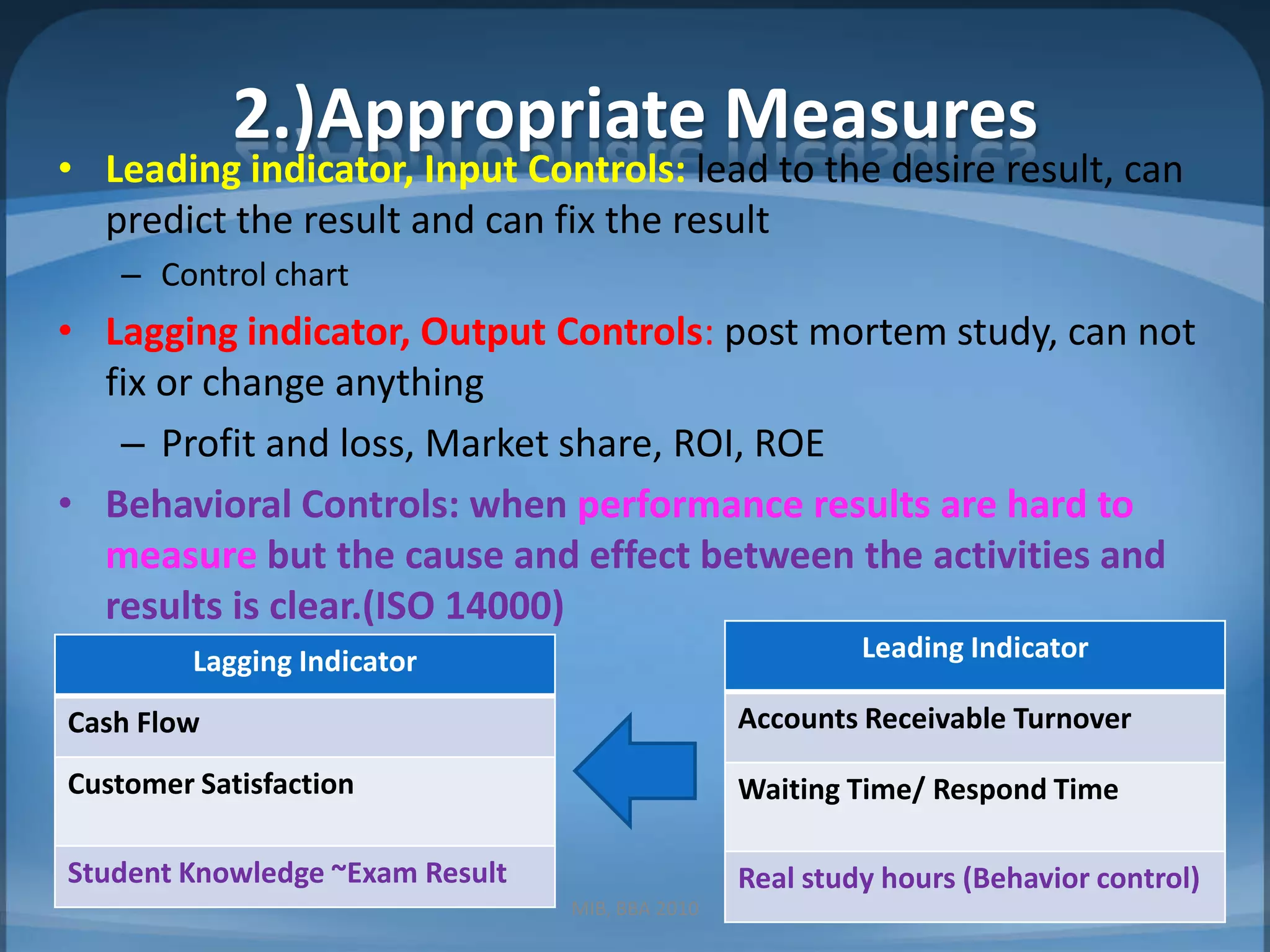
2.)Appropriate MeasuresLeading indicator, Input Controls: lead to the desire result, can predict the result and can fix the resultControl chartLagging indicator, Output Controls: post mortem study, can not fix or change anything Profit and loss, Market share, ROI, ROEBehavioral Controls: when performance results are hard to measure but the cause and effect between the activities and results is clear.(ISO 14000)MIB, BBA 201024
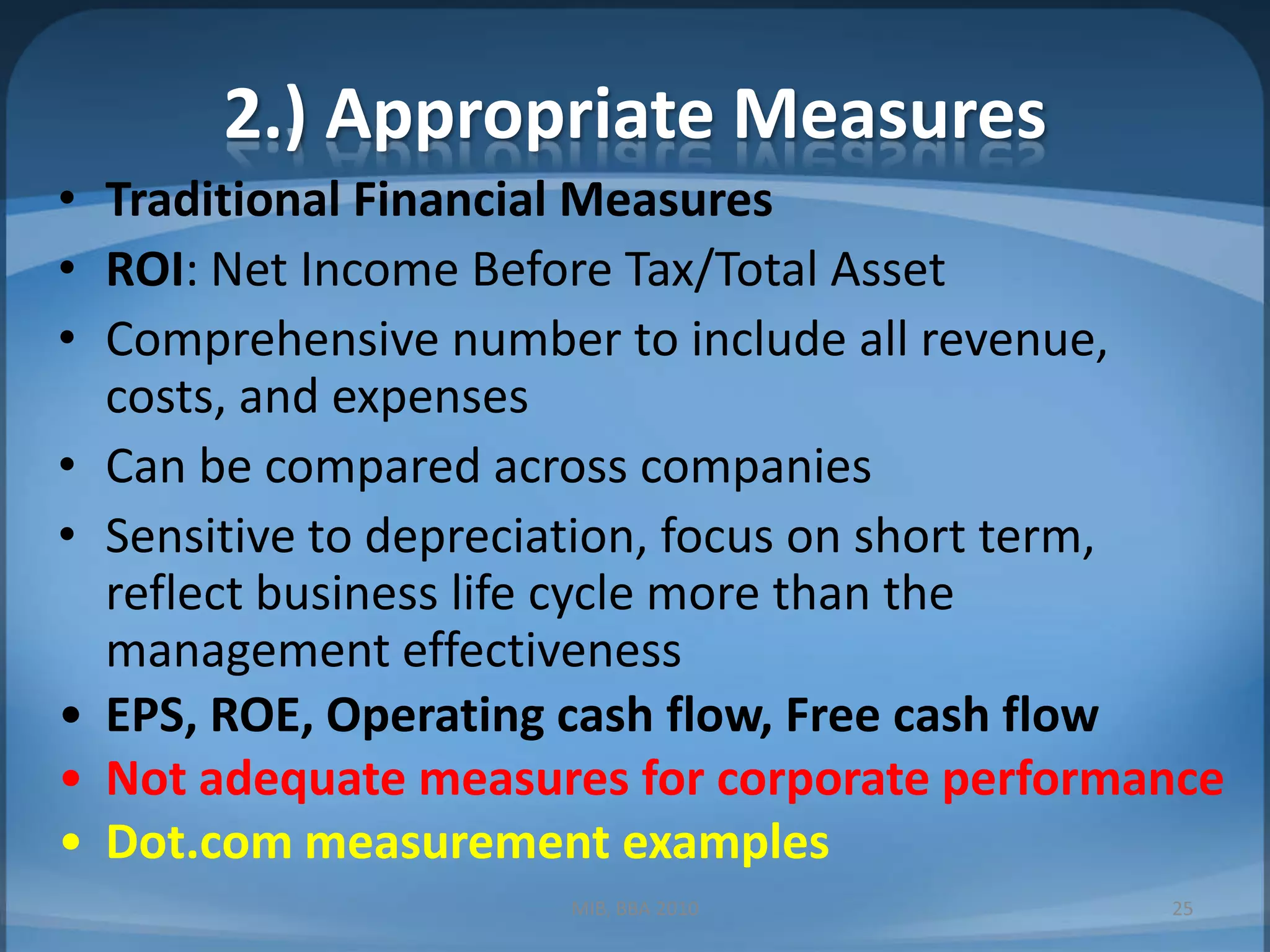
2.) Appropriate MeasuresTraditional Financial MeasuresROI: Net Income Before Tax/Total AssetComprehensive number to include all revenue, costs, and expensesCan be compared across companiesSensitive to depreciation, focus on short term, reflect business life cycle more than the management effectivenessEPS, ROE, Operating cash flow, Free cash flow
Not adequate measures for corporate performance
Dot.com measurement examplesMIB, BBA 201025
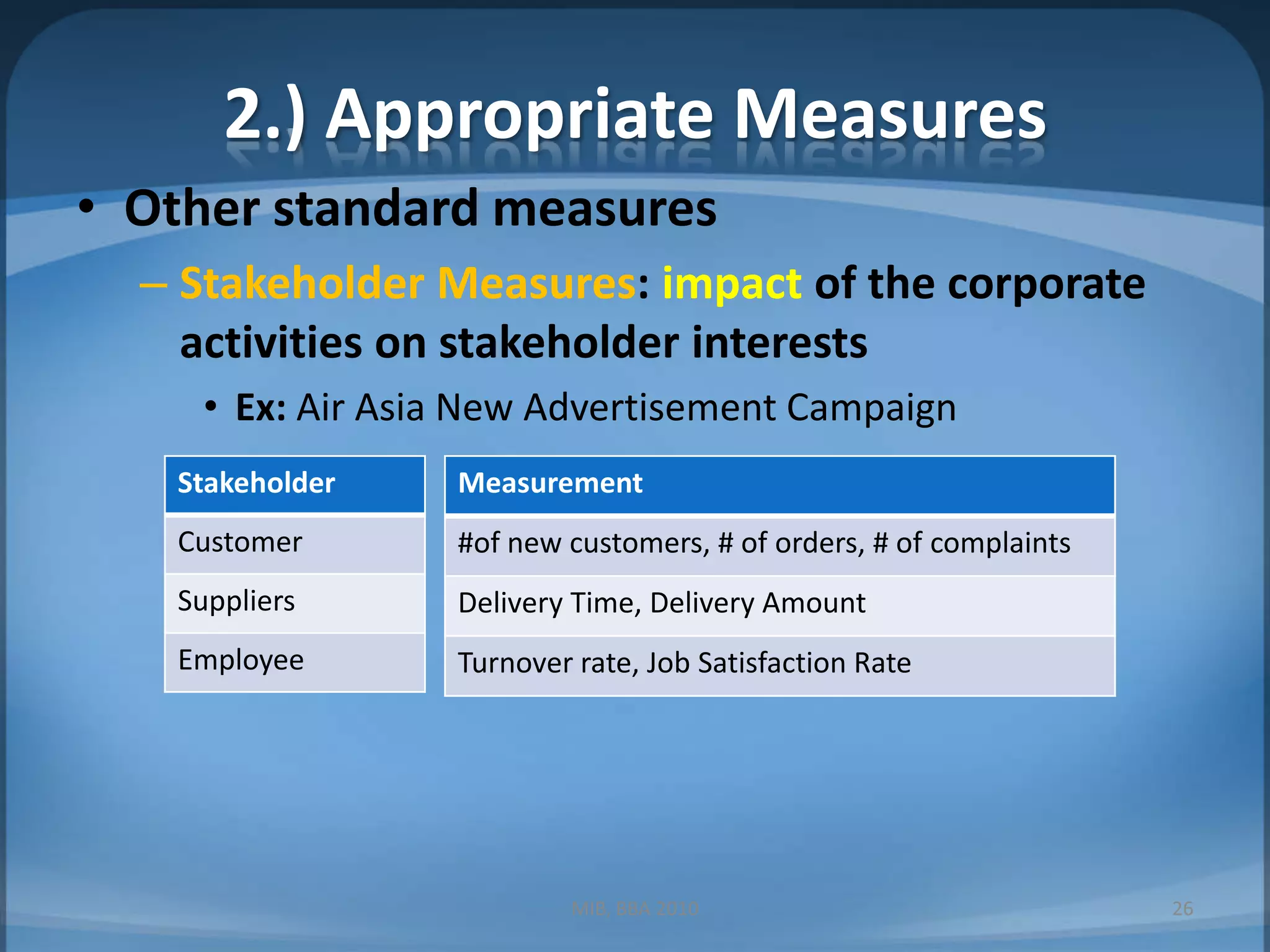
2.) Appropriate MeasuresOther standard measuresStakeholder Measures: impact of the corporate activities on stakeholder interestsEx: Air Asia New Advertisement Campaign MIB, BBA 201026

WK12 Implementation and Control

  • 1.
    WK12.1 AgendaProject presentationOlympicEvaluationExam Part II next Friday August 27, 20101MIB, BBA 2010
  • 2.
    WK12.2 AgendaEvaluation &SuggestionExam Part II next Friday August 27, 2010LectureMind mapMIB, BBA 20102
  • 3.
    Strategy ImplementationFormulation vs.Implementation~ Idea vs. Work ResultSuccess story, Failure story?A strategic plan which is executed through programs, budgets, and procedures.Key Implementation QuestionsWho will implement the plan?What must be done to align with the company’s operations in the new direction?How is strategy to be implemented?MIB, BBA 20103
  • 4.
    1.) Who willimplement the plan?VP of functional areasDirectors of divisionsSBUsPlant managersProject managersUnit headsSupervisorsEmployeesCommunication is the key.Involve all levels in the formulation and implementation MIB, BBA 20104
  • 5.
    2.) What mustbe done?MIB, BBA 20105
  • 6.
    3.) How isstrategy to be implemented?Structure follows strategy: Always?New strategy is created.New administrative problems emerge.Economic performance declines.New appropriate structure is invented.Profit returns to previous level.Example: KU structure vs. UBU structureCorporate, business, functional strategy?Video ClipsMIB, BBA 20106
  • 7.
  • 8.
    Changing Structural Characteristicsof Modern OrganizationsOld Organization DesignOne large corporationVertical communicationCentralized, top down decision makingWork/quality teamsFunctional work teamsMinimal trainingSpecialized job design focused on individualsMIB, BBA 20108New Organization DesignMini business units and cooperative relationshipsHorizontal communicationDecentralized participative decision makingOutsourcing and virtual organizationsAutonomous work teamsCross functional work teamsExtensive trainingValue chain, team focused job design
  • 9.
    Six Sigma: Quality& EfficiencyA business philosophy that uses data and statistical tools to systematically improve quality and process to achieve the highest level of customer satisfaction.Motorola: reduce the defects to 3 parts/millionDMAIC5S: workplace organization methodology(sorting, setting in order, sweeping, standardizing, sustaining)Kaizen:eliminate waste in all systems of an organization through improving standardized activities and processesMIB, BBA 20109
  • 10.
    Designing Jobs: Satisfaction& MotivationJob enlargement: more workJob rotation: more varietyJob enrichment: more autonomy and controlUse job characteristics model in job redesigning to improve job performance through job enrichmentMIB, BBA 201010
  • 11.
    International Issues inStrategy ImplementationMNCsInternational Strategic Alliances(add value, contribute key strength but protect core competencies)Stages of International DevelopmentDomestic companyDomestic company with export divisionDomestic company with international divisionMNC with multidomestic emphasisMNC with global emphasisCentralization vs. DecentralizationProduct-group structure: Global product, similar product around the worldGeographic-area structure: Customized product for each regionMIB, BBA 201011Pressures for cost reductionsPressure for local responsiveness
  • 12.
    Strategy Implementation: Staffingand LeadingStaffing: focuses on the selection and use of employees (hiring, firing, and training).Leading: emphasizes the use of programs to better align employee interests and attitudes with a strategy.MIB, BBA 201012
  • 13.
    Staffing follows strategy,Hiring & TrainingMIB, BBA 201013
  • 14.
  • 15.
  • 16.
  • 17.
  • 18.
  • 19.
  • 20.
  • 21.
    Job rotation: mixexperiencesMIB, BBA 201015
  • 22.
    Strategy & ManagingCorporate CultureAssessing Strategy &Culture CompatibilityCompatible with current culture?
  • 23.
  • 24.
  • 25.
    Commitment to strategyimplementationMIB, BBA 201016
  • 26.
    Managing Culture Afteran AcquisitionCommunicate the rationale for strategic changes.Integration: give and take, Renault&NissanAssimilation: adopts the dominant acquiring cultureSeparation: no cultural exchangeDeculturation: destructive method, confusion and stressMIB, BBA 201017
  • 27.
    Example of anAction PlanSpecific actions to be takenDates to begin and end each actionPerson responsible for carrying out each actionPerson responsible for monitoringExpected financial and physical consequences of each actionContingency planMIB, BBA 201018
  • 28.
    Other Leading TopicsManagementBy ObjectivesTotal Quality Management (TQM):preventionHofstede DimensionPut the right man at the right job at the right timeMIB, BBA 201019
  • 29.
    WK12.3 AgendaLecture onevaluation & controlMind mapMission Possible ExerciseMonday bring your note book for case study.Exam part II next Friday August 27, 2010.MIB, BBA 201020
  • 30.
    Evaluation & ControlPerformancedata and activity reports How should we start? What’s the evaluation process?MIB, BBA 201021
  • 31.
    1.)What to measure?Performanceis the end result of activity.Appropriate measures depends on the objective of the strategy.Air Asia, CPFUBU, RU, CUMeasures: financial, customers, process, innovation and learning,human resource, IT, communityMeasure controls at all three levels(Corporate, Business, Functional)MIB, BBA 201022
  • 32.
  • 33.
    2.)Appropriate MeasuresLeading indicator,Input Controls: lead to the desire result, can predict the result and can fix the resultControl chartLagging indicator, Output Controls: post mortem study, can not fix or change anything Profit and loss, Market share, ROI, ROEBehavioral Controls: when performance results are hard to measure but the cause and effect between the activities and results is clear.(ISO 14000)MIB, BBA 201024
  • 34.
    2.) Appropriate MeasuresTraditionalFinancial MeasuresROI: Net Income Before Tax/Total AssetComprehensive number to include all revenue, costs, and expensesCan be compared across companiesSensitive to depreciation, focus on short term, reflect business life cycle more than the management effectivenessEPS, ROE, Operating cash flow, Free cash flow
  • 35.
    Not adequate measuresfor corporate performance
  • 36.
  • 37.
    2.) Appropriate MeasuresOtherstandard measuresStakeholder Measures: impact of the corporate activities on stakeholder interestsEx: Air Asia New Advertisement Campaign MIB, BBA 201026
  • 38.
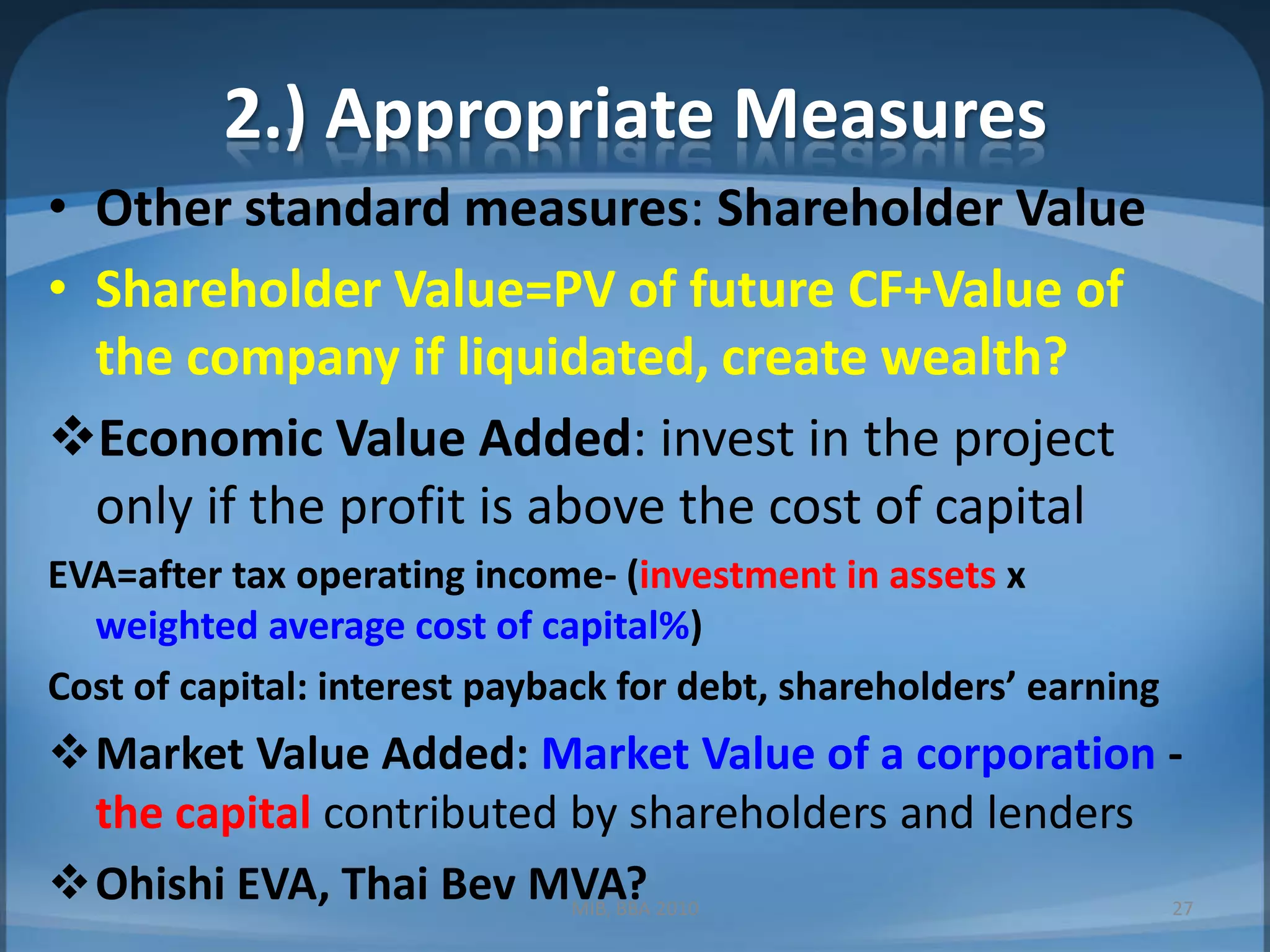
    2.) Appropriate MeasuresOtherstandard measures: Shareholder ValueShareholder Value=PV of future CF+Value of the company if liquidated, create wealth? Economic Value Added: invest in the project only if the profit is above the cost of capitalEVA=after tax operating income- (investment in assets x weighted average cost of capital%)Cost of capital: interest payback for debt, shareholders’ earningMarket Value Added: Market Value of a corporation - the capital contributed by shareholders and lenders
  • 39.
    Ohishi EVA, ThaiBev MVA?MIB, BBA 201027
  • 40.
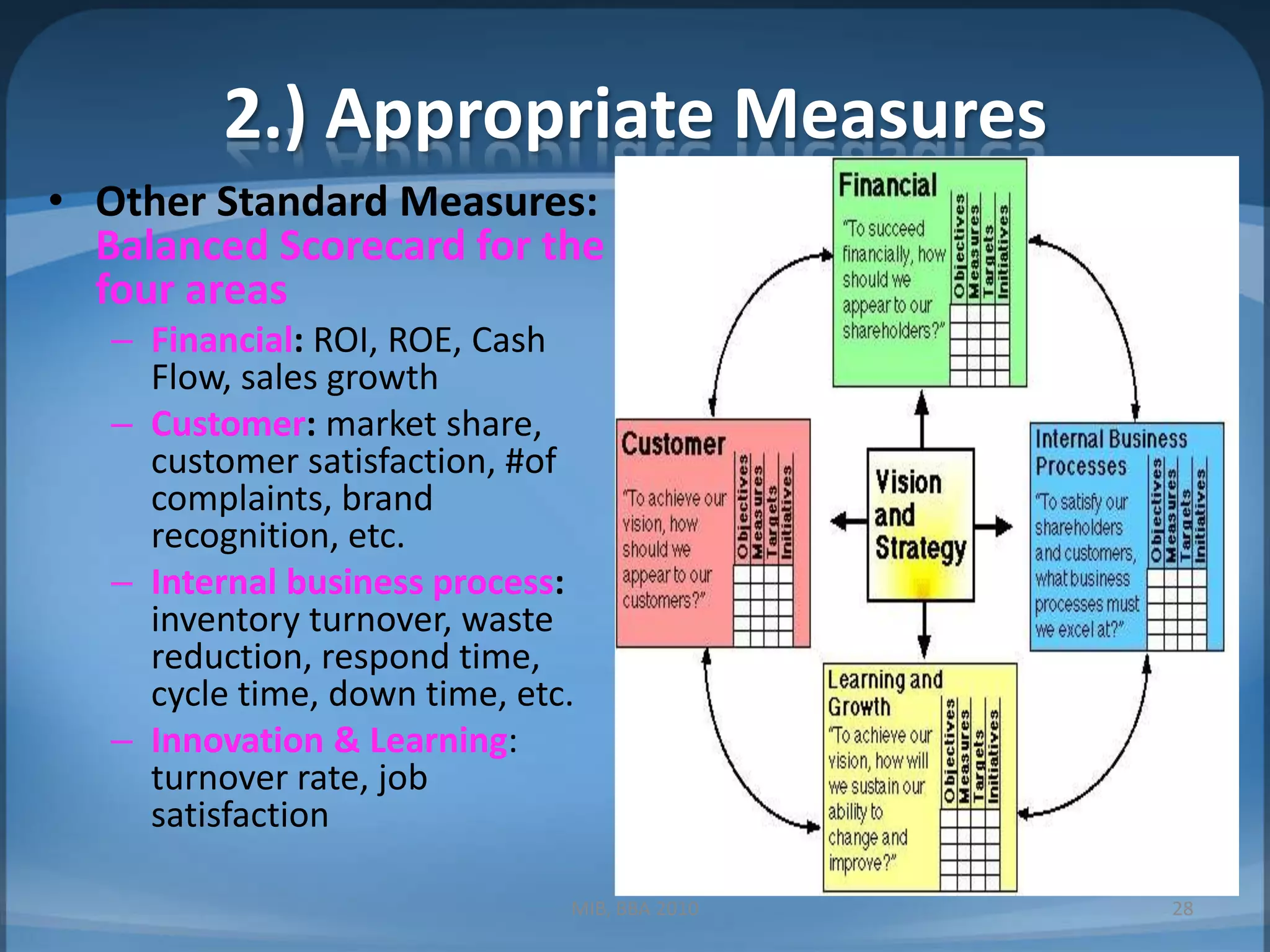
    2.) Appropriate MeasuresOtherStandard Measures: Balanced Scorecard for the four areas Financial: ROI, ROE, Cash Flow, sales growthCustomer: market share, customer satisfaction, #of complaints, brand recognition, etc.Internal business process: inventory turnover, waste reduction, respond time, cycle time, down time, etc.Innovation & Learning: turnover rate, job satisfactionMIB, BBA 201028
  • 41.
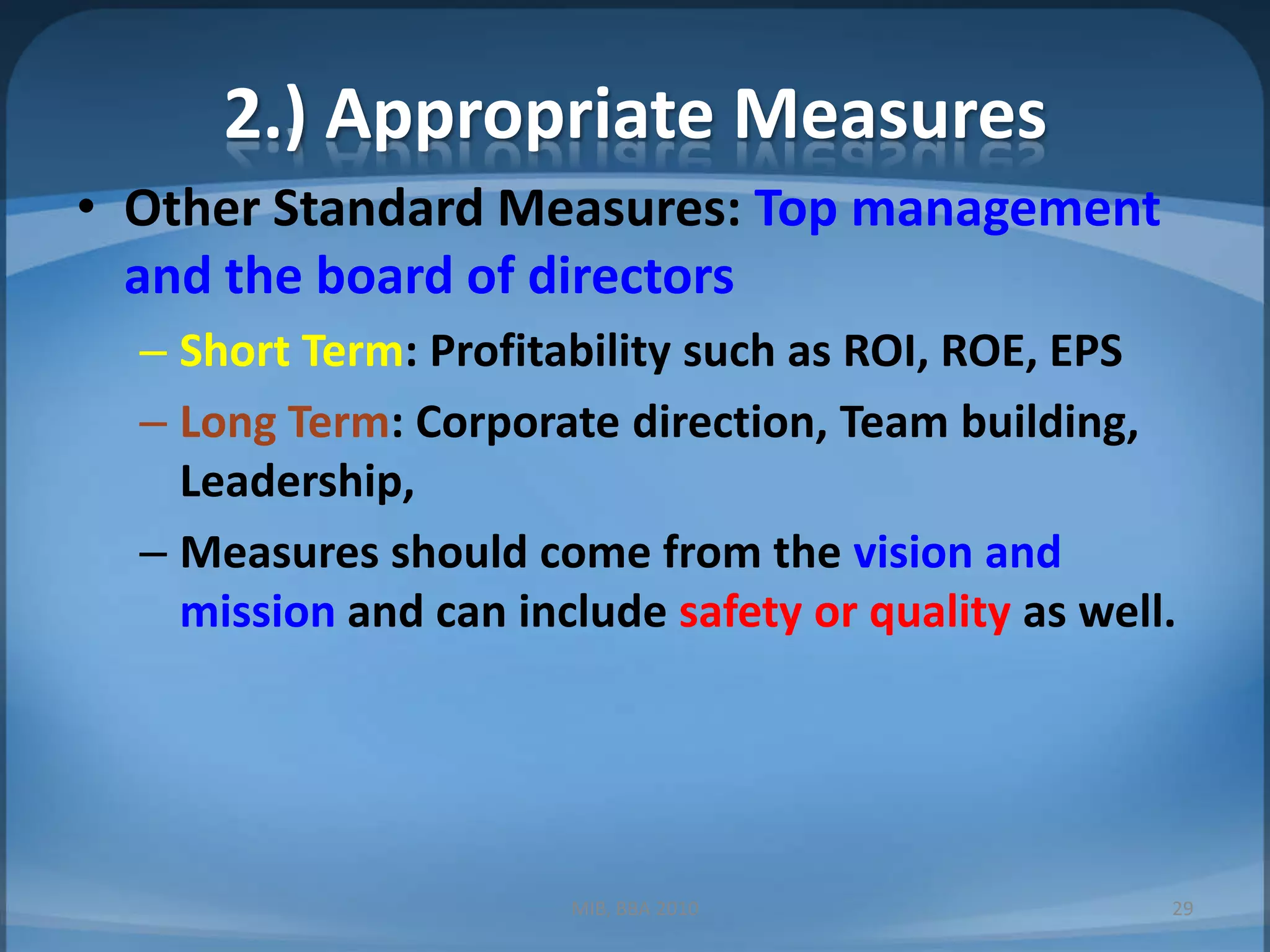
    2.) Appropriate MeasuresOtherStandard Measures: Top management and the board of directorsShort Term: Profitability such as ROI, ROE, EPSLong Term: Corporate direction, Team building, Leadership, Measures should come from the vision and mission and can include safety or quality as well.MIB, BBA 201029
  • 42.
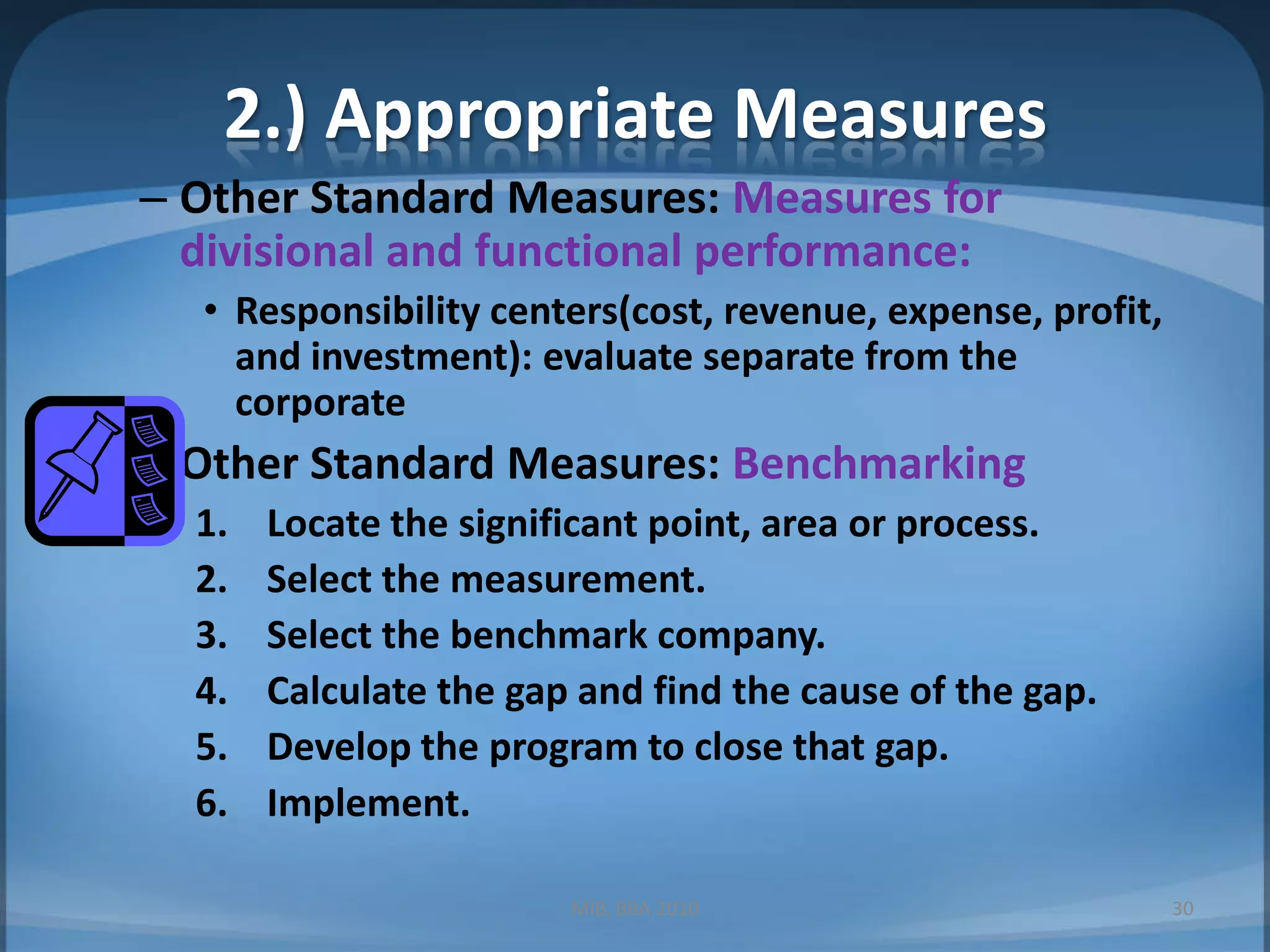
    2.) Appropriate MeasuresOtherStandard Measures: Measures for divisional and functional performance:Responsibility centers(cost, revenue, expense, profit, and investment): evaluate separate from the corporateOther Standard Measures: BenchmarkingLocate the significant point, area or process.Select the measurement.Select the benchmark company.Calculate the gap and find the cause of the gap.Develop the program to close that gap.Implement.MIB, BBA 201030
  • 43.
  • 44.
  • 45.
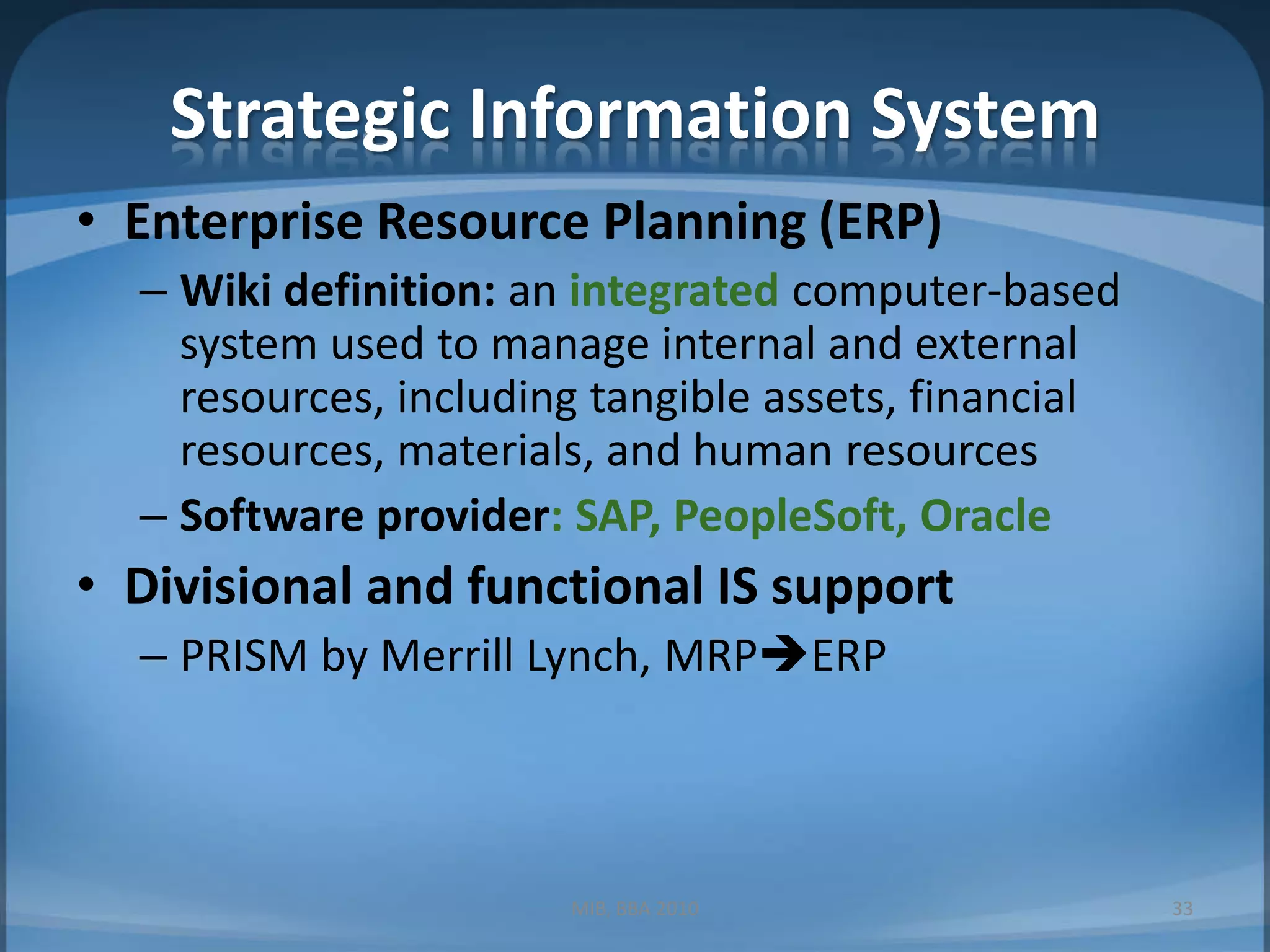
    Strategic Information SystemEnterpriseResource Planning (ERP)Wiki definition: an integrated computer-based system used to manage internal and external resources, including tangible assets, financial resources, materials, and human resourcesSoftware provider: SAP, PeopleSoft, OracleDivisional and functional IS supportPRISM by Merrill Lynch, MRPERPMIB, BBA 201033
  • 46.
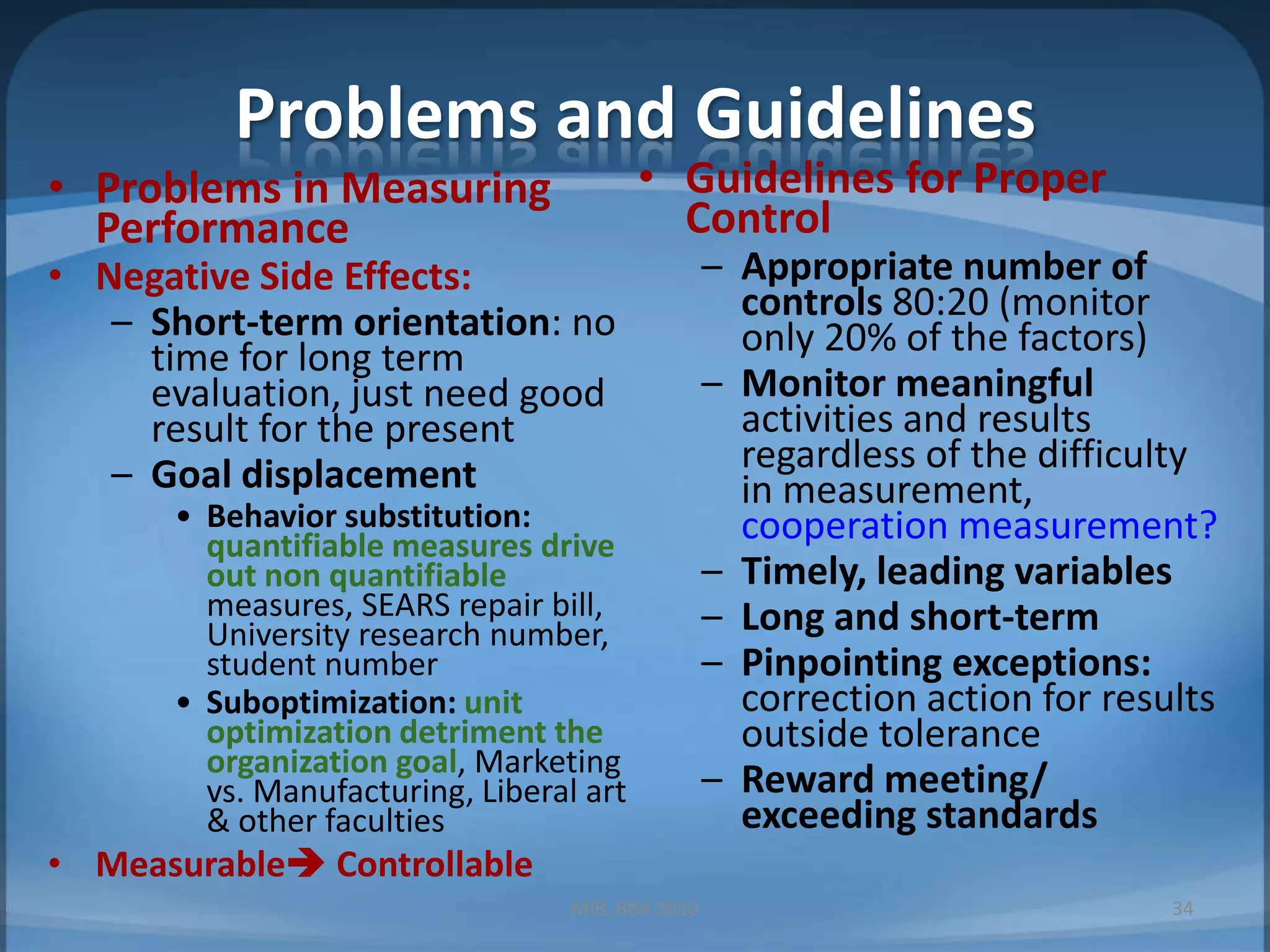
    Problems and GuidelinesGuidelinesfor Proper Control Appropriate number of controls 80:20 (monitor only 20% of the factors)
  • 47.
    Monitor meaningful activitiesand results regardless of the difficulty in measurement, cooperation measurement?
  • 48.
  • 49.
  • 50.
    Pinpointing exceptions: correctionaction for results outside tolerance
  • 51.
    Reward meeting/ exceedingstandardsProblems in Measuring Performance Negative Side Effects:Short-term orientation: no time for long term evaluation, just need good result for the present
  • 52.
  • 53.
    Behavior substitution: quantifiablemeasures drive out non quantifiable measures, SEARS repair bill, University research number, student number
  • 54.
    Suboptimization:unit optimization detrimentthe organization goal, Marketing vs. Manufacturing, Liberal art & other facultiesMeasurable ControllableMIB, BBA 201034
  • 55.
  • 56.
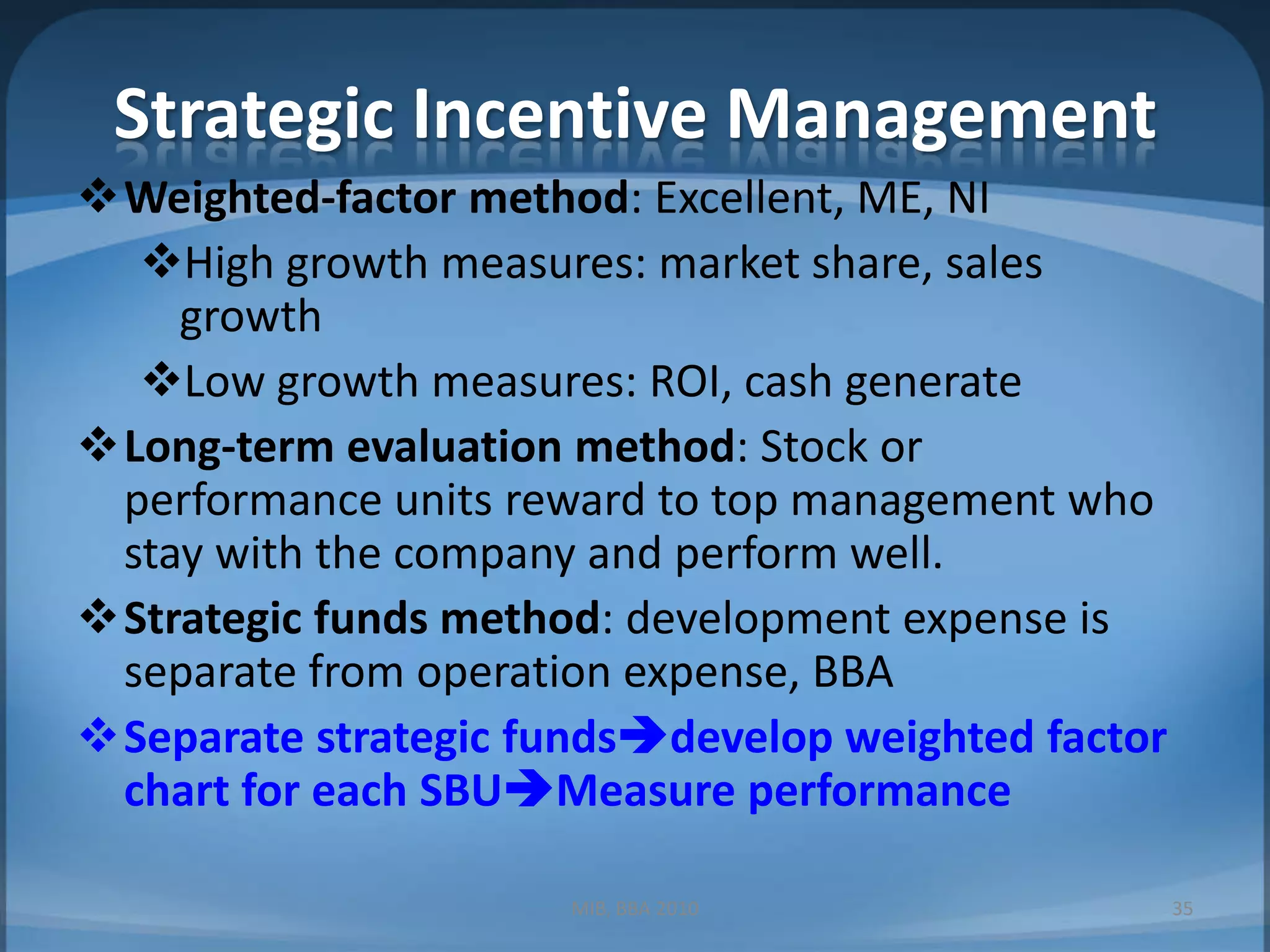
    High growth measures:market share, sales growth
  • 57.
    Low growth measures:ROI, cash generate
  • 58.
    Long-term evaluation method:Stock or performance units reward to top management who stay with the company and perform well.
  • 59.
    Strategic funds method:development expense is separate from operation expense, BBA
  • 60.
    Separate strategic fundsdevelopweighted factor chart for each SBUMeasure performanceMIB, BBA 201035
  • 61.
  • 62.
    Mission Possible ExerciseState your mission.Write your strategy, implementation, and your control measurement.Summarize to your friend and present to the class.MIB, BBA 201037

Editor's Notes