University of Agricultural sciences, Raichur
College of Agriculture,
Bheemarayangudi.
Submitted to: Dr. J B Kamble
Dept. of Agri Engineering
COA, Bheemarayangudi Submitted by: Sourabh Prabha
ID.no: UG16AGR2603
IV Year, B.Sc Agri (Hons)
WINE PRODUCTION.
TOPIC
Introduction.
• Wine is an alcoholic beverage made from
fermented fruit juice.
• Grape wine is produced by fermenting
crushed grapes using various types of yeast.
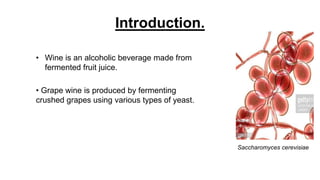
Saccharomyces cerevisiae
Types of wines.
Red wine White wine
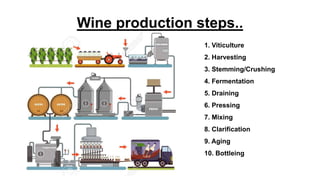
Wine production steps..
1. Viticulture
2. Harvesting
3. Stemming/Crushing
4. Fermentation
5. Draining
6. Pressing
7. Mixing
8. Clarification
9. Aging
10. Bottleing
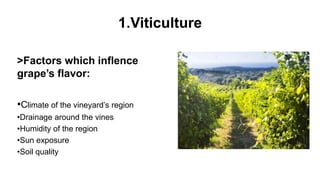
1.Viticulture
>Factors which inflence
grape’s flavor:
•Climate of the vineyard’s region
•Drainage around the vines
•Humidity of the region
•Sun exposure
•Soil quality
2. Harvesting
•Grapes are picked up by hand or
mechanically
•Descision of harvest informed by
level of sugar and acid
•Weather forecasts
3. Stemming/Crushing
• Stemming: The separation of the
stems and grapes (which are sends
to the press)
• Crushing: A horizontal press
squeezes the broken grapes,
separating the fresh juice (must)
from the skins (marc) After crushing
starts the fermentation process.
4. Fermentation
•Sugar and acids that naturally react with wild
yeasts
•Vineyard adding their own yeasts
•Fermentation can take from 10 to 30 days to
convert natural sugar to alcohol
5. Draining
• Liquid wine is drained from the vat
without being pressed and go
intobarrels (free-run wine). The
remaining pulp retains about 20%
of the wine.
6. Pressing
• The remaing pulp, after draining, is
pressed to squeeze out the press
wine
7. Mixing
• The free-run wine and press wine,
always from the same source, are
mixedtogether in appropriate ratios
to obtain the desired balance.
8. Clarification
• Stabilisation of fermentation.
• Remaining solids are removed.
• Clarification done in numerous
ways:
1. Fining
2. Filtration
3. Siphoning the liquid off the top of
the fermenting vats after the solids
have settled to the bottom
4. Floatation
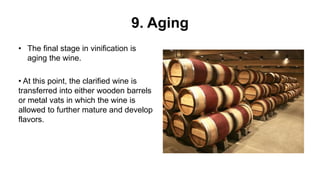
9. Aging
• The final stage in vinification is
aging the wine.
• At this point, the clarified wine is
transferred into either wooden barrels
or metal vats in which the wine is
allowed to further mature and develop
flavors.
10. Bottleing
• A dose of sulfite is added to
helppreserve the wine and
preventunwanted fermentation in
the bottle.
• The wine bottles then are
traditionally sealed with a cork.
WINE PRODUCTION STEPS.

WINE PRODUCTION STEPS.

  • 1.
    University of Agriculturalsciences, Raichur College of Agriculture, Bheemarayangudi. Submitted to: Dr. J B Kamble Dept. of Agri Engineering COA, Bheemarayangudi Submitted by: Sourabh Prabha ID.no: UG16AGR2603 IV Year, B.Sc Agri (Hons)
  • 3.
  • 4.
    Introduction. • Wine isan alcoholic beverage made from fermented fruit juice. • Grape wine is produced by fermenting crushed grapes using various types of yeast. Saccharomyces cerevisiae
  • 5.
    Types of wines. Redwine White wine
  • 6.
    Wine production steps.. 1.Viticulture 2. Harvesting 3. Stemming/Crushing 4. Fermentation 5. Draining 6. Pressing 7. Mixing 8. Clarification 9. Aging 10. Bottleing
  • 7.
    1.Viticulture >Factors which inflence grape’sflavor: •Climate of the vineyard’s region •Drainage around the vines •Humidity of the region •Sun exposure •Soil quality
  • 8.
    2. Harvesting •Grapes arepicked up by hand or mechanically •Descision of harvest informed by level of sugar and acid •Weather forecasts
  • 9.
    3. Stemming/Crushing • Stemming:The separation of the stems and grapes (which are sends to the press) • Crushing: A horizontal press squeezes the broken grapes, separating the fresh juice (must) from the skins (marc) After crushing starts the fermentation process.
  • 10.
    4. Fermentation •Sugar andacids that naturally react with wild yeasts •Vineyard adding their own yeasts •Fermentation can take from 10 to 30 days to convert natural sugar to alcohol
  • 11.
    5. Draining • Liquidwine is drained from the vat without being pressed and go intobarrels (free-run wine). The remaining pulp retains about 20% of the wine.
  • 12.
    6. Pressing • Theremaing pulp, after draining, is pressed to squeeze out the press wine
  • 13.
    7. Mixing • Thefree-run wine and press wine, always from the same source, are mixedtogether in appropriate ratios to obtain the desired balance.
  • 14.
    8. Clarification • Stabilisationof fermentation. • Remaining solids are removed. • Clarification done in numerous ways: 1. Fining 2. Filtration 3. Siphoning the liquid off the top of the fermenting vats after the solids have settled to the bottom 4. Floatation
  • 15.
    9. Aging • Thefinal stage in vinification is aging the wine. • At this point, the clarified wine is transferred into either wooden barrels or metal vats in which the wine is allowed to further mature and develop flavors.
  • 16.
    10. Bottleing • Adose of sulfite is added to helppreserve the wine and preventunwanted fermentation in the bottle. • The wine bottles then are traditionally sealed with a cork.