Wind!


         Tom Melburn
        Morgan Van Ness
Wind Energy Basics
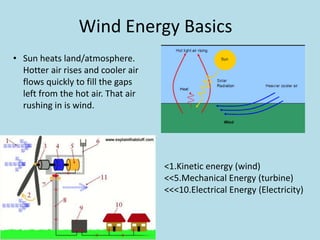
• Sun heats land/atmosphere.
  Hotter air rises and cooler air
  flows quickly to fill the gaps
  left from the hot air. That air
  rushing in is wind.


                                    <1.Kinetic energy (wind)
                                    <<5.Mechanical Energy (turbine)
                                    <<<10.Electrical Energy (Electricity)
History


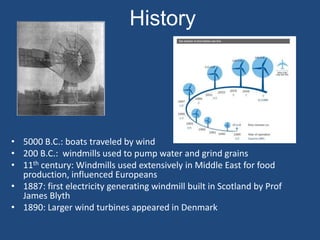
• 5000 B.C.: boats traveled by wind
• 200 B.C.: windmills used to pump water and grind grains
• 11th century: Windmills used extensively in Middle East for food
  production, influenced Europeans
• 1887: first electricity generating windmill built in Scotland by Prof
  James Blyth
• 1890: Larger wind turbines appeared in Denmark
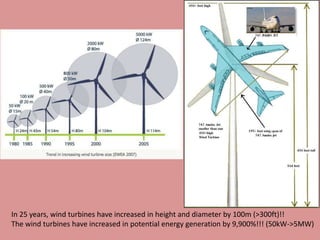
In 25 years, wind turbines have increased in height and diameter by 100m (>300ft)!!
The wind turbines have increased in potential energy generation by 9,900%!!! (50kW->5MW)
Wind Resources in the US
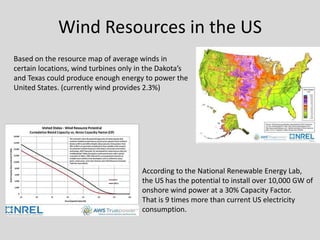
Based on the resource map of average winds in
certain locations, wind turbines only in the Dakota’s
and Texas could produce enough energy to power the
United States. (currently wind provides 2.3%)


                                       According to the National Renewable Energy Lab,
                                       the US has the potential to install over 10,000 GW of
                                       onshore wind power at a 30% Capacity Factor.
                                       That is 9 times more than current US electricity
                                       consumption.
Capacity Factor of Wind Farms
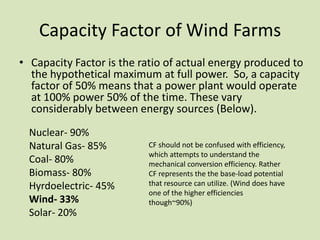
• Capacity Factor is the ratio of actual energy produced to
  the hypothetical maximum at full power. So, a capacity
  factor of 50% means that a power plant would operate
  at 100% power 50% of the time. These vary
  considerably between energy sources (Below).
  Nuclear- 90%
  Natural Gas- 85%        CF should not be confused with efficiency,
                          which attempts to understand the
  Coal- 80%               mechanical conversion efficiency. Rather
  Biomass- 80%            CF represents the the base-load potential
  Hyrdoelectric- 45%      that resource can utilize. (Wind does have
                          one of the higher efficiencies
  Wind- 33%               though~90%)
  Solar- 20%
Distribution and Capacity


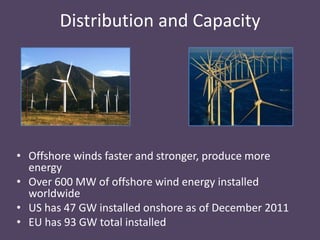
• Offshore winds faster and stronger, produce more
  energy
• Over 600 MW of offshore wind energy installed
  worldwide
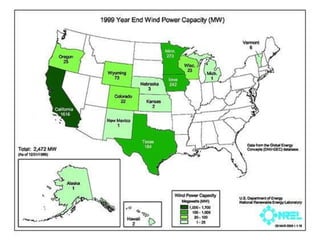
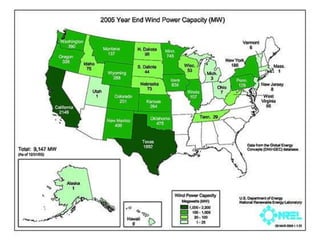
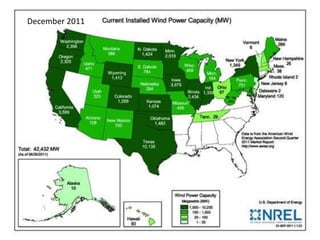
• US has 47 GW installed onshore as of December 2011
• EU has 93 GW total installed
December 2011
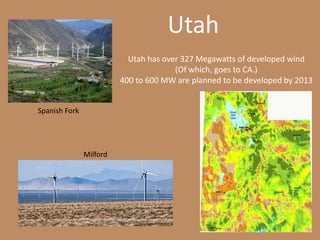
Utah
                           Utah has over 327 Megawatts of developed wind
                                       (Of which, goes to CA.)
                         400 to 600 MW are planned to be developed by 2013


Spanish Fork


               Milford
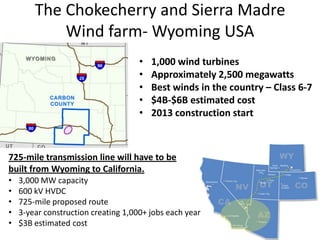
The Chokecherry and Sierra Madre
            Wind farm- Wyoming USA
                                     •   1,000 wind turbines
                                     •   Approximately 2,500 megawatts
                                     •   Best winds in the country – Class 6-7
                                     •   $4B-$6B estimated cost
                                     •   2013 construction start


725-mile transmission line will have to be
built from Wyoming to California.
•   3,000 MW capacity
•   600 kV HVDC
•   725-mile proposed route
•   3-year construction creating 1,000+ jobs each year
•   $3B estimated cost
Economical Considerations of Wind

• Wind resource development requires large amounts of upfront
  costs. For example, a 500MW wind farm costs between $600
  million and $1.5 billion.1 (Depending on grid connection costs)
• Generally, purchase power agreements are made that ensure
  stable, low cost energy over a period of time ranging from 20-
  25 years.
• Based on a research study, 2.6 jobs are created for each 1
  Megawatt of energy built.2
• Transmission lines must be incorporated into the costs for
  transportation of wind energy. Transmission lines are eligible
  for federal subsidizations because these improve grid
  efficiency.
• Rural development of wind energy can allow for communities
  to invest in their power source.
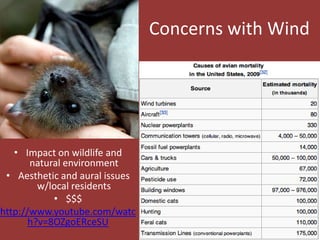
Concerns with Wind


   • Impact on wildlife and
       natural environment
 • Aesthetic and aural issues
         w/local residents
            • $$$
http://www.youtube.com/watc
       h?v=8OZgoERceSU
Final thoughts on Wind Energy
• Wind energy is intermittent. When the wind does not blow, wind
  turbines provide 0 energy.
• Energy storage is the only solution to the intermittency problem.
  Depending on new technological breakthroughs, energy storage
  could change the way we produce and consume energy.
• Depending on the regulatory atmosphere and whether or not
  pollution laws are implemented, the cost margin between wind and
  other conventional resources could be greatly reduced.
• Economically and Technologically, wind would be able to provide
  100% of energy in the entire world.
• The main barriers to large scale development of wind are social and
  political factors.
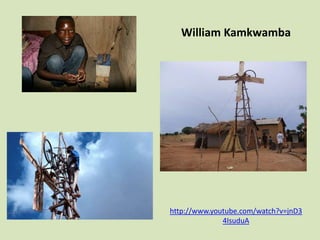
William Kamkwamba


http://www.youtube.com/watch?v=jnD3
              4IsuduA
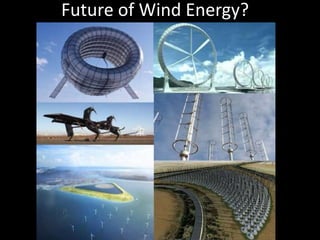
Future of Wind Energy?
Bibliograpghy
Energy Information Administration. http://www.eia.gov/oiaf/aeo/index.html.

"GWEC Global Wind Statistics 2011" (pdf). Global Wind Energy Commission. Retrieved 15 March 2012.

http://offshorewindfarms.org/

http://www.windustry.org/wind-basics/learn-about-wind-energy/wind-basics-wind-energy-today-and-
tomorrow/wind-energy-today-and

http://www.windpoweringamerica.gov/wind_installed_capacity.asp

http://www.ewea.org/index.php?id=180

http://utahcleanenergy.org/our_work/utah_wind_power_campaign/utah_wind_projects_development

Werner, Carol. “Jobs From Renewable Energy and Efficiency. Environmental and Energy Study Institute.”
8 Nov. 2007. www.eesi.org/files/EEREJobsFactSheet_11-8-07_0.pdf

Wind by Tom and Morgan

  • 1.
    Wind! Tom Melburn Morgan Van Ness
  • 2.
    Wind Energy Basics •Sun heats land/atmosphere. Hotter air rises and cooler air flows quickly to fill the gaps left from the hot air. That air rushing in is wind. <1.Kinetic energy (wind) <<5.Mechanical Energy (turbine) <<<10.Electrical Energy (Electricity)
  • 3.
    History • 5000 B.C.:boats traveled by wind • 200 B.C.: windmills used to pump water and grind grains • 11th century: Windmills used extensively in Middle East for food production, influenced Europeans • 1887: first electricity generating windmill built in Scotland by Prof James Blyth • 1890: Larger wind turbines appeared in Denmark
  • 4.
    In 25 years,wind turbines have increased in height and diameter by 100m (>300ft)!! The wind turbines have increased in potential energy generation by 9,900%!!! (50kW->5MW)
  • 5.
    Wind Resources inthe US Based on the resource map of average winds in certain locations, wind turbines only in the Dakota’s and Texas could produce enough energy to power the United States. (currently wind provides 2.3%) According to the National Renewable Energy Lab, the US has the potential to install over 10,000 GW of onshore wind power at a 30% Capacity Factor. That is 9 times more than current US electricity consumption.
  • 6.
    Capacity Factor ofWind Farms • Capacity Factor is the ratio of actual energy produced to the hypothetical maximum at full power. So, a capacity factor of 50% means that a power plant would operate at 100% power 50% of the time. These vary considerably between energy sources (Below). Nuclear- 90% Natural Gas- 85% CF should not be confused with efficiency, which attempts to understand the Coal- 80% mechanical conversion efficiency. Rather Biomass- 80% CF represents the the base-load potential Hyrdoelectric- 45% that resource can utilize. (Wind does have one of the higher efficiencies Wind- 33% though~90%) Solar- 20%
  • 7.
    Distribution and Capacity •Offshore winds faster and stronger, produce more energy • Over 600 MW of offshore wind energy installed worldwide • US has 47 GW installed onshore as of December 2011 • EU has 93 GW total installed
  • 10.
  • 11.
    Utah Utah has over 327 Megawatts of developed wind (Of which, goes to CA.) 400 to 600 MW are planned to be developed by 2013 Spanish Fork Milford
  • 12.
    The Chokecherry andSierra Madre Wind farm- Wyoming USA • 1,000 wind turbines • Approximately 2,500 megawatts • Best winds in the country – Class 6-7 • $4B-$6B estimated cost • 2013 construction start 725-mile transmission line will have to be built from Wyoming to California. • 3,000 MW capacity • 600 kV HVDC • 725-mile proposed route • 3-year construction creating 1,000+ jobs each year • $3B estimated cost
  • 13.
    Economical Considerations ofWind • Wind resource development requires large amounts of upfront costs. For example, a 500MW wind farm costs between $600 million and $1.5 billion.1 (Depending on grid connection costs) • Generally, purchase power agreements are made that ensure stable, low cost energy over a period of time ranging from 20- 25 years. • Based on a research study, 2.6 jobs are created for each 1 Megawatt of energy built.2 • Transmission lines must be incorporated into the costs for transportation of wind energy. Transmission lines are eligible for federal subsidizations because these improve grid efficiency. • Rural development of wind energy can allow for communities to invest in their power source.
  • 14.
    Concerns with Wind • Impact on wildlife and natural environment • Aesthetic and aural issues w/local residents • $$$ http://www.youtube.com/watc h?v=8OZgoERceSU
  • 15.
    Final thoughts onWind Energy • Wind energy is intermittent. When the wind does not blow, wind turbines provide 0 energy. • Energy storage is the only solution to the intermittency problem. Depending on new technological breakthroughs, energy storage could change the way we produce and consume energy. • Depending on the regulatory atmosphere and whether or not pollution laws are implemented, the cost margin between wind and other conventional resources could be greatly reduced. • Economically and Technologically, wind would be able to provide 100% of energy in the entire world. • The main barriers to large scale development of wind are social and political factors.
  • 16.
  • 17.
  • 18.
    Bibliograpghy Energy Information Administration.http://www.eia.gov/oiaf/aeo/index.html. "GWEC Global Wind Statistics 2011" (pdf). Global Wind Energy Commission. Retrieved 15 March 2012. http://offshorewindfarms.org/ http://www.windustry.org/wind-basics/learn-about-wind-energy/wind-basics-wind-energy-today-and- tomorrow/wind-energy-today-and http://www.windpoweringamerica.gov/wind_installed_capacity.asp http://www.ewea.org/index.php?id=180 http://utahcleanenergy.org/our_work/utah_wind_power_campaign/utah_wind_projects_development Werner, Carol. “Jobs From Renewable Energy and Efficiency. Environmental and Energy Study Institute.” 8 Nov. 2007. www.eesi.org/files/EEREJobsFactSheet_11-8-07_0.pdf

Editor's Notes

  • #14 1. Based on cost of previous wind farms developed.2. Jobs from Renewable Energy and Efficiency. (see bibliography)