WHY WE CARE 
ABOUT MEETINGS
Meetings are supposed 
to spur collaboration 
and create clarity.
But more often they create 
tension in a team because 
unclear or broken 
commitments damage tasks, 
relationships, and culture.
We do believe meetings 
can still work. Here are 4 principles 
we live by for meetings.
HOW WE RUN MEETINGS 
1. Meet as a last option. 
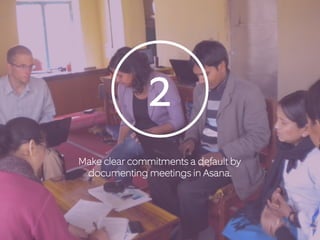
2. Make clear commitments a default by 
documenting meetings in Asana. 
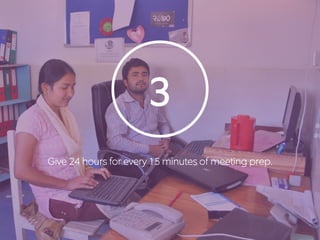
3. Give 24 hours for every 15 minutes of 
meeting prep. 
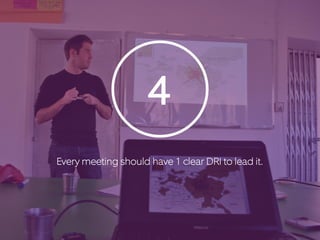
4. Every meeting should have 1 clear “DRI” 
to lead it.
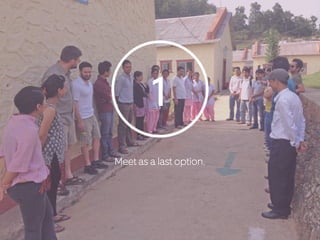
1 
Meet as a last option.
Meetings, if not used properly, 
come at a tremendous time 
cost to the organization.
If you have a useless 1 hour 
meeting with 10 people, 
you haven’t wasted 1 hour— 
you’ve wasted 10 
organizational hours.
If you think something can 
be accomplished outside 
of a meeting, it’s your 
responsibility to make that 
suggestion. 
And it’s everyone’s 
responsibility to 
treat each meeting 
as a race to clarity.
2 
Make clear commitments a default by 
documenting meetings in Asana.
Great meetings leave 
everyone with a clear 
idea of “who will do 
what by when.” 
Asana is the 
perfect match for 
that structure.
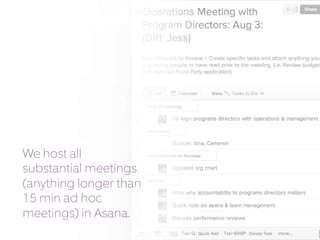
We host all 
substantial meetings 
(anything longer than 
15 min ad hoc 
meetings) in Asana.
3 
Give 24 hours for every 15 minutes of meeting prep.
It’s hard to create a standard 
rule here, but this is close: 
for every 15 minutes you 
expect someone needs to 
review materials you’ve 
prepared for a meeting, 
grant them 1 day to review.
4 
Every meeting should have 1 clear DRI to lead it.
This is an extension of the 
“Directly Responsible 
Individual” (DRI) concept 
we’ve borrowed from Apple.
A meeting is effective if it has a 
person responsible for 
building the agenda, sending 
out materials, keeping the 
meeting on time, and ending 
the meeting with clear, 
documented commitments.
In summary: 
Less meetings. More doing.
JOIN US 
DON’T MISS A SINGLE 
MILESTONE. 
Receive patient stories, crucial 
impact data, and more. 
SIGN ME UP
CONTACT US 
OUR OFFICES 
USA 
17 W. 17th Street, 7th Floor 
New York, NY 10011 
NEPAL 
Badelgada, Ridikot-2 
Achham, Nepal 
GENERAL INQUIRIES 
answers@possiblehealth.org 
DONATIONS 
donations@possiblehealth.org 
PRESS 
media@possiblehealth.org 
DONATE 
VIEW JOBS

Why Meetings Matter

  • 1.
    WHY WE CARE ABOUT MEETINGS
  • 2.
    Meetings are supposed to spur collaboration and create clarity.
  • 3.
    But more oftenthey create tension in a team because unclear or broken commitments damage tasks, relationships, and culture.
  • 4.
    We do believemeetings can still work. Here are 4 principles we live by for meetings.
  • 5.
    HOW WE RUNMEETINGS 1. Meet as a last option. 2. Make clear commitments a default by documenting meetings in Asana. 3. Give 24 hours for every 15 minutes of meeting prep. 4. Every meeting should have 1 clear “DRI” to lead it.
  • 6.
    1 Meet asa last option.
  • 7.
    Meetings, if notused properly, come at a tremendous time cost to the organization.
  • 8.
    If you havea useless 1 hour meeting with 10 people, you haven’t wasted 1 hour— you’ve wasted 10 organizational hours.
  • 9.
    If you thinksomething can be accomplished outside of a meeting, it’s your responsibility to make that suggestion. And it’s everyone’s responsibility to treat each meeting as a race to clarity.
  • 10.
    2 Make clearcommitments a default by documenting meetings in Asana.
  • 11.
    Great meetings leave everyone with a clear idea of “who will do what by when.” Asana is the perfect match for that structure.
  • 12.
    We host all substantial meetings (anything longer than 15 min ad hoc meetings) in Asana.
  • 13.
    3 Give 24hours for every 15 minutes of meeting prep.
  • 14.
    It’s hard tocreate a standard rule here, but this is close: for every 15 minutes you expect someone needs to review materials you’ve prepared for a meeting, grant them 1 day to review.
  • 15.
    4 Every meetingshould have 1 clear DRI to lead it.
  • 16.
    This is anextension of the “Directly Responsible Individual” (DRI) concept we’ve borrowed from Apple.
  • 17.
    A meeting iseffective if it has a person responsible for building the agenda, sending out materials, keeping the meeting on time, and ending the meeting with clear, documented commitments.
  • 18.
    In summary: Lessmeetings. More doing.
  • 19.
    JOIN US DON’TMISS A SINGLE MILESTONE. Receive patient stories, crucial impact data, and more. SIGN ME UP
  • 20.
    CONTACT US OUROFFICES USA 17 W. 17th Street, 7th Floor New York, NY 10011 NEPAL Badelgada, Ridikot-2 Achham, Nepal GENERAL INQUIRIES answers@possiblehealth.org DONATIONS donations@possiblehealth.org PRESS media@possiblehealth.org DONATE VIEW JOBS