Why IT Fails in Healthcare? A look at Software Maintenanceand Maintainability AspectsKoray Atalag, MD, PhD23 Mar 2010
AgendaA look at Health ITEssential difficulties and implicationsHealth Informatics – directionsMaintenance burden in HISopenEHR ParadigmMy research frameworkDevelopment workMeasurement & EvaluationResultsDiscussion & Conclusion
Healthcare – Burning IssuesCost increasing rapidly16% GDP in US, ~8-9 in EU & NZ (Ref: OECD)Quality ? (far from measuring effectively)Safety (you don’t wanna know):appx 90,000 people die each year in US due to preventable medical errors! (Ref: Institute of Medicine)Equity / Accessibilitybig differences related with geography, political, socio-economic status
Health IT – What is it all about?Health Information Systems (HIS): ProviderGP systems, Hospital Information Systems, LIS, RIS, CIS, etc. etc.Regional/National PHO, DHB, NHI, ACC etc.Consumer orientedPHR: Microsoft HealthVault, Google Health, other. Patient portals: Mayoclinic.com, The LowDown.co.nz Research related Genome DB, Medline, Health Computational Systems: CT, MRI, ECG etc.Health Communication Systems: HealthLink, NPI, DICOM
Essential DifficultiesBreadth and Depth of Medical DomainA medical student learns about 6000 new concepts (and sleeps much less than others!)>600,000 concepts, 1.2m relationships in SNOMEDComplexity of concepts and processesGene>Structure>Function? + Environment+LuckVariability in Medical PracticeMedical conduct changes acc. to time/person and across different organisations and jurisdictions
Health InformaticsMedical Informatics	Nursing informaticsBioinformaticsBiomedical InformaticsHEALTH INFORMATICS:“ Health Informatics is the science and practice around information in health that leads to informed and assisted healthcare.”HISO – Australia$mostly public funding & secondary care (hospitals)$20b stimulus package for health IT in US£70b NHS CfH and Canada Health Infoway Project
Tackling These Difficulties?Standardised terminologyMachine processable biomedical ontologyClinical guidelines & Decision SupportFunctional and Technical Standards: HL7, CEN/ISO, IEEE, ASTM, OMG – mostly openOpen Source tools and librariesEHR ArchitecturesTools and methodologies to effectively use IT in healthcare: mHealth, VR, telehealth, robotics
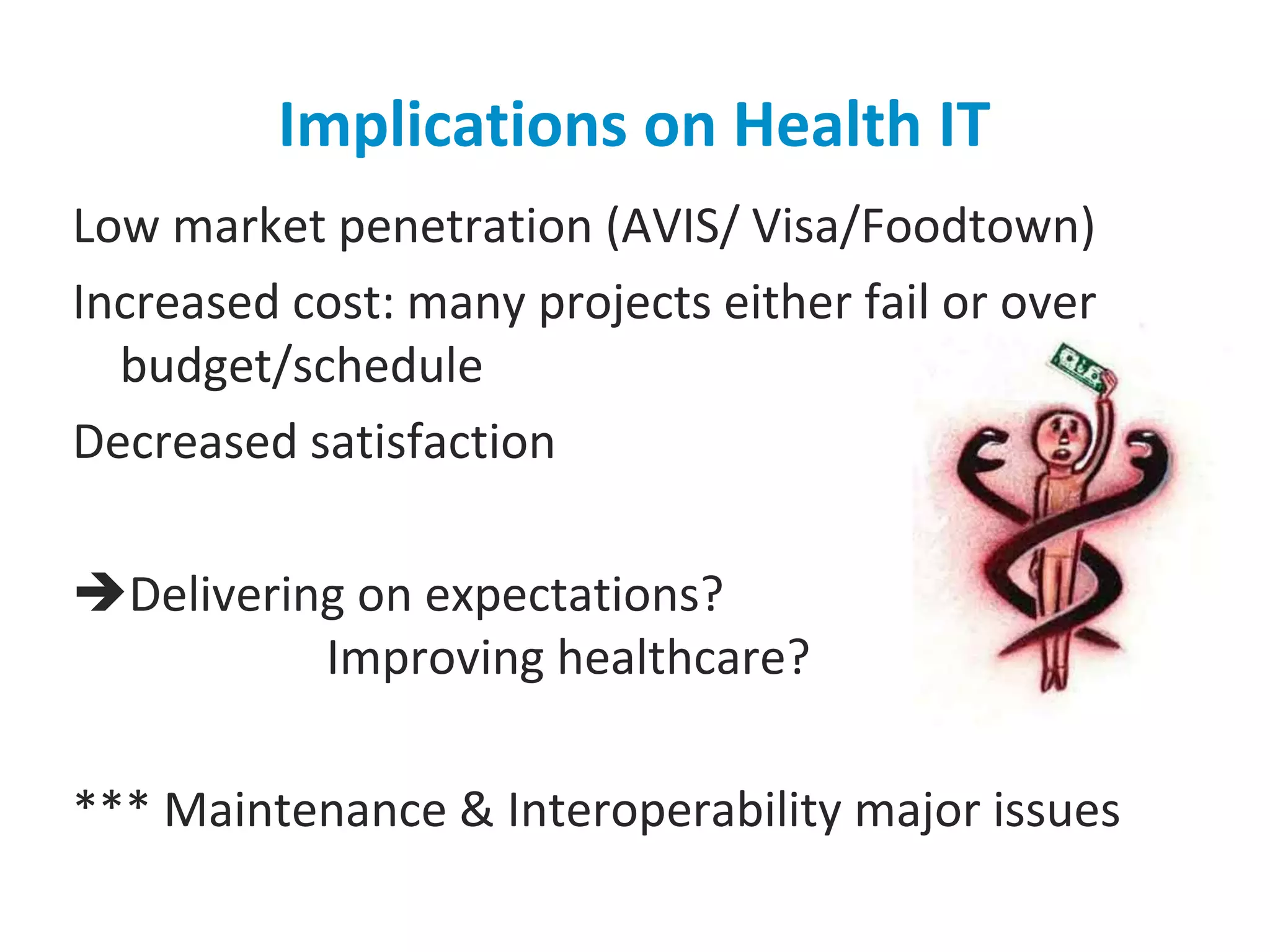
Implications on Health ITLow market penetration (AVIS/ Visa/Foodtown)Increased cost: many projects either fail or over budget/scheduleDecreased satisfactionDelivering on expectations? 		Improving healthcare?*** Maintenance & Interoperability major issues
Maintenance of HISConstitutes the majority of development costs
Degrades overall quality / longevity / satisfactionSource of problem change in domain related requirements (mostly fxnal)How?Incomplete / wrong req. at outset
New / no longer valid requirementsWhy?Essential + handover
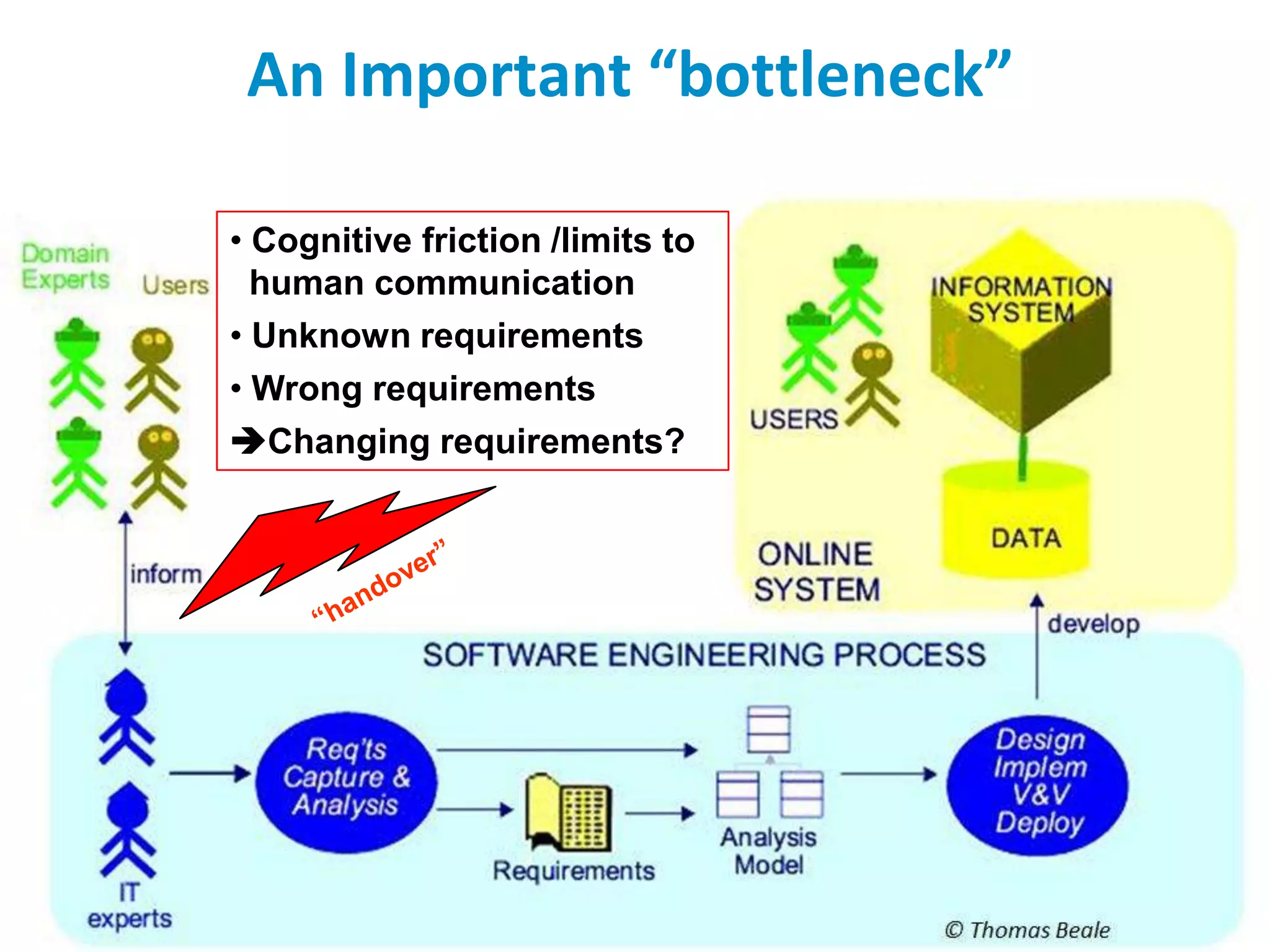
Volatility of domain concepts & processesAn Important “bottleneck”Cognitive friction /limits to   human communication Unknown requirements
 Wrong requirementsChanging requirements?“handover”
The “handover”...Isn’t this the reality in health IT?So far so good...Not only the body of knowledge can only partially be “handed” over,	but also it might just be “too much to handle”: Techiesnature of Biomedical sciences
 Clinicianslack of technical understanding: practical limitations of IT can be hard for a clinician to understand "if it can be done on Star Trek, why not here" syndromeMy Past ExperienceDeveloping HIS since 1995
Own company, employee, academician, freelance consultant and contractor
Main problem=maintenance
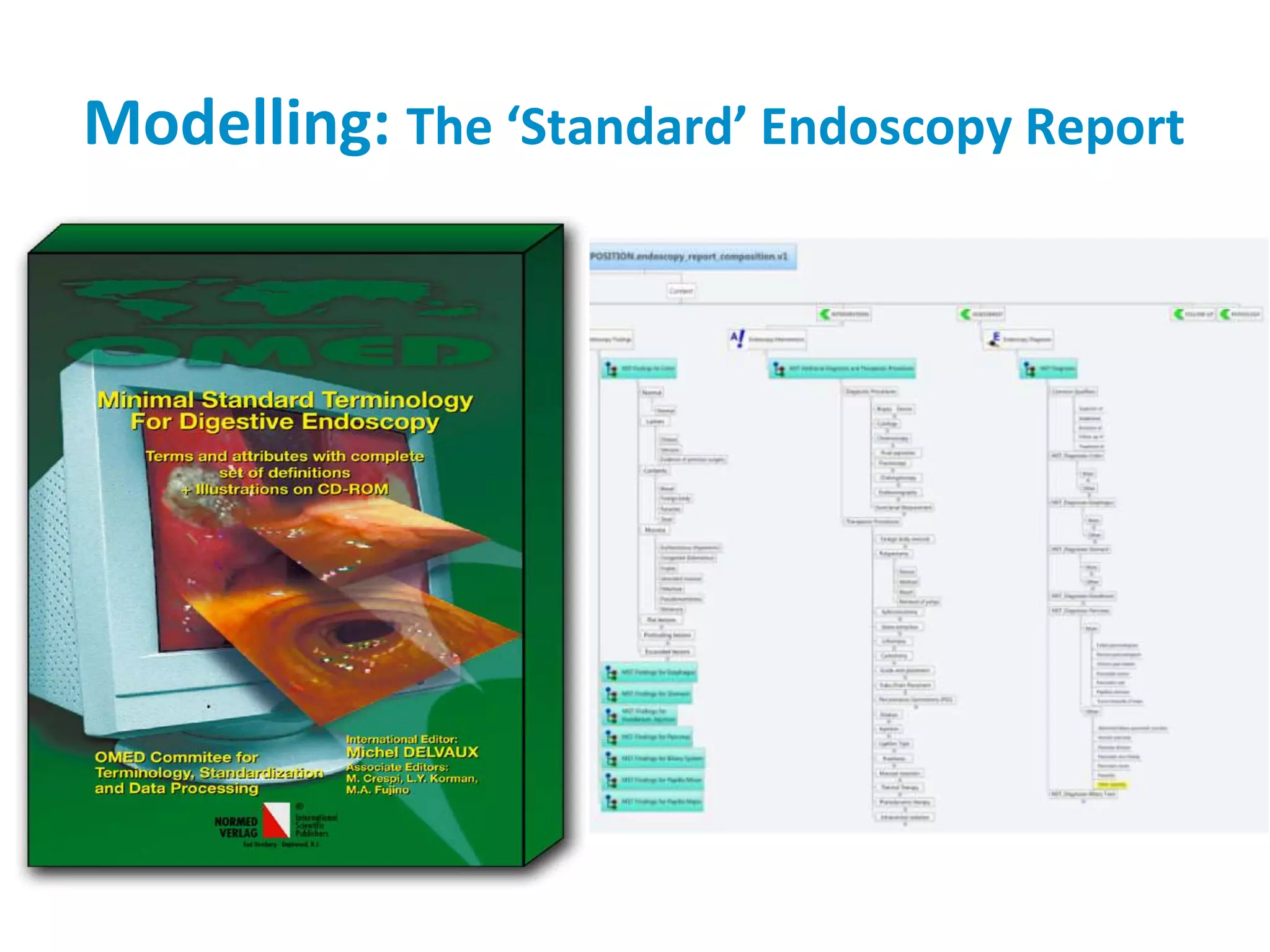
Case study: Endoscopy Reporting Application
Started 1999 as commercial project
Went well  initially but then….
Became academic and served as PhD prototype
I have collated all CR over its usage
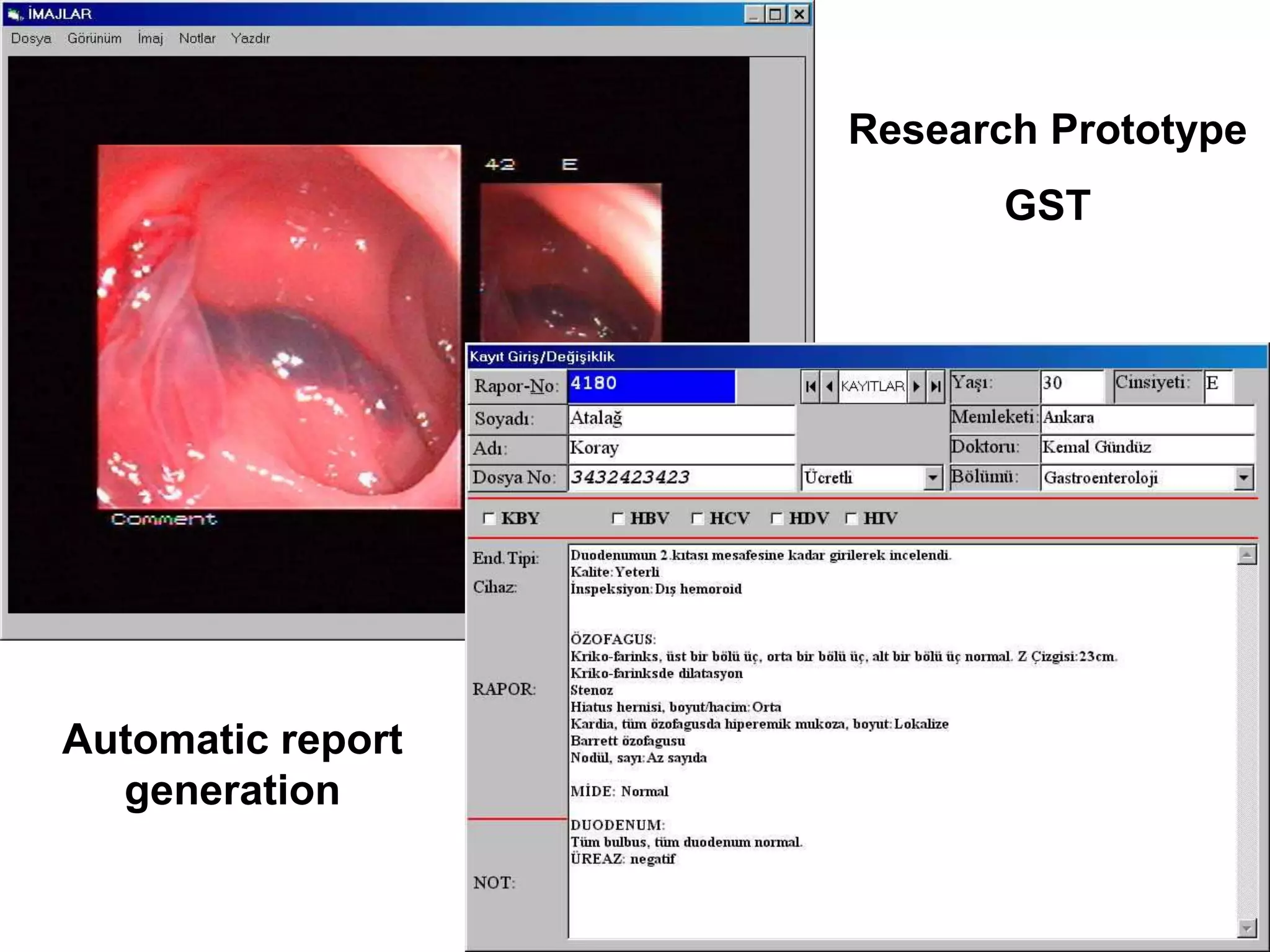
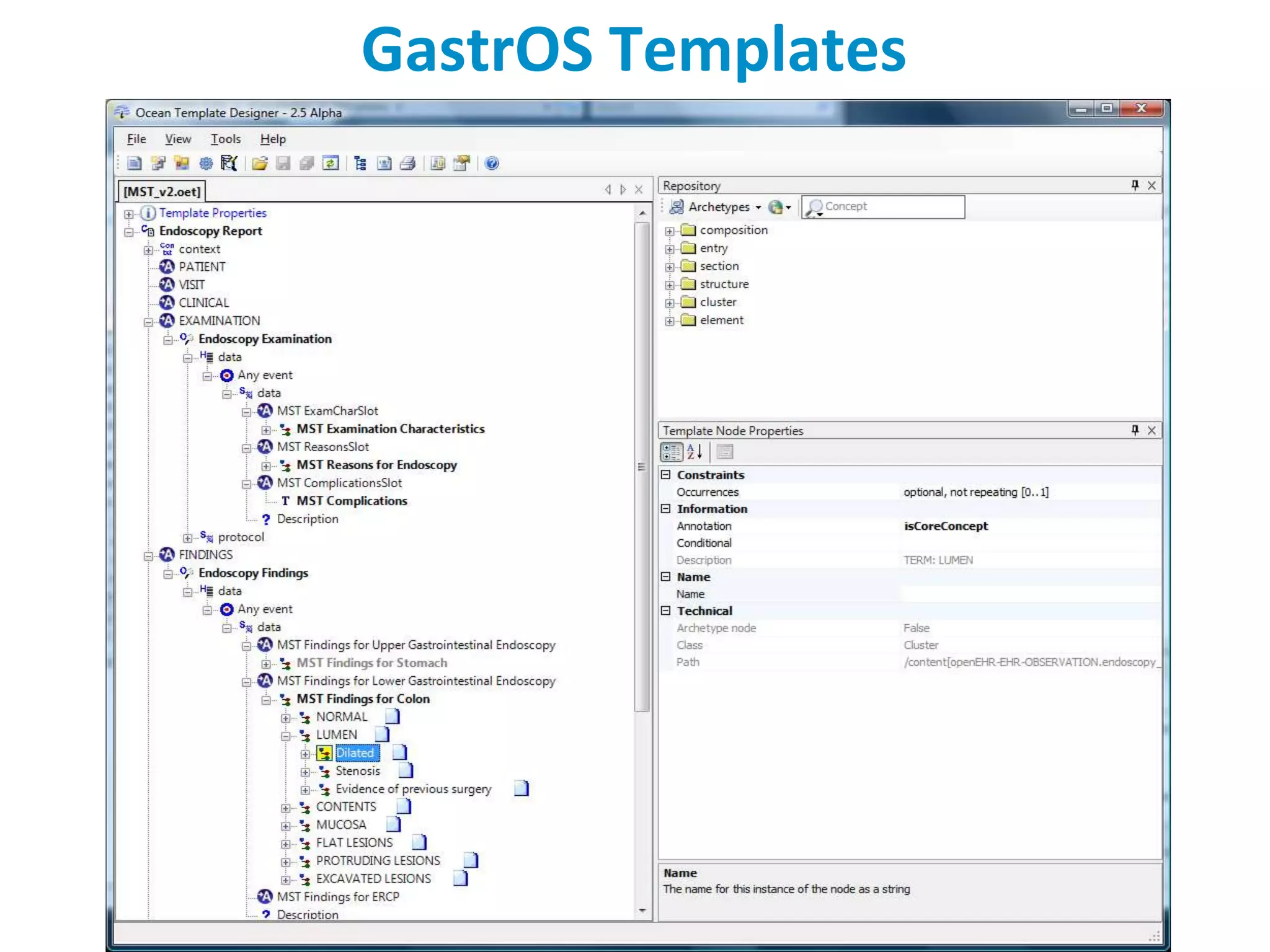
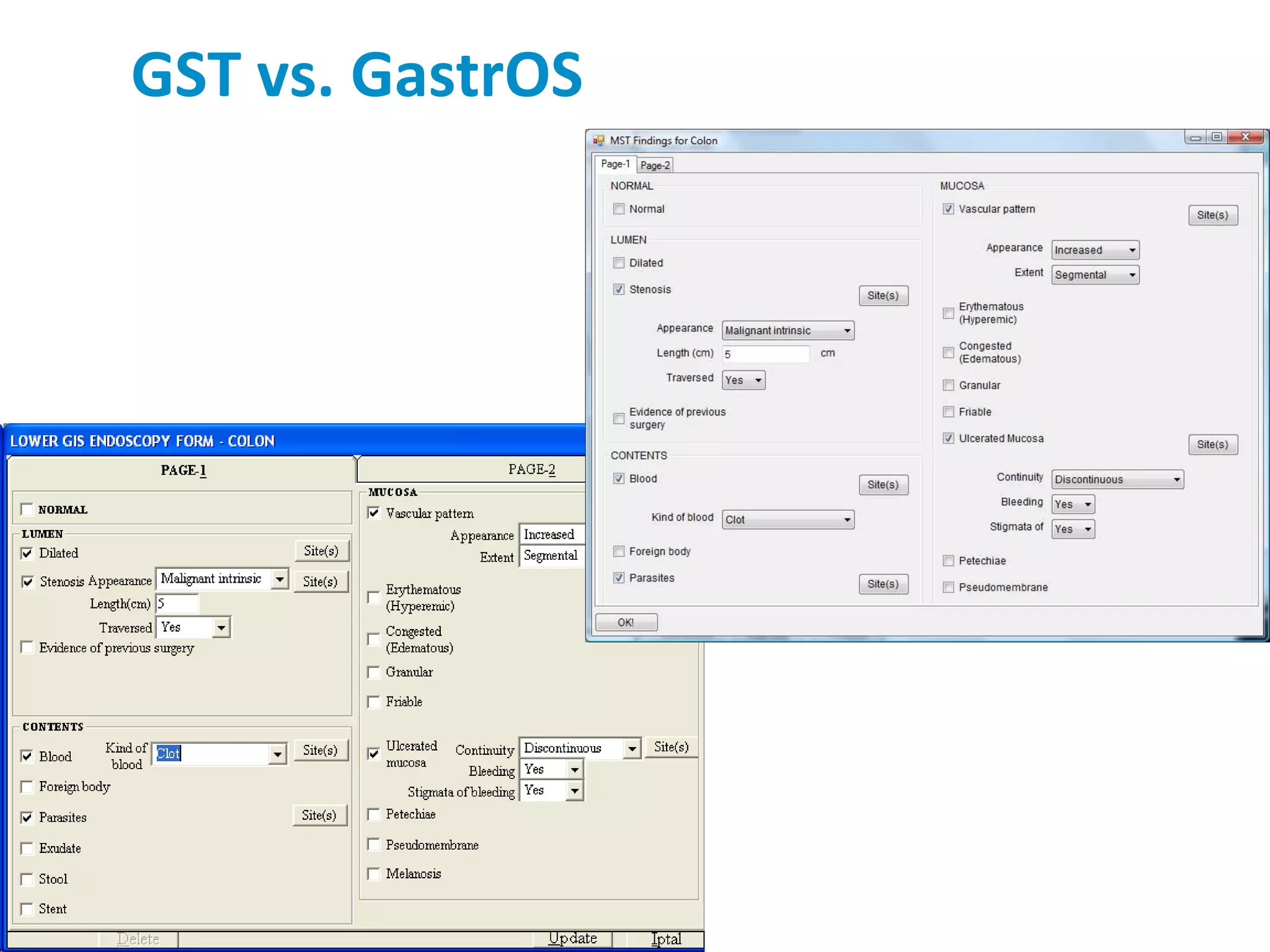
Motivation for my thesis and researchResearch PrototypeGSTAutomatic report generation
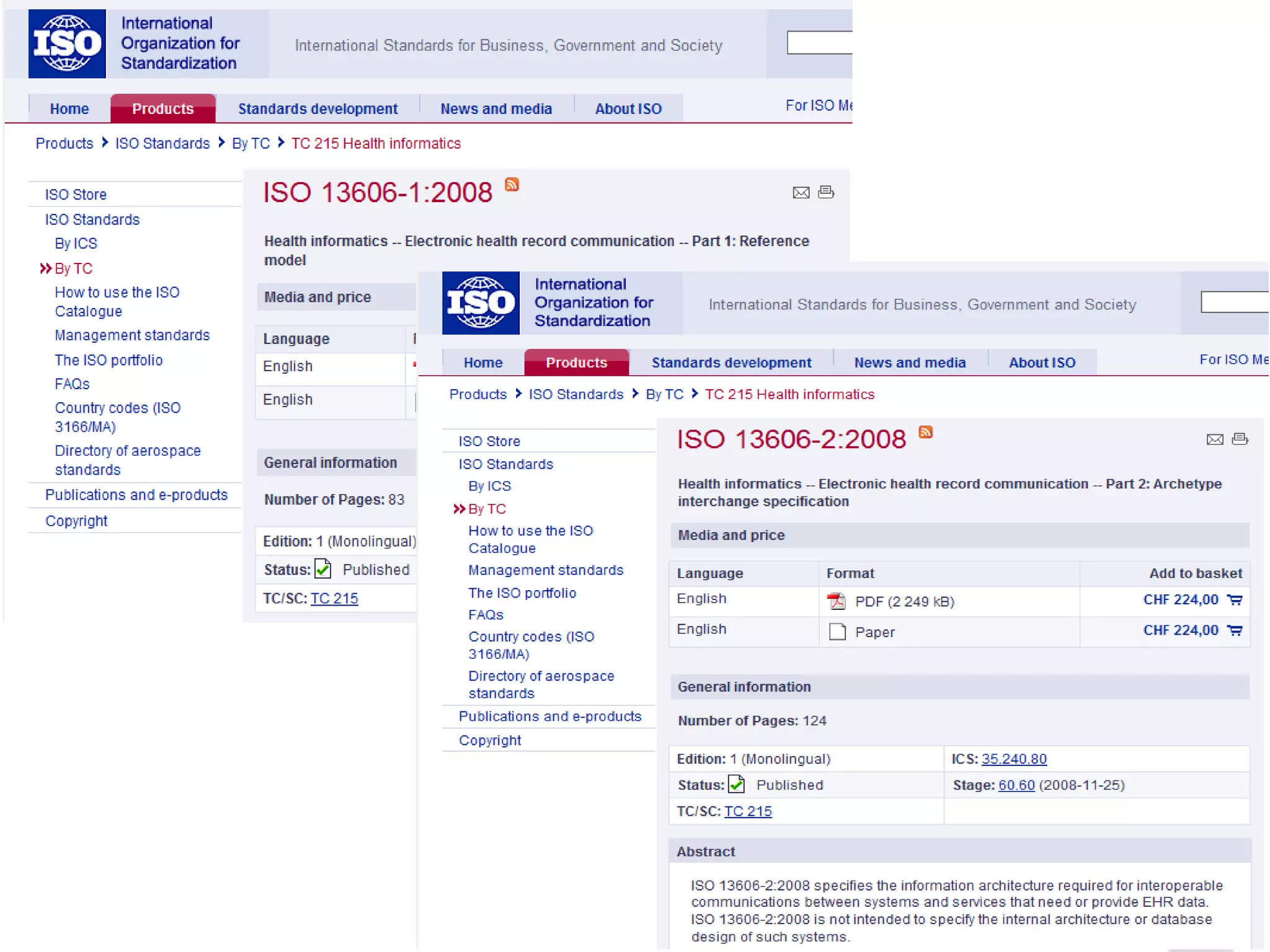
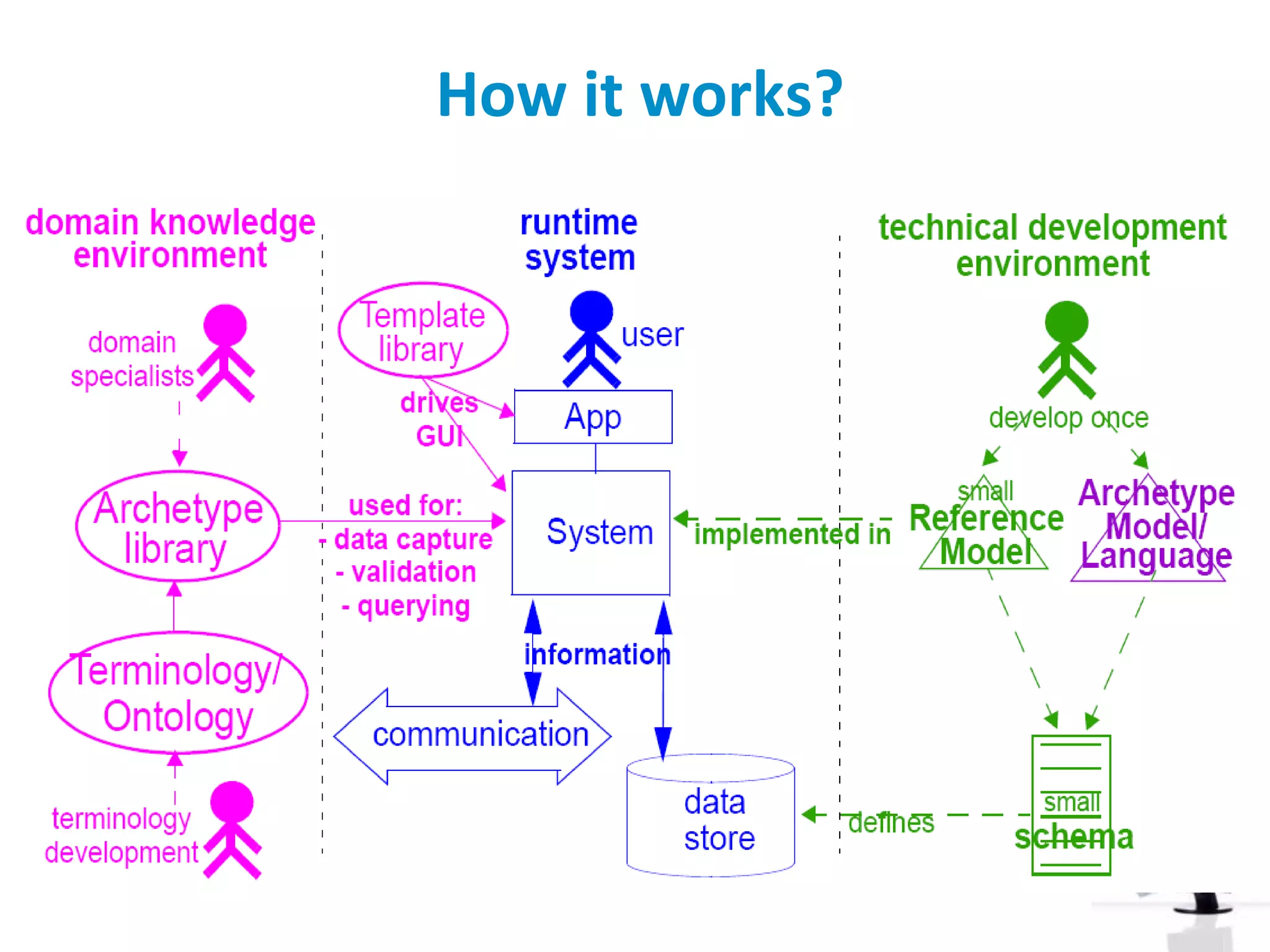
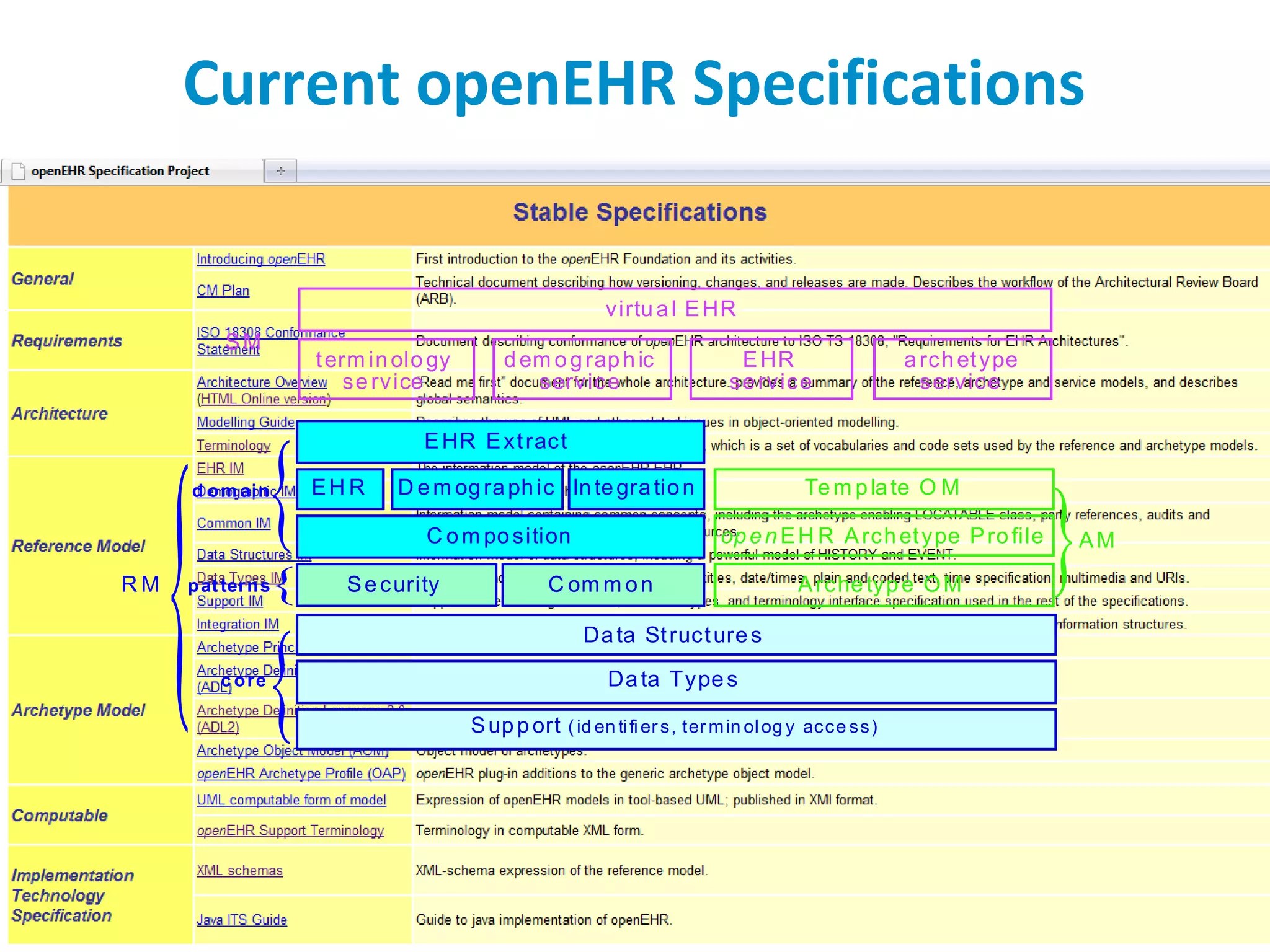
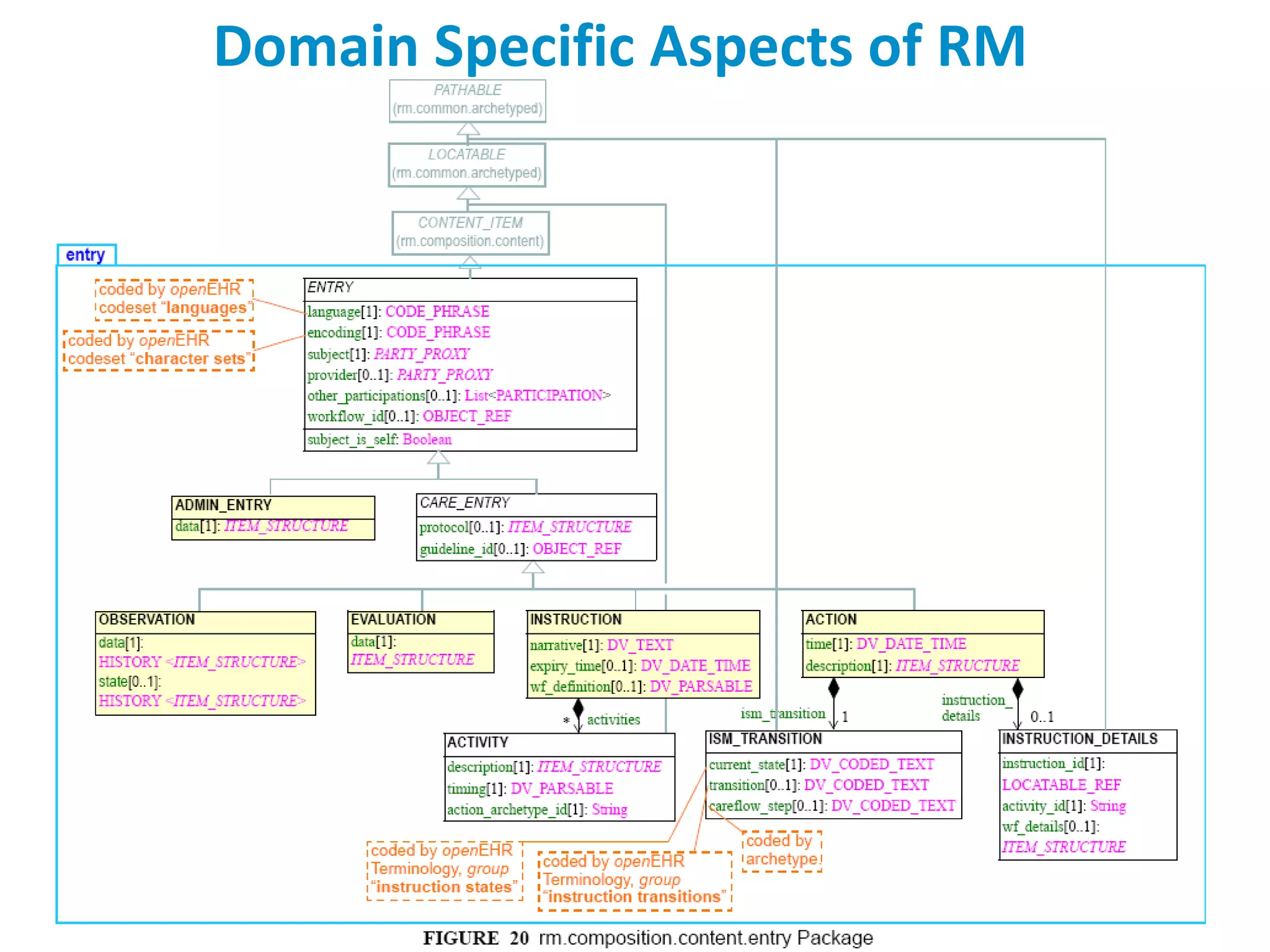
openEHR Formalism Complete set of engineering specifications for EHR Architecture and HIS development Open Access – not for profit Foundation Adopted by ISO & CEN (13606)Separate tasks of developers & domain experts
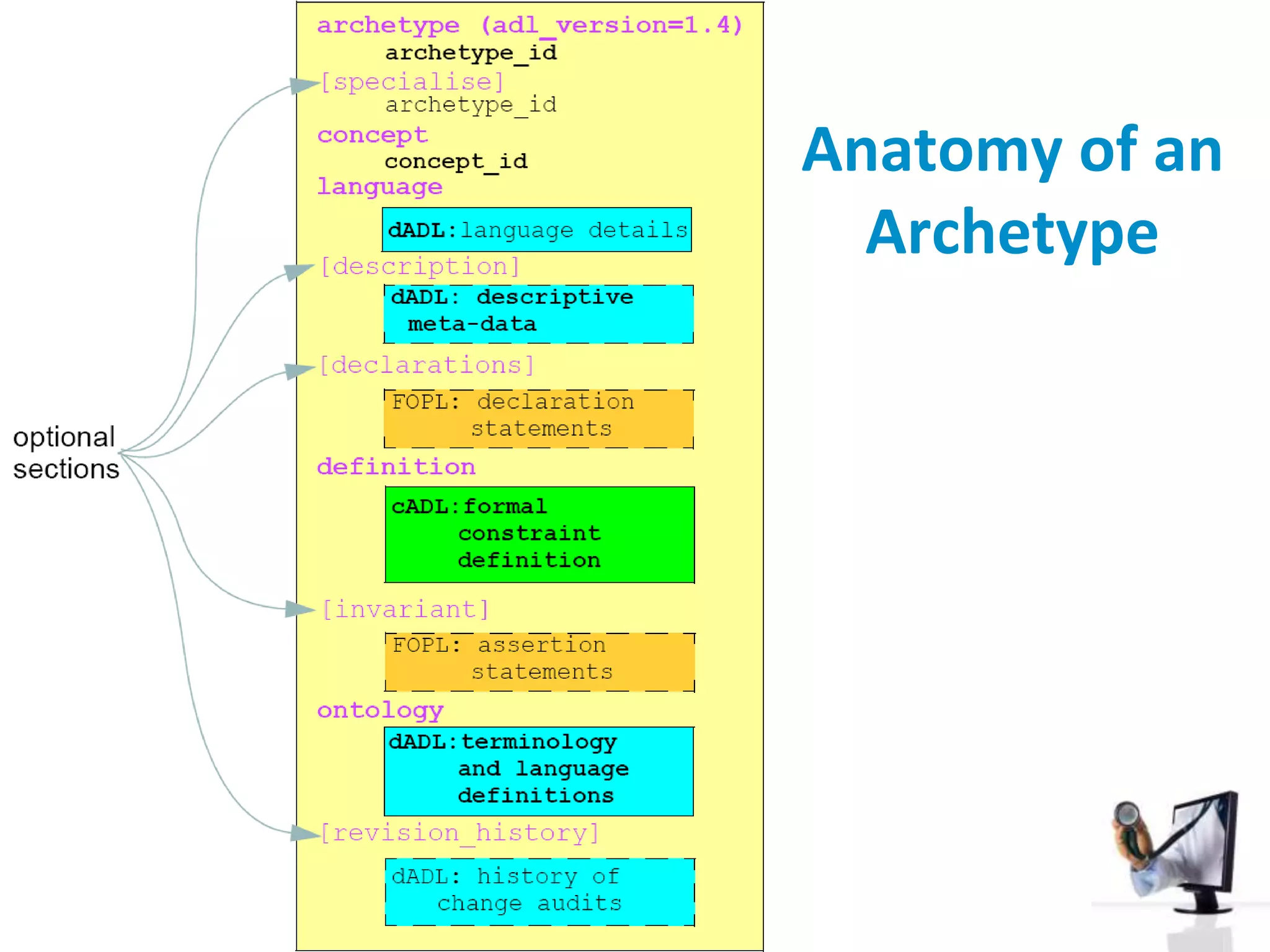
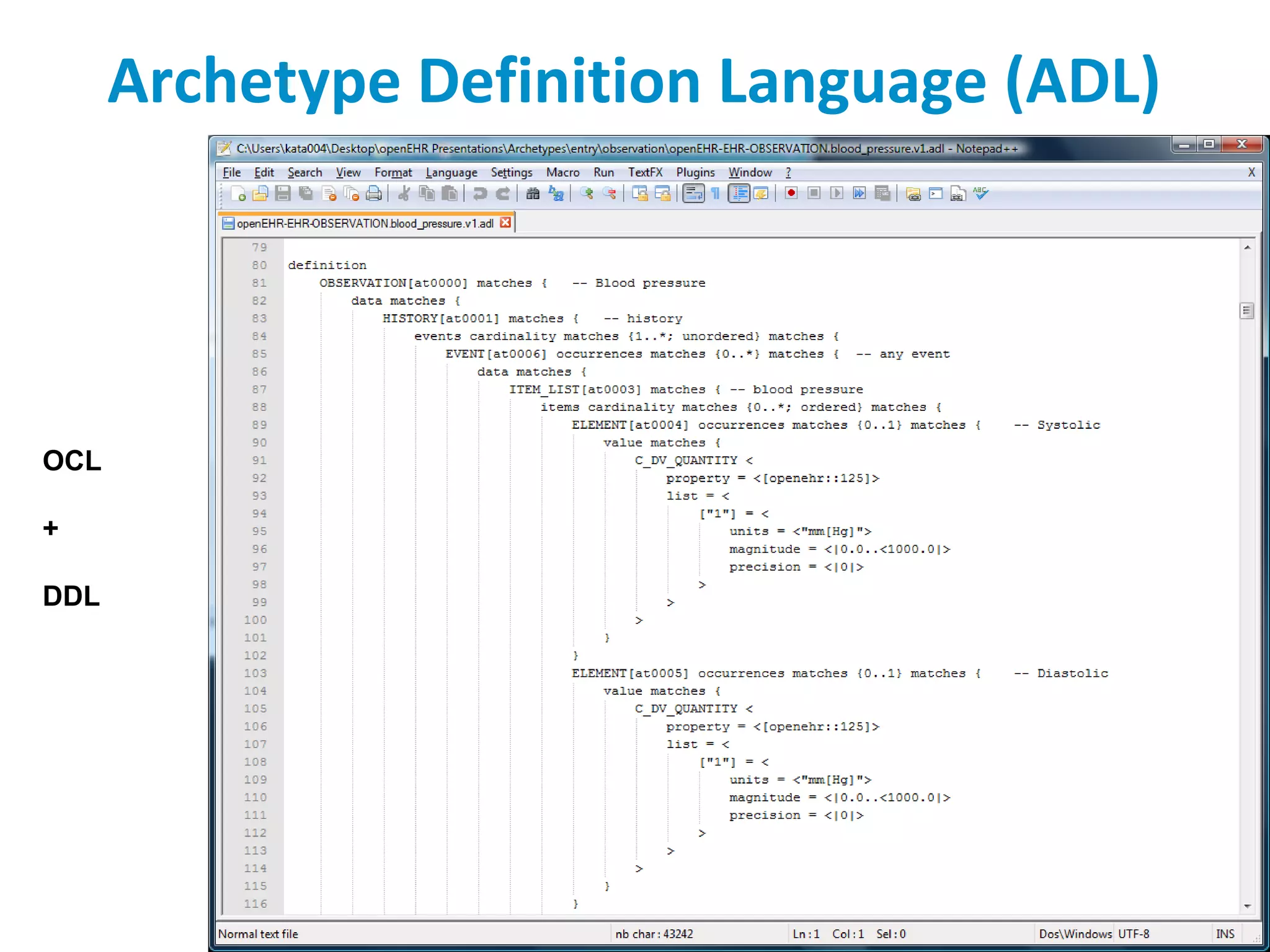
Separate domain knowledge from software code  DSL + MDA essentially; differences:A reference model (RM)
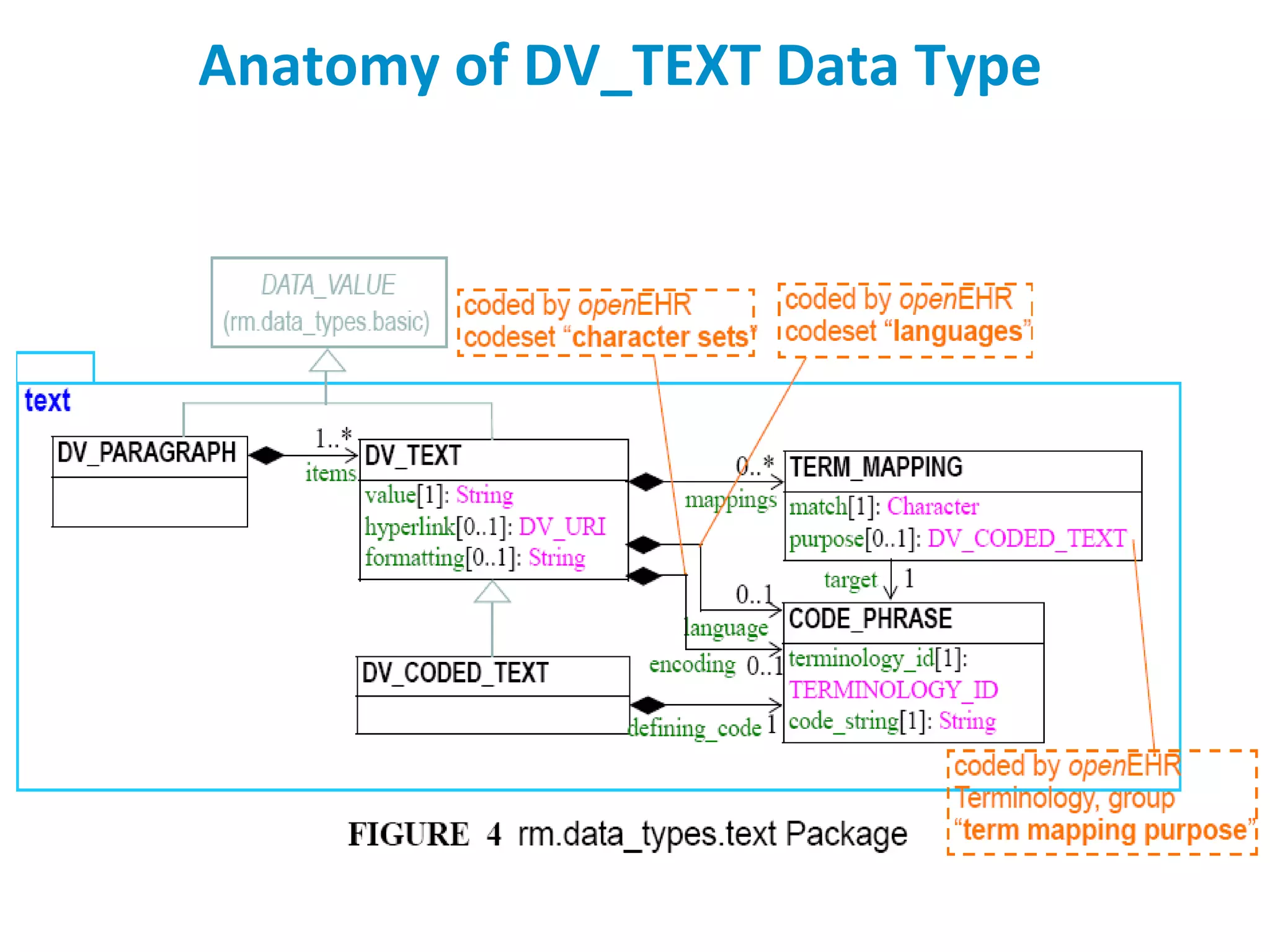
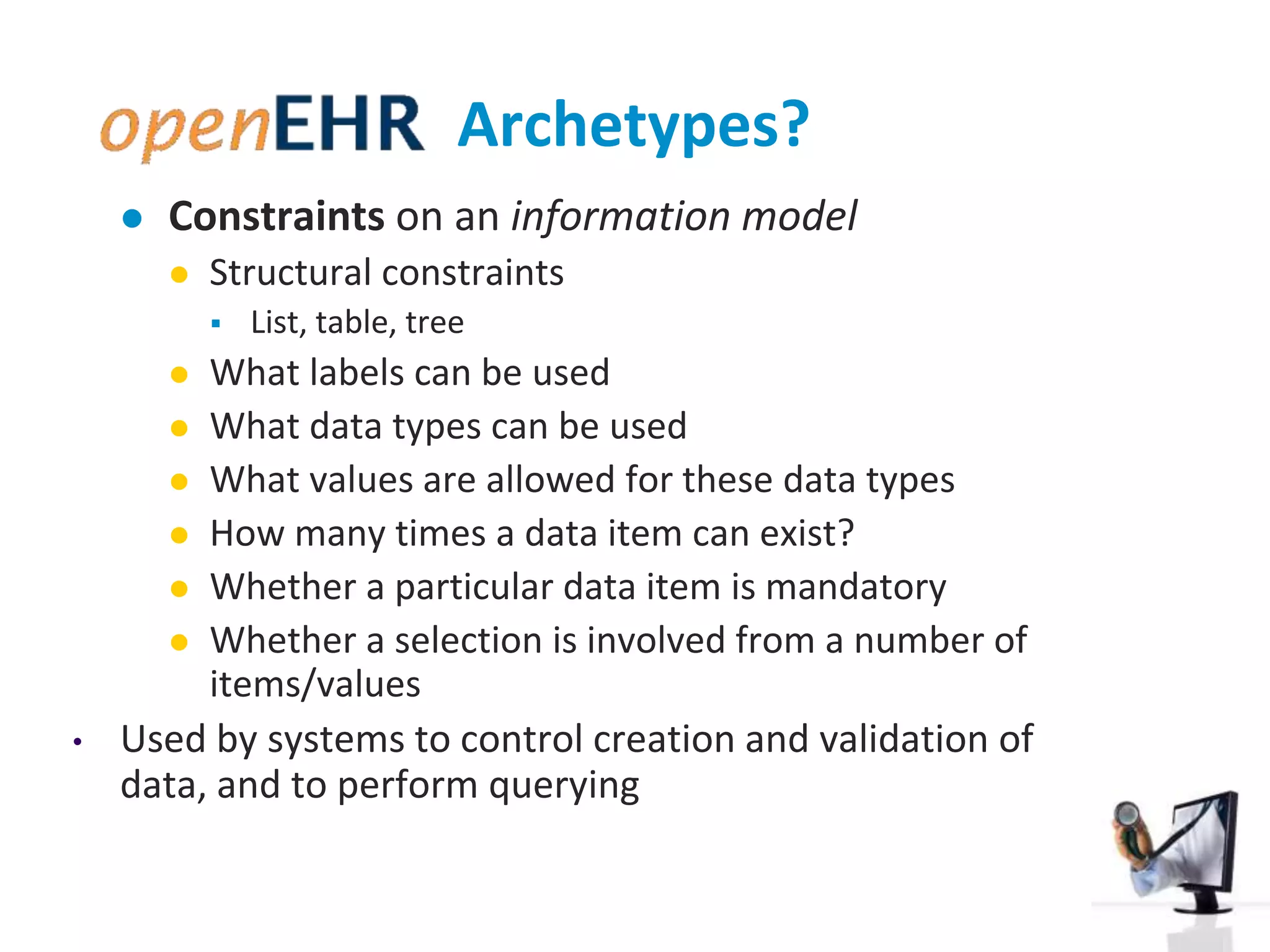
Models structure RM Classes and puts constraints on runtime Objects
openEHR FoundationNon-profit organisation based at University College, London (UCL)
Established by UCL and Ocean Informatics in 2000 to own the IP
800+ Members from 71 countries
All specifications & schemas publicly available
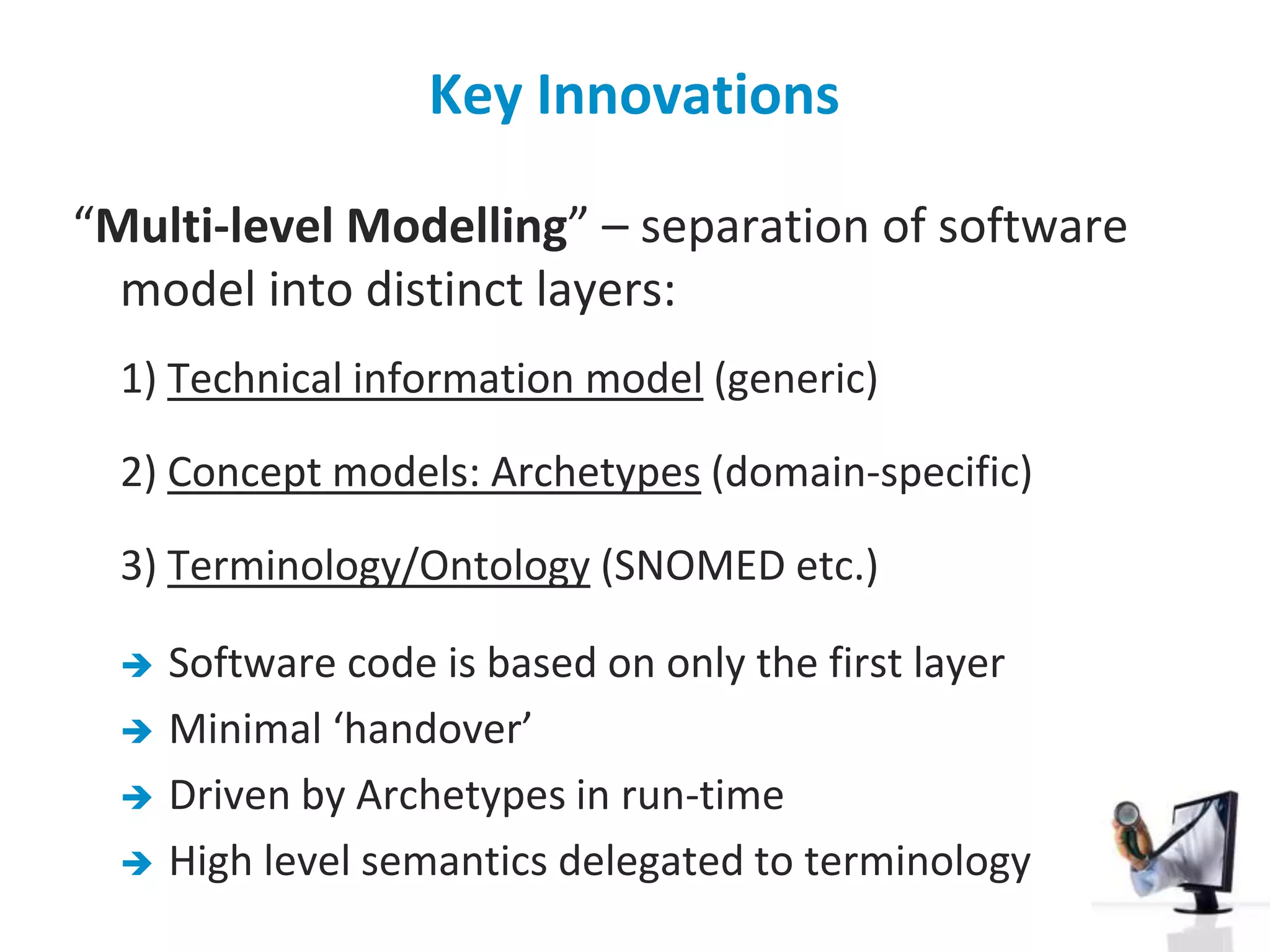
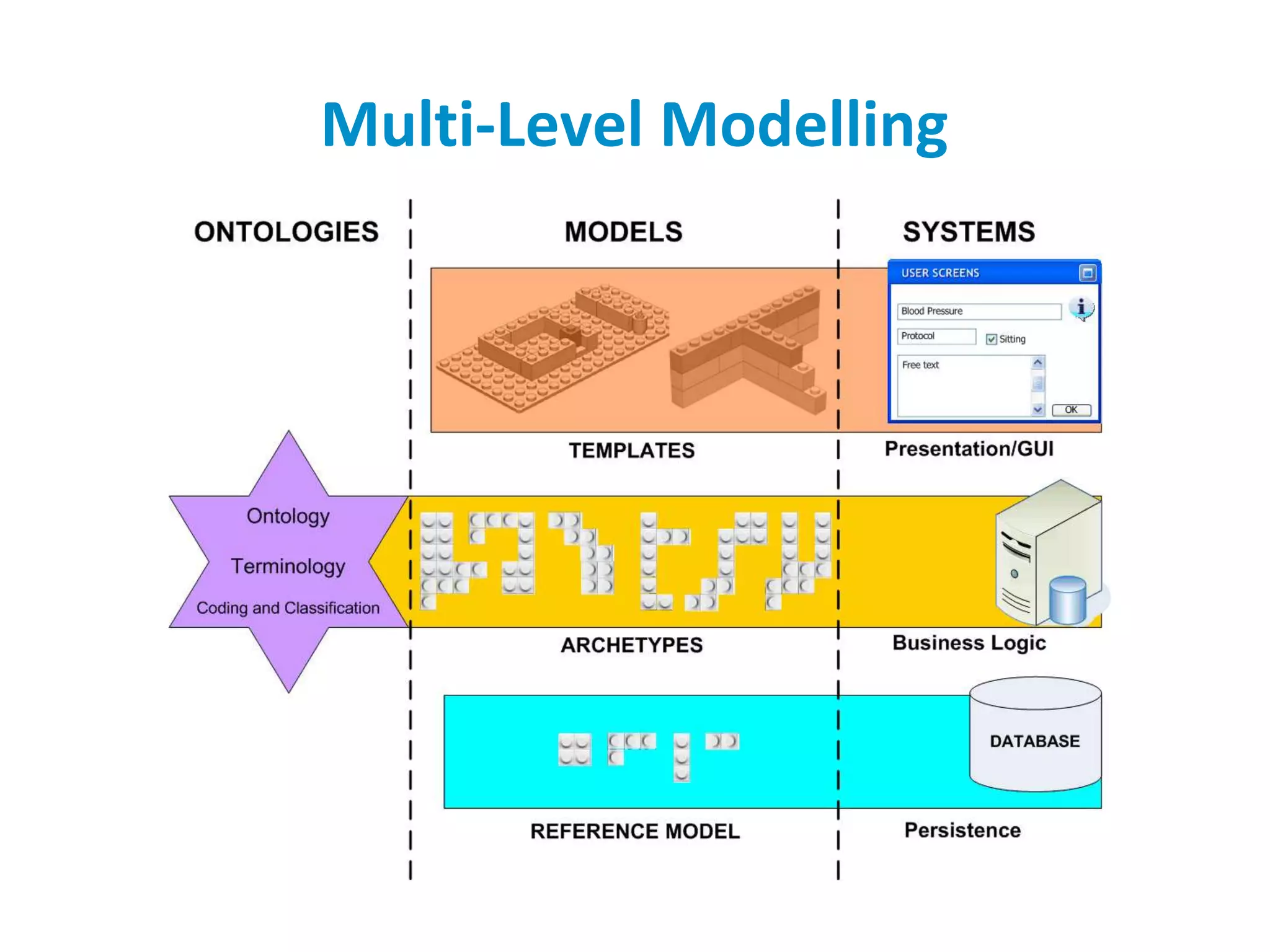
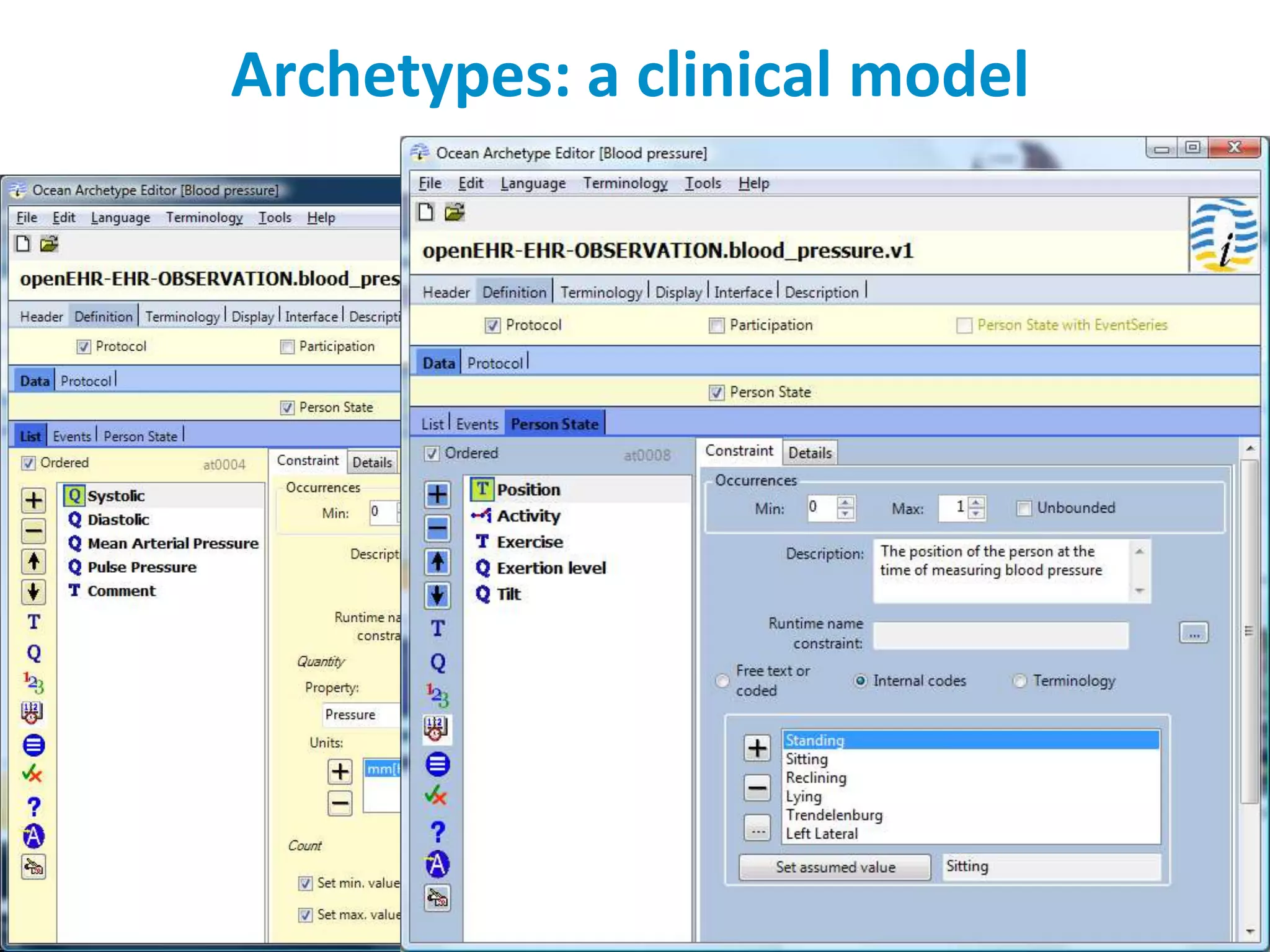
Software open source (GPL, LGPL, MPL)Key Innovations“Multi-level Modelling” – separation of software model into distinct layers:1) Technical information model (generic)2) Concept models: Archetypes (domain-specific)3) Terminology/Ontology (SNOMED etc.)Software code is based on only the first layer
Minimal ‘handover’
Driven by Archetypes in run-time
High level semantics delegated to terminologyMulti-Level Modelling
openEHR PlatformQueriesHealth Integration PlatformArchetypesHealth Information PlatformEQLTOMApplication Development PlatformKnowledge Management PlatformAOMADLTemplatesReference Model

Why ICT Fails in Healthcare: Software Maintenance and Maintainability