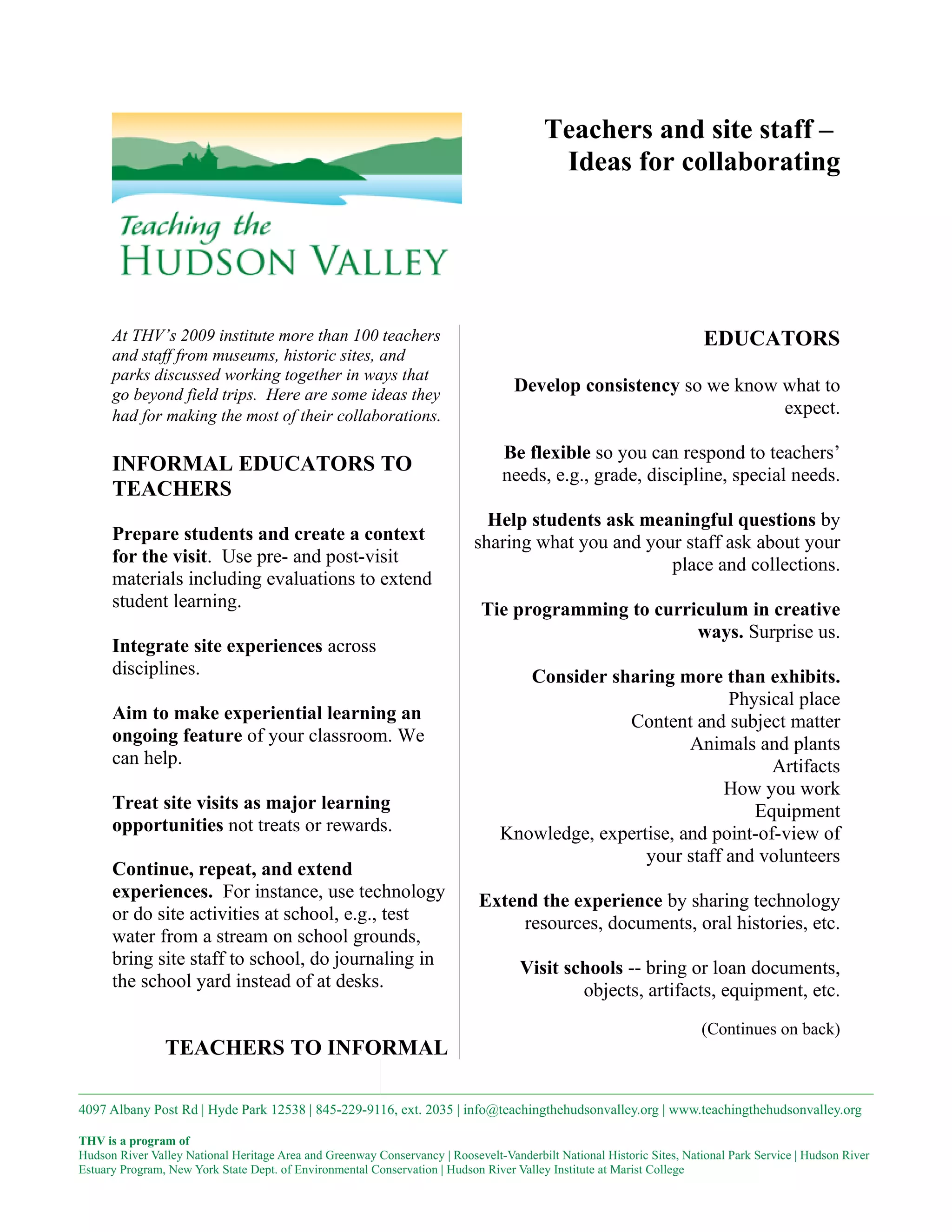
Teachers and site staff –
                                                                                          Ideas for collaborating


      At THV’s 2009 institute more than 100 teachers                                                                    EDUCATORS
      and staff from museums, historic sites, and
      parks discussed working together in ways that
      go beyond field trips. Here are some ideas they                              Develop consistency so we know what to
      had for making the most of their collaborations.                                                            expect.

                                                                                 Be flexible so you can respond to teachers’
      INFORMAL EDUCATORS TO                                                      needs, e.g., grade, discipline, special needs.
      TEACHERS
                                                                              Help students ask meaningful questions by
      Prepare students and create a context                                 sharing what you and your staff ask about your
      for the visit. Use pre- and post-visit                                                        place and collections.
      materials including evaluations to extend
      student learning.                                                      Tie programming to curriculum in creative
                                                                                                     ways. Surprise us.
      Integrate site experiences across
      disciplines.                                                                 Consider sharing more than exhibits.
                                                                                                            Physical place
      Aim to make experiential learning an                                                    Content and subject matter
      ongoing feature of your classroom. We                                                            Animals and plants
      can help.                                                                                                   Artifacts
                                                                                                           How you work
      Treat site visits as major learning                                                                      Equipment
      opportunities not treats or rewards.                                      Knowledge, expertise, and point-of-view of
                                                                                                 your staff and volunteers
      Continue, repeat, and extend
      experiences. For instance, use technology                             Extend the experience by sharing technology
      or do site activities at school, e.g., test                                resources, documents, oral histories, etc.
      water from a stream on school grounds,
      bring site staff to school, do journaling in                                  Visit schools -- bring or loan documents,
      the school yard instead of at desks.                                                  objects, artifacts, equipment, etc.
                                                                                                                       (Continues on back)
                TEACHERS TO INFORMAL

4097 Albany Post Rd | Hyde Park 12538 | 845-229-9116, ext. 2035 | info@teachingthehudsonvalley.org | www.teachingthehudsonvalley.org

THV is a program of
Hudson River Valley National Heritage Area and Greenway Conservancy | Roosevelt-Vanderbilt National Historic Sites, National Park Service | Hudson River
Estuary Program, New York State Dept. of Environmental Conservation | Hudson River Valley Institute at Marist College
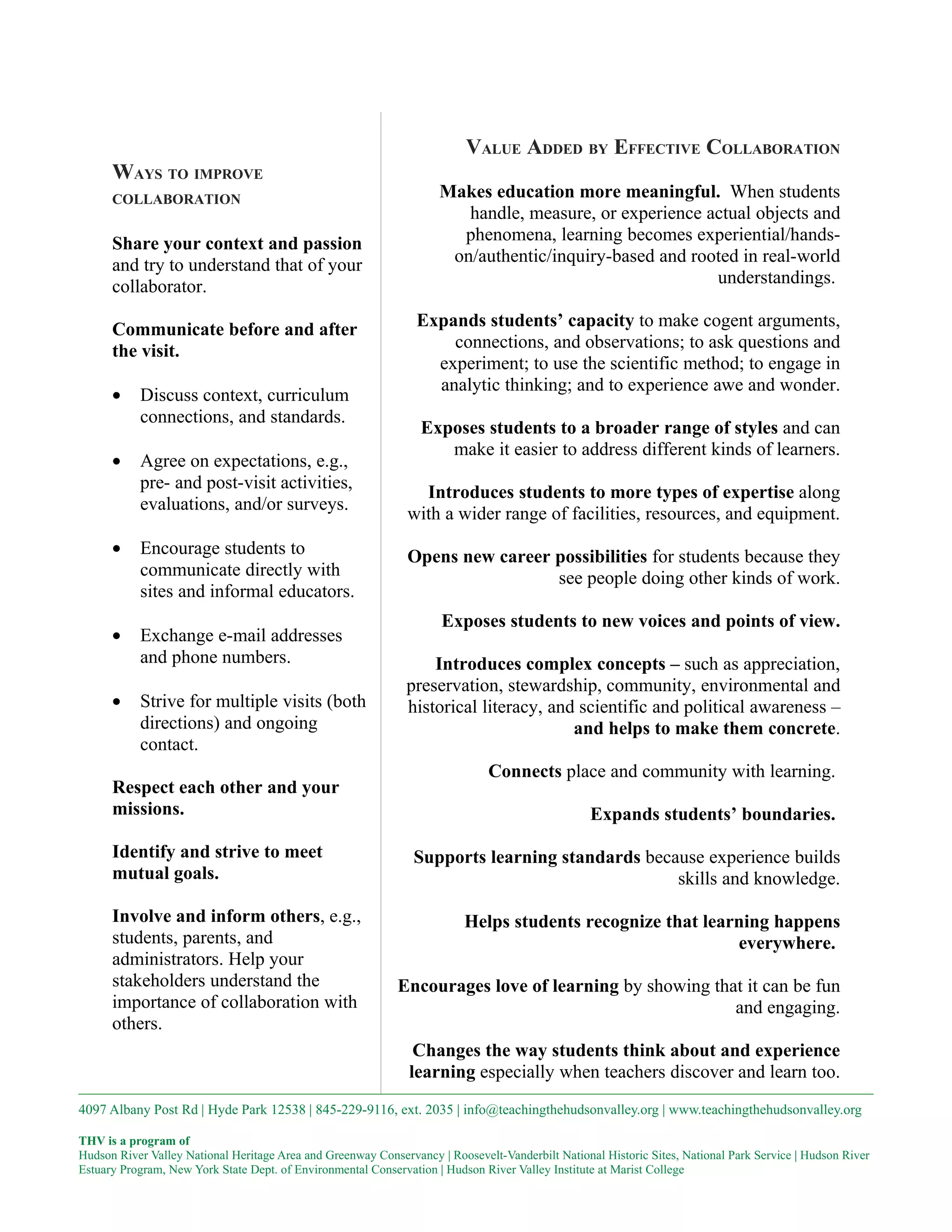
VALUE ADDED BY EFFECTIVE COLLABORATION
      WAYS TO IMPROVE
      COLLABORATION                                                  Makes education more meaningful. When students
                                                                        handle, measure, or experience actual objects and
      Share your context and passion                                   phenomena, learning becomes experiential/hands-
      and try to understand that of your                              on/authentic/inquiry-based and rooted in real-world
      collaborator.                                                                                     understandings.

      Communicate before and after                              Expands students’ capacity to make cogent arguments,
      the visit.                                                    connections, and observations; to ask questions and
                                                                  experiment; to use the scientific method; to engage in
                                                                  analytic thinking; and to experience awe and wonder.
      •    Discuss context, curriculum
           connections, and standards.
                                                                 Exposes students to a broader range of styles and can
                                                                    make it easier to address different kinds of learners.
      •    Agree on expectations, e.g.,
           pre- and post-visit activities,
                                                                 Introduces students to more types of expertise along
           evaluations, and/or surveys.
                                                               with a wider range of facilities, resources, and equipment.
      •    Encourage students to                               Opens new career possibilities for students because they
           communicate directly with                                            see people doing other kinds of work.
           sites and informal educators.
                                                                     Exposes students to new voices and points of view.
      •    Exchange e-mail addresses
           and phone numbers.                                      Introduces complex concepts – such as appreciation,
                                                               preservation, stewardship, community, environmental and
      •    Strive for multiple visits (both                    historical literacy, and scientific and political awareness –
           directions) and ongoing                                                     and helps to make them concrete.
           contact.
                                                                              Connects place and community with learning.
      Respect each other and your
      missions.                                                                                   Expands students’ boundaries.

      Identify and strive to meet                               Supports learning standards because experience builds
      mutual goals.                                                                             skills and knowledge.

      Involve and inform others, e.g.,                                    Helps students recognize that learning happens
      students, parents, and                                                                                everywhere.
      administrators. Help your
      stakeholders understand the                            Encourages love of learning by showing that it can be fun
      importance of collaboration with                                                                 and engaging.
      others.
                                                                Changes the way students think about and experience
                                                               learning especially when teachers discover and learn too.
4097 Albany Post Rd | Hyde Park 12538 | 845-229-9116, ext. 2035 | info@teachingthehudsonvalley.org | www.teachingthehudsonvalley.org

THV is a program of
Hudson River Valley National Heritage Area and Greenway Conservancy | Roosevelt-Vanderbilt National Historic Sites, National Park Service | Hudson River
Estuary Program, New York State Dept. of Environmental Conservation | Hudson River Valley Institute at Marist College
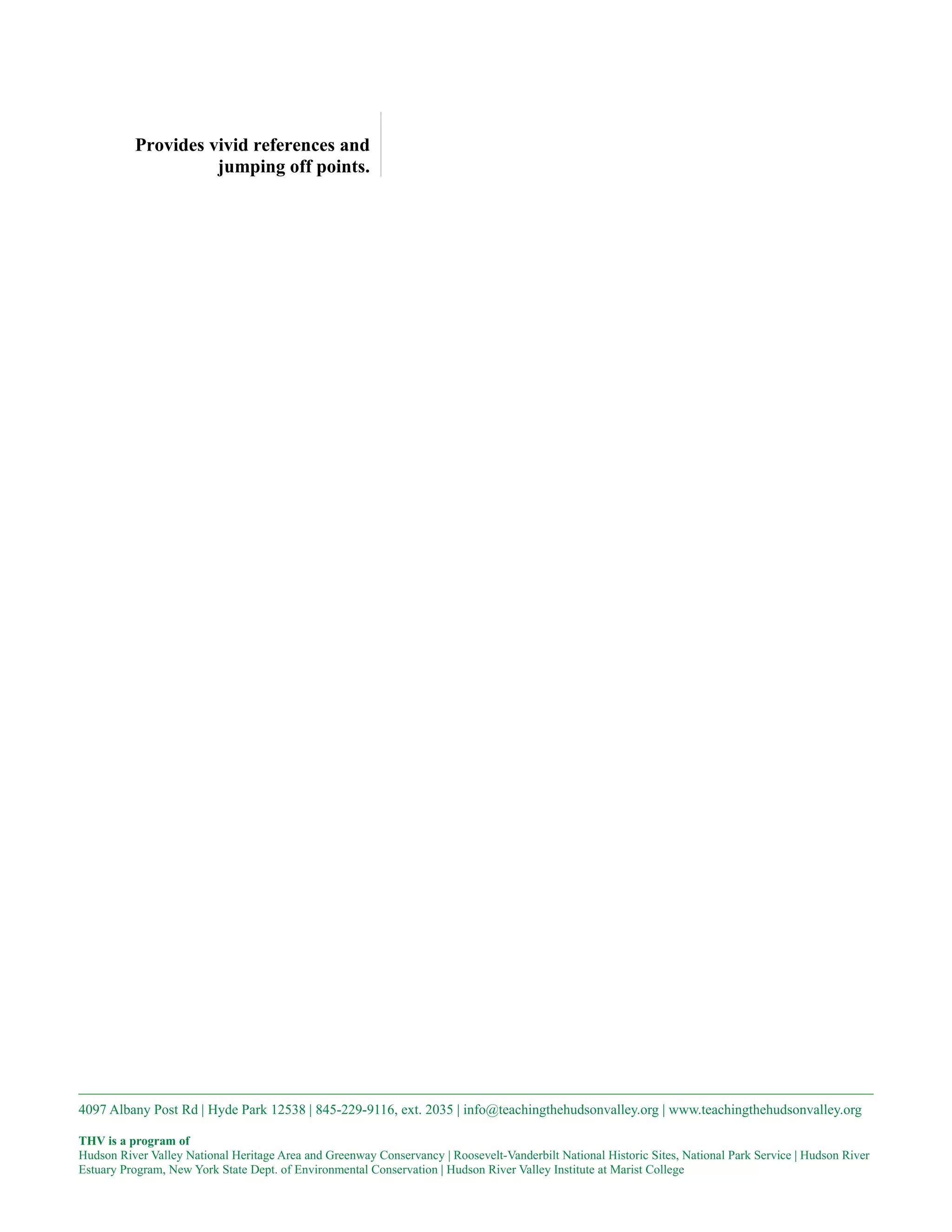
Provides vivid references and
                    jumping off points.


4097 Albany Post Rd | Hyde Park 12538 | 845-229-9116, ext. 2035 | info@teachingthehudsonvalley.org | www.teachingthehudsonvalley.org

THV is a program of
Hudson River Valley National Heritage Area and Greenway Conservancy | Roosevelt-Vanderbilt National Historic Sites, National Park Service | Hudson River
Estuary Program, New York State Dept. of Environmental Conservation | Hudson River Valley Institute at Marist College

Teachers and Site Staff - Ideas for Collaborating

  • 1.
    Teachers and sitestaff – Ideas for collaborating At THV’s 2009 institute more than 100 teachers EDUCATORS and staff from museums, historic sites, and parks discussed working together in ways that go beyond field trips. Here are some ideas they Develop consistency so we know what to had for making the most of their collaborations. expect. Be flexible so you can respond to teachers’ INFORMAL EDUCATORS TO needs, e.g., grade, discipline, special needs. TEACHERS Help students ask meaningful questions by Prepare students and create a context sharing what you and your staff ask about your for the visit. Use pre- and post-visit place and collections. materials including evaluations to extend student learning. Tie programming to curriculum in creative ways. Surprise us. Integrate site experiences across disciplines. Consider sharing more than exhibits. Physical place Aim to make experiential learning an Content and subject matter ongoing feature of your classroom. We Animals and plants can help. Artifacts How you work Treat site visits as major learning Equipment opportunities not treats or rewards. Knowledge, expertise, and point-of-view of your staff and volunteers Continue, repeat, and extend experiences. For instance, use technology Extend the experience by sharing technology or do site activities at school, e.g., test resources, documents, oral histories, etc. water from a stream on school grounds, bring site staff to school, do journaling in Visit schools -- bring or loan documents, the school yard instead of at desks. objects, artifacts, equipment, etc. (Continues on back) TEACHERS TO INFORMAL 4097 Albany Post Rd | Hyde Park 12538 | 845-229-9116, ext. 2035 | info@teachingthehudsonvalley.org | www.teachingthehudsonvalley.org THV is a program of Hudson River Valley National Heritage Area and Greenway Conservancy | Roosevelt-Vanderbilt National Historic Sites, National Park Service | Hudson River Estuary Program, New York State Dept. of Environmental Conservation | Hudson River Valley Institute at Marist College
  • 2.
    VALUE ADDED BYEFFECTIVE COLLABORATION WAYS TO IMPROVE COLLABORATION Makes education more meaningful. When students handle, measure, or experience actual objects and Share your context and passion phenomena, learning becomes experiential/hands- and try to understand that of your on/authentic/inquiry-based and rooted in real-world collaborator. understandings. Communicate before and after Expands students’ capacity to make cogent arguments, the visit. connections, and observations; to ask questions and experiment; to use the scientific method; to engage in analytic thinking; and to experience awe and wonder. • Discuss context, curriculum connections, and standards. Exposes students to a broader range of styles and can make it easier to address different kinds of learners. • Agree on expectations, e.g., pre- and post-visit activities, Introduces students to more types of expertise along evaluations, and/or surveys. with a wider range of facilities, resources, and equipment. • Encourage students to Opens new career possibilities for students because they communicate directly with see people doing other kinds of work. sites and informal educators. Exposes students to new voices and points of view. • Exchange e-mail addresses and phone numbers. Introduces complex concepts – such as appreciation, preservation, stewardship, community, environmental and • Strive for multiple visits (both historical literacy, and scientific and political awareness – directions) and ongoing and helps to make them concrete. contact. Connects place and community with learning. Respect each other and your missions. Expands students’ boundaries. Identify and strive to meet Supports learning standards because experience builds mutual goals. skills and knowledge. Involve and inform others, e.g., Helps students recognize that learning happens students, parents, and everywhere. administrators. Help your stakeholders understand the Encourages love of learning by showing that it can be fun importance of collaboration with and engaging. others. Changes the way students think about and experience learning especially when teachers discover and learn too. 4097 Albany Post Rd | Hyde Park 12538 | 845-229-9116, ext. 2035 | info@teachingthehudsonvalley.org | www.teachingthehudsonvalley.org THV is a program of Hudson River Valley National Heritage Area and Greenway Conservancy | Roosevelt-Vanderbilt National Historic Sites, National Park Service | Hudson River Estuary Program, New York State Dept. of Environmental Conservation | Hudson River Valley Institute at Marist College
  • 3.
    Provides vivid referencesand jumping off points. 4097 Albany Post Rd | Hyde Park 12538 | 845-229-9116, ext. 2035 | info@teachingthehudsonvalley.org | www.teachingthehudsonvalley.org THV is a program of Hudson River Valley National Heritage Area and Greenway Conservancy | Roosevelt-Vanderbilt National Historic Sites, National Park Service | Hudson River Estuary Program, New York State Dept. of Environmental Conservation | Hudson River Valley Institute at Marist College