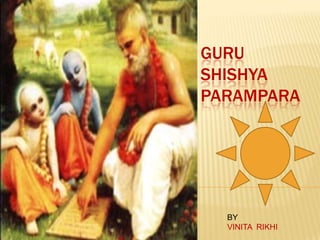
GURU
SHISHYA
PARAMPARA


  BY
  VINITA RIKHI
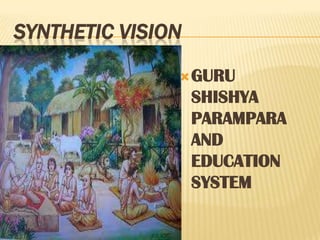
SYNTHETIC VISION

                GURU
                   SHISHYA
                   PARAMPARA
                   AND
                   EDUCATION
                   SYSTEM
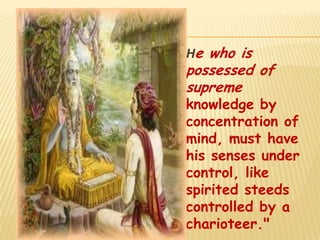
   He who is
    possessed of
    supreme
    knowledge by
    concentration of
    mind, must have
    his senses under
    control, like
    spirited steeds
    controlled by a
    charioteer."
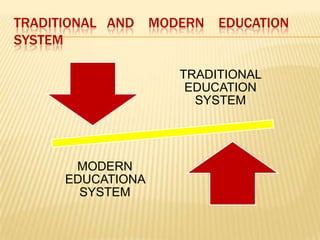
TRADITIONAL AND MODERN EDUCATION
SYSTEM

                   TRADITIONAL
                    EDUCATION
                     SYSTEM


      MODERN
     EDUCATIONA
       SYSTEM
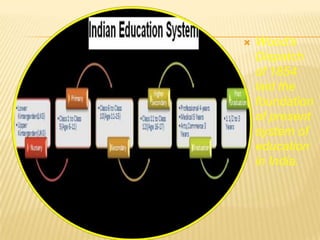
   Wood's
    Dispatch
    of 1854
    laid the
    foundation
    of present
    system of
    education
    in India.

  TEACHER-
     STUDENT

    RELATIONSHI
    P
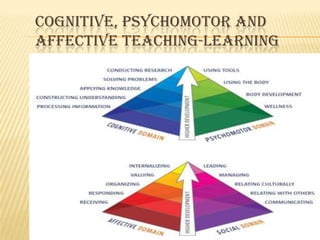
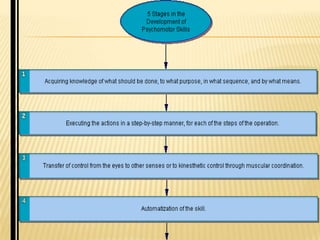
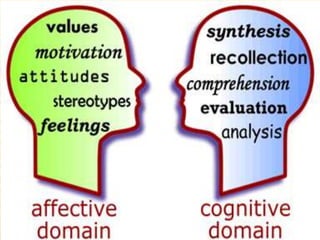
COGNITIVE, PSYCHOMOTOR AND
AFFECTIVE TEACHING-LEARNING
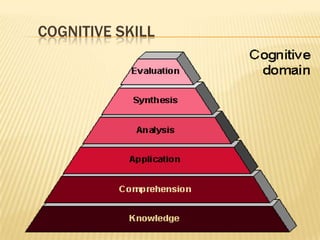
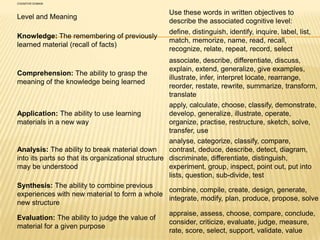
COGNITIVE SKILL
COGNITIVE DOMAIN


                                                  Use these words in written objectives to
Level and Meaning
                                                  describe the associated cognitive level:
                                                  define, distinguish, identify, inquire, label, list,
Knowledge: The remembering of previously
                                                  match, memorize, name, read, recall,
learned material (recall of facts)
                                                  recognize, relate, repeat, record, select
                                                    associate, describe, differentiate, discuss,
                                                    explain, extend, generalize, give examples,
Comprehension: The ability to grasp the
                                                    illustrate, infer, interpret locate, rearrange,
meaning of the knowledge being learned
                                                    reorder, restate, rewrite, summarize, transform,
                                                    translate
                                                    apply, calculate, choose, classify, demonstrate,
Application: The ability to use learning            develop, generalize, illustrate, operate,
materials in a new way                              organize, practise, restructure, sketch, solve,
                                                    transfer, use
                                                    analyse, categorize, classify, compare,
Analysis: The ability to break material down        contrast, deduce, describe, detect, diagram,
into its parts so that its organizational structure discriminate, differentiate, distinguish,
may be understood                                   experiment, group, inspect, point out, put into
                                                    lists, question, sub-divide, test
Synthesis: The ability to combine previous
                                                    combine, compile, create, design, generate,
experiences with new material to form a whole
                                                    integrate, modify, plan, produce, propose, solve
new structure
                                                  appraise, assess, choose, compare, conclude,
Evaluation: The ability to judge the value of
                                                  consider, criticize, evaluate, judge, measure,
material for a given purpose
                                                  rate, score, select, support, validate, value
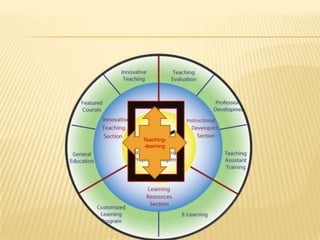
Teaching-
-learning
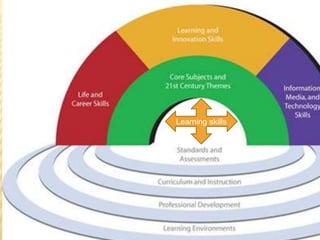
Learning skills
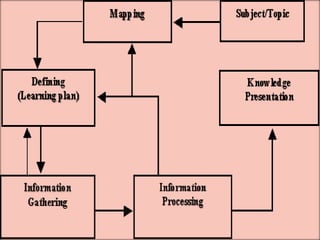
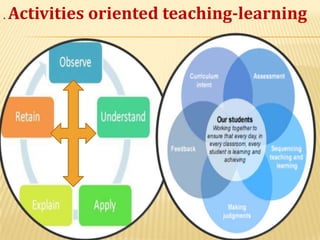
. Activities   oriented teaching-learning
INNOVATIVE WAYS TO                                                          ENHANCE

         LEARNING
     1.Cognitive learning
                                                                             1.Create a handout and transparency with a three-column chart.
    1. Select a problem (e.g .HOW SOCIO-ECONOMIC                             Place the letter “K” at the top of column 1, the letter “W” at the
     DIFFERENCES WERE REFLECTED IN THE RURAL                                  top of column 2, and the letter “L” at the top of column 3.
     SOCIETY).                                                                Distribute copies of the handout to students. Instead of a
    2. Discuss problem solving strategies.                                   transparency you may simply draw the KWL chart on the board.
    3. Introduce the problem to the students.                                2.Introduce the topic or concept to be studied (e.g.Rajputs).
    4. Have students clarify the problem (restate it-                        3.The K Part: Ask students to think quietly and independently
     possession of cattles, land, artisanal work.                             about the question “What do you already KNOW ABOUT RAJPUTS
    5. Assign students to "stakeholder groups" or roles (e.g.                ?” Tell them to write their responses in column 1 under the letter
     jatis, subjatis, clan etc) to develop solutions or positions.            “K.” Then, ask volunteers to share what they already know and
    6. Move students to jigsaw groups comprised of every                     record their responses on the transparency (or board).
     role (i.e. Rajputs, Ahoms, Sikhs, Jats etc) to try to reach              4.The W Part: Ask students to think quietly and independently on
     an agreement or a solution to the problem.
                                                                              responses to the question “ WHAT ARE SOME THINGS THAT YOU
    7. Debrief
                                                                              WANT TO LEARN ABOUT RAJPUTS ?” Tell them to write their
    .                                                                        responses in column 2 under the letter “W.” Then, ask volunteers
                                                                              to share what they already know and record their responses on
Gather two photographs that are likely to lead students to competing
                                                                              the transparency (or board). Use all or some of this information
descriptions of a(n) person, event, institution, society etc. For example,
                                                                              to modify the unit that you plan to teach.
        •Photograph A (photo of PERSIAN WHEEL= suggests some story
                                                                              5.Engage students in the unit of instruction.
        •Photograph B (photo OF SPINNING WHEEL= suggests some story
                                                                              6.The L Part: Ask students to work quietly and independently on
3. Jigsaw: Split the class into halves. Divide students in both halves into
                                                                              responses to the question “WHAT ARE SOME THINGS THAT YOU
small groups and distribute photograph A to some groups and Photograph
                                                                              LEARNT ABOUT RAJPUTS ?” Tell them to write their responses in
B to other groups.
                                                                              column 3 under the letter “L.” Then, ask volunteers to share what
4. Have students analyze the photograph and discuss the following in their
                                                                              they already know and record their responses on the
small groups: What does this photograph suggest about the topic?
                                                                              transparency
5. Take students who analyzed photograph A and pair them off with
students who analyzed photograph B. Ask each student in the paired
group to describe the conclusions they drew from their photograph. If the
photographs are well selected, students should arrive at competing
conclusions
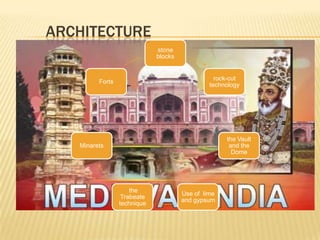
ARCHITECTURE
                             stone
                             blocks


                                                 rock-cut
         Forts
                                               technology


                                                    the Vault
   Minarets                                          and the
                                                      Dome


                     the
                                      Use of lime
                  Trabeate
                                      and gypsum
                 technique
Guru shaishya parampara

Guru shaishya parampara

  • 1.
  • 2.
    SYNTHETIC VISION  GURU SHISHYA PARAMPARA AND EDUCATION SYSTEM
  • 3.
    He who is possessed of supreme knowledge by concentration of mind, must have his senses under control, like spirited steeds controlled by a charioteer."
  • 5.
    TRADITIONAL AND MODERNEDUCATION SYSTEM TRADITIONAL EDUCATION SYSTEM MODERN EDUCATIONA SYSTEM
  • 6.
    Wood's Dispatch of 1854 laid the foundation of present system of education in India.
  • 7.
     TEACHER-  STUDENT  RELATIONSHI P
  • 8.
  • 9.
  • 10.
    COGNITIVE DOMAIN Use these words in written objectives to Level and Meaning describe the associated cognitive level: define, distinguish, identify, inquire, label, list, Knowledge: The remembering of previously match, memorize, name, read, recall, learned material (recall of facts) recognize, relate, repeat, record, select associate, describe, differentiate, discuss, explain, extend, generalize, give examples, Comprehension: The ability to grasp the illustrate, infer, interpret locate, rearrange, meaning of the knowledge being learned reorder, restate, rewrite, summarize, transform, translate apply, calculate, choose, classify, demonstrate, Application: The ability to use learning develop, generalize, illustrate, operate, materials in a new way organize, practise, restructure, sketch, solve, transfer, use analyse, categorize, classify, compare, Analysis: The ability to break material down contrast, deduce, describe, detect, diagram, into its parts so that its organizational structure discriminate, differentiate, distinguish, may be understood experiment, group, inspect, point out, put into lists, question, sub-divide, test Synthesis: The ability to combine previous combine, compile, create, design, generate, experiences with new material to form a whole integrate, modify, plan, produce, propose, solve new structure appraise, assess, choose, compare, conclude, Evaluation: The ability to judge the value of consider, criticize, evaluate, judge, measure, material for a given purpose rate, score, select, support, validate, value
  • 15.
  • 16.
  • 19.
    . Activities oriented teaching-learning
  • 20.
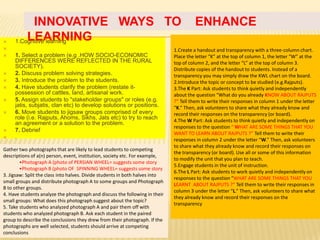
    INNOVATIVE WAYS TO ENHANCE  LEARNING 1.Cognitive learning  1.Create a handout and transparency with a three-column chart.  1. Select a problem (e.g .HOW SOCIO-ECONOMIC Place the letter “K” at the top of column 1, the letter “W” at the DIFFERENCES WERE REFLECTED IN THE RURAL top of column 2, and the letter “L” at the top of column 3. SOCIETY). Distribute copies of the handout to students. Instead of a  2. Discuss problem solving strategies. transparency you may simply draw the KWL chart on the board.  3. Introduce the problem to the students. 2.Introduce the topic or concept to be studied (e.g.Rajputs).  4. Have students clarify the problem (restate it- 3.The K Part: Ask students to think quietly and independently possession of cattles, land, artisanal work. about the question “What do you already KNOW ABOUT RAJPUTS  5. Assign students to "stakeholder groups" or roles (e.g. ?” Tell them to write their responses in column 1 under the letter jatis, subjatis, clan etc) to develop solutions or positions. “K.” Then, ask volunteers to share what they already know and  6. Move students to jigsaw groups comprised of every record their responses on the transparency (or board). role (i.e. Rajputs, Ahoms, Sikhs, Jats etc) to try to reach 4.The W Part: Ask students to think quietly and independently on an agreement or a solution to the problem. responses to the question “ WHAT ARE SOME THINGS THAT YOU  7. Debrief WANT TO LEARN ABOUT RAJPUTS ?” Tell them to write their  . responses in column 2 under the letter “W.” Then, ask volunteers to share what they already know and record their responses on Gather two photographs that are likely to lead students to competing the transparency (or board). Use all or some of this information descriptions of a(n) person, event, institution, society etc. For example, to modify the unit that you plan to teach. •Photograph A (photo of PERSIAN WHEEL= suggests some story 5.Engage students in the unit of instruction. •Photograph B (photo OF SPINNING WHEEL= suggests some story 6.The L Part: Ask students to work quietly and independently on 3. Jigsaw: Split the class into halves. Divide students in both halves into responses to the question “WHAT ARE SOME THINGS THAT YOU small groups and distribute photograph A to some groups and Photograph LEARNT ABOUT RAJPUTS ?” Tell them to write their responses in B to other groups. column 3 under the letter “L.” Then, ask volunteers to share what 4. Have students analyze the photograph and discuss the following in their they already know and record their responses on the small groups: What does this photograph suggest about the topic? transparency 5. Take students who analyzed photograph A and pair them off with students who analyzed photograph B. Ask each student in the paired group to describe the conclusions they drew from their photograph. If the photographs are well selected, students should arrive at competing conclusions
  • 21.
    ARCHITECTURE stone blocks rock-cut Forts technology the Vault Minarets and the Dome the Use of lime Trabeate and gypsum technique