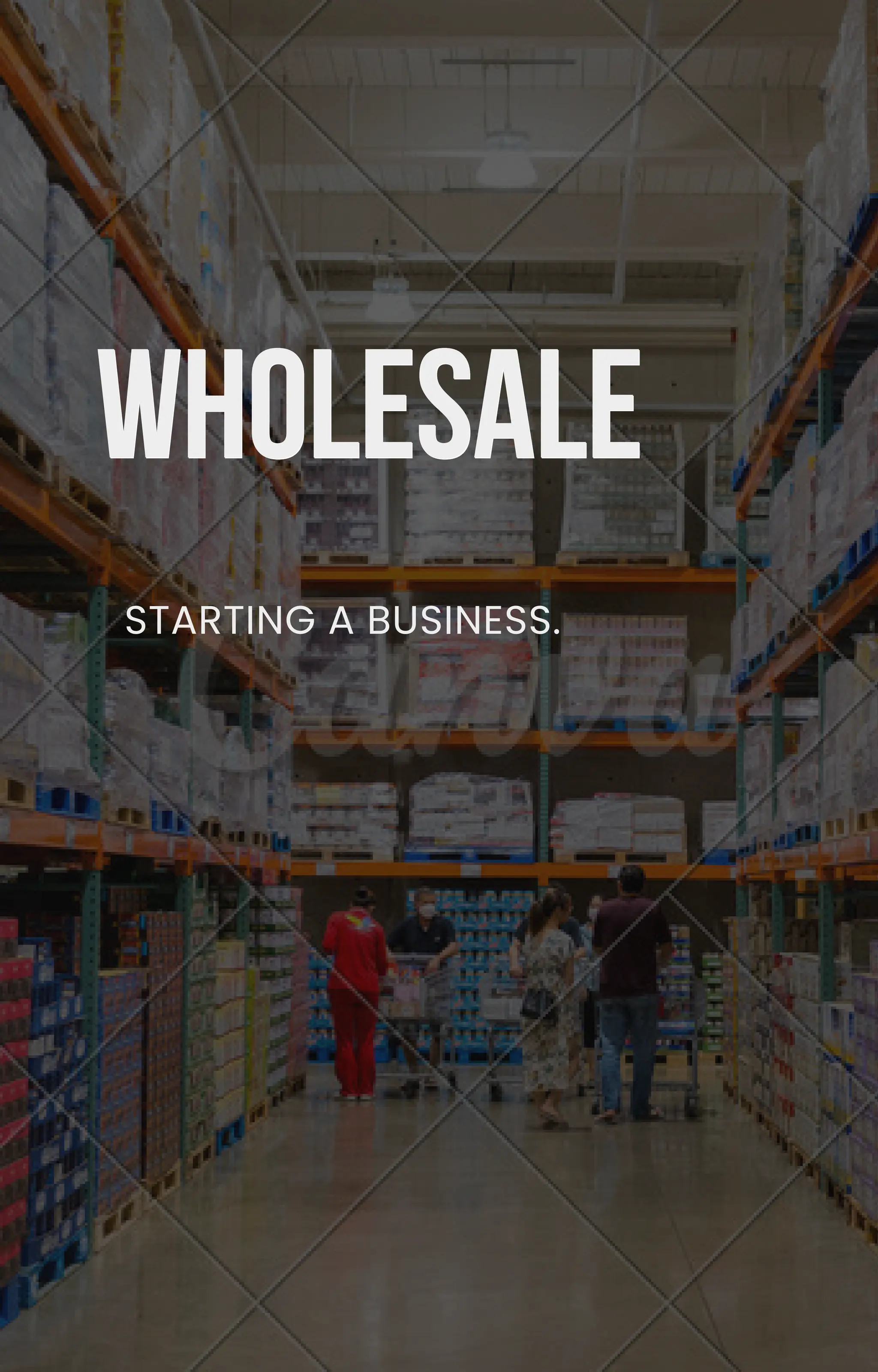
WHOLESALE
WHOLESALE
STARTING A BUSINESS.
INTRODUCTION
Welcome to "Unveiling Wholesale:
The Ultimate Guide to Mastering
Wholesale Business". In the dynamic
landscape of commerce, wholesale
stands as a cornerstone, facilitating
the flow of goods from
manufacturers to retailers and
ultimately to consumers. Yet, for
many aspiring entrepreneurs, the
world of wholesale remains shrouded
in mystery, perceived as an exclusive
domain accessible only to a select
few.
This ebook seeks to demystify
wholesale, providing you with a
comprehensive roadmap to navigate
this lucrative yet complex terrain.
WHETHERYOU'REANENTREPRENEURLOOKINGTO
STARTAWHOLESALEVENTUREORANEXISTING
WHOLESALERAIMINGTOREFINEYOURSTRATEGIES,
THISGUIDEISTAILOREDTOEQUIPYOUWITHTHE
KNOWLEDGE,INSIGHTS,ANDPRACTICALTOOLS
NEEDEDTOTHRIVEINTHEWHOLESALEINDUSTRY.
Understanding
Wholesale
In the vast landscape of commerce,
wholesale serves as a pivotal link in the
supply chain, connecting
manufacturers with retailers and
ensuring the efficient distribution of
goods. To embark on a journey of
wholesale mastery, it's essential to
grasp the fundamental concepts that
underpin this dynamic industry. In this
chapter, we'll delve into the essence of
wholesale, exploring its definition,
various types, and its indispensable
role in the marketplace.
What is Wholesale?
Definition of Wholesale: 1.
Wholesale refers to the sale of
goods in large quantities, typically
to retailers, businesses, or other
wholesalers. 2. Characteristics of
wholesale transactions: bulk orders,
lower unit prices, and a focus on
distribution rather than direct
consumer sales.
Key Players in Wholesale:
Manufacturers: Produce goods in large
quantities and sell them to wholesalers. 2.
Wholesalers: Purchase goods from
manufacturers and sell them in smaller
quantities to retailers or other businesses.
Retailers: Purchase goods from
wholesalers and sell them to
consumers through various
channels, such as brick-and-
mortar stores or online
platforms.
Types of Wholesale
Businesses
. Distributors: 1. Distributors act as
intermediaries between
manufacturers and retailers, buying
goods in bulk and selling them to
retailers in smaller quantities. 2.
They often specialize in specific
product categories or industries,
such as electronics, clothing, or
automotive parts.
Manufacturers' Sales
Branches and Offices:
Some manufacturers establish
sales branches or offices to sell
their products directly to
retailers or other businesses. 2.
These branches may offer
wholesale pricing and
distribution services, bypassing
traditional wholesalers. C. Cash
and Carry Wholesalers: 1. Cash
and carry wholesalers sell
goods in bulk to businesses or
individuals who pay in cash and
transport the items themselves.
. These wholesalers typically operate
warehouse-style stores and cater to
small businesses, convenience stores,
and independent retailers.
Importance of Wholesale
in Supply Chains
Facilitating Distribution: 1.
Wholesale bridges the gap
between production and
consumption, ensuring that goods
reach end consumers efficiently.
2. It streamlines the distribution
process by consolidating large
quantities of goods from multiple
manufacturers and delivering
them to retailers or business.
Economies of Scale:
Wholesale transactions often
involve bulk orders, allowing
wholesalers to negotiate lower
prices with manufacturers and
pass on savings to retailers. 2.
This enables retailers to price
their products competitively and
offer consumers a wide range of
goods at affordable prices.
. Supporting Business
Growth:
. Wholesale provides a platform for
businesses to expand their reach
and penetrate new markets by
reaching a broader network of
retailers or consumers. 2. It fosters
collaboration and partnerships
between manufacturers,
wholesalers, and retailers, driving
innovation and fostering industry
growth.
As we unravel the intricacies of
wholesale business, it becomes
evident that wholesale is not merely a
transactional exchange of goods but a
vital conduit that fuels the engine of
commerce. By understanding the
essence of wholesale and its
significance in the supply chain, you'll
be better equipped to navigate the
complexities of the wholesale
industry and unlock its vast potential
for growth and prosperity.

Wholesale book guide, for all enterpreneurs

  • 1.
  • 2.
    INTRODUCTION Welcome to "UnveilingWholesale: The Ultimate Guide to Mastering Wholesale Business". In the dynamic landscape of commerce, wholesale stands as a cornerstone, facilitating the flow of goods from manufacturers to retailers and ultimately to consumers. Yet, for many aspiring entrepreneurs, the world of wholesale remains shrouded in mystery, perceived as an exclusive domain accessible only to a select few. This ebook seeks to demystify wholesale, providing you with a comprehensive roadmap to navigate this lucrative yet complex terrain.
  • 3.
  • 4.
    Understanding Wholesale In the vastlandscape of commerce, wholesale serves as a pivotal link in the supply chain, connecting manufacturers with retailers and ensuring the efficient distribution of goods. To embark on a journey of wholesale mastery, it's essential to grasp the fundamental concepts that underpin this dynamic industry. In this chapter, we'll delve into the essence of wholesale, exploring its definition, various types, and its indispensable role in the marketplace.
  • 5.
    What is Wholesale? Definitionof Wholesale: 1. Wholesale refers to the sale of goods in large quantities, typically to retailers, businesses, or other wholesalers. 2. Characteristics of wholesale transactions: bulk orders, lower unit prices, and a focus on distribution rather than direct consumer sales. Key Players in Wholesale: Manufacturers: Produce goods in large quantities and sell them to wholesalers. 2. Wholesalers: Purchase goods from manufacturers and sell them in smaller quantities to retailers or other businesses.
  • 6.
    Retailers: Purchase goodsfrom wholesalers and sell them to consumers through various channels, such as brick-and- mortar stores or online platforms.
  • 7.
    Types of Wholesale Businesses .Distributors: 1. Distributors act as intermediaries between manufacturers and retailers, buying goods in bulk and selling them to retailers in smaller quantities. 2. They often specialize in specific product categories or industries, such as electronics, clothing, or automotive parts.
  • 8.
    Manufacturers' Sales Branches andOffices: Some manufacturers establish sales branches or offices to sell their products directly to retailers or other businesses. 2. These branches may offer wholesale pricing and distribution services, bypassing traditional wholesalers. C. Cash and Carry Wholesalers: 1. Cash and carry wholesalers sell goods in bulk to businesses or individuals who pay in cash and transport the items themselves.
  • 9.
    . These wholesalerstypically operate warehouse-style stores and cater to small businesses, convenience stores, and independent retailers.
  • 10.
    Importance of Wholesale inSupply Chains Facilitating Distribution: 1. Wholesale bridges the gap between production and consumption, ensuring that goods reach end consumers efficiently. 2. It streamlines the distribution process by consolidating large quantities of goods from multiple manufacturers and delivering them to retailers or business.
  • 11.
    Economies of Scale: Wholesaletransactions often involve bulk orders, allowing wholesalers to negotiate lower prices with manufacturers and pass on savings to retailers. 2. This enables retailers to price their products competitively and offer consumers a wide range of goods at affordable prices.
  • 12.
    . Supporting Business Growth: .Wholesale provides a platform for businesses to expand their reach and penetrate new markets by reaching a broader network of retailers or consumers. 2. It fosters collaboration and partnerships between manufacturers, wholesalers, and retailers, driving innovation and fostering industry growth.
  • 13.
    As we unravelthe intricacies of wholesale business, it becomes evident that wholesale is not merely a transactional exchange of goods but a vital conduit that fuels the engine of commerce. By understanding the essence of wholesale and its significance in the supply chain, you'll be better equipped to navigate the complexities of the wholesale industry and unlock its vast potential for growth and prosperity.