Welcome…
Today you willgain understanding of your
natural thinking & communication style,
frustrations and strengths.
www.SuzanneRockStierle.com (310) 433-8776
2.
Understanding the WHOLEBRAIN Model will:
• Improve Understanding of Self & Others
• Increase Personal Productivity
• Reduce Conflicts & Frustrations
• Help You Understand Your Personal Superpower
3.
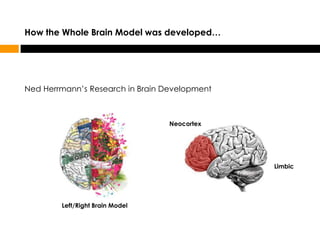
How the WholeBrain Model was developed…
Ned Herrmann’s Research in Brain Development
Neocortex
Limbic
Left/Right Brain Model
4.
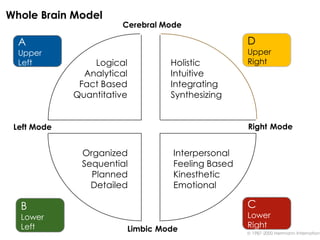
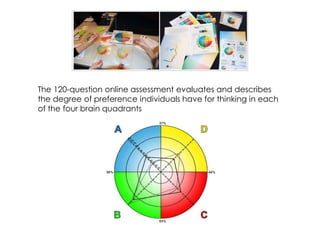
Whole Brain Model
Cerebral Mode
A D
Upper Upper
Left Logical Holistic Right
Analytical Intuitive
Fact Based Integrating
Quantitative Synthesizing
Left Mode Right Mode
Organized Interpersonal
Sequential Feeling Based
Planned Kinesthetic
Detailed Emotional
B C
Lower Lower
Left Right
Limbic Mode 1987-2000 Herrmann Internationa
5.
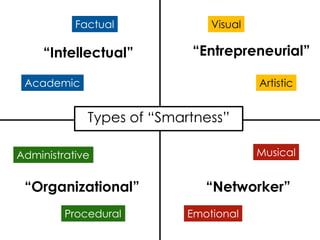
Our Four DifferentSelves
A D
Analyzes Infers Experimental
Rational
Quantifies Imagines Self
Self
Is Logical Speculates
Is Critical Takes Risks
Is Realistic Is Impetuous
Likes Numbers Breaks Rules
Knows about Money Likes Surprises
Knows how Things Work Is Curious / Plays
Takes Preventive Action Is Sensitive to Others
Establishes Procedures Likes to Teach
Gets Things Done Touches a Lot
Is Reliable Is Supportive
B C
Organizes Is Expressive
Is Neat Is Emotional
Timely Talks a lot
Safekeeping Feeling
Plans Feels
Self Self
1987-2000 Herrmann International
6.
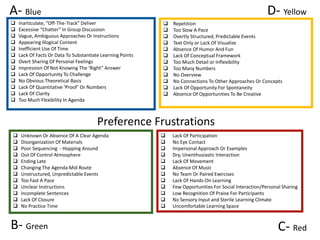
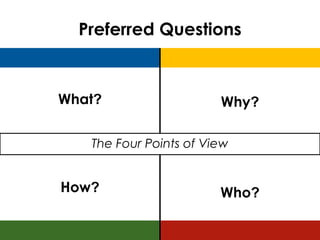
A- Blue D- Yellow
Inarticulate, “Off-The-Track” Deliver Repetition
Excessive “Chatter” In Group Discussion Too Slow A Pace
Vague, Ambiguous Approaches Or Instructions Overtly Structured, Predictable Events
Appearing Illogical Content Text Only or Lack Of Visualize
Inefficient Use Of Time Absence Of Humor And Fun
Lack Of Facts Or Data To Substantiate Learning Points Lack Of Conceptual Framework
Overt Sharing Of Personal Feelings Too Much Detail or Inflexibility
Impression Of Not Knowing The ‘Right” Answer Too Many Numbers
Lack Of Opportunity To Challenge No Overview
No Obvious Theoretical Basis No Connections To Other Approaches Or Concepts
Lack Of Quantitative ‘Proof’ Or Numbers Lack Of Opportunity For Spontaneity
Lack Of Clarity Absence Of Opportunities To Be Creative
Too Much Flexibility In Agenda
Preference Frustrations
Unknown Or Absence Of A Clear Agenda Lack Of Participation
Disorganization Of Materials No Eye Contact
Poor Sequencing - Hopping Around Impersonal Approach Or Examples
Out Of Control Atmosphere Dry, Unenthusiastic Interaction
Ending Late Lack Of Movement
Changing The Agenda Mid Route Absence Of Music
Unstructured, Unpredictable Events No Team Or Paired Exercises
Too Fast A Pace Lack Of Hands-On Learning
Unclear Instructions Few Opportunities For Social Interaction/Personal Sharing
Incomplete Sentences Low Recognition Of Praise For Participants
Lack Of Closure No Sensory Input and Sterile Learning Climate
No Practice Time Uncomfortable Learning Space
B- Green C- Red