 What is Whistle Blowing ?
 Purpose ,Objectives and Characteristics of
Whistle Blowing
 Stages of a Whistle Blowing Incident
 Legal provisions
 Cases
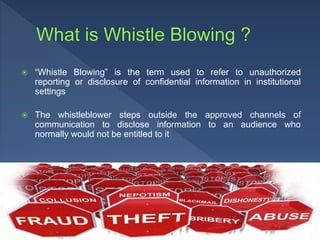
 “Whistle Blowing” is the term used to refer to unauthorized
reporting or disclosure of confidential information in institutional
settings
 The whistleblower steps outside the approved channels of
communication to disclose information to an audience who
normally would not be entitled to it
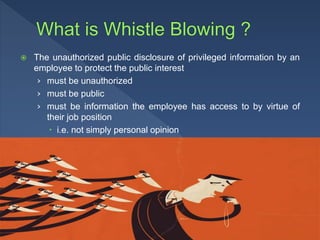
 The unauthorized public disclosure of privileged information by an
employee to protect the public interest
› must be unauthorized
› must be public
› must be information the employee has access to by virtue of
their job position
 i.e. not simply personal opinion
 To draw attention to unethical,
inappropriate or incompetent
conduct which has or may have
detrimental effects either for the
institution or for those affected by its
functions.
 It extends to situations where an
individual believes that an activity is
harmful while others involved are
not aware of it or reject the
perception that is involved
 The whistleblowers are prepared to take full responsibility for their
actions
 Implies a concern for the preservation of ethical values which
overrides a concern for self-preservation
 Whistleblowers open themselves to the risk of losing personal and
financial security, counter-accusation and alienation and yet they
feel compelled to make the disclosure and to stand by it
 Stage One – Is There a Potential Whistle Blowing
Scenario ?
 Stage Two – Seriousness Test
 Stage Three – Reality Check
 Stage Four – Becoming Aware of the Big Picture
 Stage Five – Forcing Management Recognition of the
Problem
 Stage Six – Taking the Problem to Upper Management
 Stage Seven – Going Outside the Organization
 Stage Eight – Living with The Results
 A potential whistle blowing incident begins with 3 conditions :
› You learn that your organization, or someone in your
organization, is pursuing a course of action you believe is
ethically wrong
› You believe that you know some relevant information that is not
generally known, typically this information is related to your
professional expertise
› You believe that if what you know is correct, and if it became
widely know and understood, the course of action would be
changed
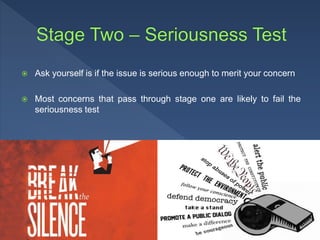
 Ask yourself is if the issue is serious enough to merit your concern
 Most concerns that pass through stage one are likely to fail the
seriousness test
 Before you begin to take any action, you should first pause,
consider it all again, gather more information, and try to be certain
that you are right
 No matter how intelligent and experienced you are, there is always
the possibility that your initial impression of the situation is not
completely correct
 One way to check your assessment is through discussions with
your colleagues, you need to be certain that you understand your
colleagues’ reasoning and the you can rationally explain why you
reached a different conclusion
 View the problem in a broader setting, beyond your individual
perspective
 An organization of any substantial size is likely to have multiple
areas of expertise and levels of management, final decisions may
depend on input from several technical, financial, and marketing
experts, as well as an assessment of compatibility with the
company’s long term strategic plan
 Once you have convinced that the ‘Big Picture’ does not change
anything, you have arrived at the beginning of the truly difficult
decisions and actions
 You should start out this stage with the goal of getting the problem
remedied from inside the organization and with as few bad feelings as
possible
 The first step is to make middle management aware of the problem in
a clear and positive manner
 From the very beginning of this stage, you should be preparing for the
possibility that you will be forced to go outside your organization with
your concerns. One aspect of this preparation is the accumulation of
supporting documents
 Another aspect is to be thinking about how you might get support from
professional societies and whom you might contact should you need
legal assistance
 A third aspect of this preparation is to be aware that your career path
may change abruptly in the near future
 When you are thoroughly convinced that the immediate level of
management is not going to address the problem, you might need
to take your concerns to a higher level. The danger for you in
“going over the boss’s head” is that this almost certainly puts your
job on the line
 Another option at this point is to attempt to pass the information up
the management ladder anonymously. People generally take
anonymous information less seriously simply because it is
anonymous
 Up to this stage, you may quickly reach the point at which you feel
you can no longer address the problem within the organization, you
are then at the threshold of fully blowing the whistle
 Once your have decided that the organization will not address the
problem unless there is pressure from the outside, Whistle Blowing
is the only alternative left
 The most effective forum and format for the whistle blowing will, of
course, depend on the specifics of the situation
 It may be tempting to think of going to reporters and getting lots of
publicity, however, professional and governmental regulatory
bodies may be a better choice
 Another better alternative is Regulatory agencies and legal
authorities because they may be able to impose fines, close
operations, or do other things that get the organization’s attention
immediately
 If you have not experienced a change in job status already, you
almost certainly will now. The less dramatic change is for the
organization to transfer you to a career dead end. The more direct
change is an ultimatum to quit or be fired
 The whistle blower essentially never continues a happy career in
the same organization
 You should of course be concerned for your financial security
 If you are a member of a professional organization, it may help in
providing moral and other forms of support
17
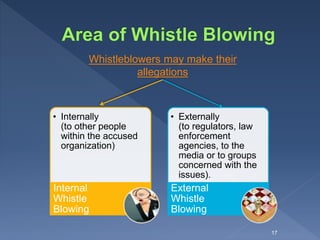
• Internally
(to other people
within the accused
organization)
Internal
Whistle
Blowing
• Externally
(to regulators, law
enforcement
agencies, to the
media or to groups
concerned with the
issues).
External
Whistle
Blowing
Whistleblowers may make their
allegations
 Whistle Blowers in some areas are not without legal support. In
United States, both federal and state laws are aimed at protecting
those who undertake whistle blowing.
 The primary protection law is the Federal Whistle Blower Protection
Act of 1989
 Another Federal Law is the False Claims Act, which has been
around since 1863.
 The law that a government enacts to protect such persons who
help expose corruption is called a whistleblower protection law.
 At present Indian Statues do not make the Establishment of
Whistle Blower Mechanism Mandatory nor is there any law for
protection of whistleblowers in India.
19
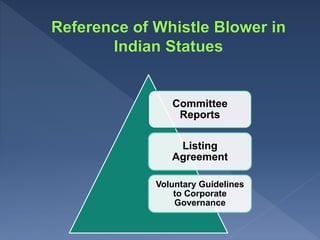
Committee
Reports
Listing
Agreement
Voluntary Guidelines
to Corporate
Governance
21
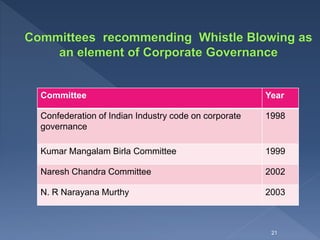
Committee Year
Confederation of Indian Industry code on corporate
governance
1998
Kumar Mangalam Birla Committee 1999
Naresh Chandra Committee 2002
N. R Narayana Murthy 2003
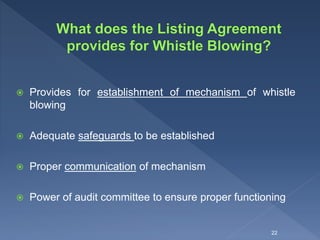
 Provides for establishment of mechanism of whistle
blowing
 Adequate safeguards to be established
 Proper communication of mechanism
 Power of audit committee to ensure proper functioning
22
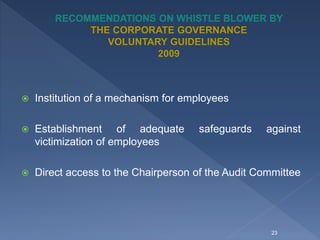
 Institution of a mechanism for employees
 Establishment of adequate safeguards against
victimization of employees
 Direct access to the Chairperson of the Audit Committee
23
24
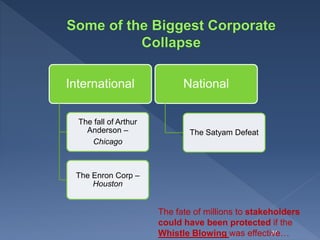
International
The fall of Arthur
Anderson –
Chicago
The Enron Corp –
Houston
National
The Satyam Defeat
The fate of millions to stakeholders
could have been protected if the
Whistle Blowing was effective…
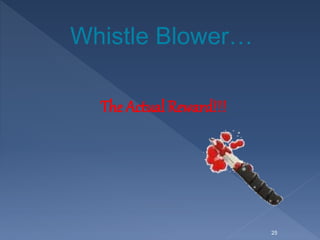
Whistle Blower…
The Actual Reward!!!
25
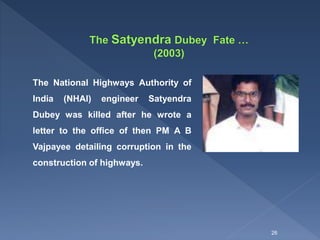
The National Highways Authority of
India (NHAI) engineer Satyendra
Dubey was killed after he wrote a
letter to the office of then PM A B
Vajpayee detailing corruption in the
construction of highways.
26
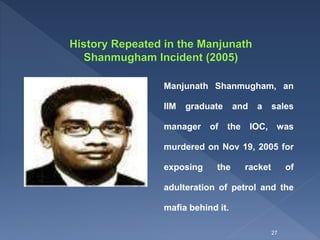
Manjunath Shanmugham, an
IIM graduate and a sales
manager of the IOC, was
murdered on Nov 19, 2005 for
exposing the racket of
adulteration of petrol and the
mafia behind it.
27
 Ineffective mechanism
 Failure to Impart Proper confidence
 Lack of Independent ombudsmen
 Non maintainability of whistle blower
confidentiality
 Ineffective Security of whistle blower
 Improper Inquiry and investigation
procedure
 Inappropriate punishment
 The Fear of Isolation
28
Thanks for your attention
QUESTIONS
Whistle blowing

Whistle blowing

  • 2.
     What isWhistle Blowing ?  Purpose ,Objectives and Characteristics of Whistle Blowing  Stages of a Whistle Blowing Incident  Legal provisions  Cases
  • 3.
     “Whistle Blowing”is the term used to refer to unauthorized reporting or disclosure of confidential information in institutional settings  The whistleblower steps outside the approved channels of communication to disclose information to an audience who normally would not be entitled to it
  • 4.
     The unauthorizedpublic disclosure of privileged information by an employee to protect the public interest › must be unauthorized › must be public › must be information the employee has access to by virtue of their job position  i.e. not simply personal opinion
  • 5.
     To drawattention to unethical, inappropriate or incompetent conduct which has or may have detrimental effects either for the institution or for those affected by its functions.  It extends to situations where an individual believes that an activity is harmful while others involved are not aware of it or reject the perception that is involved
  • 6.
     The whistleblowersare prepared to take full responsibility for their actions  Implies a concern for the preservation of ethical values which overrides a concern for self-preservation  Whistleblowers open themselves to the risk of losing personal and financial security, counter-accusation and alienation and yet they feel compelled to make the disclosure and to stand by it
  • 7.
     Stage One– Is There a Potential Whistle Blowing Scenario ?  Stage Two – Seriousness Test  Stage Three – Reality Check  Stage Four – Becoming Aware of the Big Picture
  • 8.
     Stage Five– Forcing Management Recognition of the Problem  Stage Six – Taking the Problem to Upper Management  Stage Seven – Going Outside the Organization  Stage Eight – Living with The Results
  • 9.
     A potentialwhistle blowing incident begins with 3 conditions : › You learn that your organization, or someone in your organization, is pursuing a course of action you believe is ethically wrong › You believe that you know some relevant information that is not generally known, typically this information is related to your professional expertise › You believe that if what you know is correct, and if it became widely know and understood, the course of action would be changed
  • 10.
     Ask yourselfis if the issue is serious enough to merit your concern  Most concerns that pass through stage one are likely to fail the seriousness test
  • 11.
     Before youbegin to take any action, you should first pause, consider it all again, gather more information, and try to be certain that you are right  No matter how intelligent and experienced you are, there is always the possibility that your initial impression of the situation is not completely correct  One way to check your assessment is through discussions with your colleagues, you need to be certain that you understand your colleagues’ reasoning and the you can rationally explain why you reached a different conclusion
  • 12.
     View theproblem in a broader setting, beyond your individual perspective  An organization of any substantial size is likely to have multiple areas of expertise and levels of management, final decisions may depend on input from several technical, financial, and marketing experts, as well as an assessment of compatibility with the company’s long term strategic plan  Once you have convinced that the ‘Big Picture’ does not change anything, you have arrived at the beginning of the truly difficult decisions and actions
  • 13.
     You shouldstart out this stage with the goal of getting the problem remedied from inside the organization and with as few bad feelings as possible  The first step is to make middle management aware of the problem in a clear and positive manner  From the very beginning of this stage, you should be preparing for the possibility that you will be forced to go outside your organization with your concerns. One aspect of this preparation is the accumulation of supporting documents  Another aspect is to be thinking about how you might get support from professional societies and whom you might contact should you need legal assistance  A third aspect of this preparation is to be aware that your career path may change abruptly in the near future
  • 14.
     When youare thoroughly convinced that the immediate level of management is not going to address the problem, you might need to take your concerns to a higher level. The danger for you in “going over the boss’s head” is that this almost certainly puts your job on the line  Another option at this point is to attempt to pass the information up the management ladder anonymously. People generally take anonymous information less seriously simply because it is anonymous  Up to this stage, you may quickly reach the point at which you feel you can no longer address the problem within the organization, you are then at the threshold of fully blowing the whistle
  • 15.
     Once yourhave decided that the organization will not address the problem unless there is pressure from the outside, Whistle Blowing is the only alternative left  The most effective forum and format for the whistle blowing will, of course, depend on the specifics of the situation  It may be tempting to think of going to reporters and getting lots of publicity, however, professional and governmental regulatory bodies may be a better choice  Another better alternative is Regulatory agencies and legal authorities because they may be able to impose fines, close operations, or do other things that get the organization’s attention immediately
  • 16.
     If youhave not experienced a change in job status already, you almost certainly will now. The less dramatic change is for the organization to transfer you to a career dead end. The more direct change is an ultimatum to quit or be fired  The whistle blower essentially never continues a happy career in the same organization  You should of course be concerned for your financial security  If you are a member of a professional organization, it may help in providing moral and other forms of support
  • 17.
    17 • Internally (to otherpeople within the accused organization) Internal Whistle Blowing • Externally (to regulators, law enforcement agencies, to the media or to groups concerned with the issues). External Whistle Blowing Whistleblowers may make their allegations
  • 18.
     Whistle Blowersin some areas are not without legal support. In United States, both federal and state laws are aimed at protecting those who undertake whistle blowing.  The primary protection law is the Federal Whistle Blower Protection Act of 1989  Another Federal Law is the False Claims Act, which has been around since 1863.
  • 19.
     The lawthat a government enacts to protect such persons who help expose corruption is called a whistleblower protection law.  At present Indian Statues do not make the Establishment of Whistle Blower Mechanism Mandatory nor is there any law for protection of whistleblowers in India. 19
  • 20.
  • 21.
    21 Committee Year Confederation ofIndian Industry code on corporate governance 1998 Kumar Mangalam Birla Committee 1999 Naresh Chandra Committee 2002 N. R Narayana Murthy 2003
  • 22.
     Provides forestablishment of mechanism of whistle blowing  Adequate safeguards to be established  Proper communication of mechanism  Power of audit committee to ensure proper functioning 22
  • 23.
     Institution ofa mechanism for employees  Establishment of adequate safeguards against victimization of employees  Direct access to the Chairperson of the Audit Committee 23
  • 24.
    24 International The fall ofArthur Anderson – Chicago The Enron Corp – Houston National The Satyam Defeat The fate of millions to stakeholders could have been protected if the Whistle Blowing was effective…
  • 25.
  • 26.
    The National HighwaysAuthority of India (NHAI) engineer Satyendra Dubey was killed after he wrote a letter to the office of then PM A B Vajpayee detailing corruption in the construction of highways. 26
  • 27.
    Manjunath Shanmugham, an IIMgraduate and a sales manager of the IOC, was murdered on Nov 19, 2005 for exposing the racket of adulteration of petrol and the mafia behind it. 27
  • 28.
     Ineffective mechanism Failure to Impart Proper confidence  Lack of Independent ombudsmen  Non maintainability of whistle blower confidentiality  Ineffective Security of whistle blower  Improper Inquiry and investigation procedure  Inappropriate punishment  The Fear of Isolation 28
  • 29.
    Thanks for yourattention QUESTIONS