






Where Do Stories Come
       From?
COM 13500 Introduction to Journalism
Today’s Concepts
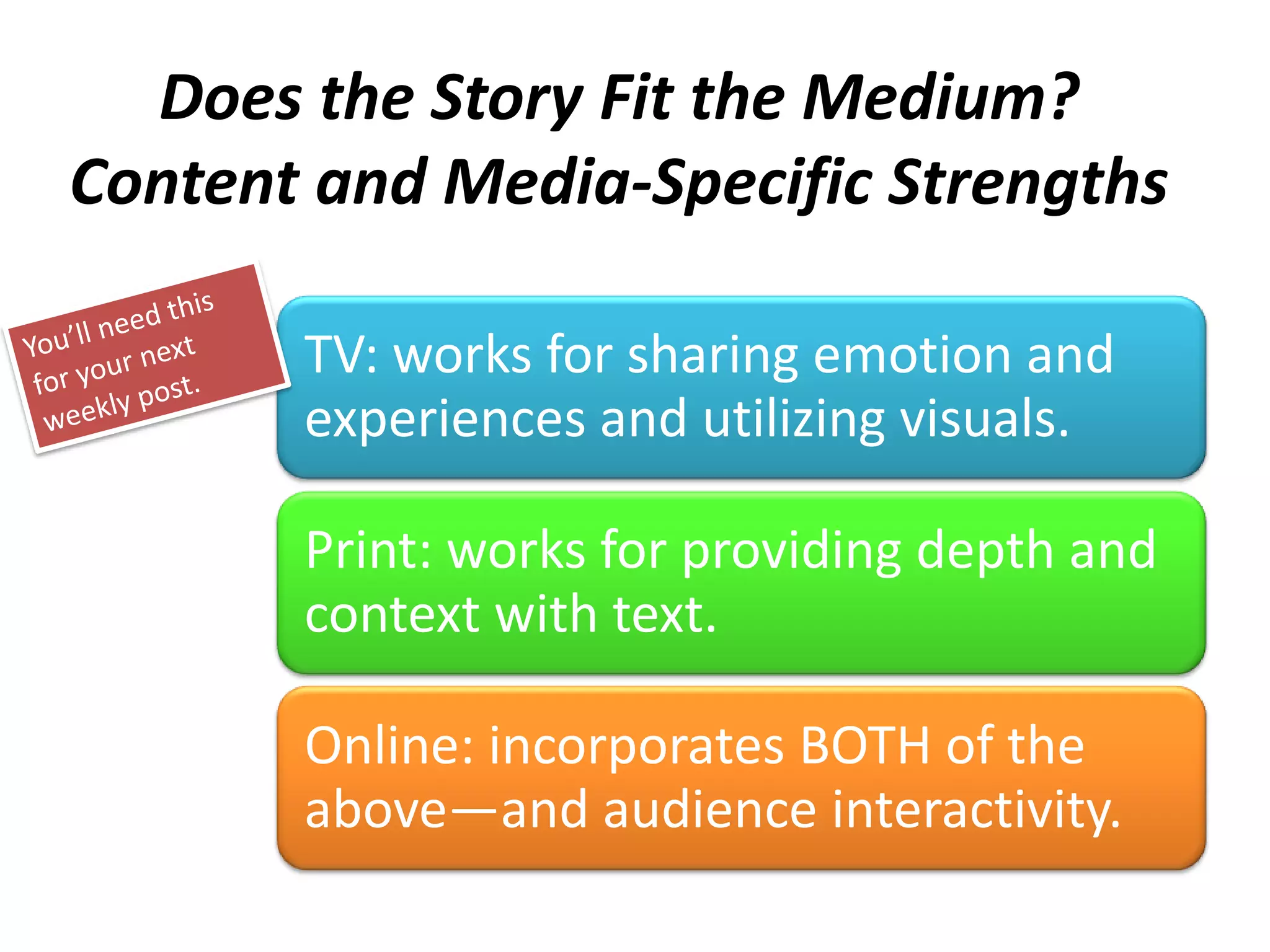
Does the Story Fit the Medium?
Content and Media-Specific Strengths

       TV: works for sharing emotion and
       experiences and utilizing visuals.

       Print: works for providing depth and
       context with text.

       Online: incorporates BOTH of the
       above—and audience interactivity.
Where do
news stories
  come
  from?


               Flickr: Marco Arment
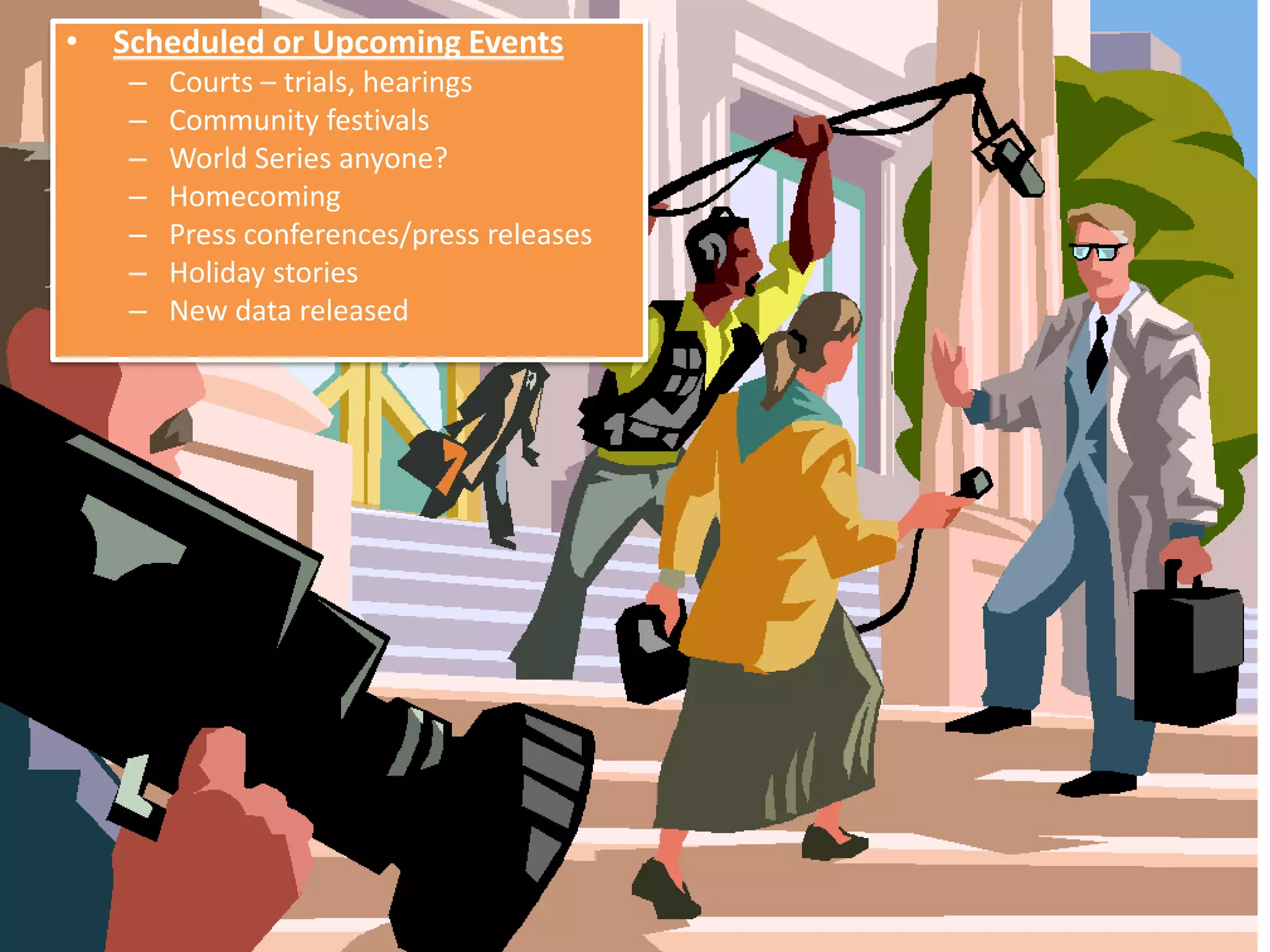
• Scheduled or Upcoming Events
   –   Courts – trials, hearings
   –   Community festivals
   –   World Series anyone?
   –   Homecoming
   –   Press conferences/press releases
   –   Holiday stories
   –   New data released
• Unscheduled Events
   – BREAKING NEWS!
      •   Crimes, arrests
      •   Searches
      •   Fires
      •   Major accidents
      •   Chemical plant explosions
      •   Police scanner (beat calls)
• Political Events
    – Local, national and international
    – City and county council meetings,
      school boards
    – State and federal legislative
      agendas
    – Elections
    – Political scandals
    – Political protests
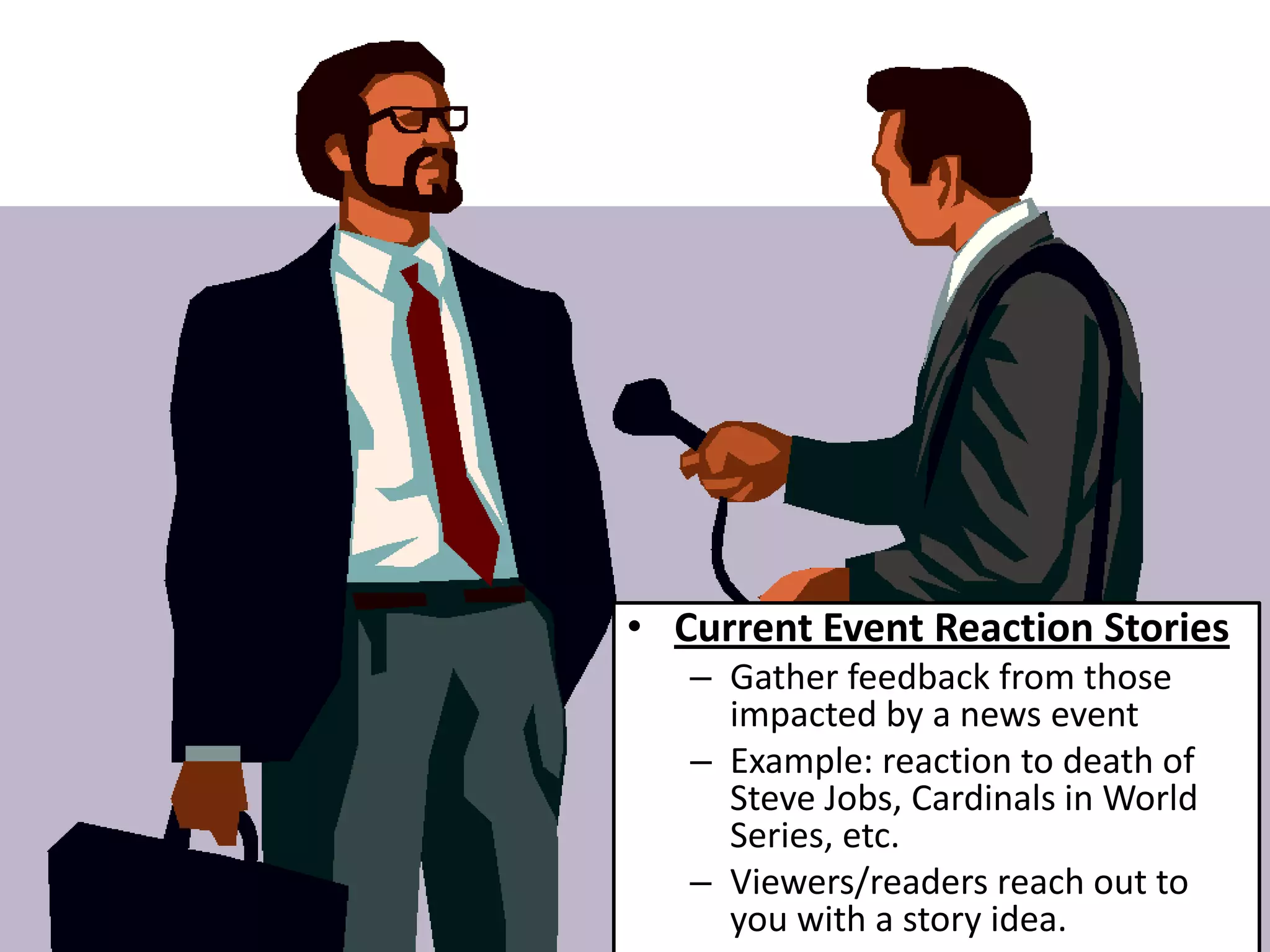
• Current Event Reaction Stories
   – Gather feedback from those
     impacted by a news event
   – Example: reaction to death of
     Steve Jobs, Cardinals in World
     Series, etc.
   – Viewers/readers reach out to
     you with a story idea.
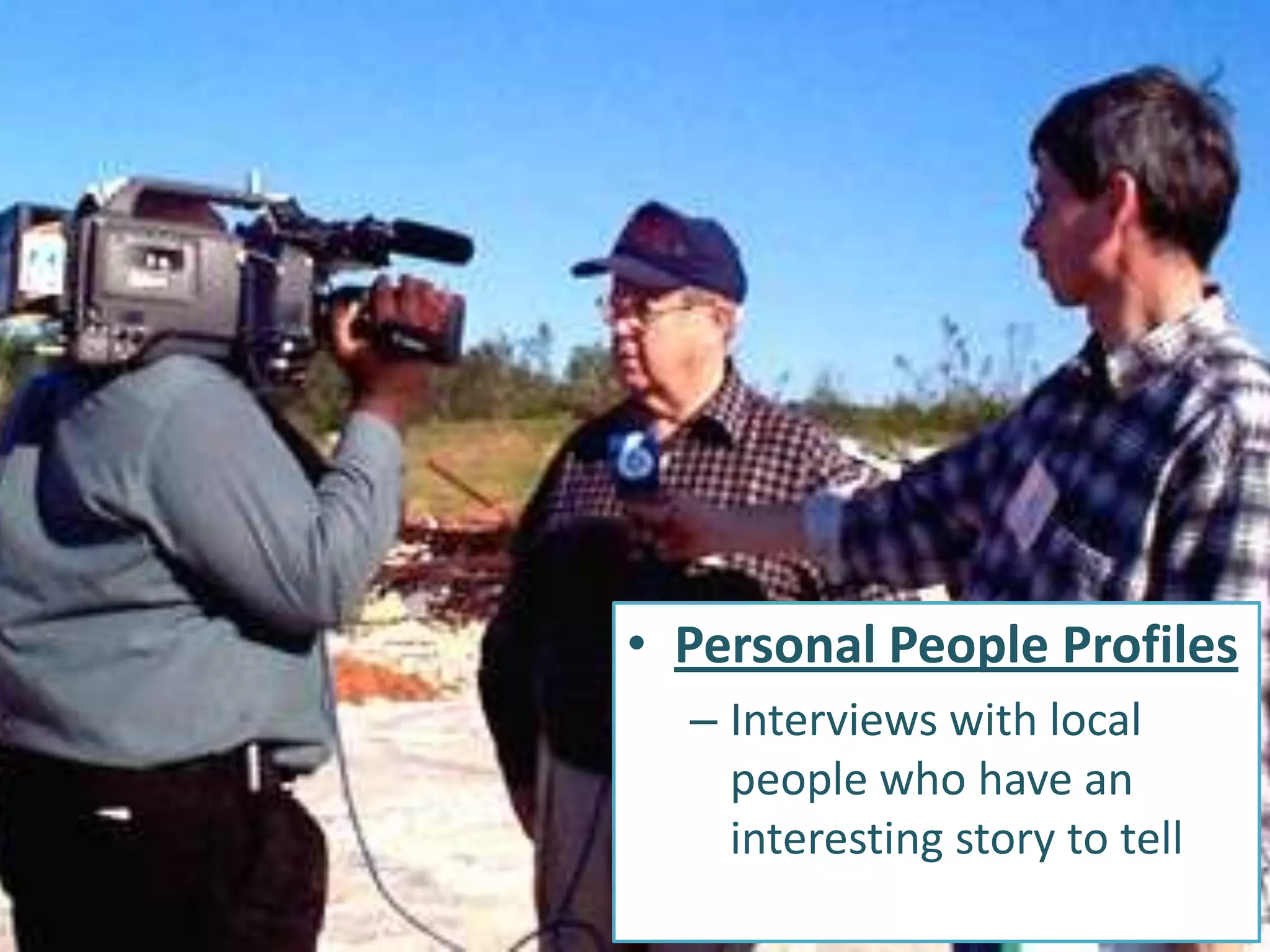
• Personal People Profiles
  – Interviews with local
    people who have an
    interesting story to tell
Niches/Beats With
Developed Sources:
   –   Health
   –   Business
   –   Education
   –   Sports
   –   Politics
• Social Media
  – Hear what
    people are
    talking about –
    LISTEN!
  – Connect directly
    with your
    audience
  – Stay up to date
    with news
  – “Crowd source”
• Follow the Money
  – Find out who has a
    financial stake in
    something
  – Discover who is
    financially backing a
    plan/candidate/proposal
• Be Curious! (number one
  piece of advice!)
   – Look, listen, ask questions
     about the world around you.
   – Don’t be afraid to ask WHY?
   – Talk with local residents in
     your community. Be where
     they are.
Where do stories come from slideshare

Where do stories come from slideshare

  • 1.
    Where Do StoriesCome From? COM 13500 Introduction to Journalism
  • 2.
  • 3.
    Does the StoryFit the Medium? Content and Media-Specific Strengths TV: works for sharing emotion and experiences and utilizing visuals. Print: works for providing depth and context with text. Online: incorporates BOTH of the above—and audience interactivity.
  • 4.
    Where do news stories come from? Flickr: Marco Arment
  • 5.
    • Scheduled orUpcoming Events – Courts – trials, hearings – Community festivals – World Series anyone? – Homecoming – Press conferences/press releases – Holiday stories – New data released
  • 6.
    • Unscheduled Events – BREAKING NEWS! • Crimes, arrests • Searches • Fires • Major accidents • Chemical plant explosions • Police scanner (beat calls)
  • 7.
    • Political Events – Local, national and international – City and county council meetings, school boards – State and federal legislative agendas – Elections – Political scandals – Political protests
  • 8.
    • Current EventReaction Stories – Gather feedback from those impacted by a news event – Example: reaction to death of Steve Jobs, Cardinals in World Series, etc. – Viewers/readers reach out to you with a story idea.
  • 9.
    • Personal PeopleProfiles – Interviews with local people who have an interesting story to tell
  • 10.
    Niches/Beats With Developed Sources: – Health – Business – Education – Sports – Politics
  • 11.
    • Social Media – Hear what people are talking about – LISTEN! – Connect directly with your audience – Stay up to date with news – “Crowd source”
  • 12.
    • Follow theMoney – Find out who has a financial stake in something – Discover who is financially backing a plan/candidate/proposal
  • 13.
    • Be Curious!(number one piece of advice!) – Look, listen, ask questions about the world around you. – Don’t be afraid to ask WHY? – Talk with local residents in your community. Be where they are.