What will it take to
create an e-commerce
circular reverse logistics
system in Asia?
This presentation focuses on 2 aspects:
1. Establishing circular systems for
returns based on economically
viable solutions to prolong or
capture their material value.
2. Establishing a circular e-commerce
industry
E-Commerce Circular Footprint
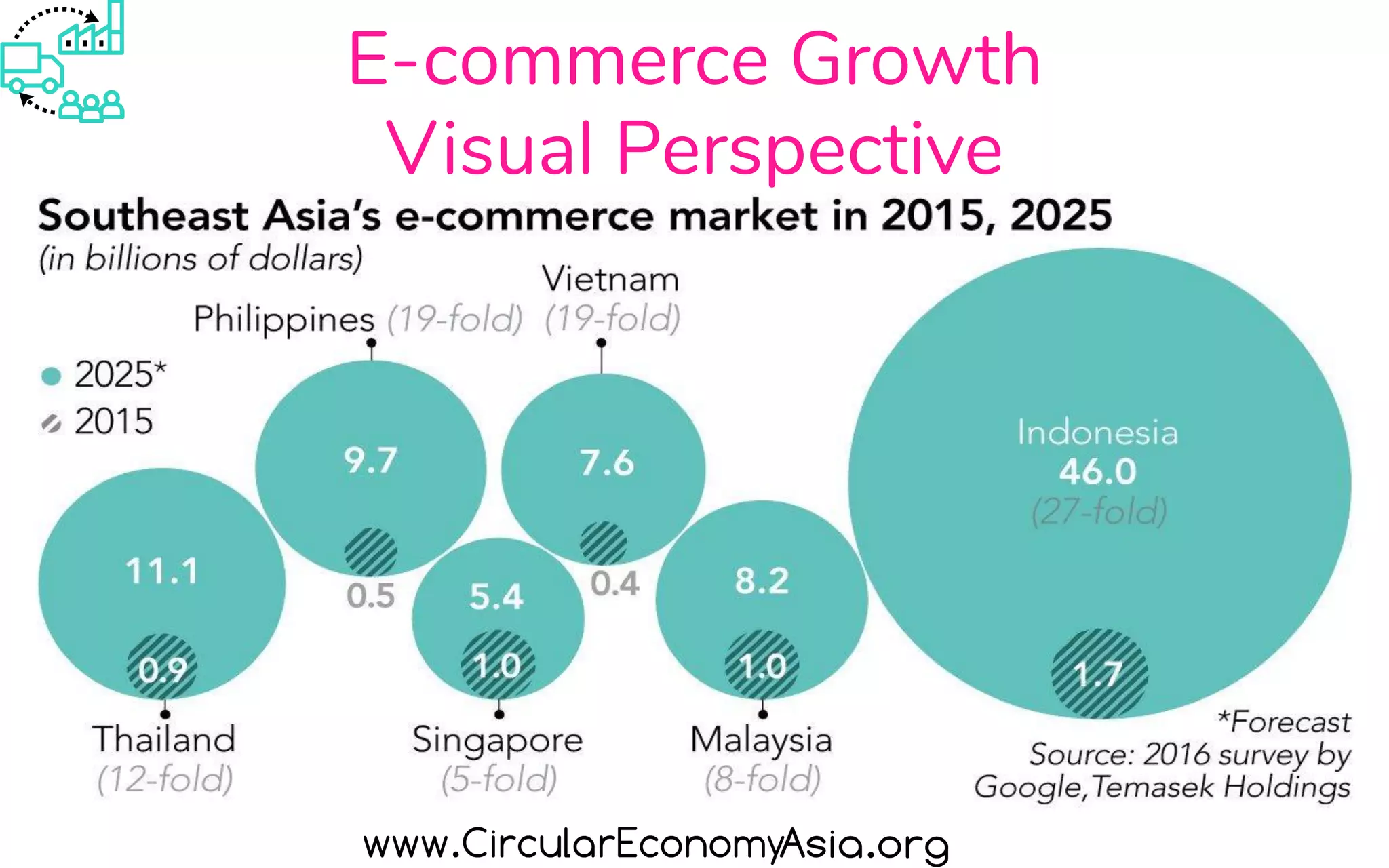
E-commerce Growth
Visual Perspective
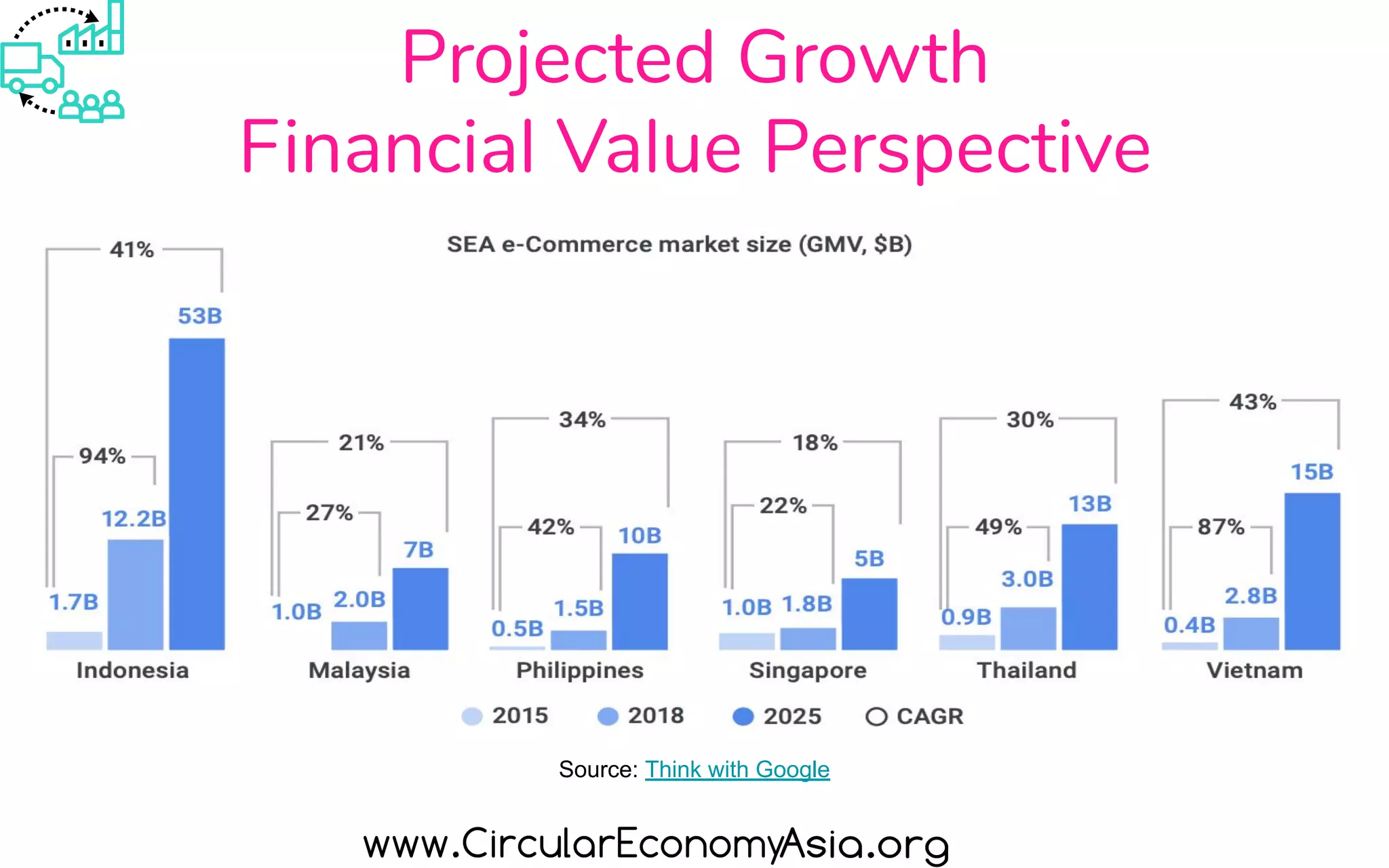
Source: Think with Google
Projected Growth
Financial Value Perspective
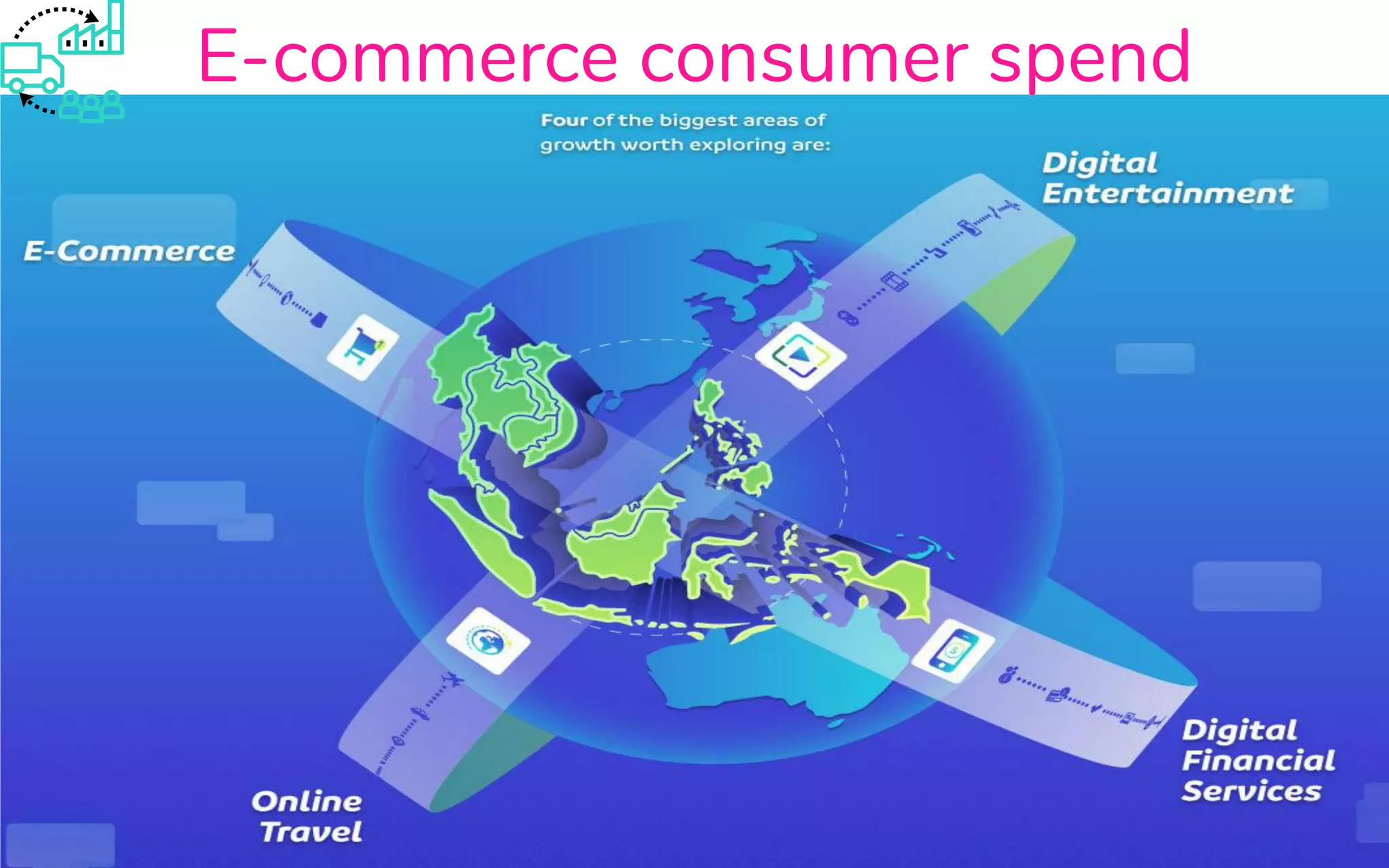
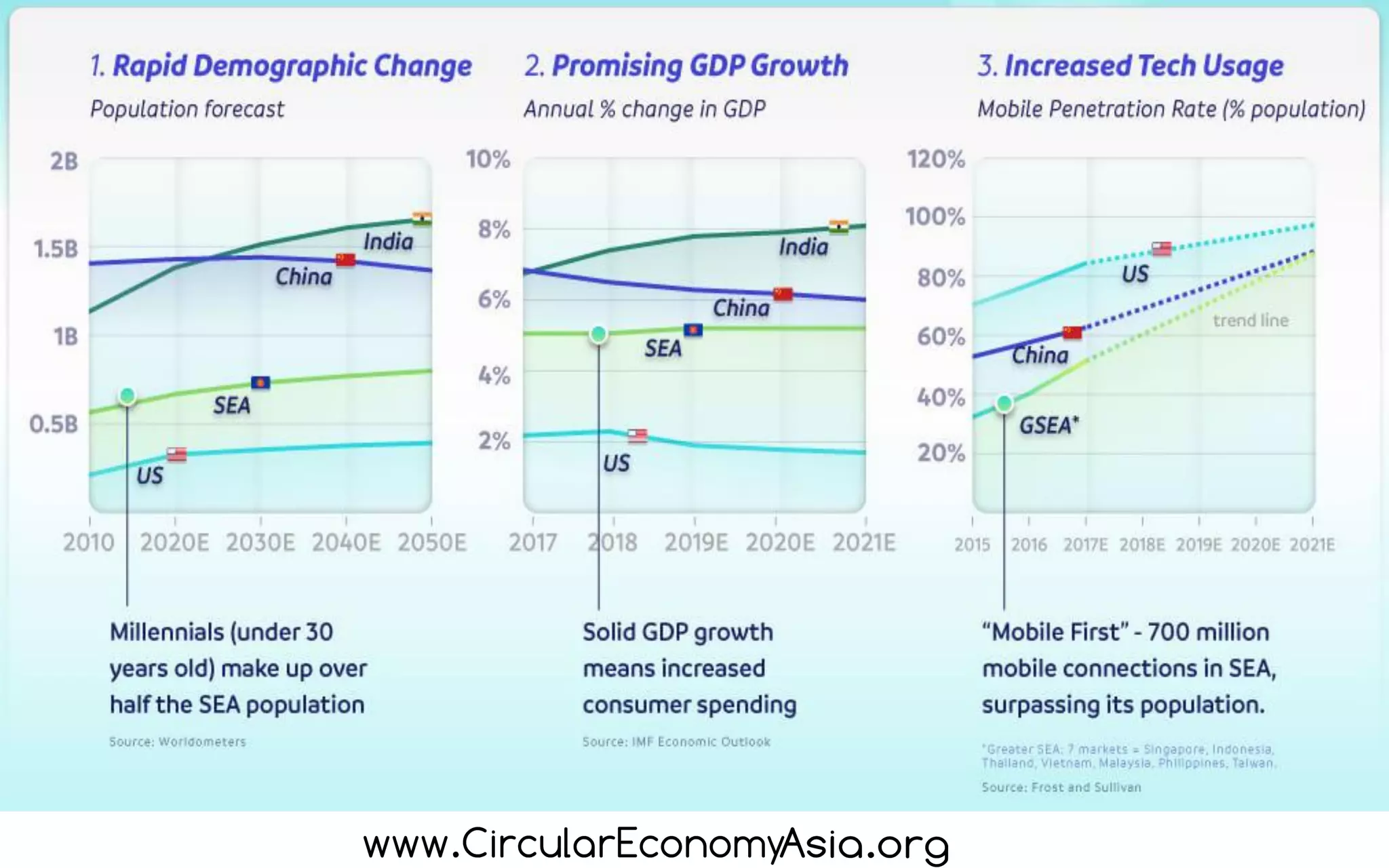
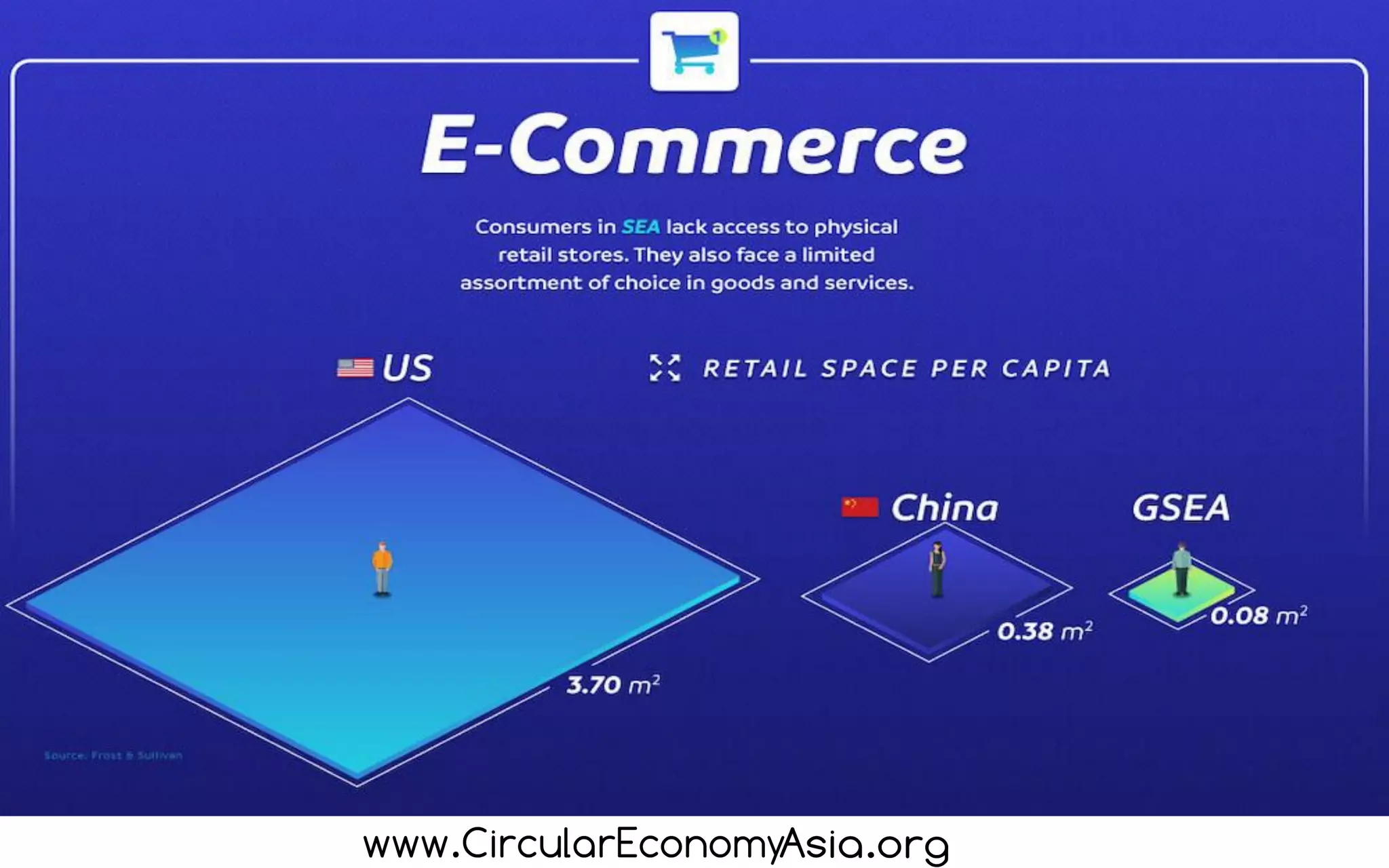
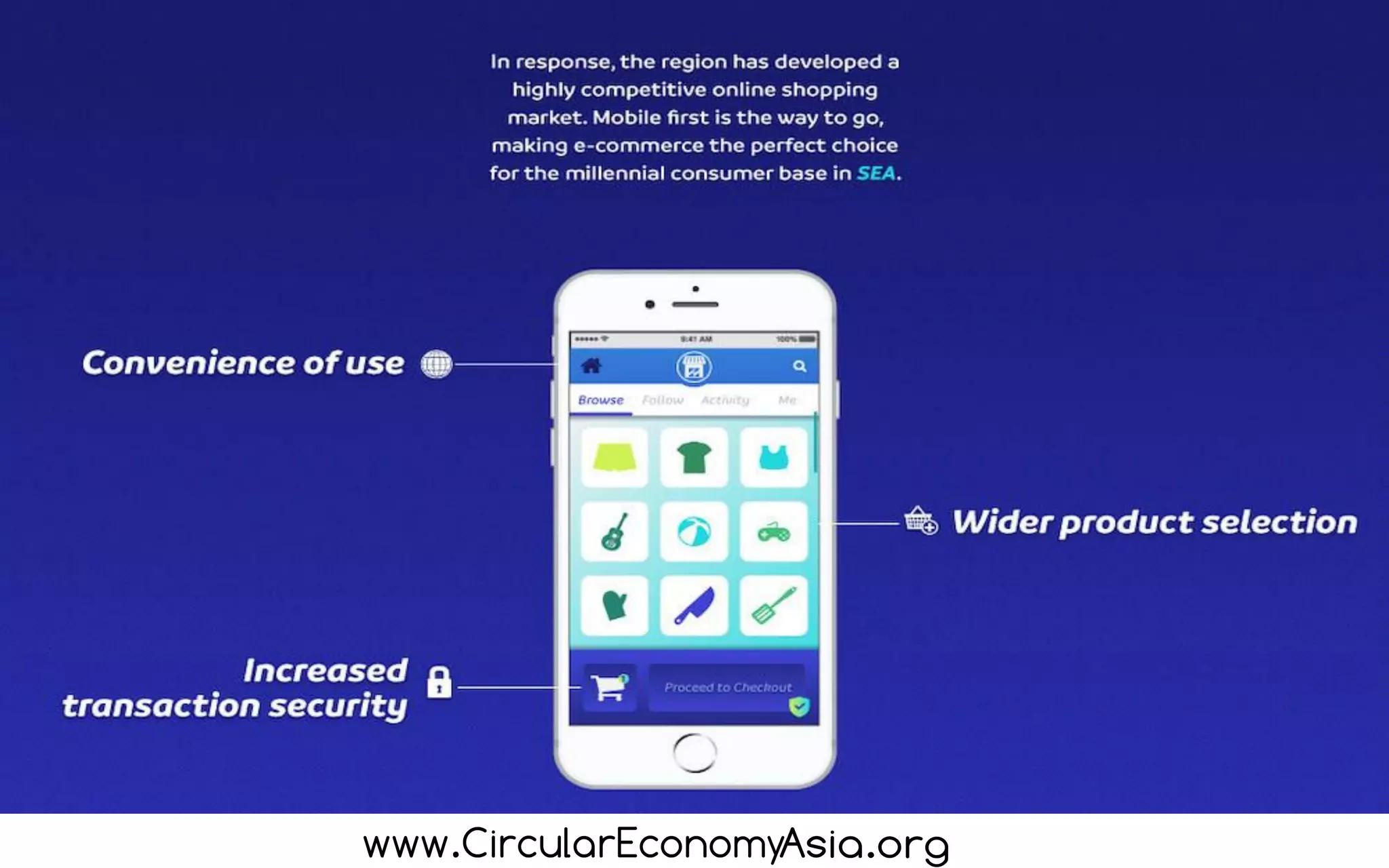
E-commerce consumer spend
Chinese tech giants engage in a spending &
investment spree across the SE Asian region
❖ Alibaba: 18 June 2018: opens first SE Asia office in
Malaysia and launches the group’s first overseas
electronic world trade platform (eWTP) hub and in
2018 invests US$4 billion into Lazada.
Lucy Peng, co-founder of Alibaba “...we feel very
confident to double down on Southeast Asia.”
❖ JD.com: Partnership with Central Group, Thailand,
follows investments into Indonesia and Vietnam.
❖ Tencent Holdings: diversifies its revenue sources
outside of China particularly in gaming.
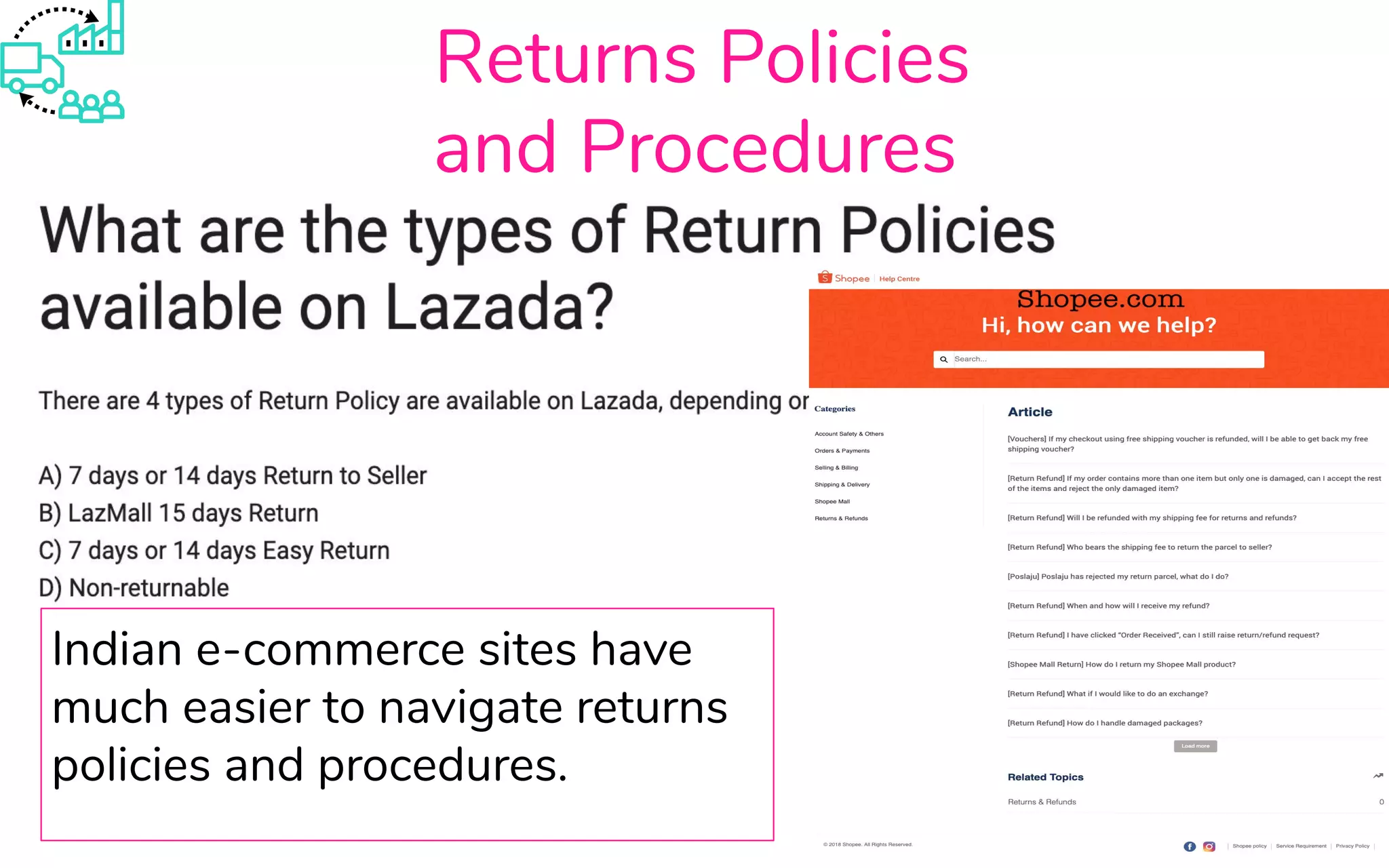
Returns Policies
and Procedures
Indian e-commerce sites have
much easier to navigate returns
policies and procedures.
Source: Caixinglobal.com
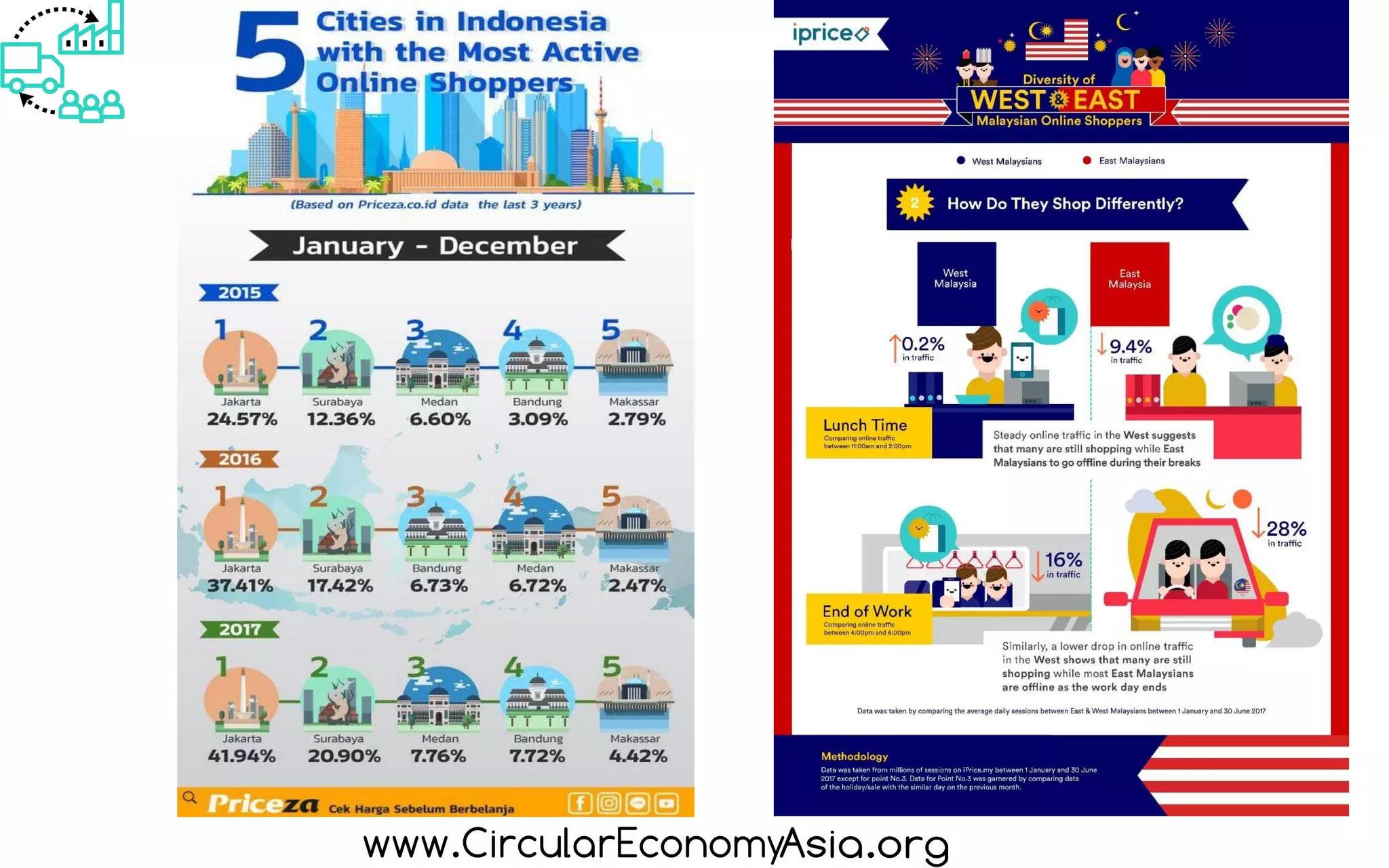
Are Asian E-commerce Sites
Customer Focused or Sales Focused?
What the Research says
on Returns in Asia (1)‘Embracing the E-Commerce Revolution in Asia & the Pacific’,
Asia Development Bank, June 2018
➔ Complex border-crossing procedures, regulatory burdens,
and uncertain return processes continue to hinder the
development of cross-border e-commerce.
➔ ...consumers need the option to return goods, which also
builds trust between the two (e-commerce platform and
buyer)
➔ Pickaboo in Bangladesh offers a 3-day return policy. Trust
can grow if trade associations and government agencies
help develop and enforce regulations and Standards -
creating what is known as institution-based trust.
What the Research says
on Returns in Asia (2)‘Handbook on E-commerce and Competition in ASEAN’,
Competition Commission Singapore, 2017
➔ ...there is a lack of trust among customers when
completing transactions online, for instance with regards to
data protection, banking fraud, unfulfilled deliveries, and
the inability to return products
➔ Last mile delivery and the locker system in Singapore: ...it
also means returning a product is easier as goods can
simply be left in the locker ready for collection.
➔ The return of products is one of the biggest challenges for
online retailers. Many companies offer a free returns service
to reduce the burden on the customer, whilst others still
charge a fee to cover the associated costs.
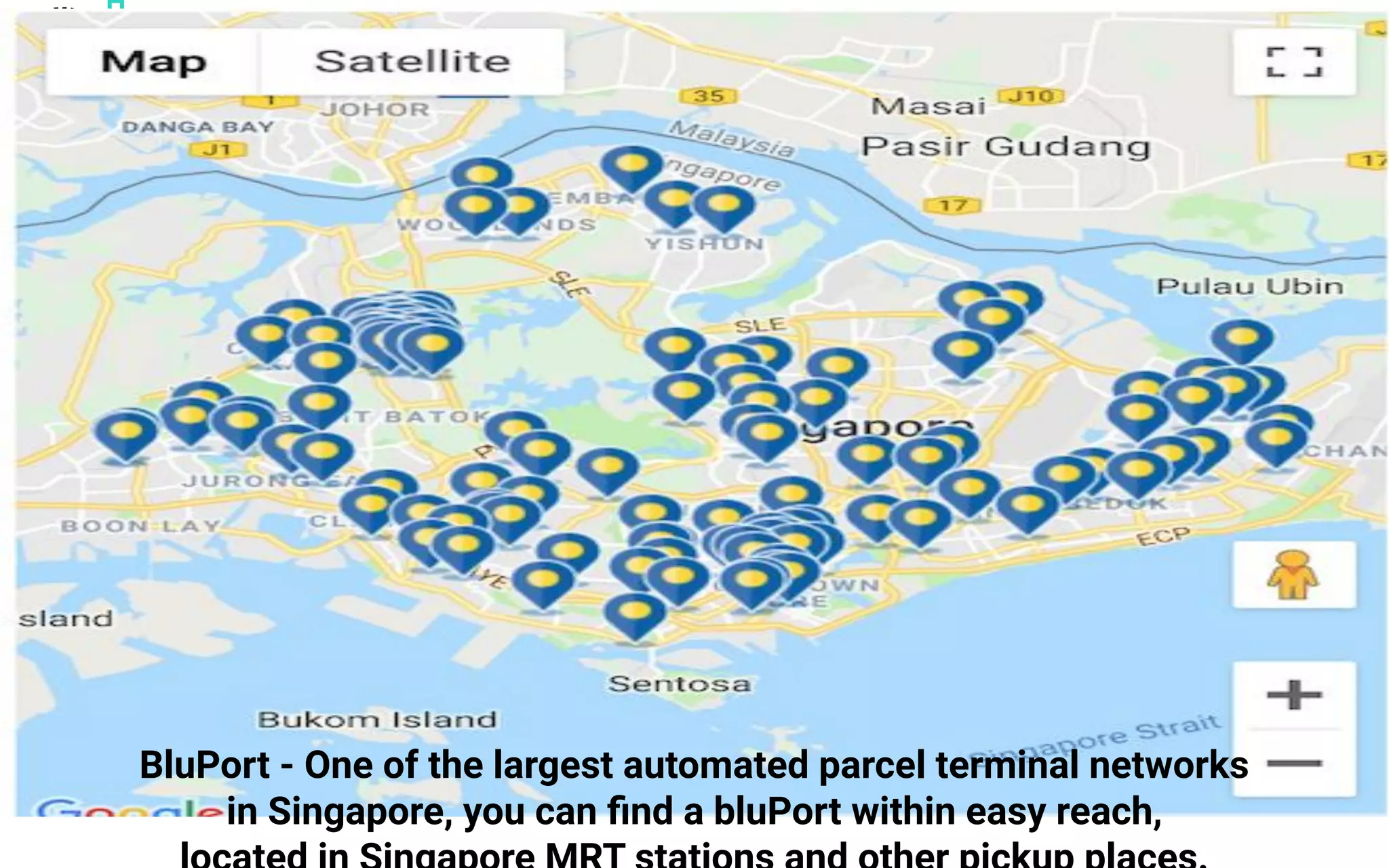
BluPort - One of the largest automated parcel terminal networks
in Singapore, you can find a bluPort within easy reach,
Current Practices
(international)
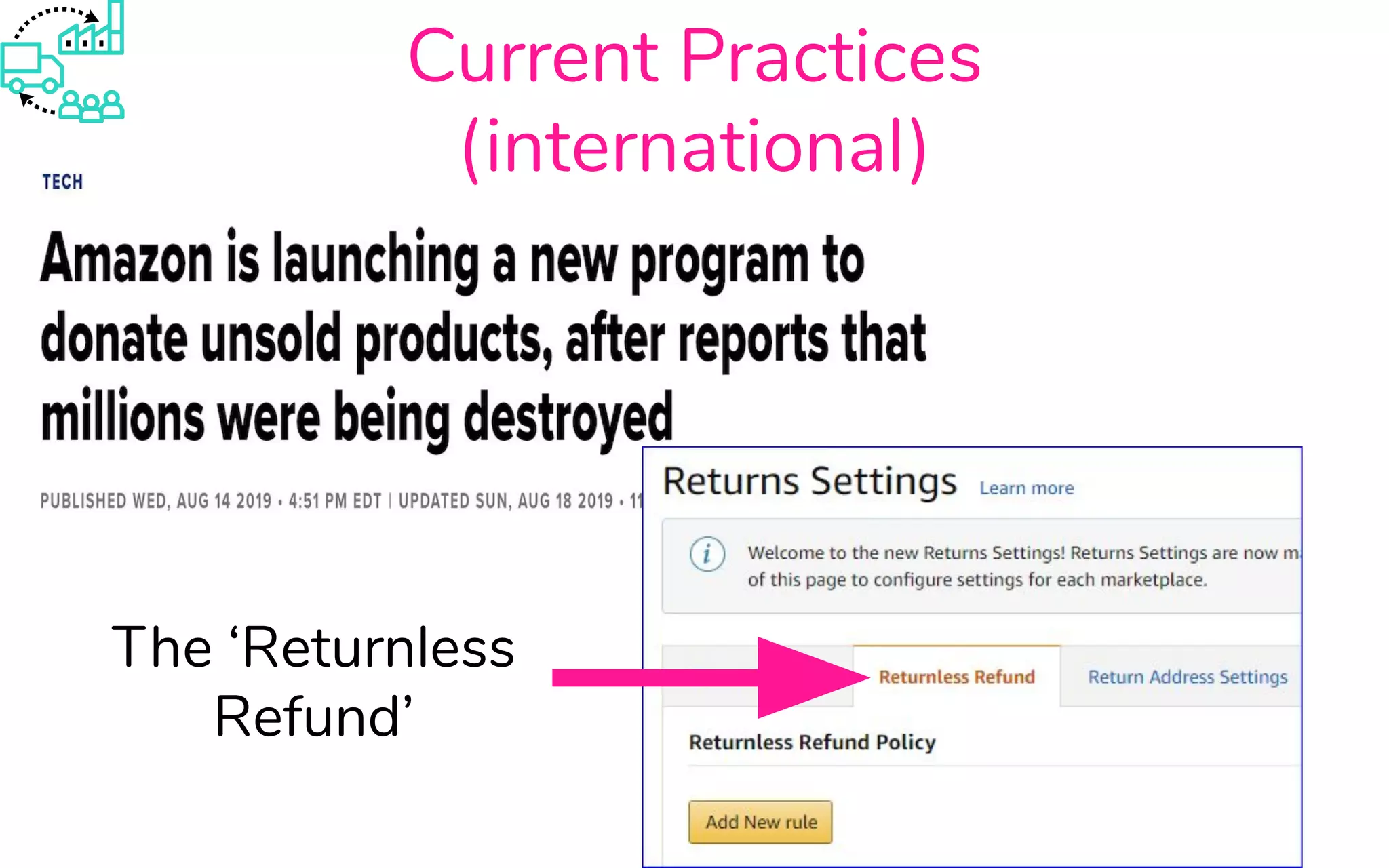
The ‘Returnless
Refund’
Returnly, the post-purchase payments company for
retailers and brands that care about customer loyalty, today
announced the availability of Green Returns™ enabling
retailers to offer smart return policies that guarantee the
best business outcome for the brand and the planet. Green
Returns are especially well-suited for beauty and intimates
retailers that are often required to dispose of used and
opened products that pose a potential health risk, adding to
the 5 billion pounds of waste that retail returns create each
year.
Returnly Press Release
Issued 22 May 2019
https://www.businesswire.com/news/home/20190522005111/en/Returnly-Online-Returns-Beauty-Intimates-Friendlier-Shoppers
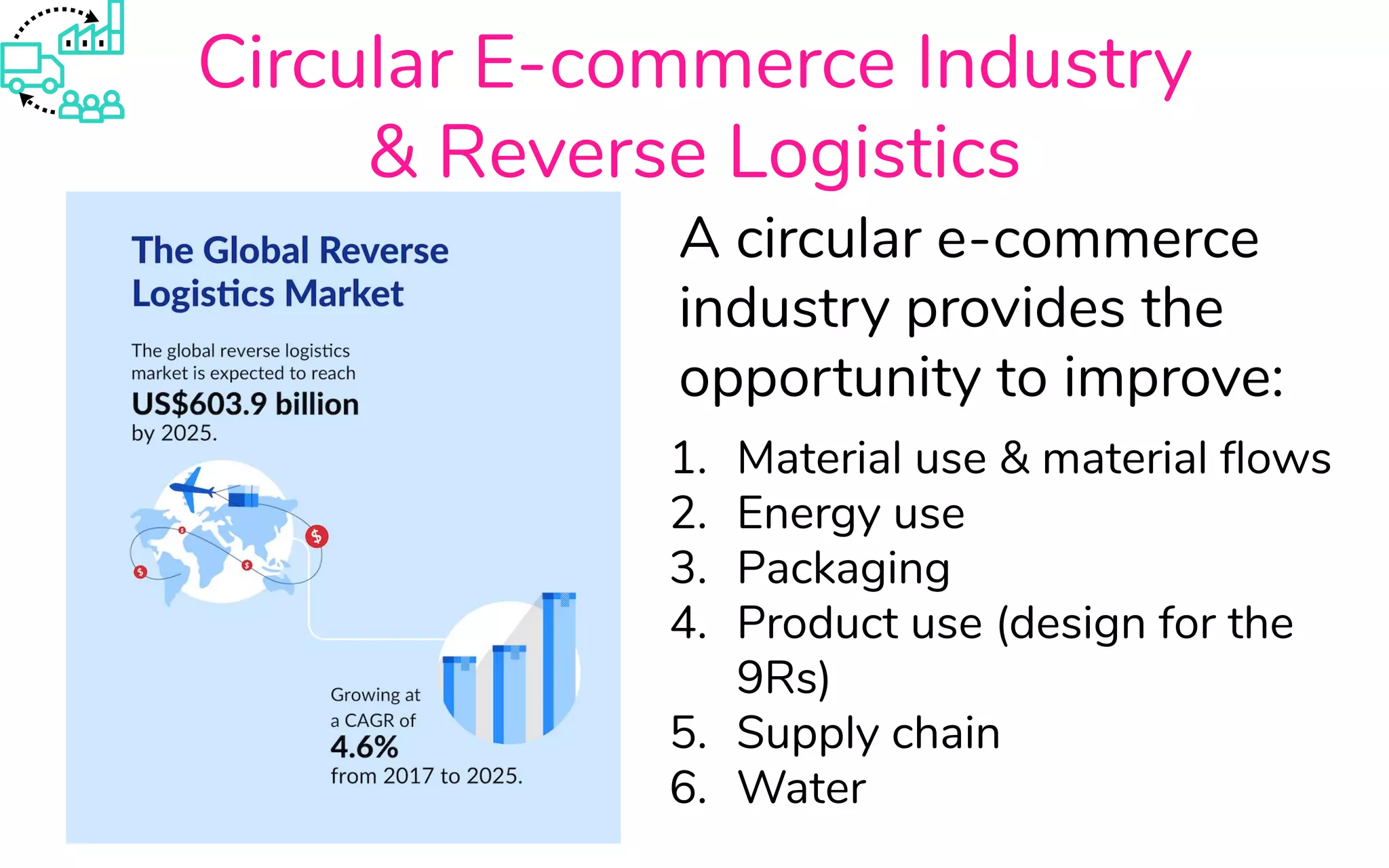
Circular E-commerce Industry
& Reverse Logistics
A circular e-commerce
industry provides the
opportunity to improve:
1. Material use & material flows
2. Energy use
3. Packaging
4. Product use (design for the
9Rs)
5. Supply chain
6. Water
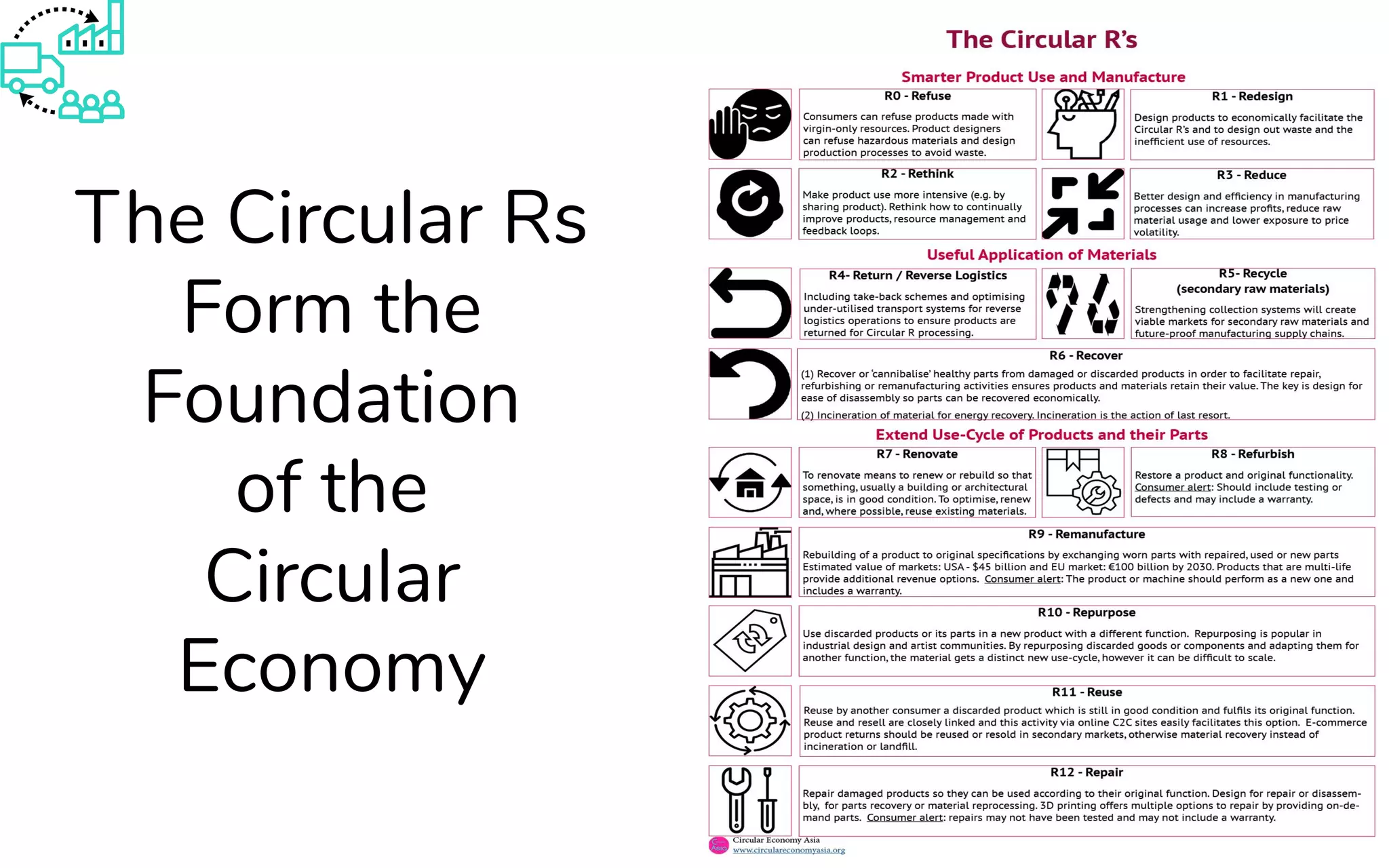
The Circular Rs
Form the
Foundation
of the
Circular
Economy
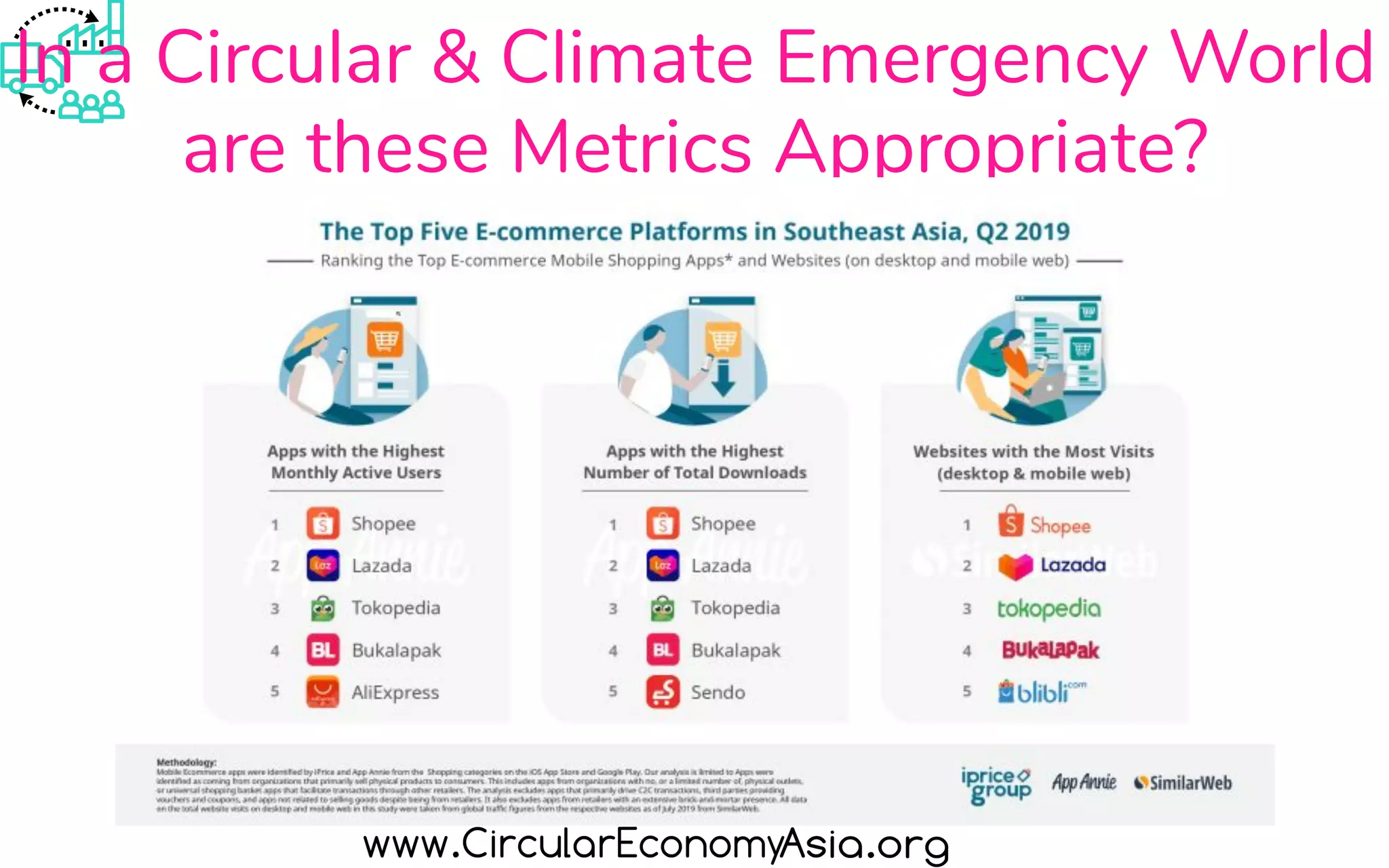
In a Circular & Climate Emergency World
are these Metrics Appropriate?
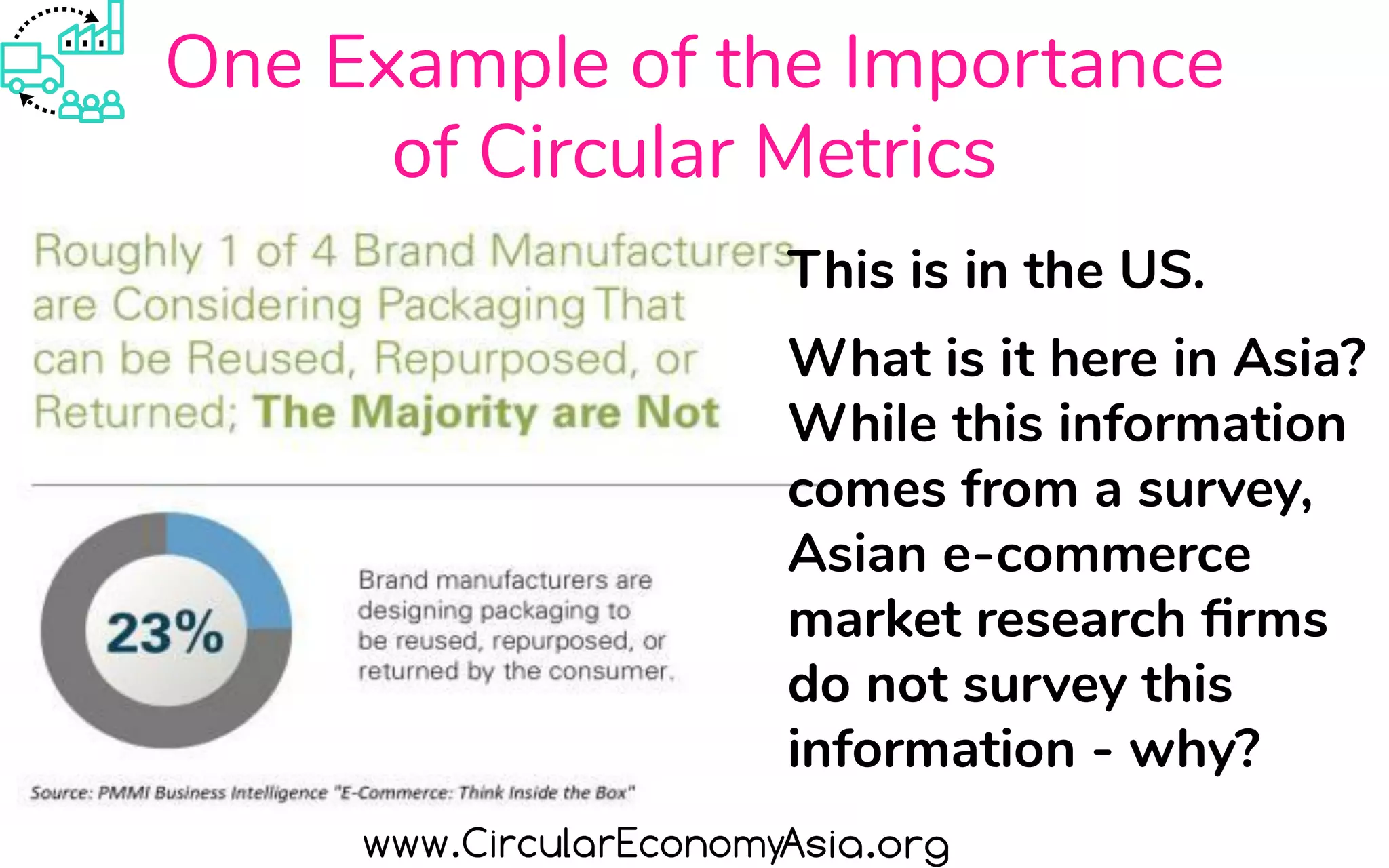
One Example of the Importance
of Circular Metrics
This is in the US.
What is it here in Asia?
While this information
comes from a survey,
Asian e-commerce
market research firms
do not survey this
information - why?
E-commerce Winners will be
Decided on Circularity / Sustainability
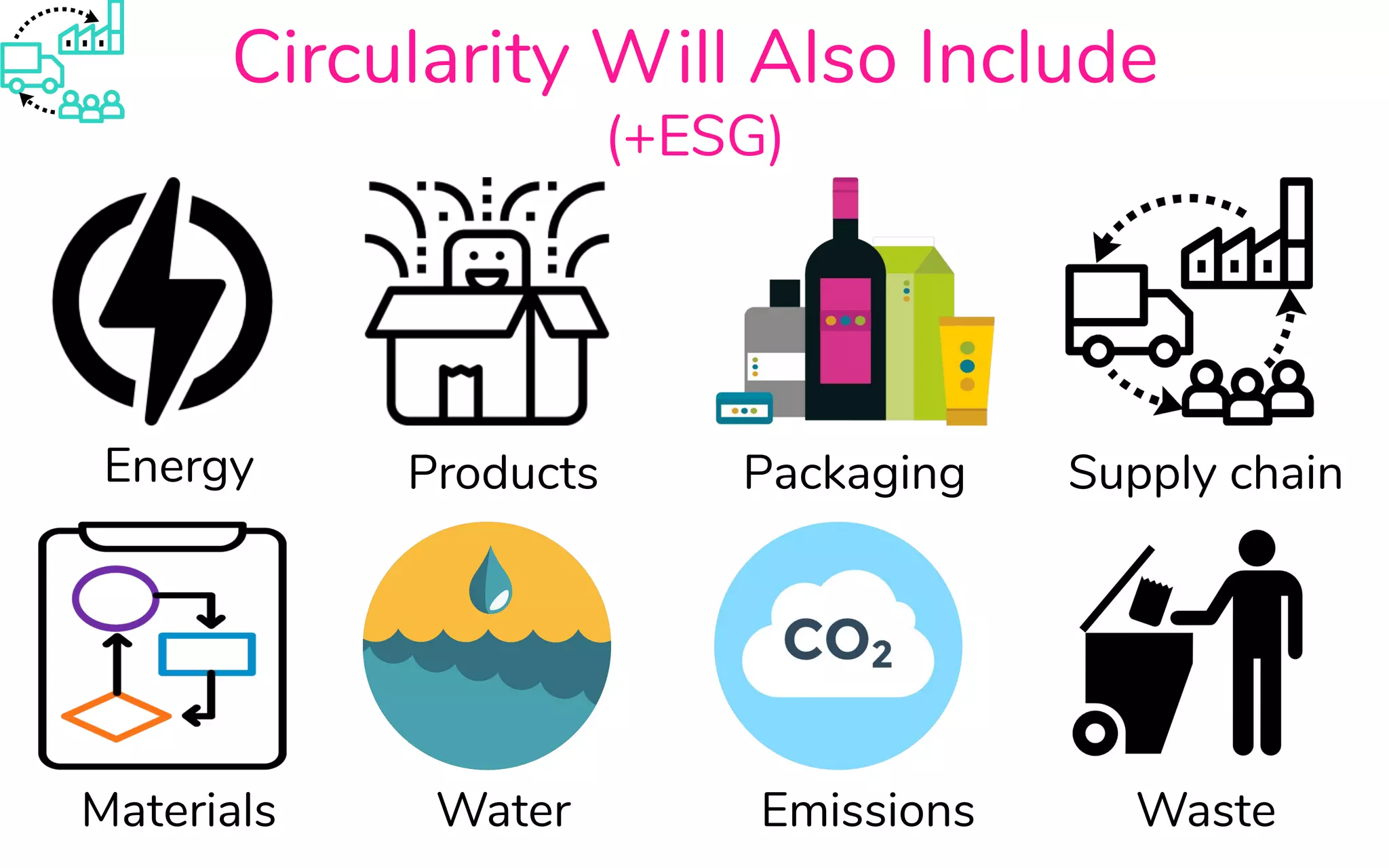
Circularity Will Also Include
(+ESG)
Energy Products Packaging Supply chain
Materials Water Emissions Waste
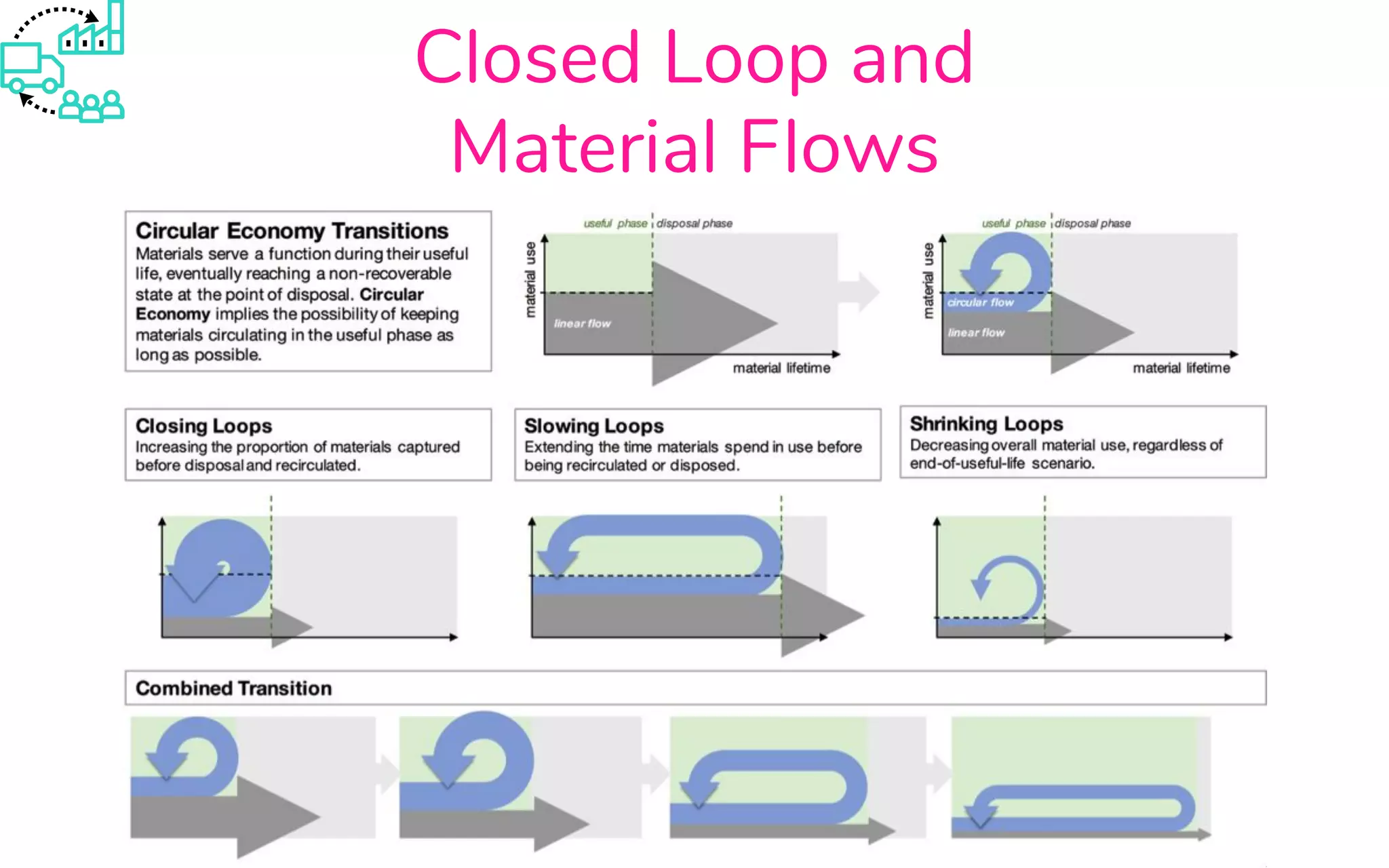
Closed Loop and
Material Flows
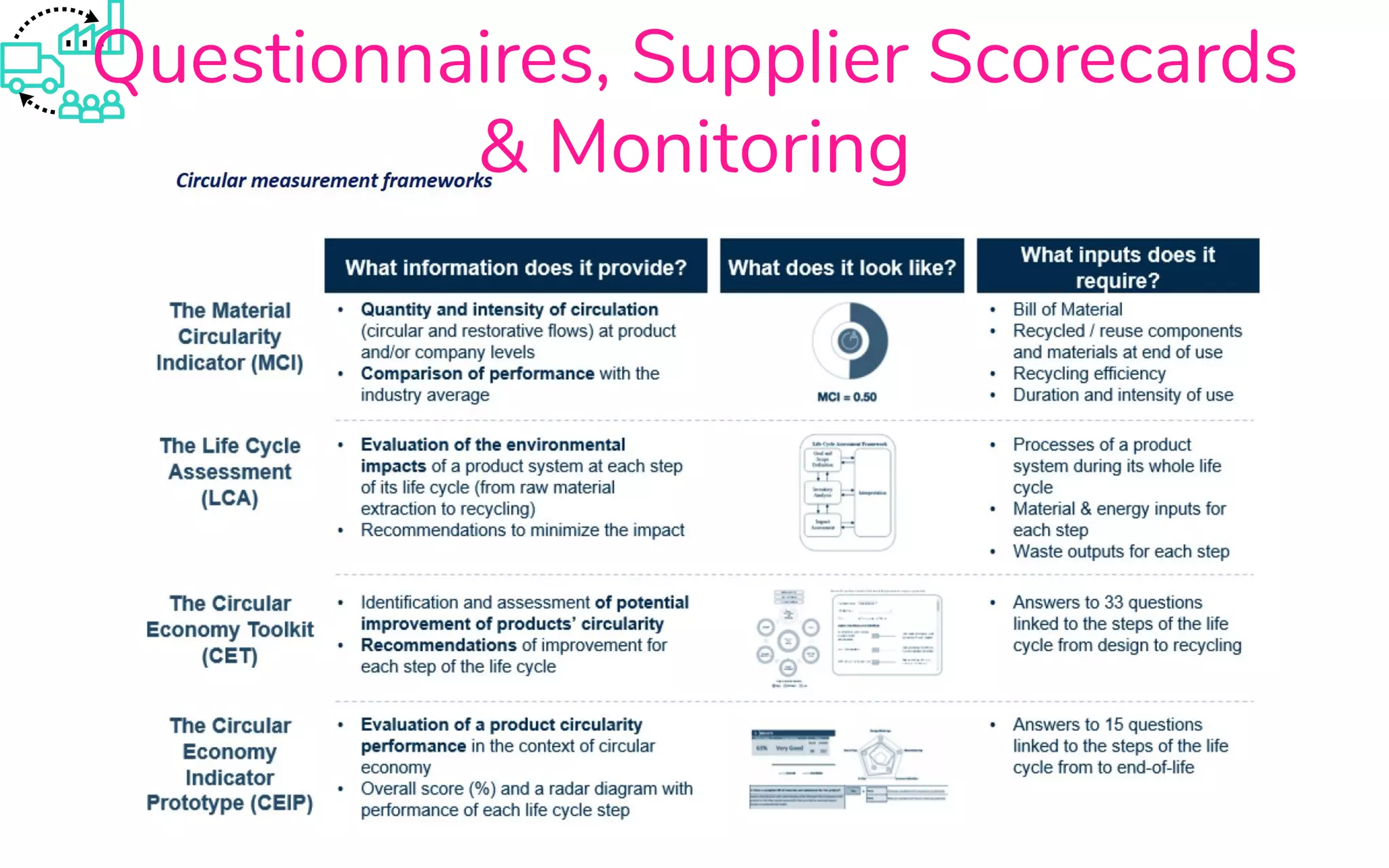
Questionnaires, Supplier Scorecards
& Monitoring
No easily available
data on returns
or the
operations
from the
Asian
e-commerce
industry
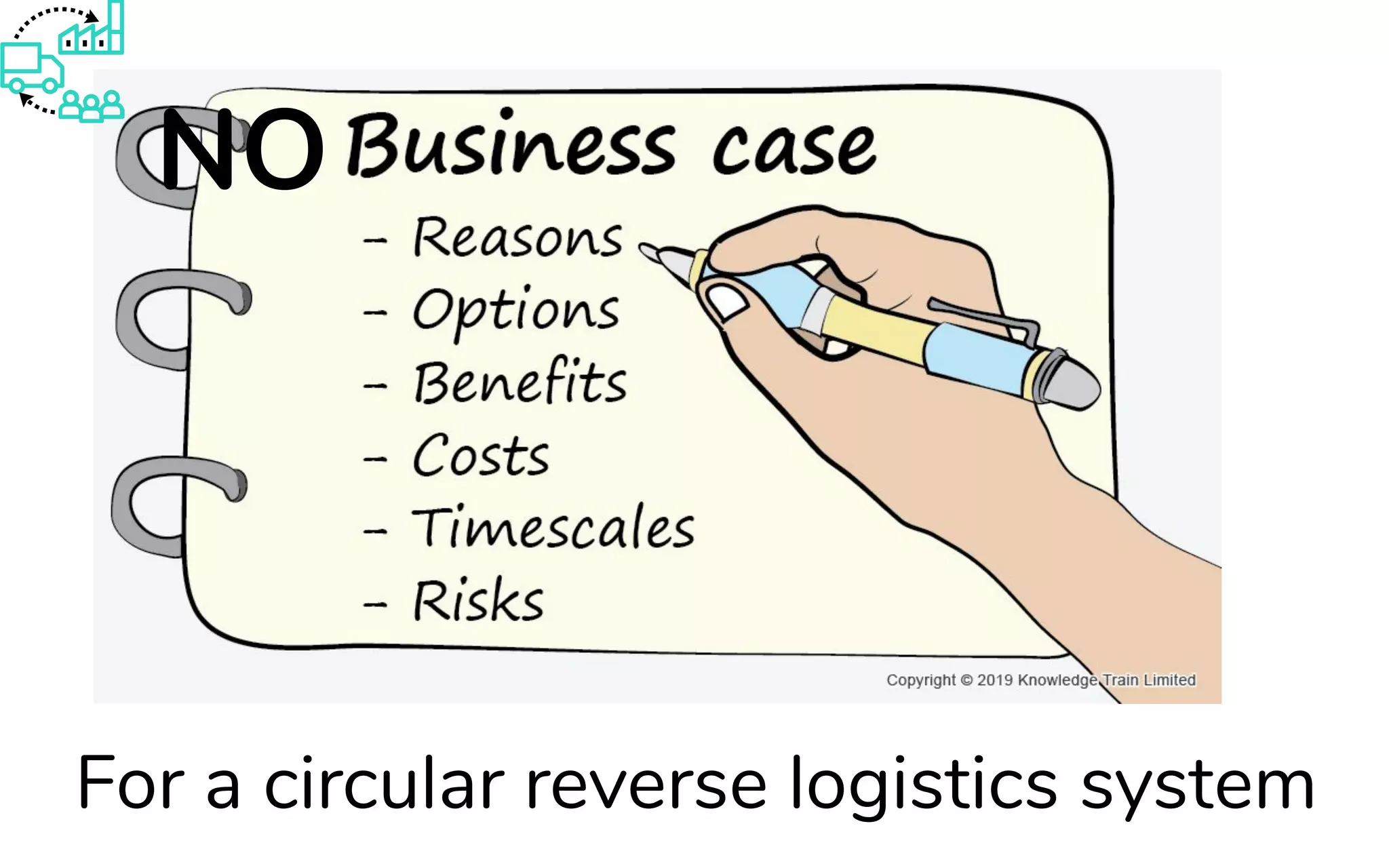
NO
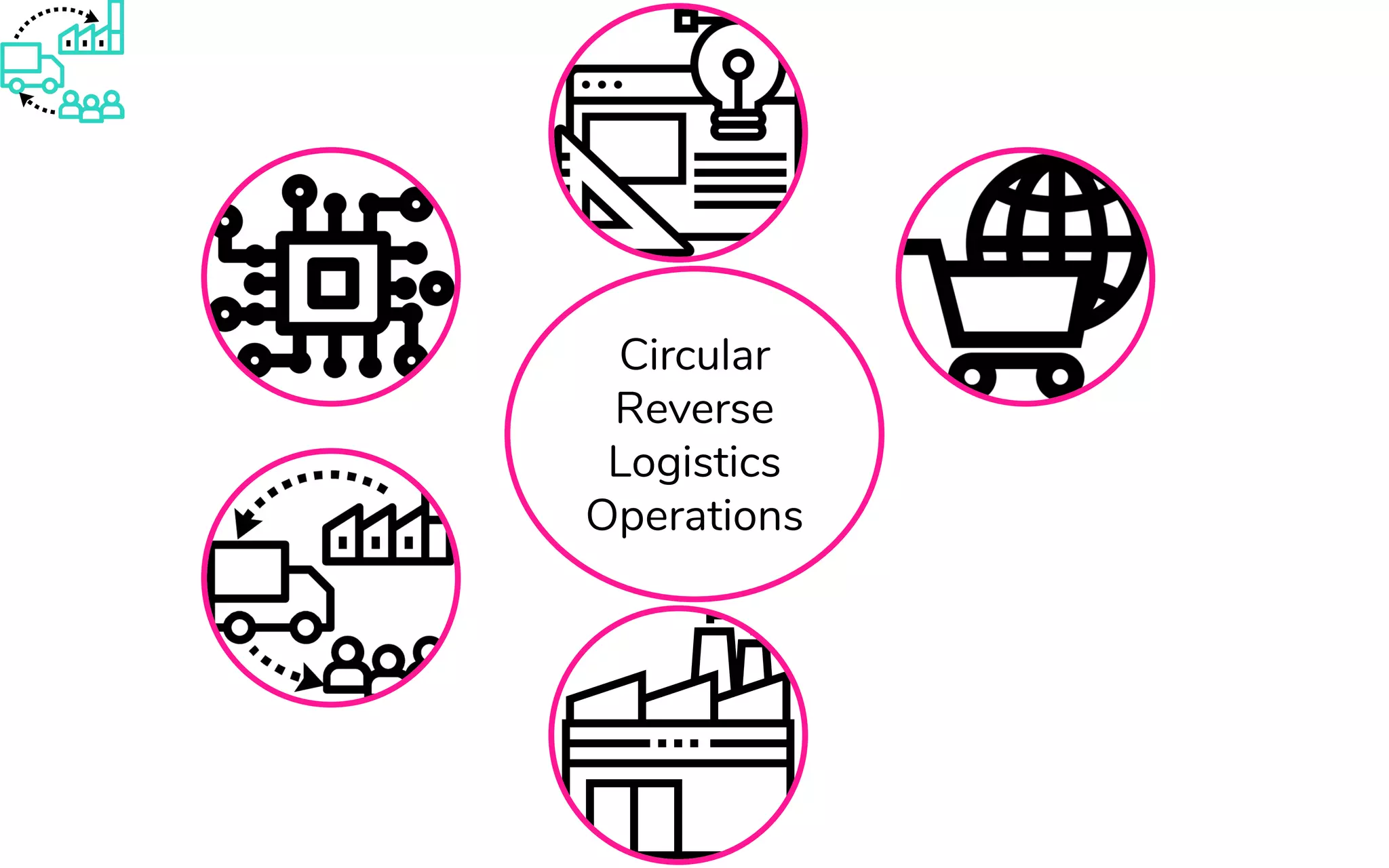
For a circular reverse logistics system
But we have
many of the
pieces
The Requirements for a
Circular Reverse Logistics
Operations in Asia
Circular
Reverse
Logistics
Operations
What We Have
Circular
Reverse
Logistics
Operations
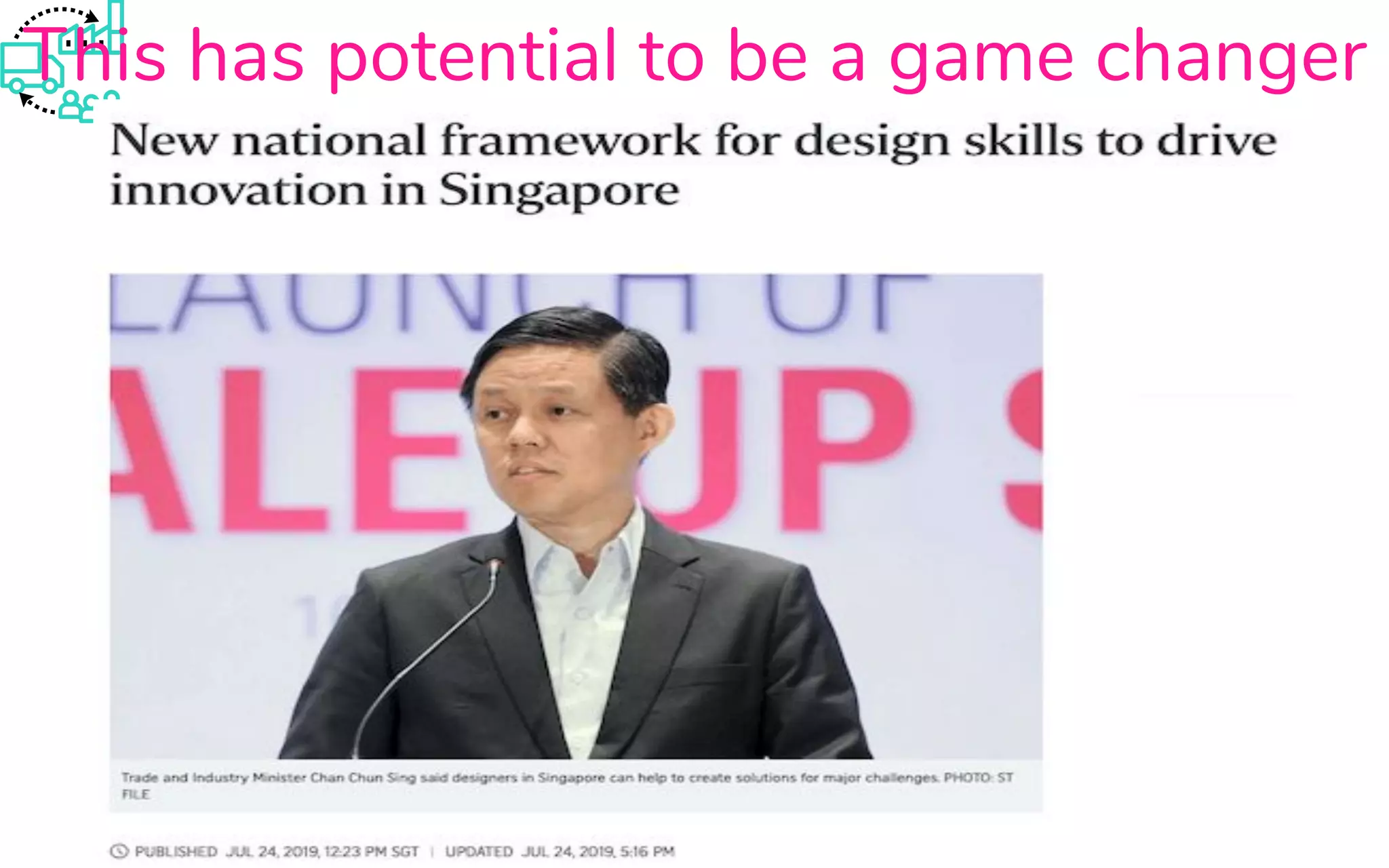
This has potential to be a game changer
Circular
Reverse
Logistics
Operations
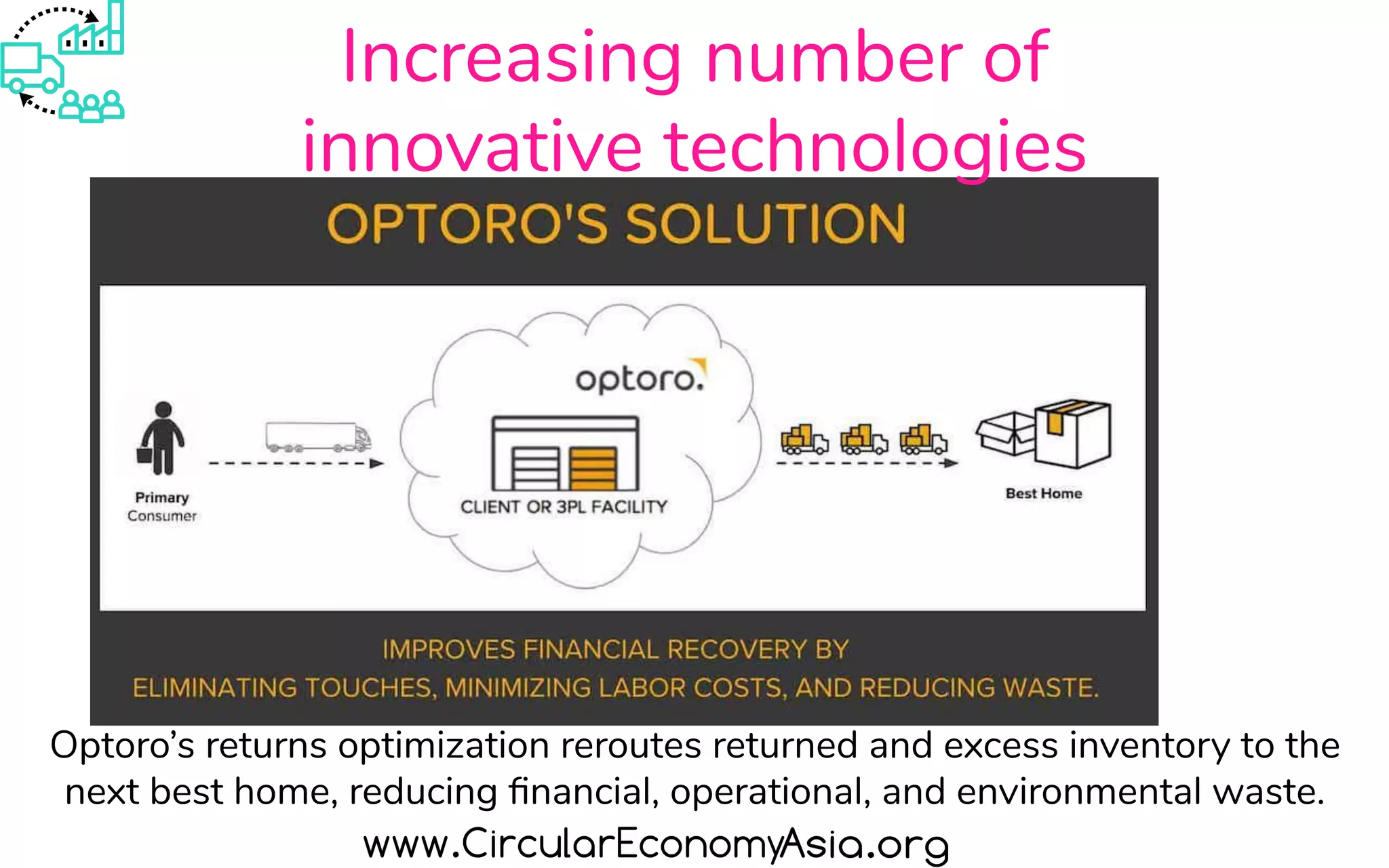
Optoro’s returns optimization reroutes returned and excess inventory to the
next best home, reducing financial, operational, and environmental waste.
Increasing number of
innovative technologies
Circular
Reverse
Logistics
Operations
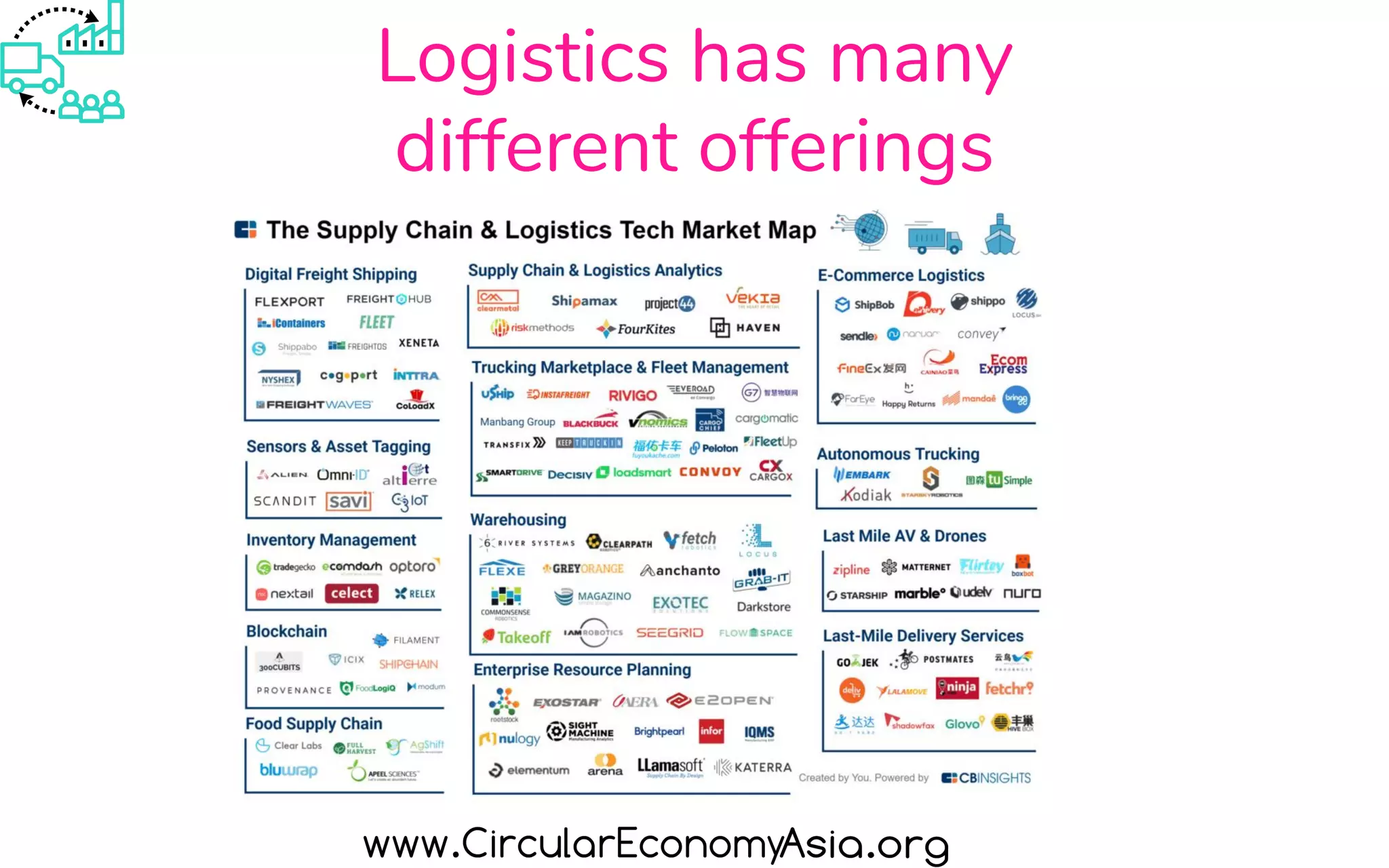
Logistics has many
different offerings
New startups are changing
the logistics landscape
Circular
Reverse
Logistics
Operations
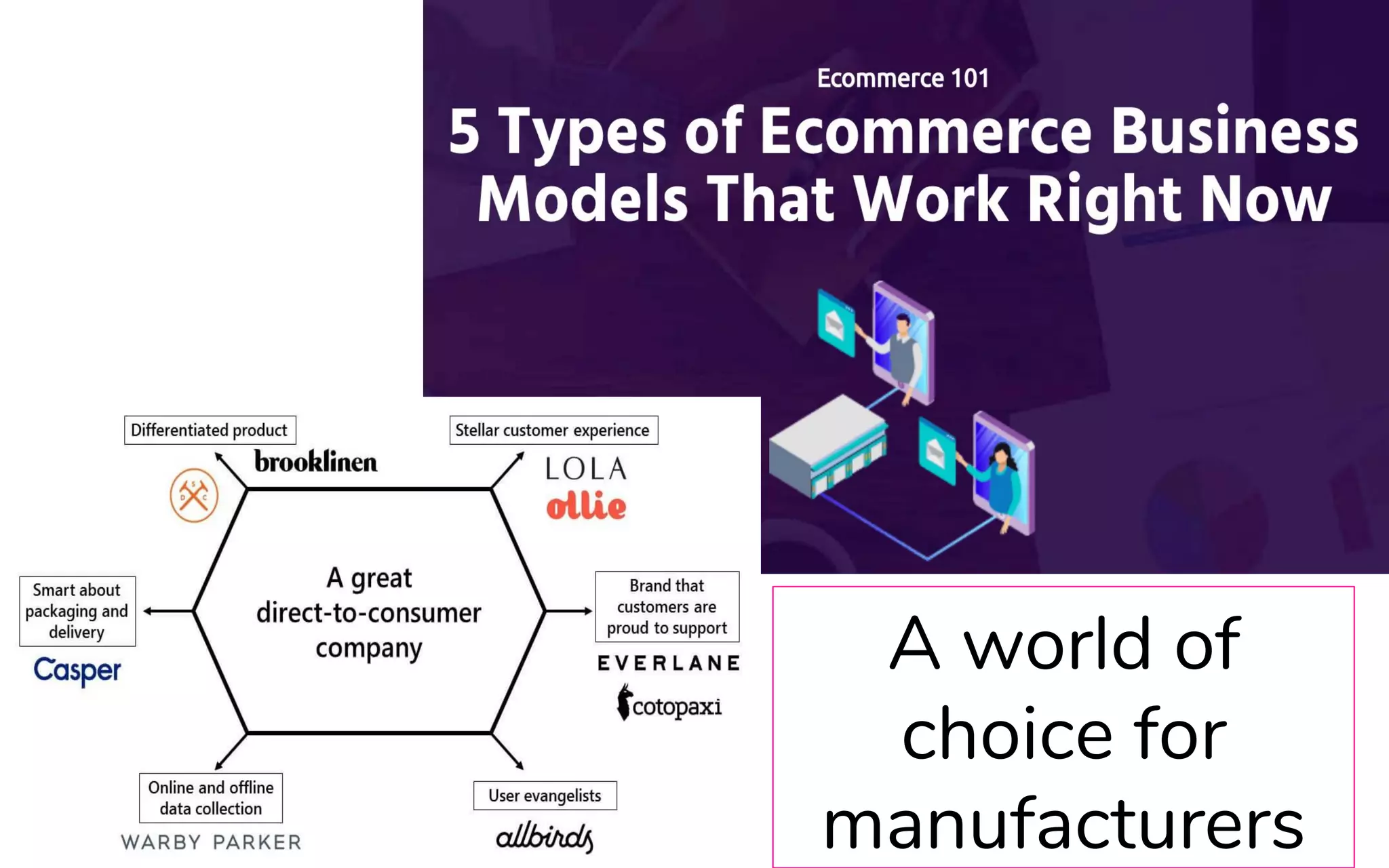
A world of
choice for
manufacturers
Circular
Reverse
Logistics
Operations
What We Do Not Have
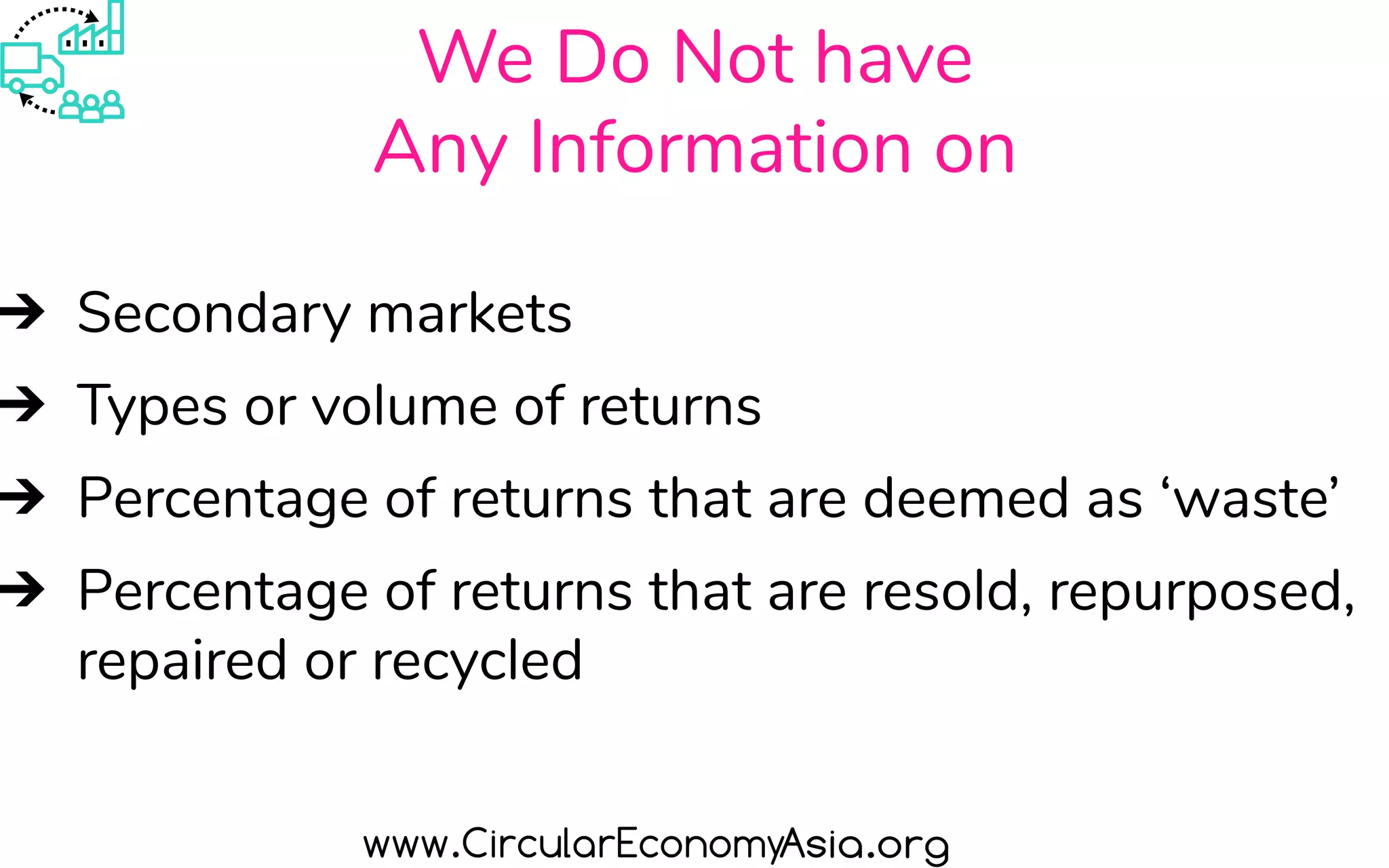
We Do Not have
Any Information on
➔ Secondary markets
➔ Types or volume of returns
➔ Percentage of returns that are deemed as ‘waste’
➔ Percentage of returns that are resold, repurposed,
repaired or recycled
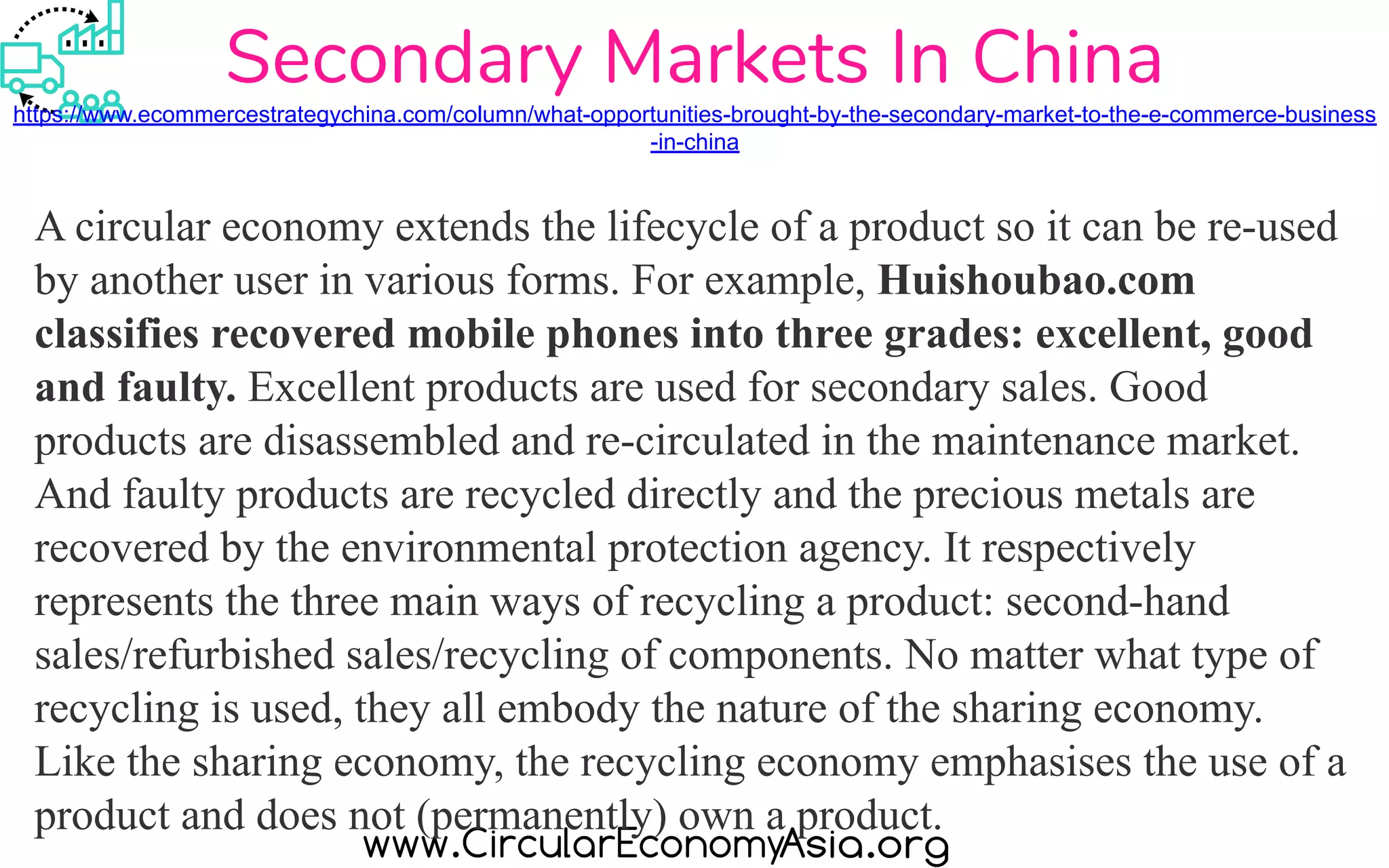
Secondary Markets In China
https://www.ecommercestrategychina.com/column/what-opportunities-brought-by-the-secondary-market-to-the-e-commerce-business
-in-china
A circular economy extends the lifecycle of a product so it can be re-used
by another user in various forms. For example, Huishoubao.com
classifies recovered mobile phones into three grades: excellent, good
and faulty. Excellent products are used for secondary sales. Good
products are disassembled and re-circulated in the maintenance market.
And faulty products are recycled directly and the precious metals are
recovered by the environmental protection agency. It respectively
represents the three main ways of recycling a product: second-hand
sales/refurbished sales/recycling of components. No matter what type of
recycling is used, they all embody the nature of the sharing economy.
Like the sharing economy, the recycling economy emphasises the use of a
product and does not (permanently) own a product.
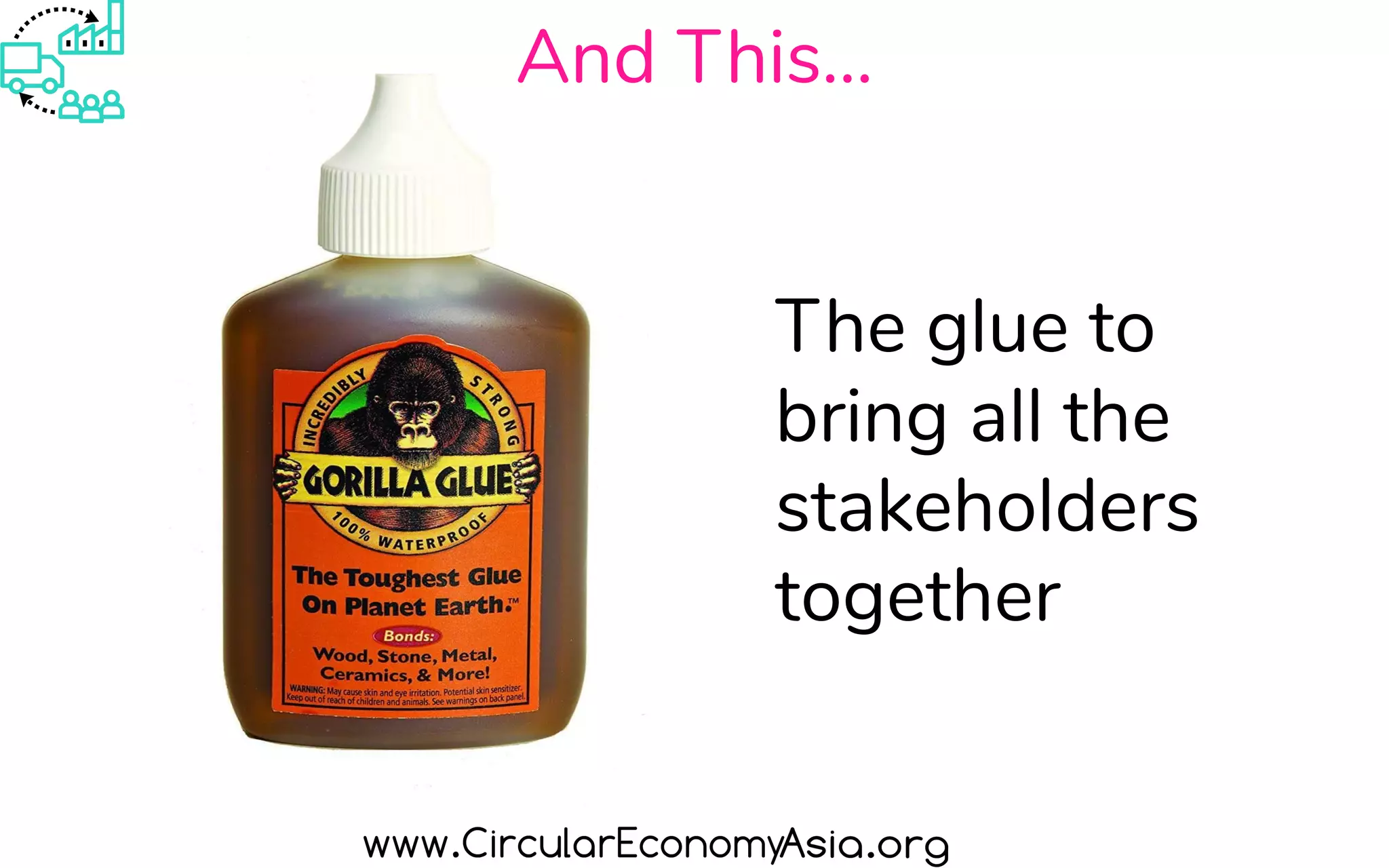
And This...
The glue to
bring all the
stakeholders
together
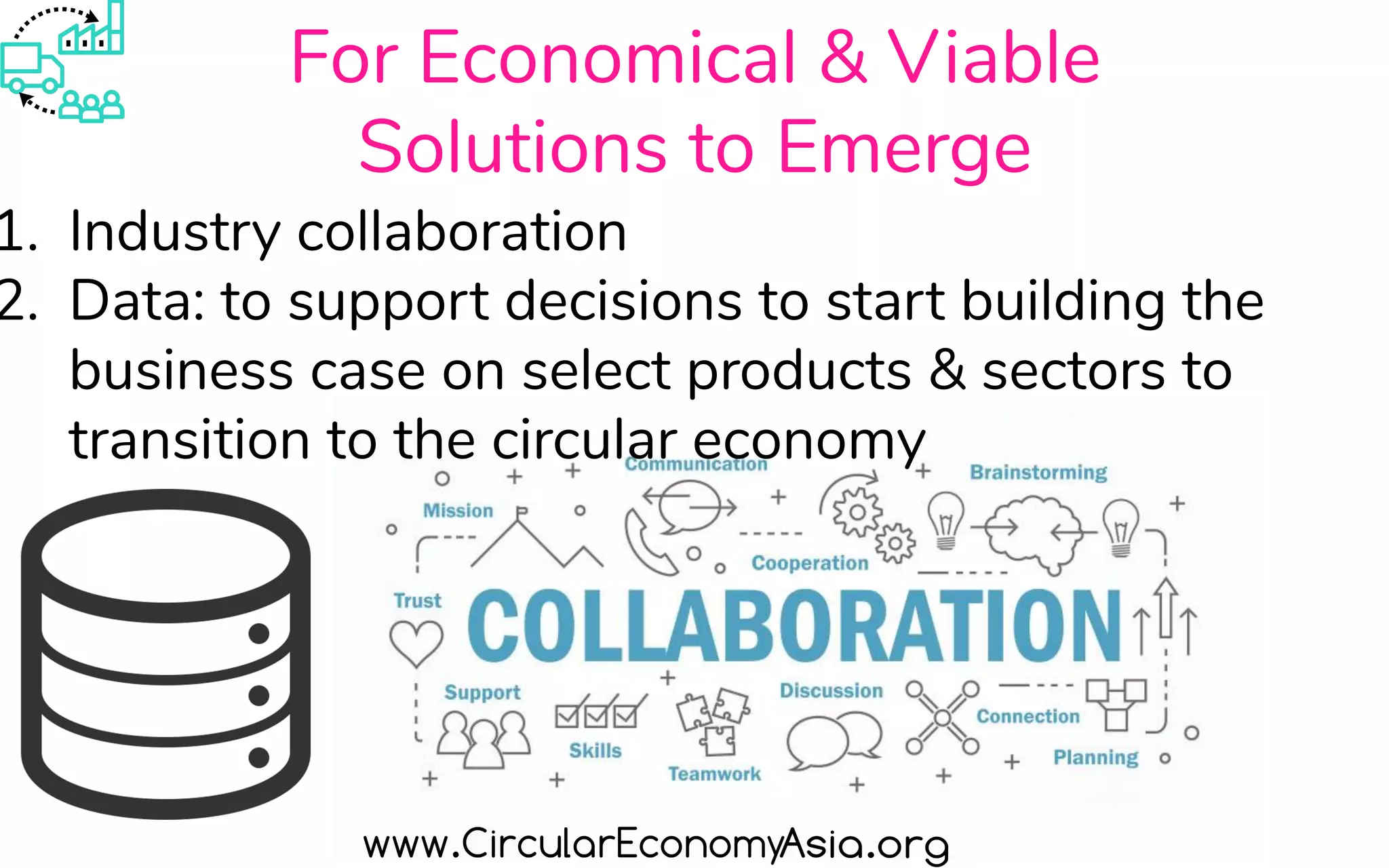
For Economical & Viable
Solutions to Emerge
1. Industry collaboration
2. Data: to support decisions to start building the
business case on select products & sectors to
transition to the circular economy
We Have to Build a Team
Create a Ripple Effect for More Industry /
Consumer Engagement
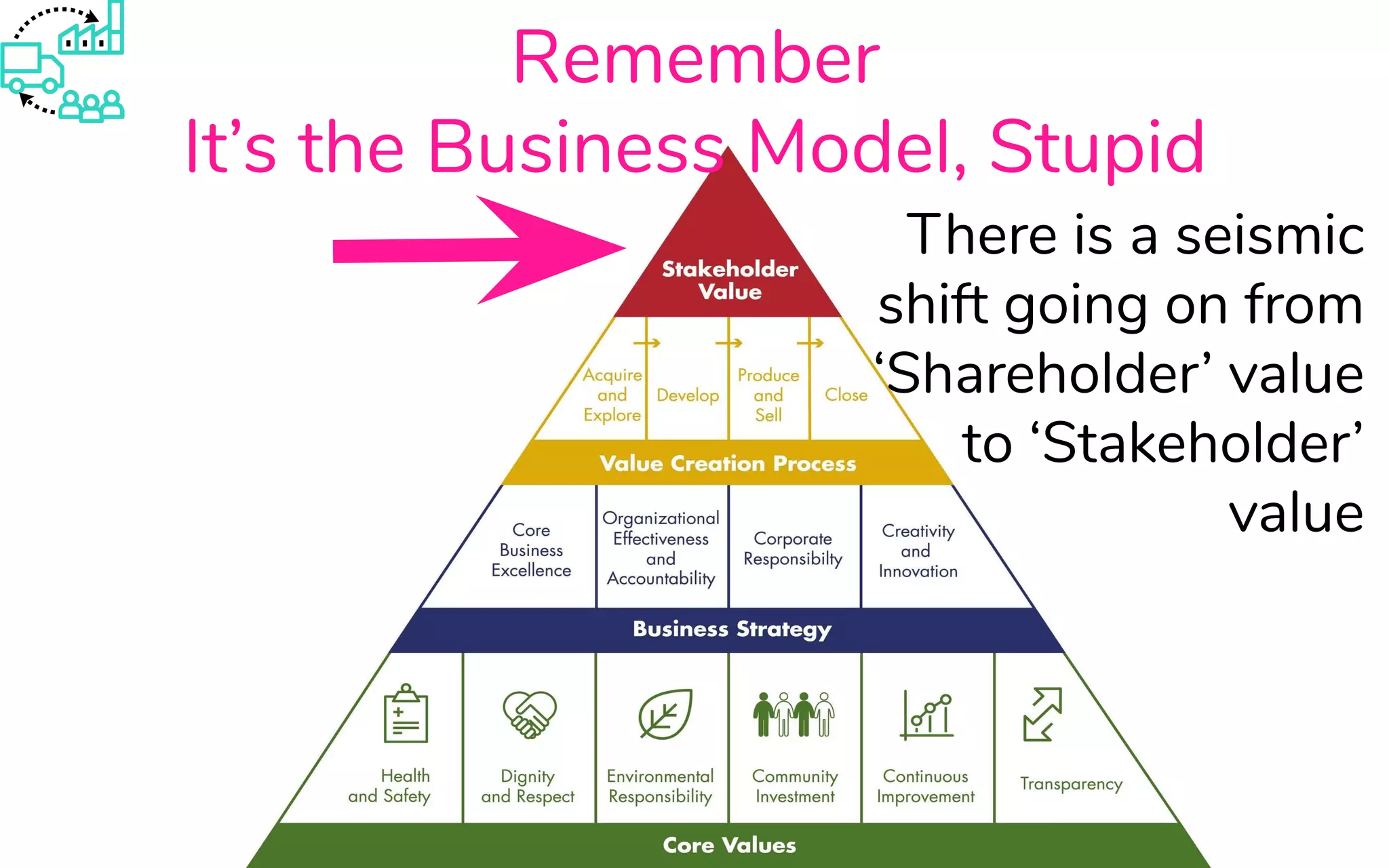
Remember
It’s the Business Model, Stupid
There is a seismic
shift going on from
‘Shareholder’ value
to ‘Stakeholder’
value
Circular Economy Asia
Visit the Knowledge Centre
of our website
adrienna@circulareconomyasia.org

What Will it Take to Create an E-commerce Circular Reverse Logistics System in Asia?

  • 1.
    What will ittake to create an e-commerce circular reverse logistics system in Asia?
  • 2.
    This presentation focuseson 2 aspects: 1. Establishing circular systems for returns based on economically viable solutions to prolong or capture their material value. 2. Establishing a circular e-commerce industry E-Commerce Circular Footprint
  • 3.
  • 4.
    Source: Think withGoogle Projected Growth Financial Value Perspective
  • 5.
  • 9.
    Chinese tech giantsengage in a spending & investment spree across the SE Asian region ❖ Alibaba: 18 June 2018: opens first SE Asia office in Malaysia and launches the group’s first overseas electronic world trade platform (eWTP) hub and in 2018 invests US$4 billion into Lazada. Lucy Peng, co-founder of Alibaba “...we feel very confident to double down on Southeast Asia.” ❖ JD.com: Partnership with Central Group, Thailand, follows investments into Indonesia and Vietnam. ❖ Tencent Holdings: diversifies its revenue sources outside of China particularly in gaming.
  • 10.
    Returns Policies and Procedures Indiane-commerce sites have much easier to navigate returns policies and procedures.
  • 11.
    Source: Caixinglobal.com Are AsianE-commerce Sites Customer Focused or Sales Focused?
  • 12.
    What the Researchsays on Returns in Asia (1)‘Embracing the E-Commerce Revolution in Asia & the Pacific’, Asia Development Bank, June 2018 ➔ Complex border-crossing procedures, regulatory burdens, and uncertain return processes continue to hinder the development of cross-border e-commerce. ➔ ...consumers need the option to return goods, which also builds trust between the two (e-commerce platform and buyer) ➔ Pickaboo in Bangladesh offers a 3-day return policy. Trust can grow if trade associations and government agencies help develop and enforce regulations and Standards - creating what is known as institution-based trust.
  • 13.
    What the Researchsays on Returns in Asia (2)‘Handbook on E-commerce and Competition in ASEAN’, Competition Commission Singapore, 2017 ➔ ...there is a lack of trust among customers when completing transactions online, for instance with regards to data protection, banking fraud, unfulfilled deliveries, and the inability to return products ➔ Last mile delivery and the locker system in Singapore: ...it also means returning a product is easier as goods can simply be left in the locker ready for collection. ➔ The return of products is one of the biggest challenges for online retailers. Many companies offer a free returns service to reduce the burden on the customer, whilst others still charge a fee to cover the associated costs.
  • 14.
    BluPort - Oneof the largest automated parcel terminal networks in Singapore, you can find a bluPort within easy reach,
  • 15.
  • 16.
    Returnly, the post-purchasepayments company for retailers and brands that care about customer loyalty, today announced the availability of Green Returns™ enabling retailers to offer smart return policies that guarantee the best business outcome for the brand and the planet. Green Returns are especially well-suited for beauty and intimates retailers that are often required to dispose of used and opened products that pose a potential health risk, adding to the 5 billion pounds of waste that retail returns create each year. Returnly Press Release Issued 22 May 2019 https://www.businesswire.com/news/home/20190522005111/en/Returnly-Online-Returns-Beauty-Intimates-Friendlier-Shoppers
  • 17.
    Circular E-commerce Industry &Reverse Logistics A circular e-commerce industry provides the opportunity to improve: 1. Material use & material flows 2. Energy use 3. Packaging 4. Product use (design for the 9Rs) 5. Supply chain 6. Water
  • 18.
    The Circular Rs Formthe Foundation of the Circular Economy
  • 19.
    In a Circular& Climate Emergency World are these Metrics Appropriate?
  • 20.
    One Example ofthe Importance of Circular Metrics This is in the US. What is it here in Asia? While this information comes from a survey, Asian e-commerce market research firms do not survey this information - why?
  • 21.
    E-commerce Winners willbe Decided on Circularity / Sustainability
  • 22.
    Circularity Will AlsoInclude (+ESG) Energy Products Packaging Supply chain Materials Water Emissions Waste
  • 23.
  • 24.
  • 26.
    No easily available dataon returns or the operations from the Asian e-commerce industry
  • 27.
    NO For a circularreverse logistics system
  • 28.
    But we have manyof the pieces
  • 29.
    The Requirements fora Circular Reverse Logistics Operations in Asia
  • 30.
  • 32.
  • 33.
    This has potentialto be a game changer
  • 34.
  • 35.
    Optoro’s returns optimizationreroutes returned and excess inventory to the next best home, reducing financial, operational, and environmental waste. Increasing number of innovative technologies
  • 36.
  • 37.
  • 38.
    New startups arechanging the logistics landscape
  • 39.
  • 40.
    A world of choicefor manufacturers
  • 41.
  • 43.
    What We DoNot Have
  • 44.
    We Do Nothave Any Information on ➔ Secondary markets ➔ Types or volume of returns ➔ Percentage of returns that are deemed as ‘waste’ ➔ Percentage of returns that are resold, repurposed, repaired or recycled
  • 45.
    Secondary Markets InChina https://www.ecommercestrategychina.com/column/what-opportunities-brought-by-the-secondary-market-to-the-e-commerce-business -in-china A circular economy extends the lifecycle of a product so it can be re-used by another user in various forms. For example, Huishoubao.com classifies recovered mobile phones into three grades: excellent, good and faulty. Excellent products are used for secondary sales. Good products are disassembled and re-circulated in the maintenance market. And faulty products are recycled directly and the precious metals are recovered by the environmental protection agency. It respectively represents the three main ways of recycling a product: second-hand sales/refurbished sales/recycling of components. No matter what type of recycling is used, they all embody the nature of the sharing economy. Like the sharing economy, the recycling economy emphasises the use of a product and does not (permanently) own a product.
  • 46.
    And This... The glueto bring all the stakeholders together
  • 47.
    For Economical &Viable Solutions to Emerge 1. Industry collaboration 2. Data: to support decisions to start building the business case on select products & sectors to transition to the circular economy
  • 48.
    We Have toBuild a Team
  • 49.
    Create a RippleEffect for More Industry / Consumer Engagement
  • 50.
    Remember It’s the BusinessModel, Stupid There is a seismic shift going on from ‘Shareholder’ value to ‘Stakeholder’ value
  • 52.
    Circular Economy Asia Visitthe Knowledge Centre of our website adrienna@circulareconomyasia.org