REVERSE LOGISTIC 
DANIELA MEJIA CONDE 
JUANITA SUAREZ CAYPA
REVERSE LOGISTIC 
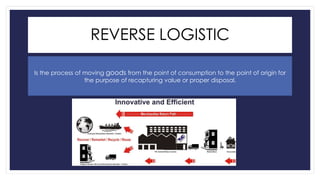
Is the process of moving goods from the point of consumption to the point of origin for 
the purpose of recapturing value or proper disposal.
Take Supply Chain Enterprise Return 
Management 
https://www.youtube.com/watch?v=MEkXfxleLBk
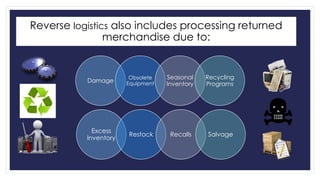
Reverse logistics also includes processing returned 
merchandise due to: 
Damage 
Obsolete 
Equipment 
Seasonal 
Inventory 
Recycling 
Programs 
Excess 
Inventory 
Restock Recalls Salvage
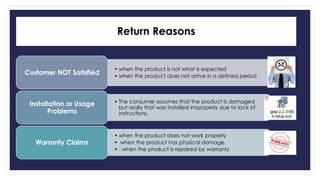
Return Reasons 
• when the product is not what is expected 
• when the product does not arrive in a defined period 
Customer NOT Satisfied 
• The consumer assumes that the product is damaged 
but really that was installed improperly due to lack of 
instructions. 
Installation or Usage 
Problems 
• when the product does not work properly 
• when the product has physical damage 
• - when the product is repaired by warranty 
Warranty Claims
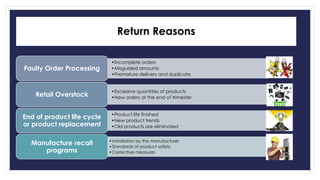
Return Reasons 
•Incomplete orders 
•Misguided amounts 
•Premature delivery and duplicate 
Faulty Order Processing 
•Excessive quantities of products 
•New orders at the end of trimester Retail Overstock 
•Product life finished 
•New product trends 
•Old products are eliminated 
End of product life cycle 
or product replacement 
• Installation by the manufacturer 
•Standards of product safety 
•Corrective measures 
Manufacture recall 
programs
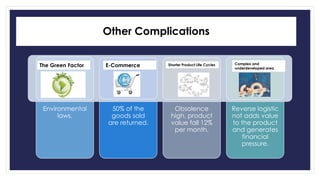
Other Complications 
The Green Factor E-Commerce Shorter Product Life Cycles Complex and 
Environmental 
laws. 
50% of the 
goods sold 
are returned. 
Obsolence 
high, product 
value fall 12% 
per month. 
underdeveloped area 
Reverse logistic 
not adds value 
to the product 
and generates 
financial 
pressure.
REVERSE LOGISTIC AND RECYCLING 
https://https://www.youtube.com/watch?v=D4CuaN7 
9XZY
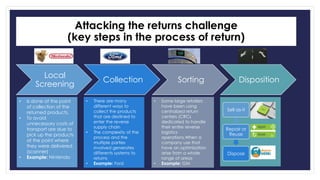
Attacking the returns challenge 
(key steps in the process of return) 
Local 
Screening 
Collection Sorting Disposition 
• Is done at the point 
of collection of the 
returned products. 
• To avoid 
unnecessary costs of 
transport are due to 
pick up the products 
at the point where 
they were delivered. 
(scanner) 
• Example: Nintendo 
• There are many 
different ways to 
collect the products 
that are destined to 
enter the reverse 
supply chain 
• The complexity of the 
process and the 
multiple parties 
involved generates 
differents systems to 
returns 
• Example: Ford 
• Some large retailers 
have been using 
centralized return 
centers (CRCs 
dedicated to handle 
their entire reverse 
logistics 
operations.When a 
company use that 
have an optimization 
arise from a whole 
range of areas 
• Example: GM 
Sell as-it 
Repair or 
Reuse 
Dispose
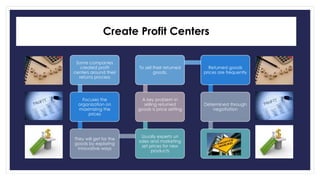
Create Profit Centers 
Some companies 
created profit 
centers around their 
returns process 
Focuses the 
organization on 
maximizing the 
prices 
They will get for the 
goods by exploring 
innovative ways 
To sell their returned 
goods. 
A key problem in 
selling returned 
goods is price setting 
Usually experts un 
sales and marketing 
set prices for new 
products 
Returned goods 
prices are frequently 
Determined through 
negotiation
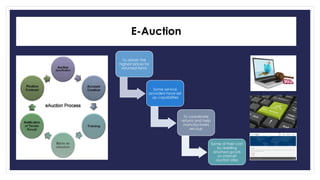
E-Auction 
To obtain the 
highest prices for 
returned items 
Some service 
providers have set 
up capabilities 
To coordinate 
returns and help 
manufacturers 
recoup 
Some of their cost 
by reselling 
returned goods 
on internet 
auction sites
REVERSE LOGISTIC S ECOSYSTEM 
https://www.youtube.com/watch?v=9w_OmYDxvAA
Change to Leading Practice Organizational Structure 
SEGMENTING THE SUPPLY CHAIN 
Into separate forward and reverse 
organizations can improve efficiency 
OUTSOURCING 
Is another way of effectively organizing 
the returns process 
EXAMPLES 
Compaq, Thomson, Target and 3M
Implement State-of-the-art Information Technology 
Collecting the right information to allocate and accurately 
calculate debits and credits is crucial for manufacturers and 
distributors 
While integration with back office functions remains an issue, the 
widespread use of internet technology has substantially improved 
the way different supply chain partners can communicate with 
each other. 
New information technologies can be used to analyse return 
reasons and provide valuable information to prevent future 
returns.
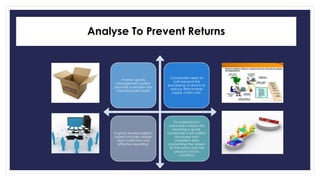
Analyse To Prevent Returns 
A return goods 
management system 
provides a window into 
manufacturers faults 
Companies need to 
look beyond the 
processing of returns to 
reduce their reverse 
supply chain cost. 
A good reverse logistics 
system includes proper 
data collection and 
effective reporting. 
To understand a 
consumer,s reason for 
returning a good, 
companies must collect 
structured and 
consistent data 
concerning the reason 
for the return and the 
product and its 
condition.
Outsource The Returns Process 
Outsourcing of the returns process is also ocurring on a 
more frequent basis and seems to be an alternative to 
avoid high investments in reverse logistics e-capabilities. 
Example: Manufacturers such as Compaq, Dell, Cisco 
and 3M and retaillers such as Sears have outsourced the 
handling of the reverse flow of godos. 
These outsource suppliers have become specialist in 
managing the reverse flow of godos and can achieve 
economies of scale.
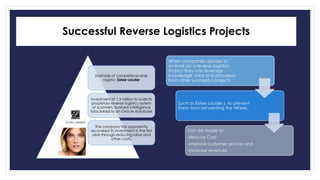
Successful Reverse Logistics Projects 
Example of complete reverse 
logistic: Estee Lauder 
Investment of 1.3 million to build its 
propietary reverse logistics system 
of scanners, business intelligence 
tolos linked to an Oracle database 
The company has apparently 
recovered its investment in the first 
year through reducing labor and 
other costs. 
When companies decide to 
embark on a reverse logistics 
Project they can leverage 
knowledge, tolos and processes 
from other successful projects 
Such as Estee Lauder s, to prevent 
them form reinventing the Wheel. 
Can be made to: 
-Reduce Cost 
-Improve customer service and 
-Increase revenues
SOURCES 
• Google Images 
• YouTube Videos 
• Schatteman, O. (n.n) Reverse Logistic lecture.

Reverse Logistic

  • 1.
    REVERSE LOGISTIC DANIELAMEJIA CONDE JUANITA SUAREZ CAYPA
  • 2.
    REVERSE LOGISTIC Isthe process of moving goods from the point of consumption to the point of origin for the purpose of recapturing value or proper disposal.
  • 3.
    Take Supply ChainEnterprise Return Management https://www.youtube.com/watch?v=MEkXfxleLBk
  • 4.
    Reverse logistics alsoincludes processing returned merchandise due to: Damage Obsolete Equipment Seasonal Inventory Recycling Programs Excess Inventory Restock Recalls Salvage
  • 5.
    Return Reasons •when the product is not what is expected • when the product does not arrive in a defined period Customer NOT Satisfied • The consumer assumes that the product is damaged but really that was installed improperly due to lack of instructions. Installation or Usage Problems • when the product does not work properly • when the product has physical damage • - when the product is repaired by warranty Warranty Claims
  • 6.
    Return Reasons •Incompleteorders •Misguided amounts •Premature delivery and duplicate Faulty Order Processing •Excessive quantities of products •New orders at the end of trimester Retail Overstock •Product life finished •New product trends •Old products are eliminated End of product life cycle or product replacement • Installation by the manufacturer •Standards of product safety •Corrective measures Manufacture recall programs
  • 7.
    Other Complications TheGreen Factor E-Commerce Shorter Product Life Cycles Complex and Environmental laws. 50% of the goods sold are returned. Obsolence high, product value fall 12% per month. underdeveloped area Reverse logistic not adds value to the product and generates financial pressure.
  • 8.
    REVERSE LOGISTIC ANDRECYCLING https://https://www.youtube.com/watch?v=D4CuaN7 9XZY
  • 9.
    Attacking the returnschallenge (key steps in the process of return) Local Screening Collection Sorting Disposition • Is done at the point of collection of the returned products. • To avoid unnecessary costs of transport are due to pick up the products at the point where they were delivered. (scanner) • Example: Nintendo • There are many different ways to collect the products that are destined to enter the reverse supply chain • The complexity of the process and the multiple parties involved generates differents systems to returns • Example: Ford • Some large retailers have been using centralized return centers (CRCs dedicated to handle their entire reverse logistics operations.When a company use that have an optimization arise from a whole range of areas • Example: GM Sell as-it Repair or Reuse Dispose
  • 10.
    Create Profit Centers Some companies created profit centers around their returns process Focuses the organization on maximizing the prices They will get for the goods by exploring innovative ways To sell their returned goods. A key problem in selling returned goods is price setting Usually experts un sales and marketing set prices for new products Returned goods prices are frequently Determined through negotiation
  • 11.
    E-Auction To obtainthe highest prices for returned items Some service providers have set up capabilities To coordinate returns and help manufacturers recoup Some of their cost by reselling returned goods on internet auction sites
  • 12.
    REVERSE LOGISTIC SECOSYSTEM https://www.youtube.com/watch?v=9w_OmYDxvAA
  • 13.
    Change to LeadingPractice Organizational Structure SEGMENTING THE SUPPLY CHAIN Into separate forward and reverse organizations can improve efficiency OUTSOURCING Is another way of effectively organizing the returns process EXAMPLES Compaq, Thomson, Target and 3M
  • 14.
    Implement State-of-the-art InformationTechnology Collecting the right information to allocate and accurately calculate debits and credits is crucial for manufacturers and distributors While integration with back office functions remains an issue, the widespread use of internet technology has substantially improved the way different supply chain partners can communicate with each other. New information technologies can be used to analyse return reasons and provide valuable information to prevent future returns.
  • 15.
    Analyse To PreventReturns A return goods management system provides a window into manufacturers faults Companies need to look beyond the processing of returns to reduce their reverse supply chain cost. A good reverse logistics system includes proper data collection and effective reporting. To understand a consumer,s reason for returning a good, companies must collect structured and consistent data concerning the reason for the return and the product and its condition.
  • 16.
    Outsource The ReturnsProcess Outsourcing of the returns process is also ocurring on a more frequent basis and seems to be an alternative to avoid high investments in reverse logistics e-capabilities. Example: Manufacturers such as Compaq, Dell, Cisco and 3M and retaillers such as Sears have outsourced the handling of the reverse flow of godos. These outsource suppliers have become specialist in managing the reverse flow of godos and can achieve economies of scale.
  • 17.
    Successful Reverse LogisticsProjects Example of complete reverse logistic: Estee Lauder Investment of 1.3 million to build its propietary reverse logistics system of scanners, business intelligence tolos linked to an Oracle database The company has apparently recovered its investment in the first year through reducing labor and other costs. When companies decide to embark on a reverse logistics Project they can leverage knowledge, tolos and processes from other successful projects Such as Estee Lauder s, to prevent them form reinventing the Wheel. Can be made to: -Reduce Cost -Improve customer service and -Increase revenues
  • 18.
    SOURCES • GoogleImages • YouTube Videos • Schatteman, O. (n.n) Reverse Logistic lecture.