






What makes a great Development Team? What are the challenges faced by development teams and how do they meet them. Mike Robinson
Who are you?
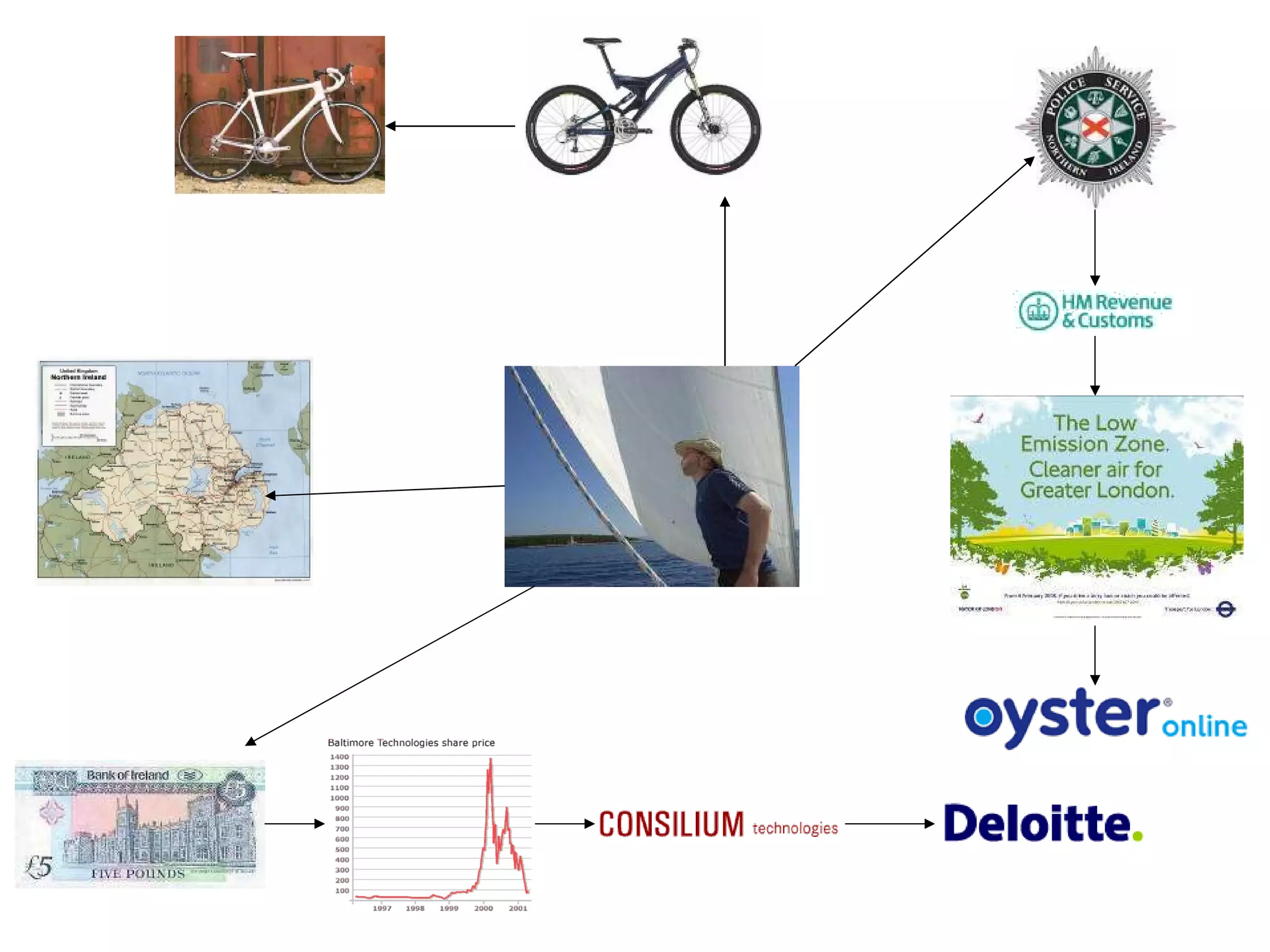
Who are we?
 
1 - What is the problem? 2 - How do we solve the problem?
1 - What is the problem?
From the customer’s point of view
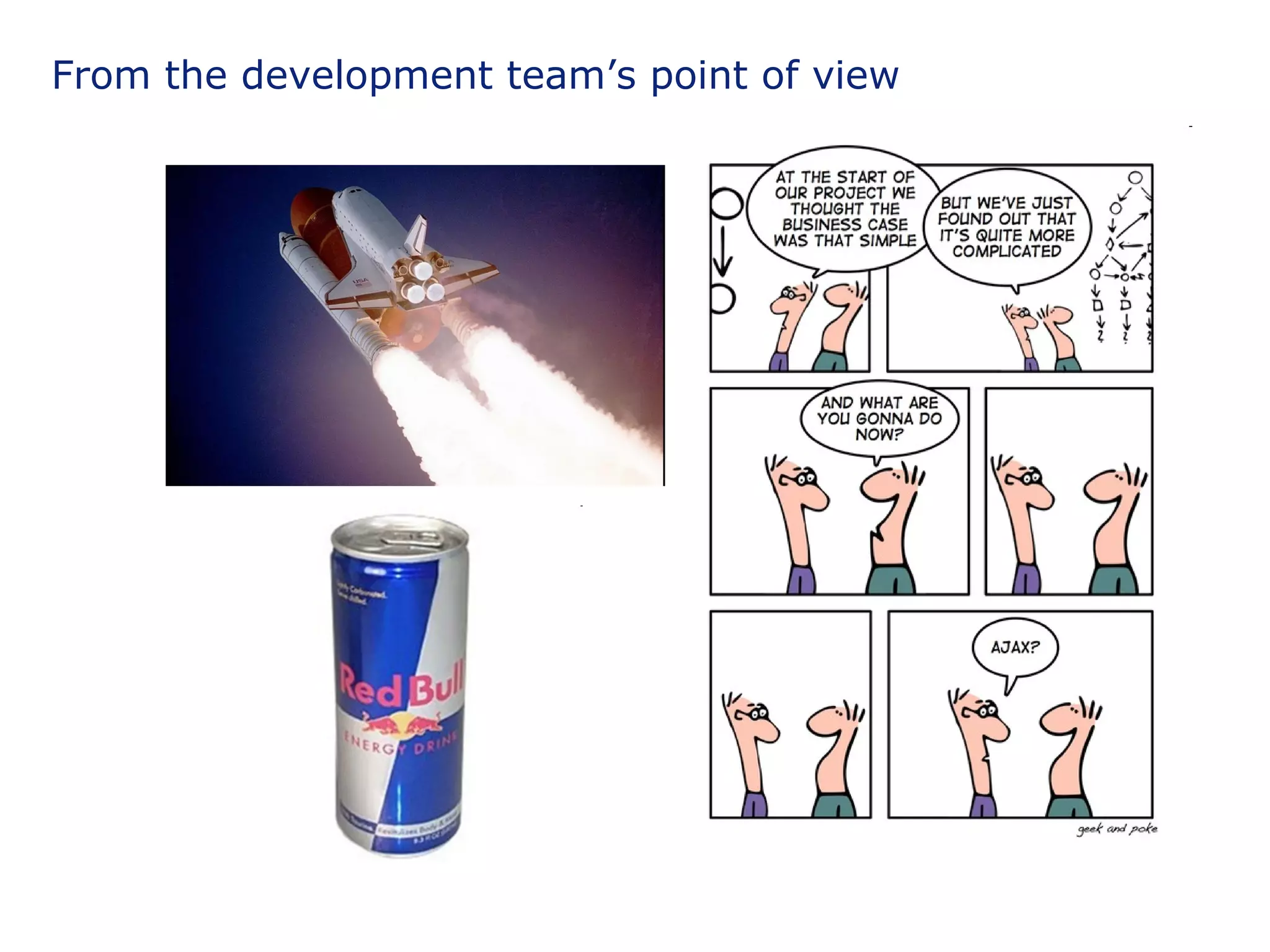
From the development team’s point of view
2 - How do we solve the problem?
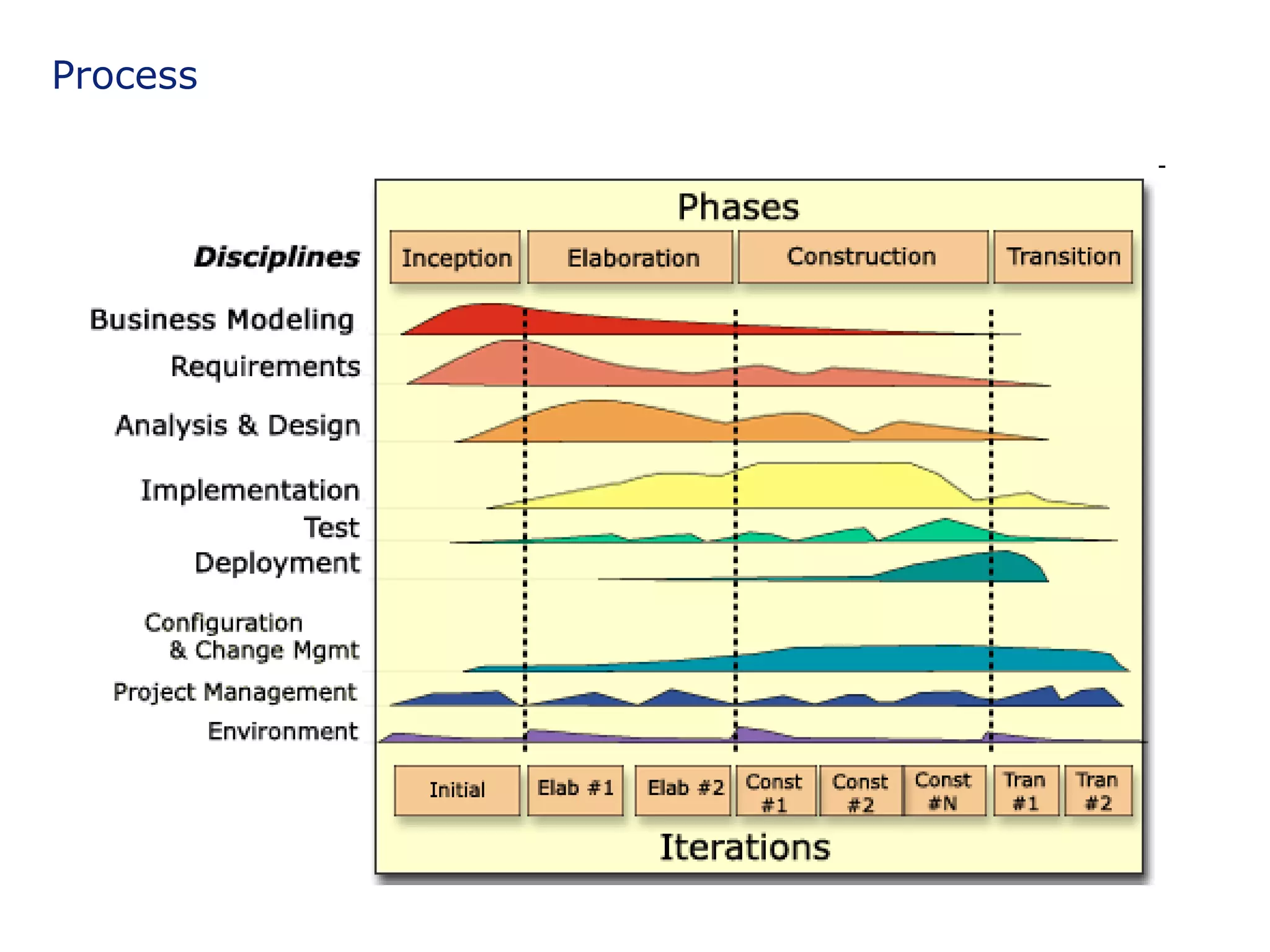
Process
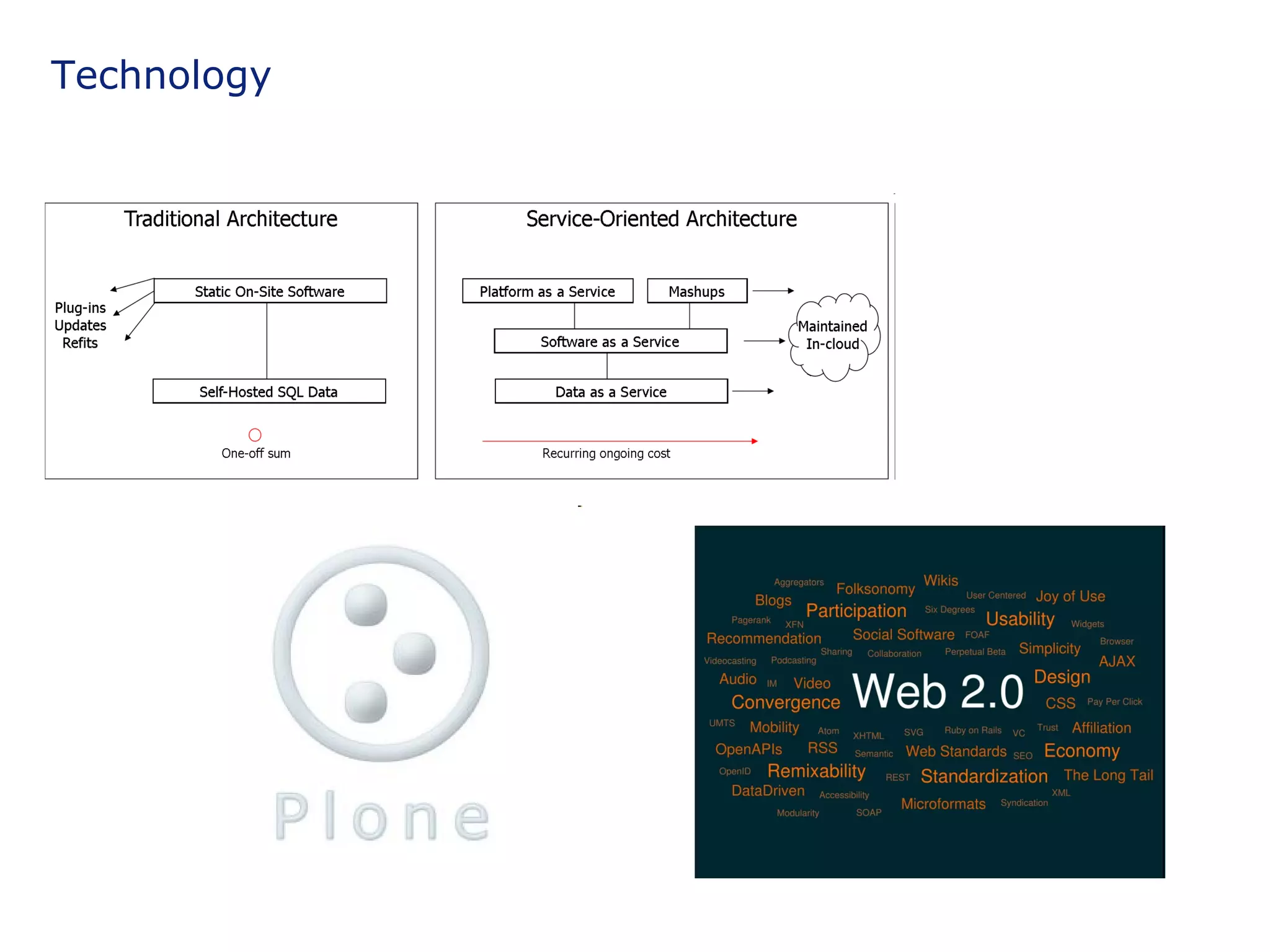
Technology
Tools
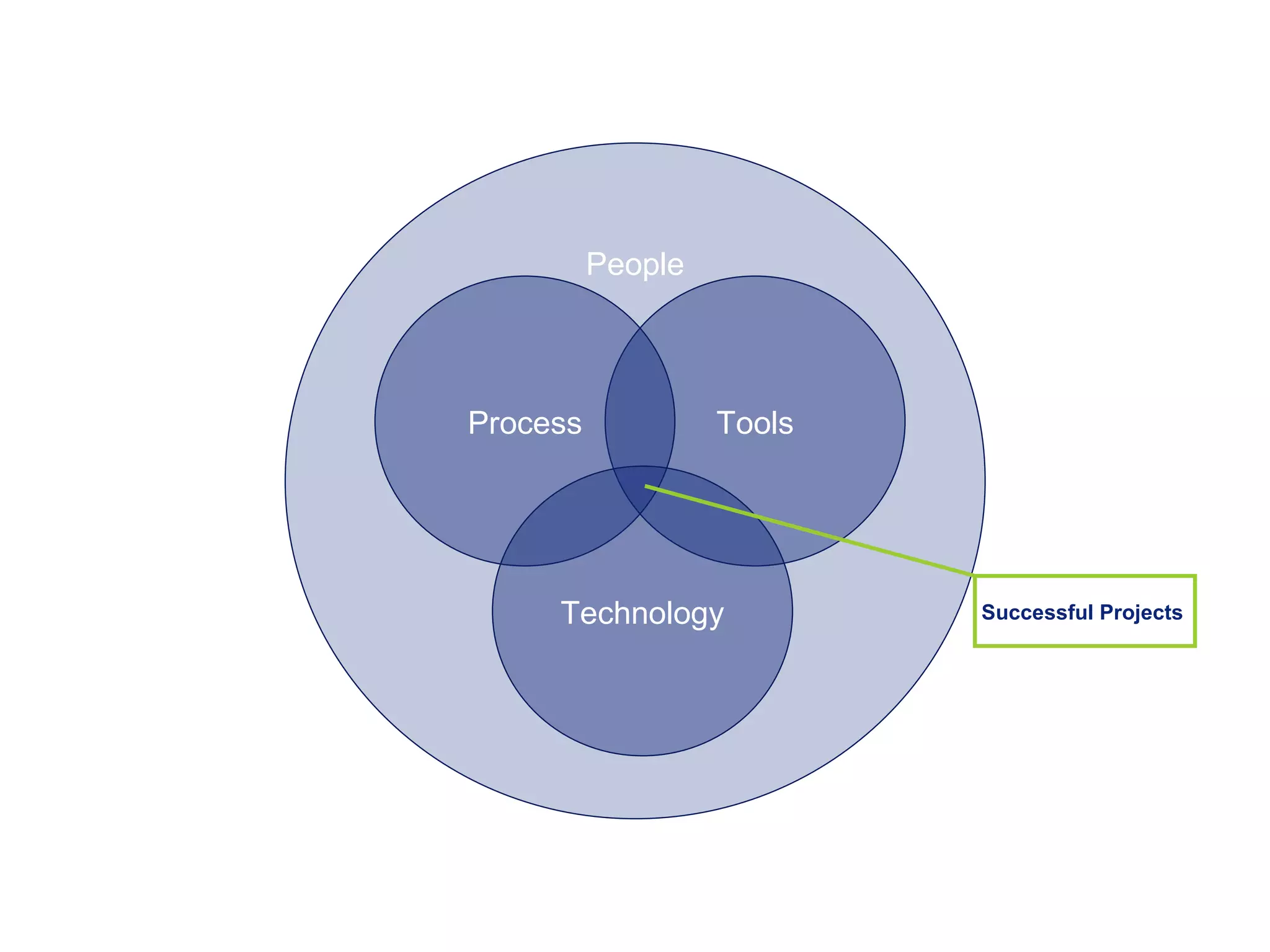
People Tools Process Technology Successful Projects
People
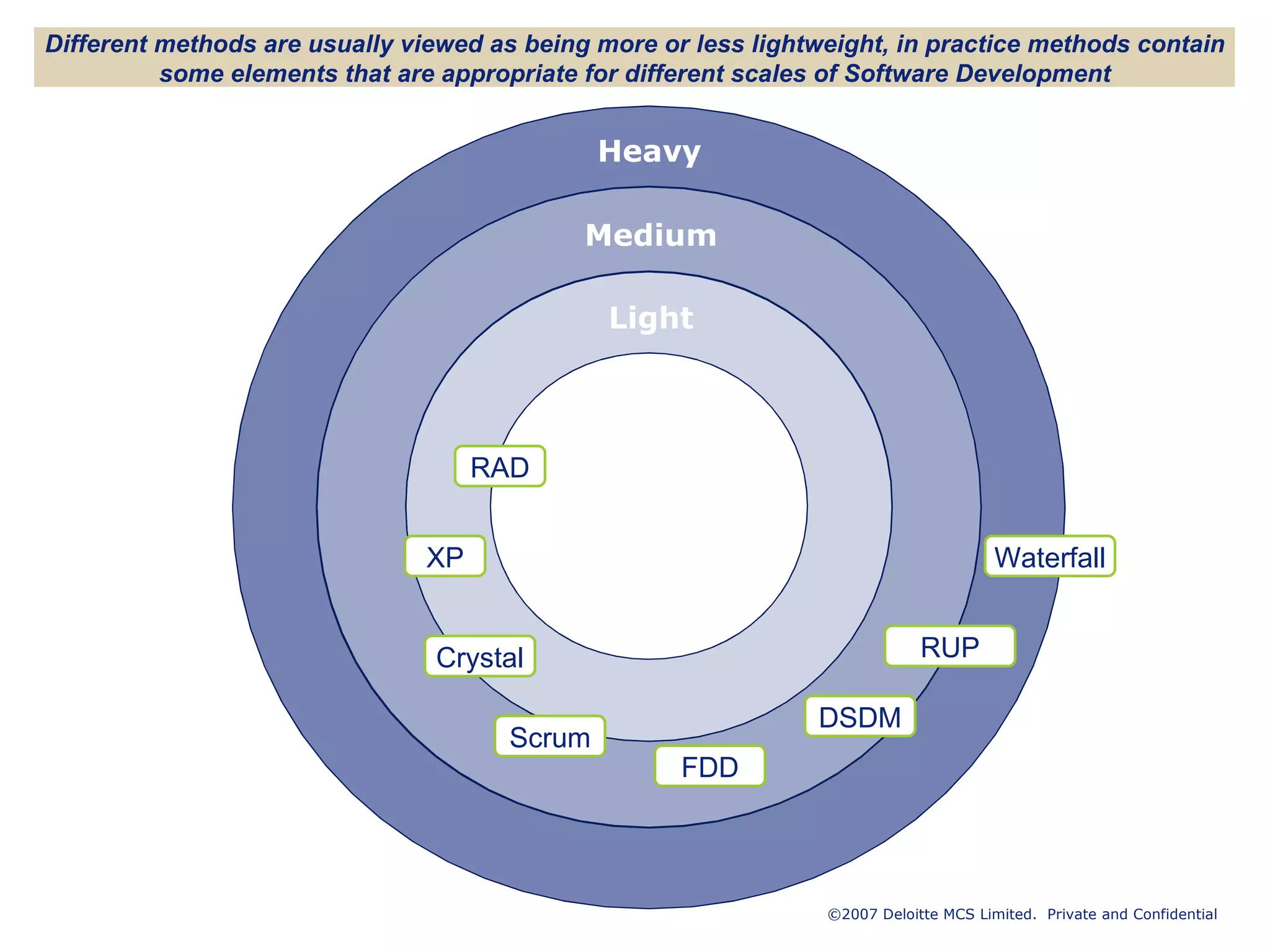
Different methods are usually viewed as being more or less lightweight, in practice methods contain some elements that are appropriate for different scales of Software Development RUP Scrum RAD FDD DSDM Waterfall XP Crystal
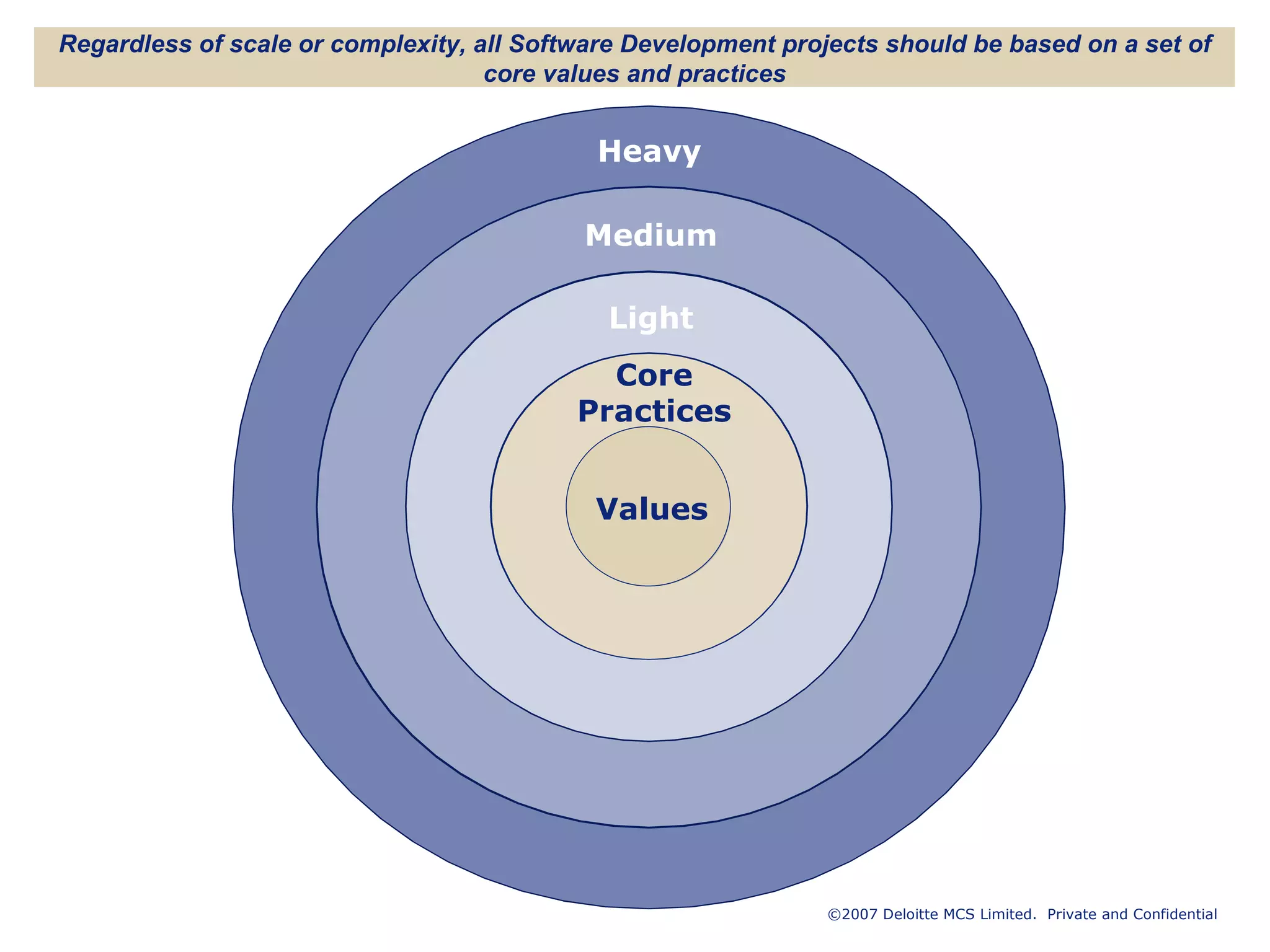
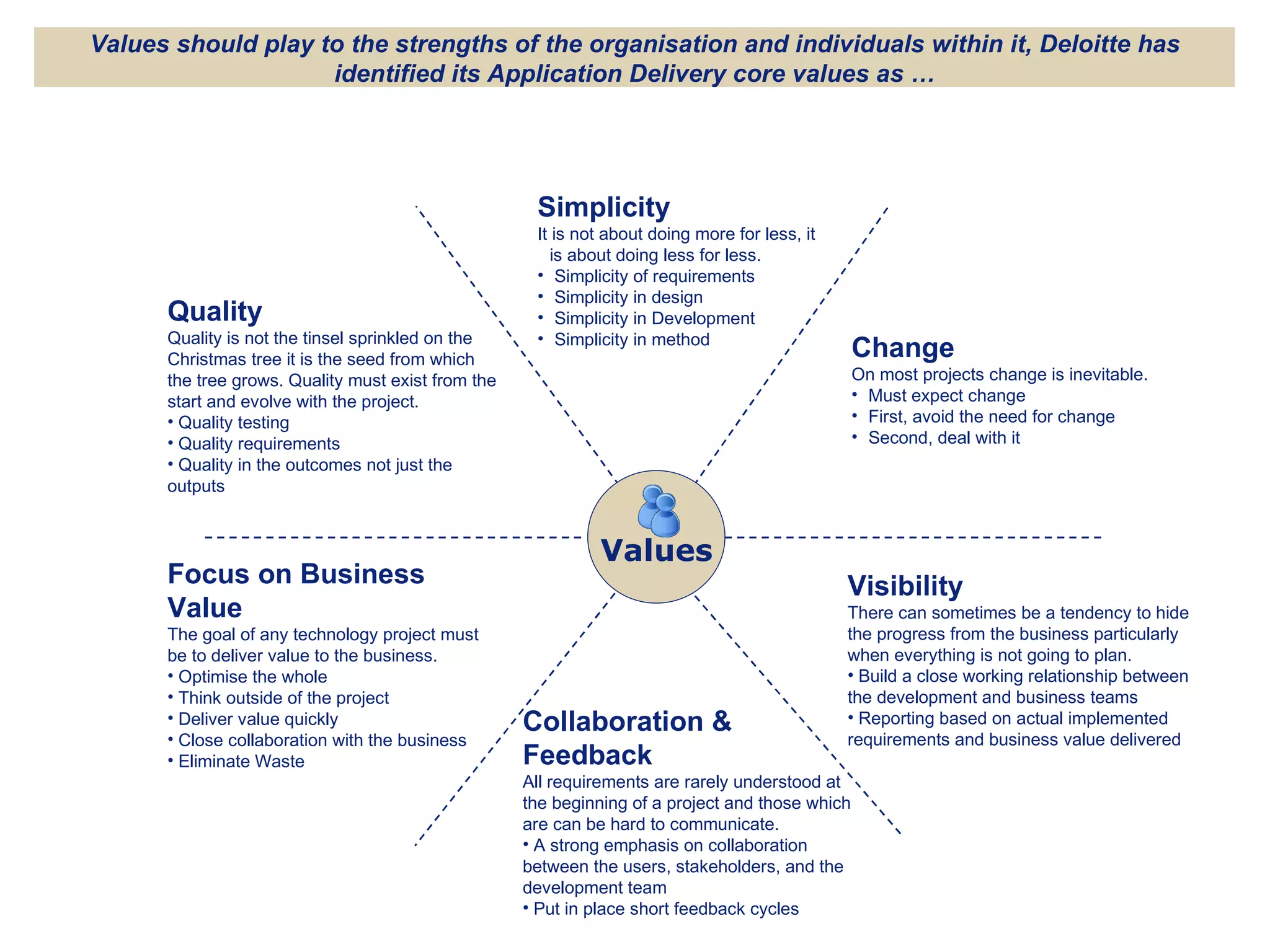
Regardless of scale or complexity, all Software Development projects should be based on a set of core values and practices
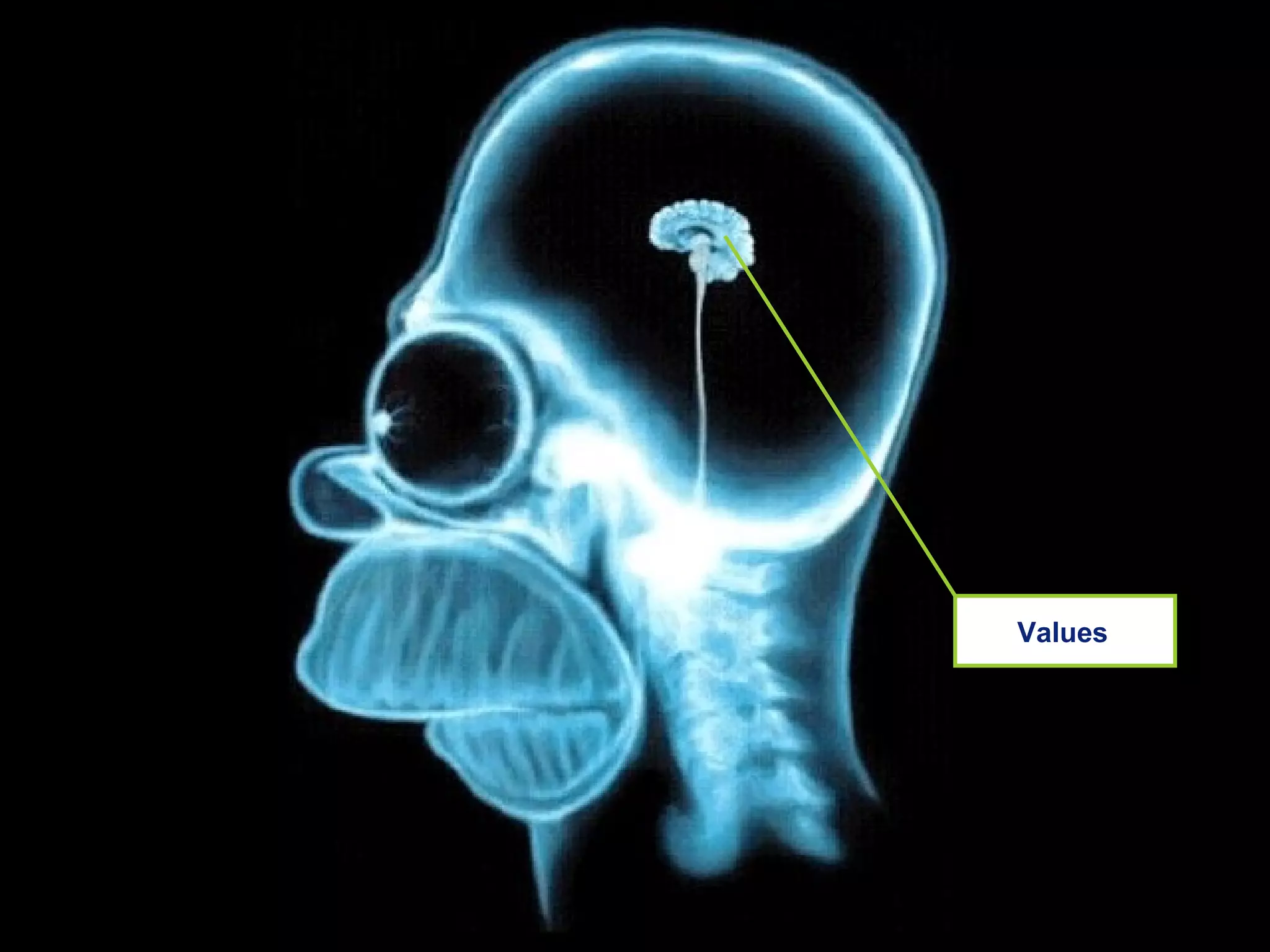
Values
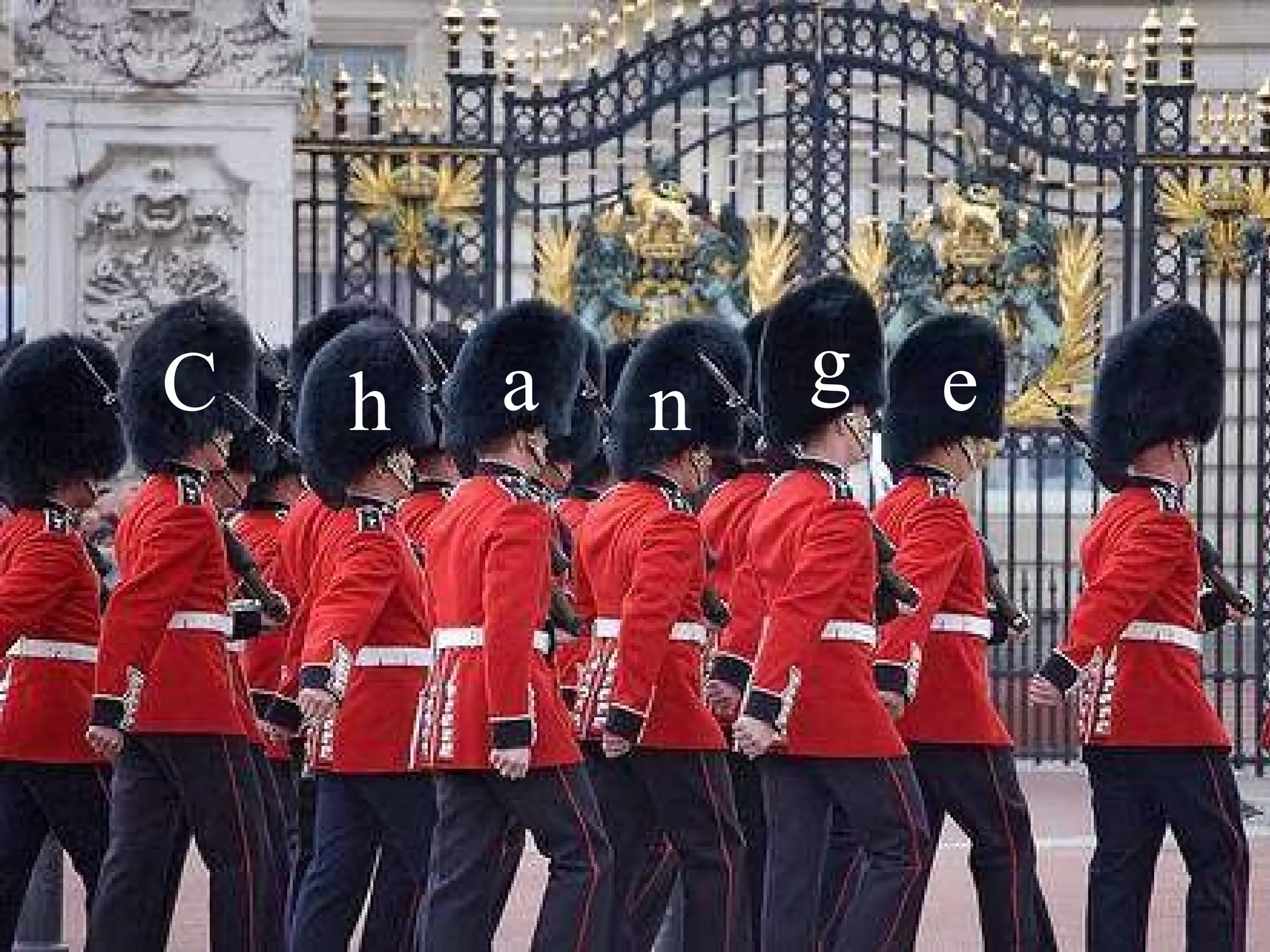
C h a n g e
Simplicity
Quality
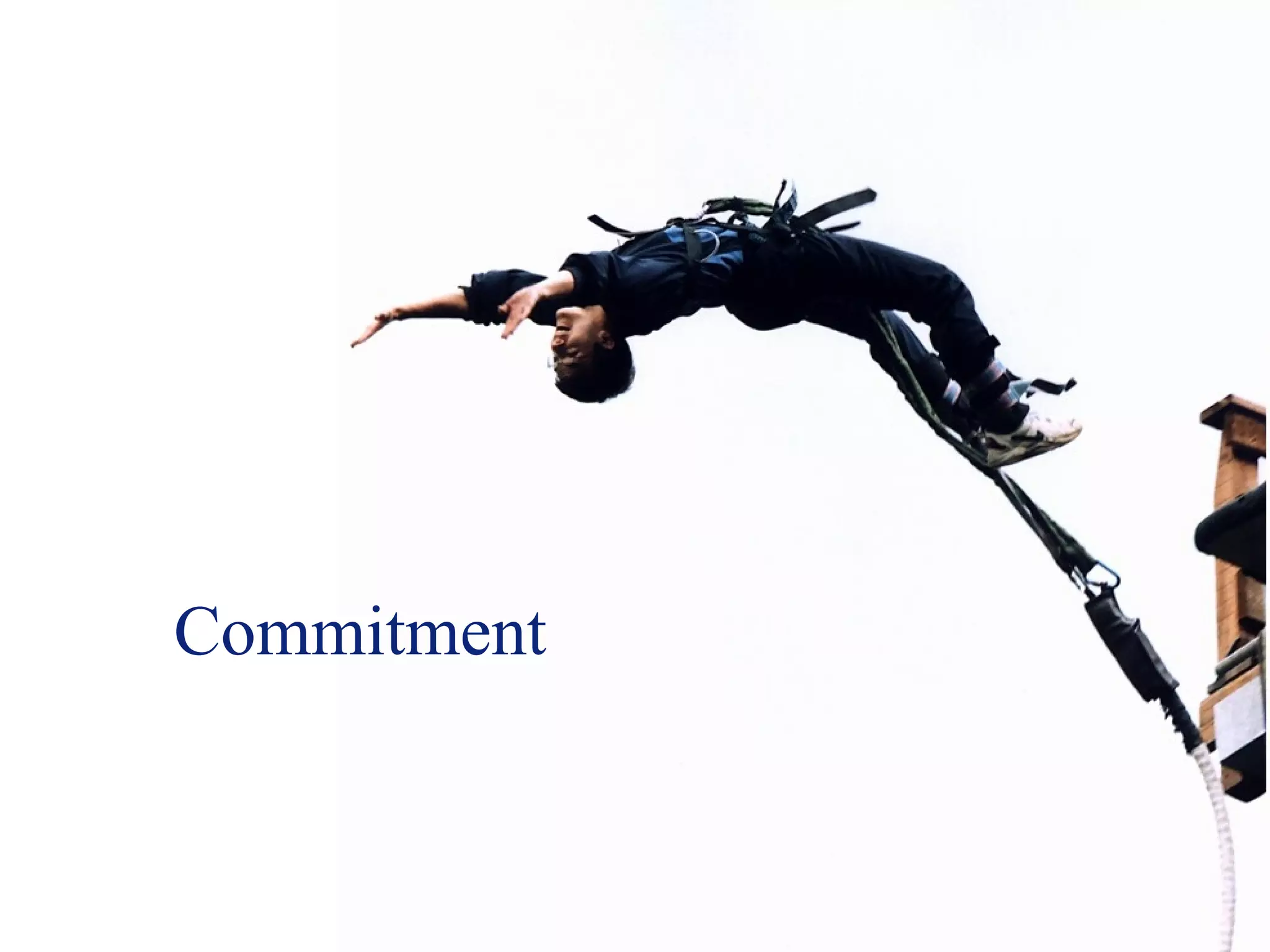
Commitment
v i sibility
C o l l a b o r a t i o n
Value Focus on
Quality Simplicity It is not about doing more for less, it is about doing less for less.  Simplicity of requirements Simplicity in design Simplicity in Development Simplicity in method Change On most projects change is inevitable. Must expect change First, avoid the need for change Second, deal with it Visibility There can sometimes be a tendency to hide the progress from the business particularly when everything is not going to plan. Build a close working relationship between the development and business teams Reporting based on actual implemented requirements and business value delivered Collaboration & Feedback All requirements are rarely understood at the beginning of a project and those which are can be hard to communicate. A strong emphasis on collaboration between the users, stakeholders, and the development team Put in place short feedback cycles Quality Quality is not the tinsel sprinkled on the Christmas tree it is the seed from which the tree grows. Quality must exist from the start and evolve with the project. Quality testing Quality requirements Quality  in the outcomes not just the outputs Values should play to the strengths of the organisation and individuals within it, Deloitte has identified its Application Delivery core values as … Focus on Business Value The goal of any technology project must be to deliver value to the business.  Optimise the whole  Think outside of the project Deliver value quickly Close collaboration with the business Eliminate Waste Values
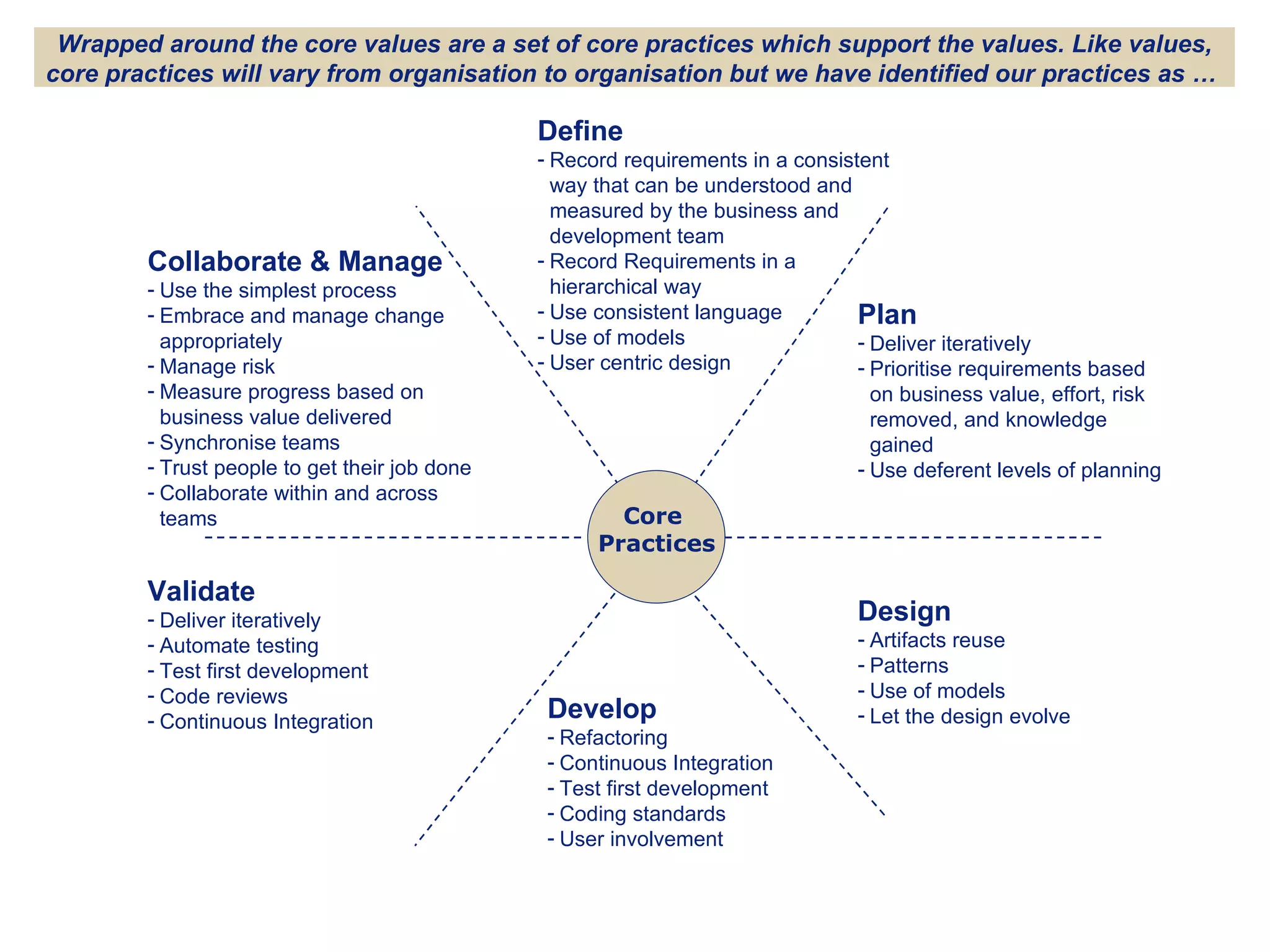
Core  Practices Define Define Record requirements in a consistent way that can be understood and measured by the business and development team Record Requirements in a hierarchical way Use consistent language  Use of models User centric design Plan Deliver iteratively Prioritise requirements based on business value, effort, risk removed, and knowledge gained Use deferent levels of planning Design Artifacts reuse Patterns Use of models Let the design evolve Develop Refactoring Continuous Integration Test first development Coding standards User involvement Validate Deliver iteratively Automate testing Test first development Code reviews Continuous Integration Collaborate & Manage Use the simplest process Embrace and manage change appropriately Manage risk Measure progress based on business value delivered  Synchronise teams Trust people to get their job done Collaborate within and across teams Wrapped around the core values are a set of core practices which support the values. Like values, core practices will vary from organisation to organisation but we have identified our practices as …
Process
“ You improvise. You adapt. You overcome.” Clint Eastwood In Heartbreak Ridge
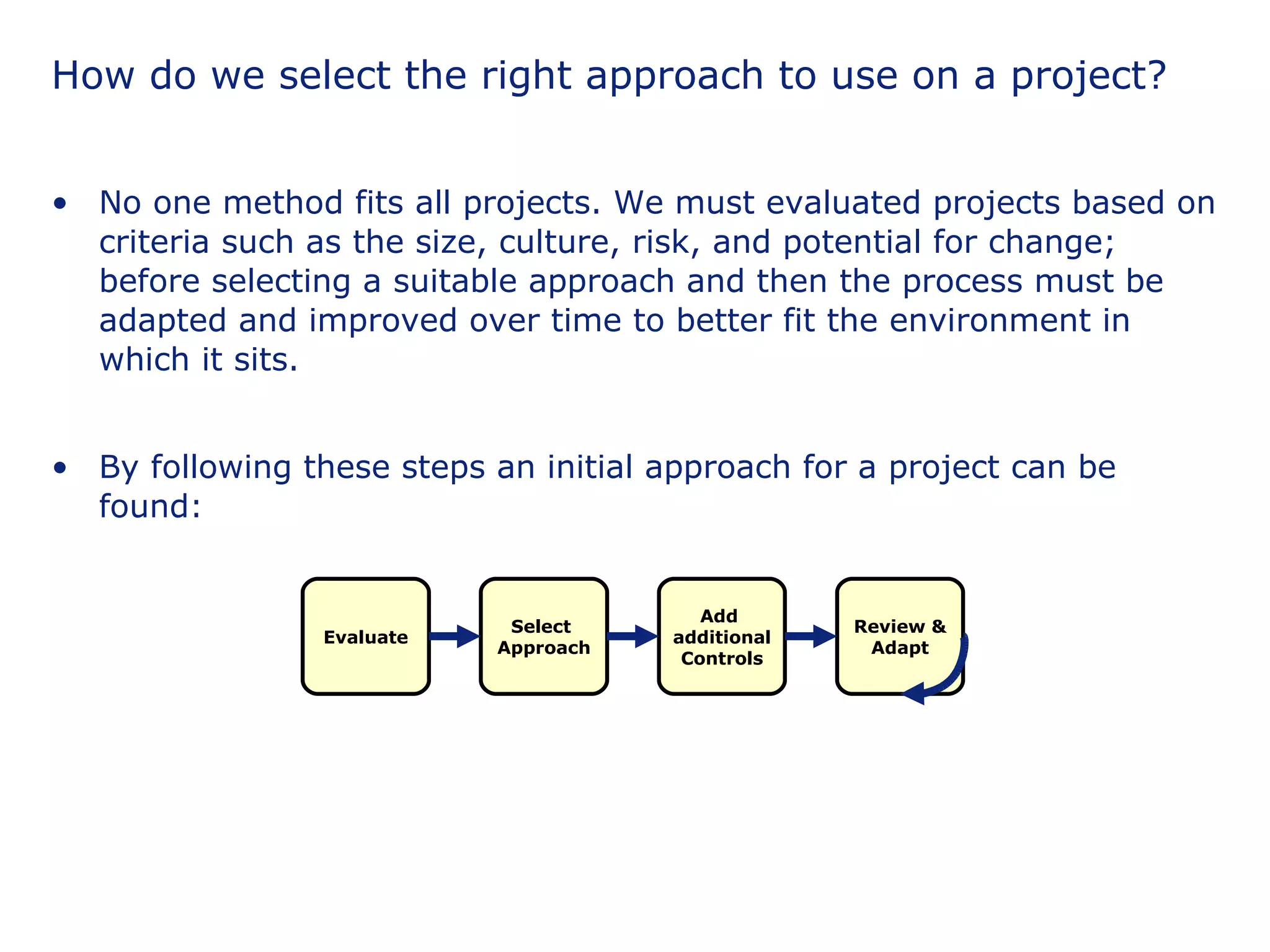
How do we select the right approach to use on a project? No one method fits all projects. We must evaluated projects based on criteria such as the size, culture, risk, and potential for change; before selecting a suitable approach and then the process must be adapted and improved over time to better fit the environment in which it sits. By following these steps an initial approach for a project can be found: Evaluate Add  additional Controls Select  Approach Review & Adapt
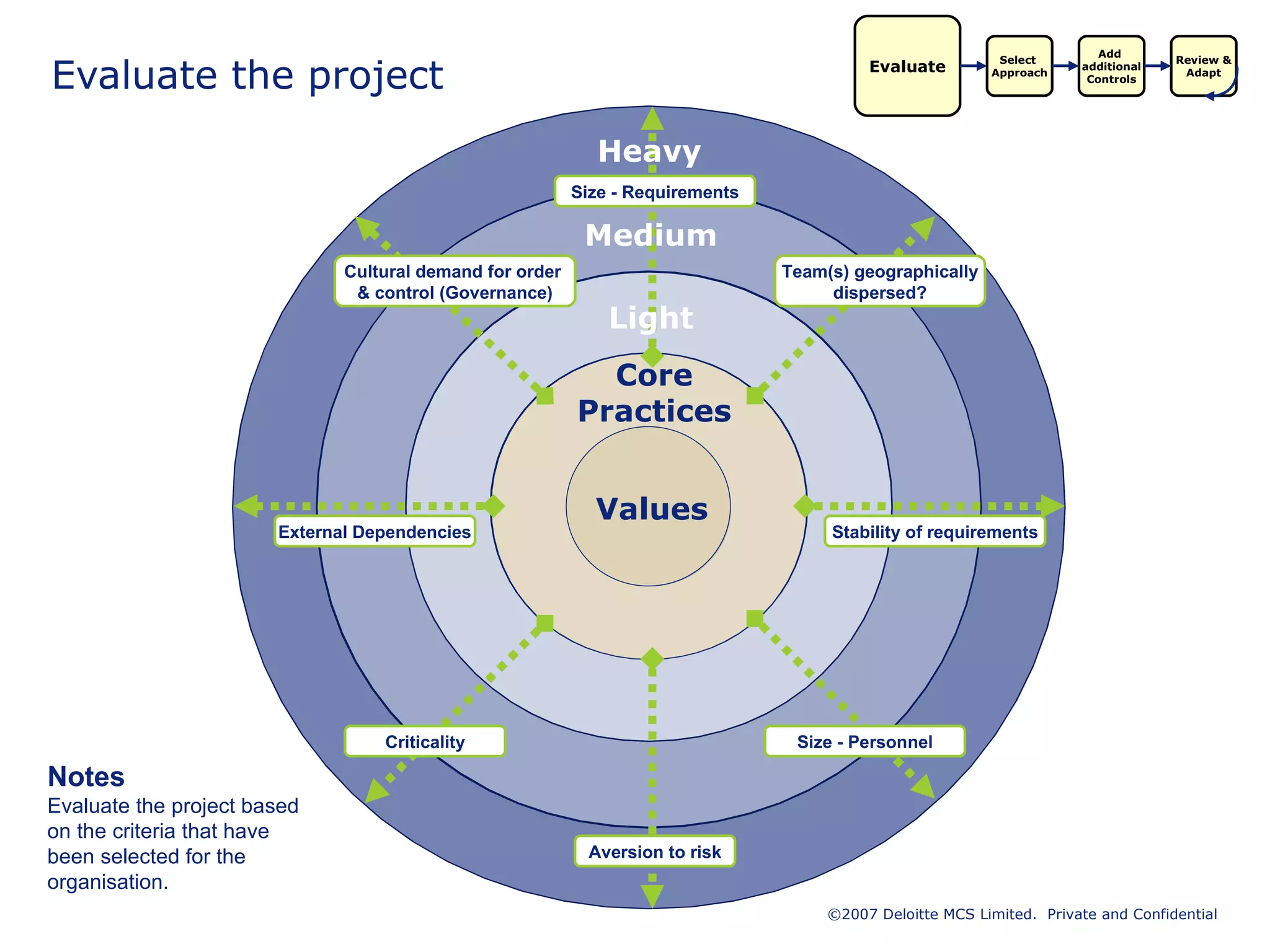
Evaluate the project Evaluate Add  additional Controls Select  Approach Review & Adapt Notes Evaluate the project based on the criteria that have been selected for the organisation.
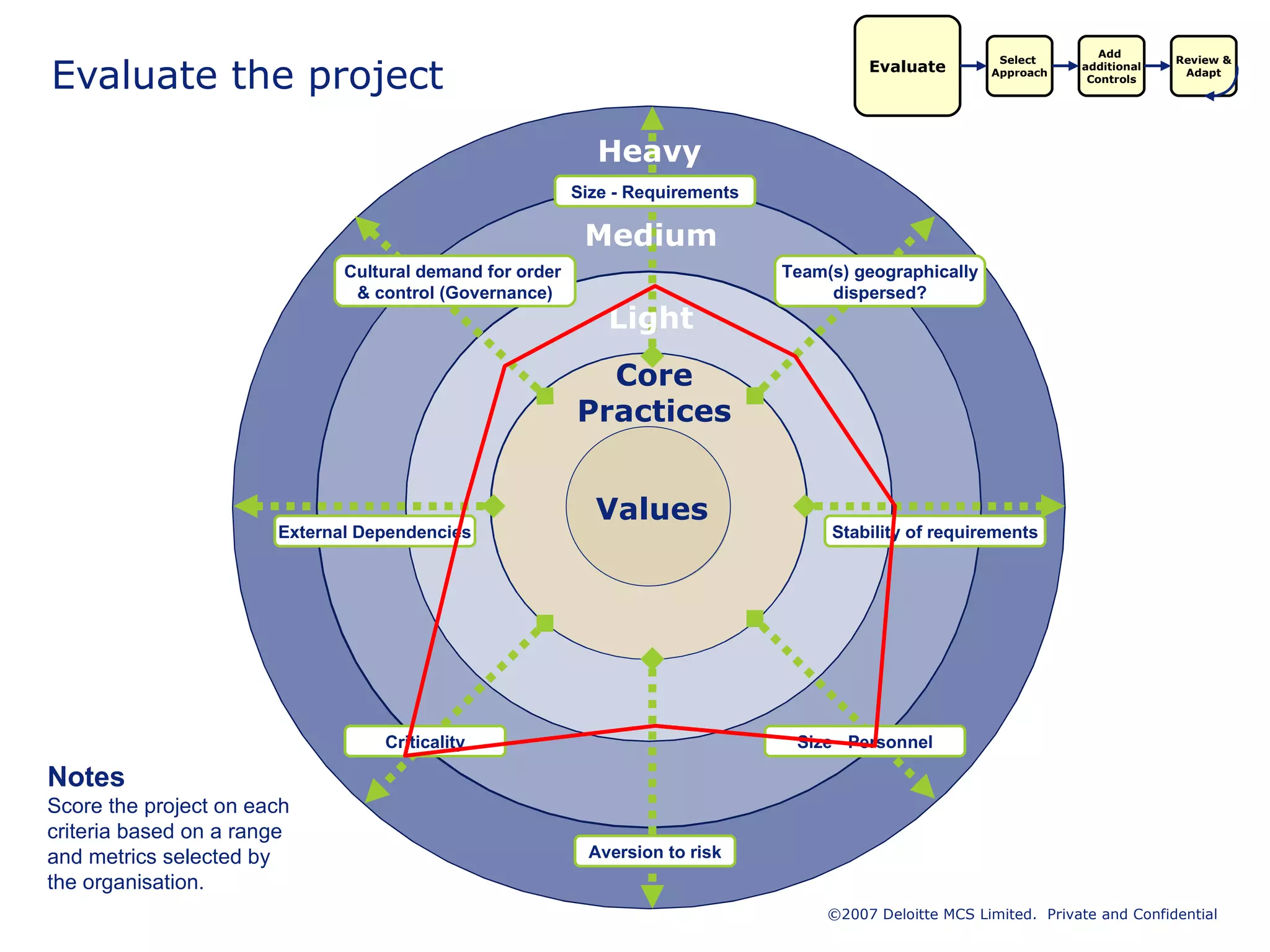
Evaluate the project Evaluate Add  additional Controls Select  Approach Review & Adapt Notes Score the project on each criteria based on a range and metrics selected by the organisation.
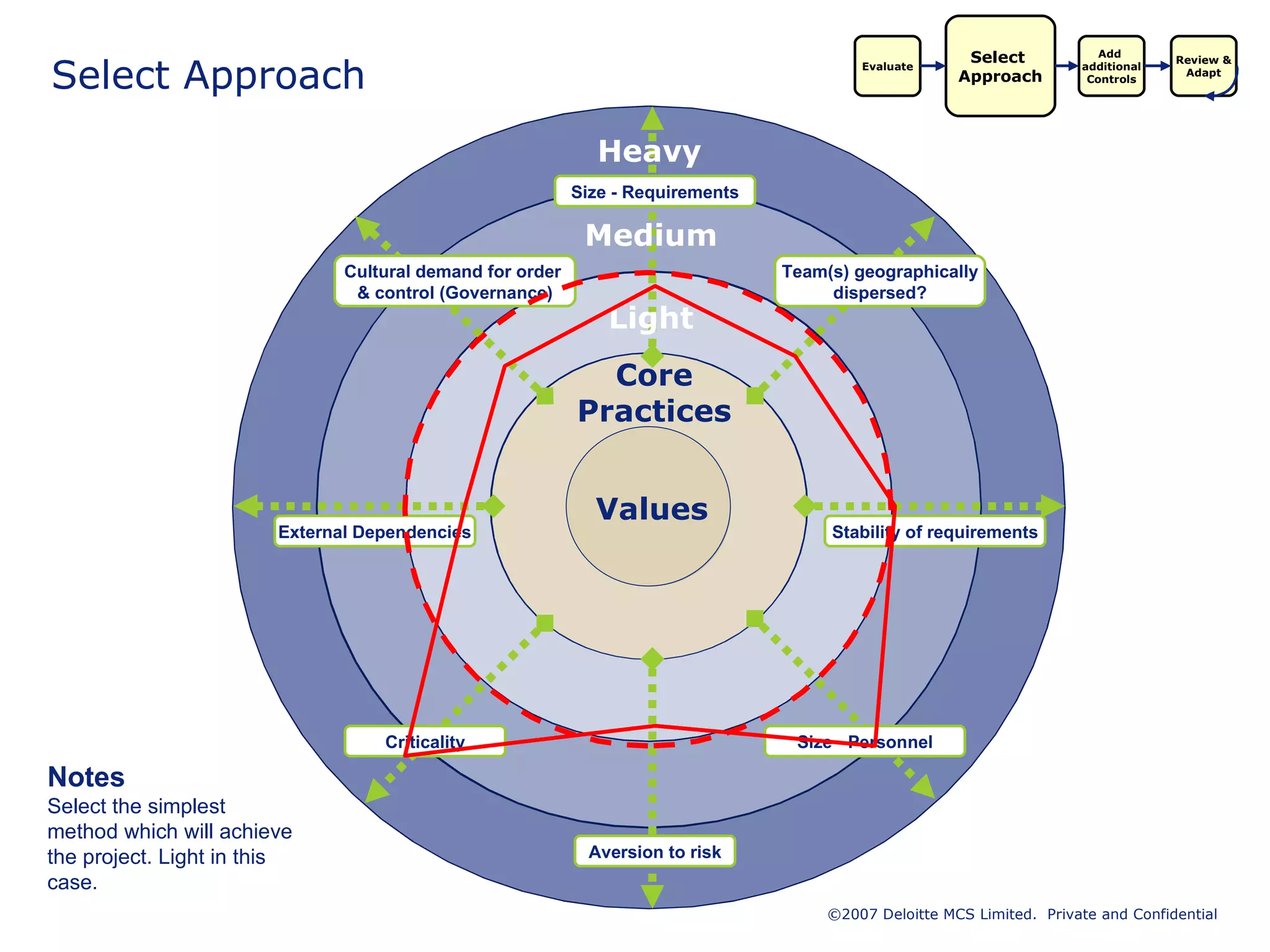
Select Approach Evaluate Add  additional Controls Select  Approach Review & Adapt Notes Select the simplest method which will achieve the project. Light in this case.
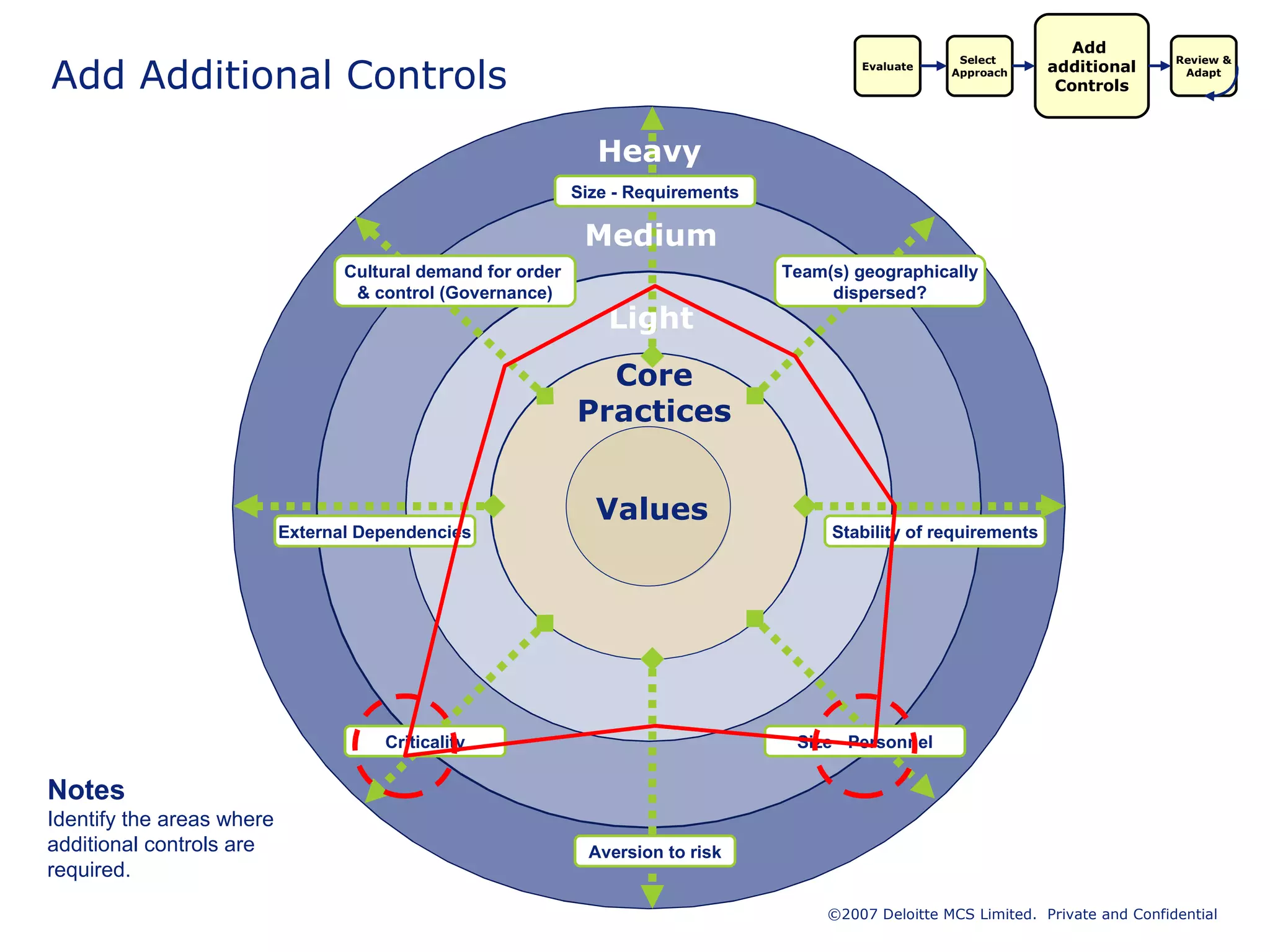
Add Additional Controls Notes Identify the areas where additional controls are required. Evaluate Add  additional Controls Select  Approach Review & Adapt
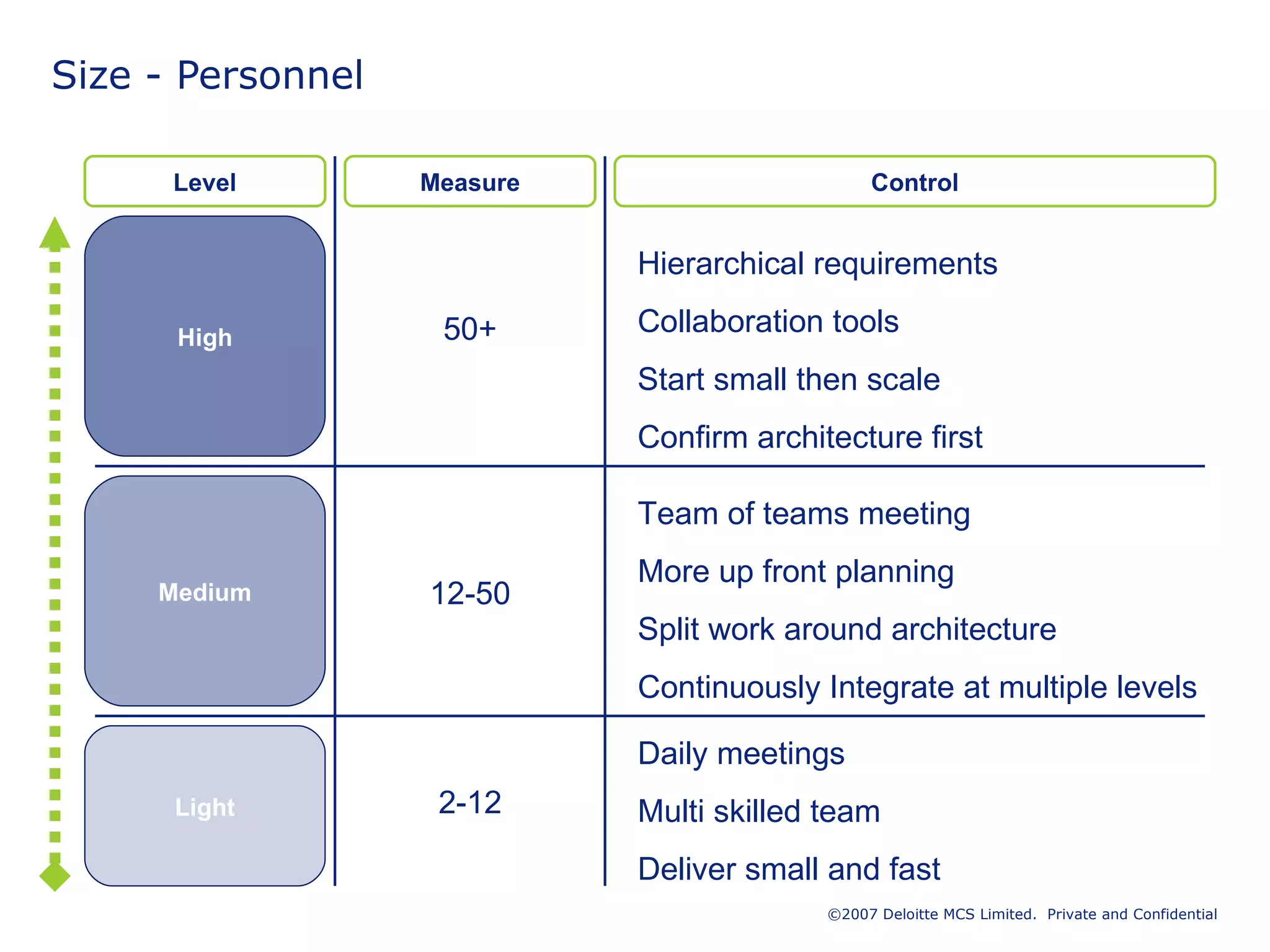
Size - Personnel 2-12 12-50 50+ Daily meetings Multi skilled team Deliver small and fast Team of teams meeting More up front planning Split work around architecture Continuously Integrate at multiple levels Hierarchical requirements Collaboration tools Start small then scale Confirm architecture first
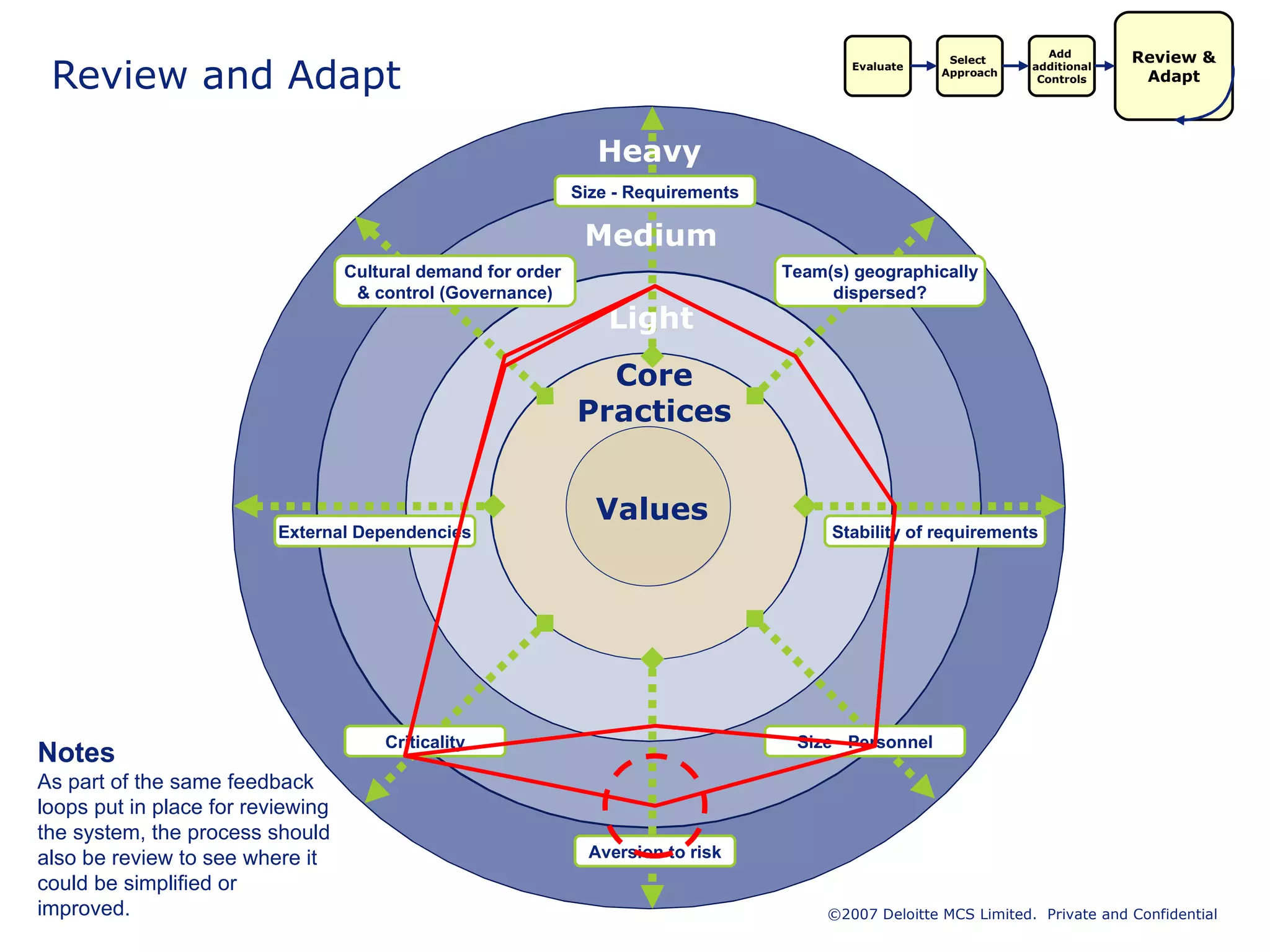
Review and Adapt Notes As part of the same feedback loops put in place for reviewing the system, the process should also be review to see where it could be simplified or improved. Evaluate Add  additional Controls Select  Approach Review & Adapt
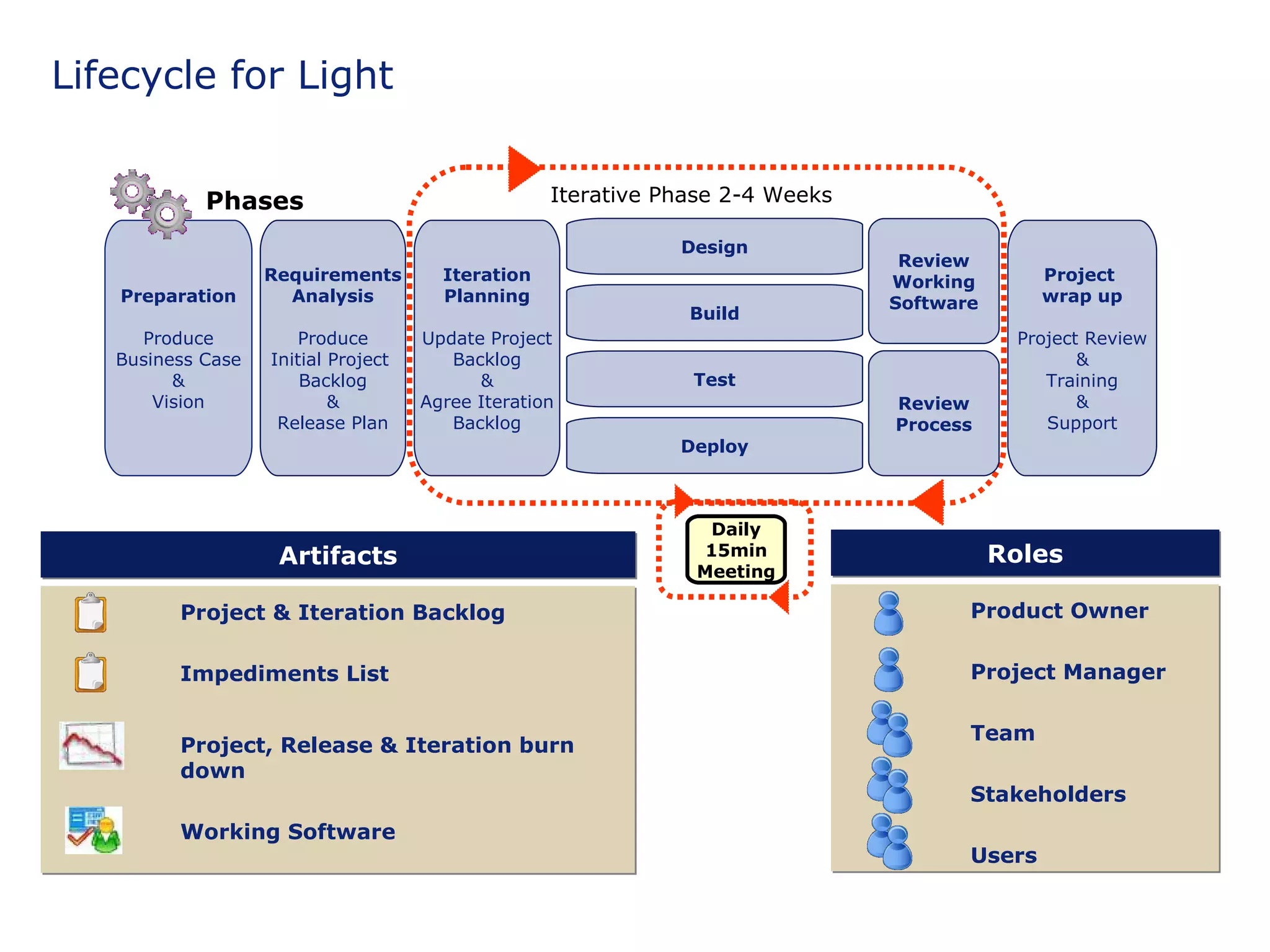
Lifecycle for Light Product Owner Project Manager Team Stakeholders Users Preparation Produce Business Case & Vision Requirements Analysis Produce Initial Project  Backlog & Release Plan Iteration Planning Update Project Backlog & Agree Iteration Backlog Design Review Working Software Project  wrap up Project Review & Training & Support Iterative Phase 2-4 Weeks Phases Build Deploy Test Daily 15min Meeting Roles Project & Iteration Backlog Impediments List Project, Release & Iteration burn  down Working Software Artifacts Review Process
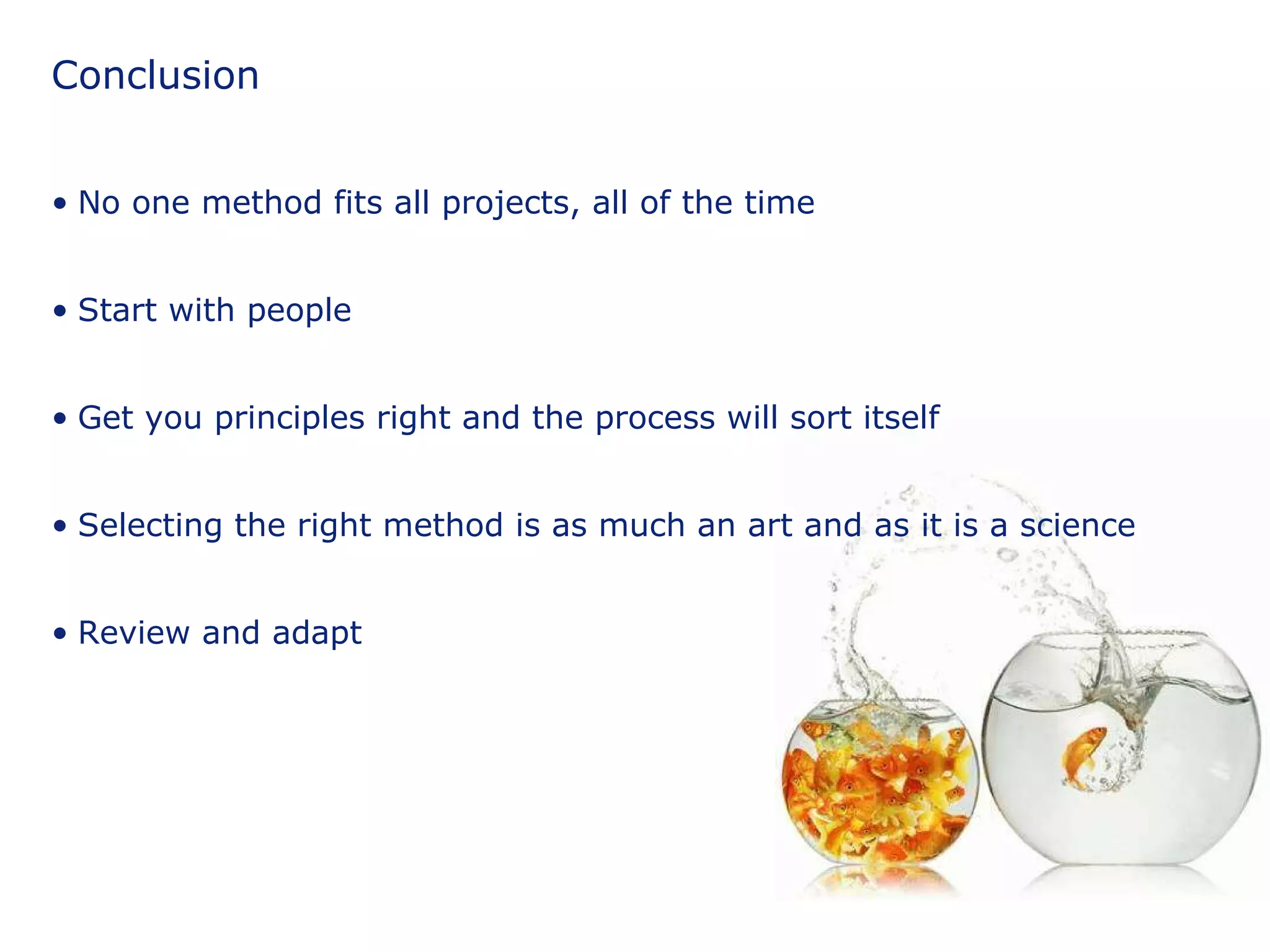
Conclusion No one method fits all projects, all of the time Start with people Get you principles right and the process will sort itself Selecting the right method is as much an art and as it is a science Review and adapt
“ If you want a guarantee, buy a toaster.” Clint Eastwood In The Rookie
Contact Details Mike Robinson [email_address]

What Makes A Great Dev Team - Mike Robinson

  • 1.
    What makes agreat Development Team? What are the challenges faced by development teams and how do they meet them. Mike Robinson
  • 2.
  • 3.
  • 4.
  • 5.
    1 - Whatis the problem? 2 - How do we solve the problem?
  • 6.
    1 - Whatis the problem?
  • 7.
    From the customer’spoint of view
  • 8.
    From the developmentteam’s point of view
  • 9.
    2 - Howdo we solve the problem?
  • 10.
  • 11.
  • 12.
  • 13.
    People Tools ProcessTechnology Successful Projects
  • 14.
  • 15.
    Different methods areusually viewed as being more or less lightweight, in practice methods contain some elements that are appropriate for different scales of Software Development RUP Scrum RAD FDD DSDM Waterfall XP Crystal
  • 16.
    Regardless of scaleor complexity, all Software Development projects should be based on a set of core values and practices
  • 17.
  • 18.
    C h an g e
  • 19.
  • 20.
  • 21.
  • 22.
  • 23.
    C o ll a b o r a t i o n
  • 24.
  • 25.
    Quality Simplicity Itis not about doing more for less, it is about doing less for less. Simplicity of requirements Simplicity in design Simplicity in Development Simplicity in method Change On most projects change is inevitable. Must expect change First, avoid the need for change Second, deal with it Visibility There can sometimes be a tendency to hide the progress from the business particularly when everything is not going to plan. Build a close working relationship between the development and business teams Reporting based on actual implemented requirements and business value delivered Collaboration & Feedback All requirements are rarely understood at the beginning of a project and those which are can be hard to communicate. A strong emphasis on collaboration between the users, stakeholders, and the development team Put in place short feedback cycles Quality Quality is not the tinsel sprinkled on the Christmas tree it is the seed from which the tree grows. Quality must exist from the start and evolve with the project. Quality testing Quality requirements Quality in the outcomes not just the outputs Values should play to the strengths of the organisation and individuals within it, Deloitte has identified its Application Delivery core values as … Focus on Business Value The goal of any technology project must be to deliver value to the business. Optimise the whole Think outside of the project Deliver value quickly Close collaboration with the business Eliminate Waste Values
  • 26.
    Core PracticesDefine Define Record requirements in a consistent way that can be understood and measured by the business and development team Record Requirements in a hierarchical way Use consistent language Use of models User centric design Plan Deliver iteratively Prioritise requirements based on business value, effort, risk removed, and knowledge gained Use deferent levels of planning Design Artifacts reuse Patterns Use of models Let the design evolve Develop Refactoring Continuous Integration Test first development Coding standards User involvement Validate Deliver iteratively Automate testing Test first development Code reviews Continuous Integration Collaborate & Manage Use the simplest process Embrace and manage change appropriately Manage risk Measure progress based on business value delivered Synchronise teams Trust people to get their job done Collaborate within and across teams Wrapped around the core values are a set of core practices which support the values. Like values, core practices will vary from organisation to organisation but we have identified our practices as …
  • 27.
  • 28.
    “ You improvise.You adapt. You overcome.” Clint Eastwood In Heartbreak Ridge
  • 29.
    How do weselect the right approach to use on a project? No one method fits all projects. We must evaluated projects based on criteria such as the size, culture, risk, and potential for change; before selecting a suitable approach and then the process must be adapted and improved over time to better fit the environment in which it sits. By following these steps an initial approach for a project can be found: Evaluate Add additional Controls Select Approach Review & Adapt
  • 30.
    Evaluate the projectEvaluate Add additional Controls Select Approach Review & Adapt Notes Evaluate the project based on the criteria that have been selected for the organisation.
  • 31.
    Evaluate the projectEvaluate Add additional Controls Select Approach Review & Adapt Notes Score the project on each criteria based on a range and metrics selected by the organisation.
  • 32.
    Select Approach EvaluateAdd additional Controls Select Approach Review & Adapt Notes Select the simplest method which will achieve the project. Light in this case.
  • 33.
    Add Additional ControlsNotes Identify the areas where additional controls are required. Evaluate Add additional Controls Select Approach Review & Adapt
  • 34.
    Size - Personnel2-12 12-50 50+ Daily meetings Multi skilled team Deliver small and fast Team of teams meeting More up front planning Split work around architecture Continuously Integrate at multiple levels Hierarchical requirements Collaboration tools Start small then scale Confirm architecture first
  • 35.
    Review and AdaptNotes As part of the same feedback loops put in place for reviewing the system, the process should also be review to see where it could be simplified or improved. Evaluate Add additional Controls Select Approach Review & Adapt
  • 36.
    Lifecycle for LightProduct Owner Project Manager Team Stakeholders Users Preparation Produce Business Case & Vision Requirements Analysis Produce Initial Project Backlog & Release Plan Iteration Planning Update Project Backlog & Agree Iteration Backlog Design Review Working Software Project wrap up Project Review & Training & Support Iterative Phase 2-4 Weeks Phases Build Deploy Test Daily 15min Meeting Roles Project & Iteration Backlog Impediments List Project, Release & Iteration burn down Working Software Artifacts Review Process
  • 37.
    Conclusion No onemethod fits all projects, all of the time Start with people Get you principles right and the process will sort itself Selecting the right method is as much an art and as it is a science Review and adapt
  • 38.
    “ If youwant a guarantee, buy a toaster.” Clint Eastwood In The Rookie
  • 39.
    Contact Details MikeRobinson [email_address]