Introduction to Neural
Networks
Presented by:

Hafiz Syed Adnan Ahmed
Introduction
• Artificial Neural Network is based on the biological nervous

system as Brain
• It is composed of interconnected computing units called
neurons

• ANN like human, learn by examples
Why Artificial Neural Networks?
There are two basic reasons why we are interested in
building artificial neural networks (ANNs):

• Technical viewpoint: Some problems such as
character recognition or the prediction of future
states of a system require massively parallel and
adaptive processing.
• Biological viewpoint: ANNs can be used to
replicate and simulate components of the human
(or animal) brain, thereby giving us insight into
natural information processing.

3
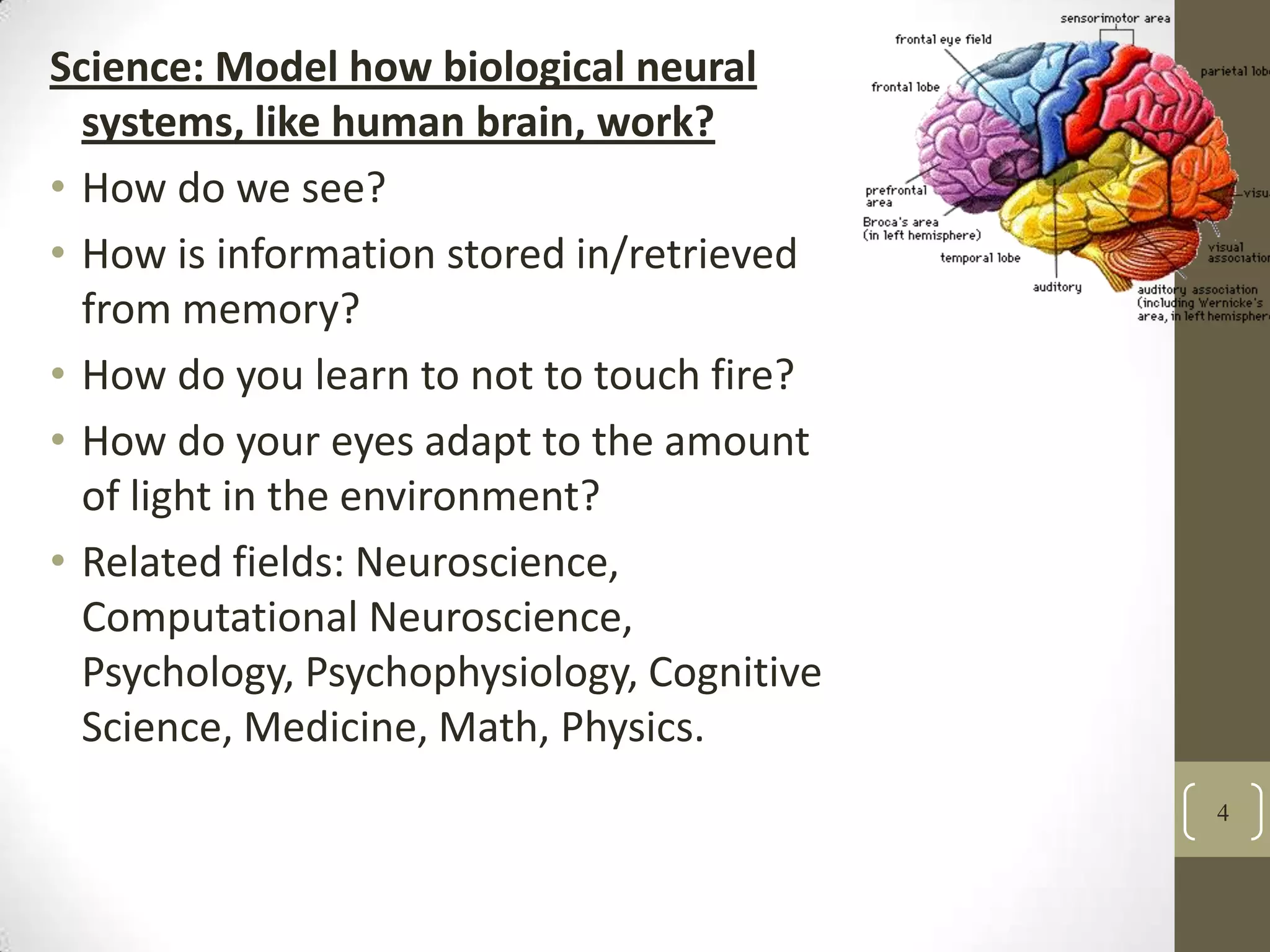
Science: Model how biological neural
systems, like human brain, work?
• How do we see?
• How is information stored in/retrieved
from memory?
• How do you learn to not to touch fire?
• How do your eyes adapt to the amount
of light in the environment?
• Related fields: Neuroscience,
Computational Neuroscience,
Psychology, Psychophysiology, Cognitive
Science, Medicine, Math, Physics.
4
Real Neural Learning
• Synapses change size and strength with
experience.
• Hebbian learning: When two connected neurons
are firing at the same time, the strength of the
synapse between them increases.
• “Neurons that fire together, wire together.”

5
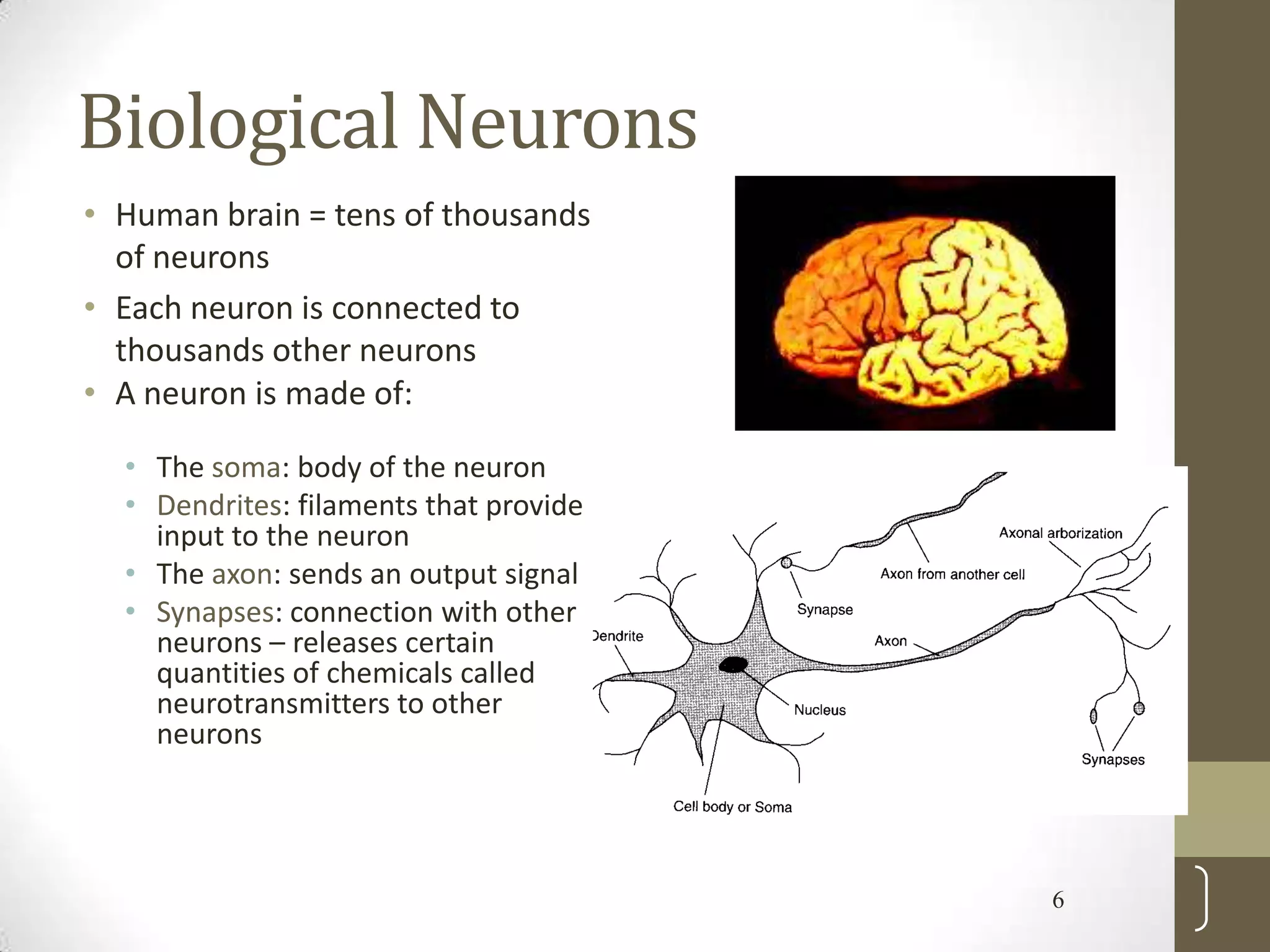
Biological Neurons
• Human brain = tens of thousands
of neurons
• Each neuron is connected to
thousands other neurons
• A neuron is made of:
• The soma: body of the neuron
• Dendrites: filaments that provide
input to the neuron
• The axon: sends an output signal
• Synapses: connection with other
neurons – releases certain
quantities of chemicals called
neurotransmitters to other
neurons

6
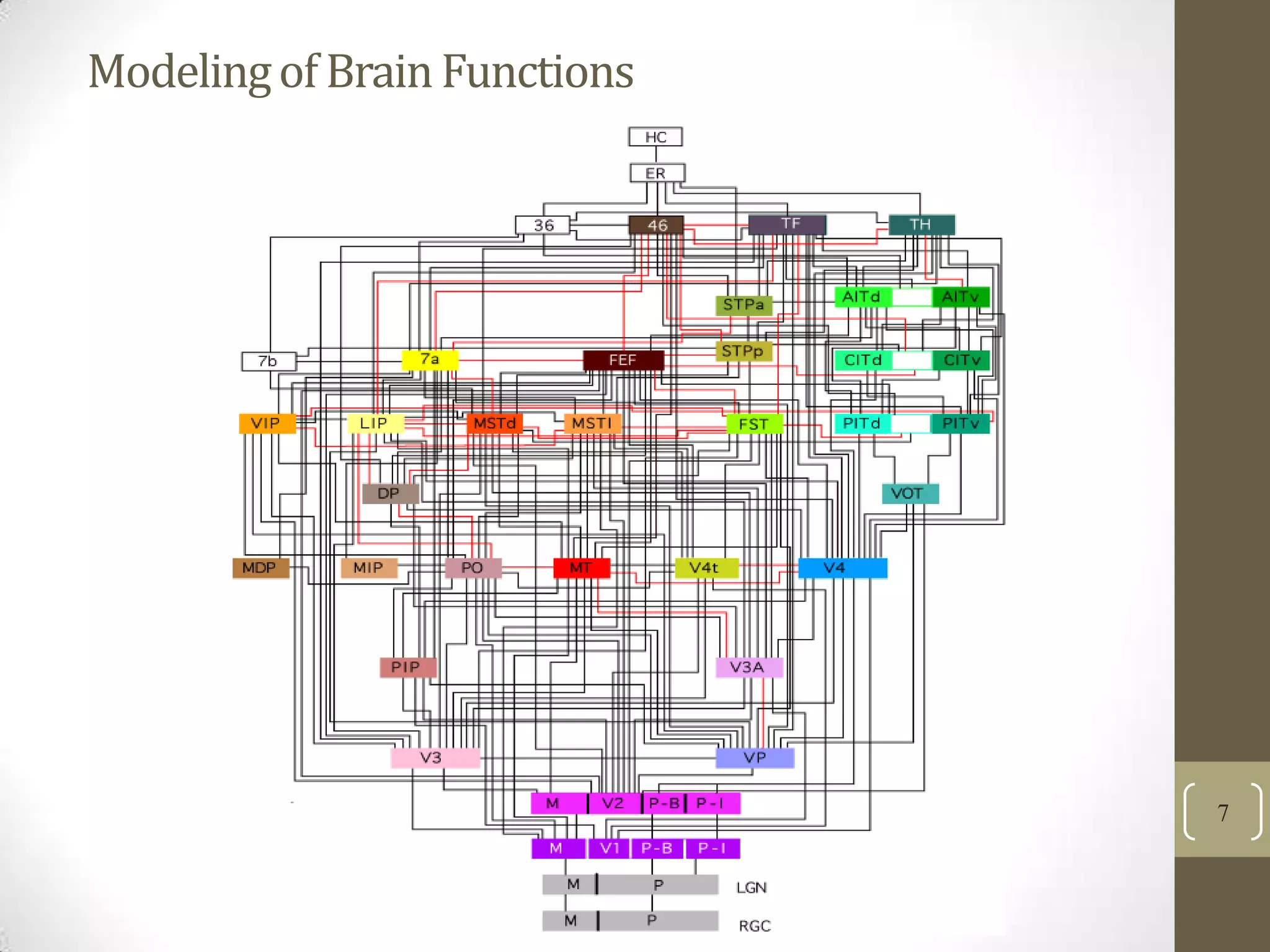
Modeling of Brain Functions

7
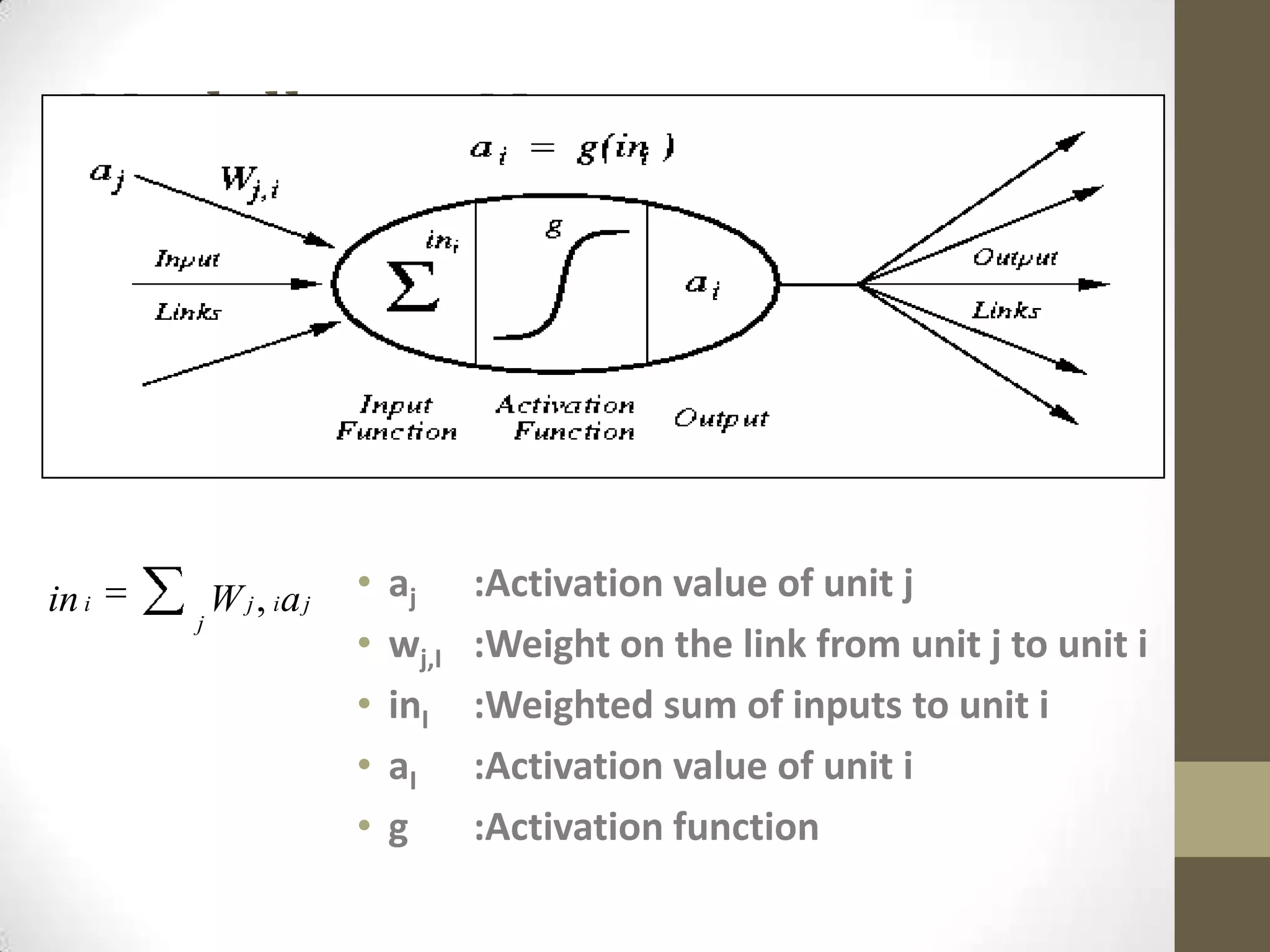
Modelling a Neuron

in i

j

W j , ia j

•
•
•
•
•

aj
wj,I
inI
aI
g

:Activation value of unit j
:Weight on the link from unit j to unit i
:Weighted sum of inputs to unit i
:Activation value of unit i
:Activation function
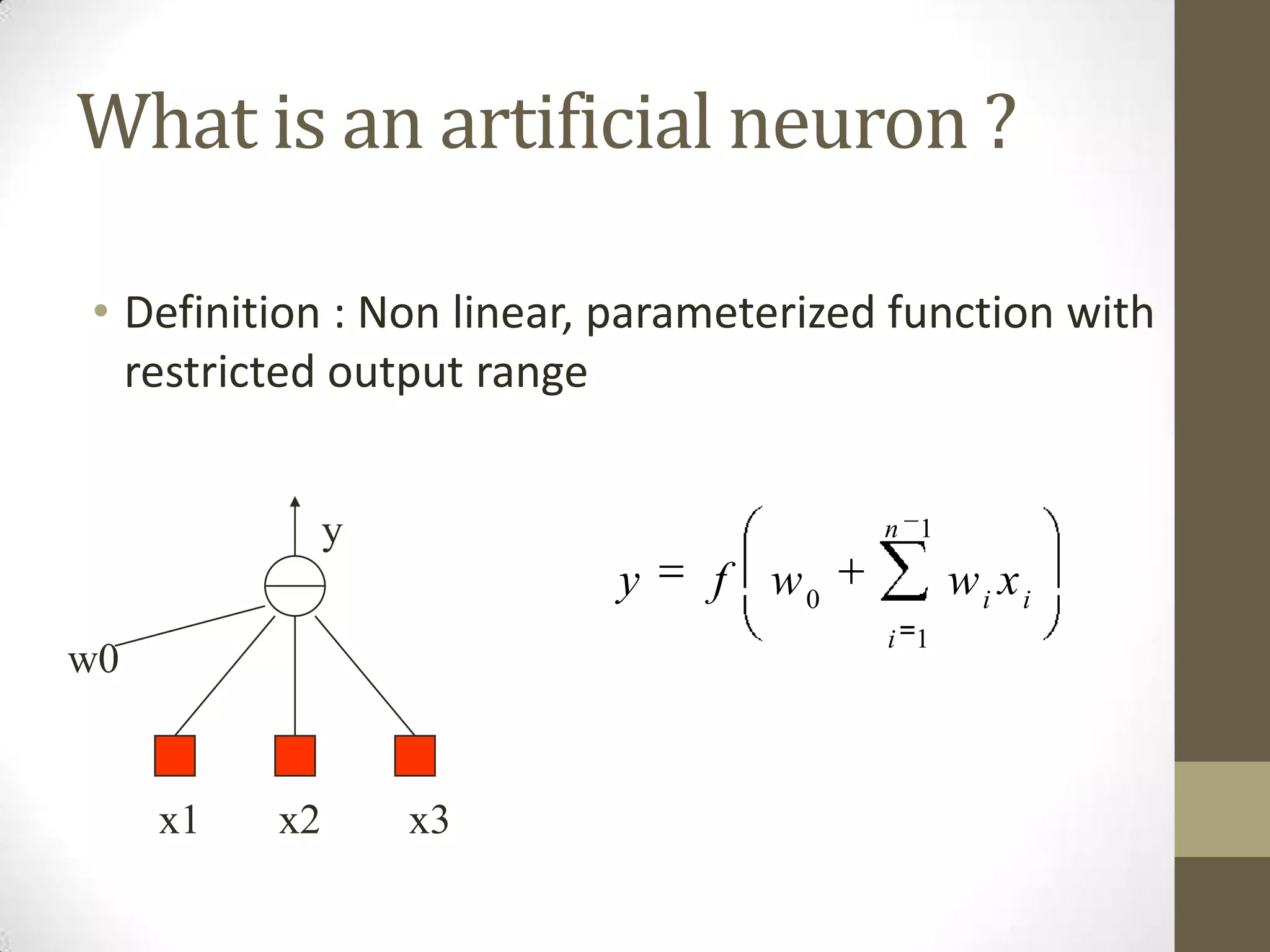
What is an artificial neuron ?
• Definition : Non linear, parameterized function with
restricted output range
y

n 1

y

f w0

wi xi
i 1

w0

x1

x2

x3
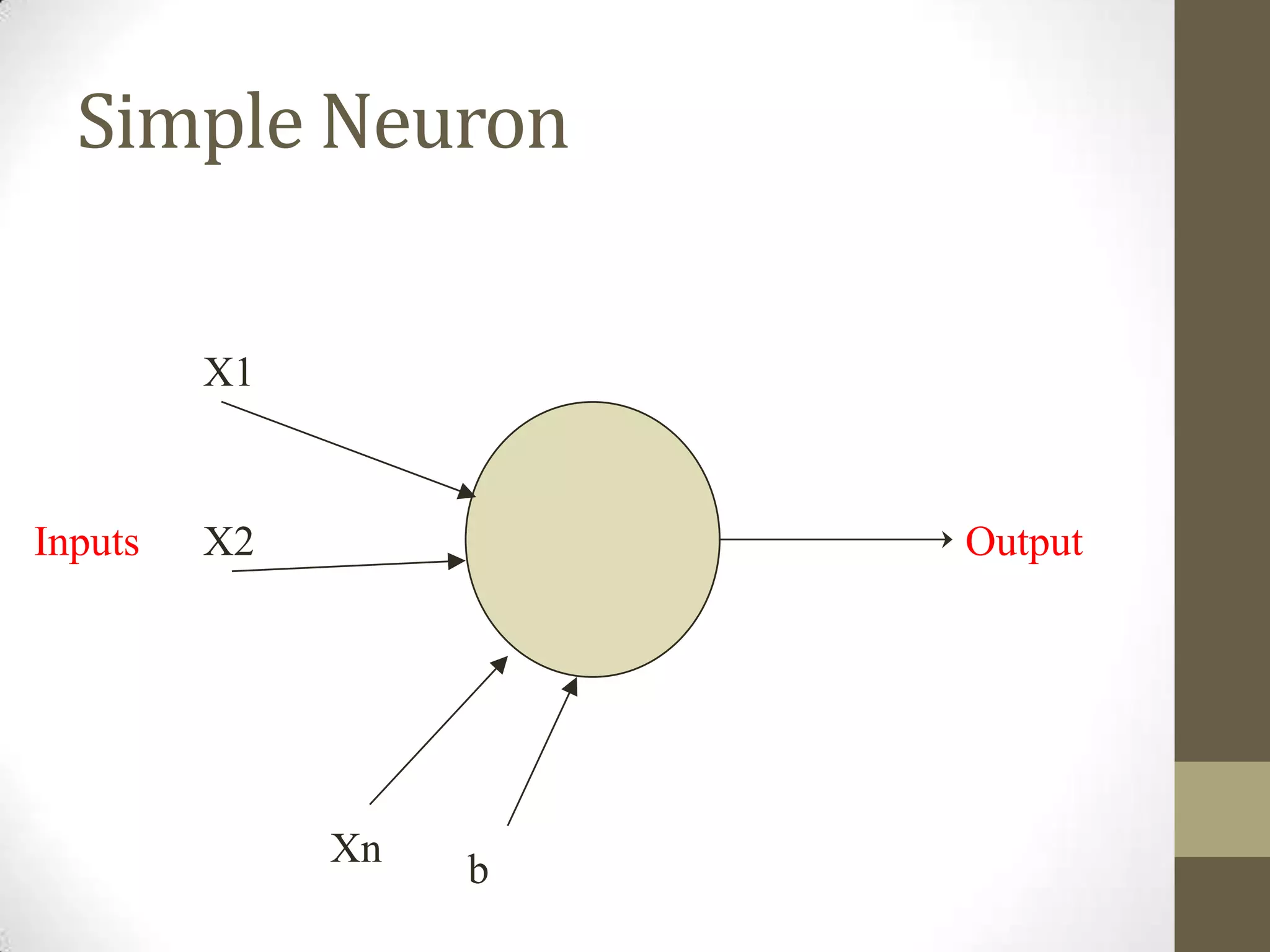
Simple Neuron
X1

Inputs

X2

Output

Xn

b
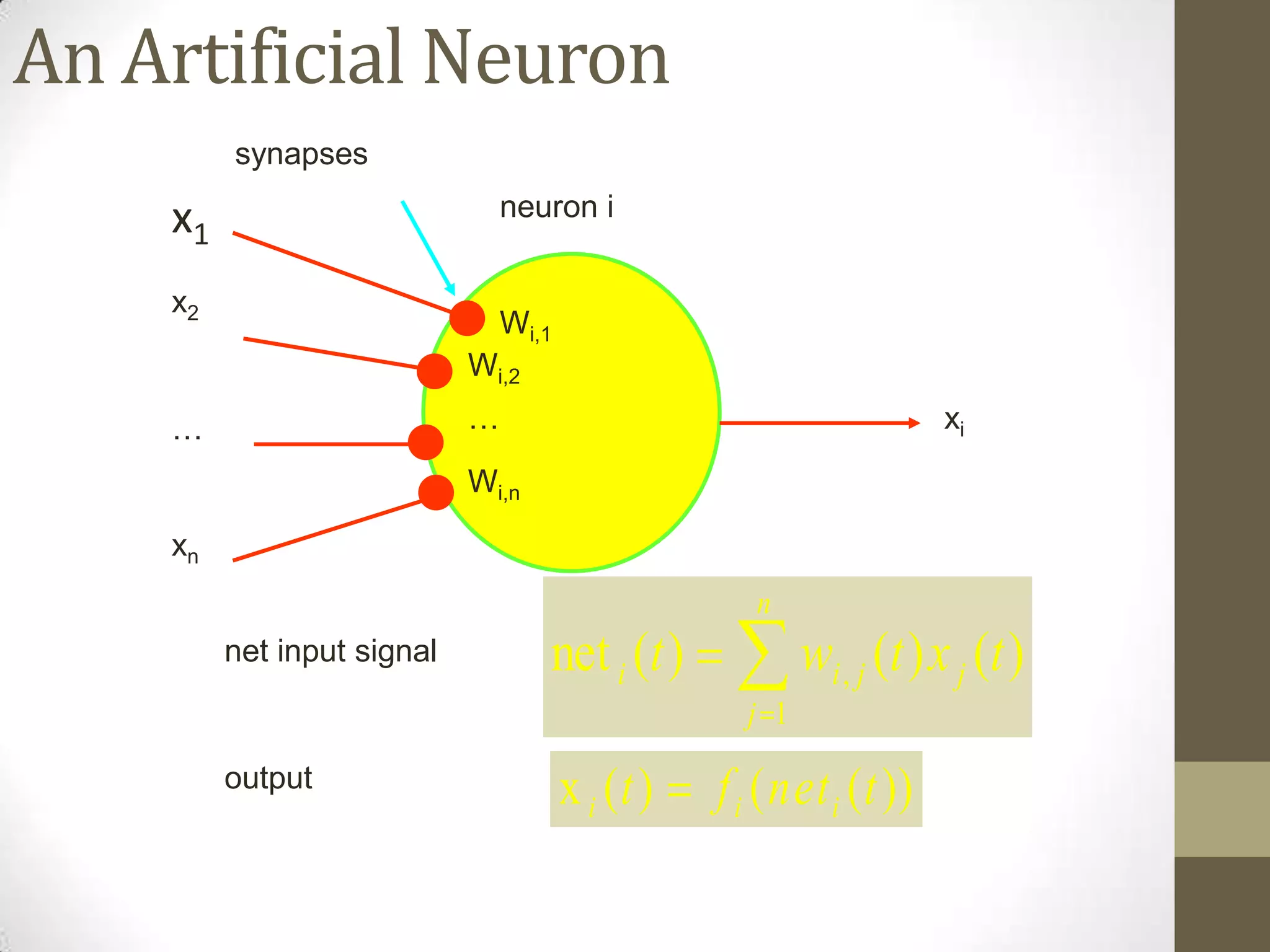
An Artificial Neuron
synapses
neuron i

x1
x2

Wi,1
Wi,2
…

…

xi

Wi,n

xn

n
net input signal

net i (t )

wi , j (t ) x j (t )
j 1

output

x i (t )

f i ( net i ( t ))
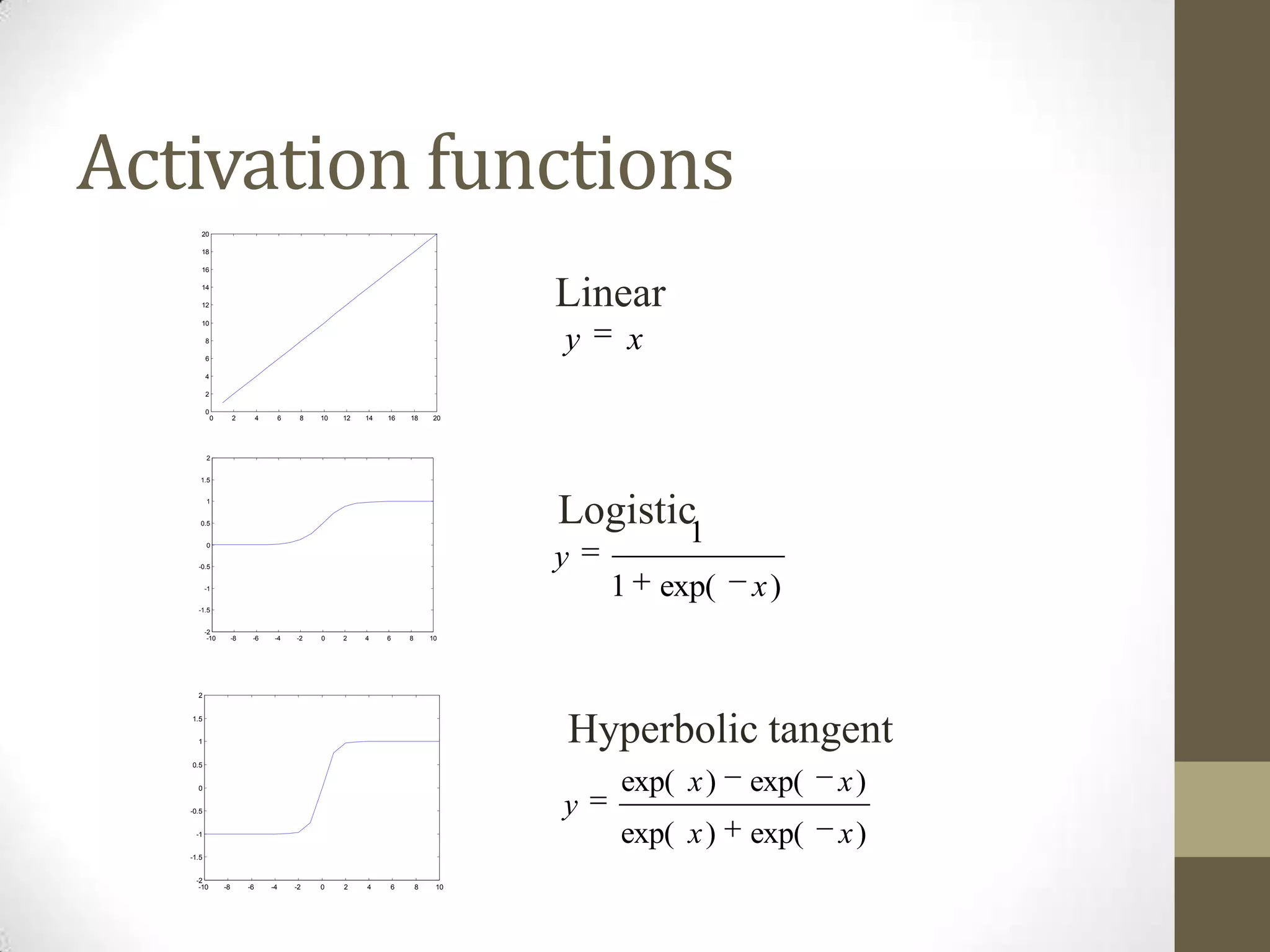
Activation functions
20
18
16

Linear

14
12
10

y

8
6

x

4
2
0

0

2

4

6

8

10

12

14

16

18

20

2
1.5

Logistic1

1
0.5
0

y

-0.5

1

-1

exp(

x)

-1.5
-2
-10

-8

-6

-4

-2

0

2

4

6

8

10

2

Hyperbolic tangent

1.5
1
0.5

y

-1
-1.5
-2
-10

-8

-6

-4

-2

0

2

4

6

8

10

exp( x )

exp(

x)

exp( x )

0
-0.5

exp(

x)
How do NNs and ANNs work?
• Information is transmitted as a series of
electric impulses, so-called spikes.

• The frequency and phase of these spikes
encodes the information.
• In biological systems, one neuron can be
connected to as many as 10,000 other
neurons.
• Usually, a neuron receives its information
from other neurons in a confined area
13
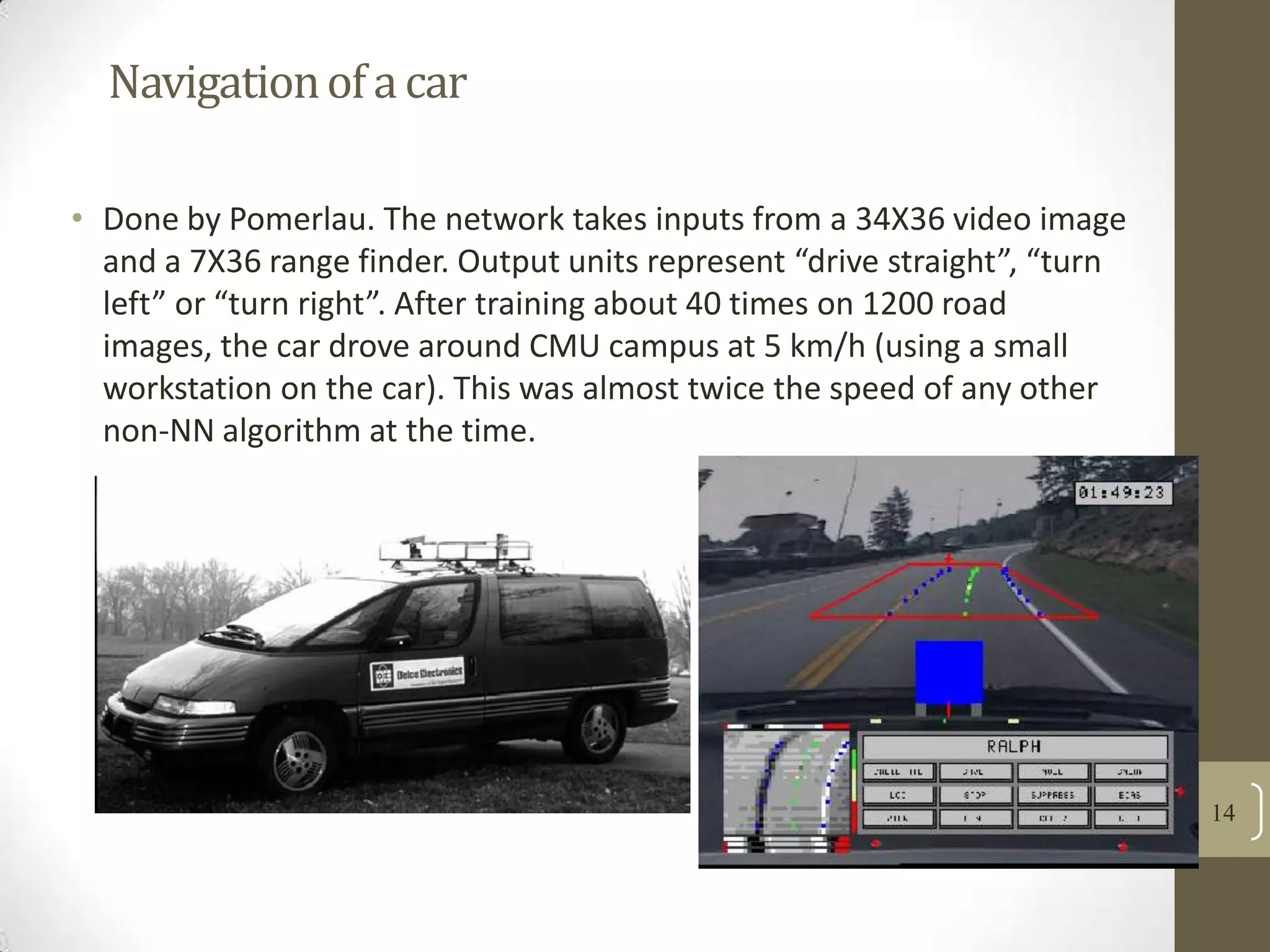
Navigation of a car
• Done by Pomerlau. The network takes inputs from a 34X36 video image
and a 7X36 range finder. Output units represent “drive straight”, “turn
left” or “turn right”. After training about 40 times on 1200 road
images, the car drove around CMU campus at 5 km/h (using a small
workstation on the car). This was almost twice the speed of any other
non-NN algorithm at the time.

14
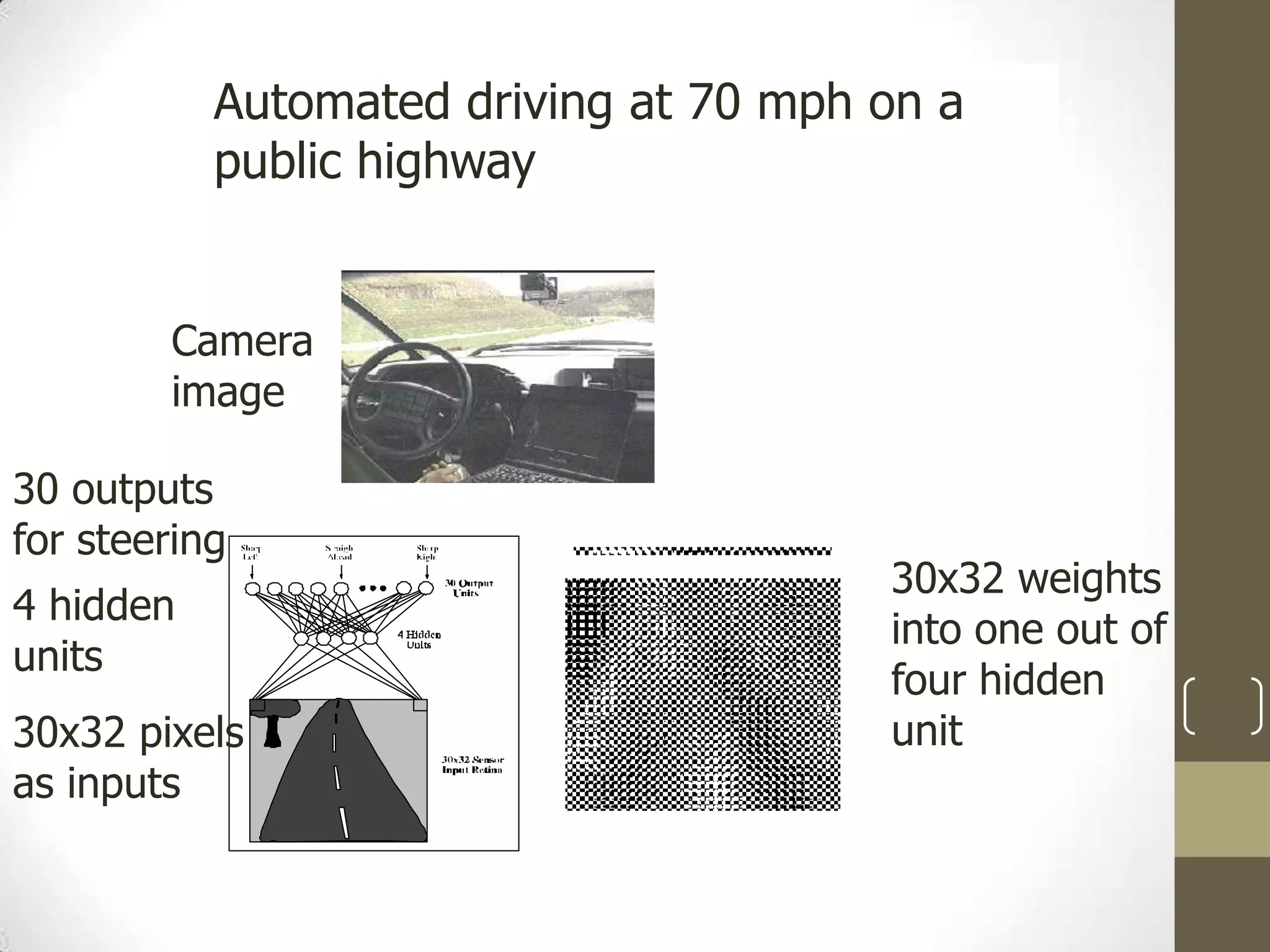
Automated driving at 70 mph on a
public highway

Camera
image

30 outputs
for steering
4 hidden
units
30x32 pixels
as inputs

30x32 weights
into one out of
four hidden
unit
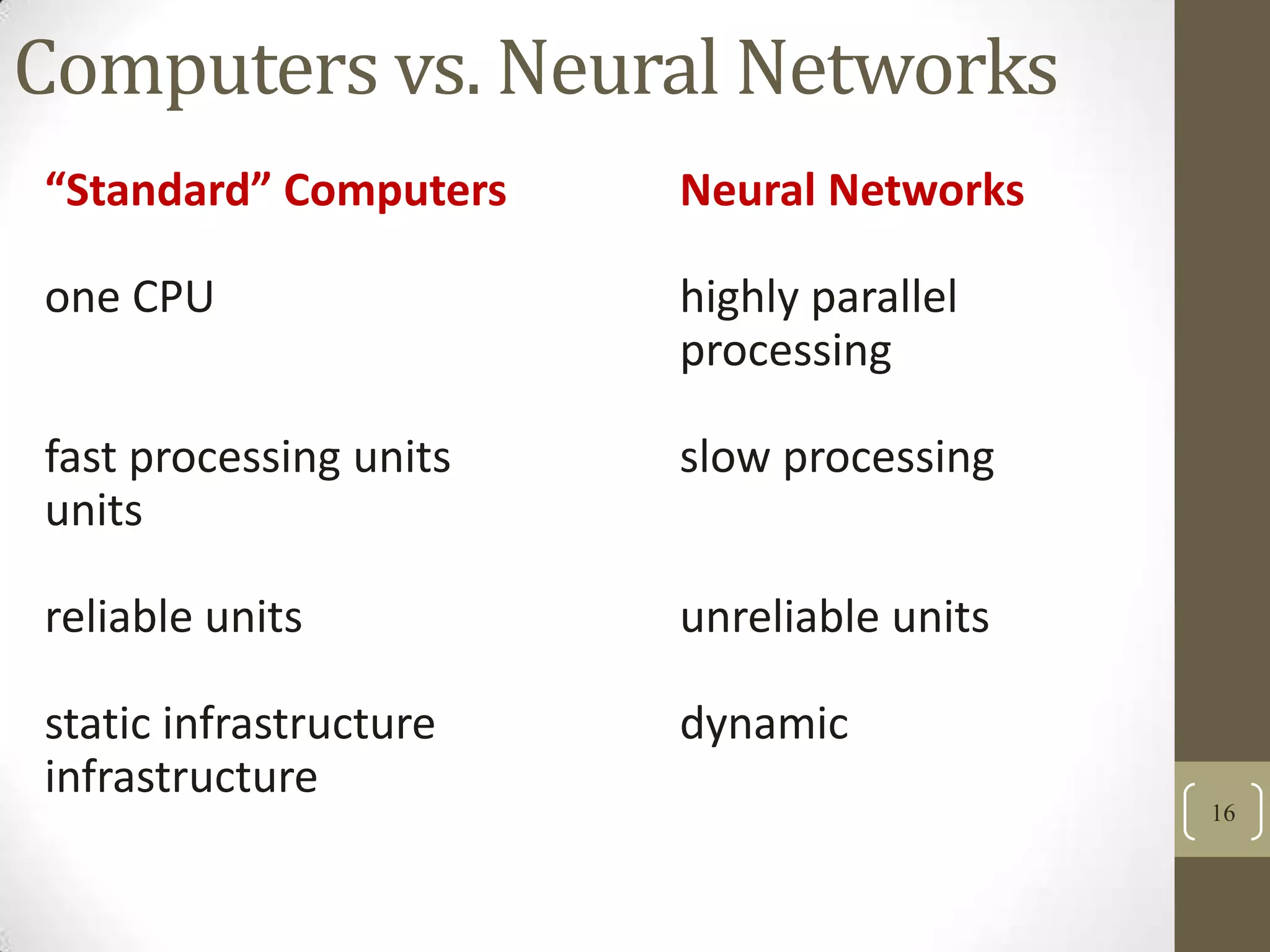
Computers vs. Neural Networks
“Standard” Computers

Neural Networks

one CPU

highly parallel
processing

fast processing units
units

slow processing

reliable units

unreliable units

static infrastructure
infrastructure

dynamic
16
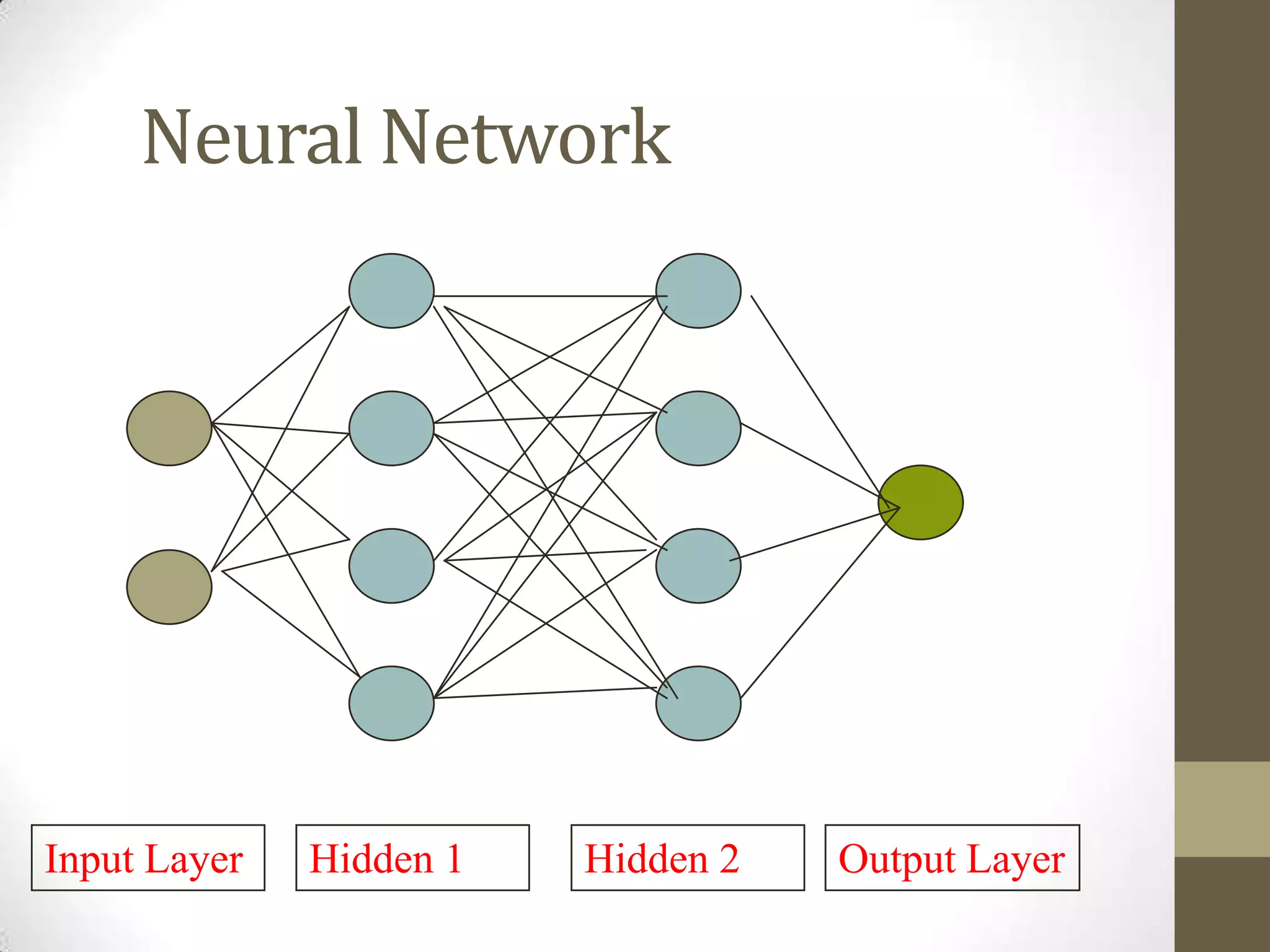
Neural Network

Input Layer

Hidden 1

Hidden 2

Output Layer
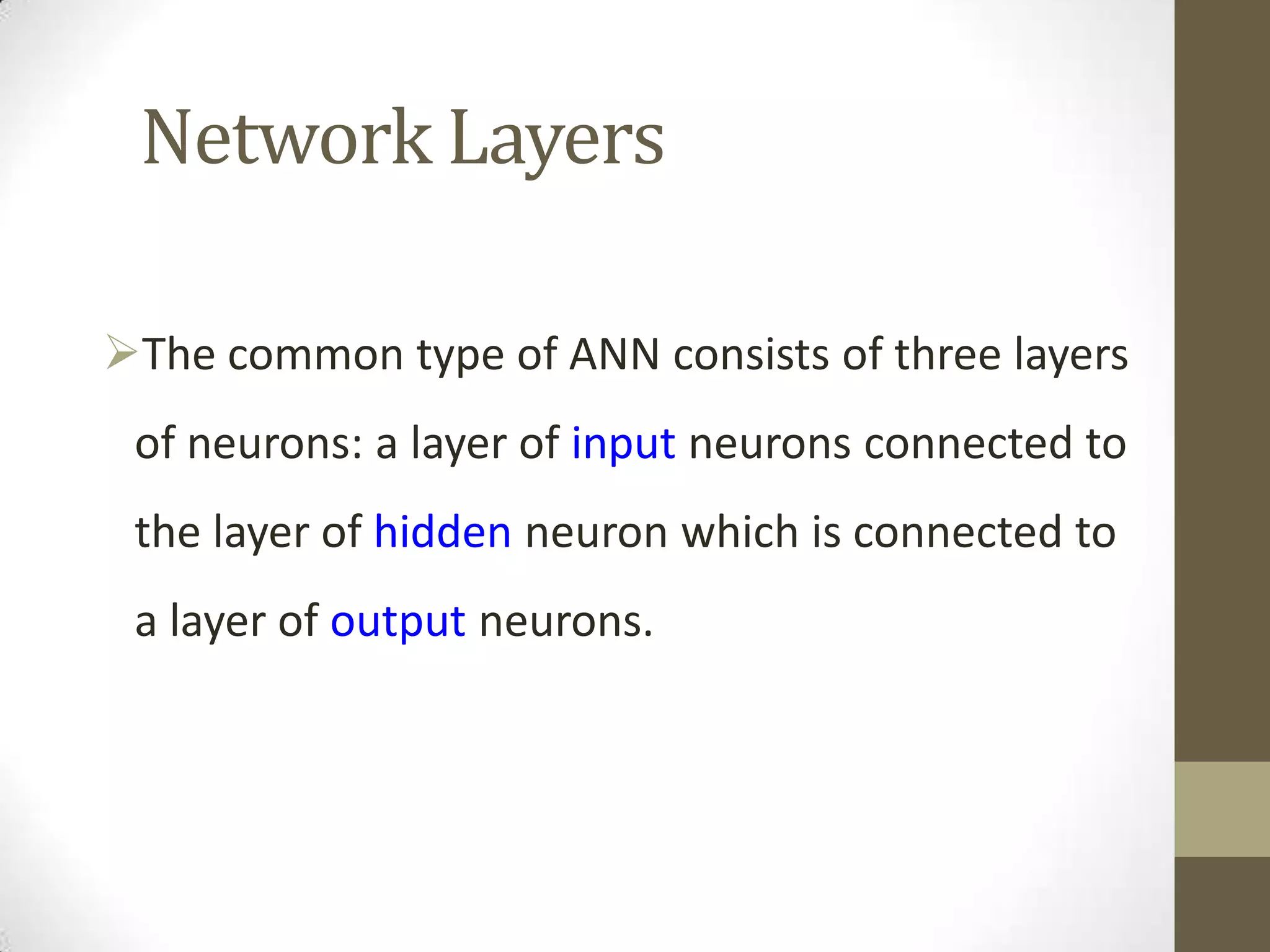
Network Layers
The common type of ANN consists of three layers
of neurons: a layer of input neurons connected to
the layer of hidden neuron which is connected to
a layer of output neurons.
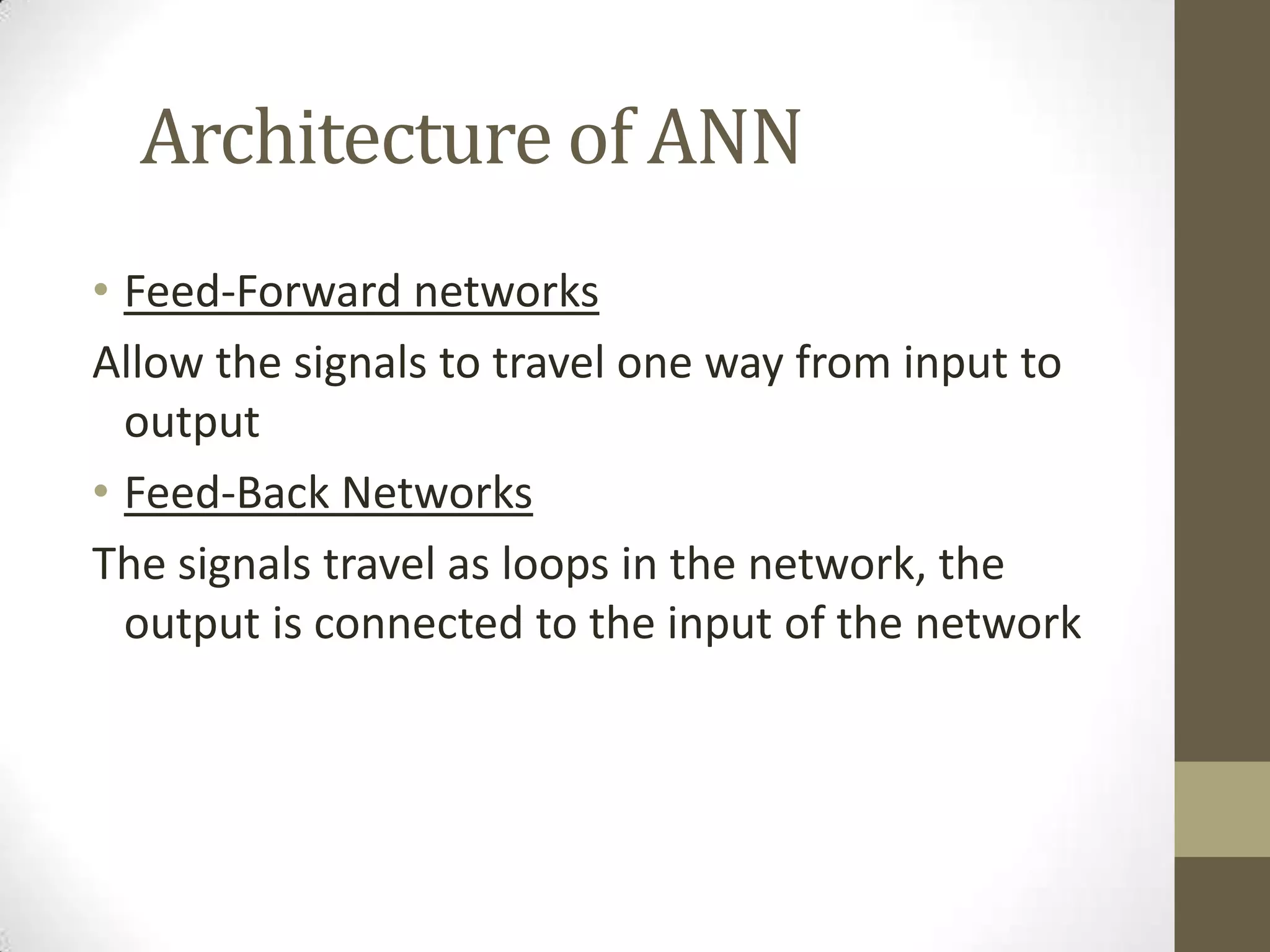
Architecture of ANN
• Feed-Forward networks
Allow the signals to travel one way from input to
output
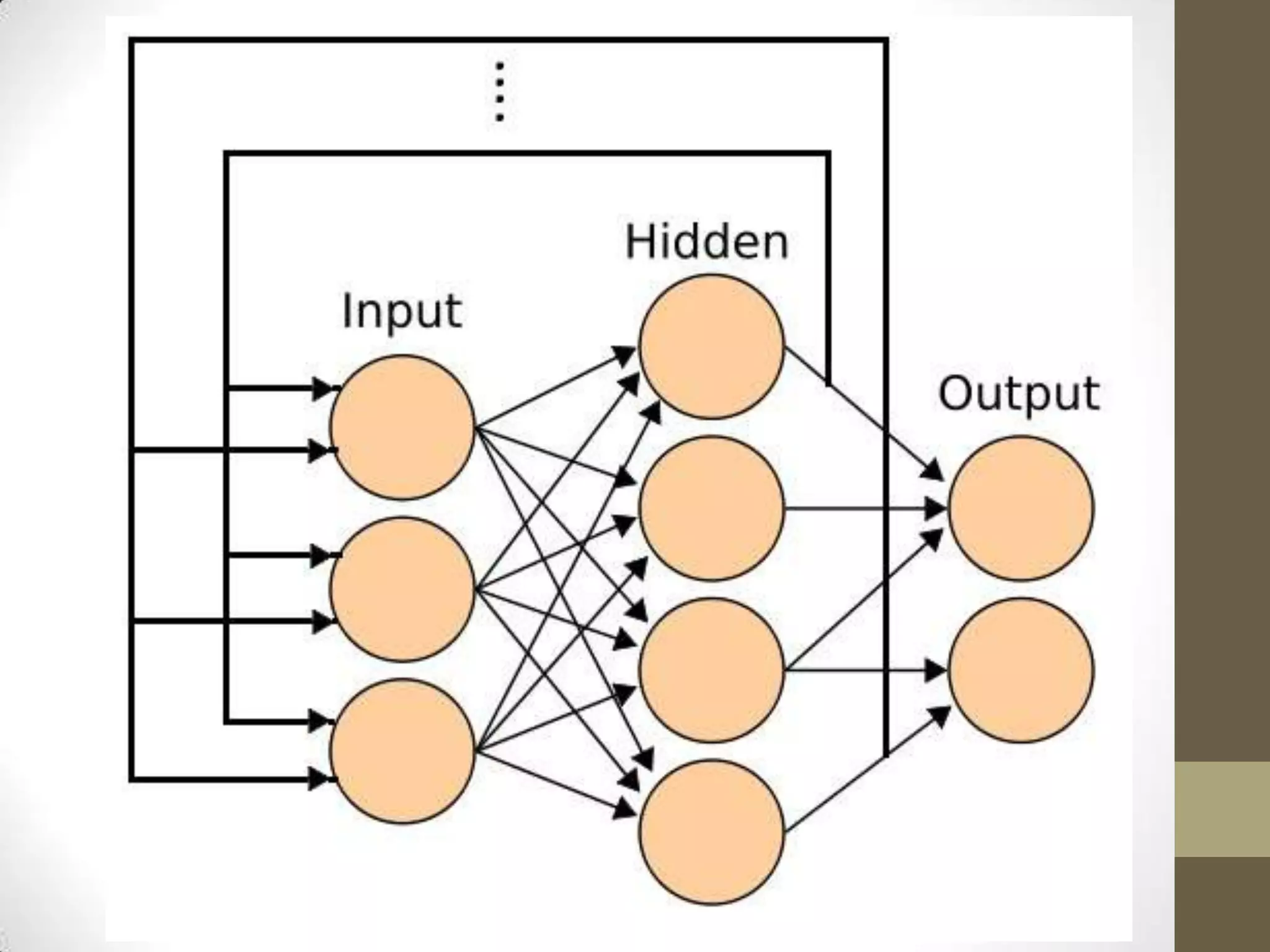
• Feed-Back Networks
The signals travel as loops in the network, the
output is connected to the input of the network
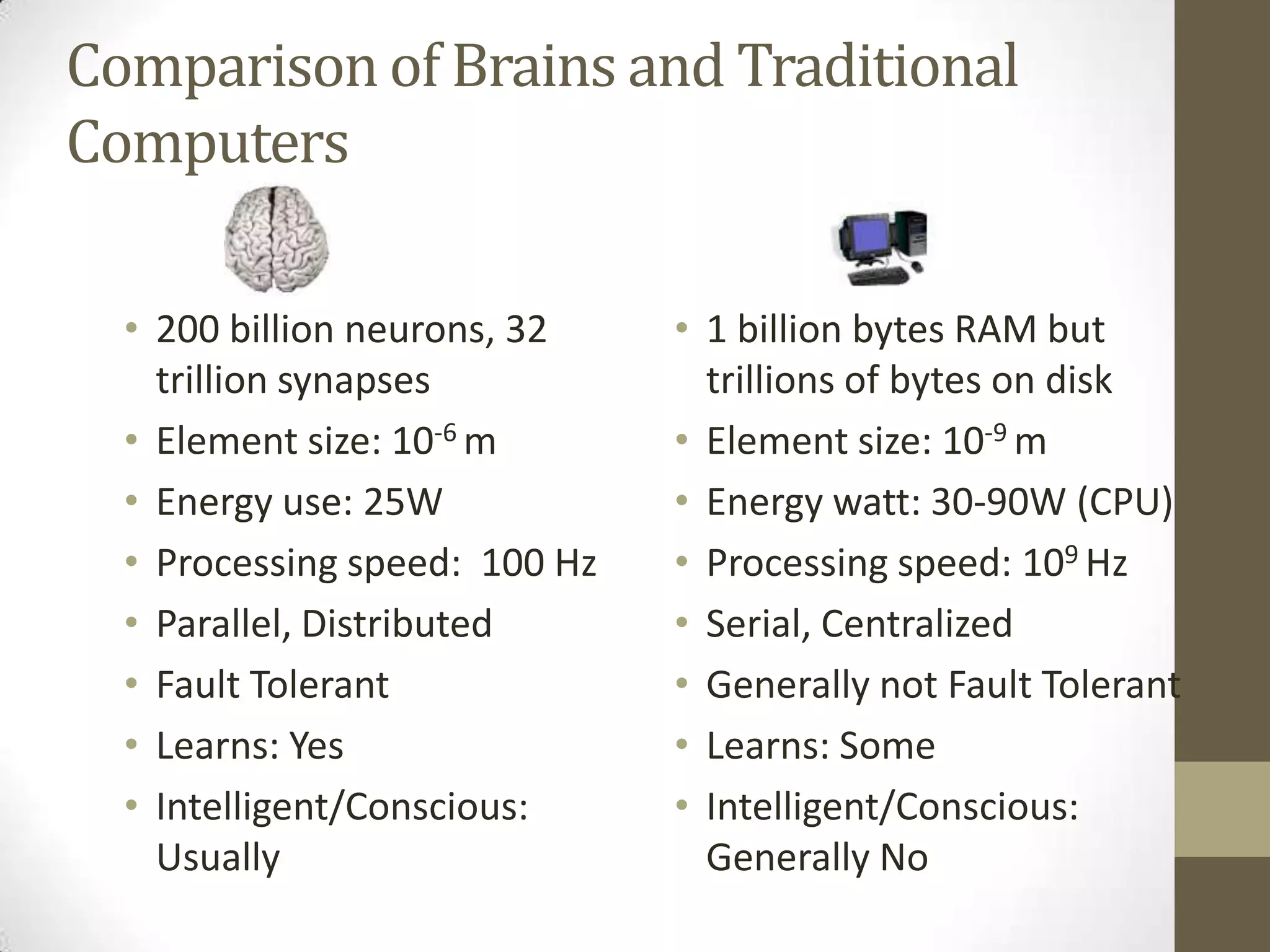
Comparison of Brains and Traditional
Computers
• 200 billion neurons, 32
trillion synapses
• Element size: 10-6 m
• Energy use: 25W
• Processing speed: 100 Hz
• Parallel, Distributed
• Fault Tolerant
• Learns: Yes
• Intelligent/Conscious:
Usually

• 1 billion bytes RAM but
trillions of bytes on disk
• Element size: 10-9 m
• Energy watt: 30-90W (CPU)
• Processing speed: 109 Hz
• Serial, Centralized
• Generally not Fault Tolerant
• Learns: Some
• Intelligent/Conscious:
Generally No
Neural Networks (Applications)
• Face recognition
• Time series prediction
• Process identification
• Process control
• Optical character recognition
• Adaptative filtering
• Etc…
And Finally….

“If the brain were so simple
that we could understand it
then we’d be so simple that
we couldn’t”
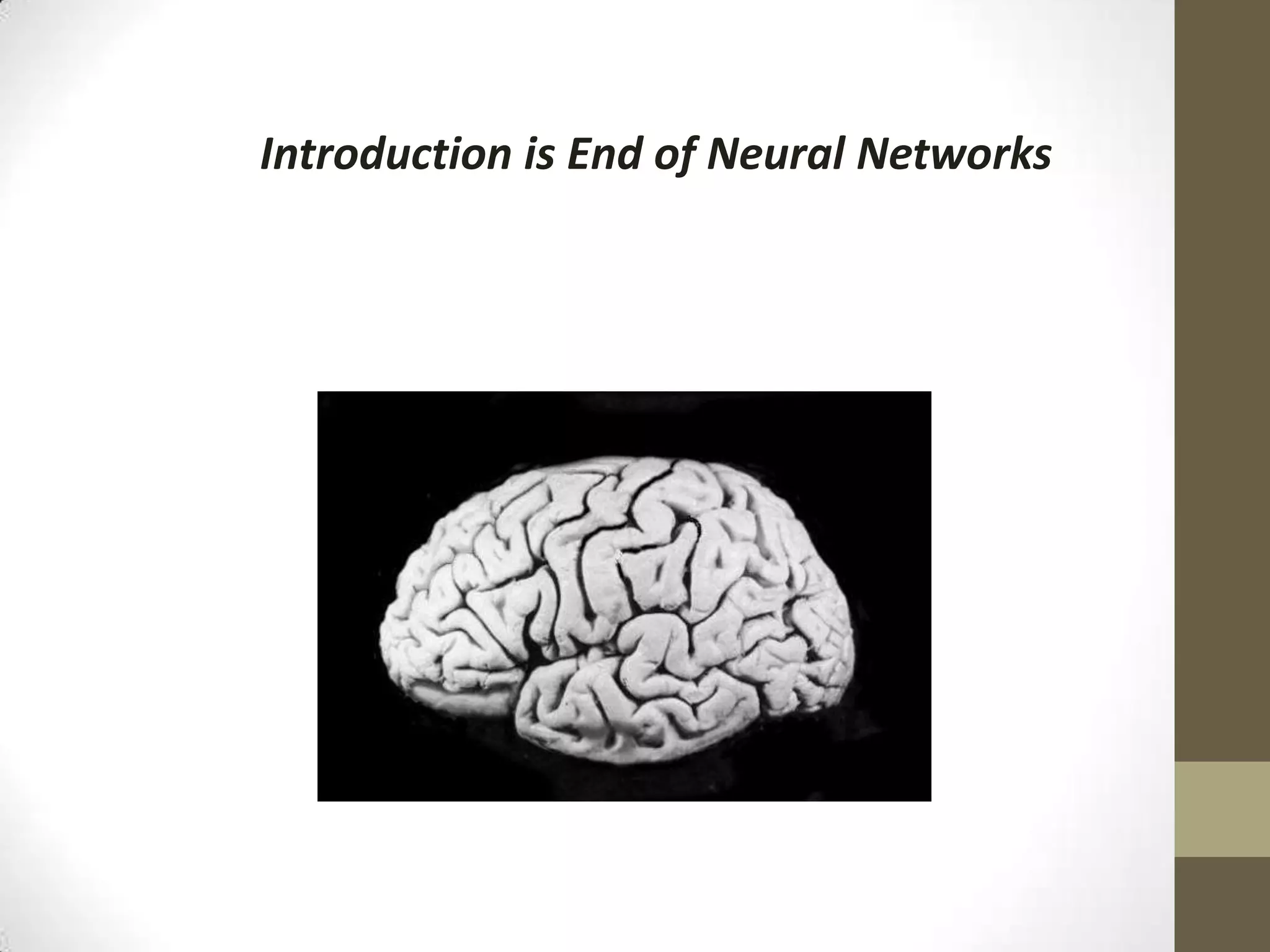
Introduction is End of Neural Networks

what is neural network....???

  • 1.
  • 2.
    Introduction • Artificial NeuralNetwork is based on the biological nervous system as Brain • It is composed of interconnected computing units called neurons • ANN like human, learn by examples
  • 3.
    Why Artificial NeuralNetworks? There are two basic reasons why we are interested in building artificial neural networks (ANNs): • Technical viewpoint: Some problems such as character recognition or the prediction of future states of a system require massively parallel and adaptive processing. • Biological viewpoint: ANNs can be used to replicate and simulate components of the human (or animal) brain, thereby giving us insight into natural information processing. 3
  • 4.
    Science: Model howbiological neural systems, like human brain, work? • How do we see? • How is information stored in/retrieved from memory? • How do you learn to not to touch fire? • How do your eyes adapt to the amount of light in the environment? • Related fields: Neuroscience, Computational Neuroscience, Psychology, Psychophysiology, Cognitive Science, Medicine, Math, Physics. 4
  • 5.
    Real Neural Learning •Synapses change size and strength with experience. • Hebbian learning: When two connected neurons are firing at the same time, the strength of the synapse between them increases. • “Neurons that fire together, wire together.” 5
  • 6.
    Biological Neurons • Humanbrain = tens of thousands of neurons • Each neuron is connected to thousands other neurons • A neuron is made of: • The soma: body of the neuron • Dendrites: filaments that provide input to the neuron • The axon: sends an output signal • Synapses: connection with other neurons – releases certain quantities of chemicals called neurotransmitters to other neurons 6
  • 7.
    Modeling of BrainFunctions 7
  • 8.
    Modelling a Neuron ini j W j , ia j • • • • • aj wj,I inI aI g :Activation value of unit j :Weight on the link from unit j to unit i :Weighted sum of inputs to unit i :Activation value of unit i :Activation function
  • 9.
    What is anartificial neuron ? • Definition : Non linear, parameterized function with restricted output range y n 1 y f w0 wi xi i 1 w0 x1 x2 x3
  • 10.
  • 11.
    An Artificial Neuron synapses neuroni x1 x2 Wi,1 Wi,2 … … xi Wi,n xn n net input signal net i (t ) wi , j (t ) x j (t ) j 1 output x i (t ) f i ( net i ( t ))
  • 12.
  • 13.
    How do NNsand ANNs work? • Information is transmitted as a series of electric impulses, so-called spikes. • The frequency and phase of these spikes encodes the information. • In biological systems, one neuron can be connected to as many as 10,000 other neurons. • Usually, a neuron receives its information from other neurons in a confined area 13
  • 14.
    Navigation of acar • Done by Pomerlau. The network takes inputs from a 34X36 video image and a 7X36 range finder. Output units represent “drive straight”, “turn left” or “turn right”. After training about 40 times on 1200 road images, the car drove around CMU campus at 5 km/h (using a small workstation on the car). This was almost twice the speed of any other non-NN algorithm at the time. 14
  • 15.
    Automated driving at70 mph on a public highway Camera image 30 outputs for steering 4 hidden units 30x32 pixels as inputs 30x32 weights into one out of four hidden unit
  • 16.
    Computers vs. NeuralNetworks “Standard” Computers Neural Networks one CPU highly parallel processing fast processing units units slow processing reliable units unreliable units static infrastructure infrastructure dynamic 16
  • 17.
    Neural Network Input Layer Hidden1 Hidden 2 Output Layer
  • 18.
    Network Layers The commontype of ANN consists of three layers of neurons: a layer of input neurons connected to the layer of hidden neuron which is connected to a layer of output neurons.
  • 19.
    Architecture of ANN •Feed-Forward networks Allow the signals to travel one way from input to output • Feed-Back Networks The signals travel as loops in the network, the output is connected to the input of the network
  • 21.
    Comparison of Brainsand Traditional Computers • 200 billion neurons, 32 trillion synapses • Element size: 10-6 m • Energy use: 25W • Processing speed: 100 Hz • Parallel, Distributed • Fault Tolerant • Learns: Yes • Intelligent/Conscious: Usually • 1 billion bytes RAM but trillions of bytes on disk • Element size: 10-9 m • Energy watt: 30-90W (CPU) • Processing speed: 109 Hz • Serial, Centralized • Generally not Fault Tolerant • Learns: Some • Intelligent/Conscious: Generally No
  • 22.
    Neural Networks (Applications) •Face recognition • Time series prediction • Process identification • Process control • Optical character recognition • Adaptative filtering • Etc…
  • 23.
    And Finally…. “If thebrain were so simple that we could understand it then we’d be so simple that we couldn’t”
  • 24.
    Introduction is Endof Neural Networks