WHAT IS INFANTS ?
INFANTS(from birth to 12 months)
anything in the first stage
of existence or progress.
 Infants are learning to anticipate events,
make sense of their worlds and
communicate their needs in these early
months of life. They learn through touch,
sight, sound, smell, and taste in
exploration of their everyday
environments, and through interactions
with adults and other children in
environments that are safe yet provide
sensory stimulation.
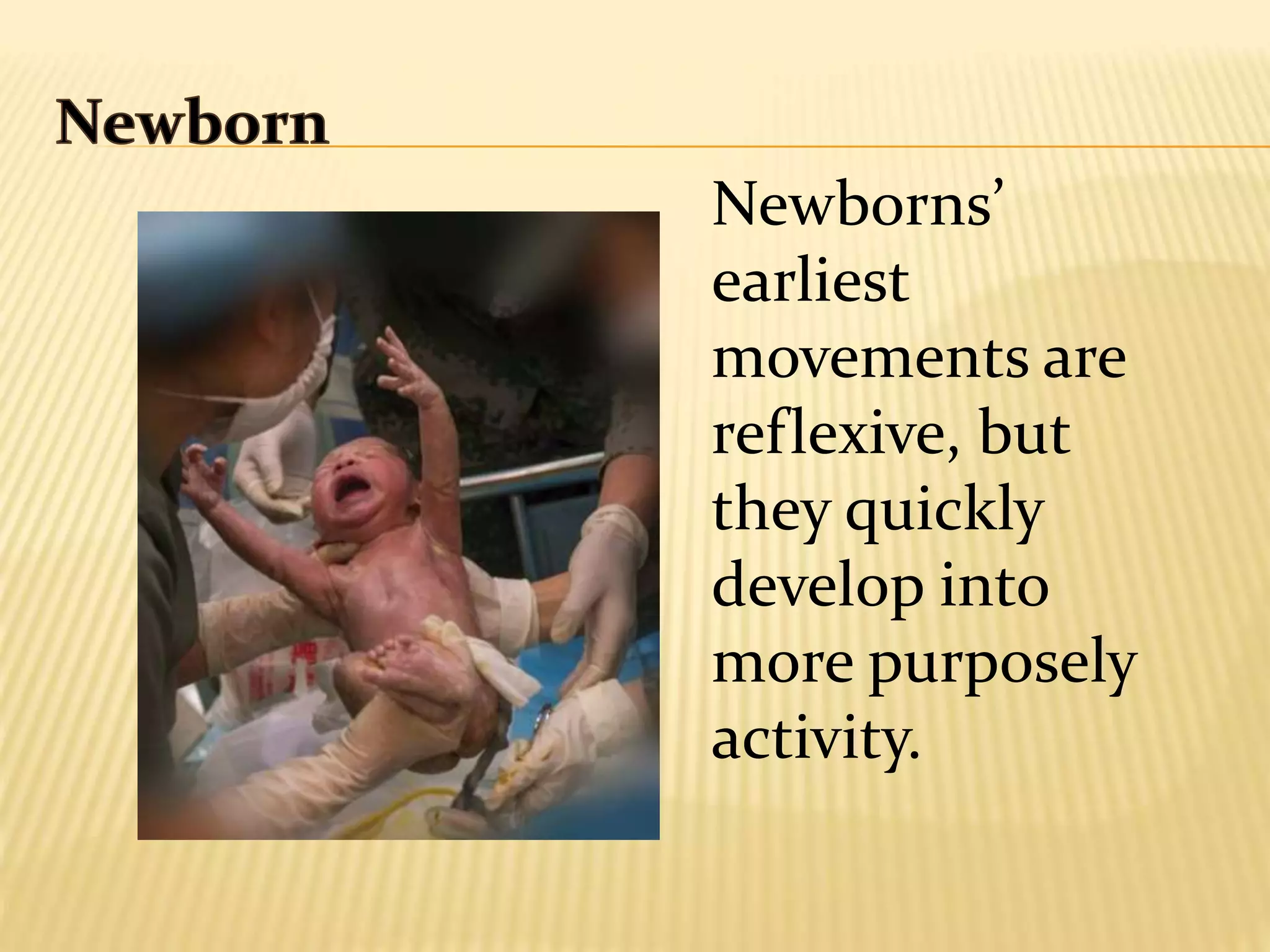
Newborns’
earliest
movements are
reflexive, but
they quickly
develop into
more purposely
activity.
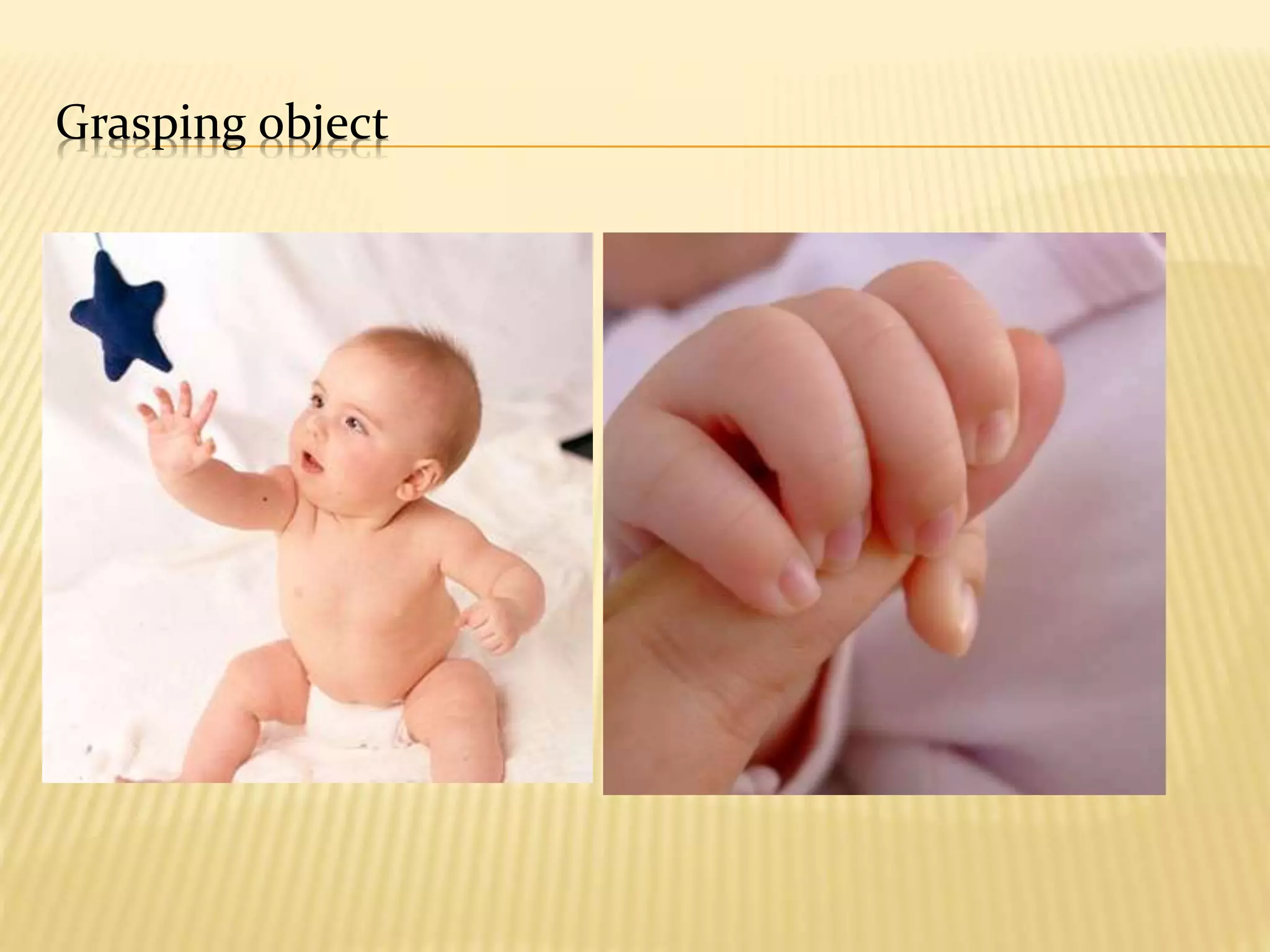
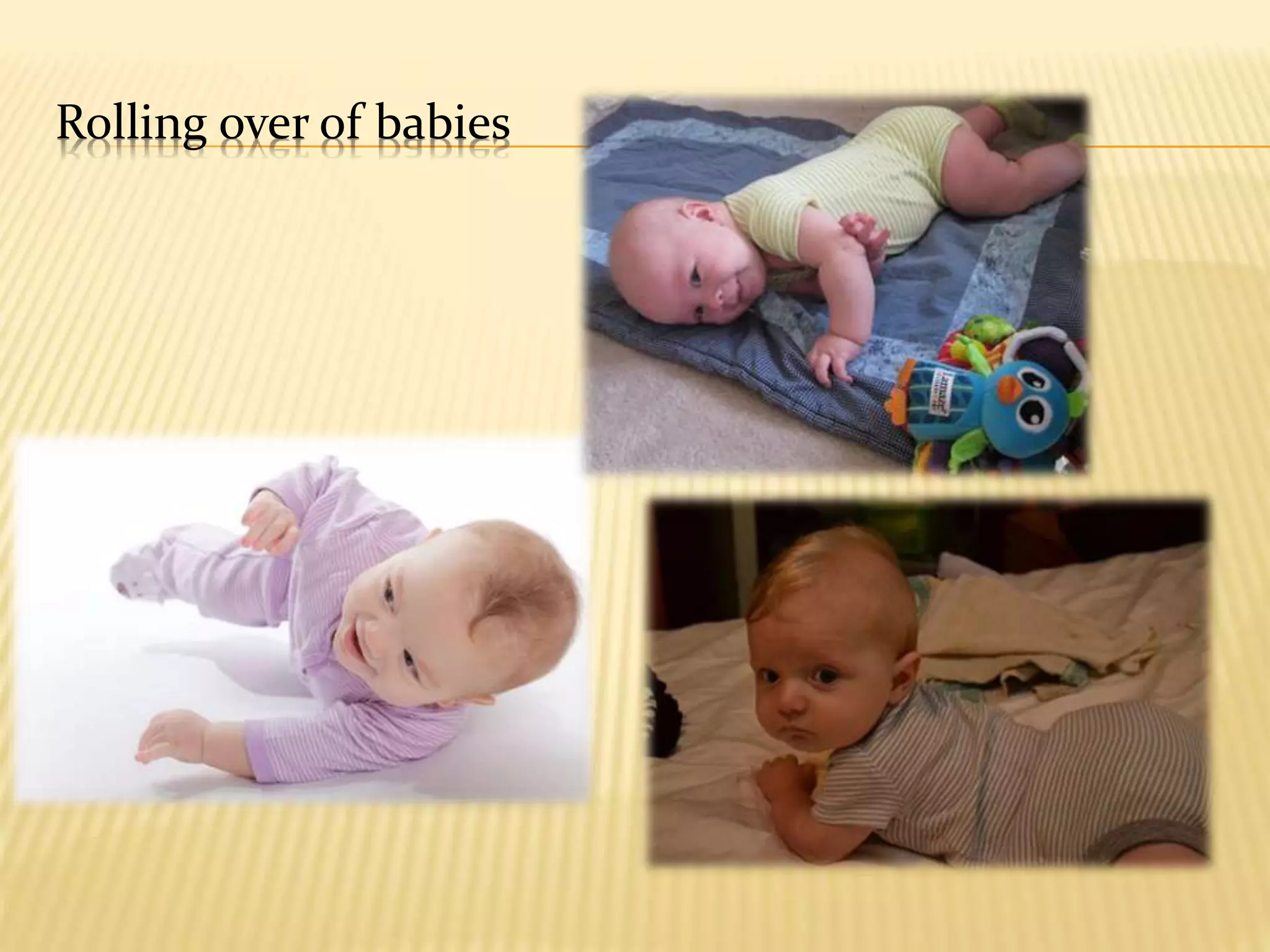
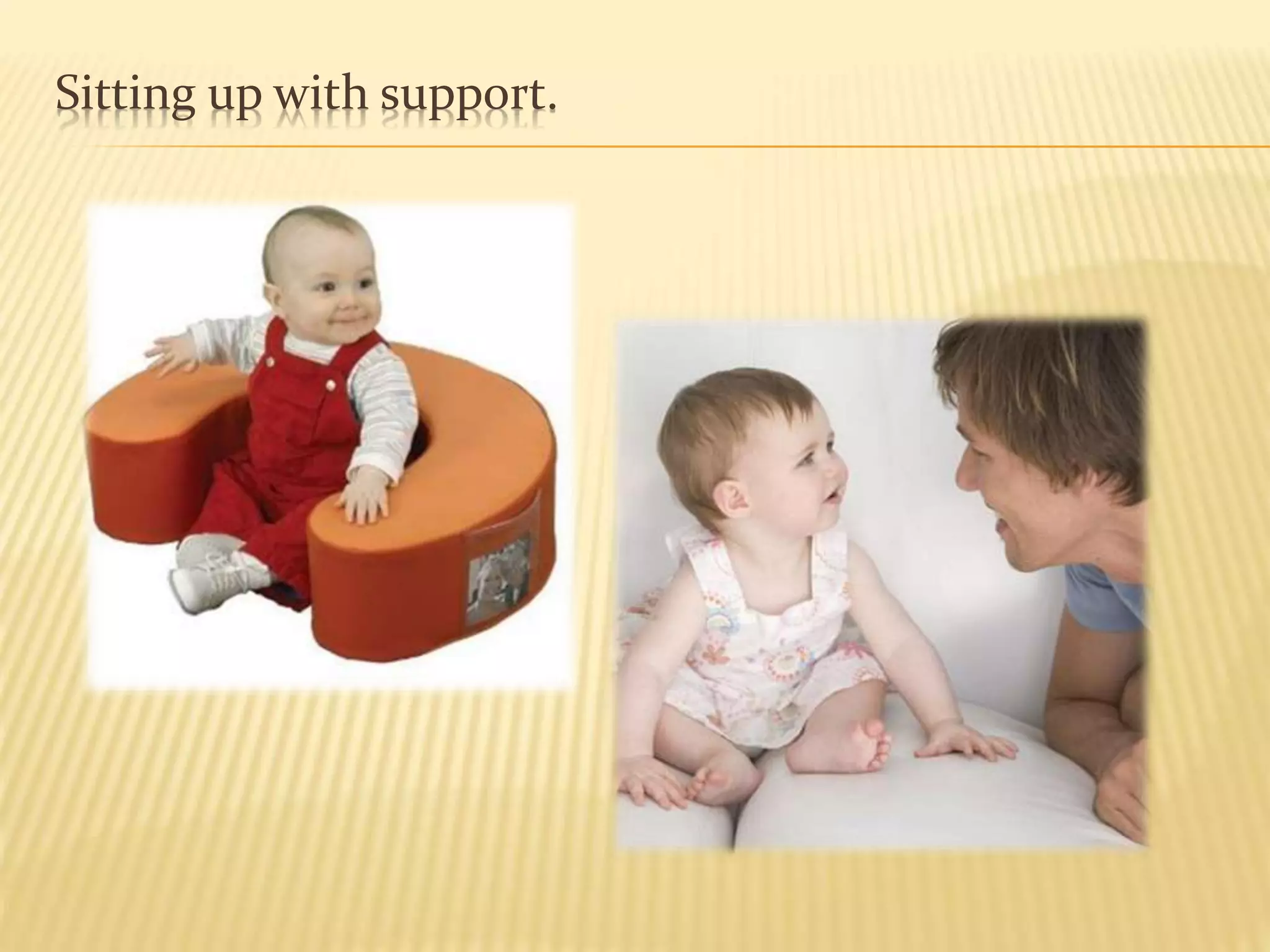
•By the middle of the first year, babies are reaching
for and grasping objects, rolling over and sitting
up with support.
From birth-six months
•At birth, infants cannot control their body
movements. Most of their movements are reflexes.
Their nervous system is not fully developed.
Grasping object
Rolling over of babies
Sitting up with support.
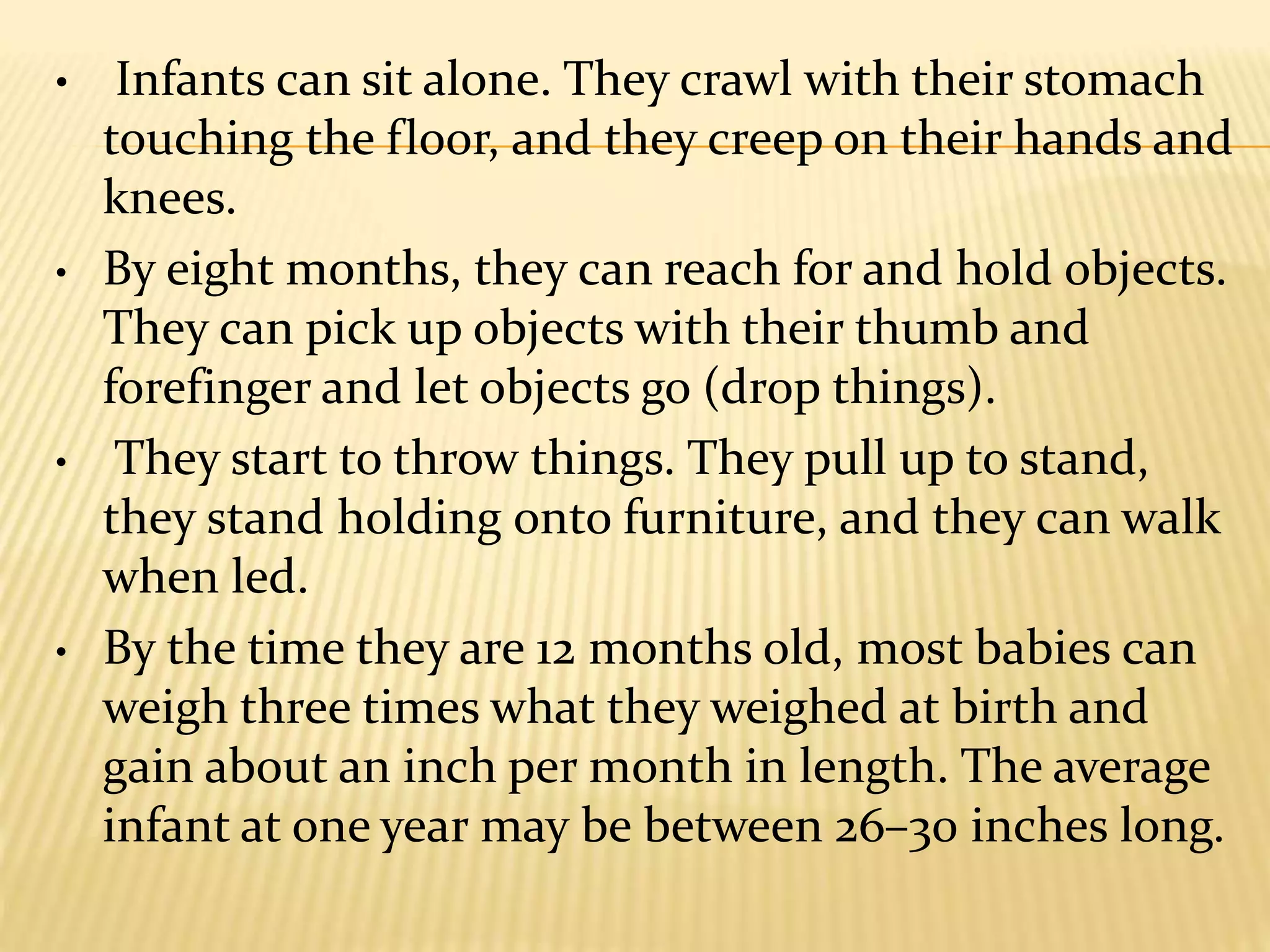
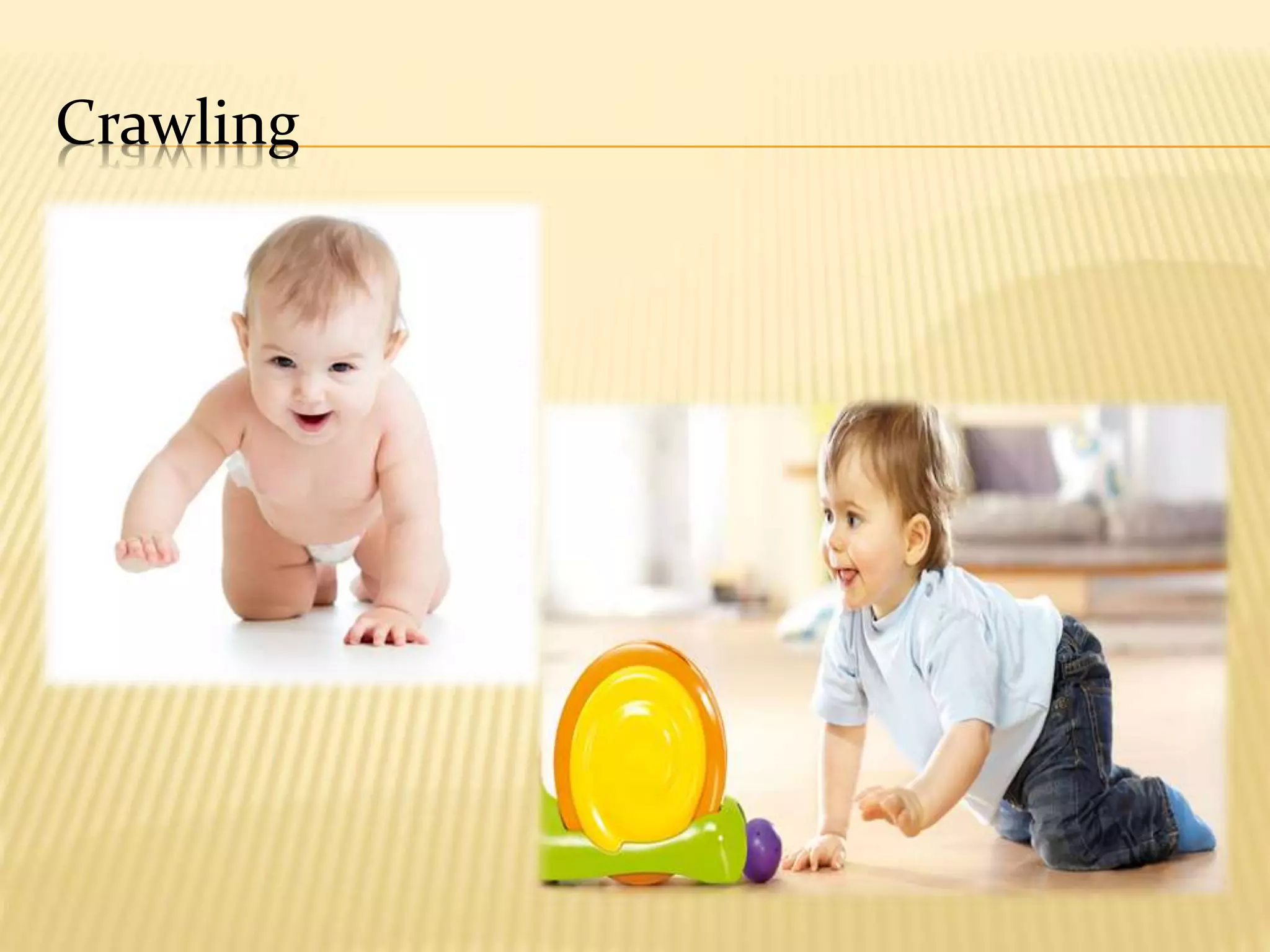
• Infants can sit alone. They crawl with their stomach
touching the floor, and they creep on their hands and
knees.
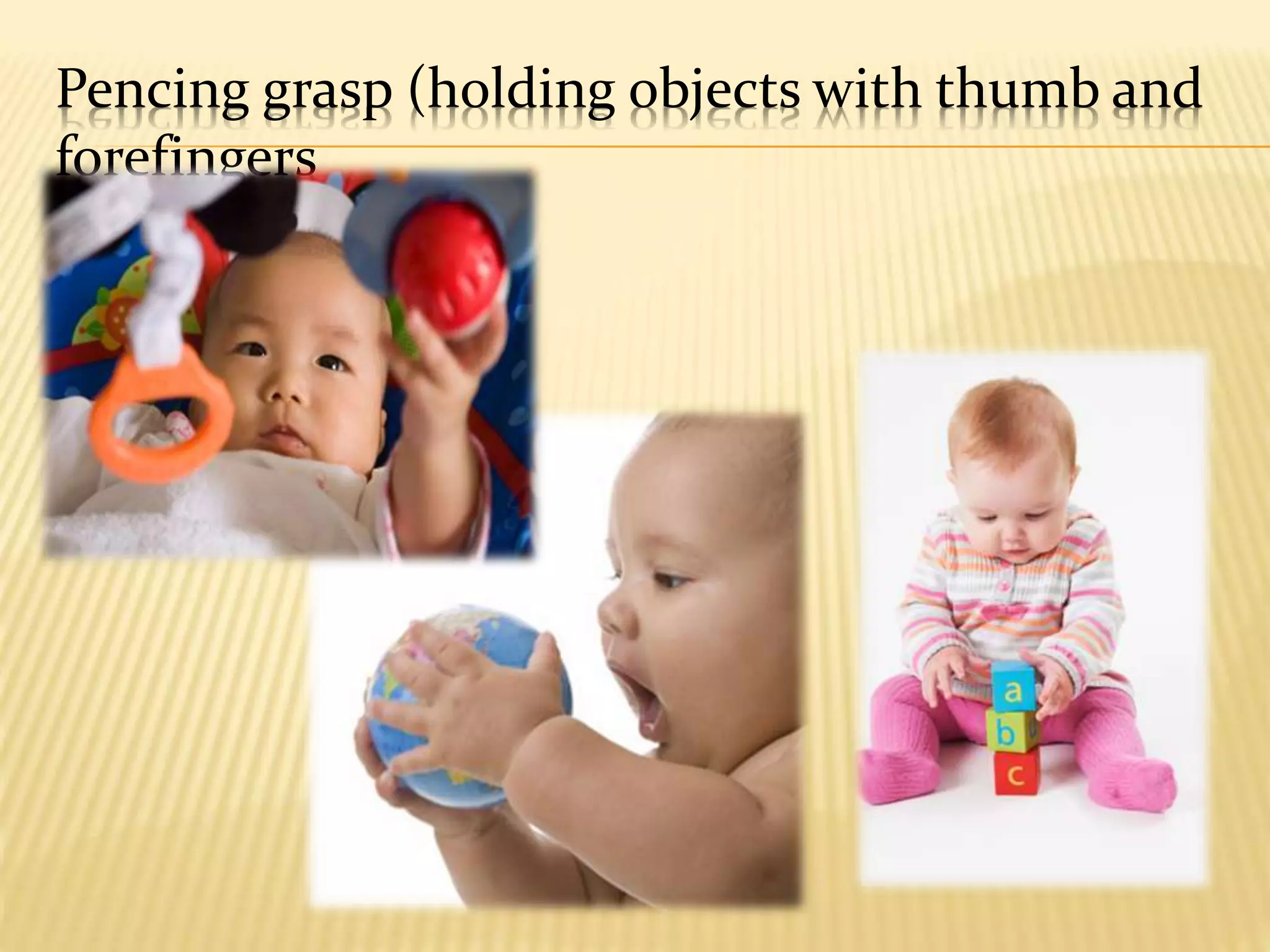
• By eight months, they can reach for and hold objects.
They can pick up objects with their thumb and
forefinger and let objects go (drop things).
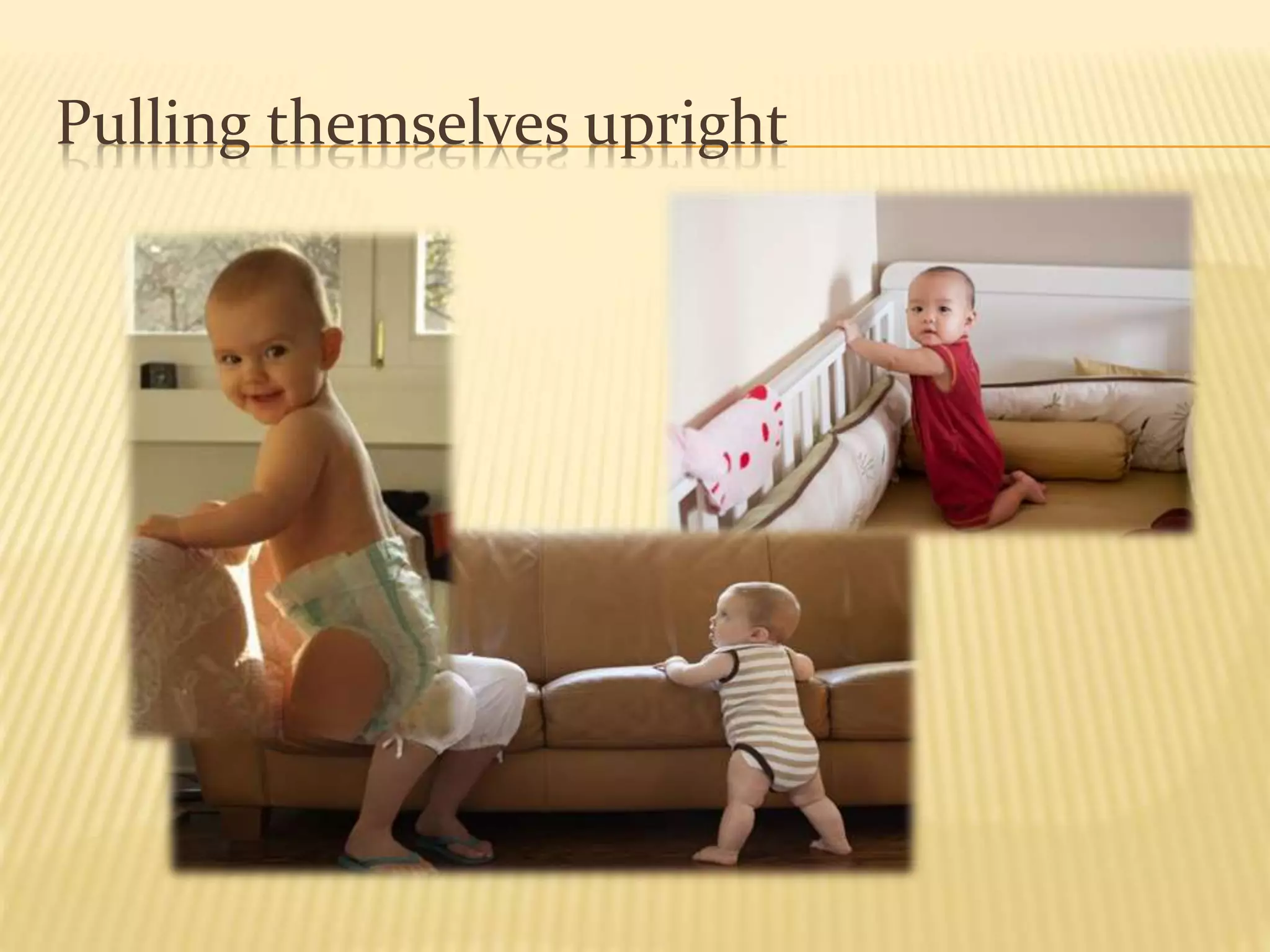
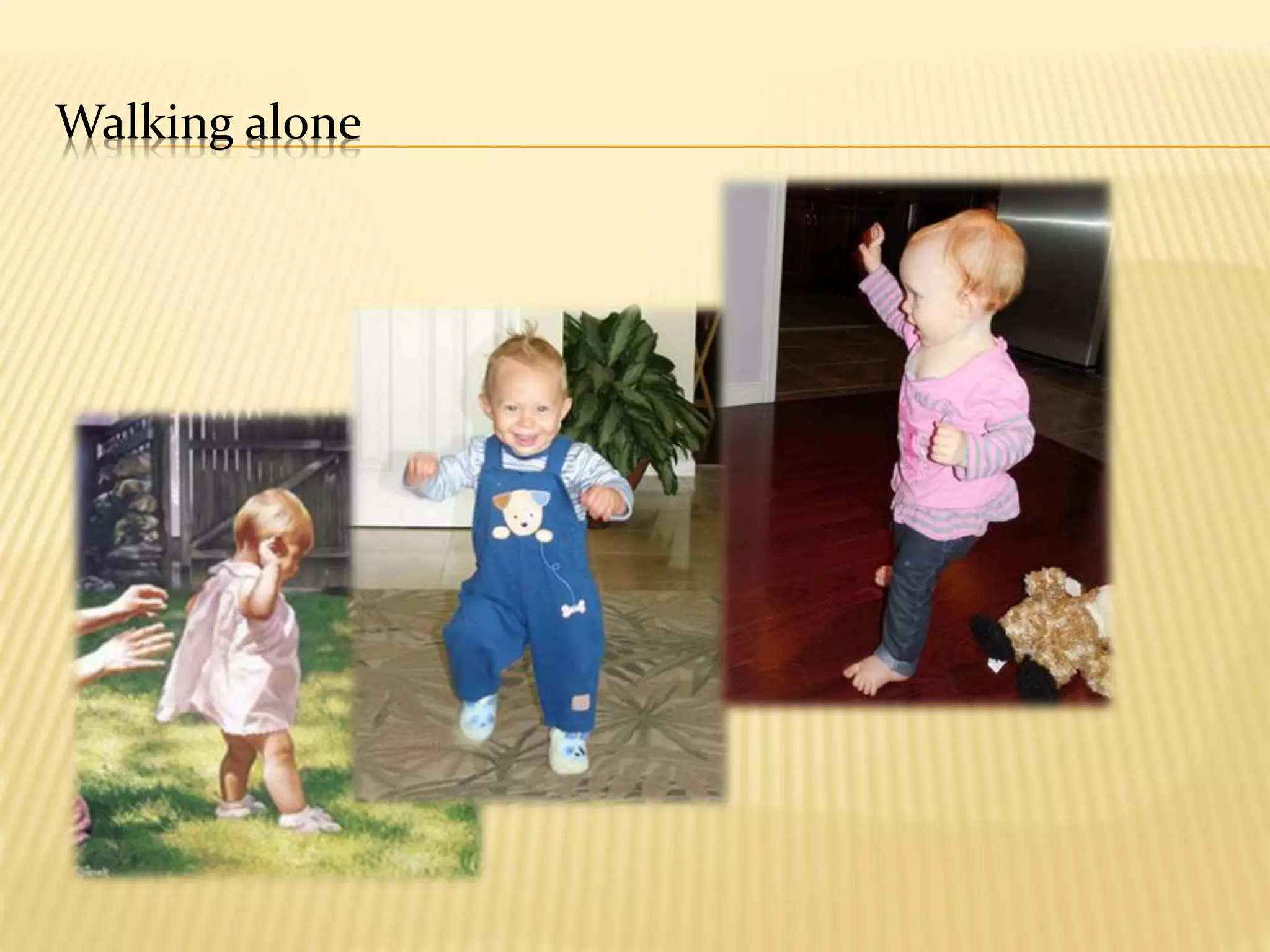
• They start to throw things. They pull up to stand,
they stand holding onto furniture, and they can walk
when led.
• By the time they are 12 months old, most babies can
weigh three times what they weighed at birth and
gain about an inch per month in length. The average
infant at one year may be between 26–30 inches long.
Pencing grasp (holding objects with thumb and
forefingers
Crawling
Pulling themselves upright
Walking alone
 Infants need a safe, interesting and calm
place to explore and adults or other children
to play, interact and talk with them.
 Infants need responsive adults recognize
and meet their individual needs in a
consistent nurturing respectful manner.
 They provide daily routines that are tailored
to each child’s individual rhythm and needs
for care, food, sleep, play and social
interaction.
Special activities for infants might include:
 batting/grasping/kicking, use scarves, toys that roll
and mobiles;
 infant ‘peepo’, use net curtains, boxes, mirrors and
scarves;
 for pulling up, use towel rails attached to wall, steps
and couches;
 use an empty paddling pool to create a play pit, use
balls, washable scarves and ribbons; and
 a cosy quiet area, use pillows, curtains and soft toys
 sensory objects to touch, taste, shake, smell, bang,
push, prod, and look at
Children experience the world with
their whole being body, spirit,
energy, minds, hearts, compassion,
tears, laughter, anger, pride,
learning, understanding, love and soul.
Children play, grow and feel the world
around them’
(R Keeler, 2008)

What is infants and their characteristics

  • 1.
    WHAT IS INFANTS? INFANTS(from birth to 12 months) anything in the first stage of existence or progress.
  • 2.
     Infants arelearning to anticipate events, make sense of their worlds and communicate their needs in these early months of life. They learn through touch, sight, sound, smell, and taste in exploration of their everyday environments, and through interactions with adults and other children in environments that are safe yet provide sensory stimulation.
  • 3.
    Newborns’ earliest movements are reflexive, but theyquickly develop into more purposely activity.
  • 4.
    •By the middleof the first year, babies are reaching for and grasping objects, rolling over and sitting up with support. From birth-six months •At birth, infants cannot control their body movements. Most of their movements are reflexes. Their nervous system is not fully developed.
  • 5.
  • 6.
  • 7.
  • 8.
    • Infants cansit alone. They crawl with their stomach touching the floor, and they creep on their hands and knees. • By eight months, they can reach for and hold objects. They can pick up objects with their thumb and forefinger and let objects go (drop things). • They start to throw things. They pull up to stand, they stand holding onto furniture, and they can walk when led. • By the time they are 12 months old, most babies can weigh three times what they weighed at birth and gain about an inch per month in length. The average infant at one year may be between 26–30 inches long.
  • 9.
    Pencing grasp (holdingobjects with thumb and forefingers
  • 10.
  • 11.
  • 12.
  • 13.
     Infants needa safe, interesting and calm place to explore and adults or other children to play, interact and talk with them.  Infants need responsive adults recognize and meet their individual needs in a consistent nurturing respectful manner.  They provide daily routines that are tailored to each child’s individual rhythm and needs for care, food, sleep, play and social interaction.
  • 14.
    Special activities forinfants might include:  batting/grasping/kicking, use scarves, toys that roll and mobiles;  infant ‘peepo’, use net curtains, boxes, mirrors and scarves;  for pulling up, use towel rails attached to wall, steps and couches;  use an empty paddling pool to create a play pit, use balls, washable scarves and ribbons; and  a cosy quiet area, use pillows, curtains and soft toys  sensory objects to touch, taste, shake, smell, bang, push, prod, and look at
  • 15.
    Children experience theworld with their whole being body, spirit, energy, minds, hearts, compassion, tears, laughter, anger, pride, learning, understanding, love and soul. Children play, grow and feel the world around them’ (R Keeler, 2008)