What is Git?
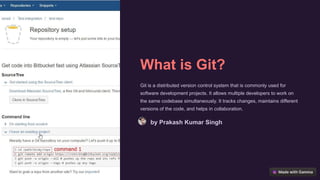
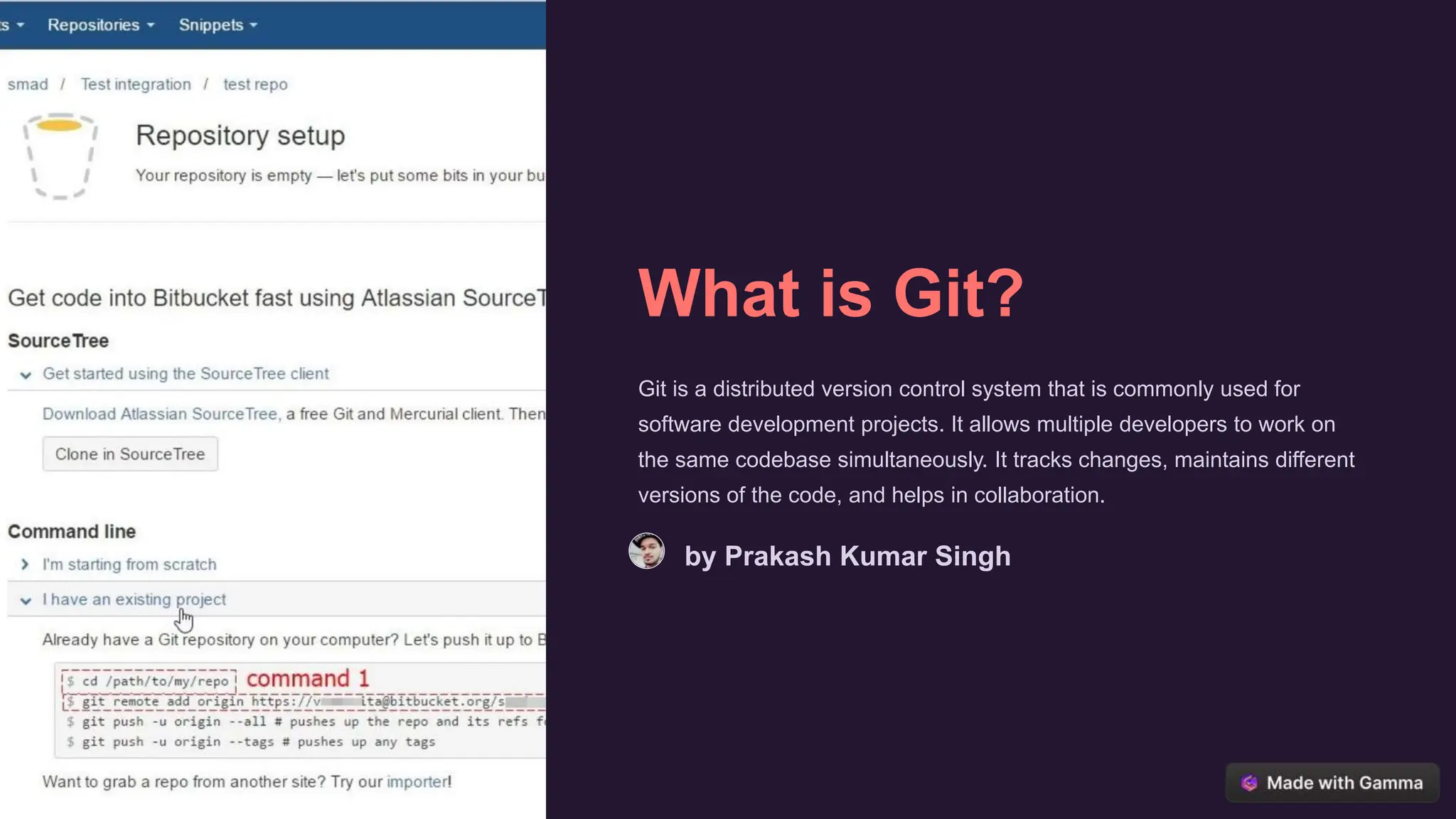
Git is a distributed version control system that is commonly used for
software development projects. It allows multiple developers to work on
the same codebase simultaneously. It tracks changes, maintains different
versions of the code, and helps in collaboration.
by Prakash Kumar Singh
Why use Git?
Collaborative
Development
Git enables seamless
collaboration among
developers by managing and
tracking changes in the
codebase, making it easier to
work together on projects.
Efficiency
Using Git streamlines the
development process, allowing
for faster and more efficient
management of code changes
and releases.
Version Control
Git provides a structured
approach to version control,
ensuring that previous versions
of the code are accessible and
revertible when needed.
Basic Git commands:
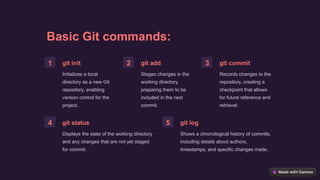
1 git init
Initializes a local
directory as a new Git
repository, enabling
version control for the
project.
2 git add
Stages changes in the
working directory,
preparing them to be
included in the next
commit.
3 git commit
Records changes to the
repository, creating a
checkpoint that allows
for future reference and
retrieval.
4 git status
Displays the state of the working directory
and any changes that are not yet staged
for commit.
5 git log
Shows a chronological history of commits,
including details about authors,
timestamps, and specific changes made.
Branching in Git:
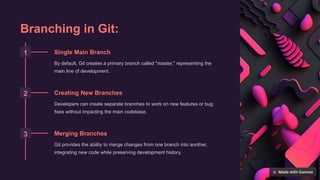
1 Single Main Branch
By default, Git creates a primary branch called "master," representing the
main line of development.
2 Creating New Branches
Developers can create separate branches to work on new features or bug
fixes without impacting the main codebase.
3 Merging Branches
Git provides the ability to merge changes from one branch into another,
integrating new code while preserving development history.
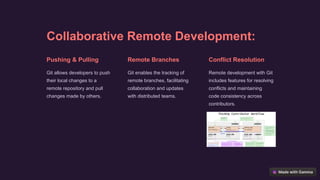
Collaborative Remote Development:
Pushing & Pulling
Git allows developers to push
their local changes to a
remote repository and pull
changes made by others.
Remote Branches
Git enables the tracking of
remote branches, facilitating
collaboration and updates
with distributed teams.
Conflict Resolution
Remote development with Git
includes features for resolving
conflicts and maintaining
code consistency across
contributors.
Stashing and Pop:
1 Stashing Changes
Developers can temporarily store changes
with Git, allowing for the switch to another
task while retaining the current work.
2 Pop
if Something has changed and you want to
take another change without commiting
pop come into picture
Git Rebase and Reset:
1 Rebasing Commits
Git rebase allows developers to apply a
sequence of commits from one branch to
another, maintaining a linear project
history.
2 Resetting Changes
With Git reset, developers can revert
changes, selectively discard commits, and
restore the repository to a previous state.
Git Hooks and Workflows:
1 Using Hooks
Git hooks enable the execution of
custom scripts and automation at
specific points in the version control
workflow.
2 Workflow Strategies
Git supports various workflows,
including centralized, feature
branch, and gitflow, catering to
diverse project needs.
Git Graph and Visualization:
1 Commit Graphs
Visual representations of git commit
history and branches provide
insights and aid in understanding
project evolution.
2 Visualization Tools
Git visualization tools offer
interactive interfaces for exploring
commits, branches, and repository
changes visually.
Git Best Practices:
1 Commit Frequently
Regular small commits help in tracking changes and make it easier to identify and
isolate issues if they arise.
2 Use Meaningful Messages
Clear and descriptive commit messages provide valuable context and enhance
collaboration among team members.
3 Regular Pull Requests
Encourage team members to review each other's work through pull requests,
fostering a culture of feedback and improvement.
Backup and Recovery
Regular backups of the Git repository safeguard against data loss and provide
security in case of unexpected events.

What is git and its features for merge etc

  • 1.
    What is Git? Gitis a distributed version control system that is commonly used for software development projects. It allows multiple developers to work on the same codebase simultaneously. It tracks changes, maintains different versions of the code, and helps in collaboration. by Prakash Kumar Singh
  • 2.
    Why use Git? Collaborative Development Gitenables seamless collaboration among developers by managing and tracking changes in the codebase, making it easier to work together on projects. Efficiency Using Git streamlines the development process, allowing for faster and more efficient management of code changes and releases. Version Control Git provides a structured approach to version control, ensuring that previous versions of the code are accessible and revertible when needed.
  • 3.
    Basic Git commands: 1git init Initializes a local directory as a new Git repository, enabling version control for the project. 2 git add Stages changes in the working directory, preparing them to be included in the next commit. 3 git commit Records changes to the repository, creating a checkpoint that allows for future reference and retrieval. 4 git status Displays the state of the working directory and any changes that are not yet staged for commit. 5 git log Shows a chronological history of commits, including details about authors, timestamps, and specific changes made.
  • 4.
    Branching in Git: 1Single Main Branch By default, Git creates a primary branch called "master," representing the main line of development. 2 Creating New Branches Developers can create separate branches to work on new features or bug fixes without impacting the main codebase. 3 Merging Branches Git provides the ability to merge changes from one branch into another, integrating new code while preserving development history.
  • 5.
    Collaborative Remote Development: Pushing& Pulling Git allows developers to push their local changes to a remote repository and pull changes made by others. Remote Branches Git enables the tracking of remote branches, facilitating collaboration and updates with distributed teams. Conflict Resolution Remote development with Git includes features for resolving conflicts and maintaining code consistency across contributors.
  • 6.
    Stashing and Pop: 1Stashing Changes Developers can temporarily store changes with Git, allowing for the switch to another task while retaining the current work. 2 Pop if Something has changed and you want to take another change without commiting pop come into picture
  • 7.
    Git Rebase andReset: 1 Rebasing Commits Git rebase allows developers to apply a sequence of commits from one branch to another, maintaining a linear project history. 2 Resetting Changes With Git reset, developers can revert changes, selectively discard commits, and restore the repository to a previous state.
  • 8.
    Git Hooks andWorkflows: 1 Using Hooks Git hooks enable the execution of custom scripts and automation at specific points in the version control workflow. 2 Workflow Strategies Git supports various workflows, including centralized, feature branch, and gitflow, catering to diverse project needs.
  • 9.
    Git Graph andVisualization: 1 Commit Graphs Visual representations of git commit history and branches provide insights and aid in understanding project evolution. 2 Visualization Tools Git visualization tools offer interactive interfaces for exploring commits, branches, and repository changes visually.
  • 10.
    Git Best Practices: 1Commit Frequently Regular small commits help in tracking changes and make it easier to identify and isolate issues if they arise. 2 Use Meaningful Messages Clear and descriptive commit messages provide valuable context and enhance collaboration among team members. 3 Regular Pull Requests Encourage team members to review each other's work through pull requests, fostering a culture of feedback and improvement. Backup and Recovery Regular backups of the Git repository safeguard against data loss and provide security in case of unexpected events.