What is eCommerce? 
Colin Lewis
What is eCommerce? 
eCommerce Definition: 
The buying and selling of products, services & information using digital channels, usually 
commerce businesses usually employing some or all of the following practices: 
• Provide Etail or virtual storefront on websites with online catalogues, 
• Buy or sell on websites or online marketplaces. 
• Provide secure business transactions 
Dave Chaffey: Internet Marketing, Strategy Implementation & Practice 
• Electronic Commerce refers to both financial and informational electronically mediated 
transactions between organisations and any third party it deals with. 
• eCommerce involves management not only sales transactions but also non-financial 
transactions such as inbound customer service enquiries and customer requests for 
further information are considered to be part of e-commerce.
Benefits of eCommerce 
• New / additional / solo sales channel that improves conversion 
• Lowers cost of sales through lower overhead (no 25 year leases) and 
increased automation/streamlining of business processes. 
• Removes geographic restrictions & Increase’s exposure to a wider audience 
• Internationalise very easily 
• Improve branding - > better customer experience. 
• Always open -operate 24/7 
• Adoption continues to grow rapidly – matching broadband and mobile 
• Niche products/services can thrive online 
• Tracking allows you to learn from customer behaviour – IMMEDIATELY 
• Now very affordable -> low barriers to entry 
• You can do it yourself!
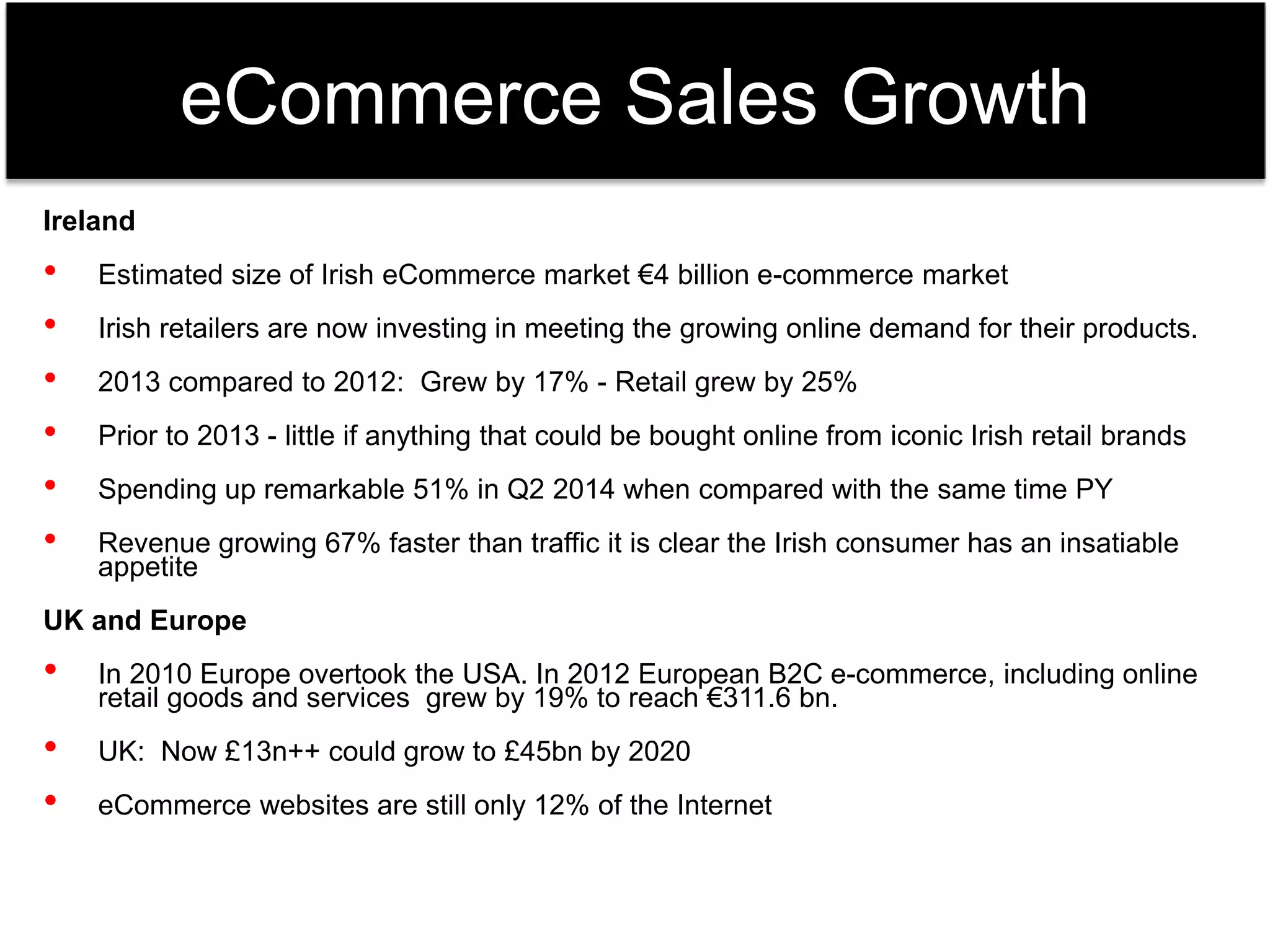
eCommerce Sales Growth 
Ireland 
• Estimated size of Irish eCommerce market €4 billion e-commerce market 
• Irish retailers are now investing in meeting the growing online demand for their products. 
• 2013 compared to 2012: Grew by 17% - Retail grew by 25% 
• Prior to 2013 - little if anything that could be bought online from iconic Irish retail brands 
• Spending up remarkable 51% in Q2 2014 when compared with the same time PY 
• Revenue growing 67% faster than traffic it is clear the Irish consumer has an insatiable 
appetite 
UK and Europe 
• In 2010 Europe overtook the USA. In 2012 European B2C e-commerce, including online 
retail goods and services grew by 19% to reach €311.6 bn. 
• UK: Now £13n++ could grow to £45bn by 2020 
• eCommerce websites are still only 12% of the Internet
Building 
an 
eCommerce site
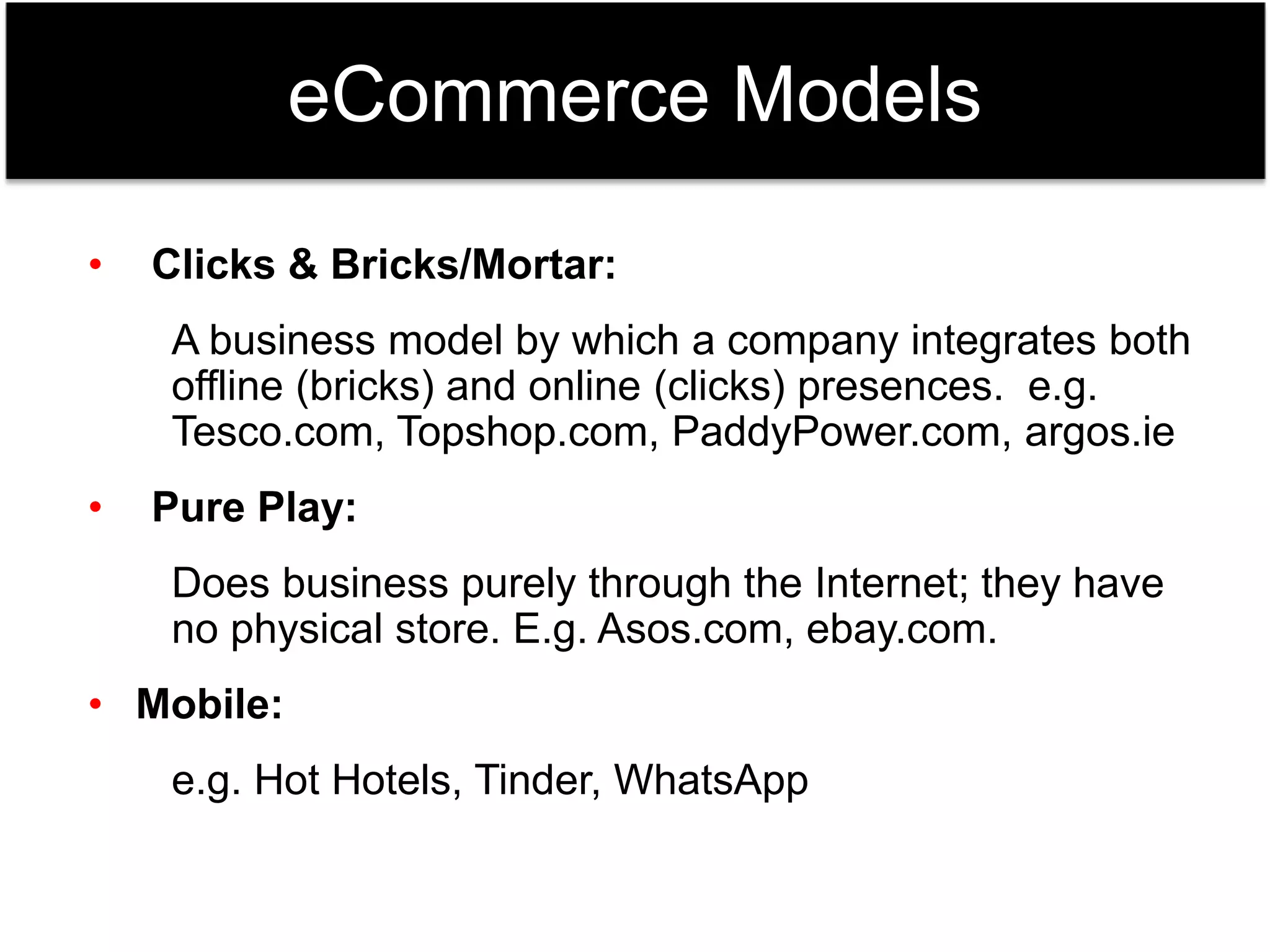
eCommerce Models 
• Clicks & Bricks/Mortar: 
A business model by which a company integrates both 
offline (bricks) and online (clicks) presences. e.g. 
Tesco.com, Topshop.com, PaddyPower.com, argos.ie 
• Pure Play: 
Does business purely through the Internet; they have 
no physical store. E.g. Asos.com, ebay.com. 
• Mobile: 
e.g. Hot Hotels, Tinder, WhatsApp
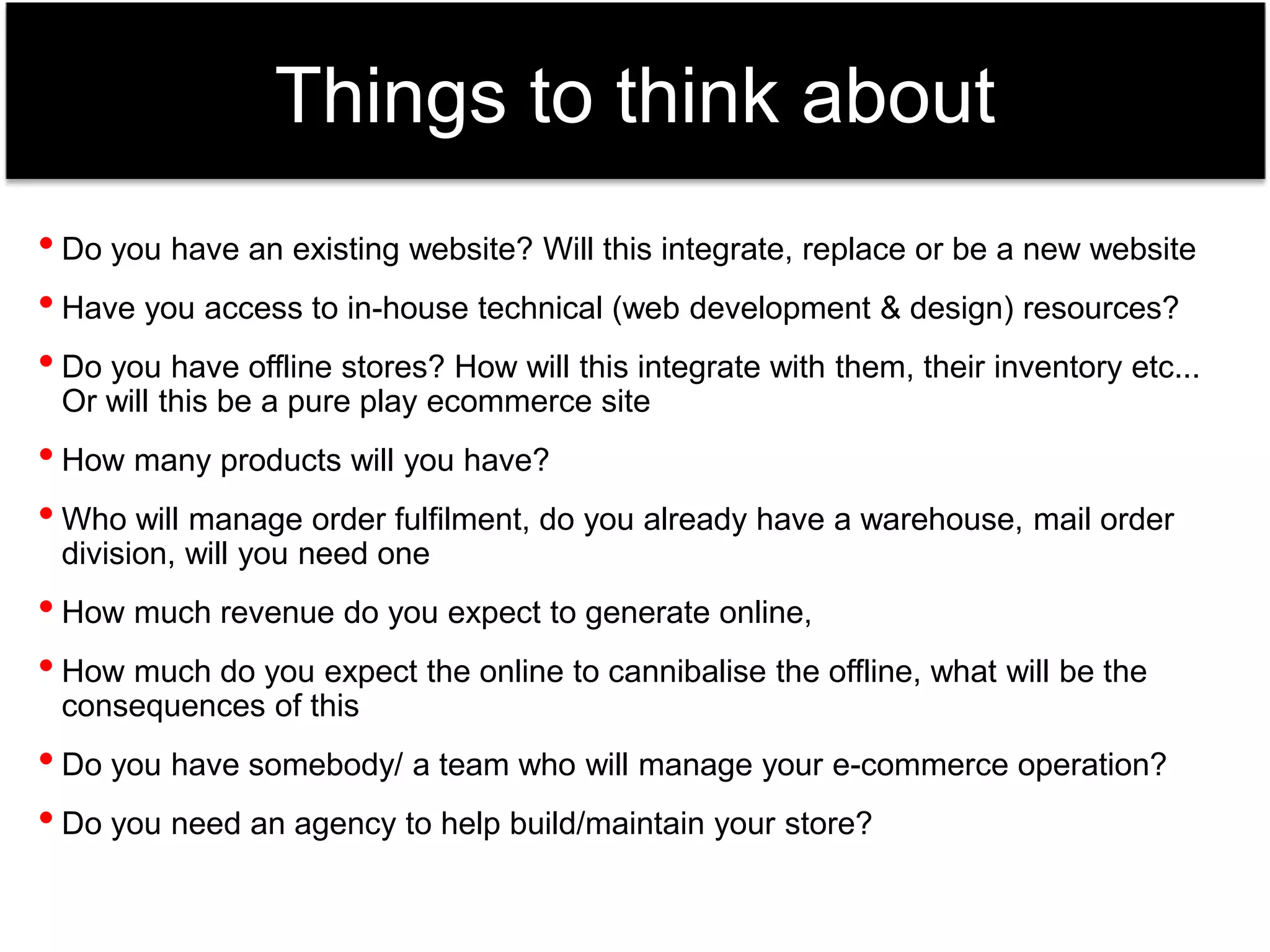
Things to think about 
• Do you have an existing website? Will this integrate, replace or be a new website 
• Have you access to in-house technical (web development & design) resources? 
• Do you have offline stores? How will this integrate with them, their inventory etc... 
Or will this be a pure play ecommerce site 
• How many products will you have? 
• Who will manage order fulfilment, do you already have a warehouse, mail order 
division, will you need one 
• How much revenue do you expect to generate online, 
• How much do you expect the online to cannibalise the offline, what will be the 
consequences of this 
• Do you have somebody/ a team who will manage your e-commerce operation? 
• Do you need an agency to help build/maintain your store?
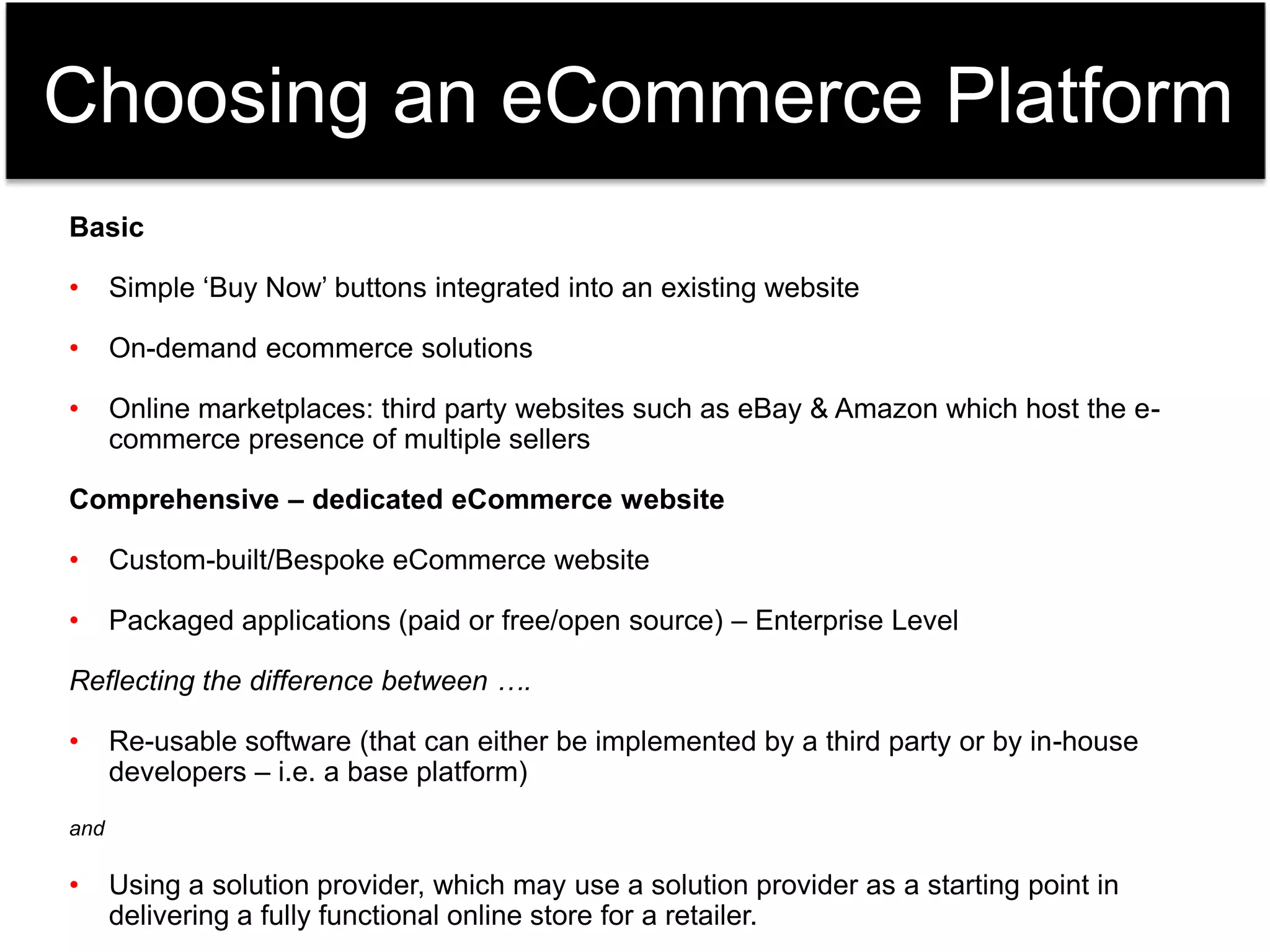
Choosing an eCommerce Platform 
Basic 
• Simple ‘Buy Now’ buttons integrated into an existing website 
• On-demand ecommerce solutions 
• Online marketplaces: third party websites such as eBay & Amazon which host the e-commerce 
presence of multiple sellers 
Comprehensive – dedicated eCommerce website 
• Custom-built/Bespoke eCommerce website 
• Packaged applications (paid or free/open source) – Enterprise Level 
Reflecting the difference between …. 
• Re-usable software (that can either be implemented by a third party or by in-house 
developers – i.e. a base platform) 
and 
• Using a solution provider, which may use a solution provider as a starting point in 
delivering a fully functional online store for a retailer.
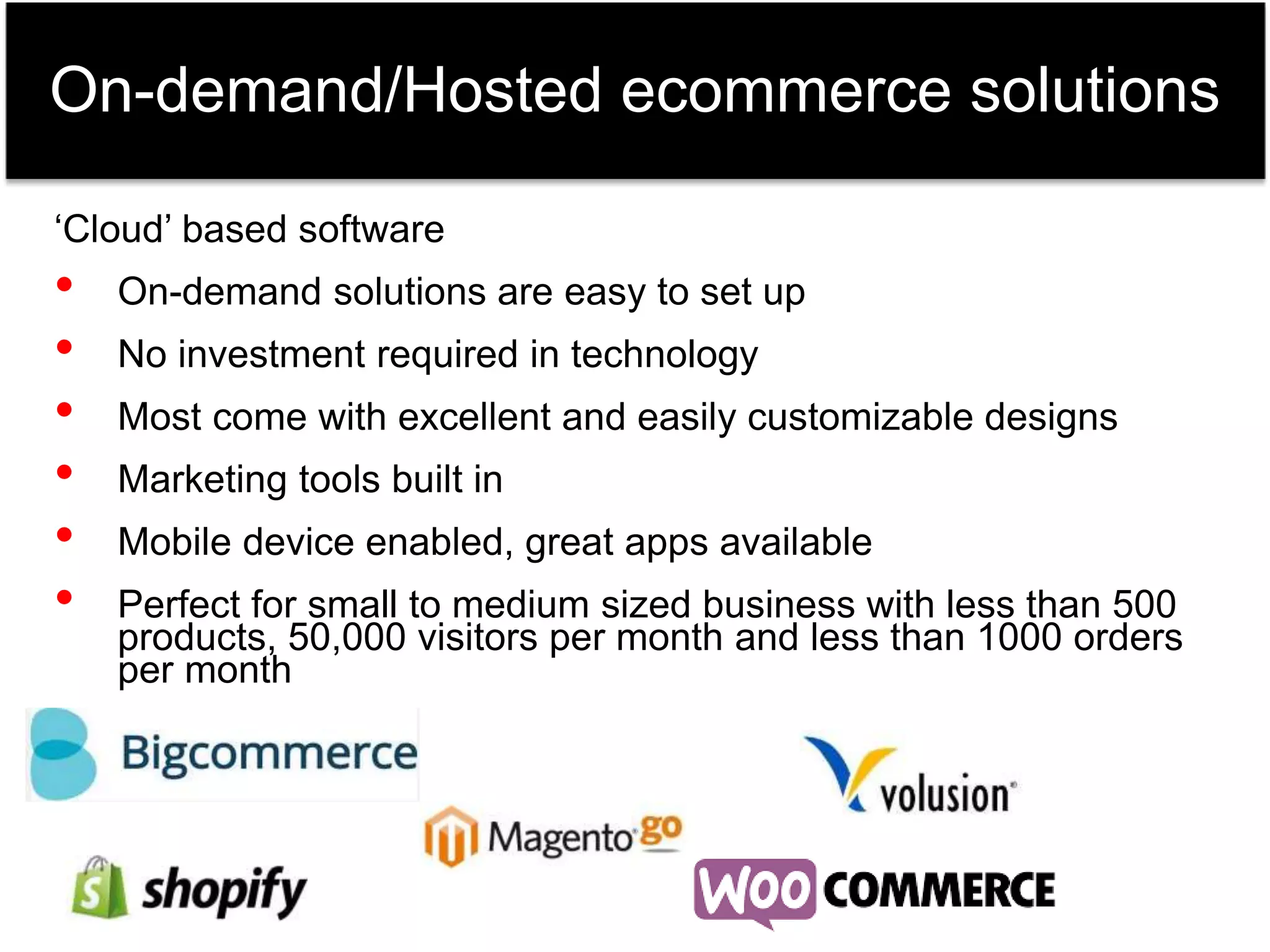
On-demand/Hosted ecommerce solutions 
‘Cloud’ based software 
• On-demand solutions are easy to set up 
• No investment required in technology 
• Most come with excellent and easily customizable designs 
• Marketing tools built in 
• Mobile device enabled, great apps available 
• Perfect for small to medium sized business with less than 500 
products, 50,000 visitors per month and less than 1000 orders 
per month
Things to think about: getting paid 
• Two Payment Processing Options: 
 Payment Bureau 
 Payment Service Providers (PSP’s)
Payments online – Payment Bureau 
• Payment Bureau’s act as both Payment Processer and Acquiring 
bank 
• PayPal & Google Checkout are the main players 
Pros 
• The only option for many start up’s 
• Easy to set up 
• Helps increase conversion 
• Fraud Protection - Both checkouts offer a level of fraud protection 
to both buyers and sellers 
Cons 
• Higher fees – 2% - 3.5% 
• Revenue settled slower
Payment Service Providers (PSP’s) 
• Retailer must have an internet merchant account with an acquiring 
bank (a bank which provides internet merchant services). 
• They must also have an account with a payment service provider 
(PSP) also known as a payment gateway. A PSP is effectively an 
online credit card machine. 
• Merchant’s bank account’s - BOI – Elavon, AIB – AIBMS (Not all 
banks provide this service) 
• Payment Service Providers 
• - Realex, SagePay
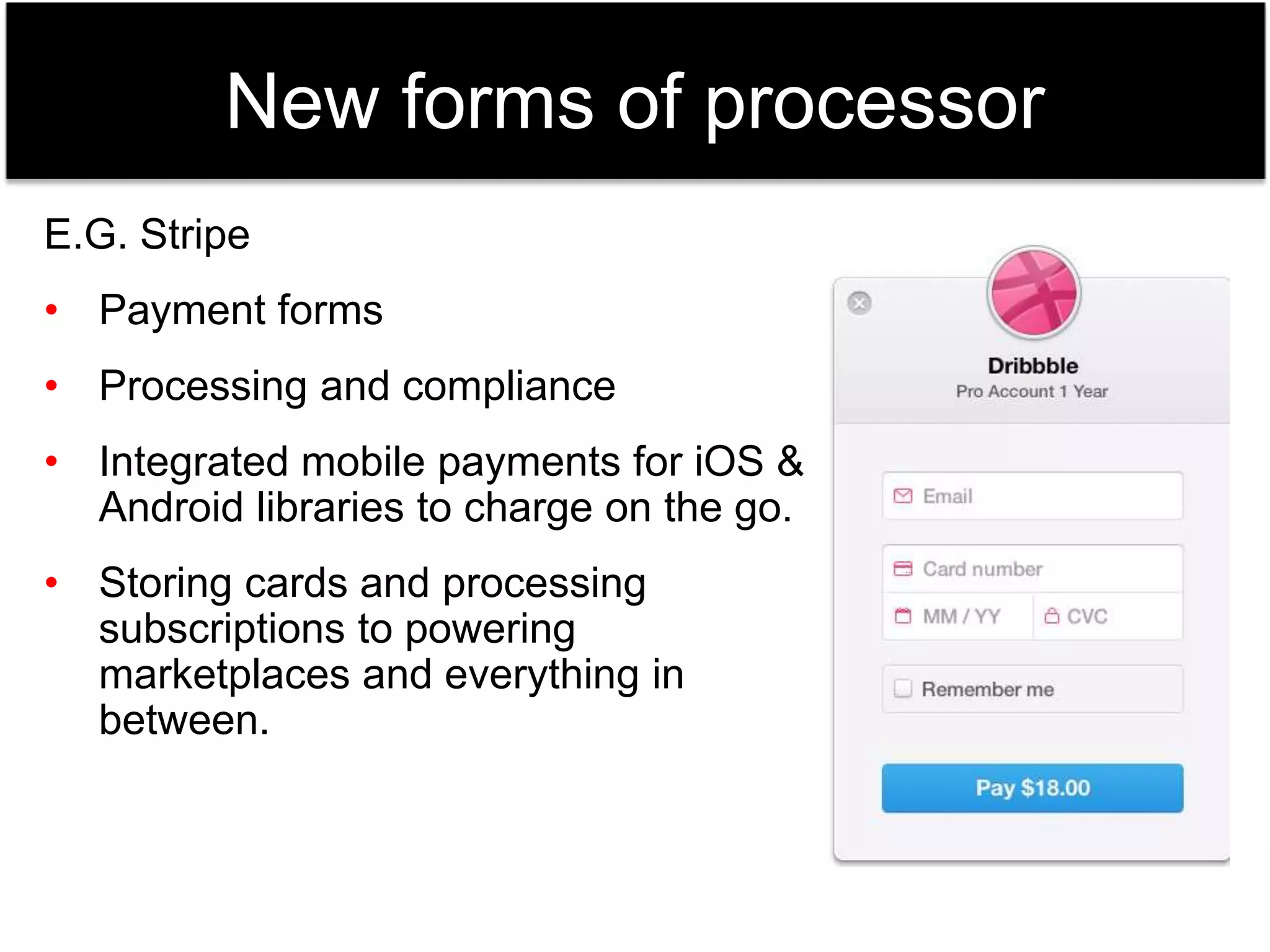
New forms of processor 
E.G. Stripe 
• Payment forms 
• Processing and compliance 
• Integrated mobile payments for iOS & 
Android libraries to charge on the go. 
• Storing cards and processing 
subscriptions to powering 
marketplaces and everything in 
between.
Payment Service Providers (PSP’s) 
Pro’s 
• Lower fee’s - 2% for most cards / 49p for debit cards 
• Excellent site integration options 
• Works well if you are doing larger volumes 
• Funds settled within 1-2 days 
Con’s 
• Not really available for start ups 
• Time to set cost 
• Set up costs 
• More susceptible to fraud 
• Monthly fee’s in conjunction with transaction fee’s (20-30 Eur)
But wait 
How do I get traffic? 
(‘punters to my site’) 
And how do I get them to buy?
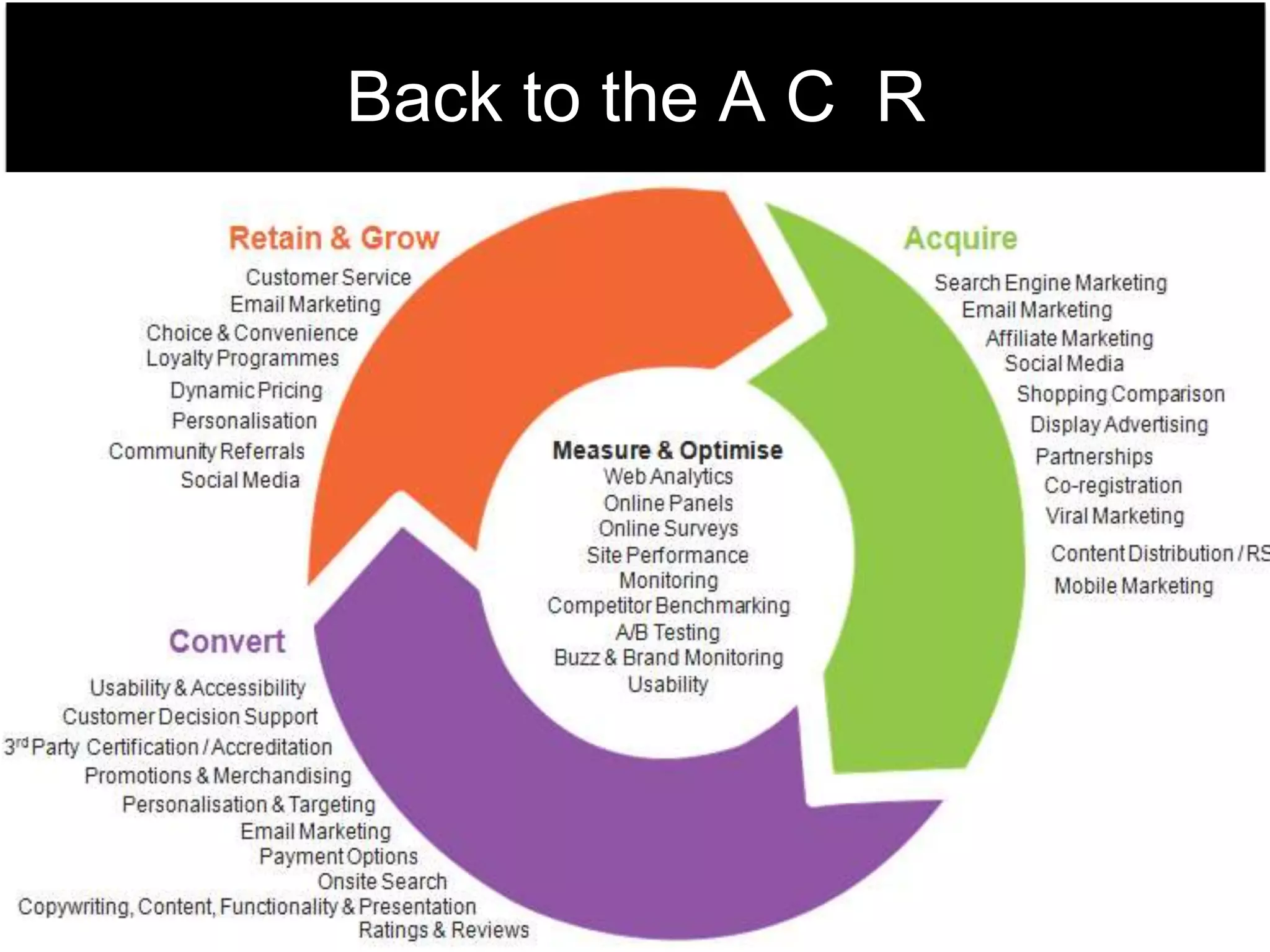
Back to the A C R
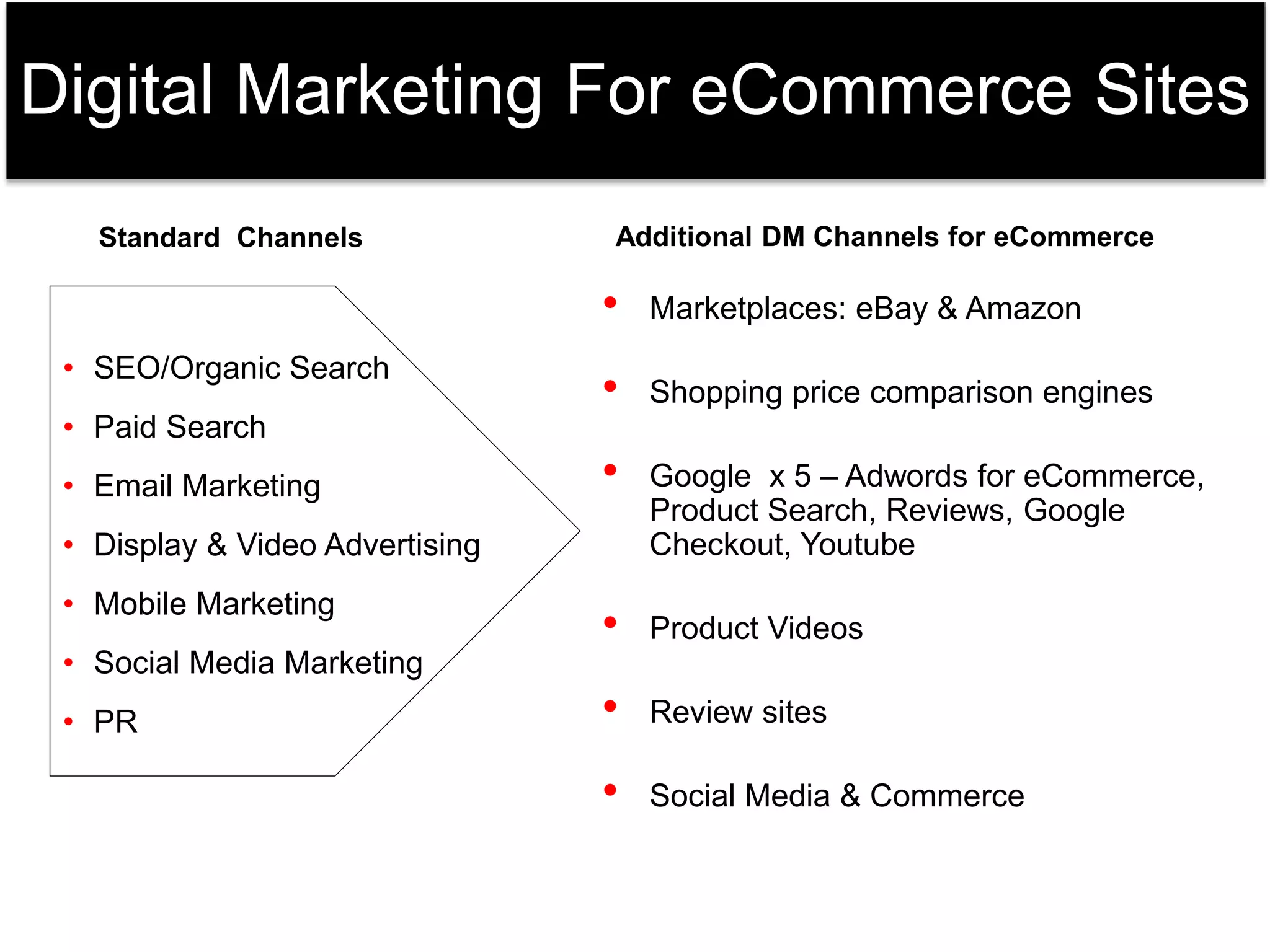
Digital Marketing For eCommerce Sites 
• Standard Channels • Additional DM Channels for eCommerce 
• SEO/Organic Search 
• Paid Search 
• Email Marketing 
• Display & Video Advertising 
• Mobile Marketing 
• Social Media Marketing 
• PR 
• Marketplaces: eBay & Amazon 
• Shopping price comparison engines 
• Google x 5 – Adwords for eCommerce, 
Product Search, Reviews, Google 
Checkout, Youtube 
• Product Videos 
• Review sites 
• Social Media & Commerce
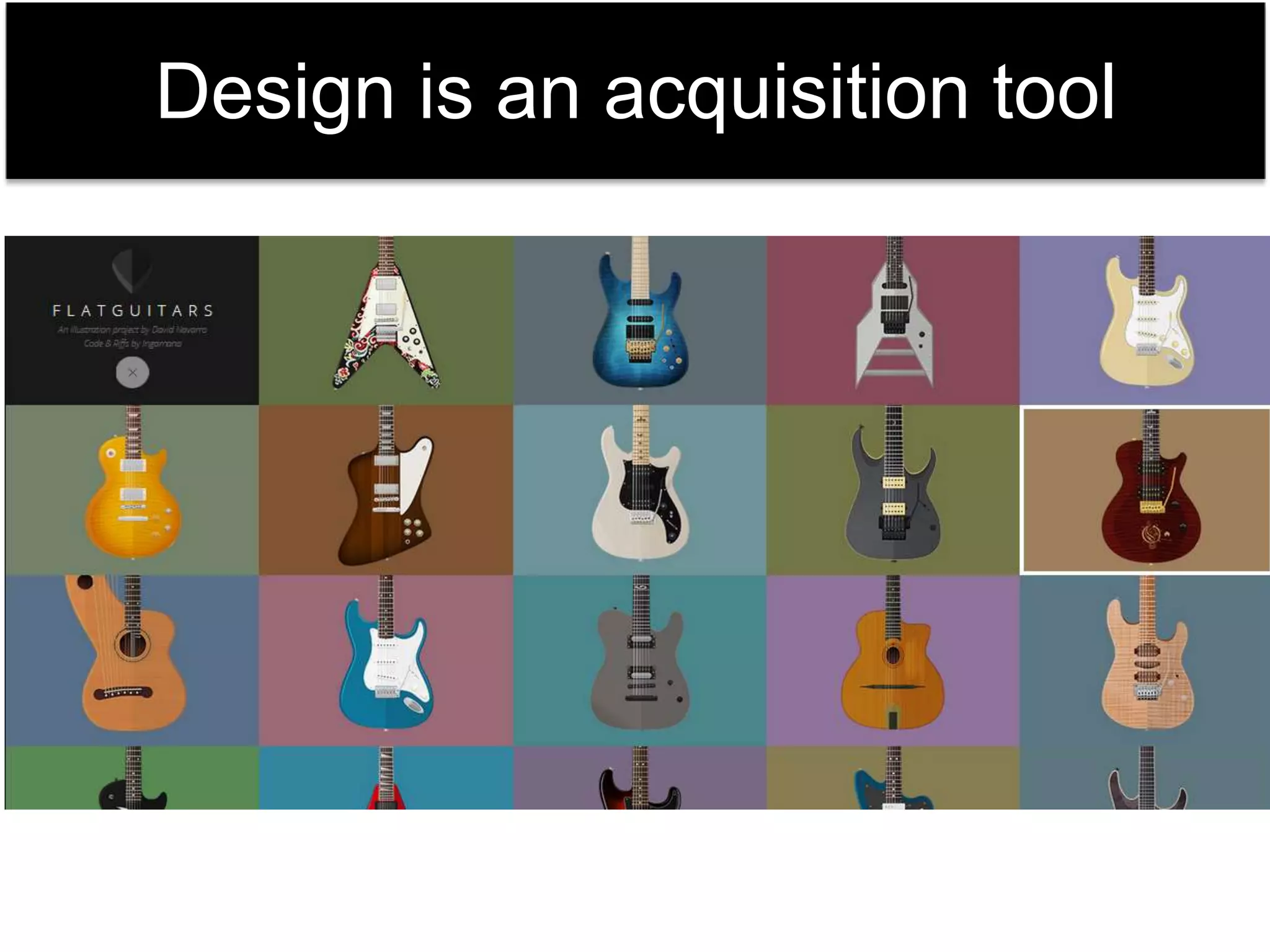
Design is an acquisition tool
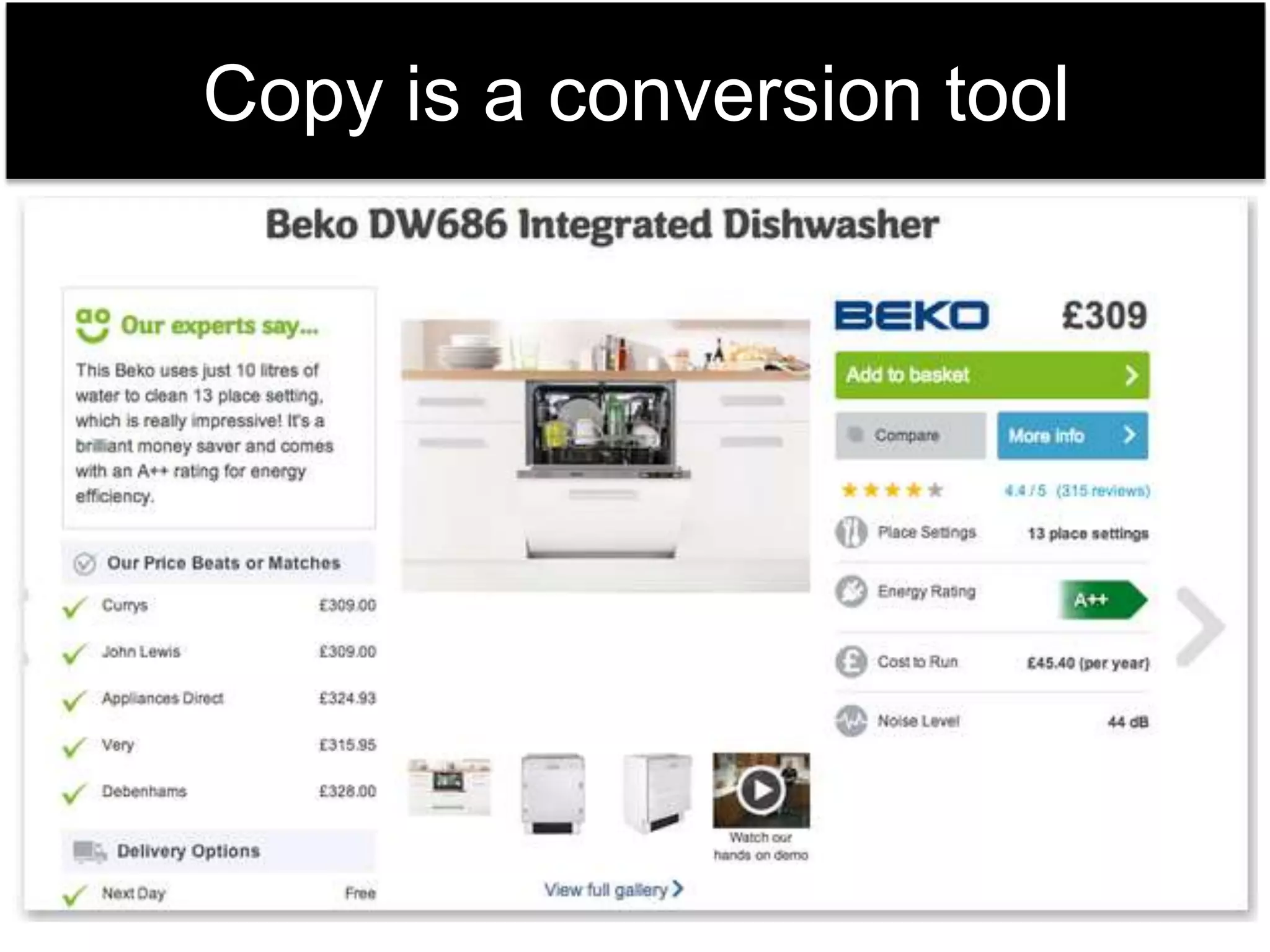
Copy is a conversion tool
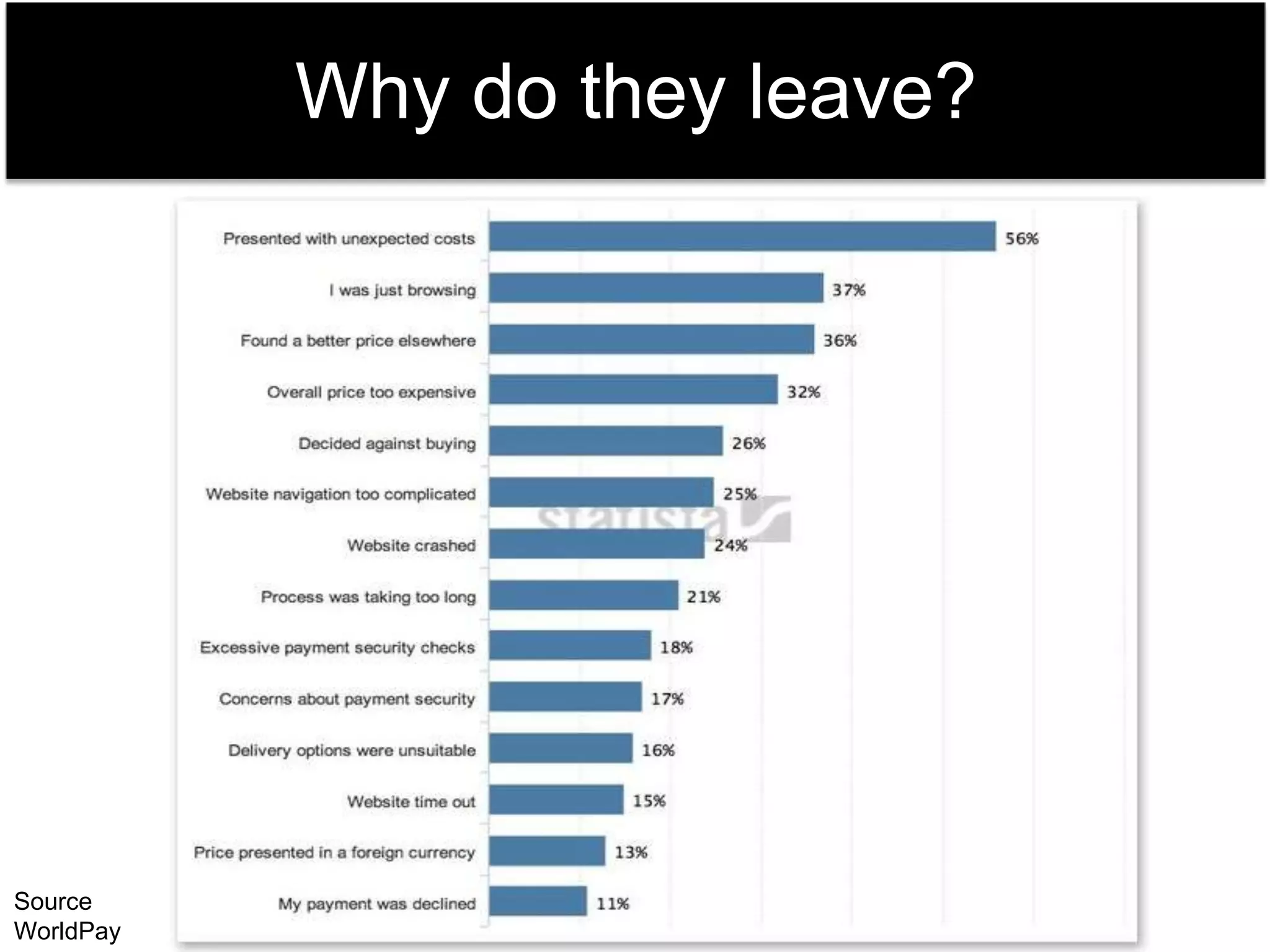
Source 
WorldPay 
Why do they leave?

What is eCommerce

  • 1.
    What is eCommerce? Colin Lewis
  • 2.
    What is eCommerce? eCommerce Definition: The buying and selling of products, services & information using digital channels, usually commerce businesses usually employing some or all of the following practices: • Provide Etail or virtual storefront on websites with online catalogues, • Buy or sell on websites or online marketplaces. • Provide secure business transactions Dave Chaffey: Internet Marketing, Strategy Implementation & Practice • Electronic Commerce refers to both financial and informational electronically mediated transactions between organisations and any third party it deals with. • eCommerce involves management not only sales transactions but also non-financial transactions such as inbound customer service enquiries and customer requests for further information are considered to be part of e-commerce.
  • 3.
    Benefits of eCommerce • New / additional / solo sales channel that improves conversion • Lowers cost of sales through lower overhead (no 25 year leases) and increased automation/streamlining of business processes. • Removes geographic restrictions & Increase’s exposure to a wider audience • Internationalise very easily • Improve branding - > better customer experience. • Always open -operate 24/7 • Adoption continues to grow rapidly – matching broadband and mobile • Niche products/services can thrive online • Tracking allows you to learn from customer behaviour – IMMEDIATELY • Now very affordable -> low barriers to entry • You can do it yourself!
  • 4.
    eCommerce Sales Growth Ireland • Estimated size of Irish eCommerce market €4 billion e-commerce market • Irish retailers are now investing in meeting the growing online demand for their products. • 2013 compared to 2012: Grew by 17% - Retail grew by 25% • Prior to 2013 - little if anything that could be bought online from iconic Irish retail brands • Spending up remarkable 51% in Q2 2014 when compared with the same time PY • Revenue growing 67% faster than traffic it is clear the Irish consumer has an insatiable appetite UK and Europe • In 2010 Europe overtook the USA. In 2012 European B2C e-commerce, including online retail goods and services grew by 19% to reach €311.6 bn. • UK: Now £13n++ could grow to £45bn by 2020 • eCommerce websites are still only 12% of the Internet
  • 5.
  • 6.
    eCommerce Models •Clicks & Bricks/Mortar: A business model by which a company integrates both offline (bricks) and online (clicks) presences. e.g. Tesco.com, Topshop.com, PaddyPower.com, argos.ie • Pure Play: Does business purely through the Internet; they have no physical store. E.g. Asos.com, ebay.com. • Mobile: e.g. Hot Hotels, Tinder, WhatsApp
  • 7.
    Things to thinkabout • Do you have an existing website? Will this integrate, replace or be a new website • Have you access to in-house technical (web development & design) resources? • Do you have offline stores? How will this integrate with them, their inventory etc... Or will this be a pure play ecommerce site • How many products will you have? • Who will manage order fulfilment, do you already have a warehouse, mail order division, will you need one • How much revenue do you expect to generate online, • How much do you expect the online to cannibalise the offline, what will be the consequences of this • Do you have somebody/ a team who will manage your e-commerce operation? • Do you need an agency to help build/maintain your store?
  • 8.
    Choosing an eCommercePlatform Basic • Simple ‘Buy Now’ buttons integrated into an existing website • On-demand ecommerce solutions • Online marketplaces: third party websites such as eBay & Amazon which host the e-commerce presence of multiple sellers Comprehensive – dedicated eCommerce website • Custom-built/Bespoke eCommerce website • Packaged applications (paid or free/open source) – Enterprise Level Reflecting the difference between …. • Re-usable software (that can either be implemented by a third party or by in-house developers – i.e. a base platform) and • Using a solution provider, which may use a solution provider as a starting point in delivering a fully functional online store for a retailer.
  • 9.
    On-demand/Hosted ecommerce solutions ‘Cloud’ based software • On-demand solutions are easy to set up • No investment required in technology • Most come with excellent and easily customizable designs • Marketing tools built in • Mobile device enabled, great apps available • Perfect for small to medium sized business with less than 500 products, 50,000 visitors per month and less than 1000 orders per month
  • 10.
    Things to thinkabout: getting paid • Two Payment Processing Options:  Payment Bureau  Payment Service Providers (PSP’s)
  • 11.
    Payments online –Payment Bureau • Payment Bureau’s act as both Payment Processer and Acquiring bank • PayPal & Google Checkout are the main players Pros • The only option for many start up’s • Easy to set up • Helps increase conversion • Fraud Protection - Both checkouts offer a level of fraud protection to both buyers and sellers Cons • Higher fees – 2% - 3.5% • Revenue settled slower
  • 12.
    Payment Service Providers(PSP’s) • Retailer must have an internet merchant account with an acquiring bank (a bank which provides internet merchant services). • They must also have an account with a payment service provider (PSP) also known as a payment gateway. A PSP is effectively an online credit card machine. • Merchant’s bank account’s - BOI – Elavon, AIB – AIBMS (Not all banks provide this service) • Payment Service Providers • - Realex, SagePay
  • 13.
    New forms ofprocessor E.G. Stripe • Payment forms • Processing and compliance • Integrated mobile payments for iOS & Android libraries to charge on the go. • Storing cards and processing subscriptions to powering marketplaces and everything in between.
  • 14.
    Payment Service Providers(PSP’s) Pro’s • Lower fee’s - 2% for most cards / 49p for debit cards • Excellent site integration options • Works well if you are doing larger volumes • Funds settled within 1-2 days Con’s • Not really available for start ups • Time to set cost • Set up costs • More susceptible to fraud • Monthly fee’s in conjunction with transaction fee’s (20-30 Eur)
  • 15.
    But wait Howdo I get traffic? (‘punters to my site’) And how do I get them to buy?
  • 16.
  • 17.
    Digital Marketing ForeCommerce Sites • Standard Channels • Additional DM Channels for eCommerce • SEO/Organic Search • Paid Search • Email Marketing • Display & Video Advertising • Mobile Marketing • Social Media Marketing • PR • Marketplaces: eBay & Amazon • Shopping price comparison engines • Google x 5 – Adwords for eCommerce, Product Search, Reviews, Google Checkout, Youtube • Product Videos • Review sites • Social Media & Commerce
  • 18.
    Design is anacquisition tool
  • 19.
    Copy is aconversion tool
  • 20.
    Source WorldPay Whydo they leave?