What is Contract
Lifecycle
Management?
www.bywater.co.uk
What is Contract Lifecycle Management?
Most organisations who buy or sell goods or services will
adopt this method as best practice.
It is the methodical management of the lifecycle of the
contract, from development through to completion. It
can benefit the organisation by improving contract
performance, and achieving efficiencies and savings.
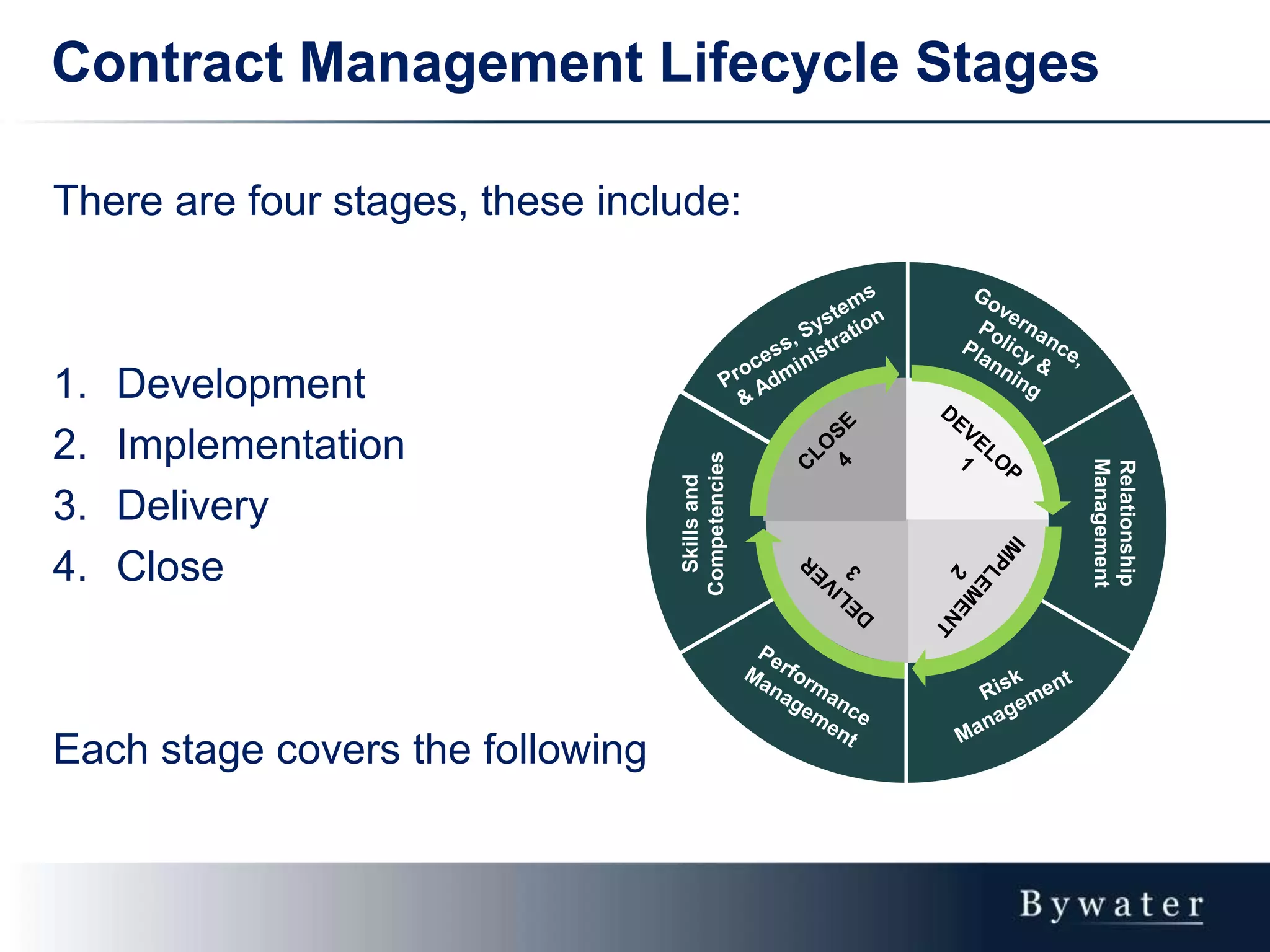
Contract Management Lifecycle Stages
There are four stages, these include:
1. Development
2. Implementation
3. Delivery
4. Close
Each stage covers the following
Relationship
Management
Skillsand
Competencies
1. Develop Phase Objectives
• Clearly defined specification
• Right contract structure and T&Cs
• Appropriate performance measures
• Provisions to facilitate CM
• Establish stakeholder and supplier relationships
• Identify and manage risk to the appropriate level
• Behave professionally and ethically
2. Implementation Phase Objectives
• Manage start-up risks effectively
• Ensure business continuity
• Ensure all parties understand the contract and their roles
• Create a positive relationship environment
• Work with stakeholders to ensure smooth transition
• Minimise risk during transition
• Establish robust governance arrangements
• Establish robust administration processes
• Establish robust performance management
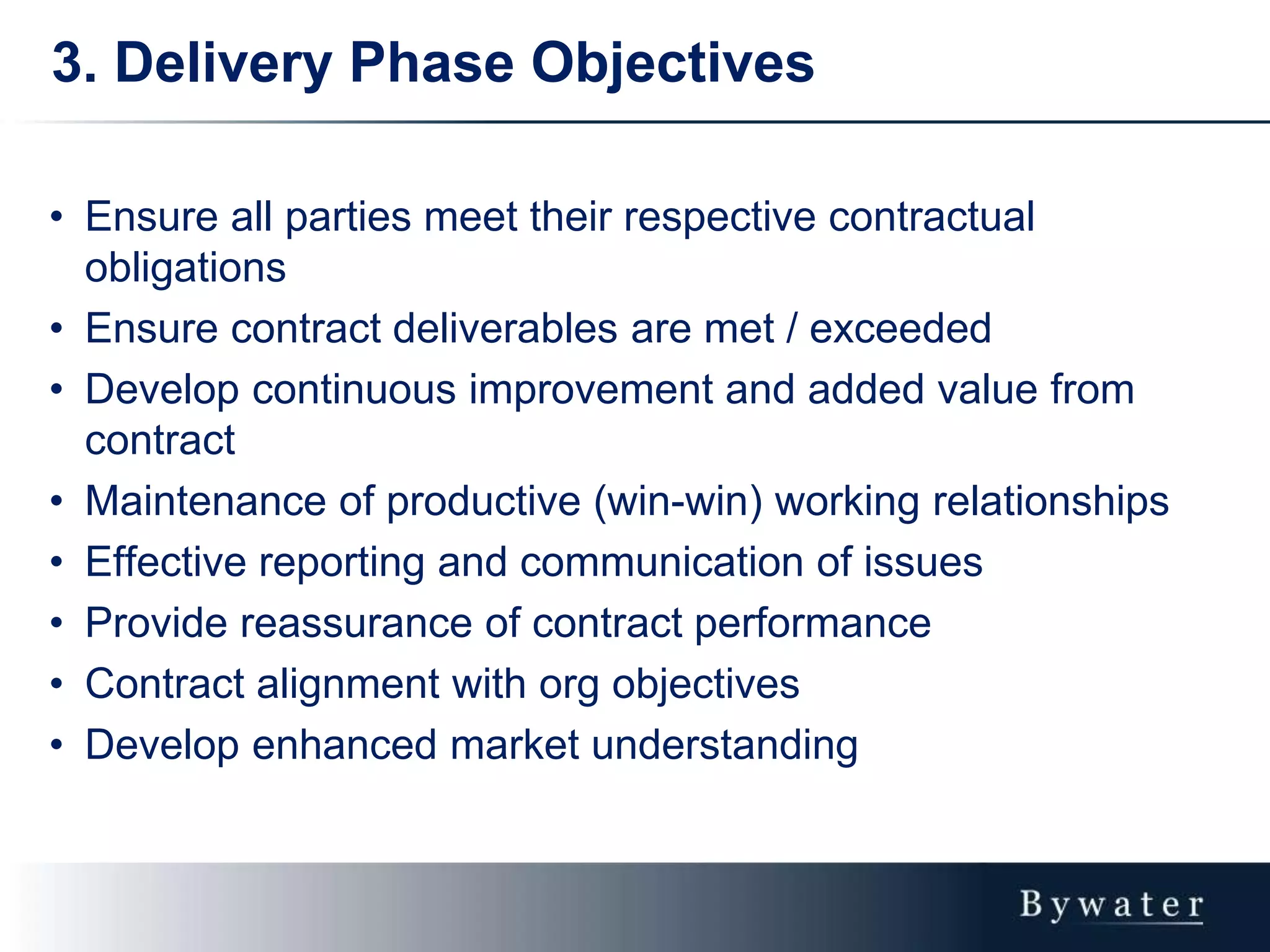
3. Delivery Phase Objectives
• Ensure all parties meet their respective contractual
obligations
• Ensure contract deliverables are met / exceeded
• Develop continuous improvement and added value from
contract
• Maintenance of productive (win-win) working relationships
• Effective reporting and communication of issues
• Provide reassurance of contract performance
• Contract alignment with org objectives
• Develop enhanced market understanding
4. Closure Phase Objectives
• Bring the contract to a smooth and timely close
• Minimise risks during transition
• Business continuity
• Maintain supplier relationships for the long term
• Complete all contract and regulatory documentation
• Capture and communicate lessons learnt
Capabilities to Deliver Success
Contract Lifecycle Management includes a number of
important factors so it’s essential for a Procurement or
Contract Manager to have the necessary capabilities in order
to achieve success.
These include
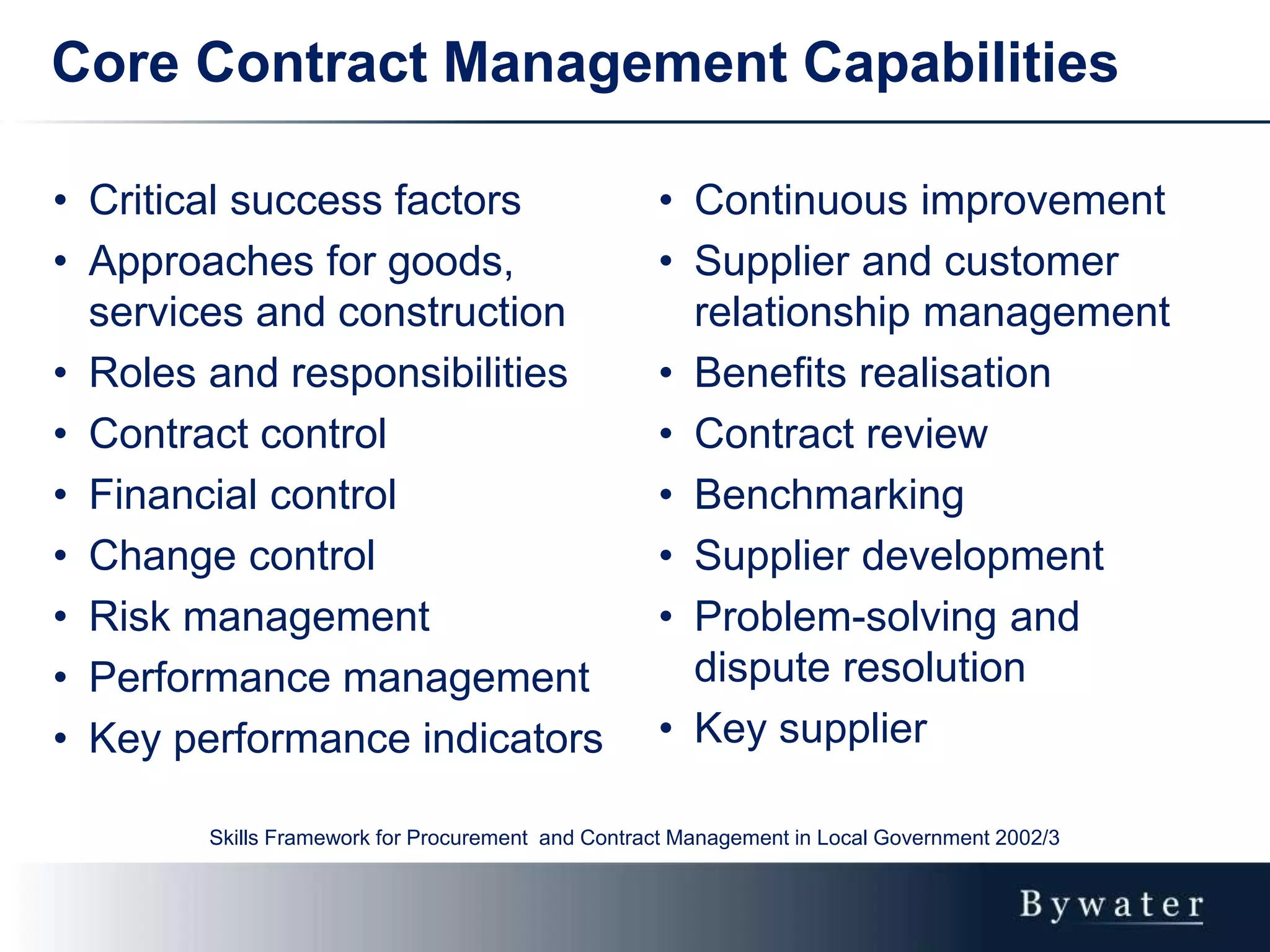
Core Contract Management Capabilities
• Critical success factors
• Approaches for goods,
services and construction
• Roles and responsibilities
• Contract control
• Financial control
• Change control
• Risk management
• Performance management
• Key performance indicators
• Continuous improvement
• Supplier and customer
relationship management
• Benefits realisation
• Contract review
• Benchmarking
• Supplier development
• Problem-solving and
dispute resolution
• Key supplier
Skills Framework for Procurement and Contract Management in Local Government 2002/3
More Contract Management Knowledge
Do you need to gain more knowledge or skills for any of the
following?
1. Role of the Contract Manager
2. Contract Management Lifecycle
3. Process, Systems and Administration
4. Risk Management Process
5. Performance Management ie KPIs
6. Relationship Management including disputes
Bywater offers Procurement and Contract Management
Training Courses to help you achieve efficient and effective
contract management.
Contact Bywater
If you have any questions or interested in our Consultancy
Services please contact the Training Team
Telephone: 0333 123 9001
Email: contact@bywater.co.uk
Website: www.bywater.co.uk
www.bywater.co.uk

What is Contract Lifecycle Management?

  • 1.
  • 2.
    What is ContractLifecycle Management? Most organisations who buy or sell goods or services will adopt this method as best practice. It is the methodical management of the lifecycle of the contract, from development through to completion. It can benefit the organisation by improving contract performance, and achieving efficiencies and savings.
  • 3.
    Contract Management LifecycleStages There are four stages, these include: 1. Development 2. Implementation 3. Delivery 4. Close Each stage covers the following Relationship Management Skillsand Competencies
  • 4.
    1. Develop PhaseObjectives • Clearly defined specification • Right contract structure and T&Cs • Appropriate performance measures • Provisions to facilitate CM • Establish stakeholder and supplier relationships • Identify and manage risk to the appropriate level • Behave professionally and ethically
  • 5.
    2. Implementation PhaseObjectives • Manage start-up risks effectively • Ensure business continuity • Ensure all parties understand the contract and their roles • Create a positive relationship environment • Work with stakeholders to ensure smooth transition • Minimise risk during transition • Establish robust governance arrangements • Establish robust administration processes • Establish robust performance management
  • 6.
    3. Delivery PhaseObjectives • Ensure all parties meet their respective contractual obligations • Ensure contract deliverables are met / exceeded • Develop continuous improvement and added value from contract • Maintenance of productive (win-win) working relationships • Effective reporting and communication of issues • Provide reassurance of contract performance • Contract alignment with org objectives • Develop enhanced market understanding
  • 7.
    4. Closure PhaseObjectives • Bring the contract to a smooth and timely close • Minimise risks during transition • Business continuity • Maintain supplier relationships for the long term • Complete all contract and regulatory documentation • Capture and communicate lessons learnt
  • 8.
    Capabilities to DeliverSuccess Contract Lifecycle Management includes a number of important factors so it’s essential for a Procurement or Contract Manager to have the necessary capabilities in order to achieve success. These include
  • 9.
    Core Contract ManagementCapabilities • Critical success factors • Approaches for goods, services and construction • Roles and responsibilities • Contract control • Financial control • Change control • Risk management • Performance management • Key performance indicators • Continuous improvement • Supplier and customer relationship management • Benefits realisation • Contract review • Benchmarking • Supplier development • Problem-solving and dispute resolution • Key supplier Skills Framework for Procurement and Contract Management in Local Government 2002/3
  • 10.
    More Contract ManagementKnowledge Do you need to gain more knowledge or skills for any of the following? 1. Role of the Contract Manager 2. Contract Management Lifecycle 3. Process, Systems and Administration 4. Risk Management Process 5. Performance Management ie KPIs 6. Relationship Management including disputes Bywater offers Procurement and Contract Management Training Courses to help you achieve efficient and effective contract management.
  • 11.
    Contact Bywater If youhave any questions or interested in our Consultancy Services please contact the Training Team Telephone: 0333 123 9001 Email: contact@bywater.co.uk Website: www.bywater.co.uk
  • 12.

Editor's Notes

  • #7 Ensure all parties meet their respective contract obligations Legal and regulatory Adherence to policy and process Contract administration Ensure performance meets expectations Stakeholders are kept well informed of progress and buy-in to the contract: Users / customers Senior management Category management Deliver continuous improvement and added value from the contract: Improved solutions / innovation Social Value Develop enhanced market understanding and productive supplier relationships (win-win)