What is a customer
centric culture?
By Chris L Brown
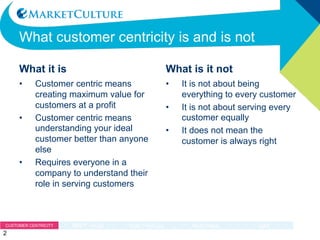
WHAT CUSTOMER CENTRICITY IS AND IS NOT
What it is
• Customer centric means
creating maximum value for
customers at a profit
• Customer centric means
understanding your ideal
customer better than anyone
else
• Requires everyone in a
company to understand their
role in serving customers
What is it not
• It is not about being everything
to every customer
• It is not about serving every
customer equally
• It does not mean the customer
is always right
2
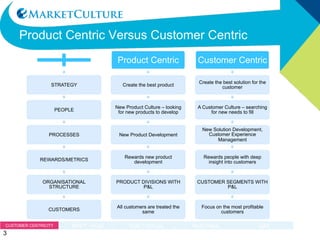
PRODUCT CENTRIC VERSUS CUSTOMER CENTRIC
Customer Centric
Create the best solution for
the customer
A Customer Culture –
searching for new needs to fill
New Solution Development,
Customer Experience
Management
Rewards people with deep
insight into customers
CUSTOMER SEGMENTS
WITH P&L
Focus on the most profitable
customers
Product Centric
Create the best product
New Product Culture – looking
for new products to develop
New Product Development
Rewards new product
development
PRODUCT DIVISIONS WITH
P&L
All customers are treated the
same
STRATEGY
PEOPLE
PROCESSES
REWARDS/METRICS
ORGANISATIONAL
STRUCTURE
CUSTOMERS
3
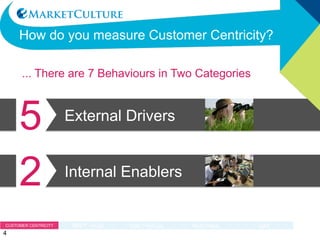
External Drivers
HOW DO YOU MEASURE CUSTOMER CENTRICITY?
5
Internal Enablers
3
.....There are 8 Behaviors in Two Categories,
these are measured using an assessment called
the Market Responsiveness IndexTM
4
THE MARKET RESPONSIVENESS INDEXTM MEASURES
8 CRITICAL BEHAVIORS
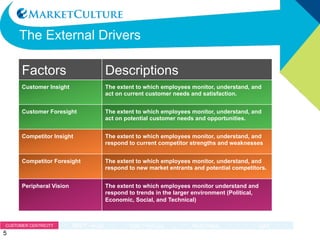
5 are External Drivers
There are FIVE External Drivers. These behaviors lead to an understanding of “the market.”
5
CUSTOMER INSIGHT
This measures the extent to which employees monitor, understand, and act on current customer
needs and satisfaction
CUSTOMER FORESIGHT
This measures the extent to which employees anticipate customer needs, recognize unspoken needs,
consider future needs and take action to satisfy them
COMPETITOR INSIGHT
This measures the extent to which employees monitor, understand, and act on current competitor
activities and take action to incorporate these in their actions to improve customer experience
COMPETITOR FORESIGHT
This measures the extent to which employees identify and consider possible future competitors and
how they might affect the value that will be offered in the future
PERIPHERAL VISION
The extent to which employees monitor understand and respond to trends in the larger environment
(Political, Economic, Social, and Technical)
THE MARKET RESPONSIVENESS INDEXTM MEASURES
8 CRITICAL BEHAVIORS
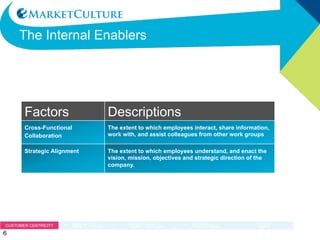
3 are Internal Enablers
There are THREE Internal Enablers. These behaviors leverage employee action to successfully
address customer needs.
6
CROSS-FUNCTIONAL
COLLABORATION
This measures the extent to
which employees interact and
collaborate cross-functionally.
This includes spending time
with people from other work
groups, taking a cross-
functional perspective, sharing
information, and inviting
contributions.
STRATEGIC
ALIGNMENT
This measures the extent to
which employees understand,
attend to, and enact the vision,
mission, objectives and
strategic direction of the
company in their day-to-day
activities.
EMPOWERMENT
The extent to which
employees are able to make
decisions that are best for
the customer without the
explicit approval of senior
leaders.
Customer Insight
Customer Foresight
Competitor Insight
Competitor Foresight
Peripheral Vision
Empowerment
Cross-functional
Collaboration
Strategic Alignment
THESE BEHAVIORS DRIVE THESE BUSINESS
PERFORMANCE OUTCOMES
7
Factors
Customer
Satisfaction
Innovation
New Product
Success
Profit
Growth
Profitability
Sales
Revenue
Growth
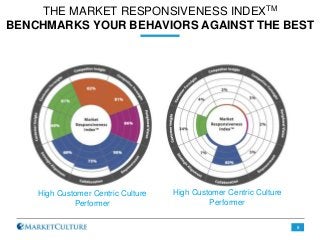
THE MARKET RESPONSIVENESS INDEXTM
BENCHMARKS YOUR BEHAVIORS AGAINST THE BEST
8
High Customer Centric Culture
Performer
High Customer Centric Culture
Performer
CONCLUSION
1. Your organization’s customer culture does have
a dramatic impact on your bottom line.
2. Your Customer Culture is a controllable aspect
of your organization that can improve your
profitability, sales growth, innovation, and
customer satisfaction.
3. Developing your customer culture today will
improve your performance tomorrow.
9
WANT TO KNOW MORE?
GET A COPY OF OUR BEST SELLING BOOK
http://www.marketculture.com/the-customer-culture-imperative
Read our BLOG
blog.marketculture.com/
Connect on LinkedIn
linkedin.com/in/christopherlbrown/
Follow us on Twitter
twitter.com/marketculture/
Contact us
info@marketculture.com
10

What is a customer centric culture?

  • 1.
    What is acustomer centric culture? By Chris L Brown
  • 2.
    WHAT CUSTOMER CENTRICITYIS AND IS NOT What it is • Customer centric means creating maximum value for customers at a profit • Customer centric means understanding your ideal customer better than anyone else • Requires everyone in a company to understand their role in serving customers What is it not • It is not about being everything to every customer • It is not about serving every customer equally • It does not mean the customer is always right 2
  • 3.
    PRODUCT CENTRIC VERSUSCUSTOMER CENTRIC Customer Centric Create the best solution for the customer A Customer Culture – searching for new needs to fill New Solution Development, Customer Experience Management Rewards people with deep insight into customers CUSTOMER SEGMENTS WITH P&L Focus on the most profitable customers Product Centric Create the best product New Product Culture – looking for new products to develop New Product Development Rewards new product development PRODUCT DIVISIONS WITH P&L All customers are treated the same STRATEGY PEOPLE PROCESSES REWARDS/METRICS ORGANISATIONAL STRUCTURE CUSTOMERS 3
  • 4.
    External Drivers HOW DOYOU MEASURE CUSTOMER CENTRICITY? 5 Internal Enablers 3 .....There are 8 Behaviors in Two Categories, these are measured using an assessment called the Market Responsiveness IndexTM 4
  • 5.
    THE MARKET RESPONSIVENESSINDEXTM MEASURES 8 CRITICAL BEHAVIORS 5 are External Drivers There are FIVE External Drivers. These behaviors lead to an understanding of “the market.” 5 CUSTOMER INSIGHT This measures the extent to which employees monitor, understand, and act on current customer needs and satisfaction CUSTOMER FORESIGHT This measures the extent to which employees anticipate customer needs, recognize unspoken needs, consider future needs and take action to satisfy them COMPETITOR INSIGHT This measures the extent to which employees monitor, understand, and act on current competitor activities and take action to incorporate these in their actions to improve customer experience COMPETITOR FORESIGHT This measures the extent to which employees identify and consider possible future competitors and how they might affect the value that will be offered in the future PERIPHERAL VISION The extent to which employees monitor understand and respond to trends in the larger environment (Political, Economic, Social, and Technical)
  • 6.
    THE MARKET RESPONSIVENESSINDEXTM MEASURES 8 CRITICAL BEHAVIORS 3 are Internal Enablers There are THREE Internal Enablers. These behaviors leverage employee action to successfully address customer needs. 6 CROSS-FUNCTIONAL COLLABORATION This measures the extent to which employees interact and collaborate cross-functionally. This includes spending time with people from other work groups, taking a cross- functional perspective, sharing information, and inviting contributions. STRATEGIC ALIGNMENT This measures the extent to which employees understand, attend to, and enact the vision, mission, objectives and strategic direction of the company in their day-to-day activities. EMPOWERMENT The extent to which employees are able to make decisions that are best for the customer without the explicit approval of senior leaders.
  • 7.
    Customer Insight Customer Foresight CompetitorInsight Competitor Foresight Peripheral Vision Empowerment Cross-functional Collaboration Strategic Alignment THESE BEHAVIORS DRIVE THESE BUSINESS PERFORMANCE OUTCOMES 7 Factors Customer Satisfaction Innovation New Product Success Profit Growth Profitability Sales Revenue Growth
  • 8.
    THE MARKET RESPONSIVENESSINDEXTM BENCHMARKS YOUR BEHAVIORS AGAINST THE BEST 8 High Customer Centric Culture Performer High Customer Centric Culture Performer
  • 9.
    CONCLUSION 1. Your organization’scustomer culture does have a dramatic impact on your bottom line. 2. Your Customer Culture is a controllable aspect of your organization that can improve your profitability, sales growth, innovation, and customer satisfaction. 3. Developing your customer culture today will improve your performance tomorrow. 9
  • 10.
    WANT TO KNOWMORE? GET A COPY OF OUR BEST SELLING BOOK http://www.marketculture.com/the-customer-culture-imperative Read our BLOG blog.marketculture.com/ Connect on LinkedIn linkedin.com/in/christopherlbrown/ Follow us on Twitter twitter.com/marketculture/ Contact us info@marketculture.com 10