• A program designed to corrupt other
programs.
•Self- replicating programs
• Install themselves without the users
consent.
• Spreads from one computer to another.
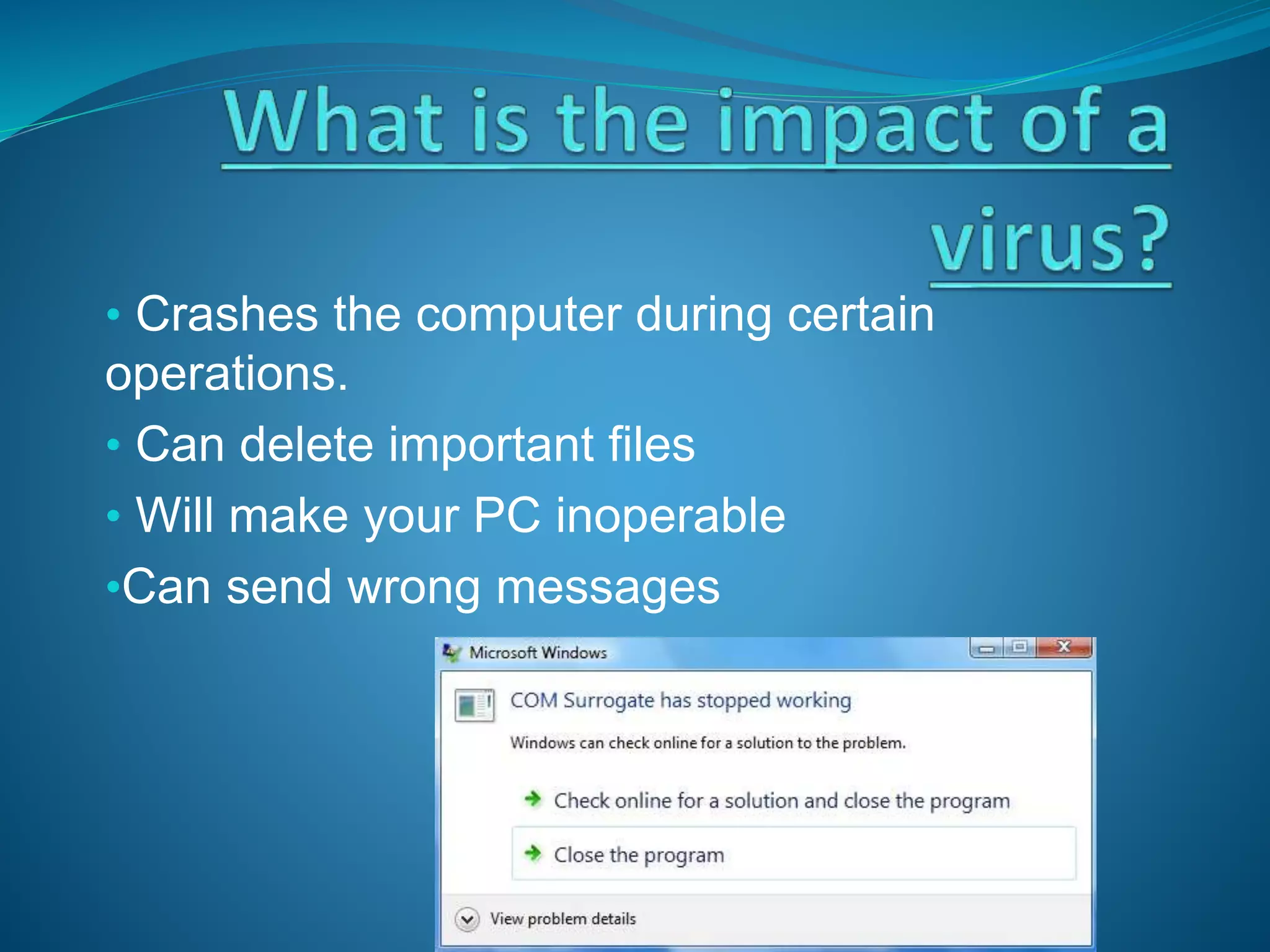
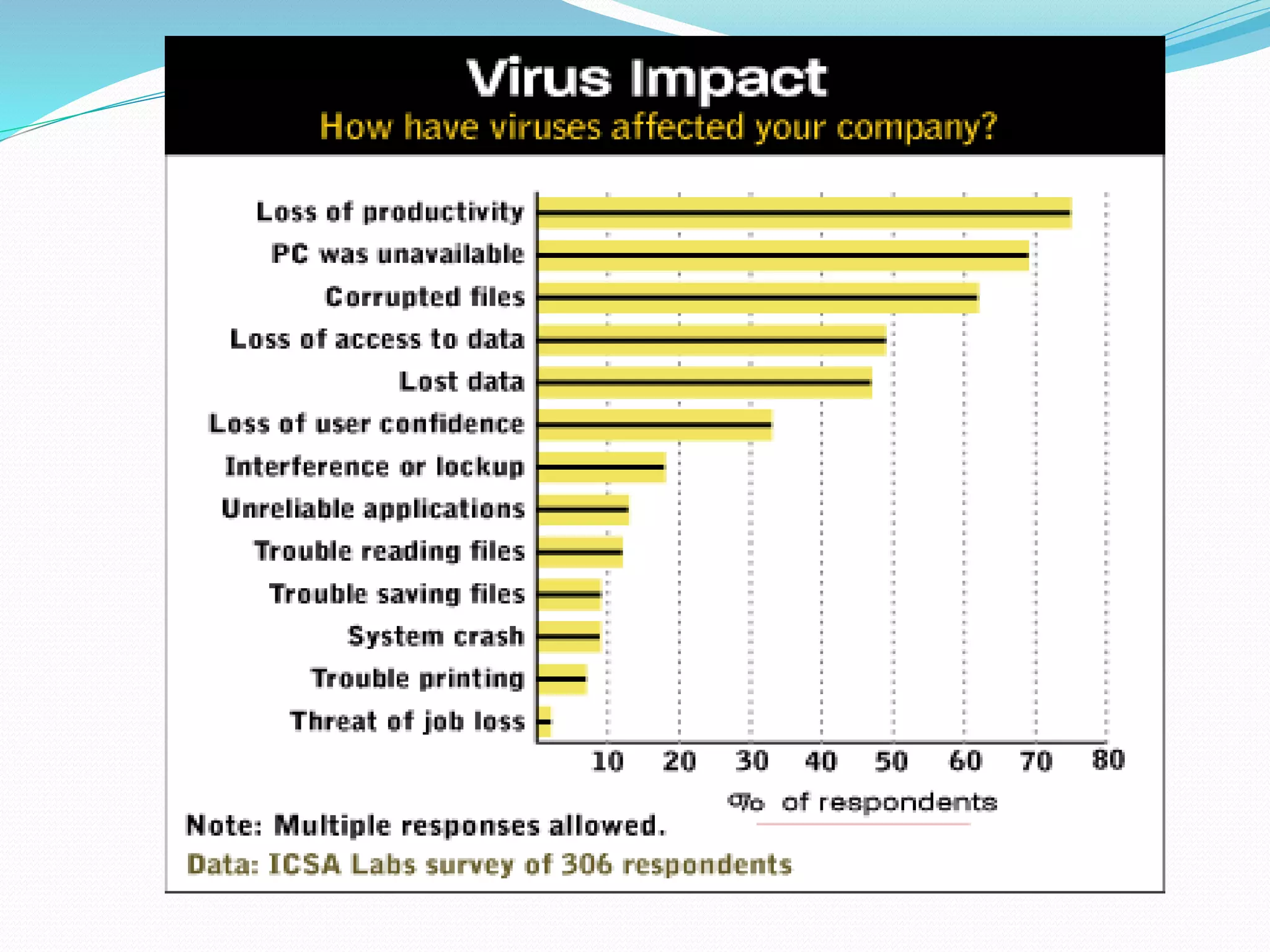
• Crashes the computer during certain
operations.
• Can delete important files
• Will make your PC inoperable
•Can send wrong messages
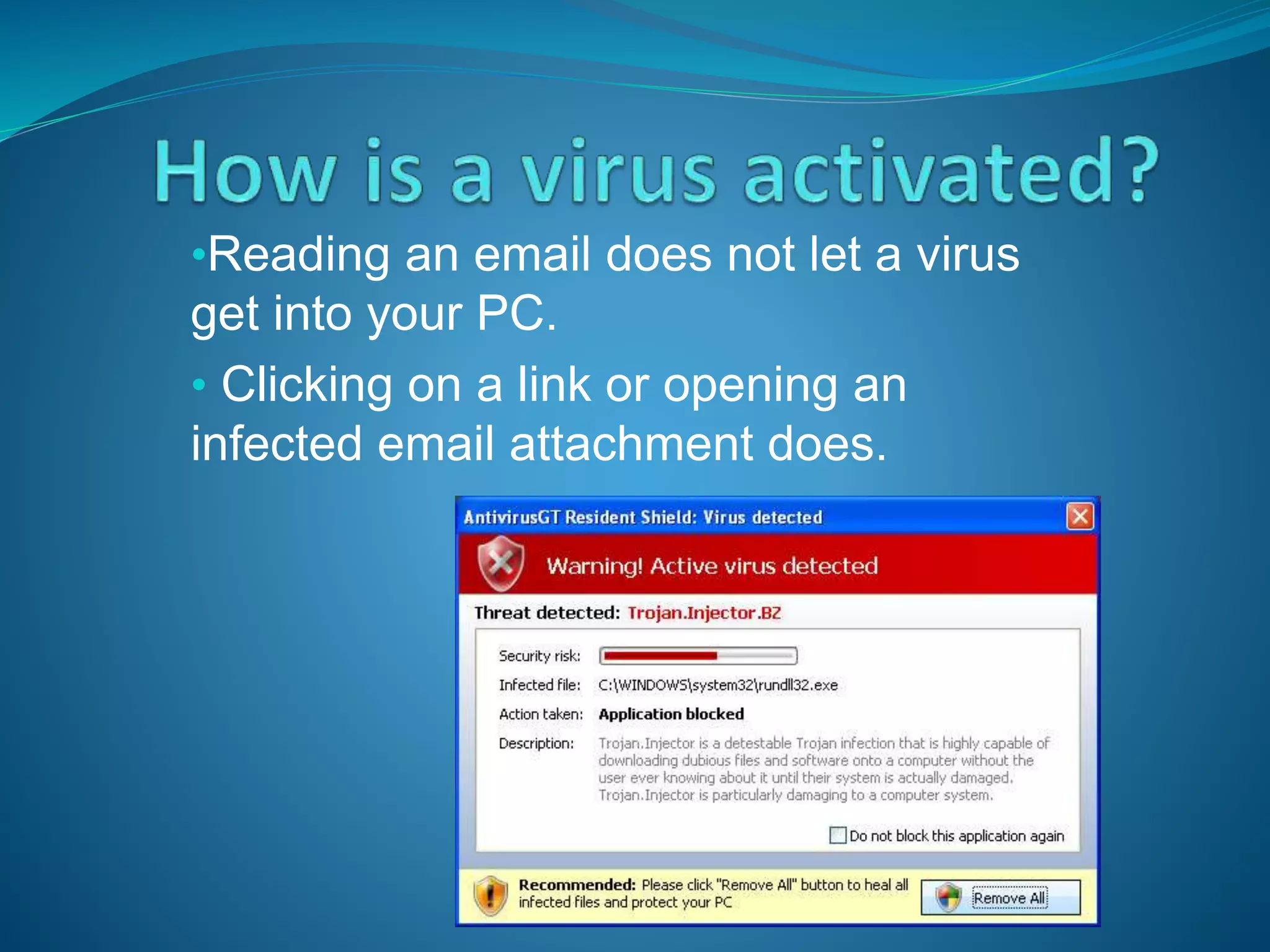
•Reading an email does not let a virus
get into your PC.
• Clicking on a link or opening an
infected email attachment does.
Types of virus?
1) Trojan
 It is a hacking program, which is self replicating.
 It can control all functions of the computer.
 They infect computers without creating any problems.
2) Worms
 It replicates itself to infect other computers.
 They don’t corrupt files, but can delete or modify its
content.
 Standalone software, does not require a host program
Who was the first person to create
a virus?
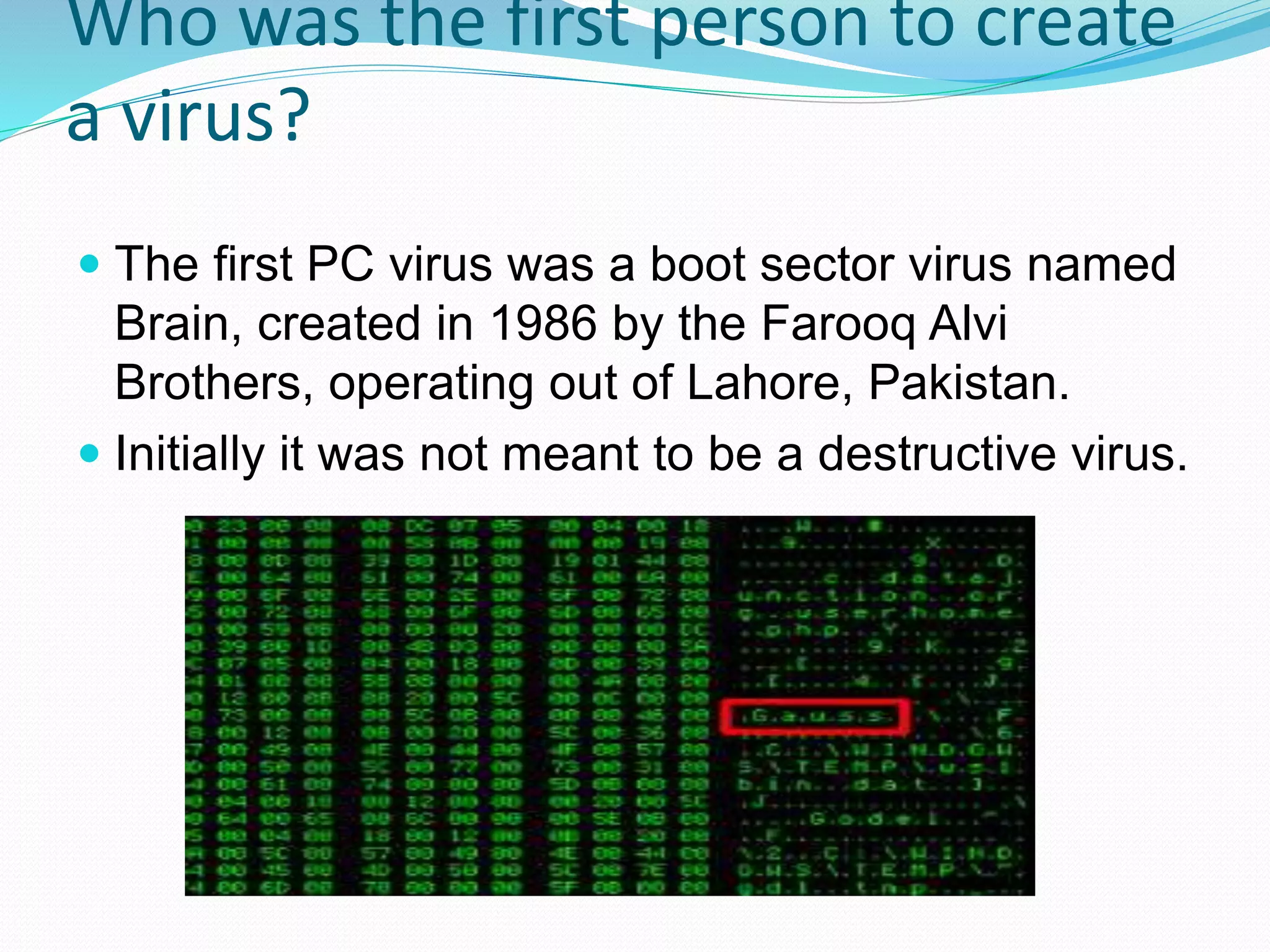
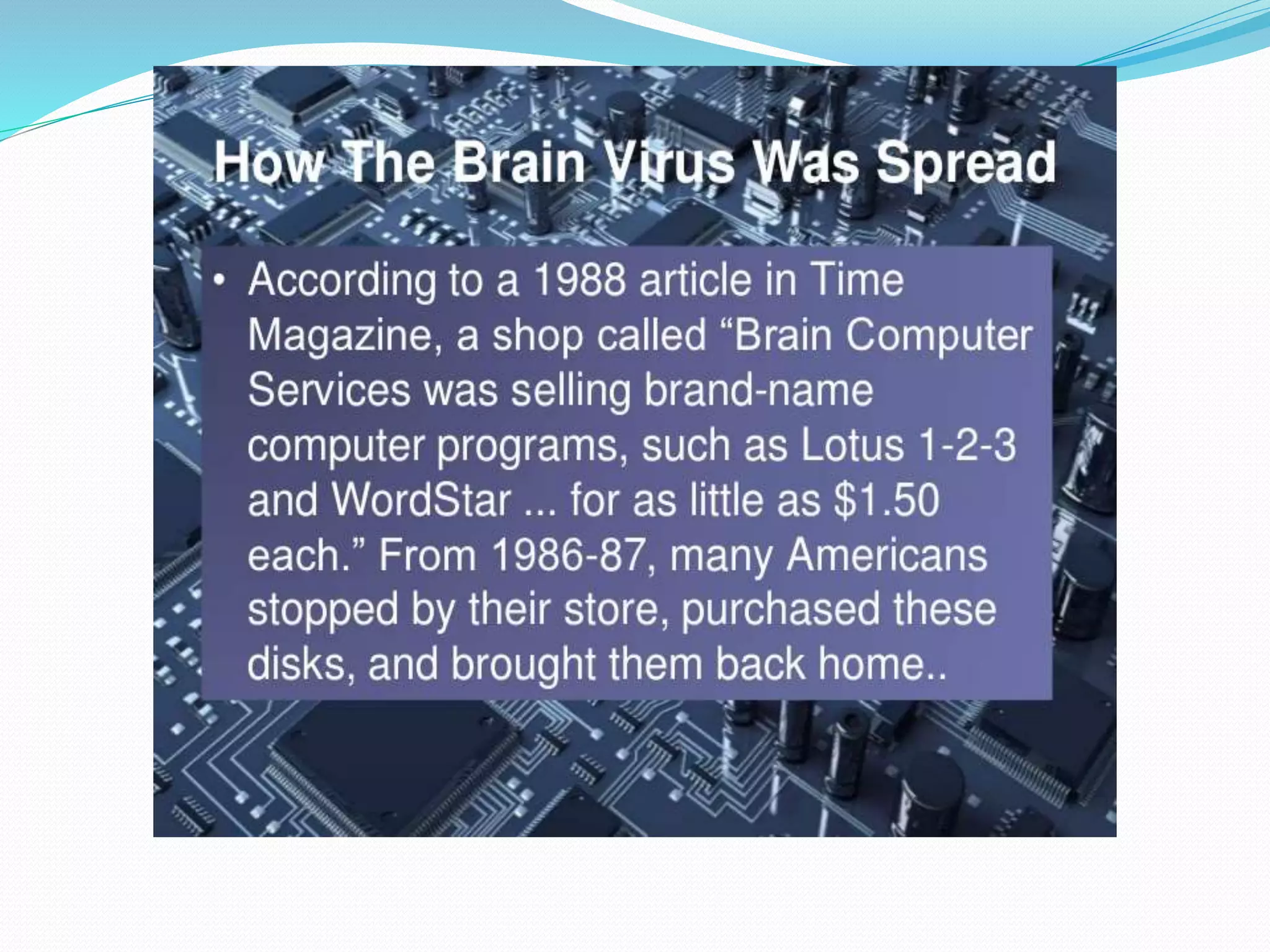
 The first PC virus was a boot sector virus named
Brain, created in 1986 by the Farooq Alvi
Brothers, operating out of Lahore, Pakistan.
 Initially it was not meant to be a destructive virus.
How does a virus get on my PC?
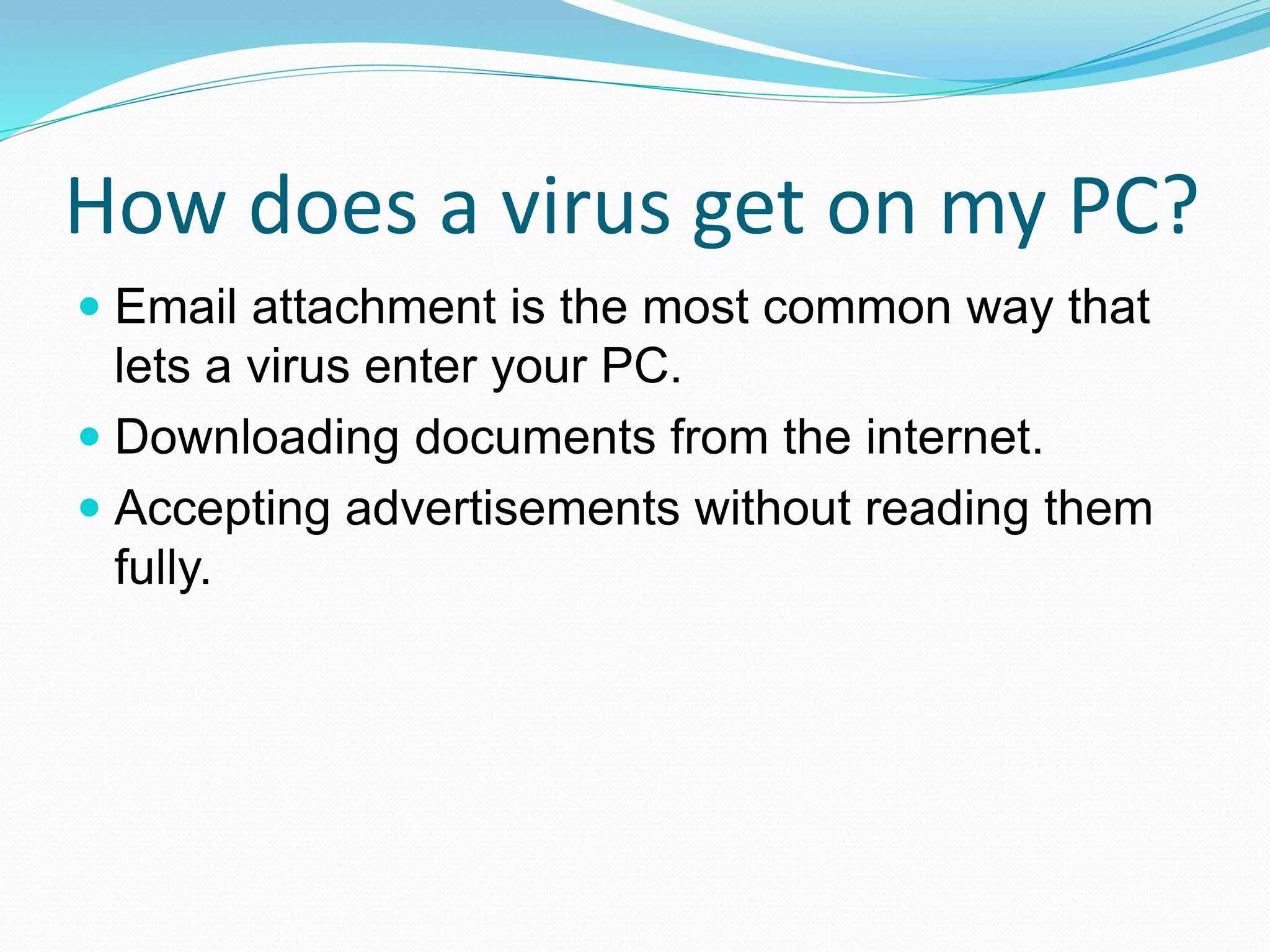
 Email attachment is the most common way that
lets a virus enter your PC.
 Downloading documents from the internet.
 Accepting advertisements without reading them
fully.
How to delete a Virus?
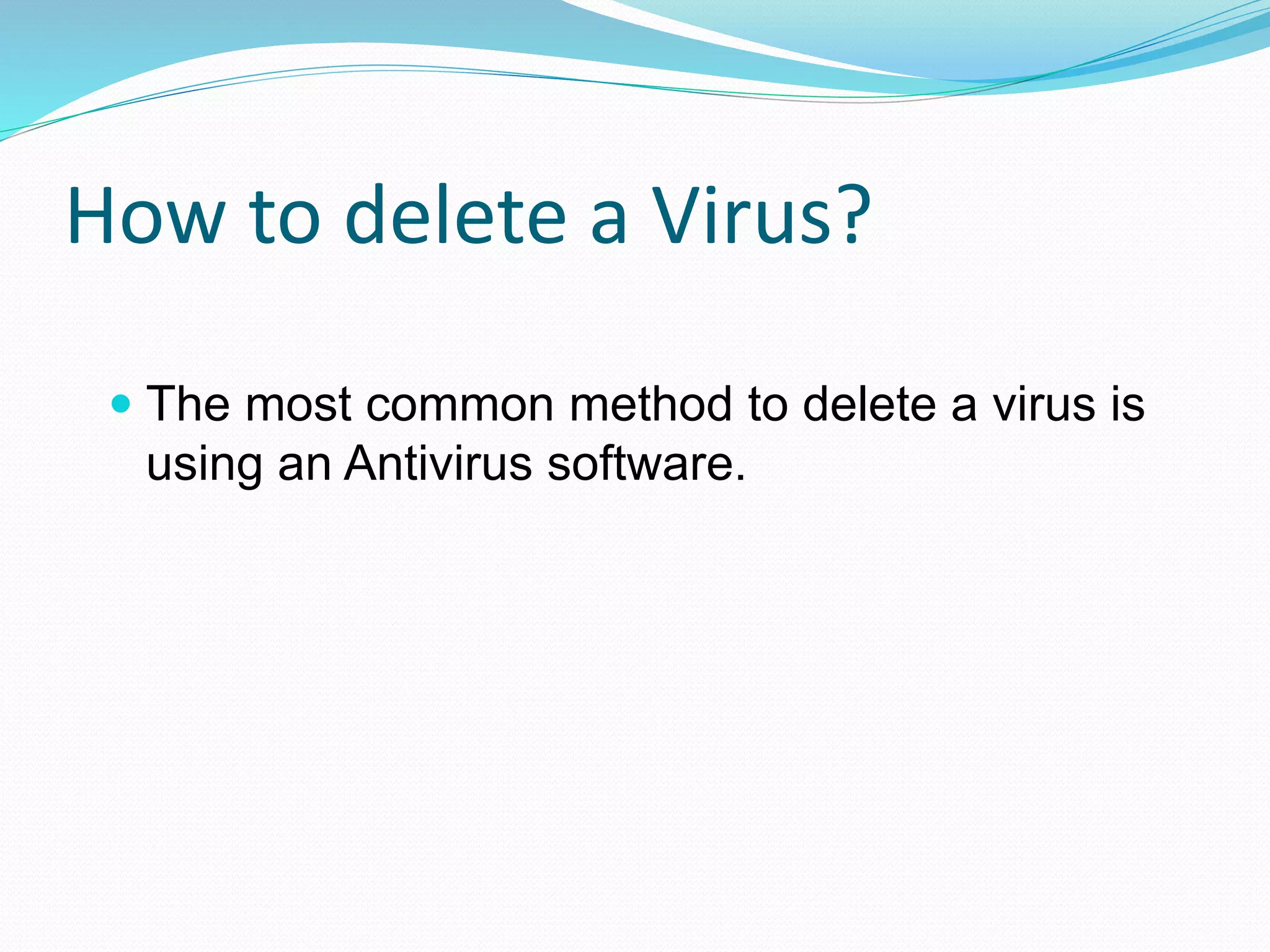
 The most common method to delete a virus is
using an Antivirus software.
Interesting facts about computer
viruses
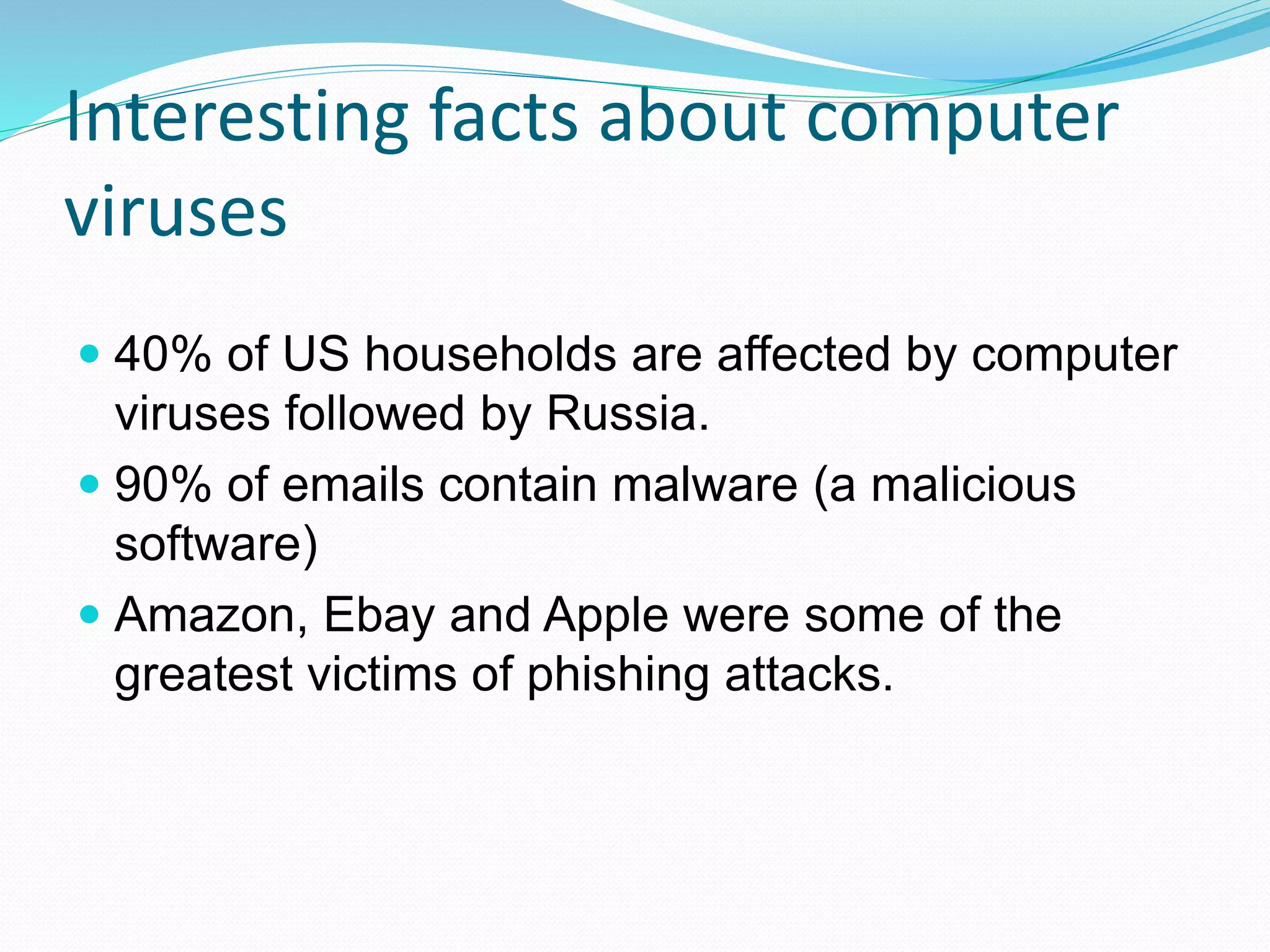
 40% of US households are affected by computer
viruses followed by Russia.
 90% of emails contain malware (a malicious
software)
 Amazon, Ebay and Apple were some of the
greatest victims of phishing attacks.
Precautions to be taken to avoid
virus attack
 Scan removable devices such as CDs, floppy,
USB drive, etc before inserting.
 Avoid installing pirated software's.
 Perform daily scan.
 Don’t click on email links and attachments
 Use strong passwords and change them
regularly
 Install a good Antivirus software.
Thank You

What is a computer virus

  • 2.
    • A programdesigned to corrupt other programs. •Self- replicating programs • Install themselves without the users consent. • Spreads from one computer to another.
  • 3.
    • Crashes thecomputer during certain operations. • Can delete important files • Will make your PC inoperable •Can send wrong messages
  • 6.
    •Reading an emaildoes not let a virus get into your PC. • Clicking on a link or opening an infected email attachment does.
  • 7.
    Types of virus? 1)Trojan  It is a hacking program, which is self replicating.  It can control all functions of the computer.  They infect computers without creating any problems. 2) Worms  It replicates itself to infect other computers.  They don’t corrupt files, but can delete or modify its content.  Standalone software, does not require a host program
  • 8.
    Who was thefirst person to create a virus?  The first PC virus was a boot sector virus named Brain, created in 1986 by the Farooq Alvi Brothers, operating out of Lahore, Pakistan.  Initially it was not meant to be a destructive virus.
  • 10.
    How does avirus get on my PC?  Email attachment is the most common way that lets a virus enter your PC.  Downloading documents from the internet.  Accepting advertisements without reading them fully.
  • 11.
    How to deletea Virus?  The most common method to delete a virus is using an Antivirus software.
  • 12.
    Interesting facts aboutcomputer viruses  40% of US households are affected by computer viruses followed by Russia.  90% of emails contain malware (a malicious software)  Amazon, Ebay and Apple were some of the greatest victims of phishing attacks.
  • 13.
    Precautions to betaken to avoid virus attack  Scan removable devices such as CDs, floppy, USB drive, etc before inserting.  Avoid installing pirated software's.  Perform daily scan.  Don’t click on email links and attachments  Use strong passwords and change them regularly  Install a good Antivirus software.
  • 14.