What is a
Computer?
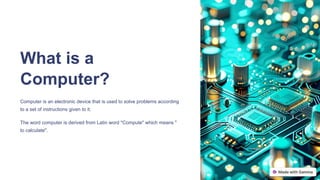
Computer is an electronic device that is used to solve problems according
to a set of instructions given to it.
The word computer is derived from Latin word "Compute" which means "
to calculate".
Functionalities of
Computer
1. Perform calculations and data processing tasks efficiently
2. Enable information storage and retrieval for easy access
3. Facilitate communication and through networking capabilities
Components of a Computer
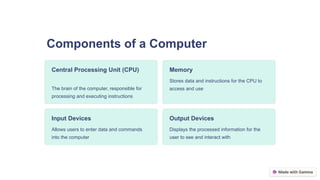
Central Processing Unit (CPU)
The brain of the computer, responsible for
processing and executing instructions
Memory
Stores data and instructions for the CPU to
access and use
Input Devices
Allows users to enter data and commands
into the computer
Output Devices
Displays the processed information for the
user to see and interact with
Hardware
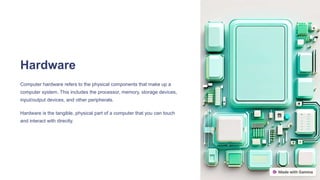
Computer hardware refers to the physical components that make up a
computer system. This includes the processor, memory, storage devices,
input/output devices, and other peripherals.
Hardware is the tangible, physical part of a computer that you can touch
and interact with directly.
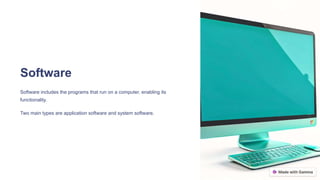
Software
Software includes the programs that run on a computer, enabling its
functionality.
Two main types are application software and system software.
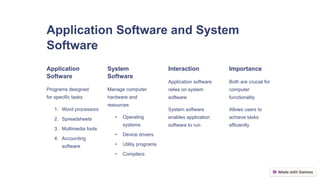
Application Software and System
Software
Application
Software
Programs designed
for specific tasks
1. Word processors
2. Spreadsheets
3. Multimedia tools
4. Accounting
software
System
Software
Manage computer
hardware and
resources
• Operating
systems
• Device drivers
• Utility programs
• Compilers
Interaction
Application software
relies on system
software
System software
enables application
software to run
Importance
Both are crucial for
computer
functionality
Allows users to
achieve tasks
efficiently
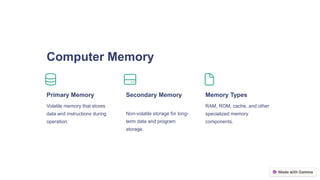
Computer Memory
Primary Memory
Volatile memory that stores
data and instructions during
operation.
Secondary Memory
Non-volatile storage for long-
term data and program
storage.
Memory Types
RAM, ROM, cache, and other
specialized memory
components.
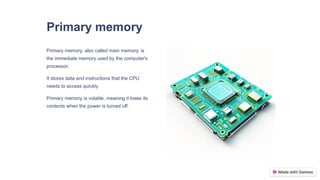
Primary memory
Primary memory, also called main memory, is
the immediate memory used by the computer's
processor.
It stores data and instructions that the CPU
needs to access quickly.
Primary memory is volatile, meaning it loses its
contents when the power is turned off.
Secondary memory
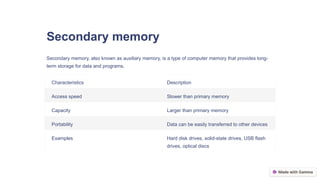
Secondary memory, also known as auxiliary memory, is a type of computer memory that provides long-
term storage for data and programs.
Characteristics Description
Access speed Slower than primary memory
Capacity Larger than primary memory
Portability Data can be easily transferred to other devices
Examples Hard disk drives, solid-state drives, USB flash
drives, optical discs
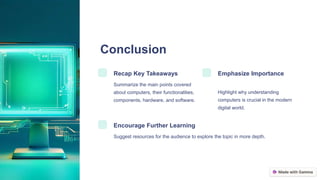
Conclusion
Recap Key Takeaways
Summarize the main points covered
about computers, their functionalities,
components, hardware, and software.
Emphasize Importance
Highlight why understanding
computers is crucial in the modern
digital world.
Encourage Further Learning
Suggest resources for the audience to explore the topic in more depth.

What-is-a-Computer, Basic about Computer.pptx

  • 1.
    What is a Computer? Computeris an electronic device that is used to solve problems according to a set of instructions given to it. The word computer is derived from Latin word "Compute" which means " to calculate".
  • 2.
    Functionalities of Computer 1. Performcalculations and data processing tasks efficiently 2. Enable information storage and retrieval for easy access 3. Facilitate communication and through networking capabilities
  • 3.
    Components of aComputer Central Processing Unit (CPU) The brain of the computer, responsible for processing and executing instructions Memory Stores data and instructions for the CPU to access and use Input Devices Allows users to enter data and commands into the computer Output Devices Displays the processed information for the user to see and interact with
  • 4.
    Hardware Computer hardware refersto the physical components that make up a computer system. This includes the processor, memory, storage devices, input/output devices, and other peripherals. Hardware is the tangible, physical part of a computer that you can touch and interact with directly.
  • 5.
    Software Software includes theprograms that run on a computer, enabling its functionality. Two main types are application software and system software.
  • 6.
    Application Software andSystem Software Application Software Programs designed for specific tasks 1. Word processors 2. Spreadsheets 3. Multimedia tools 4. Accounting software System Software Manage computer hardware and resources • Operating systems • Device drivers • Utility programs • Compilers Interaction Application software relies on system software System software enables application software to run Importance Both are crucial for computer functionality Allows users to achieve tasks efficiently
  • 7.
    Computer Memory Primary Memory Volatilememory that stores data and instructions during operation. Secondary Memory Non-volatile storage for long- term data and program storage. Memory Types RAM, ROM, cache, and other specialized memory components.
  • 8.
    Primary memory Primary memory,also called main memory, is the immediate memory used by the computer's processor. It stores data and instructions that the CPU needs to access quickly. Primary memory is volatile, meaning it loses its contents when the power is turned off.
  • 9.
    Secondary memory Secondary memory,also known as auxiliary memory, is a type of computer memory that provides long- term storage for data and programs. Characteristics Description Access speed Slower than primary memory Capacity Larger than primary memory Portability Data can be easily transferred to other devices Examples Hard disk drives, solid-state drives, USB flash drives, optical discs
  • 10.
    Conclusion Recap Key Takeaways Summarizethe main points covered about computers, their functionalities, components, hardware, and software. Emphasize Importance Highlight why understanding computers is crucial in the modern digital world. Encourage Further Learning Suggest resources for the audience to explore the topic in more depth.