Downloaded 21 times








Constant velocity (CV) joints are crucial for transferring power from the transmission to the wheels in vehicles, primarily found in front-wheel-drive cars. There are several types of CV joints, including fixed and plunge joints, tripod and ball-type plunge joints, and Rzeppa CV joints, each serving specific functions and configurations based on vehicle design. If a CV joint is damaged, it's essential to diagnose and replace the worn joints to ensure proper vehicle performance.
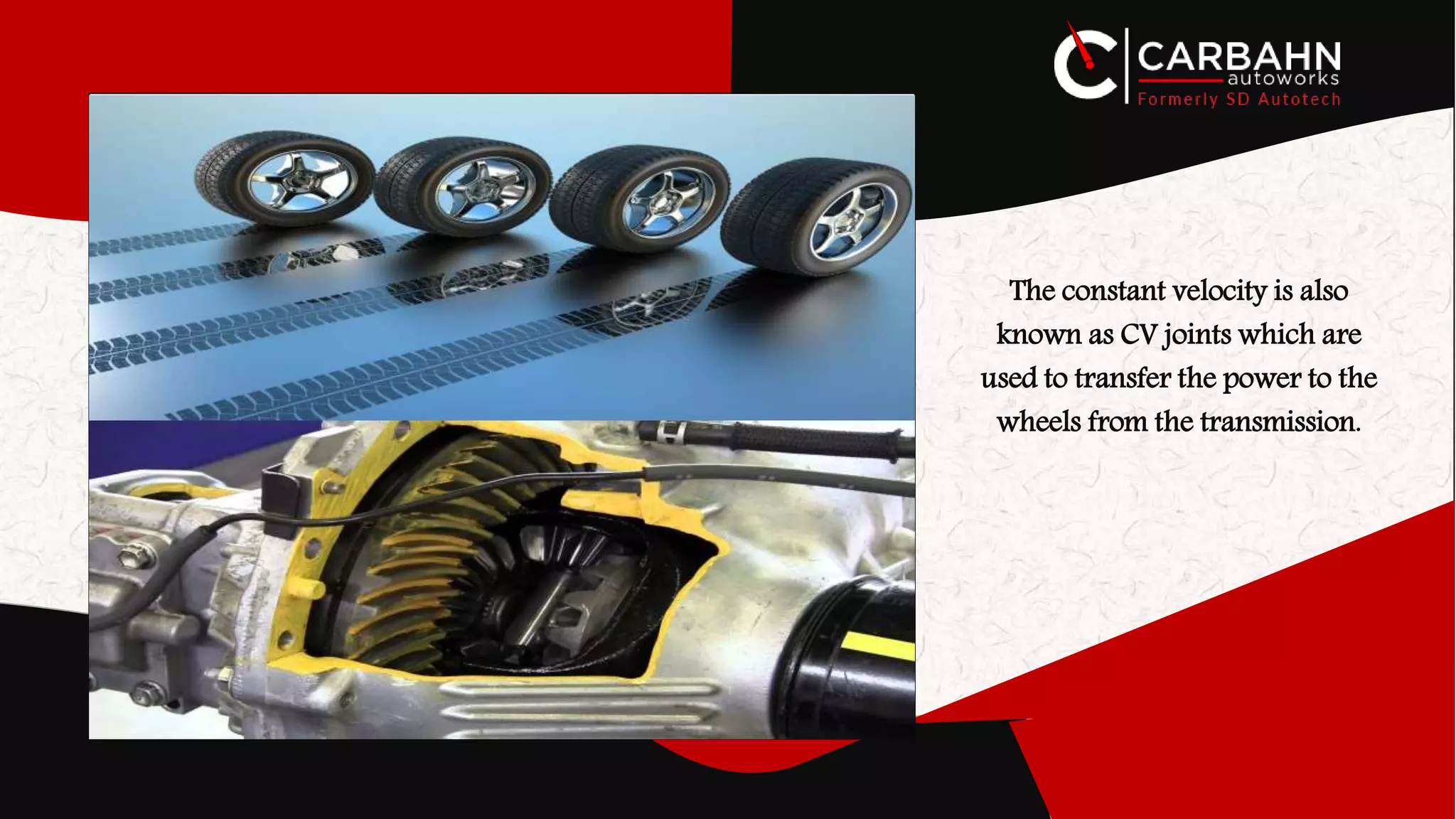
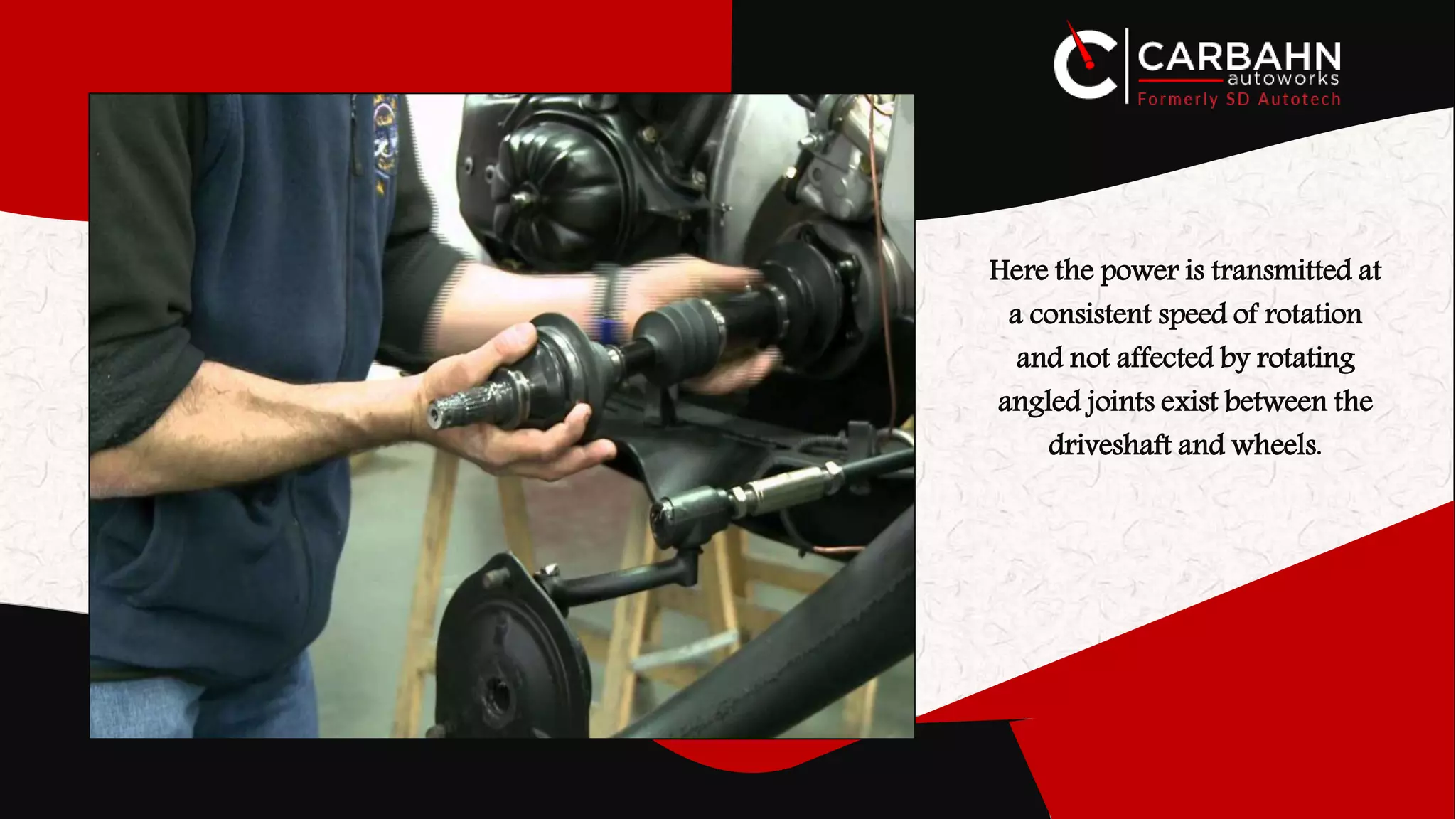
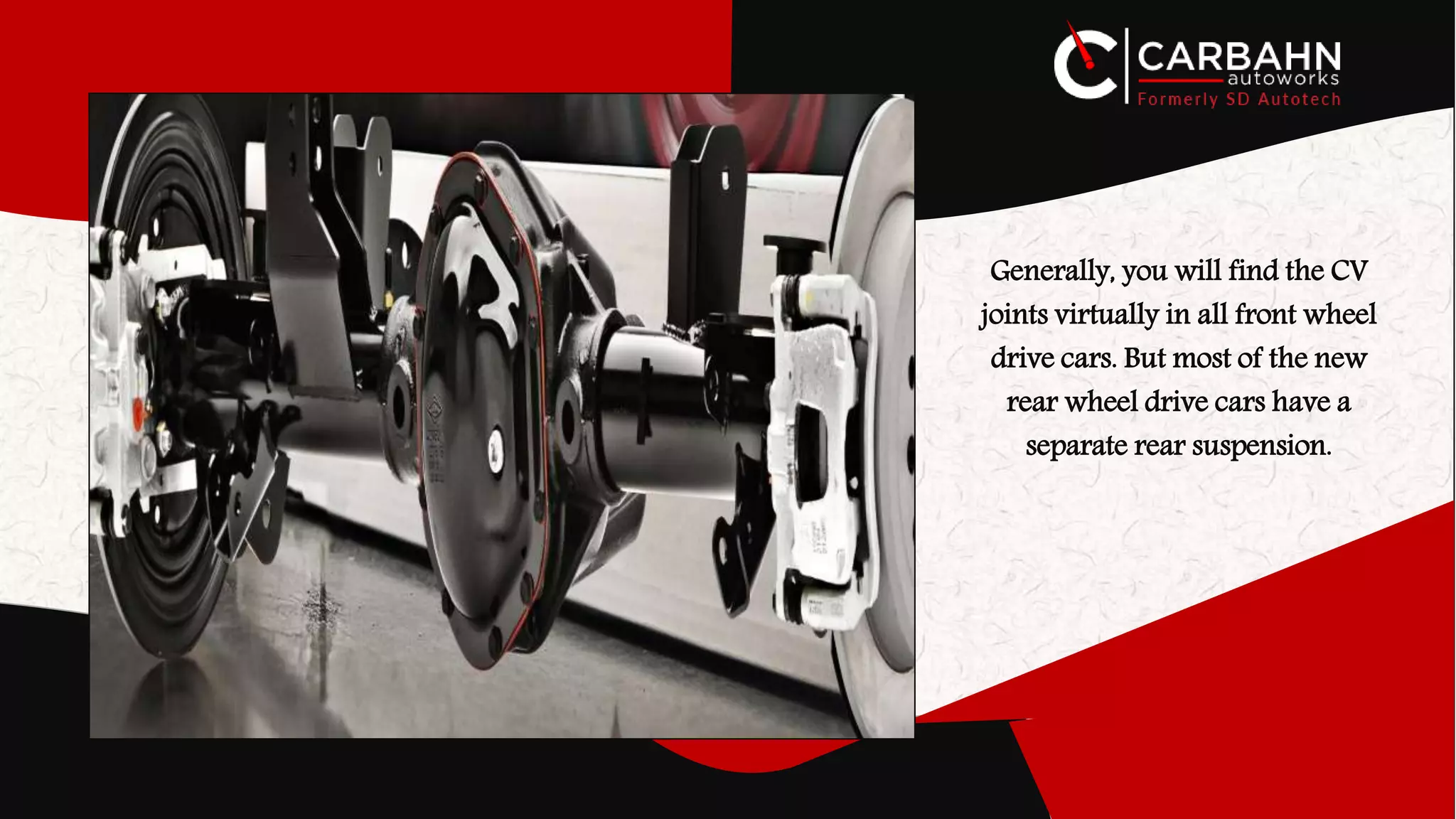
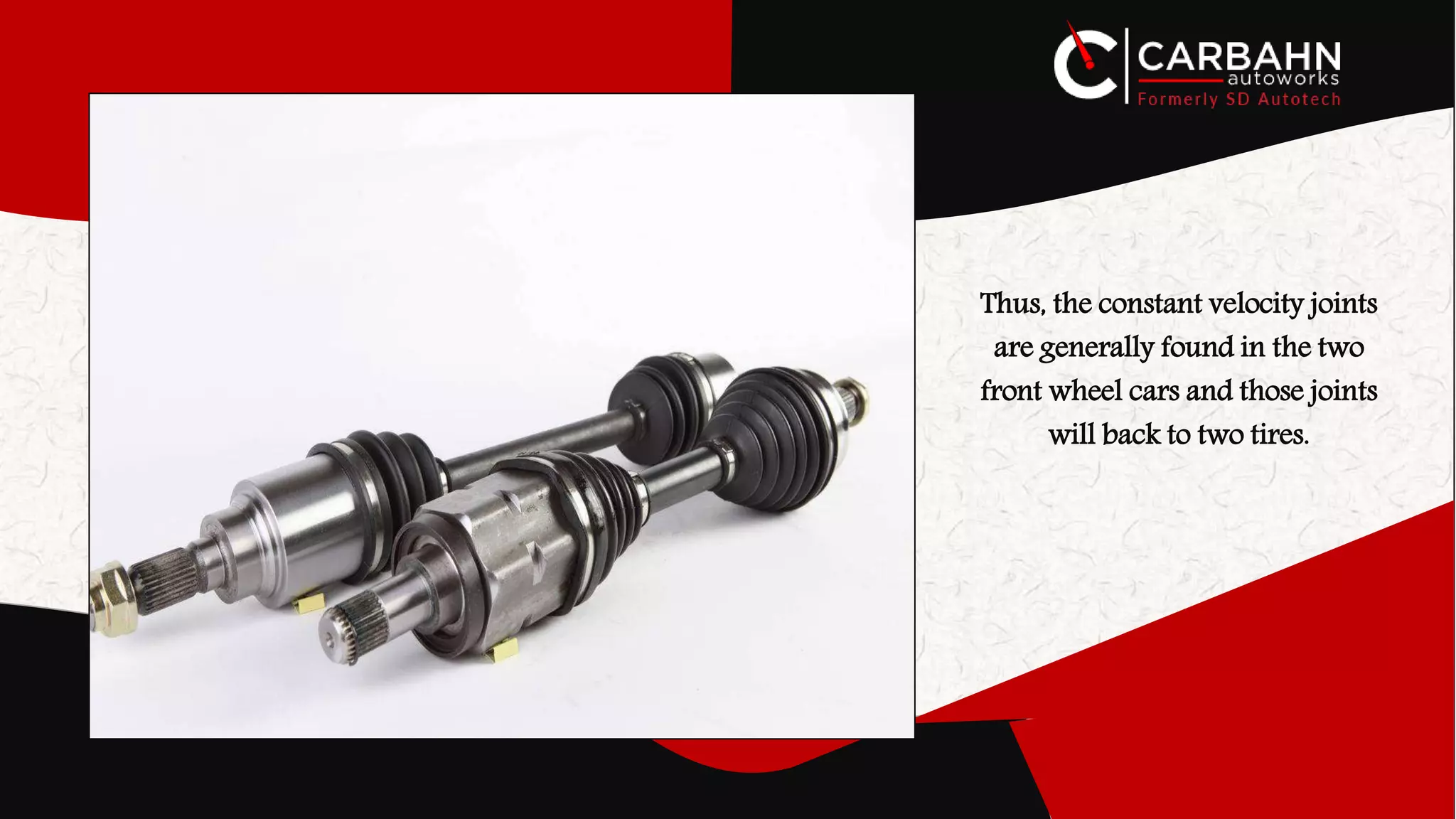
Introduction to CV joints, their function in power transfer, and common usage in front and rear wheel drive cars.
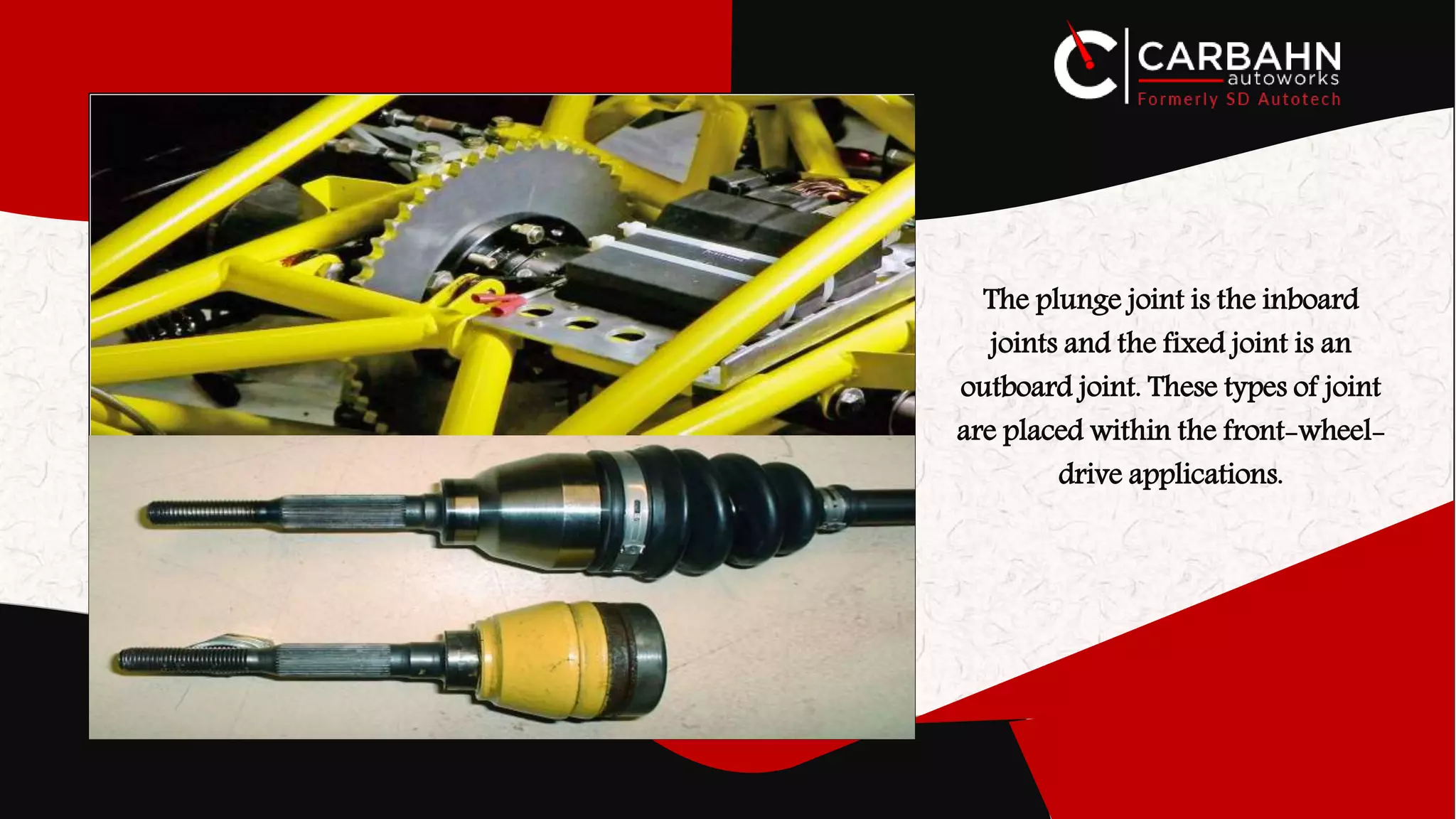
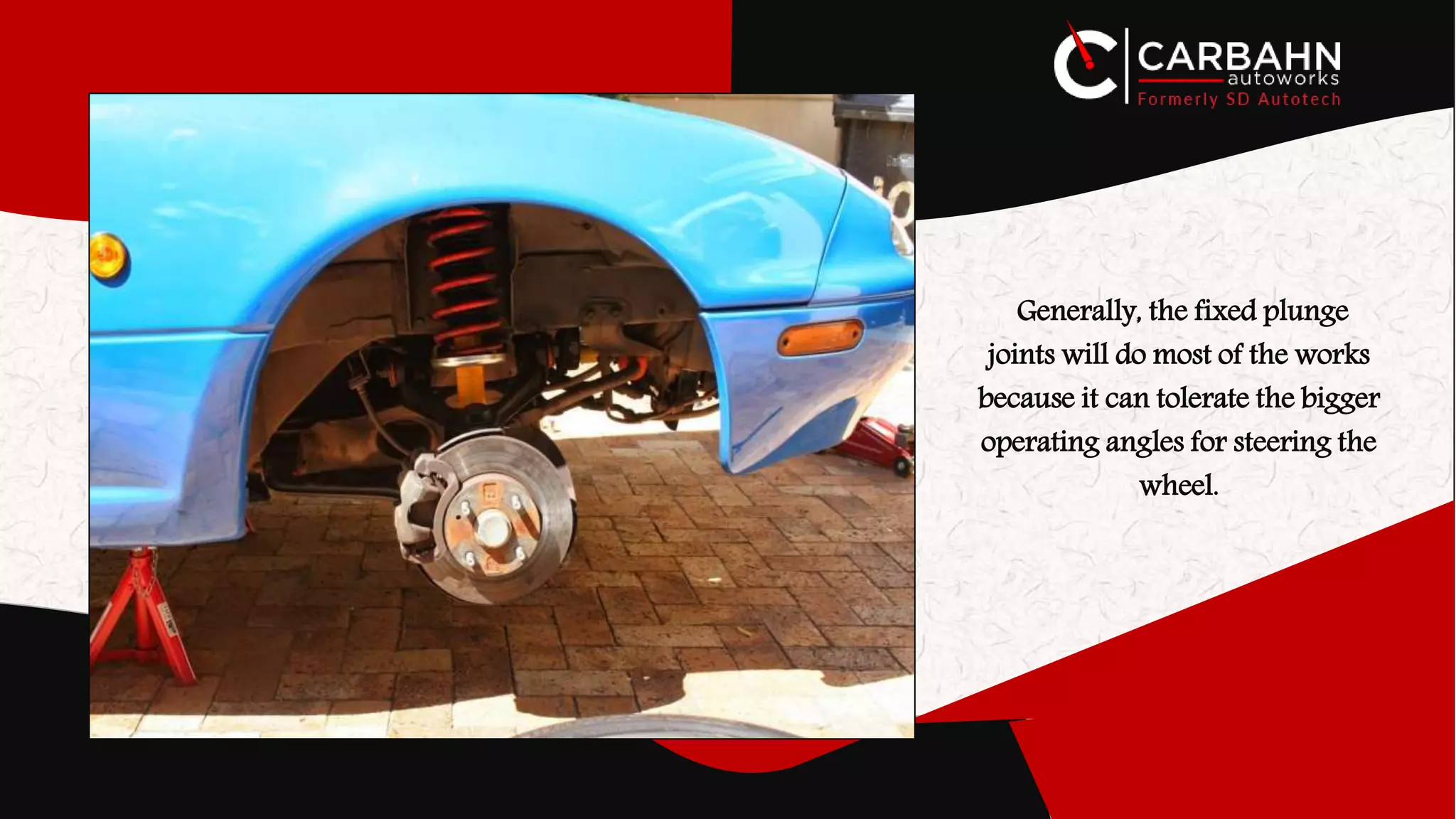
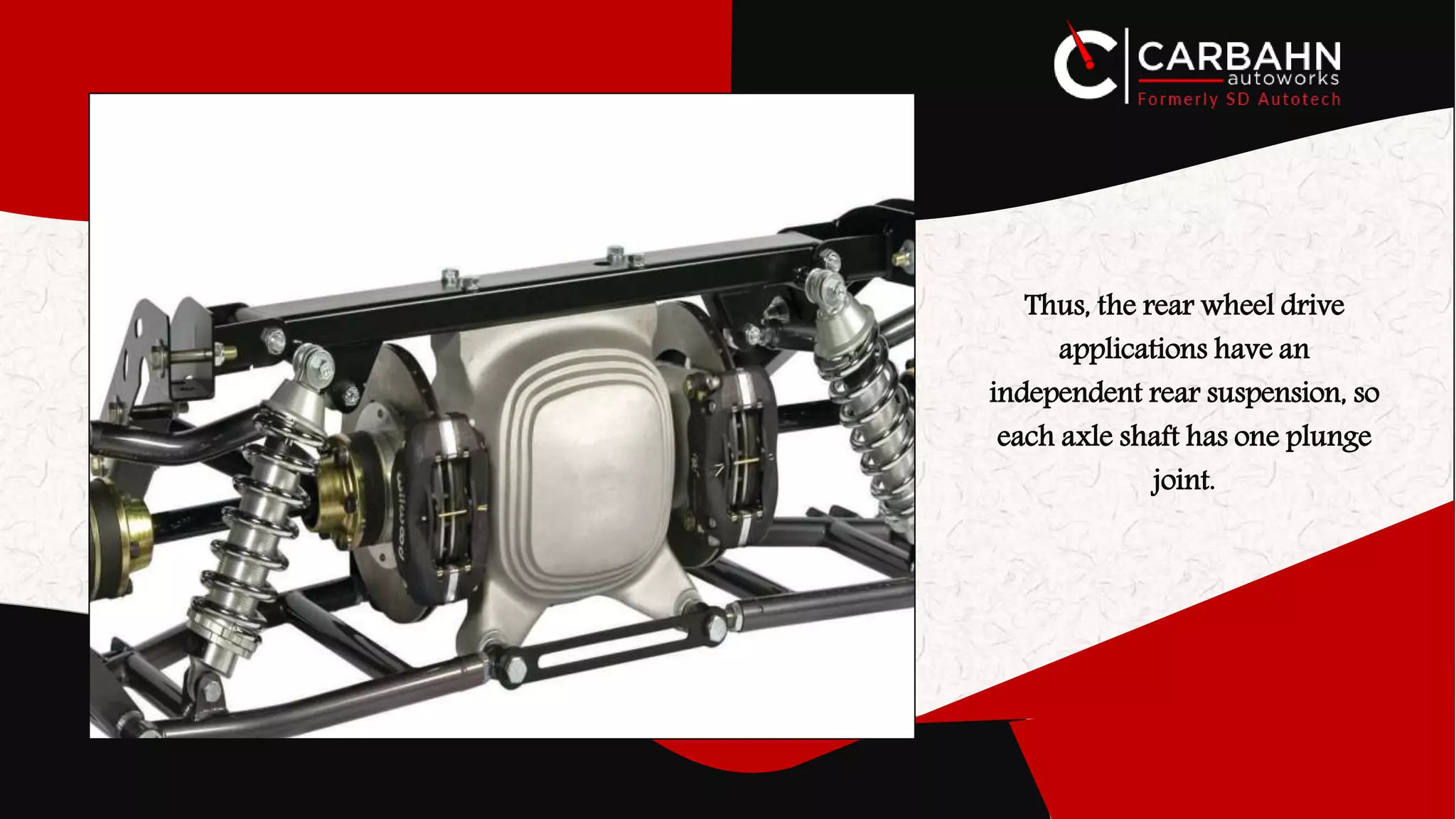
Different types of CV joints including fixed and plunge joints, their applications in front and rear wheel drive systems.
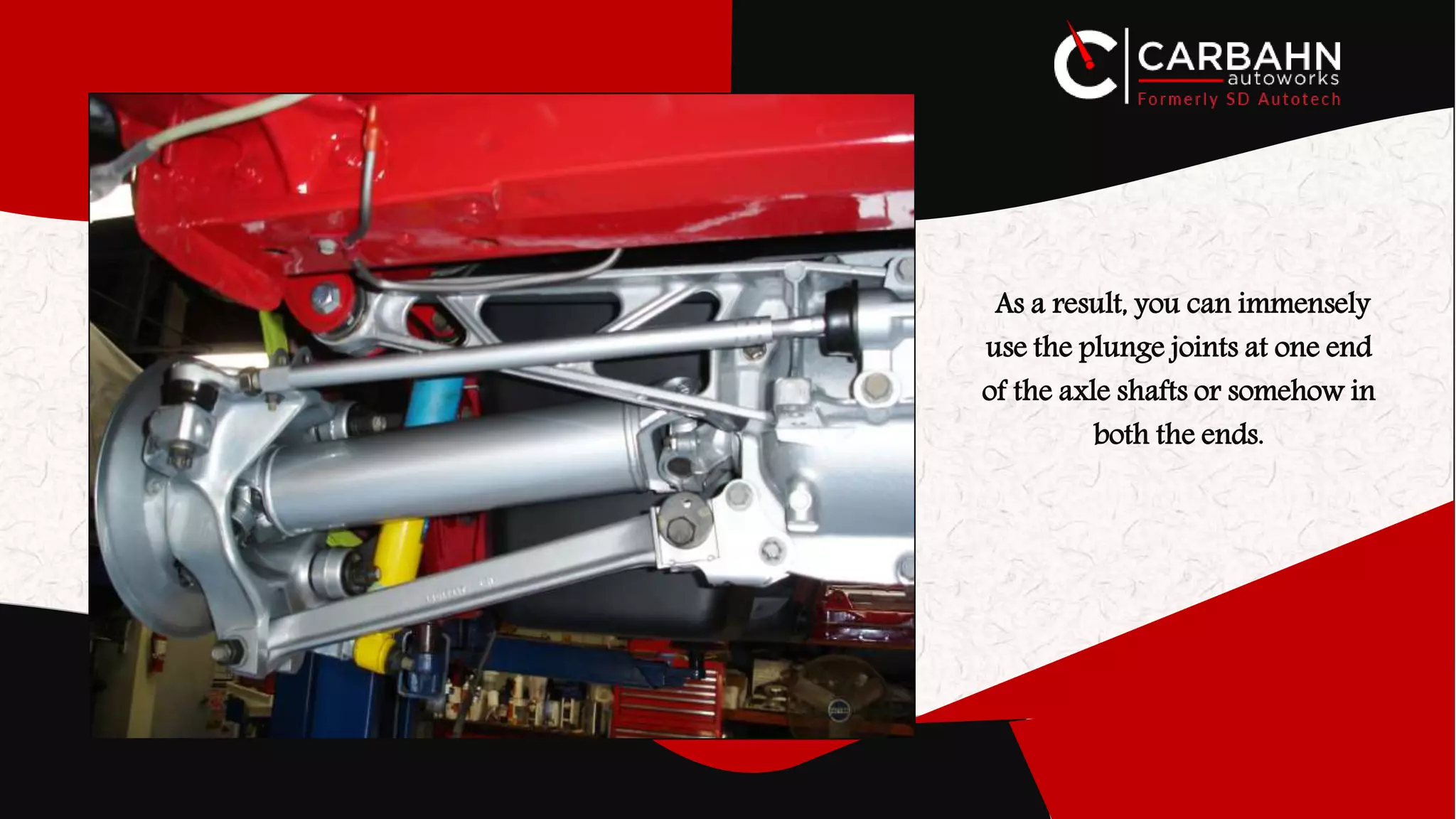
Details on the application of plunge joints on axle shafts.
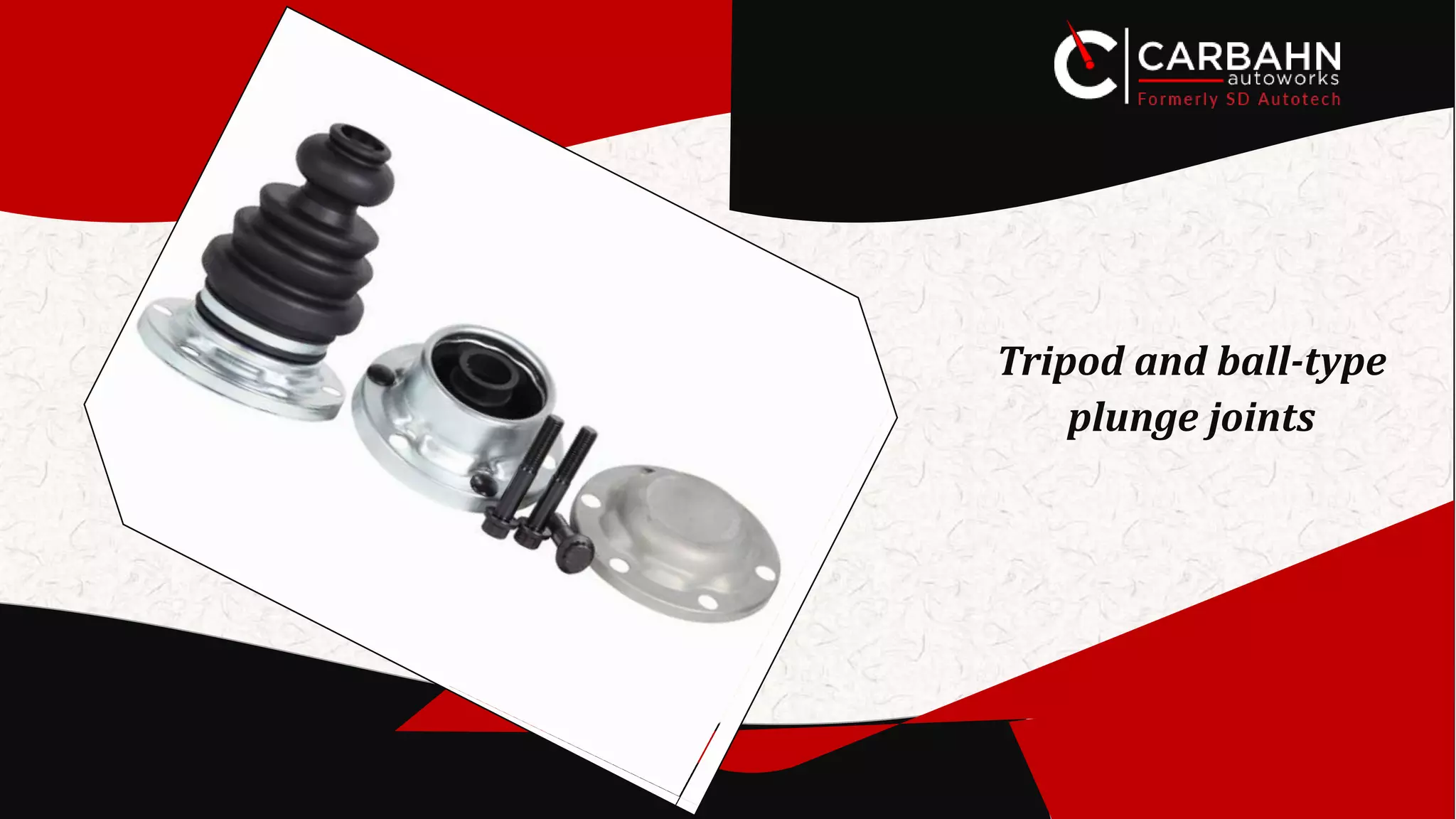
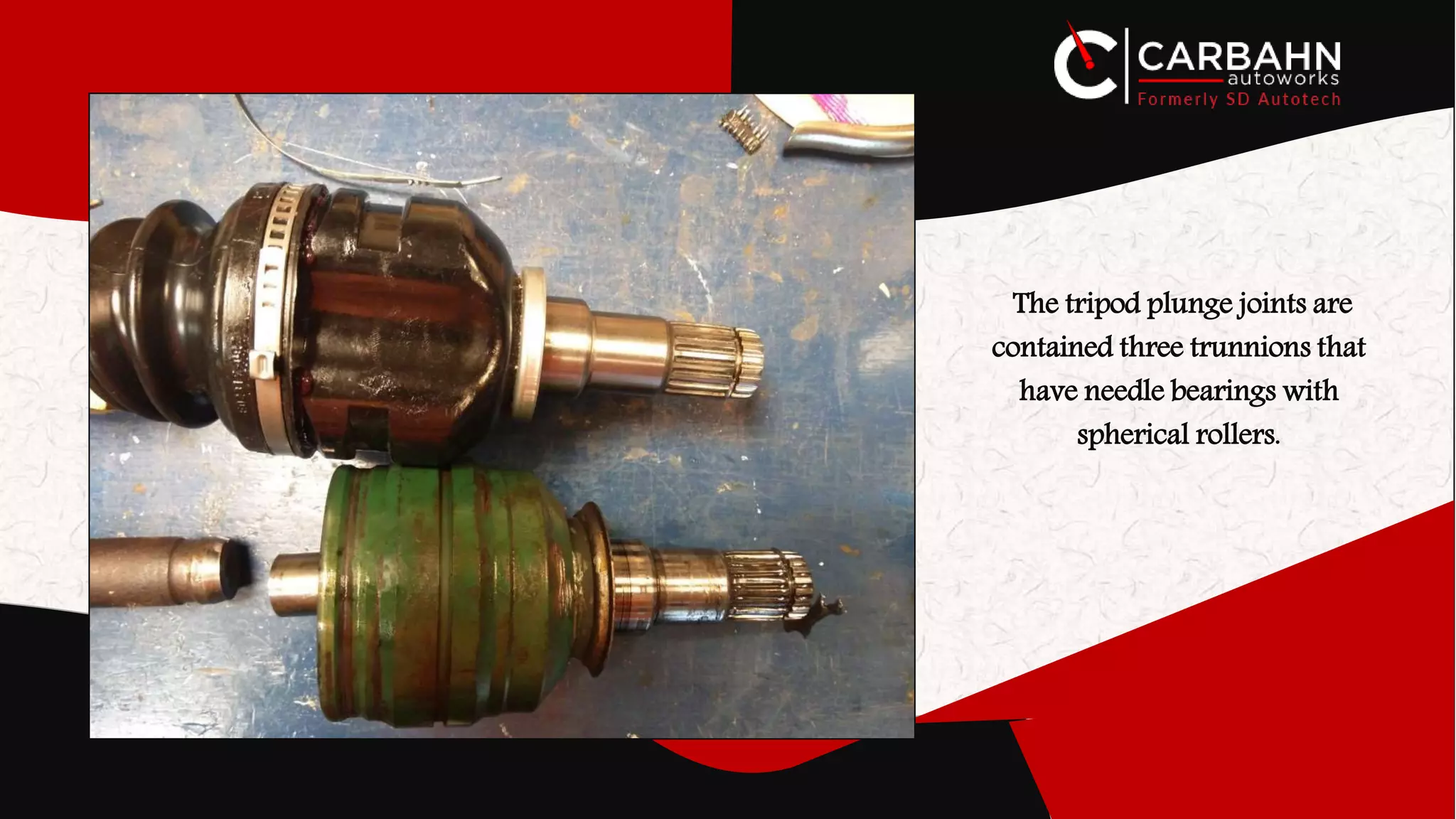
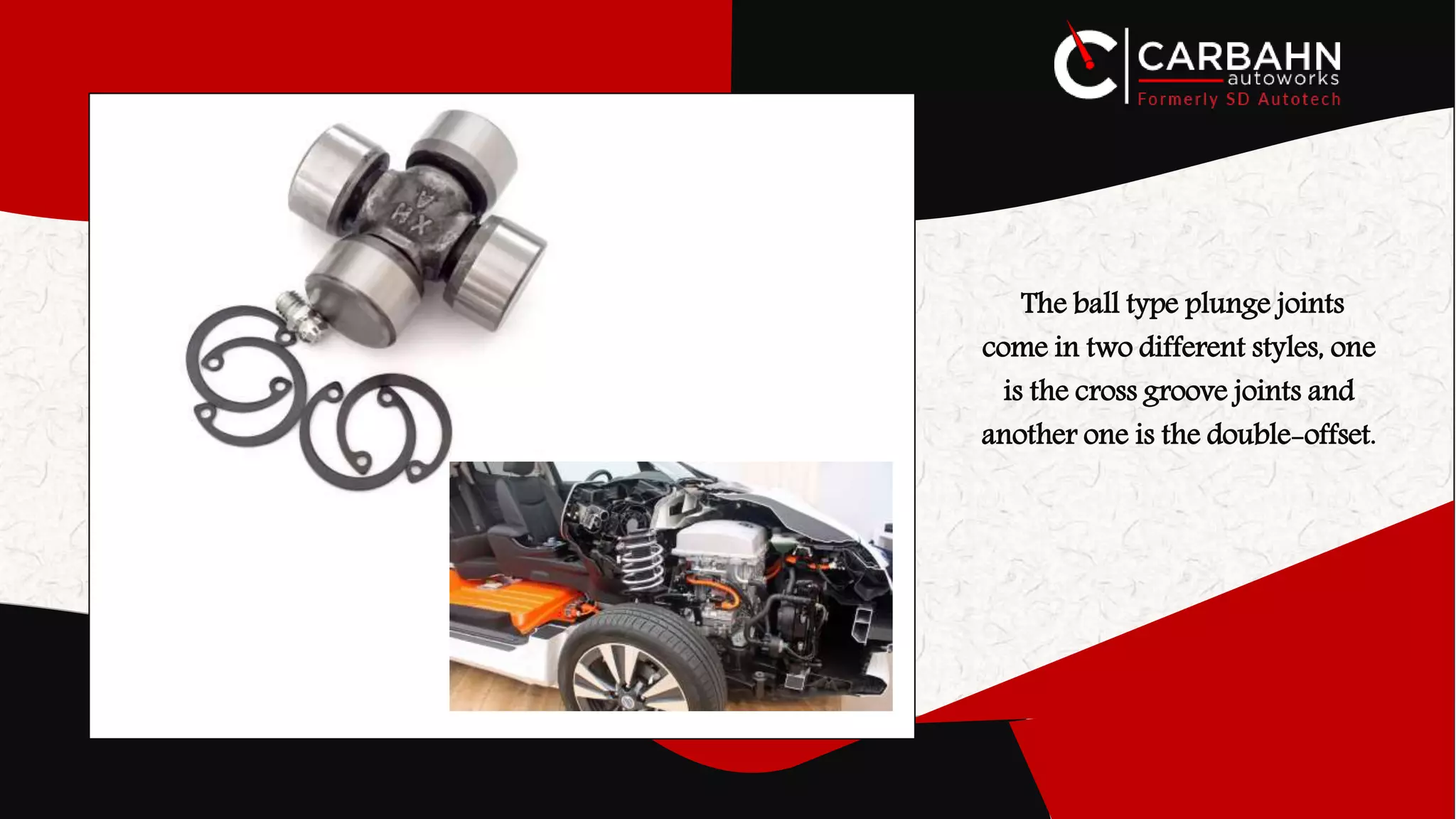
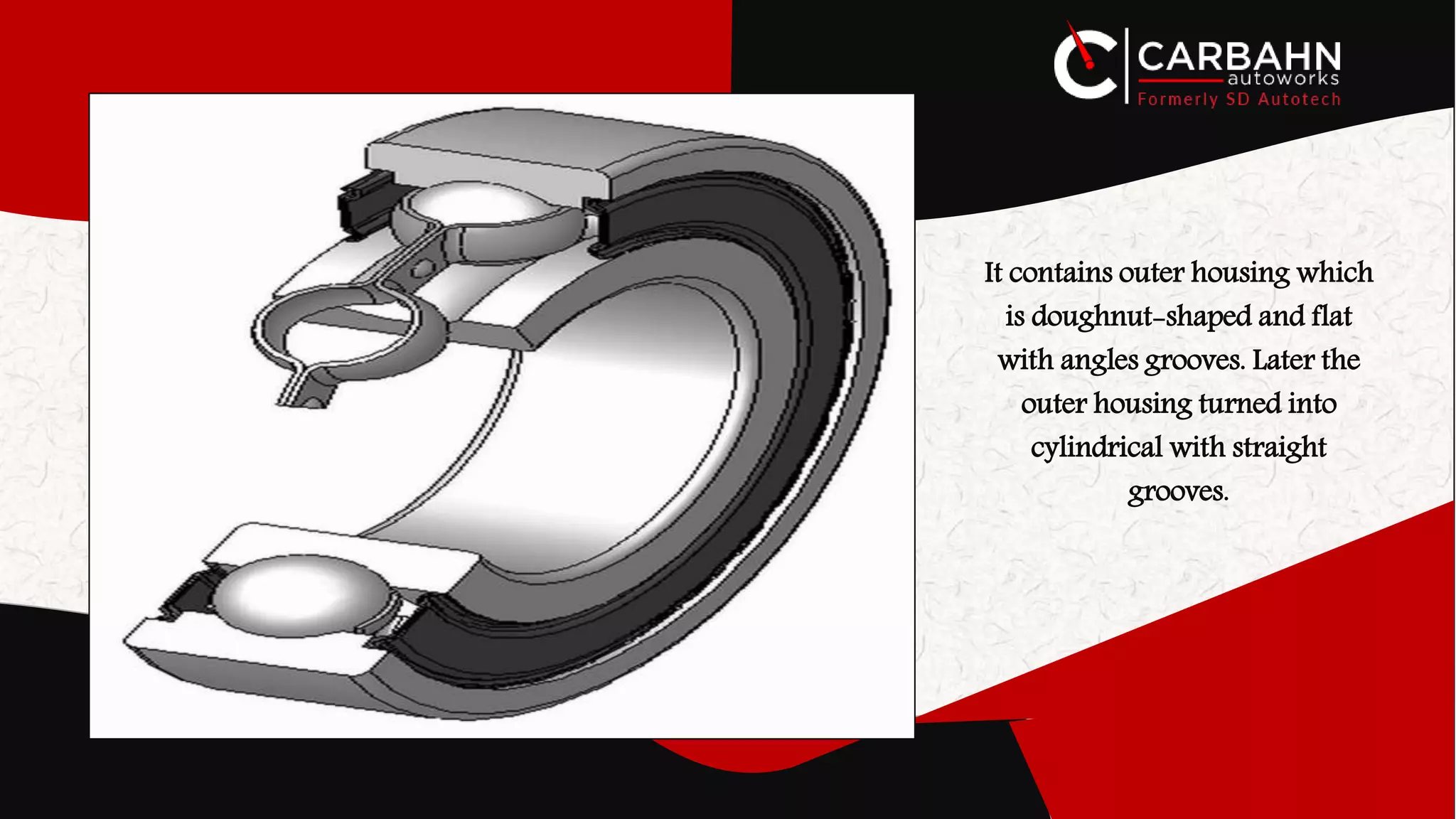
Overview of tripod and ball-type plunge joints, their structure, and operational characteristics.
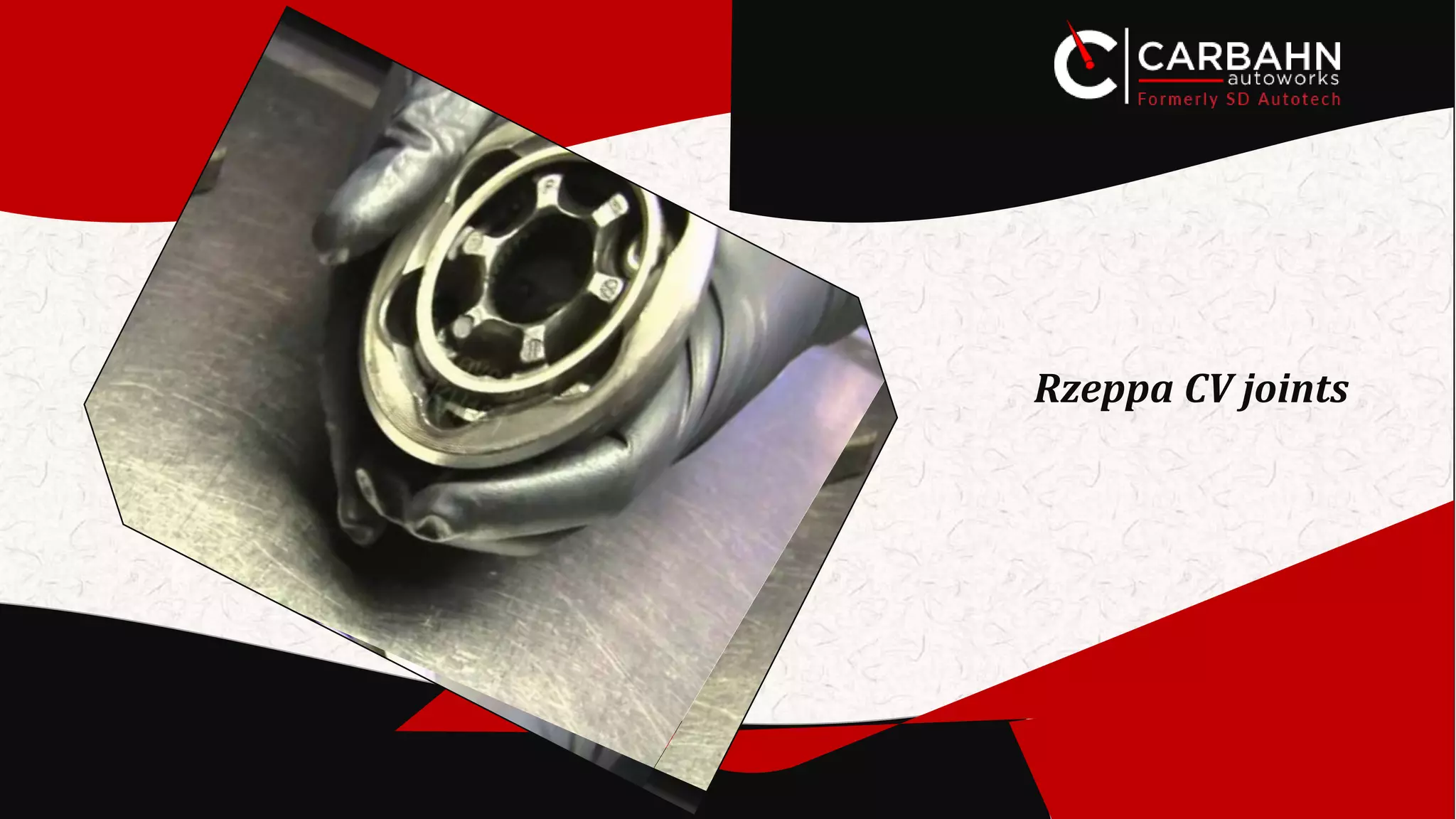
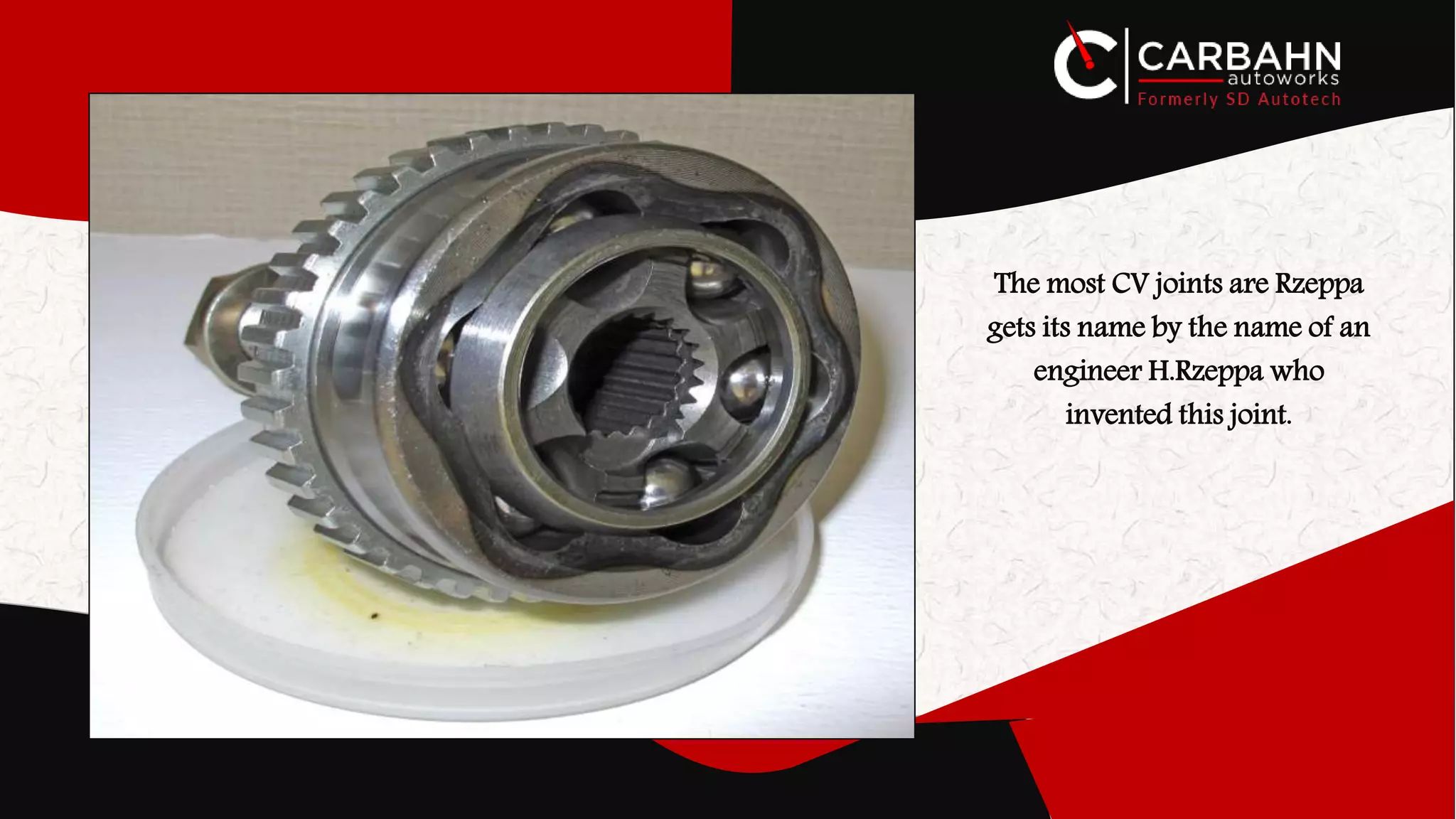
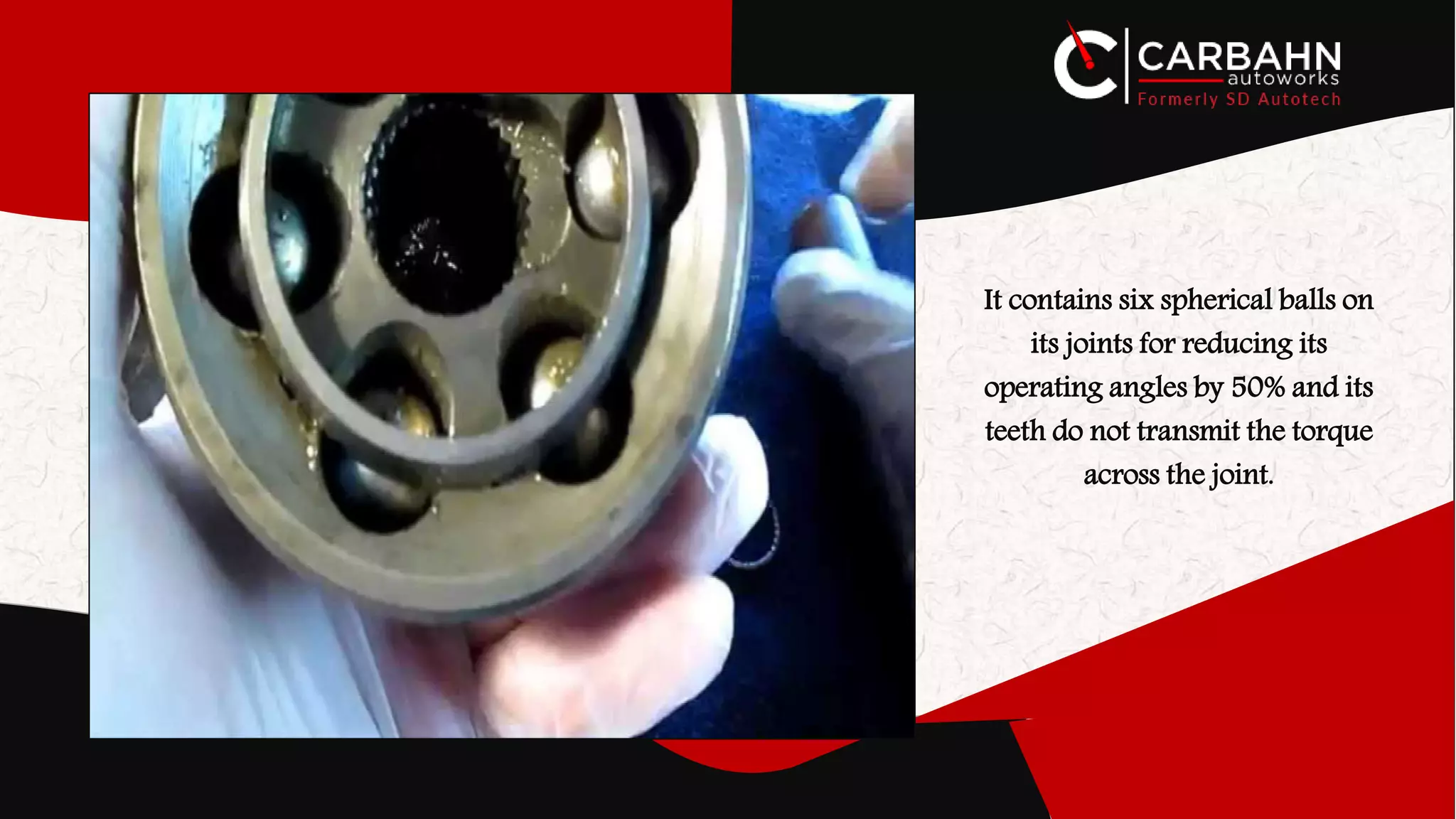
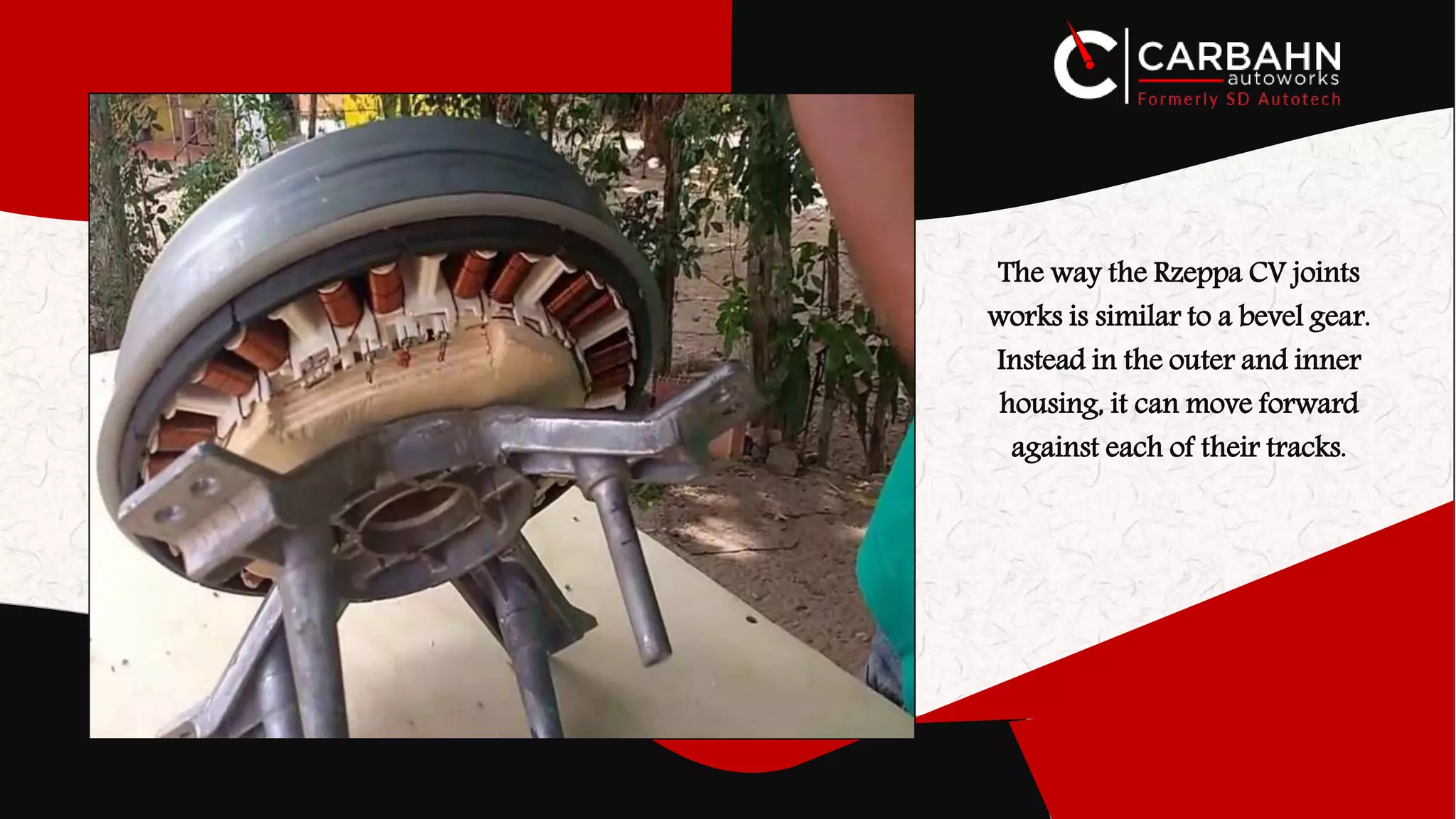
Description of Rzeppa CV joints, their design, function, and mechanism of operation.
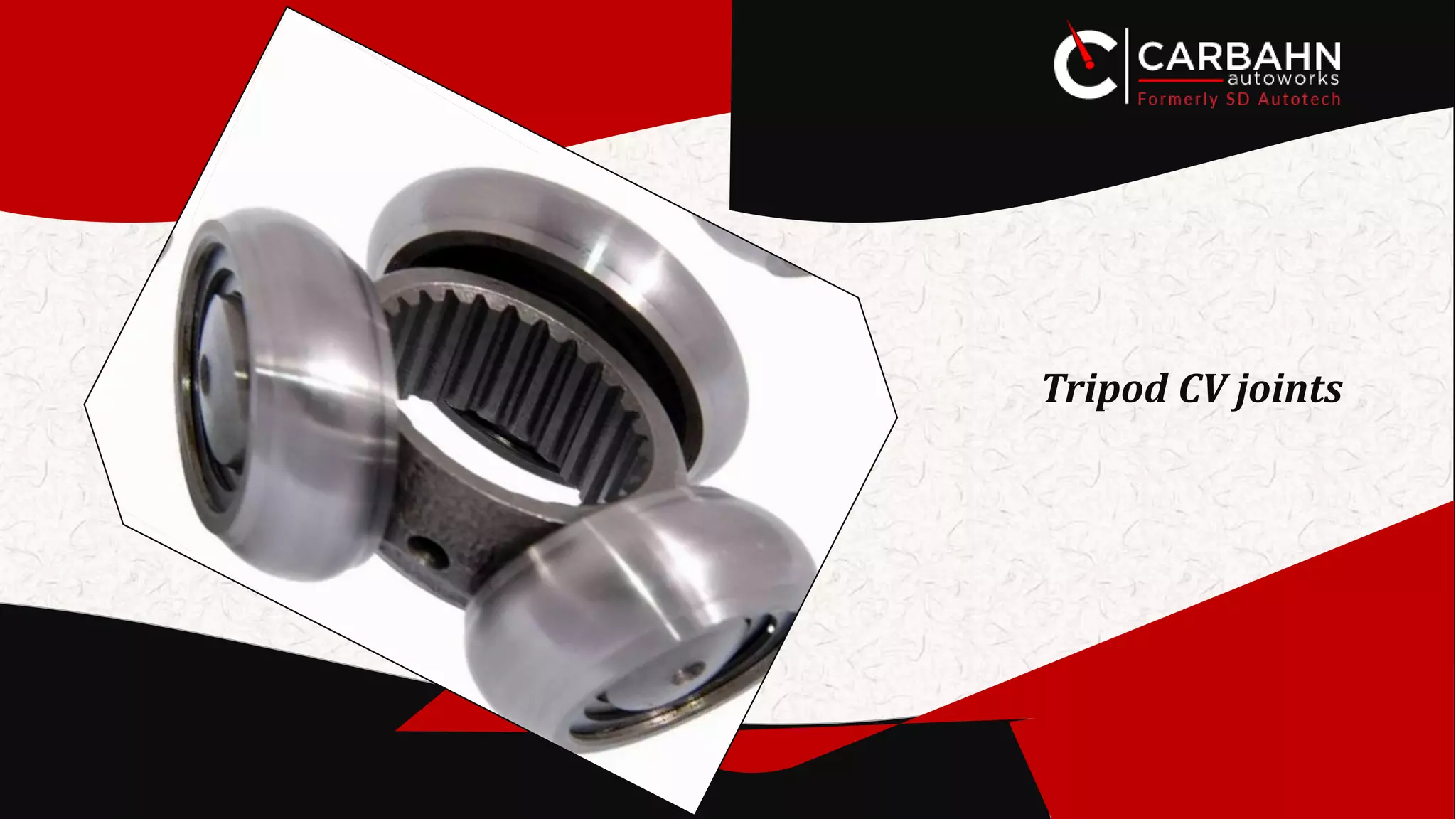
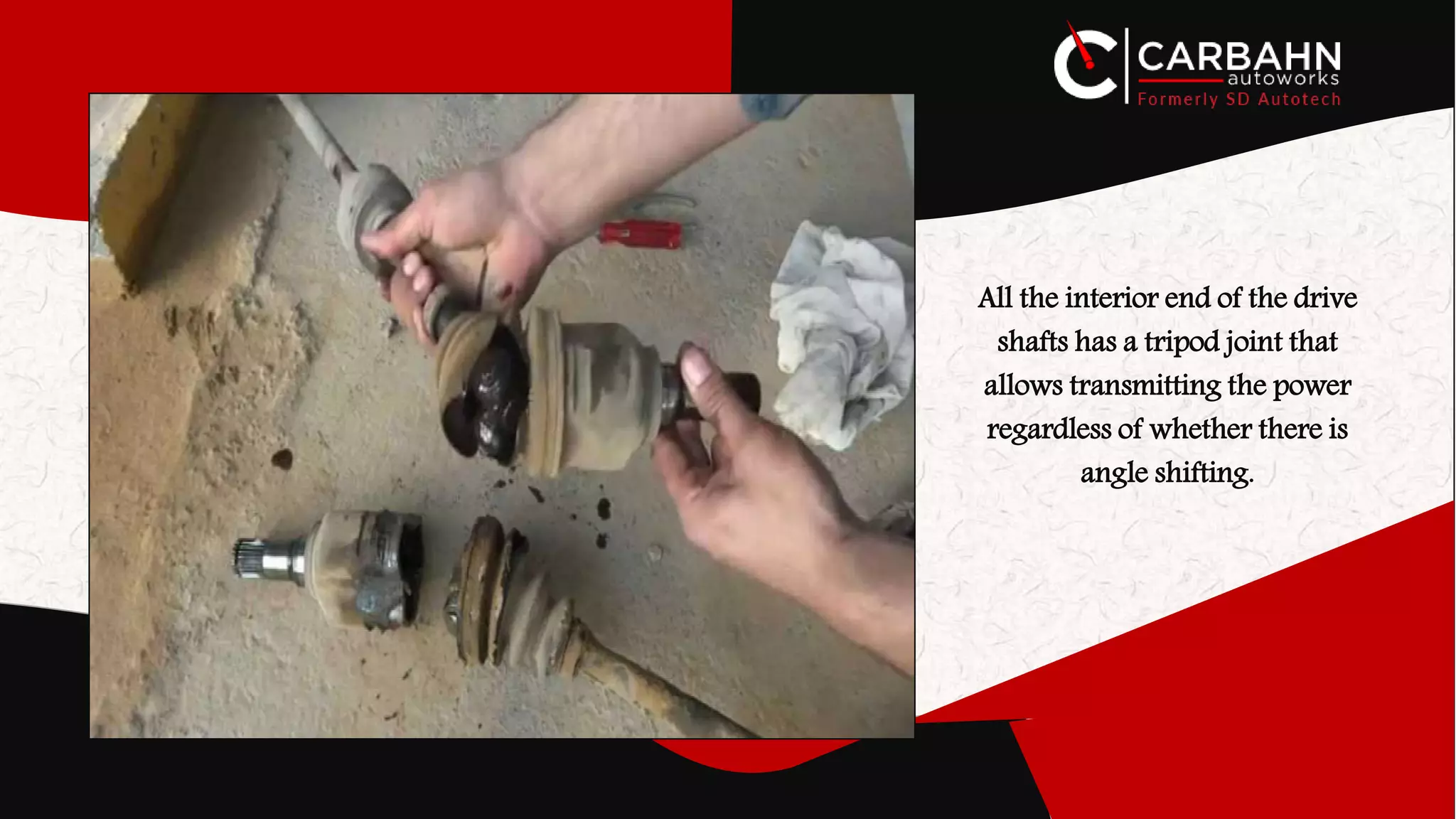
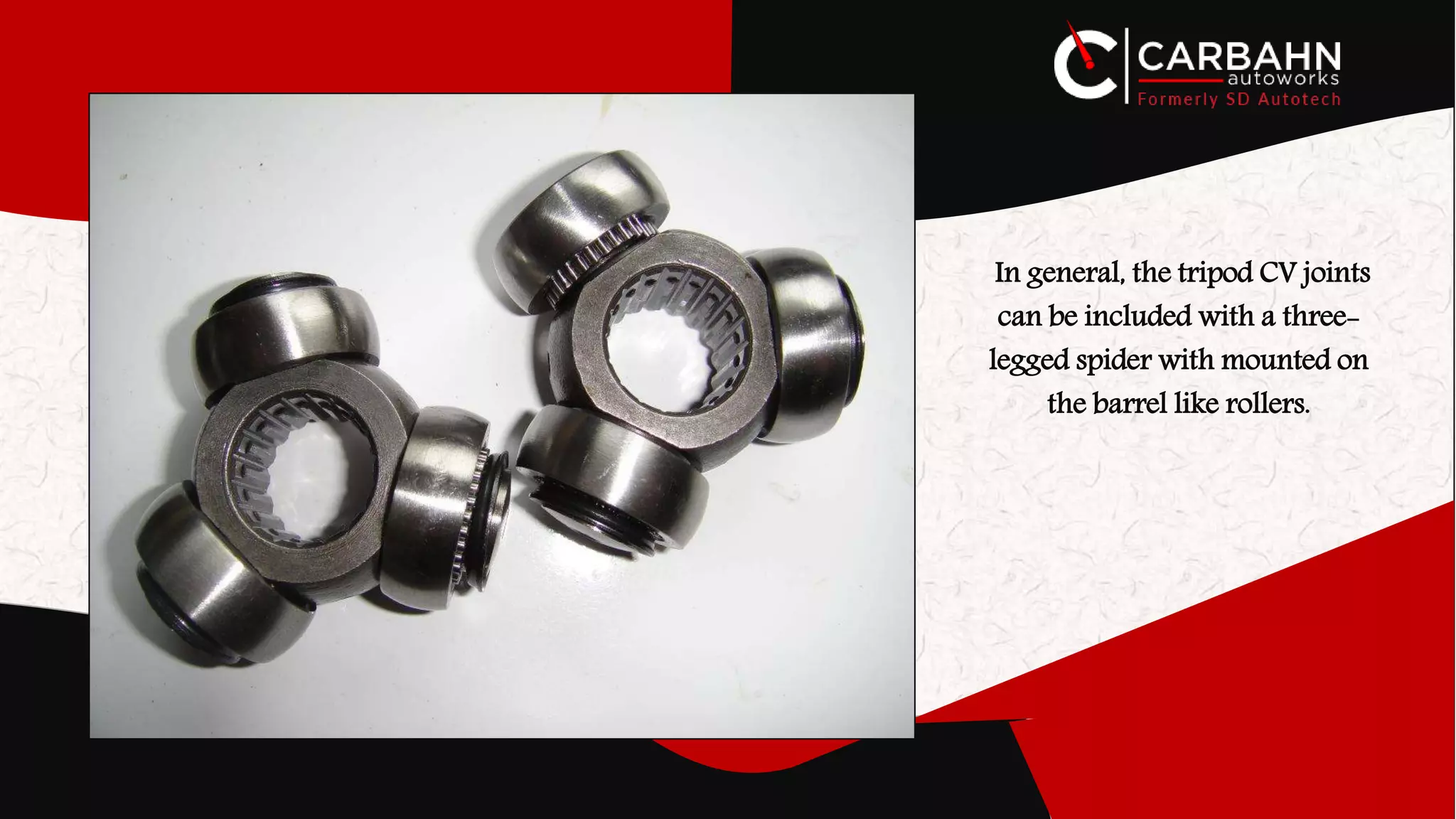
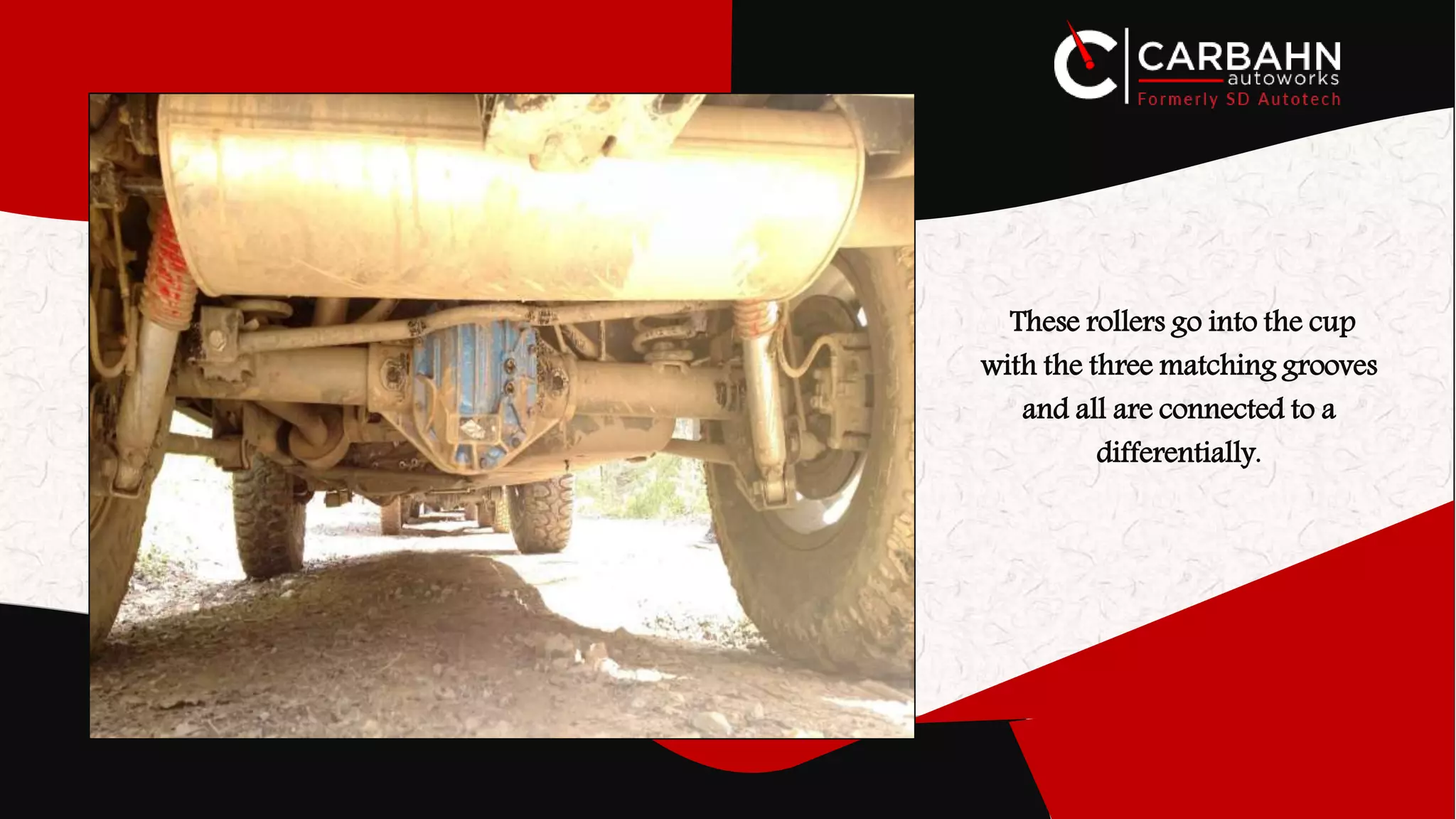
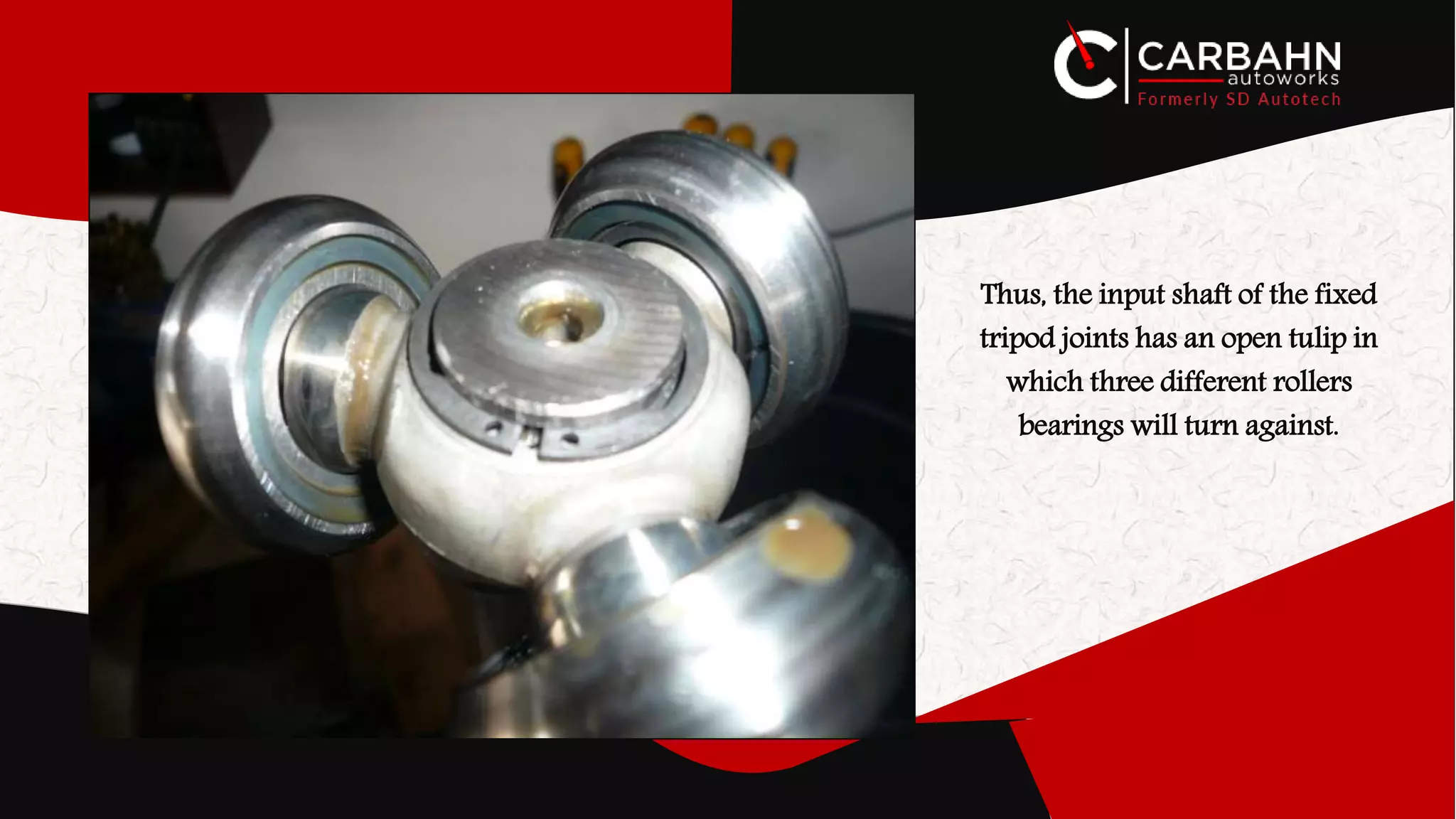
Description of tripod CV joints, their structure, and how they transmit power at varying angles.
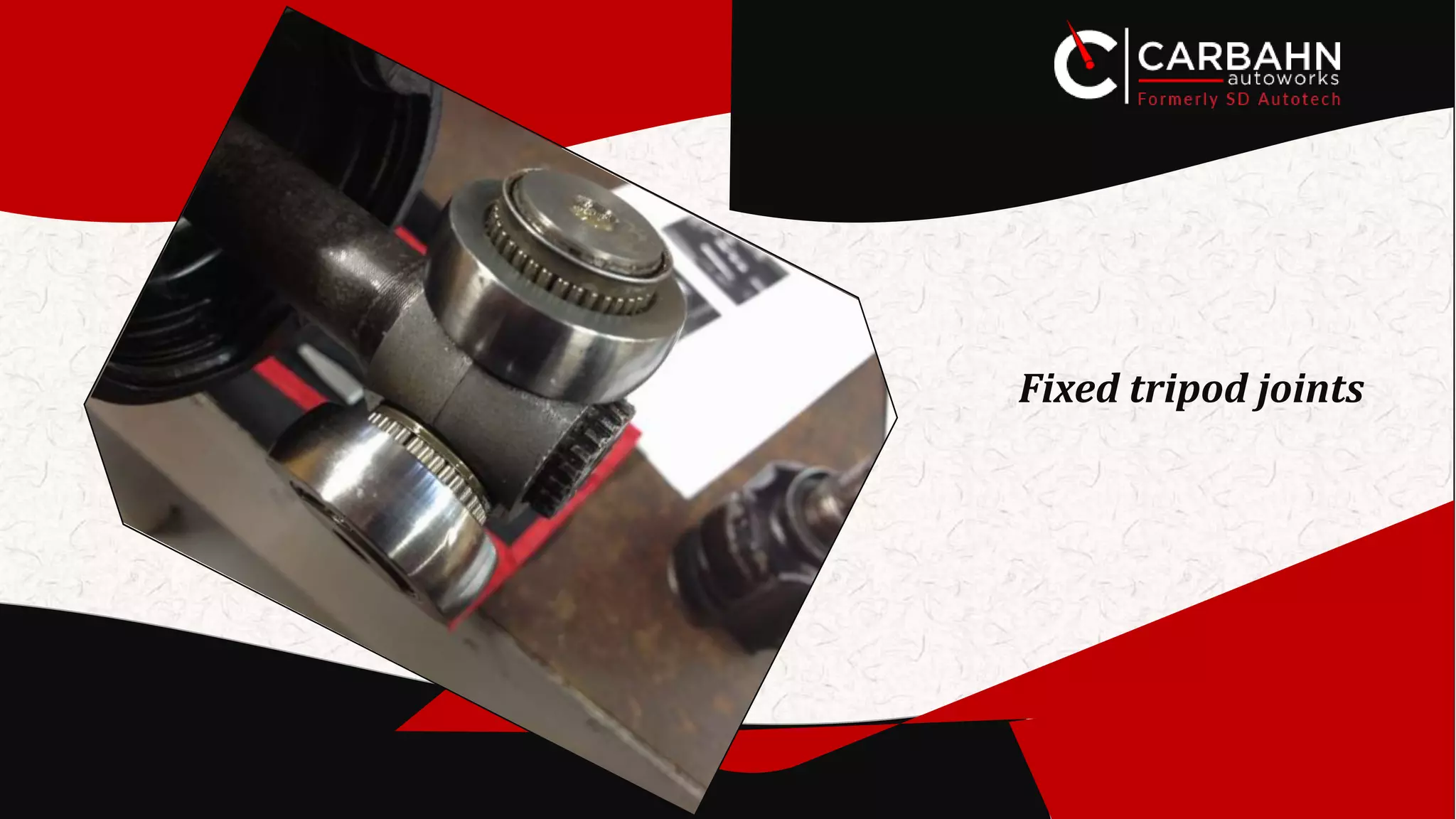
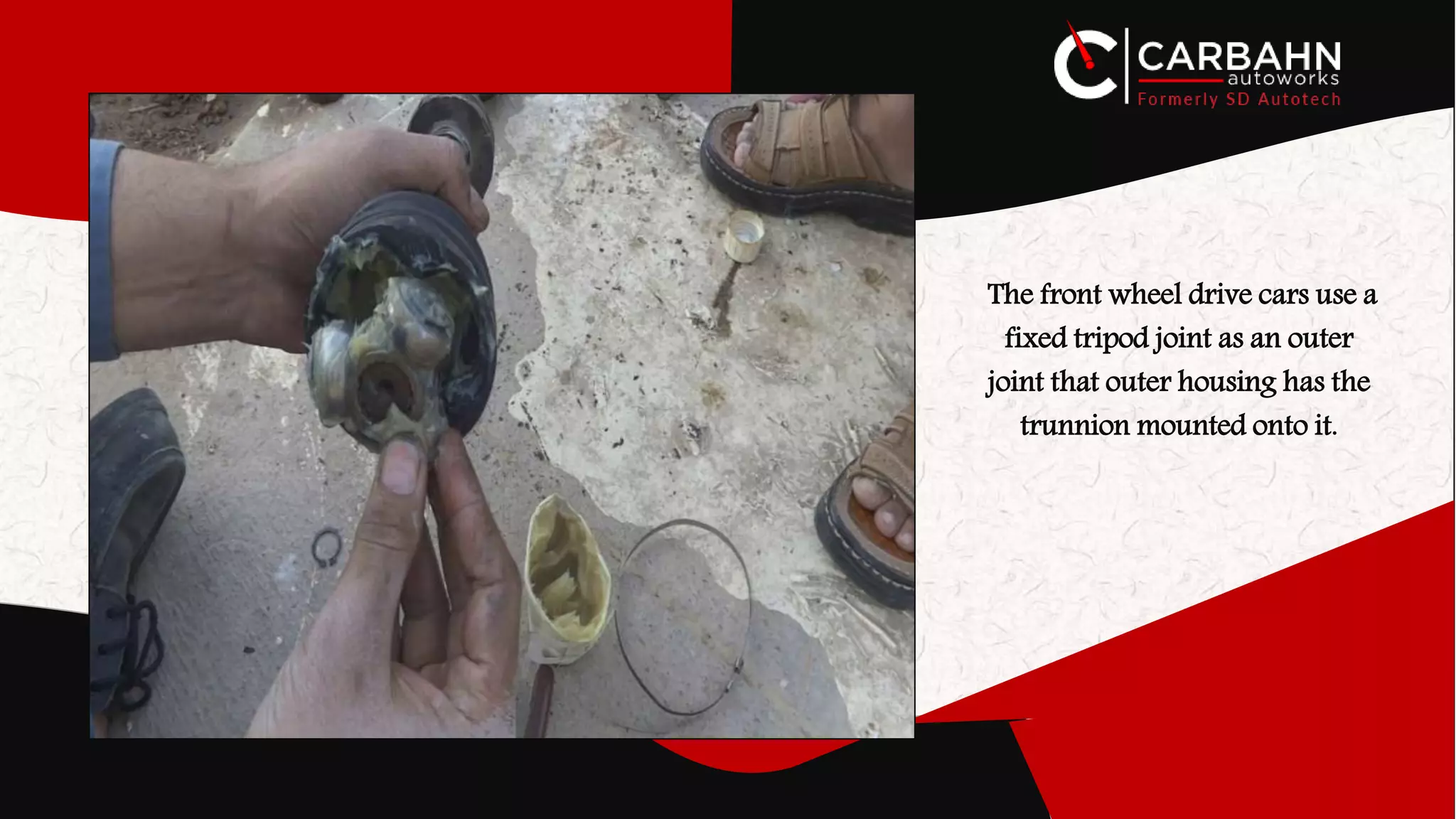
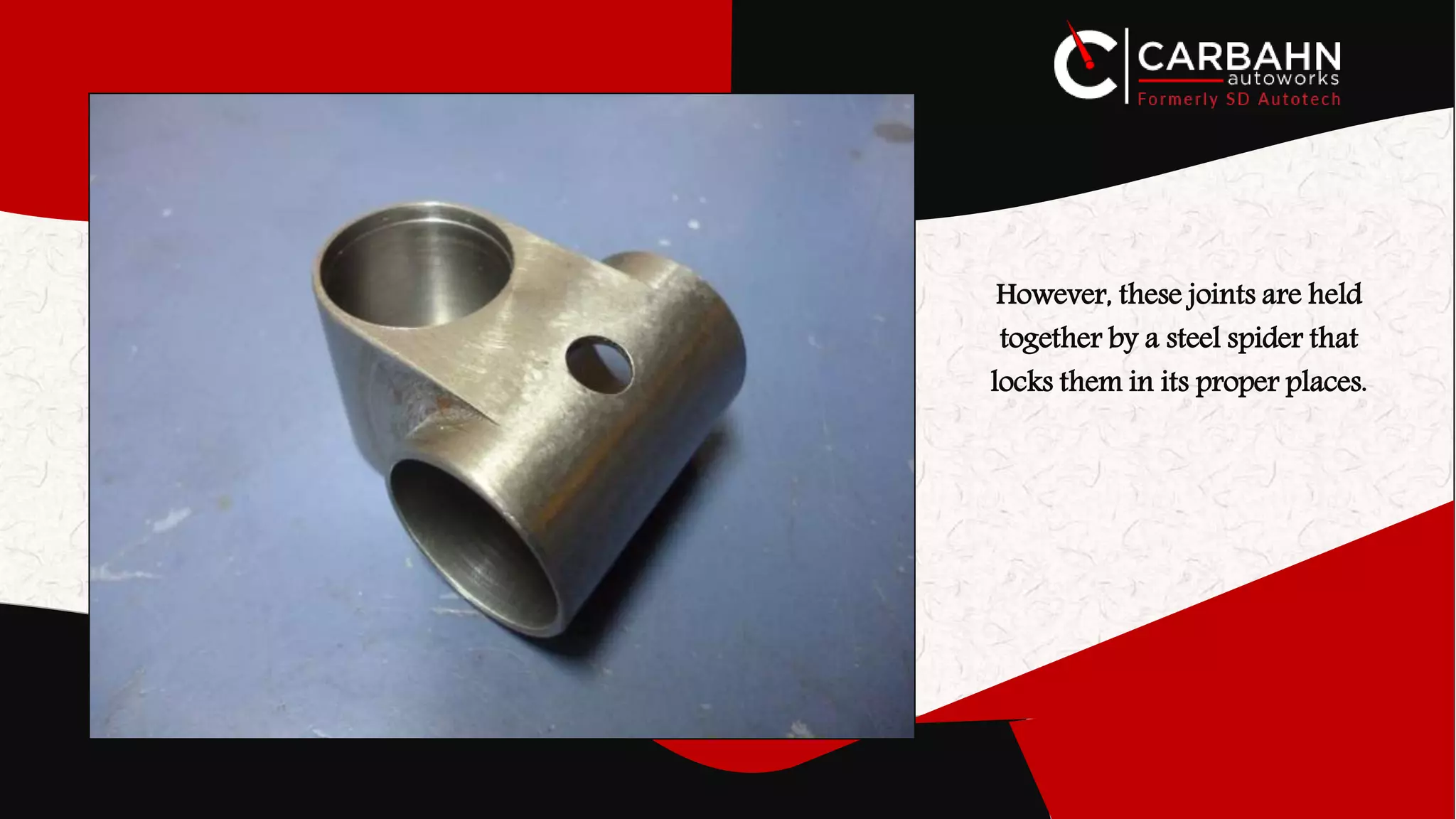
Details on fixed tripod joints used in front-wheel drive cars, their assembly, and operation.
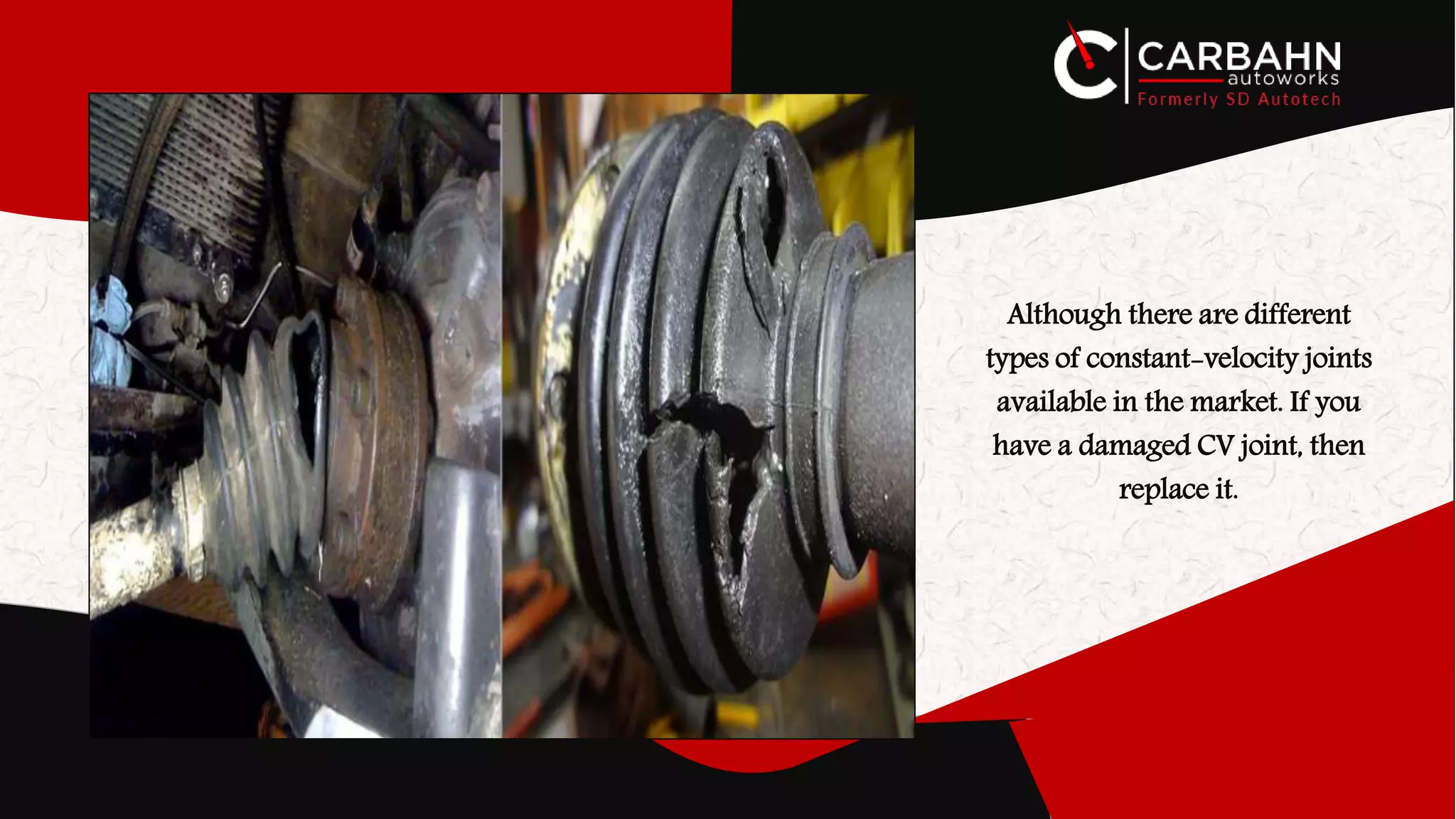
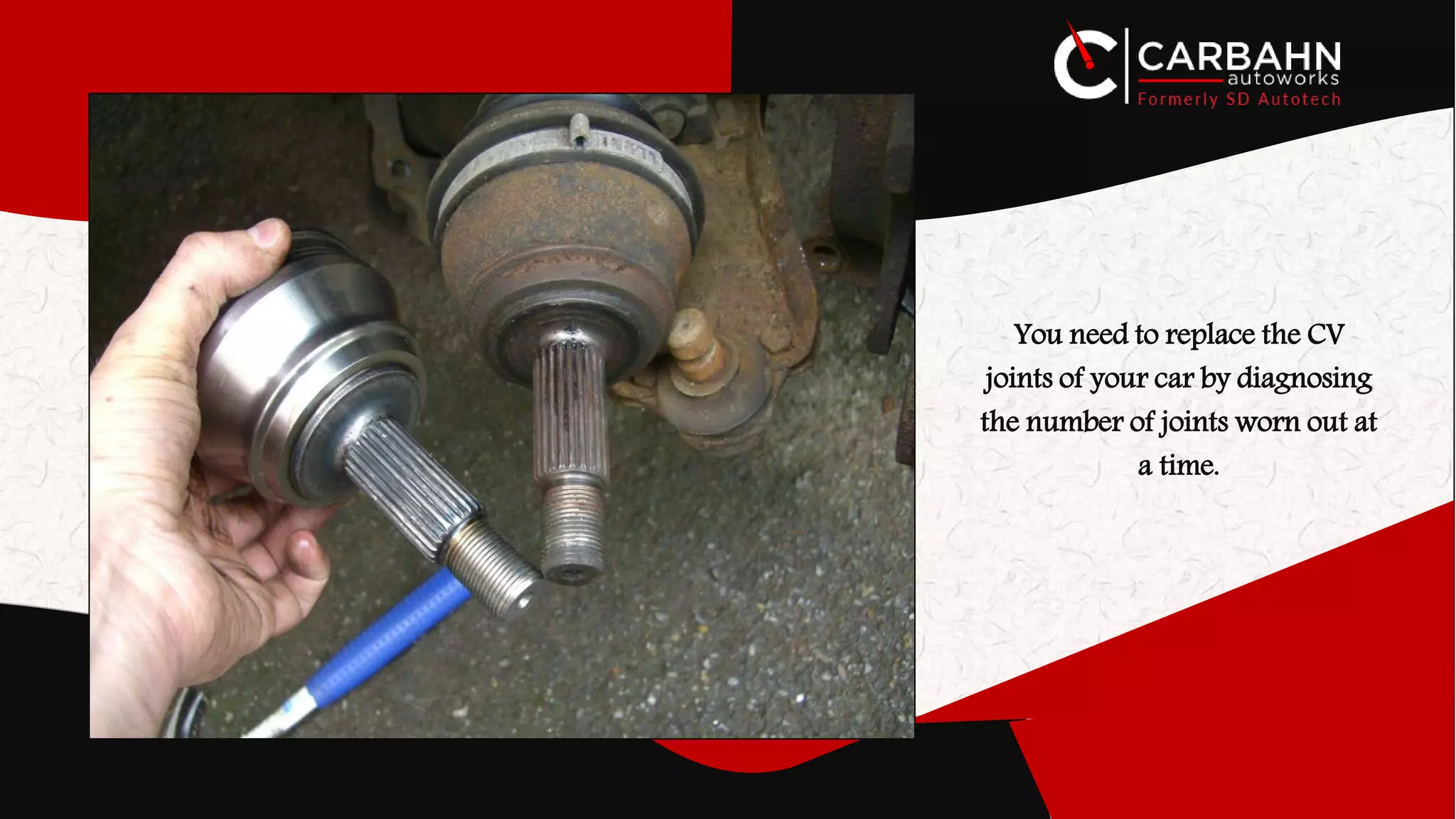
Summary on types of CV joints, need for replacement, and importance of inspection.


![1. SIH2025-IDEA-Presentation-Format[1].pptx](https://cdn.slidesharecdn.com/ss_thumbnails/1-251204091914-b1bb69d5-thumbnail.jpg?width=640&height=640&fit=bounds)


