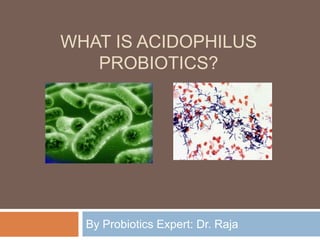
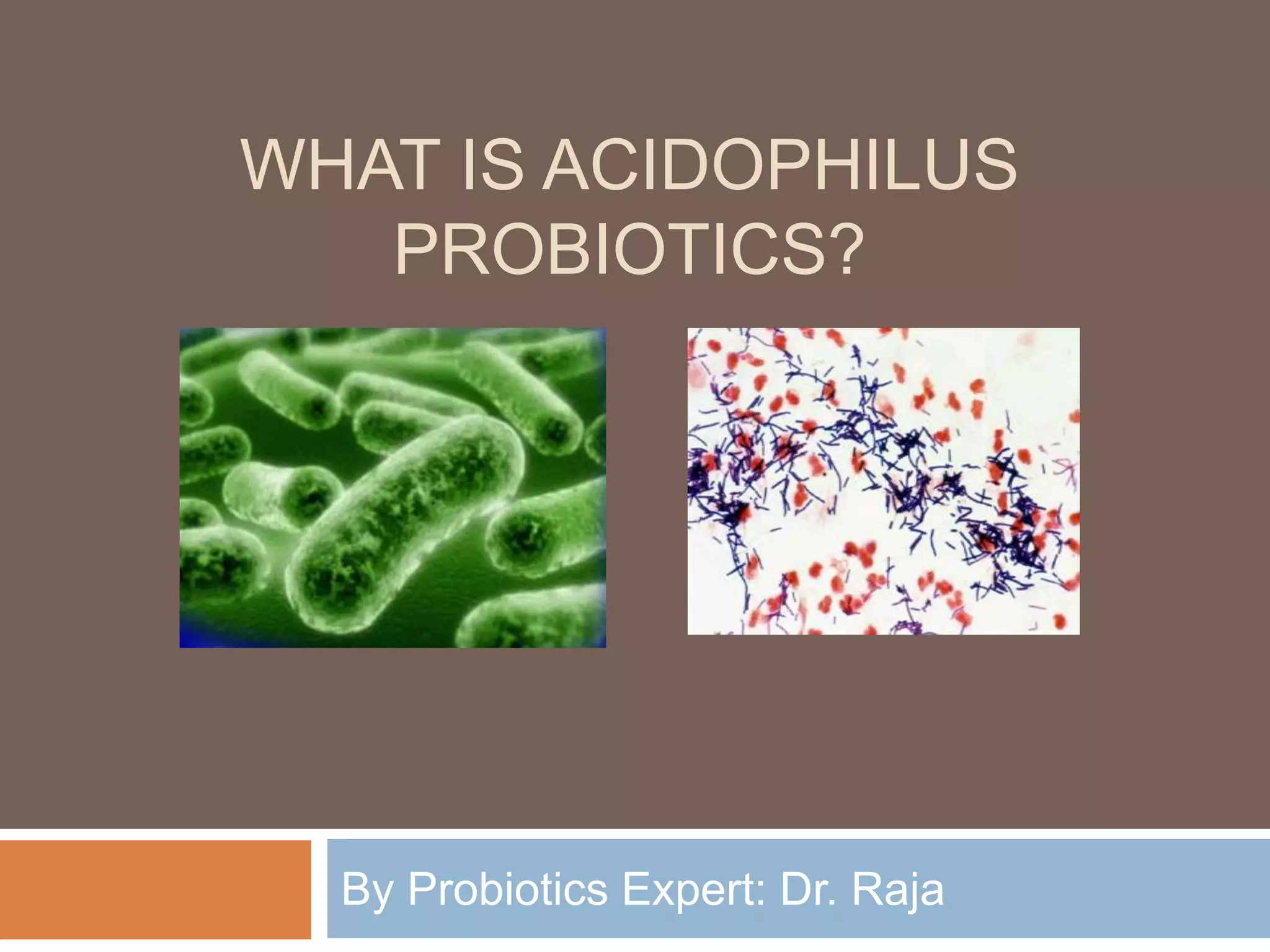
WHAT IS ACIDOPHILUS
PROBIOTICS?
By Probiotics Expert: Dr. Raja
What is acidophilus probiotics?
 Acidophilus probiotics is a known strain of friendly
bacteria (probiotics) that is commonly found in the
intestines and vagina.
 Acidophilus perform its functions in variety of
ways. In the intestines, acidophilus breaks down
food ingested. Then, as a by-product of this
process, substances such as hydrogen peroxide
and lactic acid provides an unfavourable
environment for the bad bacteria.
 Another way is by balancing the intestinal
environment when taking antibiotics. Through this,
stomach upset can be prevented because the
healthy or good bacteria are restored.
Dietary Sources of acidophilus
probiotics
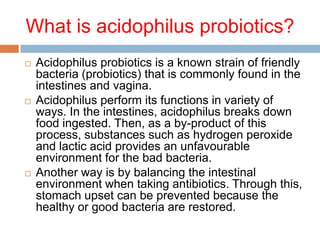
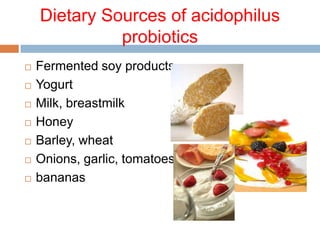
 Fermented soy products
 Yogurt
 Milk, breastmilk
 Honey
 Barley, wheat
 Onions, garlic, tomatoes
 bananas
Therapeutic uses of acidophilus
probiotics
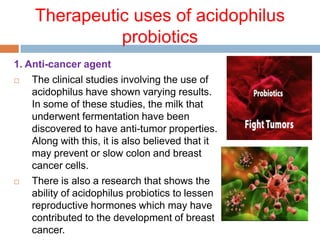
1. Anti-cancer agent
 The clinical studies involving the use of
acidophilus have shown varying results.
In some of these studies, the milk that
underwent fermentation have been
discovered to have anti-tumor properties.
Along with this, it is also believed that it
may prevent or slow colon and breast
cancer cells.
 There is also a research that shows the
ability of acidophilus probiotics to lessen
reproductive hormones which may have
contributed to the development of breast
cancer.
Therapeutic uses of acidophilus
probiotics
2. Diarrhea Prevention
 A clinical research have found out that
acidophilus can prevent and treat traveler’s
diarrhea (a diarrhea caused by contaminated
food)
 Infectious diarrhea can aid in its prevention in
children and adults.
 Acidophilus is also known to prevent and treat
diarrhea caused by antibiotics through
restoration of the good bacteria.
Therapeutic uses of acidophilus
probiotics
3. Treatment/Prevention of
Gastrointestinal diseases
 Probiotic strains such as acidophilus
is known to aid in digestion and
absorption.
 Restoration of the friendly bacteria
during the course of antibiotic
treatment
 Treatment of chronic constipation
and dyspepsia
 Symptoms treatment of
inflammatory bowel disease
(Crohn’s disease and ulcerative
colitis) and irritable bowel disease.
Therapeutic uses of acidophilus
probiotics
4. Improvement of immune system
 There have been trials which aimed to use
acidophilus for asthma. Unfortunately the study
failed to find significance in its use. Though that’s
the case, acidophilus is still used for treating
eczemas in children.
 Studies also show effectiveness of this strain for
treating colds, influenza, and allergic rhinitis.
 In some studies, acidophilus is utilized for treating
antibiotic-resistant bacteria.
 Acidophilus is also proposed as a form of
treatment for hypersensitivity syndrome.
Therapeutic uses of acidophilus
probiotics
5. Prevention and Treatment of Vaginal
Infections
 Acidophilus probiotics are widely used for
treatment of vaginal infections (bacterial
vaginosis, vaginal yeast infection)
6. Urinary System Health
 Studies also show that acidophilus can help in
treating and preventing urinary tract infections.
Therapeutic uses of acidophilus
probiotics
7. Other uses of acidophilus probiotics include:
 Acidophilus is associated as a possible form of
treatment for liver diseases.
 Some studies show improvement of sore and
wound healing with the use of this probiotics
strain.
 There is a small study that claims better sleep
quality with acidophilus.
 It is also used for prevention of dental caries.
 Aside from that, acidophilus is a proposed
treatment for high levels of bad cholesterol.
Possible interactions of acidophilus
probiotics
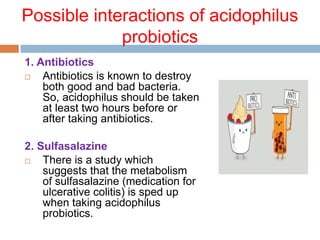
1. Antibiotics
 Antibiotics is known to destroy
both good and bad bacteria.
So, acidophilus should be taken
at least two hours before or
after taking antibiotics.
2. Sulfasalazine
 There is a study which
suggests that the metabolism
of sulfasalazine (medication for
ulcerative colitis) is sped up
when taking acidophilus
probiotics.
Precautions in taking acidophilus
probiotics
 Generally, probiotics do not cause any side
effects. However, in some instances, gas,
diarrhea, and upset stomach may result with
usage of such substances.
 People who have compromised immune system
should consult a doctor prior to its use.
 Those who have artificial heart valves are not
advised to take acidophilus probiotics due to a
small chance of getting bacterial infection.
 There is also a small study which have found out
that the use of acidophilus may be harmful for
those who have severe acute pancreatitis.
My Favorite Probiotic
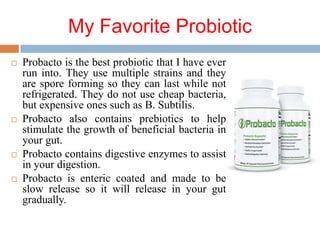
 Probacto is the best probiotic that I have ever
run into. They use multiple strains and they
are spore forming so they can last while not
refrigerated. They do not use cheap bacteria,
but expensive ones such as B. Subtilis.
 Probacto also contains prebiotics to help
stimulate the growth of beneficial bacteria in
your gut.
 Probacto contains digestive enzymes to assist
in your digestion.
 Probacto is enteric coated and made to be
slow release so it will release in your gut
gradually.
Conclusion
 The use of acidophilus probiotics have led to
the provision of numerous therapeutic effects.
These are prevention and relief of some
diseases which may be difficult to treat. Due to
the advantages of probiotics, experts have
become more dedicated in discovering other
possible benefits that comes with its use.
Though there are some precautions in its use,
it still outweighs the several benefits that offers
than the very few risks that come with it.

What Are Acidophilus Probiotics

  • 1.
    WHAT IS ACIDOPHILUS PROBIOTICS? ByProbiotics Expert: Dr. Raja
  • 2.
    What is acidophilusprobiotics?  Acidophilus probiotics is a known strain of friendly bacteria (probiotics) that is commonly found in the intestines and vagina.  Acidophilus perform its functions in variety of ways. In the intestines, acidophilus breaks down food ingested. Then, as a by-product of this process, substances such as hydrogen peroxide and lactic acid provides an unfavourable environment for the bad bacteria.  Another way is by balancing the intestinal environment when taking antibiotics. Through this, stomach upset can be prevented because the healthy or good bacteria are restored.
  • 3.
    Dietary Sources ofacidophilus probiotics  Fermented soy products  Yogurt  Milk, breastmilk  Honey  Barley, wheat  Onions, garlic, tomatoes  bananas
  • 4.
    Therapeutic uses ofacidophilus probiotics 1. Anti-cancer agent  The clinical studies involving the use of acidophilus have shown varying results. In some of these studies, the milk that underwent fermentation have been discovered to have anti-tumor properties. Along with this, it is also believed that it may prevent or slow colon and breast cancer cells.  There is also a research that shows the ability of acidophilus probiotics to lessen reproductive hormones which may have contributed to the development of breast cancer.
  • 5.
    Therapeutic uses ofacidophilus probiotics 2. Diarrhea Prevention  A clinical research have found out that acidophilus can prevent and treat traveler’s diarrhea (a diarrhea caused by contaminated food)  Infectious diarrhea can aid in its prevention in children and adults.  Acidophilus is also known to prevent and treat diarrhea caused by antibiotics through restoration of the good bacteria.
  • 6.
    Therapeutic uses ofacidophilus probiotics 3. Treatment/Prevention of Gastrointestinal diseases  Probiotic strains such as acidophilus is known to aid in digestion and absorption.  Restoration of the friendly bacteria during the course of antibiotic treatment  Treatment of chronic constipation and dyspepsia  Symptoms treatment of inflammatory bowel disease (Crohn’s disease and ulcerative colitis) and irritable bowel disease.
  • 7.
    Therapeutic uses ofacidophilus probiotics 4. Improvement of immune system  There have been trials which aimed to use acidophilus for asthma. Unfortunately the study failed to find significance in its use. Though that’s the case, acidophilus is still used for treating eczemas in children.  Studies also show effectiveness of this strain for treating colds, influenza, and allergic rhinitis.  In some studies, acidophilus is utilized for treating antibiotic-resistant bacteria.  Acidophilus is also proposed as a form of treatment for hypersensitivity syndrome.
  • 8.
    Therapeutic uses ofacidophilus probiotics 5. Prevention and Treatment of Vaginal Infections  Acidophilus probiotics are widely used for treatment of vaginal infections (bacterial vaginosis, vaginal yeast infection) 6. Urinary System Health  Studies also show that acidophilus can help in treating and preventing urinary tract infections.
  • 9.
    Therapeutic uses ofacidophilus probiotics 7. Other uses of acidophilus probiotics include:  Acidophilus is associated as a possible form of treatment for liver diseases.  Some studies show improvement of sore and wound healing with the use of this probiotics strain.  There is a small study that claims better sleep quality with acidophilus.  It is also used for prevention of dental caries.  Aside from that, acidophilus is a proposed treatment for high levels of bad cholesterol.
  • 10.
    Possible interactions ofacidophilus probiotics 1. Antibiotics  Antibiotics is known to destroy both good and bad bacteria. So, acidophilus should be taken at least two hours before or after taking antibiotics. 2. Sulfasalazine  There is a study which suggests that the metabolism of sulfasalazine (medication for ulcerative colitis) is sped up when taking acidophilus probiotics.
  • 11.
    Precautions in takingacidophilus probiotics  Generally, probiotics do not cause any side effects. However, in some instances, gas, diarrhea, and upset stomach may result with usage of such substances.  People who have compromised immune system should consult a doctor prior to its use.  Those who have artificial heart valves are not advised to take acidophilus probiotics due to a small chance of getting bacterial infection.  There is also a small study which have found out that the use of acidophilus may be harmful for those who have severe acute pancreatitis.
  • 12.
    My Favorite Probiotic Probacto is the best probiotic that I have ever run into. They use multiple strains and they are spore forming so they can last while not refrigerated. They do not use cheap bacteria, but expensive ones such as B. Subtilis.  Probacto also contains prebiotics to help stimulate the growth of beneficial bacteria in your gut.  Probacto contains digestive enzymes to assist in your digestion.  Probacto is enteric coated and made to be slow release so it will release in your gut gradually.
  • 13.
    Conclusion  The useof acidophilus probiotics have led to the provision of numerous therapeutic effects. These are prevention and relief of some diseases which may be difficult to treat. Due to the advantages of probiotics, experts have become more dedicated in discovering other possible benefits that comes with its use. Though there are some precautions in its use, it still outweighs the several benefits that offers than the very few risks that come with it.