



By Probiotic Expert: Dr. Raga
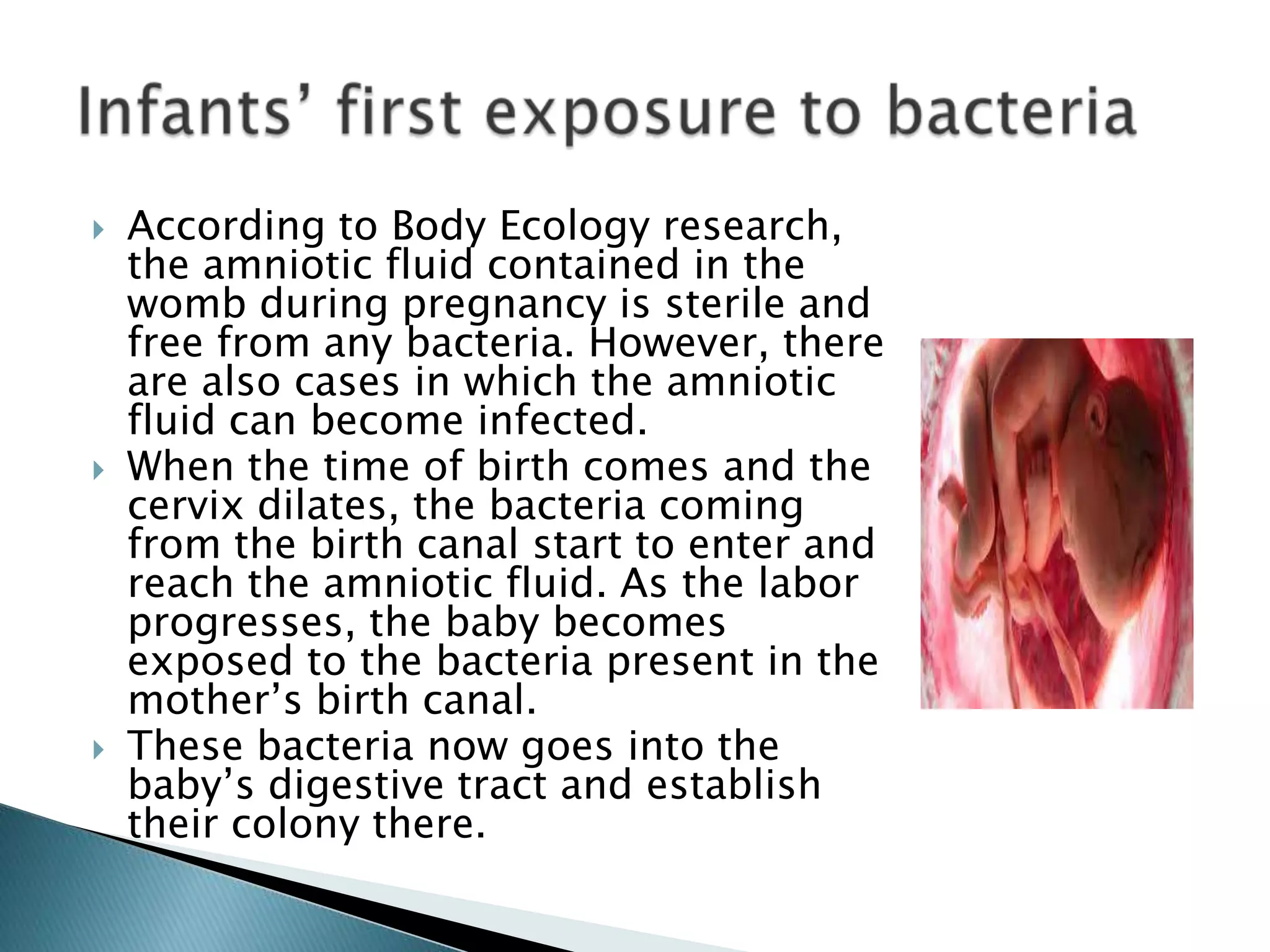
 According to Body Ecology research,
the amniotic fluid contained in the
womb during pregnancy is sterile and
free from any bacteria. However, there
are also cases in which the amniotic
fluid can become infected.
 When the time of birth comes and the
cervix dilates, the bacteria coming
from the birth canal start to enter and
reach the amniotic fluid. As the labor
progresses, the baby becomes
exposed to the bacteria present in the
mother’s birth canal.
 These bacteria now goes into the
baby’s digestive tract and establish
their colony there.
 It is a good thing if the mother has enough
beneficial bacteria in her digestive system and
vagina. This is helpful because she will be able to
pass beneficial bacteria to the baby.
 On the other hand, if the mother does not have
enough beneficial bacteria, the tendency is that
she will only pass the potentially harmful bacteria
to the baby.
 Based on studies, 85% of women who give birth
have vaginal infection. Then, the dangerous
pathogens causing this infection gets passed to
the baby instead of the beneficial bacteria which
is essential for their wellness foundation.
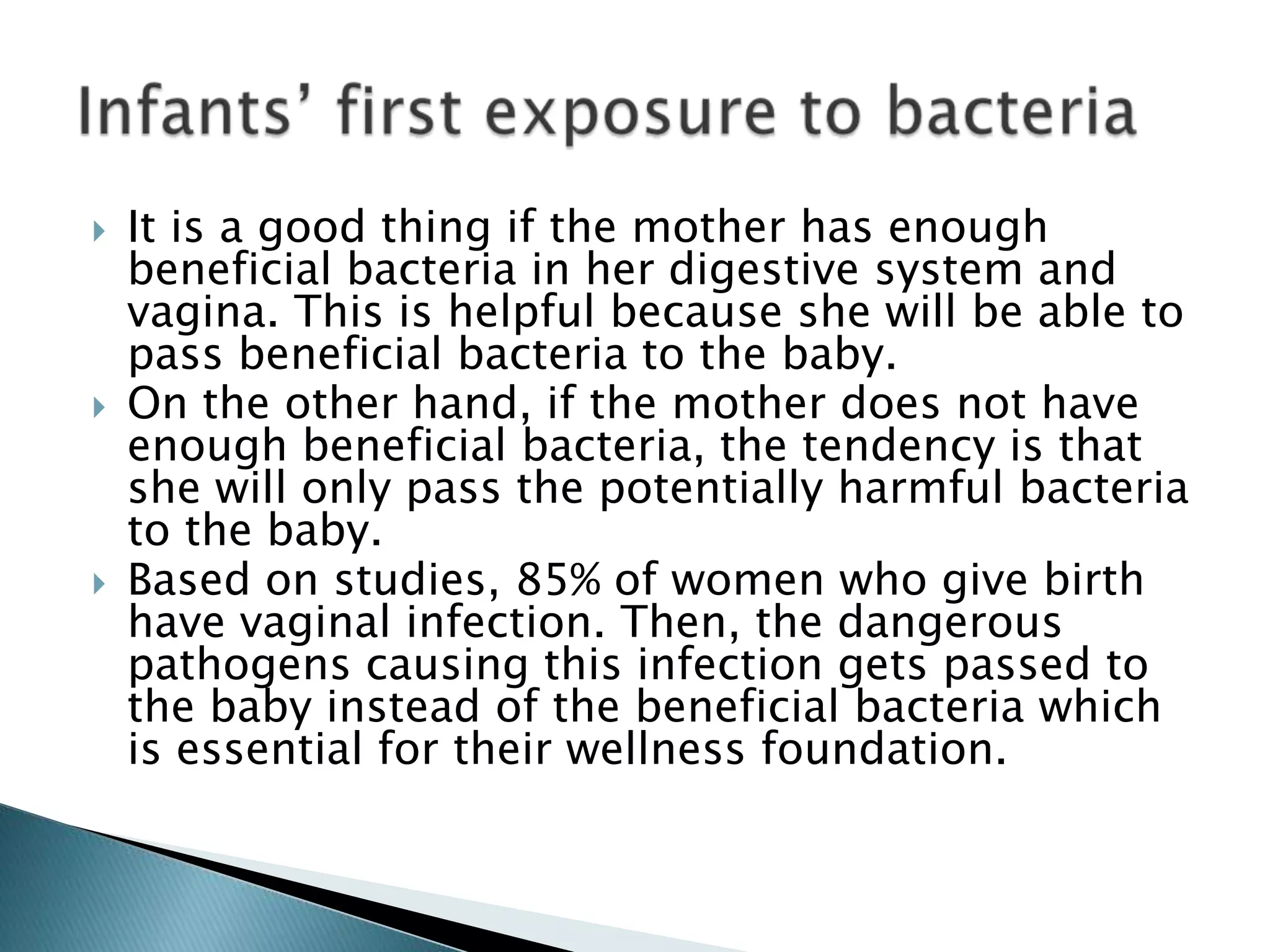
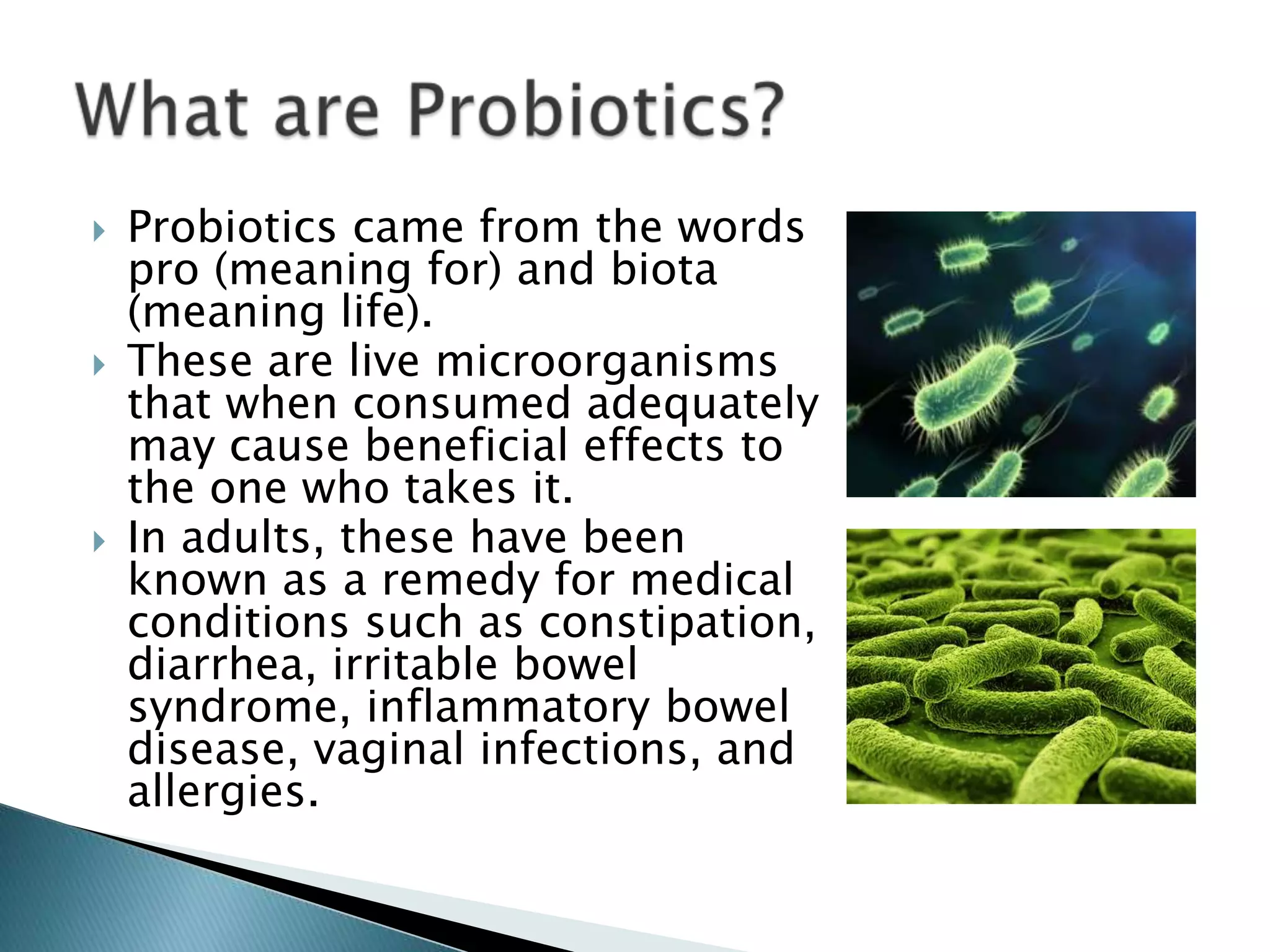
 Probiotics came from the words
pro (meaning for) and biota
(meaning life).
 These are live microorganisms
that when consumed adequately
may cause beneficial effects to
the one who takes it.
 In adults, these have been
known as a remedy for medical
conditions such as constipation,
diarrhea, irritable bowel
syndrome, inflammatory bowel
disease, vaginal infections, and
allergies.
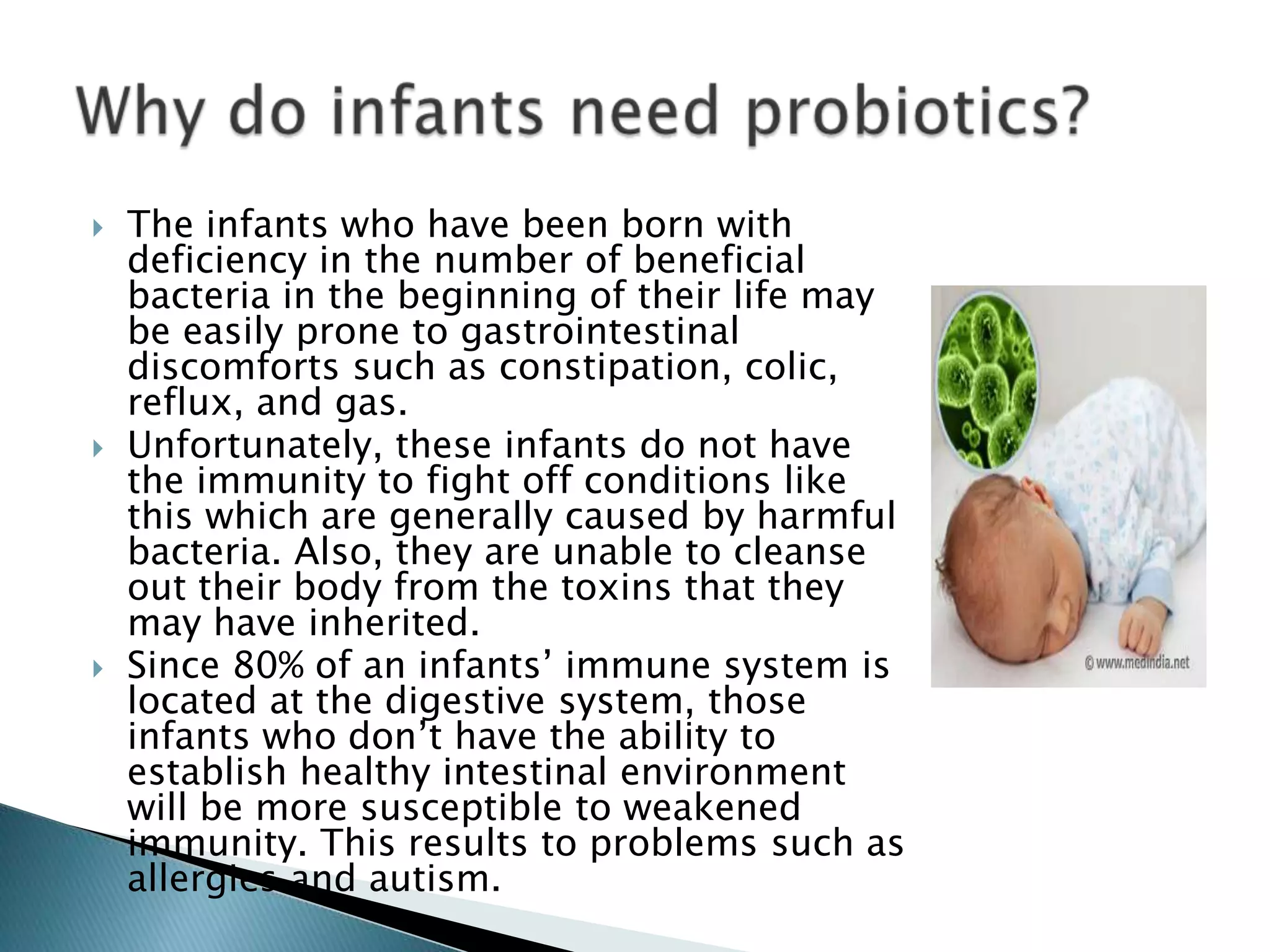
 The infants who have been born with
deficiency in the number of beneficial
bacteria in the beginning of their life may
be easily prone to gastrointestinal
discomforts such as constipation, colic,
reflux, and gas.
 Unfortunately, these infants do not have
the immunity to fight off conditions like
this which are generally caused by harmful
bacteria. Also, they are unable to cleanse
out their body from the toxins that they
may have inherited.
 Since 80% of an infants’ immune system is
located at the digestive system, those
infants who don’t have the ability to
establish healthy intestinal environment
will be more susceptible to weakened
immunity. This results to problems such as
allergies and autism.
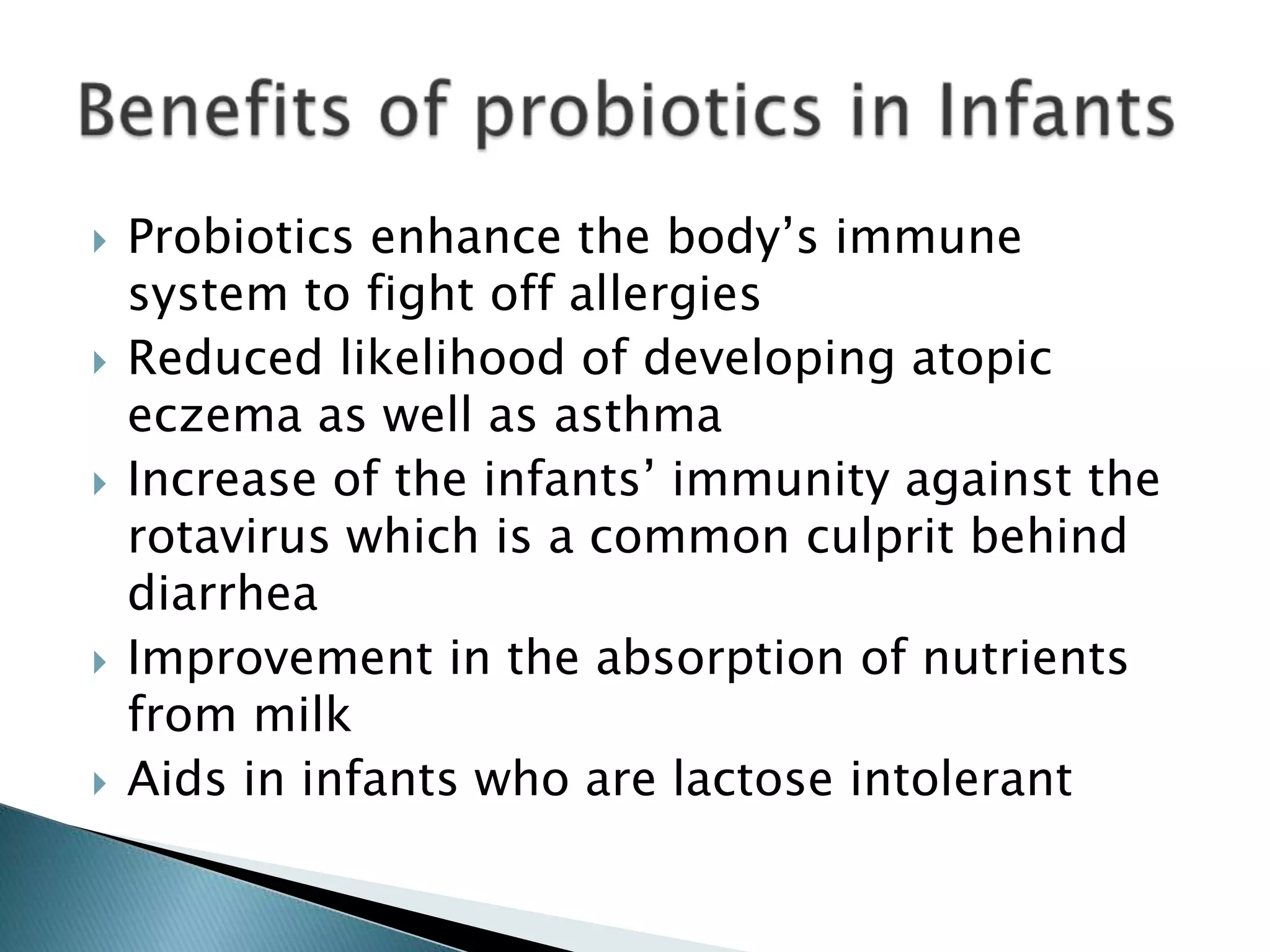
 Probiotics enhance the body’s immune
system to fight off allergies
 Reduced likelihood of developing atopic
eczema as well as asthma
 Increase of the infants’ immunity against the
rotavirus which is a common culprit behind
diarrhea
 Improvement in the absorption of nutrients
from milk
 Aids in infants who are lactose intolerant
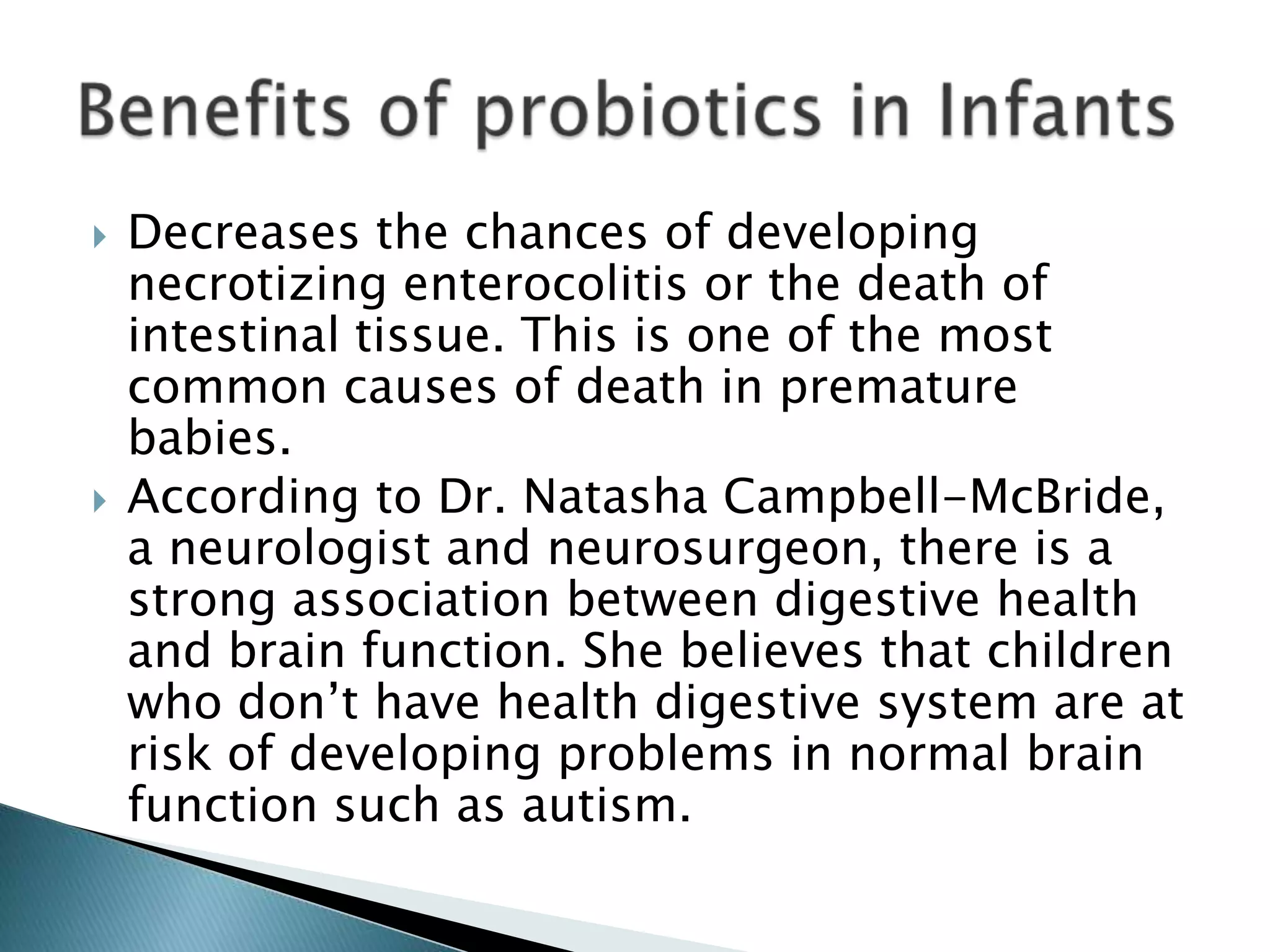
 Decreases the chances of developing
necrotizing enterocolitis or the death of
intestinal tissue. This is one of the most
common causes of death in premature
babies.
 According to Dr. Natasha Campbell-McBride,
a neurologist and neurosurgeon, there is a
strong association between digestive health
and brain function. She believes that children
who don’t have health digestive system are at
risk of developing problems in normal brain
function such as autism.
 Based on an Australian study, it was found that
the best probiotic strains that could be used for
infants are lactobacilli and bifidobacterium. This
is due to the evolution of the preterm infant’s
intestinal flora.
 Ideally, the sources of these bacterial strains
should be from humans as well. This is
preferable due to their capability to adapt to both
mucosal and dairy ecosystems.
 It was also suggested that it is better to use
probiotics with several strains instead of single
stains since these will give more benefits to the
infants.
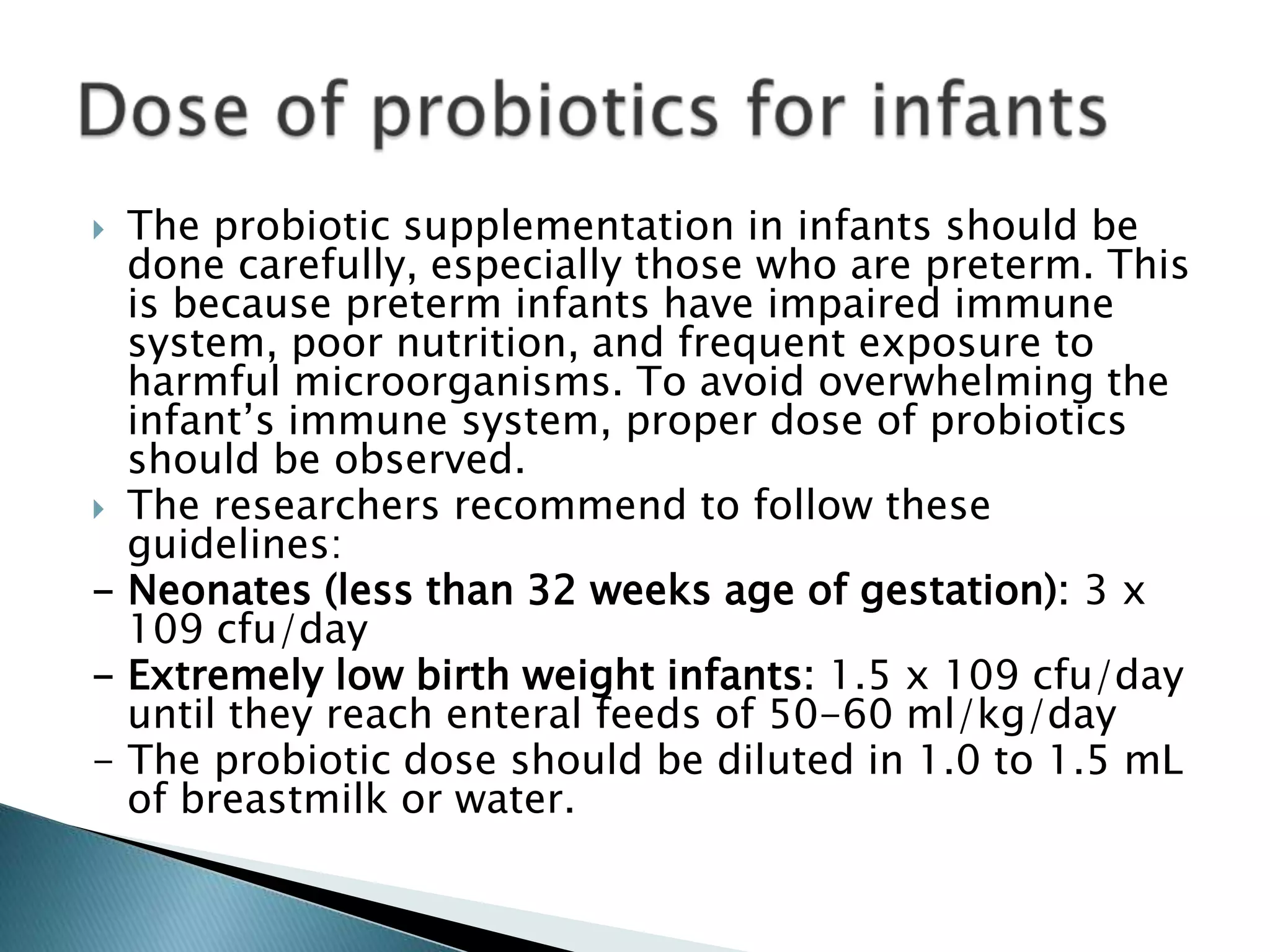
 The probiotic supplementation in infants should be
done carefully, especially those who are preterm. This
is because preterm infants have impaired immune
system, poor nutrition, and frequent exposure to
harmful microorganisms. To avoid overwhelming the
infant’s immune system, proper dose of probiotics
should be observed.
 The researchers recommend to follow these
guidelines:
- Neonates (less than 32 weeks age of gestation): 3 x
109 cfu/day
- Extremely low birth weight infants: 1.5 x 10⁹ cfu/day
until they reach enteral feeds of 50-60 ml/kg/day
- The probiotic dose should be diluted in 1.0 to 1.5 mL
of breastmilk or water.
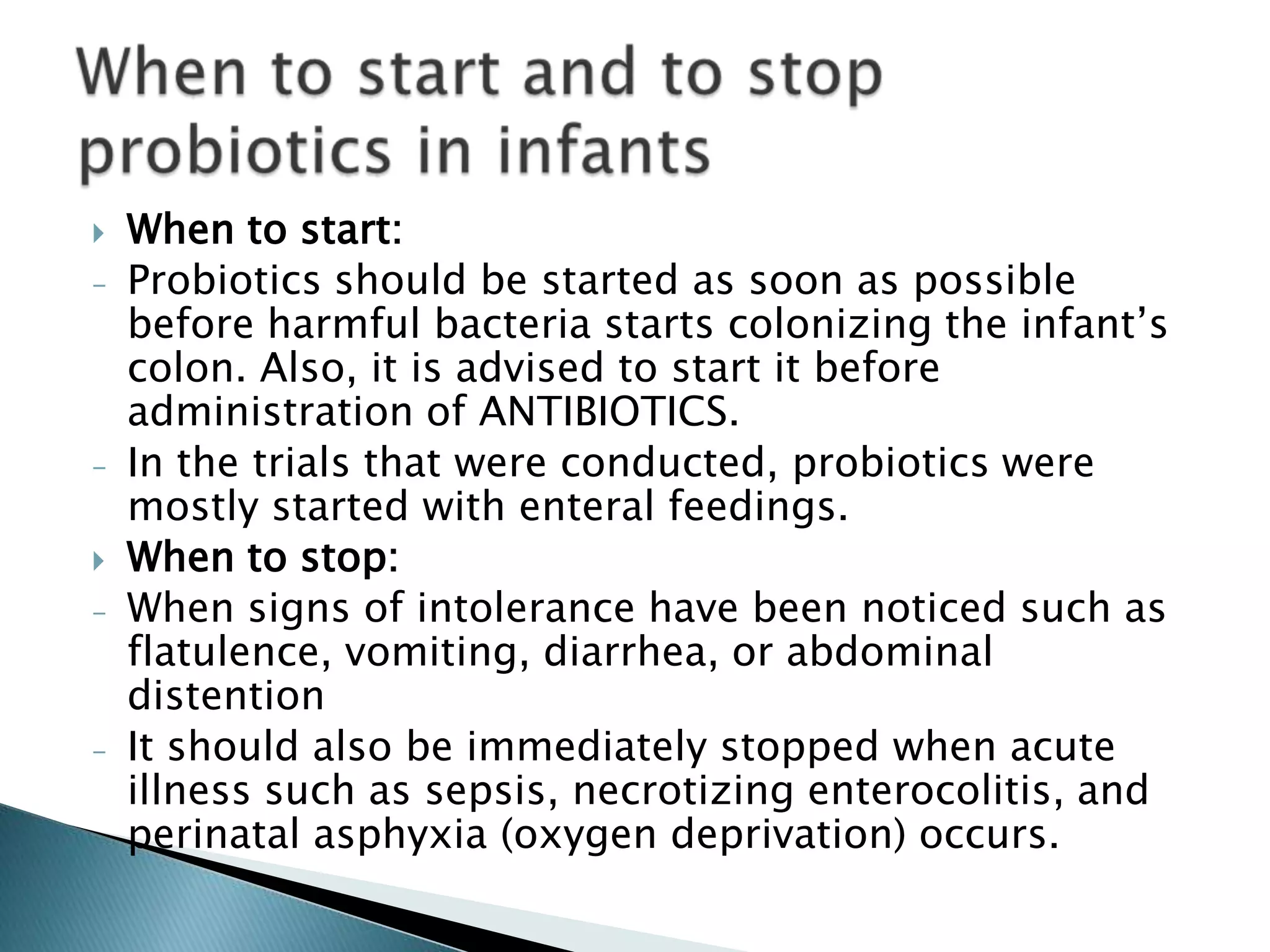
 When to start:
- Probiotics should be started as soon as possible
before harmful bacteria starts colonizing the infant’s
colon. Also, it is advised to start it before
administration of ANTIBIOTICS.
- In the trials that were conducted, probiotics were
mostly started with enteral feedings.
 When to stop:
- When signs of intolerance have been noticed such as
flatulence, vomiting, diarrhea, or abdominal
distention
- It should also be immediately stopped when acute
illness such as sepsis, necrotizing enterocolitis, and
perinatal asphyxia (oxygen deprivation) occurs.
 Should have a high quality
 Should be bought from a probiotics company
which has good manufacturing practices as well
as strict quality control
 The probiotics should be made with a
formulation that ensures that adequate beneficial
bacteria will be able to survive and arrive at the
colon.
 Preferably added with a prebiotic (food for
probiotics)
 A type of packaging that is able to protect the
integrity of the product in order to achieve the
product’s effectiveness
 Parents need to take care of their own
health and not just their babies.
 Probacto is the best probiotic that I have
ever run into. They use multiple strains and
they are spore forming so they can last
while not refrigerated. They do not use
cheap bacteria, but expensive ones such as
B. Subtilis.
 Probacto also contains prebiotics to help
stimulate the growth of beneficial bacteria
in your gut.
 Probacto contains digestive enzymes to
assist in your digestion.
 Probacto is enteric coated and made to be
slow release so it will release in your gut
gradually.
 It is a must for parents to be very vigilant
about the health of their infant. This should
be done by collaborating with their infant’s
healthcare providers. It is essential to ensure
that the safety and overall wellness of the
infant would not be compromised.
Furthermore, more studies should be
conducted to firmly support the safety of
probiotic use in infants. This is an integral
point because infants, especially newborns,
have a very sensitive and specialized case.

How much probiotic for infants and which ones

  • 1.
  • 2.
     According toBody Ecology research, the amniotic fluid contained in the womb during pregnancy is sterile and free from any bacteria. However, there are also cases in which the amniotic fluid can become infected.  When the time of birth comes and the cervix dilates, the bacteria coming from the birth canal start to enter and reach the amniotic fluid. As the labor progresses, the baby becomes exposed to the bacteria present in the mother’s birth canal.  These bacteria now goes into the baby’s digestive tract and establish their colony there.
  • 3.
     It isa good thing if the mother has enough beneficial bacteria in her digestive system and vagina. This is helpful because she will be able to pass beneficial bacteria to the baby.  On the other hand, if the mother does not have enough beneficial bacteria, the tendency is that she will only pass the potentially harmful bacteria to the baby.  Based on studies, 85% of women who give birth have vaginal infection. Then, the dangerous pathogens causing this infection gets passed to the baby instead of the beneficial bacteria which is essential for their wellness foundation.
  • 4.
     Probiotics camefrom the words pro (meaning for) and biota (meaning life).  These are live microorganisms that when consumed adequately may cause beneficial effects to the one who takes it.  In adults, these have been known as a remedy for medical conditions such as constipation, diarrhea, irritable bowel syndrome, inflammatory bowel disease, vaginal infections, and allergies.
  • 5.
     The infantswho have been born with deficiency in the number of beneficial bacteria in the beginning of their life may be easily prone to gastrointestinal discomforts such as constipation, colic, reflux, and gas.  Unfortunately, these infants do not have the immunity to fight off conditions like this which are generally caused by harmful bacteria. Also, they are unable to cleanse out their body from the toxins that they may have inherited.  Since 80% of an infants’ immune system is located at the digestive system, those infants who don’t have the ability to establish healthy intestinal environment will be more susceptible to weakened immunity. This results to problems such as allergies and autism.
  • 6.
     Probiotics enhancethe body’s immune system to fight off allergies  Reduced likelihood of developing atopic eczema as well as asthma  Increase of the infants’ immunity against the rotavirus which is a common culprit behind diarrhea  Improvement in the absorption of nutrients from milk  Aids in infants who are lactose intolerant
  • 7.
     Decreases thechances of developing necrotizing enterocolitis or the death of intestinal tissue. This is one of the most common causes of death in premature babies.  According to Dr. Natasha Campbell-McBride, a neurologist and neurosurgeon, there is a strong association between digestive health and brain function. She believes that children who don’t have health digestive system are at risk of developing problems in normal brain function such as autism.
  • 8.
     Based onan Australian study, it was found that the best probiotic strains that could be used for infants are lactobacilli and bifidobacterium. This is due to the evolution of the preterm infant’s intestinal flora.  Ideally, the sources of these bacterial strains should be from humans as well. This is preferable due to their capability to adapt to both mucosal and dairy ecosystems.  It was also suggested that it is better to use probiotics with several strains instead of single stains since these will give more benefits to the infants.
  • 9.
     The probioticsupplementation in infants should be done carefully, especially those who are preterm. This is because preterm infants have impaired immune system, poor nutrition, and frequent exposure to harmful microorganisms. To avoid overwhelming the infant’s immune system, proper dose of probiotics should be observed.  The researchers recommend to follow these guidelines: - Neonates (less than 32 weeks age of gestation): 3 x 10⁹ cfu/day - Extremely low birth weight infants: 1.5 x 10⁹ cfu/day until they reach enteral feeds of 50-60 ml/kg/day - The probiotic dose should be diluted in 1.0 to 1.5 mL of breastmilk or water.
  • 10.
     When tostart: - Probiotics should be started as soon as possible before harmful bacteria starts colonizing the infant’s colon. Also, it is advised to start it before administration of ANTIBIOTICS. - In the trials that were conducted, probiotics were mostly started with enteral feedings.  When to stop: - When signs of intolerance have been noticed such as flatulence, vomiting, diarrhea, or abdominal distention - It should also be immediately stopped when acute illness such as sepsis, necrotizing enterocolitis, and perinatal asphyxia (oxygen deprivation) occurs.
  • 11.
     Should havea high quality  Should be bought from a probiotics company which has good manufacturing practices as well as strict quality control  The probiotics should be made with a formulation that ensures that adequate beneficial bacteria will be able to survive and arrive at the colon.  Preferably added with a prebiotic (food for probiotics)  A type of packaging that is able to protect the integrity of the product in order to achieve the product’s effectiveness
  • 12.
     Parents needto take care of their own health and not just their babies.  Probacto is the best probiotic that I have ever run into. They use multiple strains and they are spore forming so they can last while not refrigerated. They do not use cheap bacteria, but expensive ones such as B. Subtilis.  Probacto also contains prebiotics to help stimulate the growth of beneficial bacteria in your gut.  Probacto contains digestive enzymes to assist in your digestion.  Probacto is enteric coated and made to be slow release so it will release in your gut gradually.
  • 13.
     It isa must for parents to be very vigilant about the health of their infant. This should be done by collaborating with their infant’s healthcare providers. It is essential to ensure that the safety and overall wellness of the infant would not be compromised. Furthermore, more studies should be conducted to firmly support the safety of probiotic use in infants. This is an integral point because infants, especially newborns, have a very sensitive and specialized case.