TRADITIONAL CULTURAL STRUCTURES
AND COMMUNITY ELDERS AS STRONG
ADVOCATES FOR CARE AND SUPPORT
OF WIDOWS AND ORPHANS LIVING
WITH HIV
By: Dorothy Odhiambo
Mexico, August 6, 2008
• Some Kenyan communities have a tradition of denying
widows and orphans infected and affected by HIV and
AIDS the right to inheritance and access to services.
• HIV and AIDS pandemic has compounded the problem by
causing massive destitution, displacements, blame-
passing and mistrust in most communities.
• The situation is worse for HIV- positive widows and OVC
who are disinherited by kinsmen
• Forceful eviction, poor quality of health, emotional and
psychological trauma, loss of livelihood, stigma and
discrimination, increased vulnerability to HIV infection,
human rights abuses.
2. Issue
3. Interventions
• USAID/Health policy Initiative task order 1:
• Conducted a series of capacity building workshops for
cultural structures through Luo Council of Elders ( LCE)
• Institutional strengthening , training for community
groups in OVC care and support, legal issues,
inheritance rights, monitoring and referral for rights
abuse cases & arbitration
• Established linkages with Government structures
through provincial administration ,Children’s
department, Solicitor general for legal redress,
settlement of disinherited OVC and widows
Results and Lessons learnt
• Over 50 widows and 200 OVC resettled
• Inclusion of the LCE in Local Area Advisory councils
and land tribunals
• Empowerment of OVC and widows to speak out
• Advocacy against Stigma and discrimination
• Increased livelihood and improved quality of life
• Reductions in social tensions and improved support
to OVC
• Using LCE was more effective and appropriate.
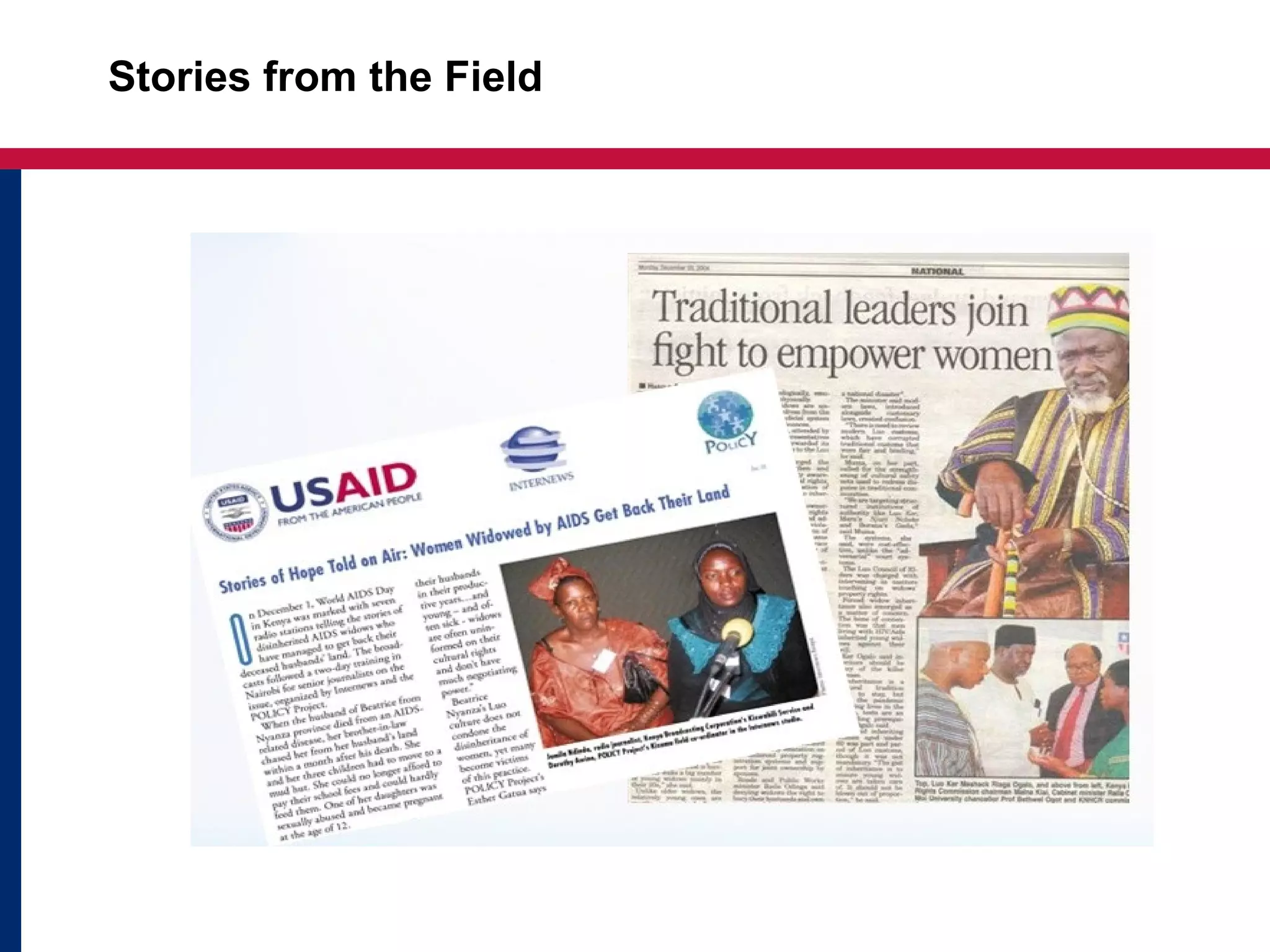
Stories from the Field
5. Conclusions and Way Forward
• Break through in addressing sensitive cultural issues
• Reduction of social tensions and improved
community support for vulnerable groups
• Replication of program in other provinces
• Need to further strengthen capacity of Traditional
structures in addressing legal issues of OVC
• Strengthen women’s ability to advocate to inherit
property
• Build capacity for income generation, livelihood skills
for OVC and Widows living with HIV and AIDS.
5. Conclusions and Way Forward
• Break through in addressing sensitive cultural issues
• Reduction of social tensions and improved
community support for vulnerable groups
• Replication of program in other provinces
• Need to further strengthen capacity of Traditional
structures in addressing legal issues of OVC
• Strengthen women’s ability to advocate to inherit
property
• Build capacity for income generation, livelihood skills
for OVC and Widows living with HIV and AIDS.

Wepdd202

  • 1.
    TRADITIONAL CULTURAL STRUCTURES ANDCOMMUNITY ELDERS AS STRONG ADVOCATES FOR CARE AND SUPPORT OF WIDOWS AND ORPHANS LIVING WITH HIV By: Dorothy Odhiambo Mexico, August 6, 2008
  • 2.
    • Some Kenyancommunities have a tradition of denying widows and orphans infected and affected by HIV and AIDS the right to inheritance and access to services. • HIV and AIDS pandemic has compounded the problem by causing massive destitution, displacements, blame- passing and mistrust in most communities. • The situation is worse for HIV- positive widows and OVC who are disinherited by kinsmen • Forceful eviction, poor quality of health, emotional and psychological trauma, loss of livelihood, stigma and discrimination, increased vulnerability to HIV infection, human rights abuses. 2. Issue
  • 3.
    3. Interventions • USAID/Healthpolicy Initiative task order 1: • Conducted a series of capacity building workshops for cultural structures through Luo Council of Elders ( LCE) • Institutional strengthening , training for community groups in OVC care and support, legal issues, inheritance rights, monitoring and referral for rights abuse cases & arbitration • Established linkages with Government structures through provincial administration ,Children’s department, Solicitor general for legal redress, settlement of disinherited OVC and widows
  • 4.
    Results and Lessonslearnt • Over 50 widows and 200 OVC resettled • Inclusion of the LCE in Local Area Advisory councils and land tribunals • Empowerment of OVC and widows to speak out • Advocacy against Stigma and discrimination • Increased livelihood and improved quality of life • Reductions in social tensions and improved support to OVC • Using LCE was more effective and appropriate.
  • 5.
  • 6.
    5. Conclusions andWay Forward • Break through in addressing sensitive cultural issues • Reduction of social tensions and improved community support for vulnerable groups • Replication of program in other provinces • Need to further strengthen capacity of Traditional structures in addressing legal issues of OVC • Strengthen women’s ability to advocate to inherit property • Build capacity for income generation, livelihood skills for OVC and Widows living with HIV and AIDS.
  • 7.
    5. Conclusions andWay Forward • Break through in addressing sensitive cultural issues • Reduction of social tensions and improved community support for vulnerable groups • Replication of program in other provinces • Need to further strengthen capacity of Traditional structures in addressing legal issues of OVC • Strengthen women’s ability to advocate to inherit property • Build capacity for income generation, livelihood skills for OVC and Widows living with HIV and AIDS.