DO NOW!
Clear your desk
except for a piece of paper and
pen/pencil and your signed contract
Wellness Models 101
By: Mr. Mader
DO NOW!
• Keep your animal picture on top of you
desk, don’t fold or wrinkle it we will use it
shortly.
• Take out your contract- put it on your
desk- I will collect it.
• Please also take out a piece of paper and
title it Wellness.
Group Work
• Brainstorm key words to describe health
Some definitions of health
• Health is a resource for everyday life, not
the object of living.
• Health is a positive concept emphasizing
social and personal resources, as well as
physical capacities.
• A complete state of physical, mental, and
social well-being and not merely the
absence of disease.
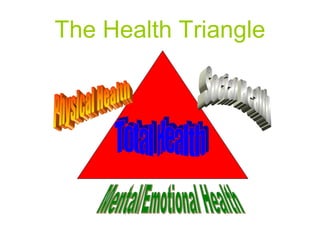
The Health Triangle


All Aspects are Interrelated!
• Partner Work
• Create a situation in which areas of the
health triangle are effected negatively.
Show how one area effects and is
interrelated to other areas.
• EX.- A teen who skips meals may feel
irritable and have trouble concentrating in
school. This person may also be rude to
her peers and teachers.
Another Model
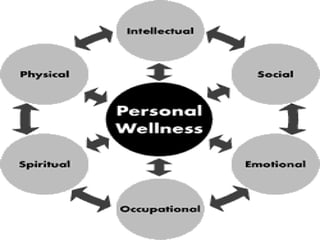
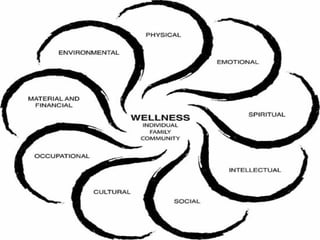
6 Dimensions of Wellness
• Physical Wellness- Eating well, exercise, avoid
harmful habits, making responsible decisions
about sex, medical and dental check-ups…
• Emotional Wellness- Optimism, trust, self-
esteem, confidence, self-control…
• Intellectual Wellness- Openness to new ideas,
question and think critically, creativity, curiosity
to learn…
6 Dimensions of Wellness Cont.
• Spiritual Wellness- have values and beliefs that
add purpose to life, love, compassion,
forgiveness, altruism…
• Interpersonal and Social Wellness- Satisfying
relationships, good communication skills,
supportive family and friends…
• Environmental or Planetary Wellness- Personal
health depends on the health of the planet, food
supply, violence, pollution…
Some definitions of wellness
• An integrated method of functioning that is
oriented toward maximizing the potential of
which the individual is capable.
• An approach to health that focuses on balancing
the many aspects or dimensions of a person’s
life through increasing the adoption of health
enhancing behaviors rather than attempting to
minimize conditions of illness.
• Wellness is an active process through which
people become aware of, and make choices
toward, a more successful existence.
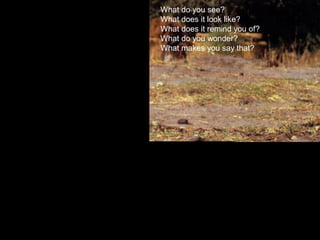
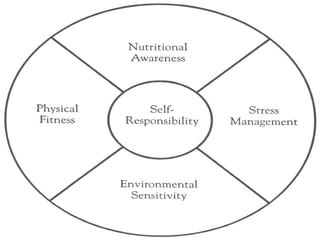
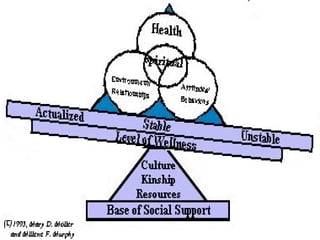
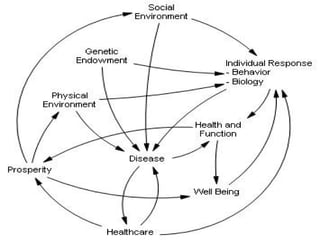
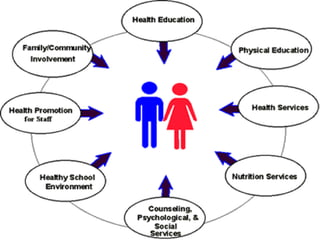
What do you see?
What does it look like?
What does it remind you of?
What do you wonder?
What makes you say that?
• “Health is to wellness
as a seed is to a
flower.”
• Health provides a
foundation for
wellness.
In your groups
• Build a health model
• Each model must-
– Contain a visual element
– Contain at least three components
– Have at least one external factor
– Contain color
• What does health mean to you?
• Can a person with a chronic disease (e.g.
cancer, heart disease, diabetes, etc.) or
an infectious illness (e.g. Tb, HIV, Herpes,
etc.) be healthy? Can they achieve
wellness?
• What does a healthy person look like?
What does a well person look like?
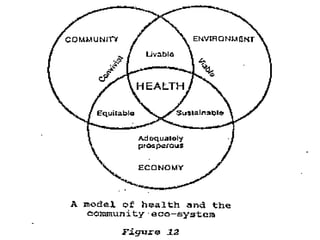
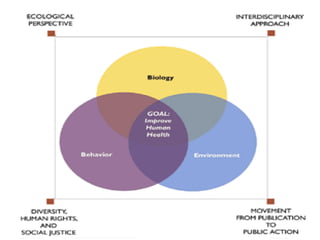
Complete the Worksheet
Finish it for Homework
• On the back answer
the following
questions-
– What are the
differences between
the two health
models?
– Which model do you
like better? Why?

Wellness models 101

  • 1.
    DO NOW! Clear yourdesk except for a piece of paper and pen/pencil and your signed contract
  • 2.
  • 3.
    DO NOW! • Keepyour animal picture on top of you desk, don’t fold or wrinkle it we will use it shortly. • Take out your contract- put it on your desk- I will collect it. • Please also take out a piece of paper and title it Wellness.
  • 4.
    Group Work • Brainstormkey words to describe health
  • 5.
    Some definitions ofhealth • Health is a resource for everyday life, not the object of living. • Health is a positive concept emphasizing social and personal resources, as well as physical capacities. • A complete state of physical, mental, and social well-being and not merely the absence of disease.
  • 6.
  • 7.
    All Aspects areInterrelated! • Partner Work • Create a situation in which areas of the health triangle are effected negatively. Show how one area effects and is interrelated to other areas. • EX.- A teen who skips meals may feel irritable and have trouble concentrating in school. This person may also be rude to her peers and teachers.
  • 8.
    Another Model 6 Dimensionsof Wellness • Physical Wellness- Eating well, exercise, avoid harmful habits, making responsible decisions about sex, medical and dental check-ups… • Emotional Wellness- Optimism, trust, self- esteem, confidence, self-control… • Intellectual Wellness- Openness to new ideas, question and think critically, creativity, curiosity to learn…
  • 9.
    6 Dimensions ofWellness Cont. • Spiritual Wellness- have values and beliefs that add purpose to life, love, compassion, forgiveness, altruism… • Interpersonal and Social Wellness- Satisfying relationships, good communication skills, supportive family and friends… • Environmental or Planetary Wellness- Personal health depends on the health of the planet, food supply, violence, pollution…
  • 10.
    Some definitions ofwellness • An integrated method of functioning that is oriented toward maximizing the potential of which the individual is capable. • An approach to health that focuses on balancing the many aspects or dimensions of a person’s life through increasing the adoption of health enhancing behaviors rather than attempting to minimize conditions of illness. • Wellness is an active process through which people become aware of, and make choices toward, a more successful existence.
  • 11.
    What do yousee? What does it look like? What does it remind you of? What do you wonder? What makes you say that?
  • 22.
    • “Health isto wellness as a seed is to a flower.” • Health provides a foundation for wellness.
  • 23.
    In your groups •Build a health model • Each model must- – Contain a visual element – Contain at least three components – Have at least one external factor – Contain color
  • 24.
    • What doeshealth mean to you? • Can a person with a chronic disease (e.g. cancer, heart disease, diabetes, etc.) or an infectious illness (e.g. Tb, HIV, Herpes, etc.) be healthy? Can they achieve wellness? • What does a healthy person look like? What does a well person look like?
  • 25.
    Complete the Worksheet Finishit for Homework • On the back answer the following questions- – What are the differences between the two health models? – Which model do you like better? Why?