sponsored by:
1 in 10
Step one:
Back to basics
Clear, simple, brief
Action-oriented
Focused on real challenges
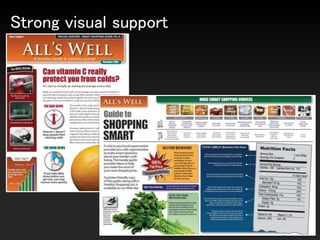
Strong visual support
Fun and active
Multi-faceted
Step two:
Sea changes
From “program” to “culture”
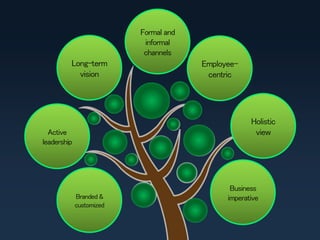
Active
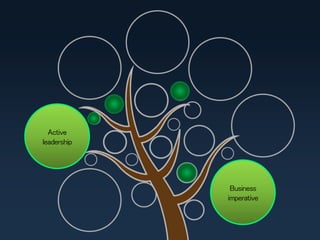
leadership
Active
leadership
Business
imperative
Active
leadership
Business
imperative
Employee-
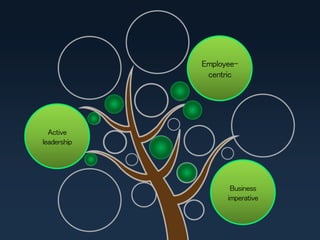
centric
Active
leadership
Business
imperative
Employee-
centric
Branded &
customized
Active
leadership
Business
imperative
Employee-
centric
Long-term
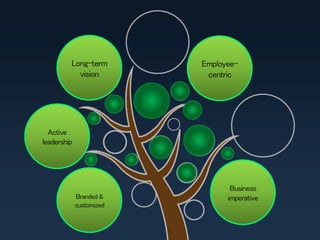
vision
Branded &
customized
Active
leadership
Business
imperative
Employee-
centric
Long-term
vision
Branded &
customized
Holistic
view
Active
leadership
Business
imperative
Employee-
centric
Long-term
vision
Branded &
customized
Holistic
view
Formal and
informal
channels
Follow these 10
steps to reduce
your blood
pressure!
This week’s
Health Tips focus
on preventing
diabetes!
Participate in
wellness
screenings and
earn rewards!
Attend a
workshop about
disease
prevention.
The latest issue
of To Your Health
is now available.
Schedule your
Health Risk
Profile today!
We just found
this app…what
do you think?
Yoga with the
CEO at 8am
tomorrow!
Who wants to
put together a
team for this
5K Fun Run?
Low-fat Thai
cooking class
this Thursday at
noon!
This week’s
Healthy Vendor
offering 20% off
athletic shoes!
How do you
manage stress?
Share your tips
and ideas here.
Step three:
A broader view
Exercise
Weight management
Nutrition
Risk reduction
Sleep management
Work/life balance
Ergonomics & safety
Personal satisfaction
Work environment
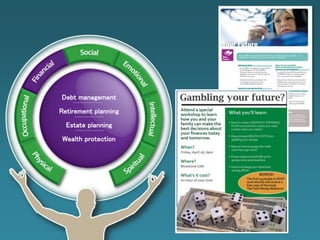
Debt management
Retirement planning
Estate planning
Wealth protection
Communication skills
Diversity
Volunteerism
Conflict resolution
Priority setting
Stress management
Self-esteem
Grief management
Problem solving
Creativity
Critical thinking
Intellectual growth
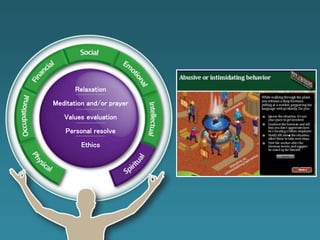
Relaxation
Meditation and/or prayer
Values evaluation
Personal resolve
Ethics
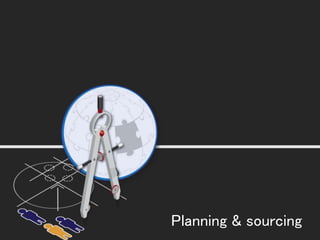
Planning & sourcing
Attraction
Recruiting & selection
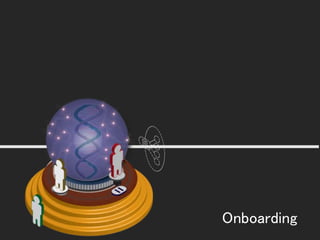
Onboarding
Growth & development
Retention
Separation
preventio
fitness
nutrition
diet
screenings
exercise activity
appetite
balance
calories
challenge
choices
conditioning
diagnostics
education
endurance
energy
family
genetics
habits
lifestyle
improvement
learning
medicine
optimism
mood
participation
recreation
safety
stamina
strength
training
weight
stress
zeal
commitment
impact
well-being
tone
alternatives
cardio
flexibility
wellness
strength
Strategy Brand Tools Support
Jean E. Hanvik, Principal
SGH Communications, Inc.
612.618.0433
jhanvik@sghcomm.com
Brian O’Mara-Croft, Founder
Visual Congruence Information Design
630.788.2005
brian@visualcongruence.com
Tyler Norenberg, President
Bluespire Marketing
952.920.9928
tyler.norenberg@bluespiremarketing.com
Questions?

Next-generation Wellness@Work Webinar

Editor's Notes

  • #3 JEAN Welcome, everyone, and thanks for sharing your time with us. I’m Jean Hanvik of SGH Communications, a health and benefit communication firm based in the Twin Cities. I’m joined by Brian O’Mara-Croft of Visual Congruence, a Chicago-area visual communication consulting firm. We’d like to thank Bluespire Marketing for sponsoring this event. Bluespire has more than 30 years’ experience serving the health care and financial industries, with a focus on strategy, technology and content. Over the next 45 minutes, we’ll walk you through the hottest trends in health, wellness and benefits communication, and offer some new ideas to nudge your organization along the path from “programs” toward a sustainable “culture” of well-being. We will reserve time at the end of the presentation to answer questions. Please feel free to type your questions into the box provided. [CLICK]
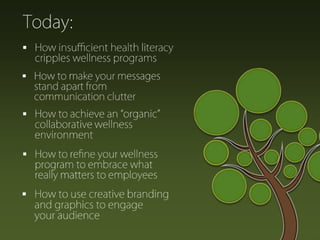
  • #4 BRIAN Through our time with you this morning, we’ll tackle a number of important issues and challenges: [CLICK] How insufficient health literacy cripples wellness programs [CLICK] How to make your messages stand apart from communication clutter [CLICK] How to achieve an “organic” collaborative wellness environment; and [CLICK] How to refine your wellness program to embrace what really matters to employees. [CLICK] By sharing samples throughout, we hope to also provide fresh ideas about how to use creative branding and graphics to engage your audience. [CLICK] [CLICK]
  • #5 JEAN Each organization holds its own vision of what a “culture” of wellness looks like. Some set out with modest ambitions, offering things like one-size-fits-all employee education and premium incentives for completing health assessments. Other more committed employers offer employees more – and more targeted -- training, more incentives, a modeling tool or two, and links to insurer web sites, without planning for how they’ll measure and manage results. [CLICK]
  • #6 JEAN …We’re not there yet. [CLICK] A recent study found that while 62 percent of large employers hope to create an authentic culture of wellness…[CLICK] …less than a quarter feel they’re even close to reaching this goal. So why aren’t we there? Of course, there are the usual suspects: a lack of management support, inconvenience for employees, a mismatch between what workers want and what companies provide, and an unrealistic desire to see an immediate impact on the bottom line. And yet the biggest problem may be much less complicated. [CLICK]
  • #7 BRIAN To put it simply, many of our employees don’t even know what we’re trying to say. Only 1 in 10 American adults is functionally health literate. This means 90 percent feel lost when faced with the most basic health concepts: co-pays, deductibles and out-of-pocket maximums. In fact, many can’t understand a prescription label, can’t find a doctor, and can’t sort out when to visit a general practitioner, a walk-in clinic, or the ER. [CLICK]
  • #8 BRIAN Consider this: half of all prescription medications are taken incorrectly…or not at all. Every year, this leads to nine million stays in the hospital and 18 million visits to the ER…[CLICK] …to the tune of as much as $290 billion per year. And this is just the tip of a very big iceberg: every year, $750 billion is spent in the U.S. on wasted health care. Of course, we can’t blame all of this on the health illiterate—nor can we hope to reverse things with a flashy video or a bunch of posters alone. But it’s easy to see we have plenty of room to improve. Poor health literacy has other cost implications as well, including: [CLICK] A tendency to seek treatment only when sick, rather than to AVOID getting sick; [CLICK] A lack of knowledge of diseases and how to treat them; [CLICK] Poorer overall health; and [CLICK] More frequent and longer stays in the hospital. [CLICK]
  • #9 JEAN Given the likelihood at least some of your employee population struggles with elementary aspects of your health offerings, we believe the first step in moving toward a culture of wellness is to ensure your efforts are built on a solid foundation of basic understanding. [CLICK]
  • #10 JEAN The Affordable Care Act set as one of its core goals to increase health literacy, which the Act defines as, “The degree to which individuals have the capacity to obtain, process, understand and communicate basic health information and services needed to make… [CLICK] … appropriate health decisions.” Although the logic behind this is more than sound… [CLICK]
  • #11 JEAN …Many employers are putting the cart before the horse. While summary plan descriptions, enrollment guides and teasers about biometric health screenings serve a purpose, organizations must still account for the large number of employees who lack a fundamental understanding of how their health plans work. An Aflac open enrollment study has found that nearly 75 percent of health care consumers, when thinking about choices for medical insurance, only “sometimes” or “rarely” understand what’s covered. For this large group, we need to take an important step back, and refocus our efforts on more basic health literacy. What’s more, only 7% of employees who were given less than two weeks to select benefits rated their benefits education as excellent or very good, and only 8% gave strong ratings to their benefits package. But giving employees three or more weeks raised those ratings to 57% for education and 53% for overall benefits. [CLICK]
  • #12 BRIAN So…how do we improve our communication so we can move the needle from 1-in-10 to a much higher fraction? [CLICK]
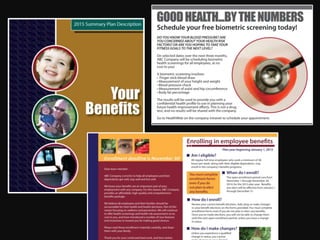
  • #13 BRIAN First, any communication should be clear, simple and brief. As you can see here, this postcard tackles a single issue: “Who pays for your health coverage?” It provides straightforward definitions of deductibles, coinsurance and out-of-pocket limits. It then uses an example, or persona, to show how the various pieces work together. The piece answers a number of important questions without overwhelming the reader. Subsequent mailings could each tackle a specific challenge. [CLICK]
  • #14 BRIAN In most cases, our goal isn’t simply to inform our folks—we want them to DO something. As communicators, we need to make clear what actions are possible and, when possible, give them a bit of a nudge. In this first example, we “hook” the reader with an explanation of why this matters—”Ignore this at your peril”, basically--and then provide a small number of immediate actions the reader can take. The two others present step-by-step blueprints for participating in health and fitness challenges, and answer the all-important question: “What’s in it for me?” [CLICK]
  • #15 BRIAN You won’t improve health literacy if you don’t focus on real challenges your employees face. The worst thing we can do is to approach the information with the attitude, “EVERYONE knows this, don’t they?” They don’t. This mailer walks the reader through each item on a prescription label, and then provides simple dos-and-don’ts about taking and storing medicine. As with the earlier postcard example, we convey a fair amount of information, but without making the employee tackle too much at once. [CLICK]
  • #16 BRIAN Whomever said, “A picture’s worth a thousand words”, was absolutely right; in fact, the picture may be worth a LOT more. Recent studies have shown that images follow a direct route to our long-term memory. While we tend to hang on to only about 20 percent of what we read, we remember as much as 80 percent of what we see and do. The more we break our messages into manageable chunks—and then support the text with compelling visuals, callouts, lists, boxes and such—the more likely we are to attract, reach and influence employees. [CLICK]
  • #17 BRIAN We live in a world in which everyone is bombarded constantly with stimuli—on YouTube, on Facebook, on television…everywhere. This presents corporate communicators with a real challenge: how do we get through? How can our messages, which tend to be a little less, uh, exciting—compete? To this end, we’re seeing a growing trend toward story-telling and “gamification”—the use of games to promote learning. As we show here, these can be fairly sophisticated online games with video introductions and support, or they can be as simple as a deck of trivia cards. [CLICK]
  • #18 BRIAN Finally, we must be aware that different people respond to different tools of communication. Whatever media you use, consider marrying a variety of methods in a well-conceived, integrated and ongoing campaign, so you reach a broader audience, reinforce messages through repetition, and inspire immediate action. Think out of the box here: if you’ve been in the men’s room at a bar (no judgment here), you may have seen posters above urinals. You could put informative placemats on cafeteria trays, like they do at McDonald’s. Whenever possible, take advantage of a captive audience. [CLICK]
  • #19 JEAN Let’s presume now that your organization has either already made steps to improve health literacy or feels confident it can take steps in that direction. How, then, do we move into the future with the goal of not only offering a compelling health and wellness “program,” but instead shifting thinking toward building a “culture” of wellness? [CLICK]
  • #20 JEAN As we’ve seen, many wellness programs forget that a large percentage of employees are unaware, uninformed and skeptical. Too often, organizations expect that, with the simplest of nudges, they can jump in at the right side of this continuum—with fully engaged, active employees—when the largest portion of their employee population is stuck well over to the left. Changing behavior takes a sound, in-depth strategy, implemented over a long period of time. To change a culture requires patience, resilience, careful planning, listening. and a willingness to make course corrections along the way, based on a regular analysis of what’s working…and what isn’t. The key to giving life to a wellness culture is starting small by making sure your employees embrace the basics, and building from there. [CLICK]
  • #21 JEAN So, quickly, what are some of the key differences we observe between organizations at the left and right of the continuum? [CLICK]
  • #22 JEAN Organizations that succeed with wellness programs have leaders playing an active and visible role in the process. A study by HR consulting firm Mercer found that 66% of employers with strong leadership support of wellness programs reported a reduction in health risks, compared to just 26% of those with little or no management support of the program. [CLICK]
  • #23 JEAN A wellness culture treats health and wellness matters not as an HR “project,” but as a business imperative, linked to broader organizational goals. [CLICK]
  • #24 JEAN Unsuccessful wellness programs tend to focus on what’s in it for the company. Effective wellness efforts hone in on issues most important to employees, like family, security and opportunity. [CLICK]
  • #25 JEAN Many employers turn to their health benefit providers for the bulk of their communication materials. Although these resources can be valuable, they don’t capture the culture of the organization; a branded, customized and personalized approach greatly increases the odds employees will pay attention to what you’re saying. [CLICK]
  • #26 JEAN Effective wellness efforts take the long view…that is, they recognize that employees may be resistant to change, and that support systems need time to evolve. [CLICK]
  • #27 JEAN An employee’s physical health is only one aspect of what makes them effective and engaged at work. Forward-thinking organizations take a holistic view of wellness that recognizes aspects beyond physical health. We’ll talk more about this in a minute. [CLICK]
  • #28 JEAN Finally, wellness programs that thrive use not only formal channels of communication such as newsletters and email blasts, but also informal, interactive, and employee-centered channels, including social media. Let’s spend an extra moment on this. [CLICK]
  • #29 BRIAN What we’re proposing is a more “organic” approach to wellness communication, built on a combination of formal and informal communication methods. What’s more, we’re suggesting communicators rethink their role: instead of serving solely to plan and execute communication strategies, we need to play facilitators and moderators of a communication ecosystem in which much communication occurs not up and down the organization, but throughout. For many organizations, this represents a huge change, because it’s sometimes messy, it’s not easy to measure, and there are greater risks associated with reducing control. [CLICK]
  • #30 BRIAN If you compare the messages that come from each approach, you can see that informal communication engages employees more—it makes them part-owners of the process. One of the great payoffs of our moving into an increasingly “connected” age is that instead of leading employees with vague messages like, “Participate in wellness screenings and earn rewards,” we can promote a much more spontaneous and fun atmosphere. For example, one CEO of a huge company routinely meets with employees over yoga. Other organizations invite guest speakers from restaurants, health food stores, and other businesses to meet with employees, an effort that not only entices employees but builds good rapport within the community. [CLICK]
  • #31 JEAN A moment ago we mentioned we were going to come back to key components of a wellness culture… [CLICK]
  • #32 JEAN When many organizations discuss “wellness” as part of their health care strategy, their focus is predominantly on physical wellness—cholesterol and blood pressure levels, weight, disease management, etc.. A relative few employers have started to expand this filter—to target ALL aspects of what makes an employee “healthy.” Now in its 7th year, the Gallup-Healthways Wellbeing Index compares employees who are physically fit to employees who are fit but who also claim satisfaction in other dimensions of life. They find that those who enjoy physical wellness alone are more likely to miss work, resist change, abuse alcohol, and pursue other jobs than those who feel a sense of purpose, enjoy good social relationships, are in decent shape financially, and have a sense of community. [CLICK]
  • #33 JEAN Of course, nobody would argue in favor of wellness programs that ignored the physical component. The key for communicators is to present information that is fresh, interesting and motivating. [CLICK]
  • #34 JEAN Employees are very suspicious of employers who subscribe to “wellness” as the solution to many problems, but who don’t show the same concern for the work environment. Asking for feedback on the workplace, taking action based on that information, and then communicating to employees that you’ve listened, helps employees see you’re concerned with their well-being as much as you’re concerned about health care premiums. [CLICK]
  • #35 JEAN In companies with high-deductible plans, the average deductible exceeds the typical family savings of 20 percent of employees, so helping them improve financial literacy is a key success component. Research from PWC found that half of employees worry about not having enough emergency savings for unexpected expenses, and 42 percent fear they’ll be unable to retire when they want to. Help employees feel more at ease about their financial concerns and they’ll be more likely to listen to ideas about how they can refocus improving their physical health. [CLICK]
  • #36 JEAN Employees also have concerns about how they work with others, so resources to help manage conflicts at work and better communicate with colleagues can contribute greatly to overall wellness. For example, a study commissioned by CPP found that U.S. employees spent 2.8 hours per week dealing with conflict at work, which translates into 385 million working days lost. [CLICK]
  • #37 JEAN A 2011 study by ComPsych, an employee assistance program provider, found that 36 percent of employees feel tense or anxious most of the time at work, and 40 percent said an emotional or physical health problem has interfered with their day-to-day activities. The same report found many employees blame their emotional health for avoiding exercise, choosing unhealthy foods, struggling with sleep, and abusing alcohol and other substances. [CLICK]
  • #38 JEAN Most employees value their careers, and want to feel they are effective in their roles. Providing resources to help employees solve problems, generate innovative ideas, and grow intellectually can contribute greatly to their overall job satisfaction. [CLICK]
  • #39 JEAN Finally, acknowledging the spiritual values of employees—which is not necessarily religion—can pay dividends. Finding ways to help employees relax can pay off in the long run. Forward-thinking organizations have introduced yoga, massages and other pampering gestures as both a reward and a means to reduce tension in the workplace. [CLICK]
  • #40 BRIAN Okay…we’ve explored how a solid foundation of literacy, supported by a more casual communication approach and a perspective that sees employees as more than physical beings can contribute to a sustainable culture of wellness in an organization. To wind things up, we want to spend a few minutes looking at one more angle that can ensure continuity in wellness communication and action—tying wellness efforts to the employee life cycle. [CLICK]
  • #41 BRIAN Wellness should be a consideration whenever your organization revisits its philosophy around people. For example, are wellness factors worked into your hiring philosophy? Are you an organization that does drug screening of potential employees? Will you allow smoking anywhere on work campuses? How will you position this—strictly as an ethics stance, or as part of a commitment to health? The more health and wellness becomes part of the answer to the question, “What type of employer do we want to be?”, the more likely it is to really stick. [CLICK]
  • #42 BRIAN We hear a lot about an employment “brand” in organizations. To what extent is your wellness “brand” built into your employee value proposition? Will wellness be a selling point you use to attract employees? A recent study by Virgin Pulse and Workforce found that 88 percent of potential employees consider health and wellness offerings an important factor when choosing an employer. In other words, “If you’ve got it, flaunt it.” [CLICK]
  • #43 BRIAN During the recruiting and selection process, are you sharing all aspects of your wellness approach with prospective hires? A comprehensive, holistic approach to wellness shows prospective employees you’ll have their backs throughout their careers. This could tip the scales in your favor in attracting top talent. [CLICK]
  • #44 BRIAN Do you have tools in place to make wellness/education and promotion part of new employee orientation? Research has shown a clear link between one-on-one coaching about health matters—such as that which could be built into helping new employees learn the ropes—and their overall health literacy moving forward. [CLICK]
  • #45 BRIAN How is your holistic approach to wellness linked to training and growth and development initiatives? Providing information is one thing—getting those ideas to stick requires repetition and reinforcement throughout an employee’s career. [CLICK]
  • #46 BRIAN Have you reached employees at key touch points with tailored wellness messages that remind the employee, “Hey, we still care?” Research has shown that 45 percent of employees consider wellness programs as one factor in their choice to stay with a company. [CLICK]
  • #47 BRIAN And, finally, when you and your employees go separate ways—say, if an employee resigns or retires—do you ask wellness-related questions as part of exit interviews? At this time, you may uncover more honest feedback than at any other time. [CLICK]
  • #48 JEAN We’ve covered a lot in a relatively short period, and some of you may wonder where to begin. Brian and I have developed a one-day workshop we can bring into your organization and help your team dig deeper into all of these issues. You’ll come out of the session with a refined blueprint of actions you can take to move your wellness efforts from “program” to “culture.” [CLICK]
  • #49 JEAN We can help you build a practical, forward-thinking strategy, develop a clever and compelling internal brand, and create an engaging collateral system of materials and tools. When you’re up and running, we can deliver reliable, helpful ongoing support. Or, if you’re faced with a specific need—or perhaps saw something appealing in the samples we shared today--please contact us to brainstorm how we might add real value to your efforts. [CLICK]
  • #50 BRIAN Thank you so much for your time; we hope you found this valuable, and we look forward to continuing the conversation with you. [CLICK]
  • #51 BRIAN Any unanswered questions? [END]