




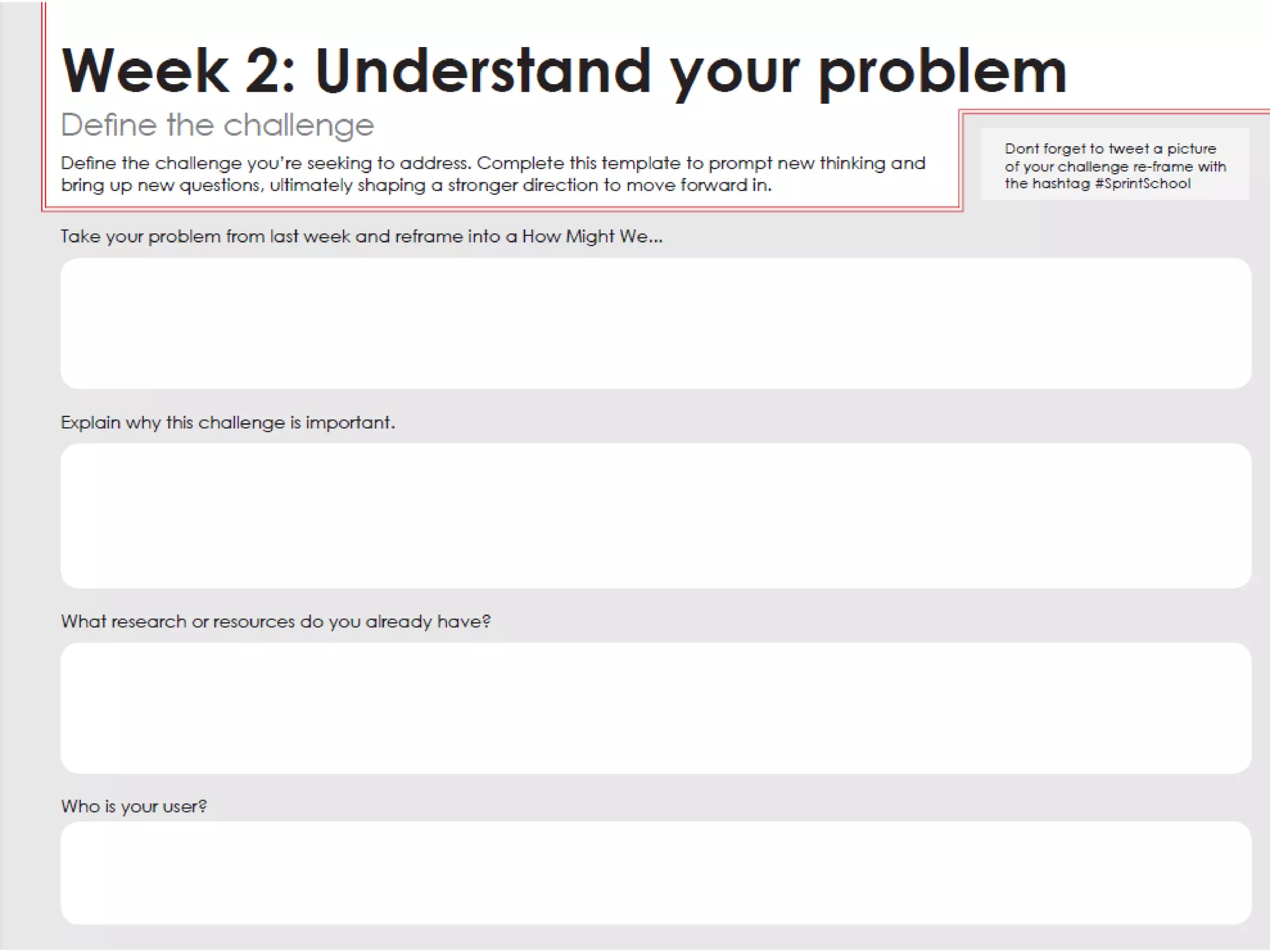
Week 2: Understand
#VirtualSprintSchool
#SprintSchool@Design4AHS
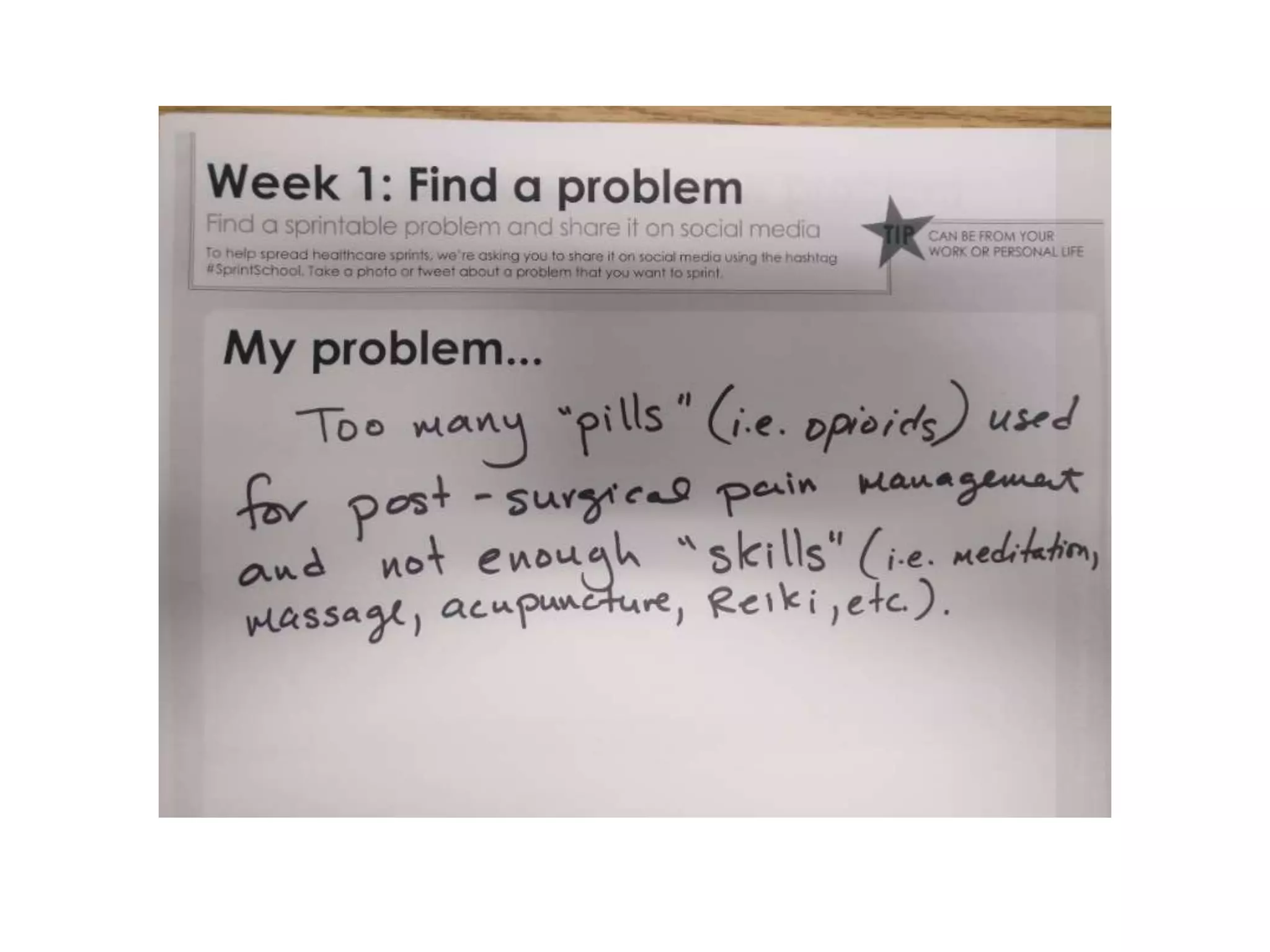
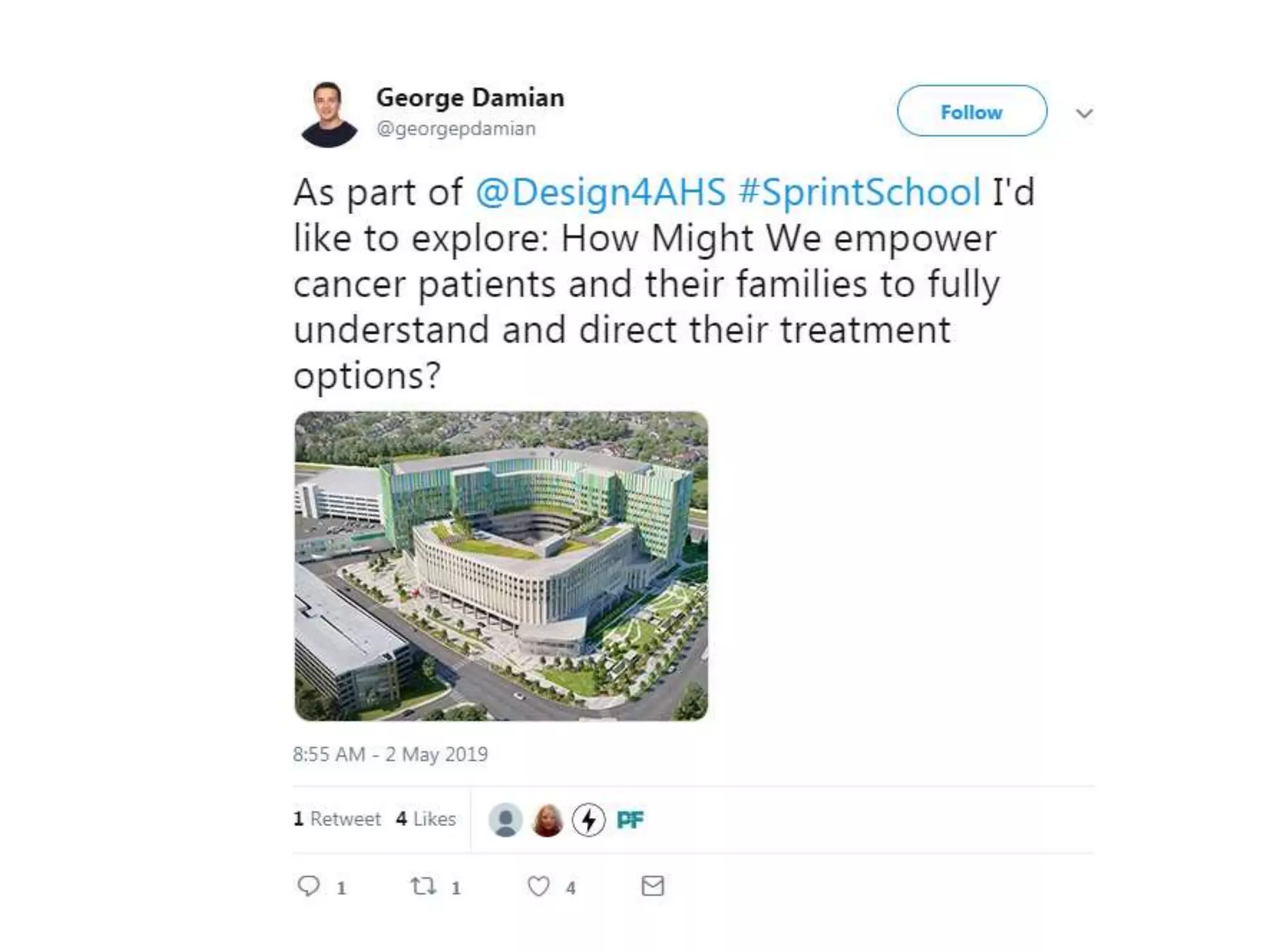
Share your
Sprintable Problem
#SprintSchool@Design4AHS
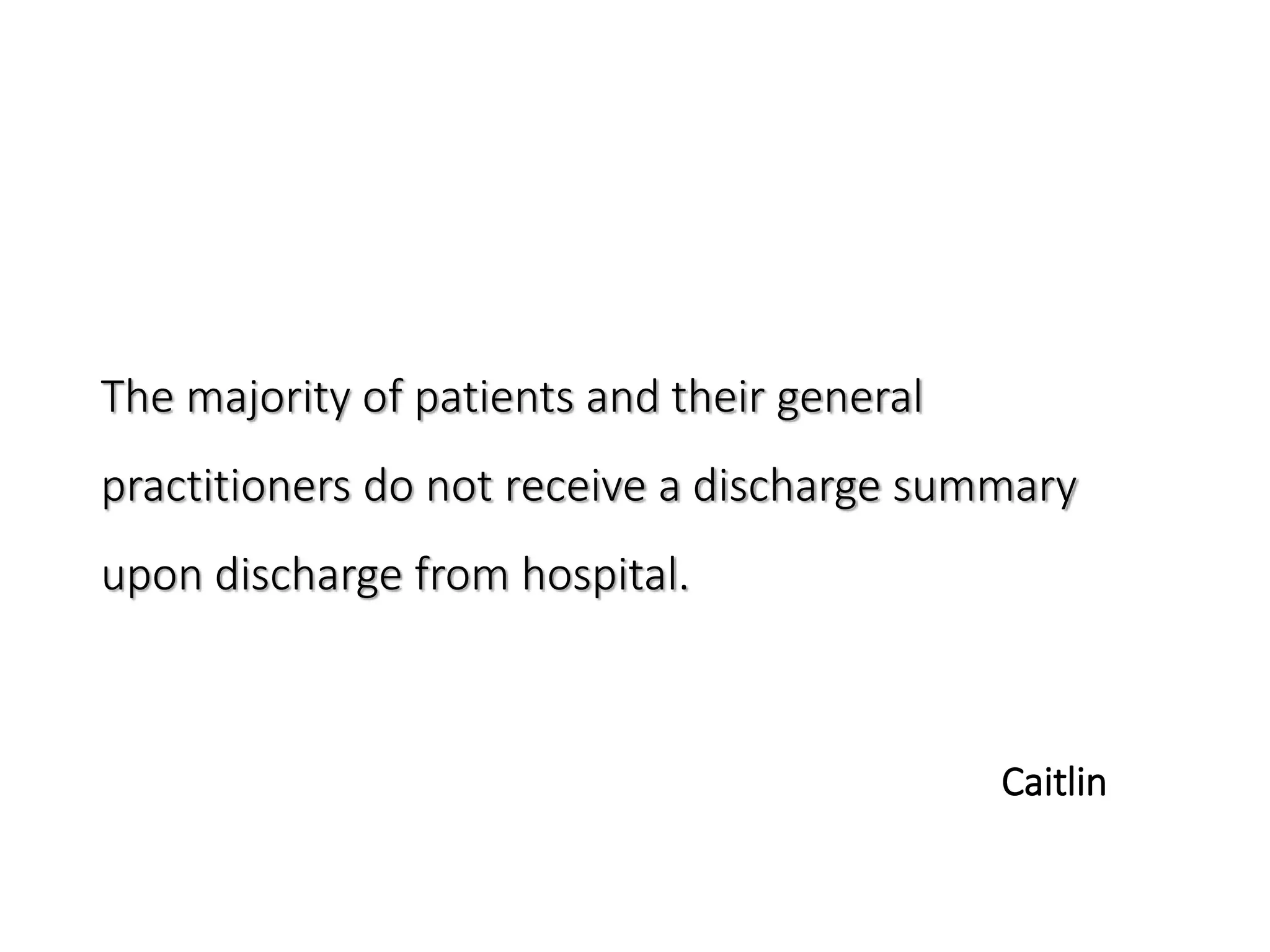
The majority of patients and their general
practitioners do not receive a discharge summary
upon discharge from hospital.
Caitlin
Recap + plan
#SprintSchool@Design4AHS
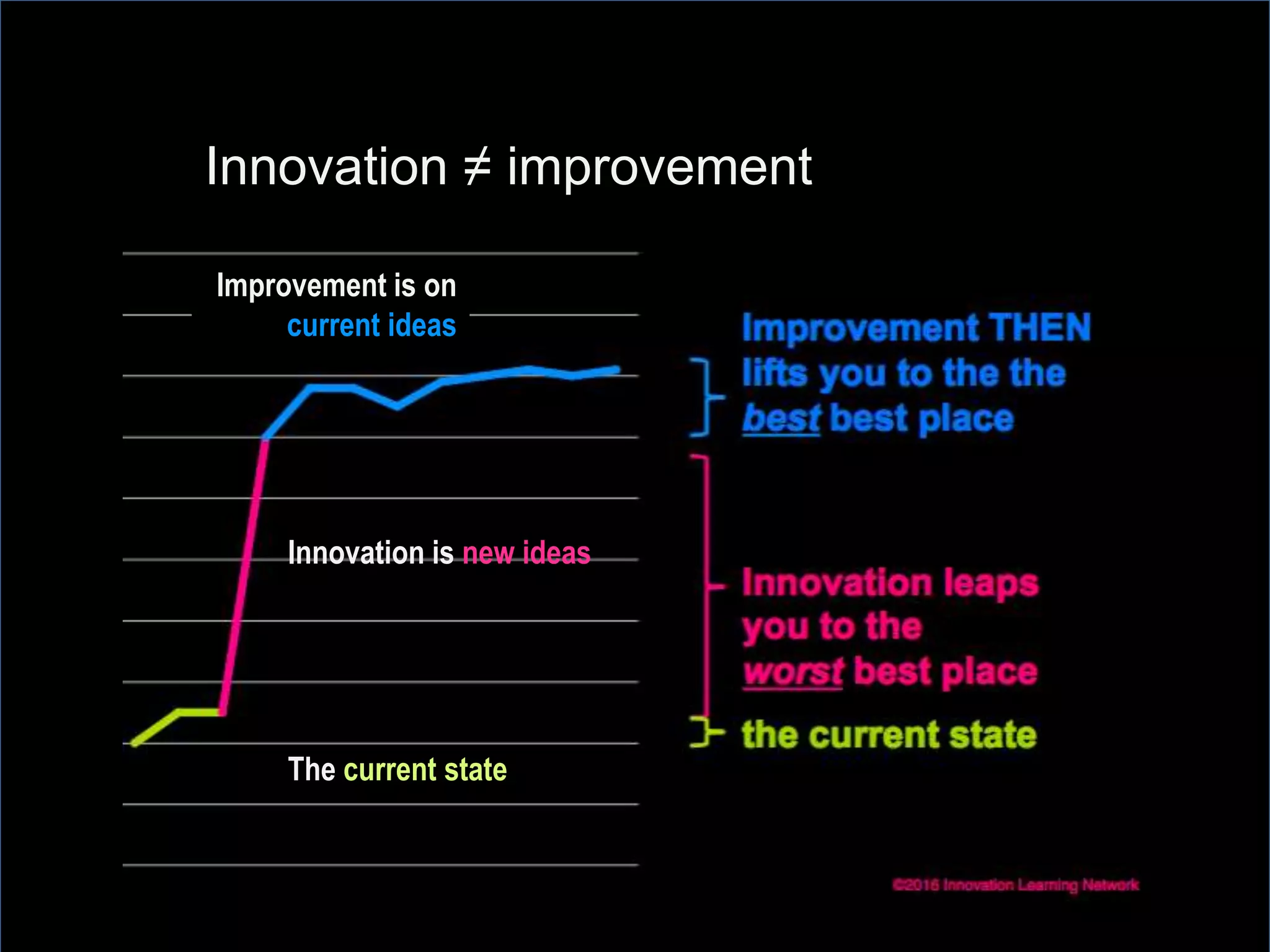
Innovation ≠ improvement
Innovation is new ideas
The current state
Improvement is on
current ideas
#SprintSchool@Design4AHS
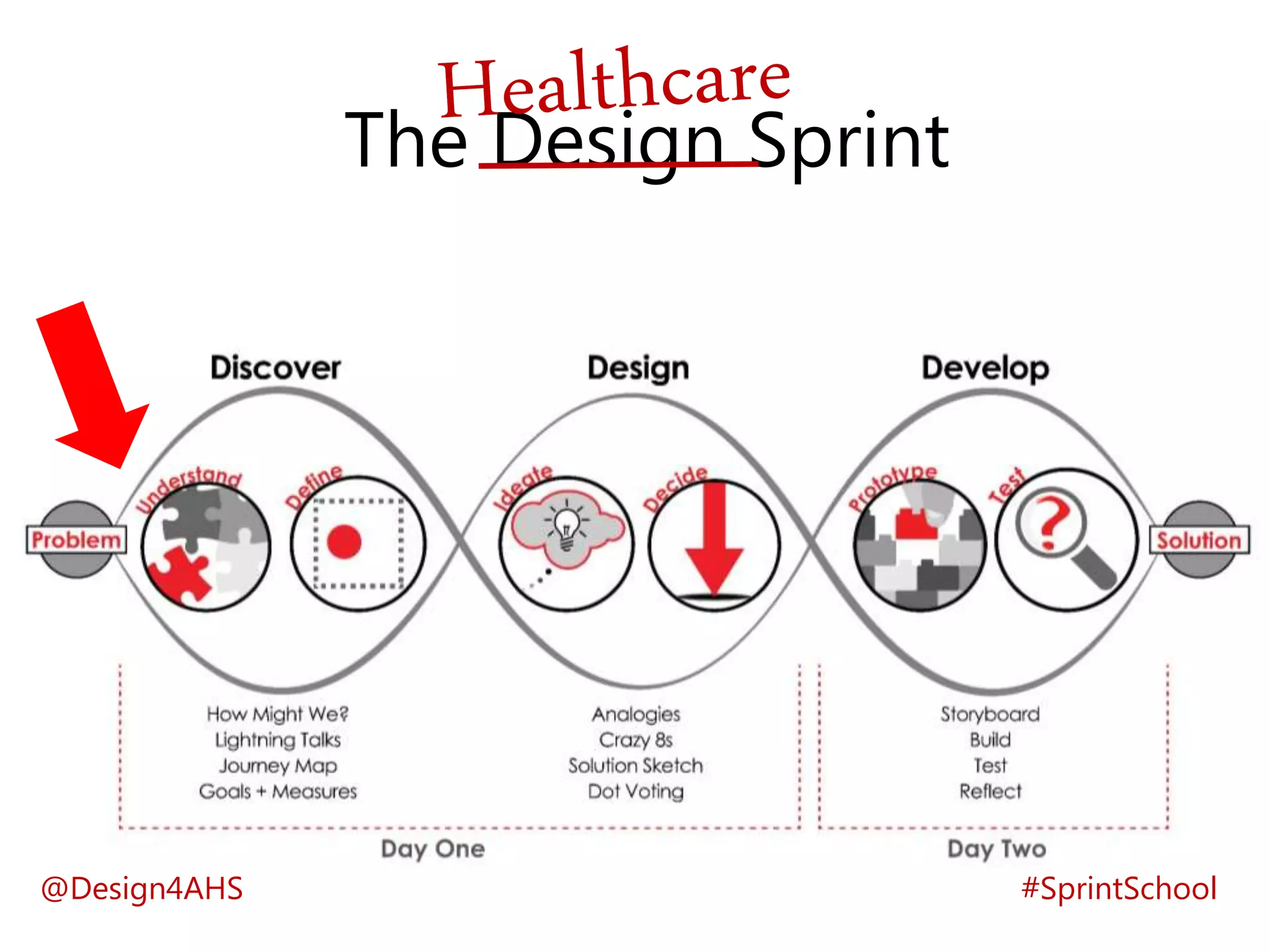
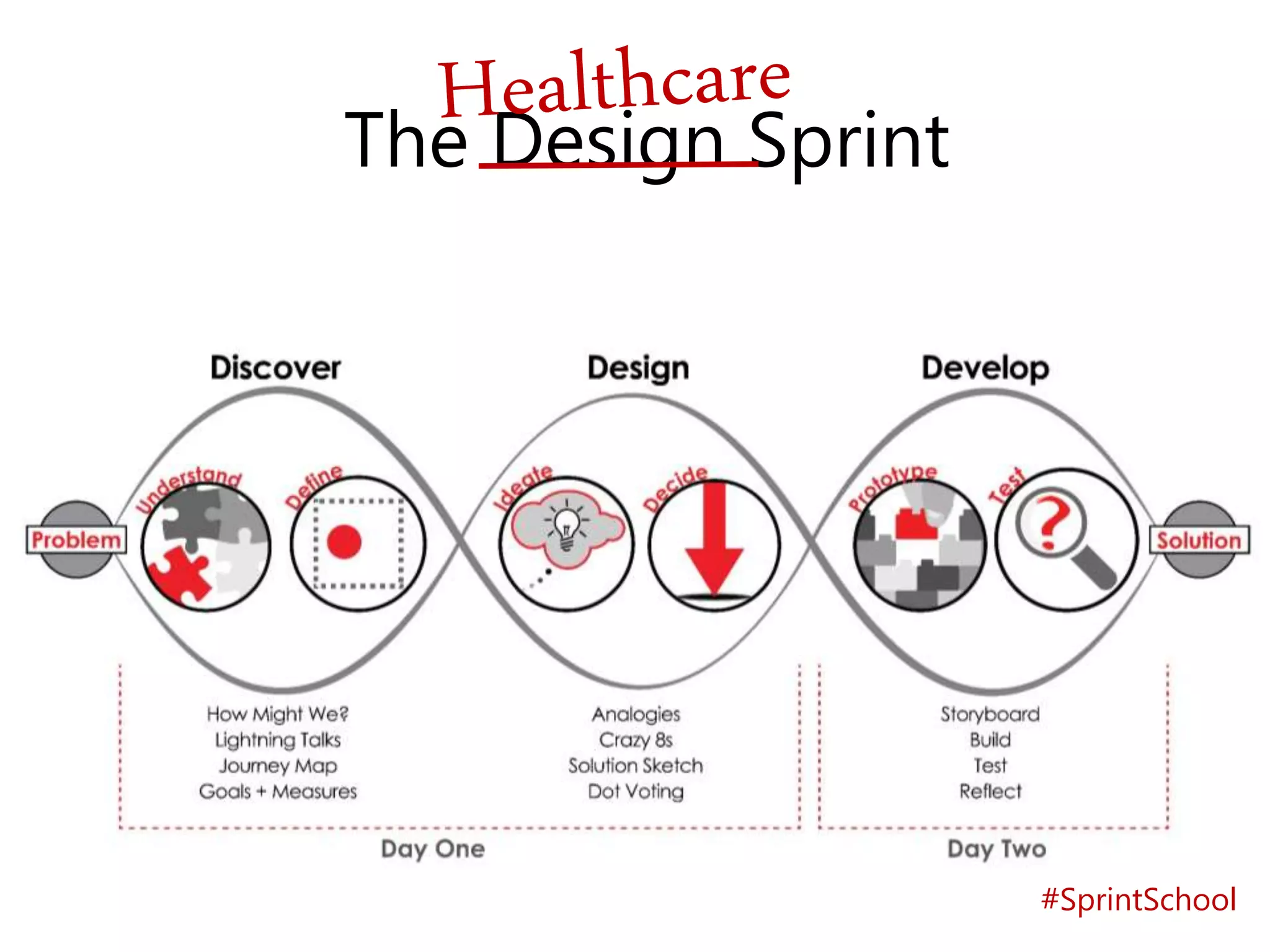
The Design Sprint
@Design4AHS #SprintSchool
Session Objectives
o Guest Speaker: Ariel Sim
o Setting the Stage
o How might we
o Lightning talks
#SprintSchool@Design4AHS
Guest Speaker:
Ariel Sim
#SprintSchool@Design4AHS
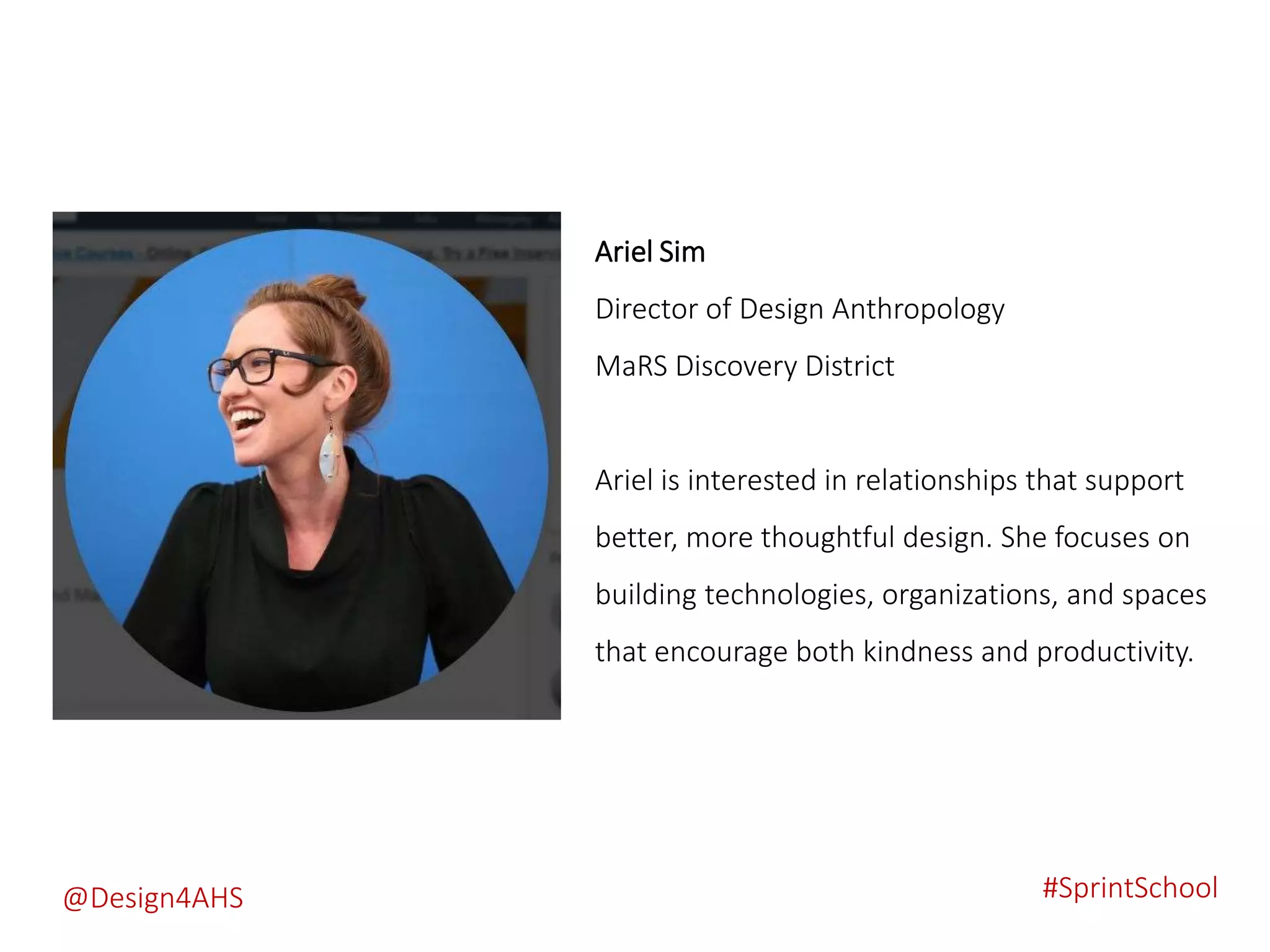
Ariel Sim
Director of Design Anthropology
MaRS Discovery District
Ariel is interested in relationships that support
better, more thoughtful design. She focuses on
building technologies, organizations, and spaces
that encourage both kindness and productivity.
#SprintSchool@Design4AHS
Problem
Framing
with MaRS Solutions Lab
Ariel Sim is the Director of Design Anthropology
at the MaRS Solutions Lab. Her expertise is in
user research, experience design, design
strategy, and product development.
Problem Framing | MaRS Discovery District
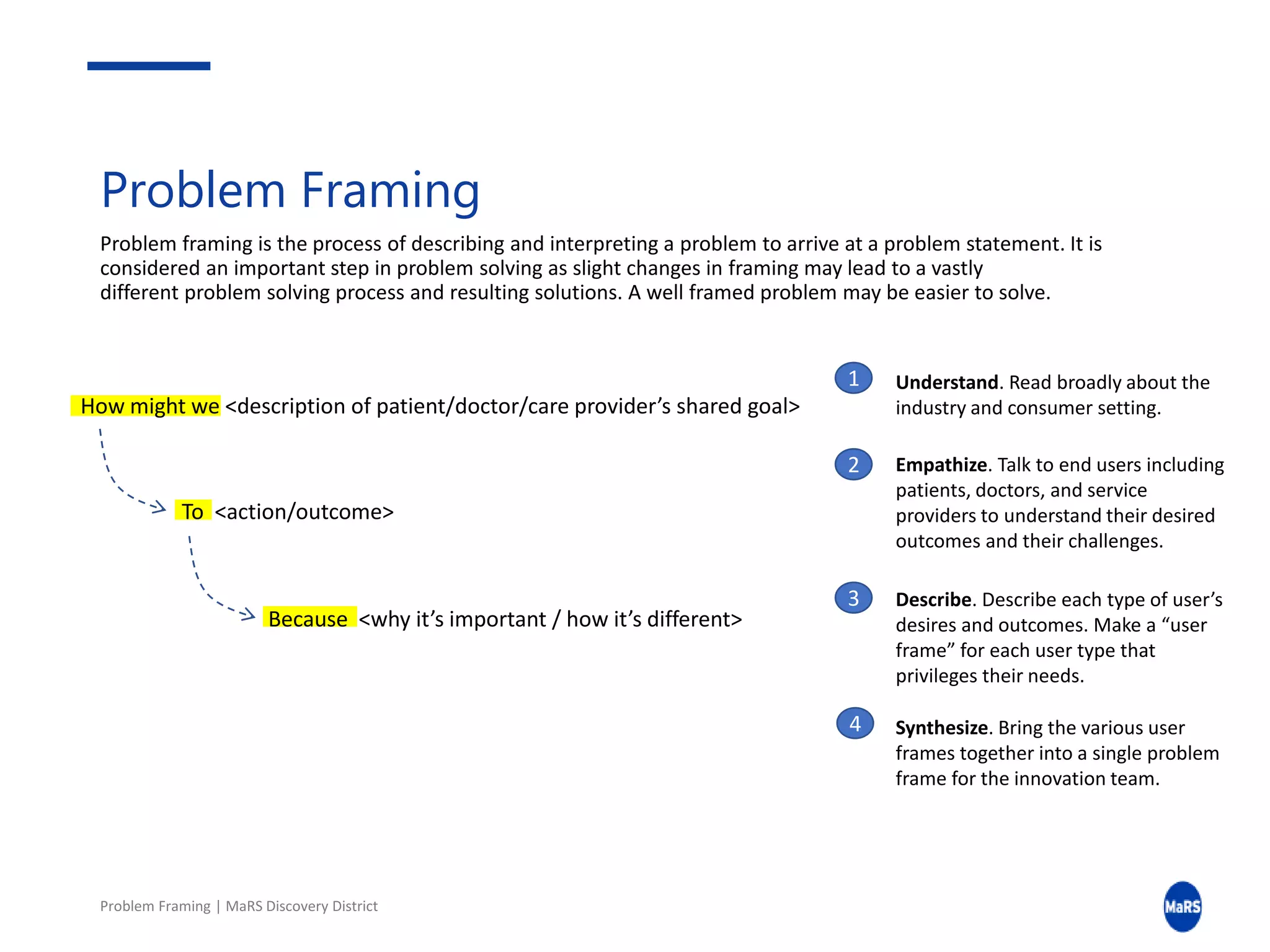
Problem Framing
Problem framing is the process of describing and interpreting a problem to arrive at a problem statement. It is
considered an important step in problem solving as slight changes in framing may lead to a vastly
different problem solving process and resulting solutions. A well framed problem may be easier to solve.
Because <why it’s important / how it’s different>
How might we <description of patient/doctor/care provider’s shared goal>
1
2
3
4
Understand. Read broadly about the
industry and consumer setting.
Empathize. Talk to end users including
patients, doctors, and service
providers to understand their desired
outcomes and their challenges.
Describe. Describe each type of user’s
desires and outcomes. Make a “user
frame” for each user type that
privileges their needs.
Synthesize. Bring the various user
frames together into a single problem
frame for the innovation team.
To <action/outcome>
#SprintSchool@Design4AHS
The Design Sprint
#SprintSchool
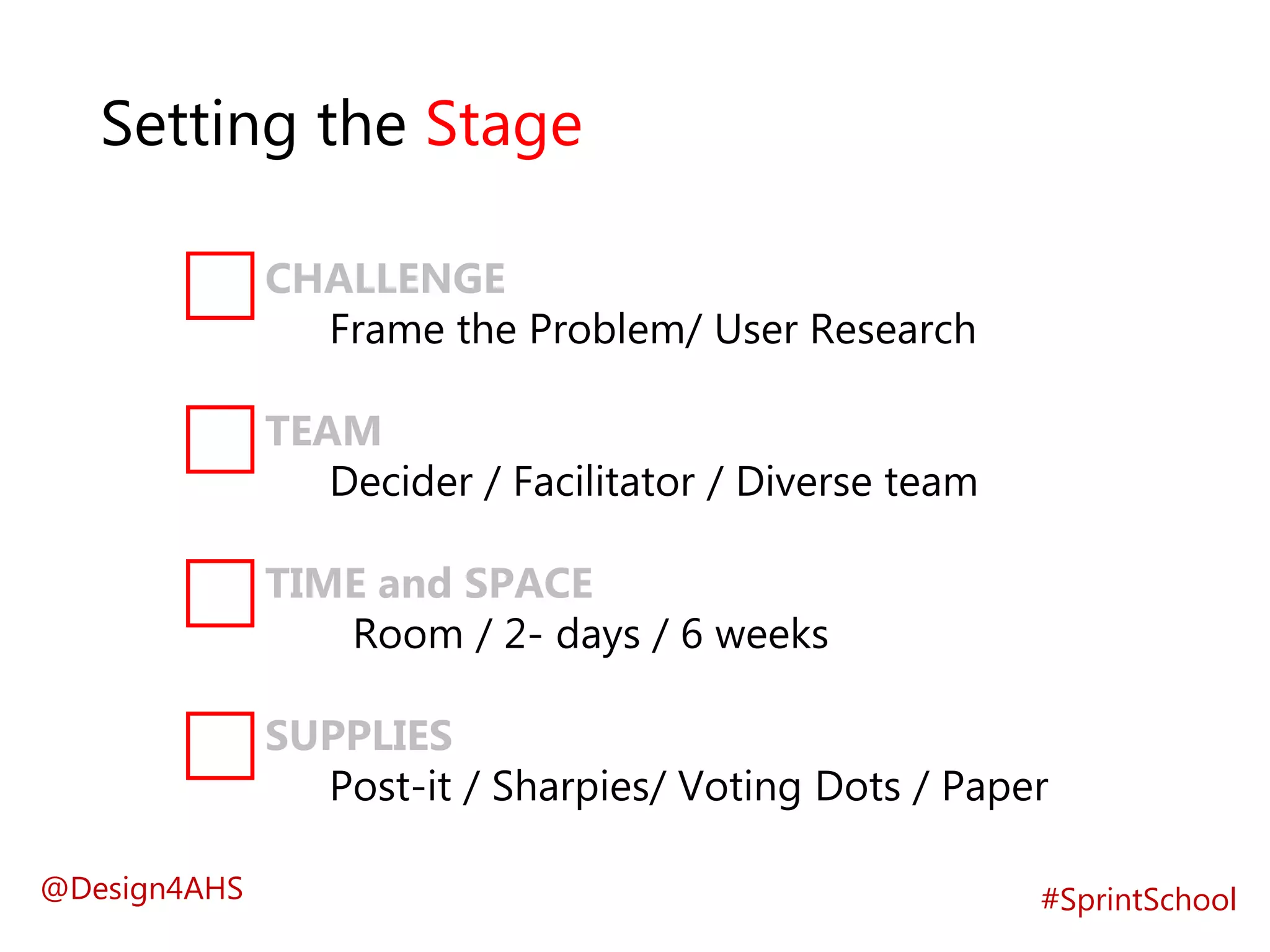
Setting the Stage
#SprintSchool
CHALLENGE
Frame the Problem/ User Research
TEAM
Decider / Facilitator / Diverse team
TIME and SPACE
Room / 2- days / 6 weeks
SUPPLIES
Post-it / Sharpies/ Voting Dots / Paper
@Design4AHS
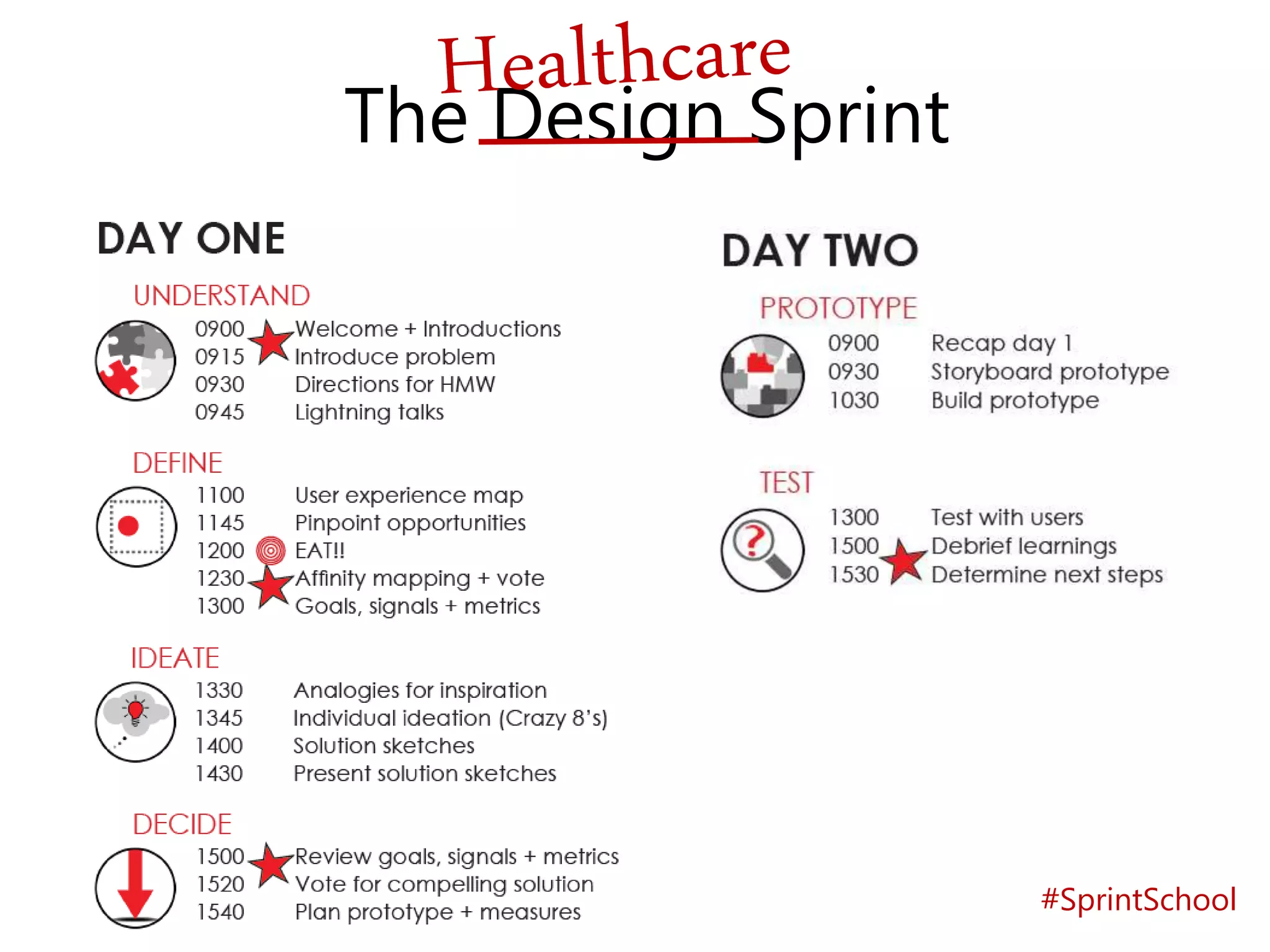
The Design Sprint
#SprintSchool
DAY ONE #SprintSchool
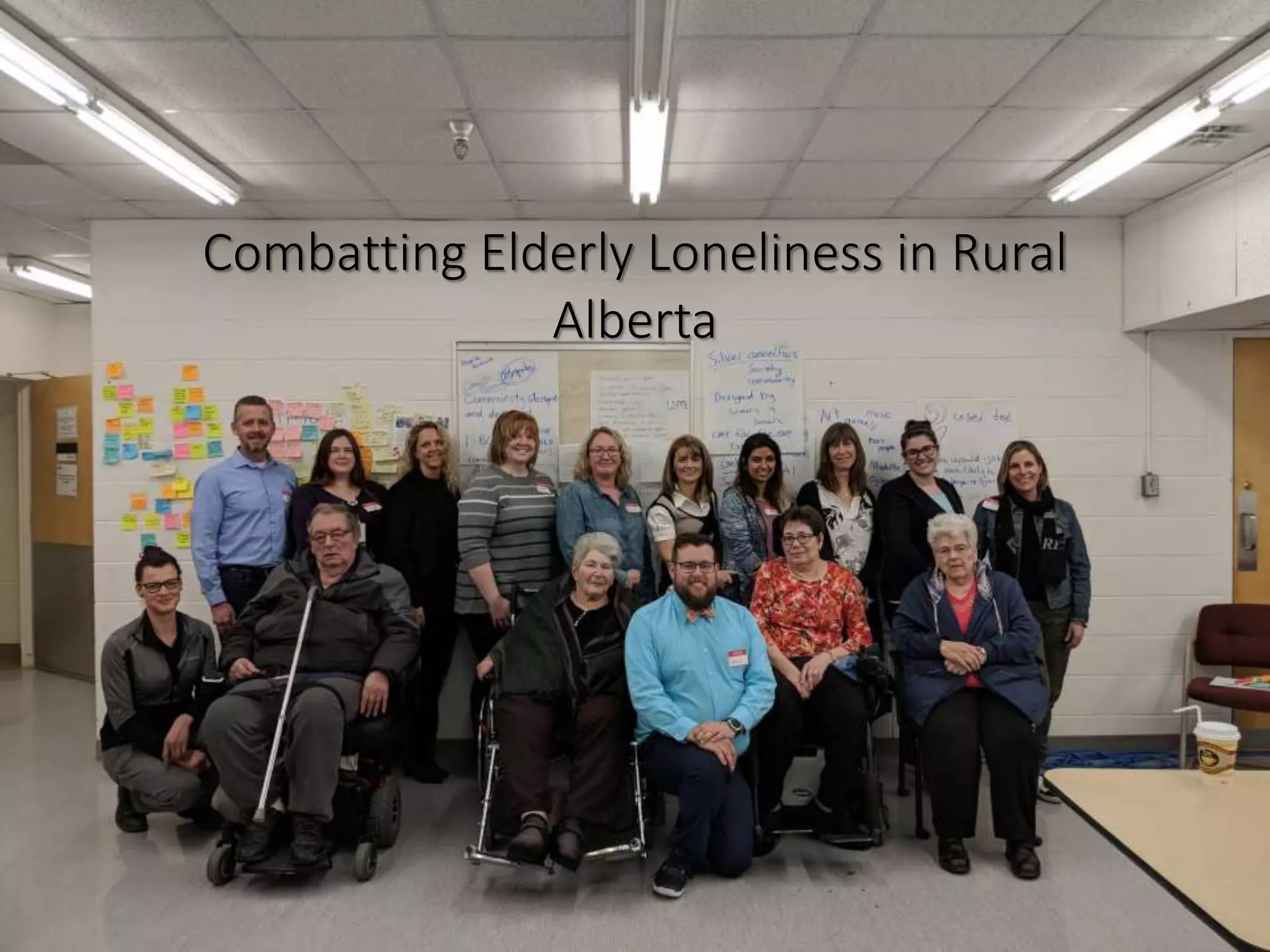
Combatting Elderly Loneliness in Rural
Alberta
The Problem:
Nobody is attending the seniors day activity
program at the long term care facility in rural
Alberta.
#SprintSchool@Design4AHS
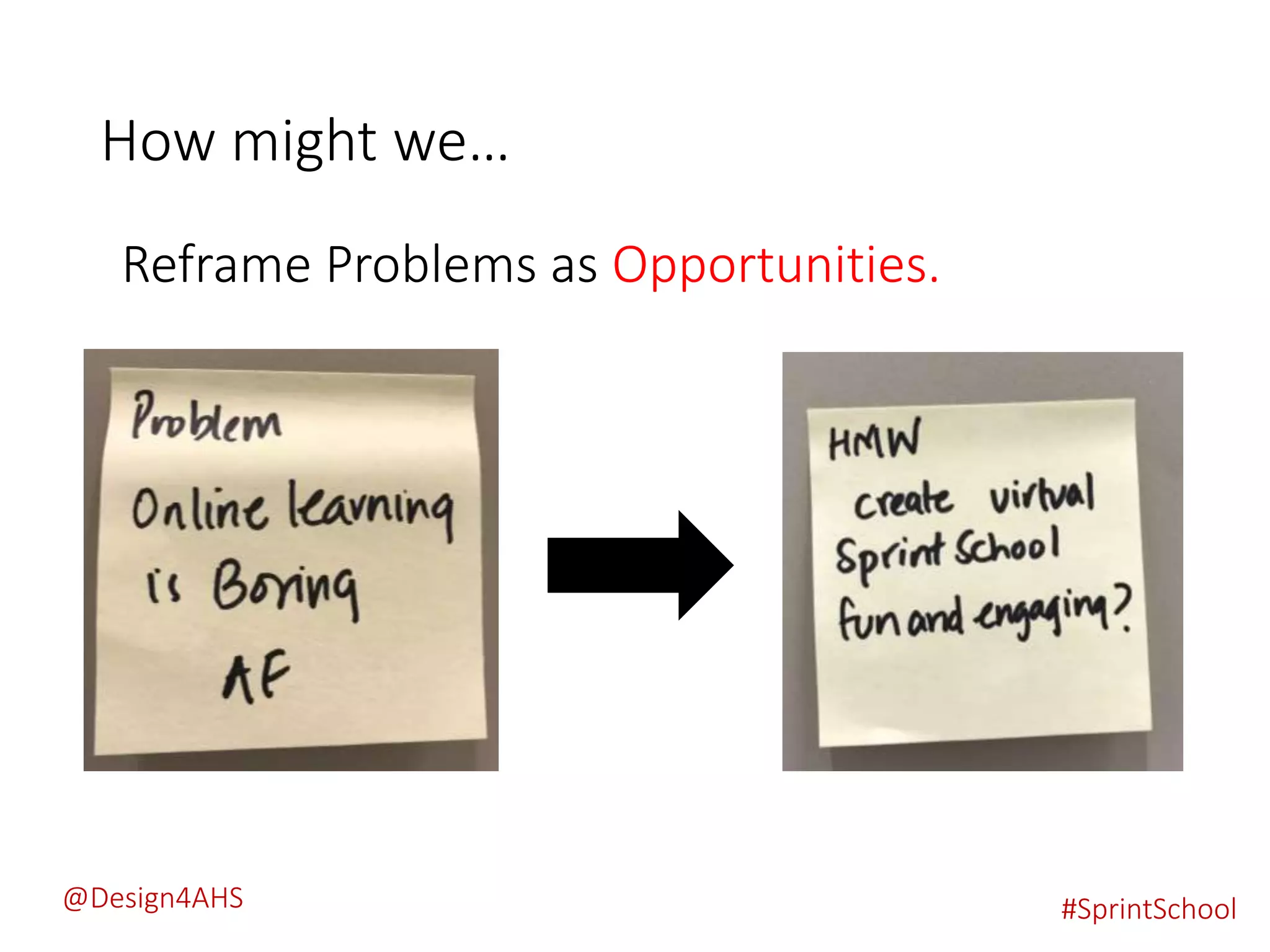
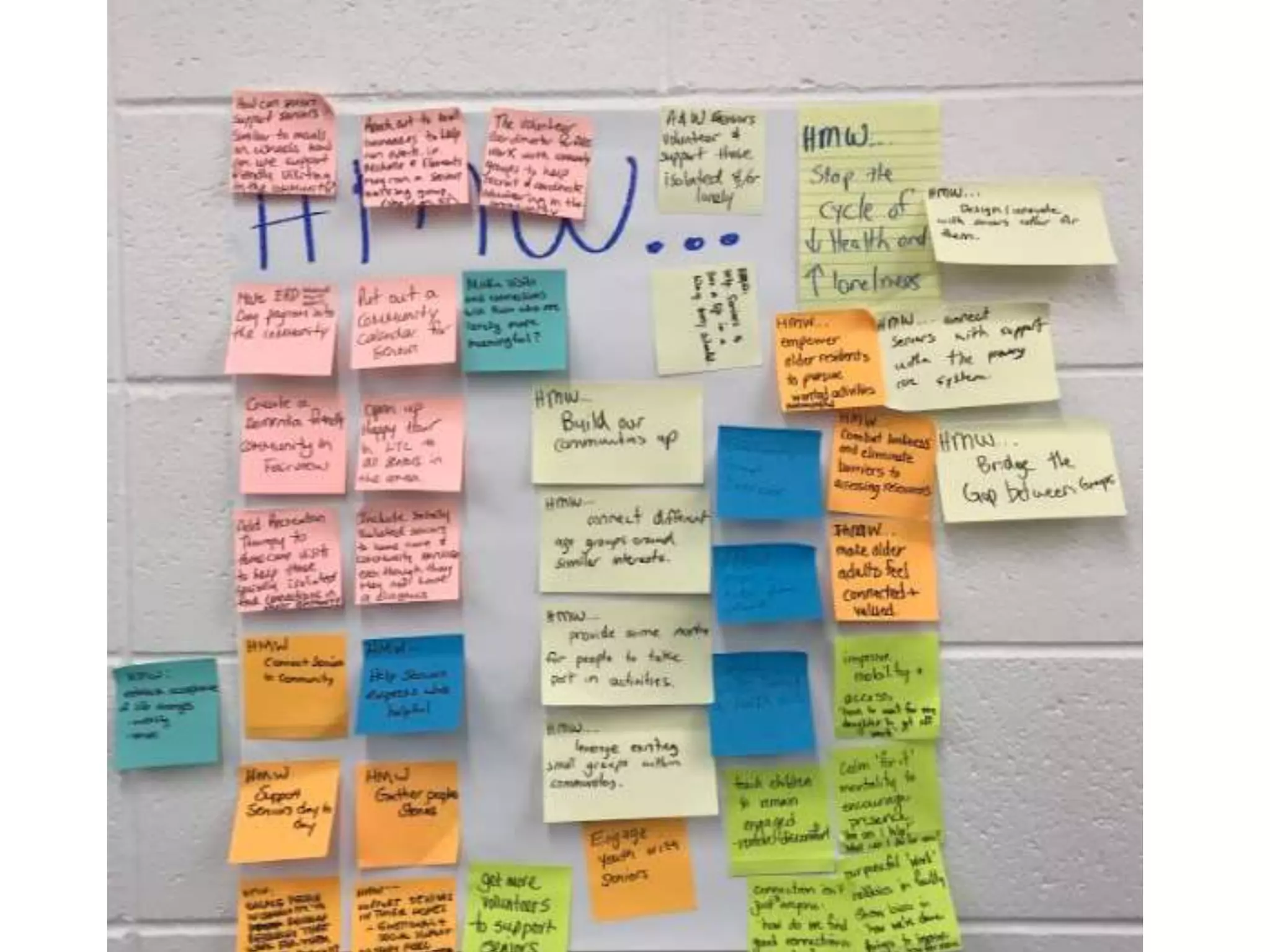
How might we…
#SprintSchool
Reframe Problems as Opportunities.
@Design4AHS
Now you try…
#SprintSchool
Take your personal challenge and reframe
into an opportunity!
@Design4AHS
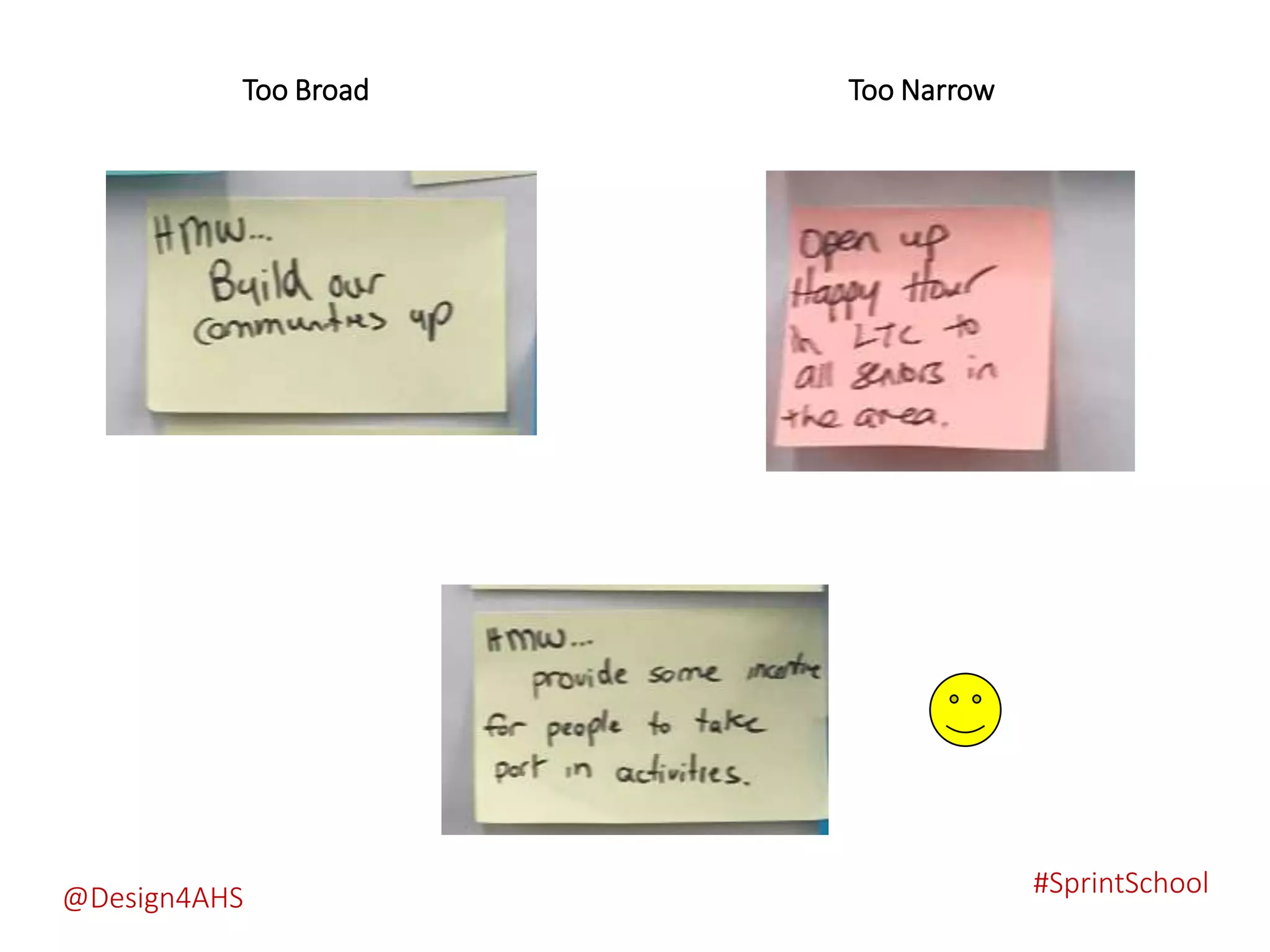
Too Broad Too Narrow
#SprintSchool@Design4AHS
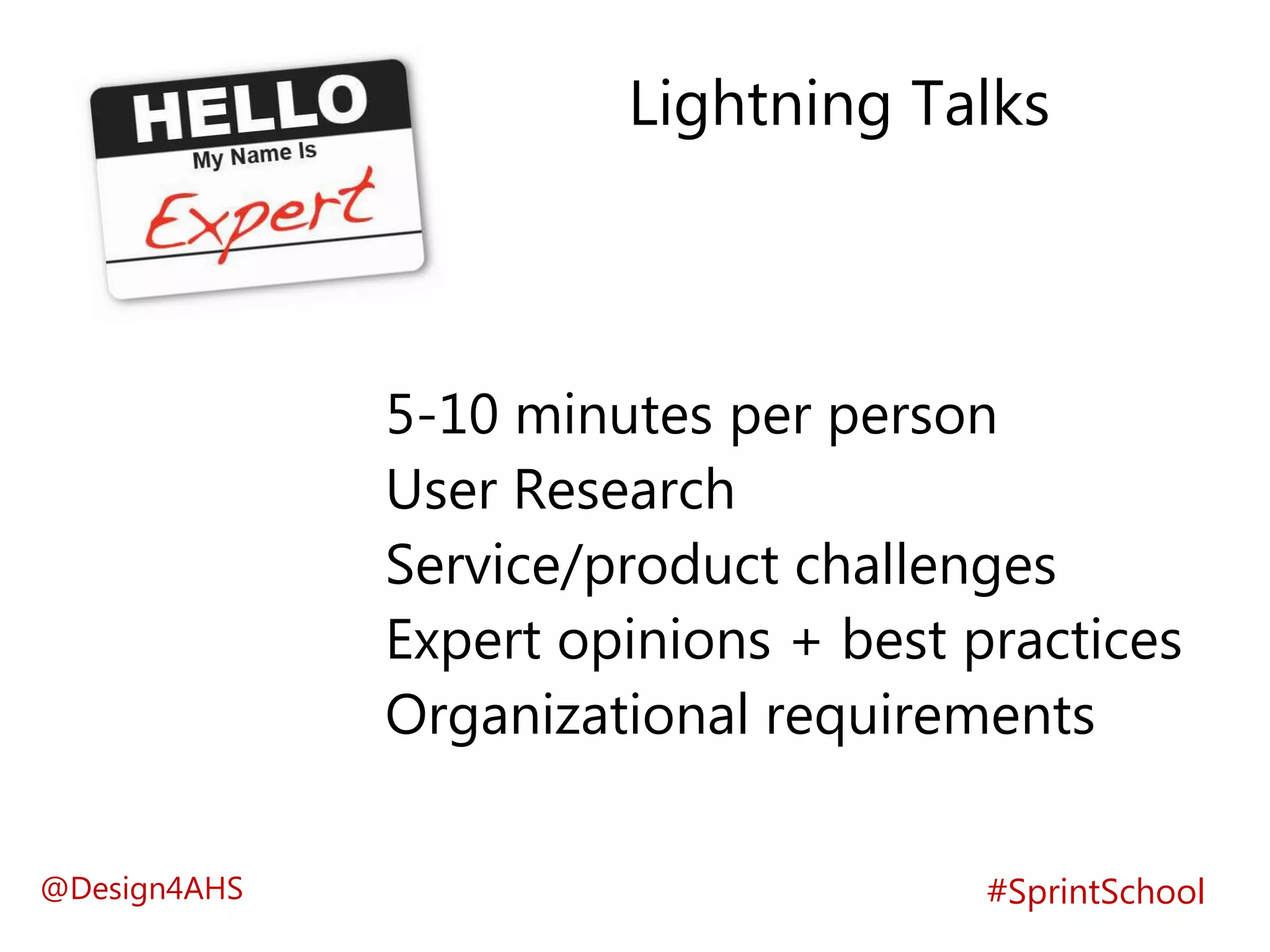
5-10 minutes per person
User Research
Service/product challenges
Expert opinions + best practices
Organizational requirements
#SprintSchool
Lightning Talks
@Design4AHS
#SprintSchool@Design4AHS
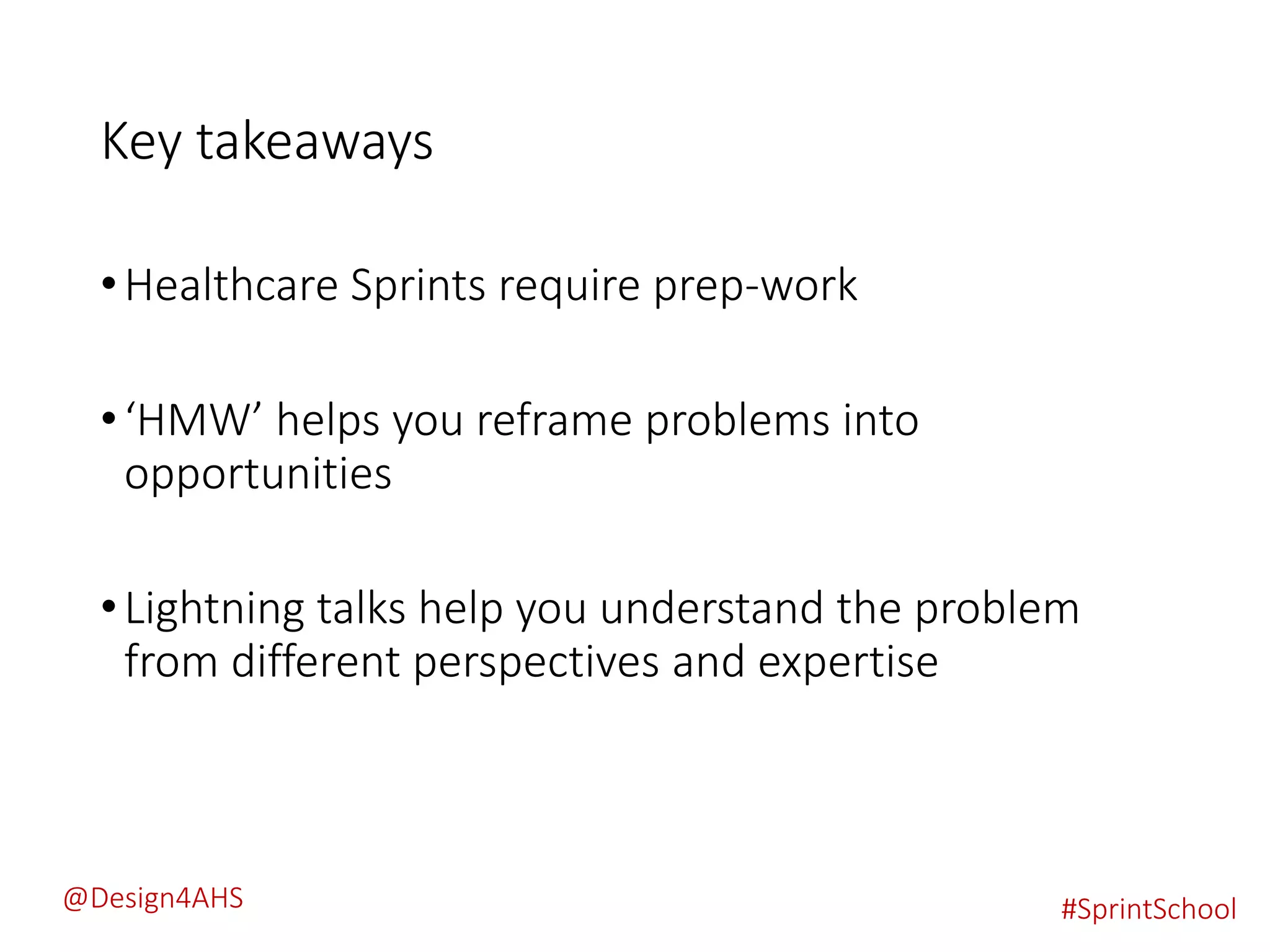
Key takeaways
•Healthcare Sprints require prep-work
•‘HMW’ helps you reframe problems into
opportunities
•Lightning talks help you understand the problem
from different perspectives and expertise
#SprintSchool@Design4AHS
Q + A
@Design4AHS #SprintSchool
Activity for the week
@Design4AHS #SprintSchool
Next week…
o Guest Speaker: Andrew Siu
o Picking a Target
o Goal setting
#SprintSchool@Design4AHS
Call me maybe…
•Design Lab: design.lab@ahs.ca
•Twitter: @Design4AHS
#SprintSchool@Design4AHS

Week 2 - Virtual Sprint School PPT

Editor's Notes

  • #2 Ali
  • #3 aa
  • #4 Pick 2. aa
  • #5 Where did the problem come from? Tell me more about this problem.
  • #8 End of every session we need a summary and we bring that back . aa
  • #9 Zayna Recap You cannot QI you way out of the bottom. Iphone example
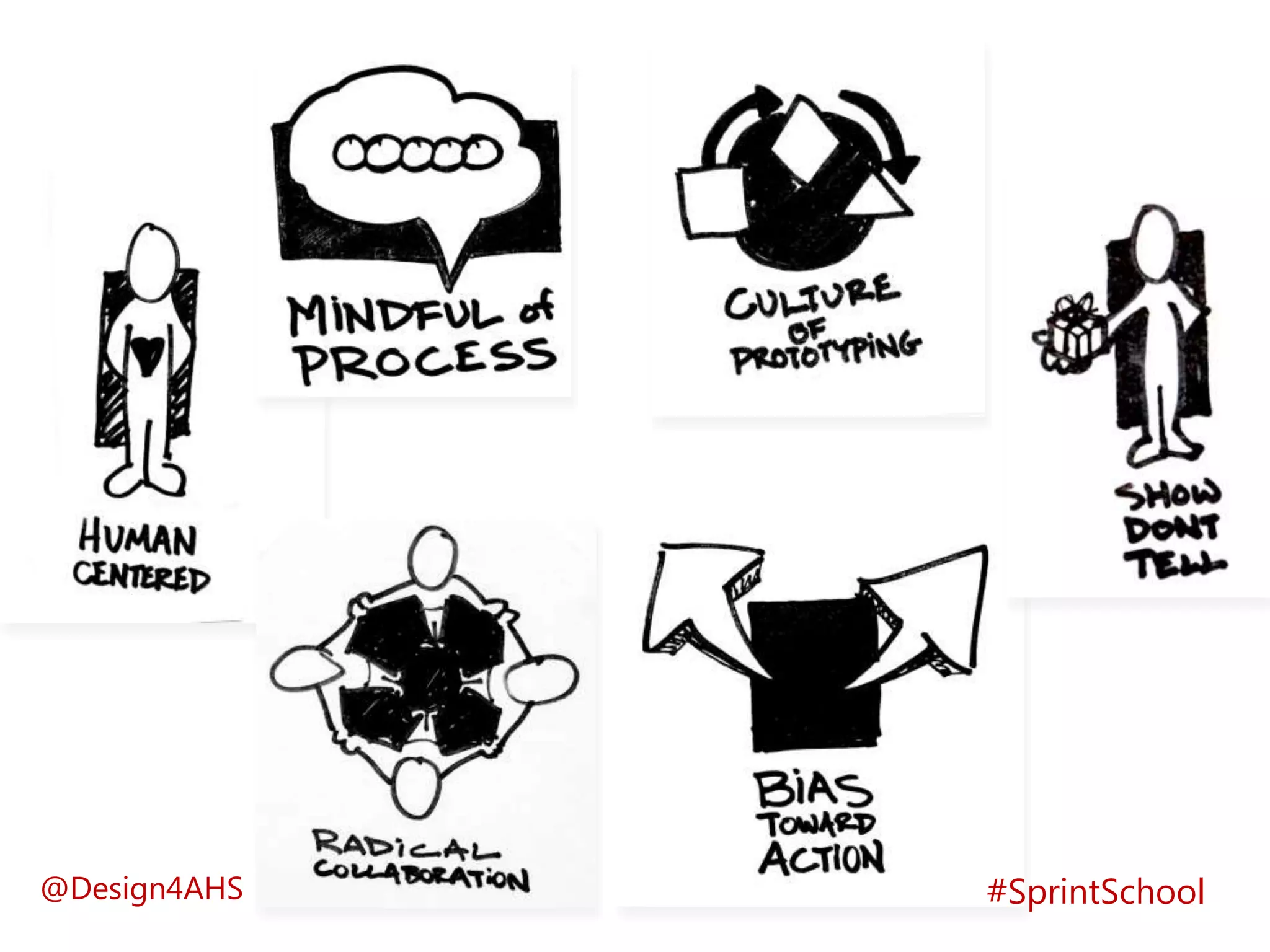
  • #10 We talked about that that to be innovative and start solving problems differently we need to shift our mindsets. So Underneath sprints are these key mindsets: Focus on human values : empathy for the people we are designing for and getting feedback from them Embrace Experimentation: Prototyping is not simply to validate idea. We build to think and learn Bias toward actions: Sprints are all about doing and making over talking and meeting Radical collaboration: bring together different viewpoints and background, enables breakthrough and insights that emerges from diversity. Show don’t tell: Communicate your vision in an impactful by visuals and telling good stories Mindful of process : Understand the steps of the methodology and each of the stages has a unique goal Which mindset is missing the most in healthcare? And why
  • #11 Day 1 you understand your problem, decide what part of the problem to solve and decide what solutions to test Day 2: design prototype versions of your solution and test with real users to get their feedback
  • #12 Ali
  • #13 Indigenous land recognition Lori welcome Rules of engagement
  • #17 Shalyn- What was your biggest Aha! Moment?
  • #18 Day 1 you understand your problem, decide what part of the problem to solve and decide what solutions to test Day 2: design prototype versions of your solution and test with real users to get their feedback
  • #19 Josh
  • #20 1- Framing the problem are the first step that we need to acknowledge. 2- Team really important -> Decider Has the final say and good know resources – Decider 2) Facilitator- running the show/ coordinating 3) diverse team. 3- Time and Space: Room –> Space/ 6 weeks / book 2 days out. ( first thing supplies) 4- Supplies -
  • #21 Day 1 you understand your problem, decide what part of the problem to solve and decide what solutions to test Day 2: design prototype versions of your solution and test with real users to get their feedback
  • #23 Complex community coalition problem
  • #25 Note taking method that we use during the understand phase, which helps us capture insight and pain points and positively reframe them. This is the first instruction we give to people. To take out their post it note and pens and capture their thoughts, ideas and write them out. How might we is a brilliant “How” guides team members to believe the answer is out there. “Might” lets team members know their HMW statement might or might not work, and either possibility is okay “We” reminds team members that the Design Sprint is about teamwork and building on each others’ ideas
  • #26 Type into text box – 2 mins
  • #29 lightning talk is the first activity of the understanding phase of a sprint, our goal is to get everyone in the room to understand the problem from different perspectives. During LT we identify key speakers from the team and sometimes we invite speakers during the sprint, to speak for 5-10 minutes on a relevant topic related to the challenge. The LT can range from 30-60 mins. Topics can range from Environmental scan User perspective (patient) Frontline staff perspective Management perspective (business goals/budgets etc)
  • #32 Indigenous land recognition Lori welcome Rules of engagement
  • #33 Bring us your problem – what is your challenge
  • #36 Josh