A DESIGNER WALKS
INTO A LIBRARY…
Presented by Paul-Jervis Heath
at I2C2 in Manchester
on Thursday, 7 March 2014.
MODERN
HUMAN.
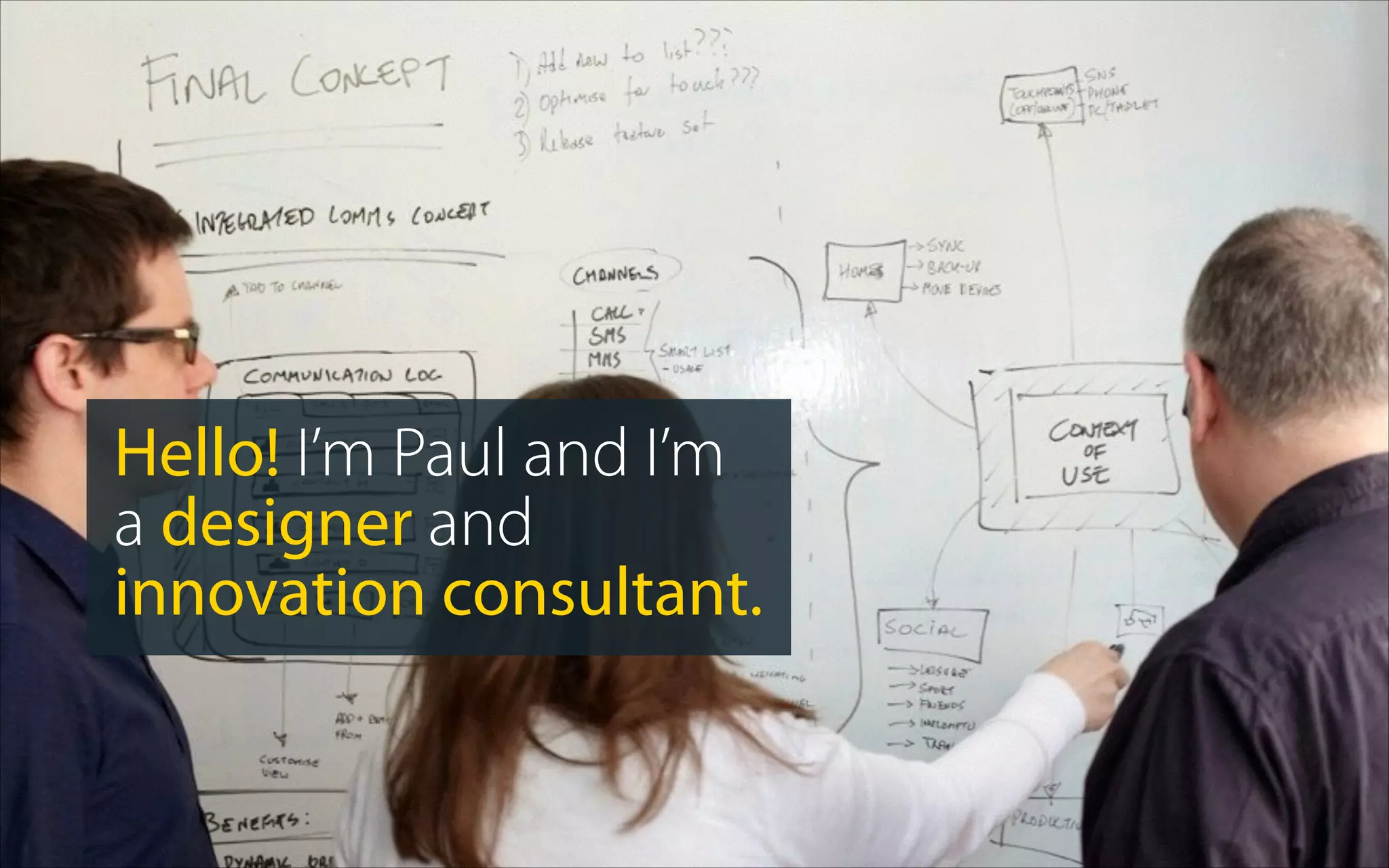
Hello! I’m Paul and I’m
a designer and
innovation consultant.
🕅🕆
Photo credit
Flickr user Anna L Martin - http://bit.ly/1hOknrj
114
libraries
8m
volumes
in the University Library
6,000
academic staff
18,500
students
Academic Libraries
face a perfect storm.
🕅🕆🕋
Photo credit
Flickr user Jerry Angelica Photography - http://bit.ly/1pKfZzc
Consumer technology is
driving the expectations of
both students and faculty.
The library is a natural home
for an institutions eLearning
platform, MOOC and the
material it contains.
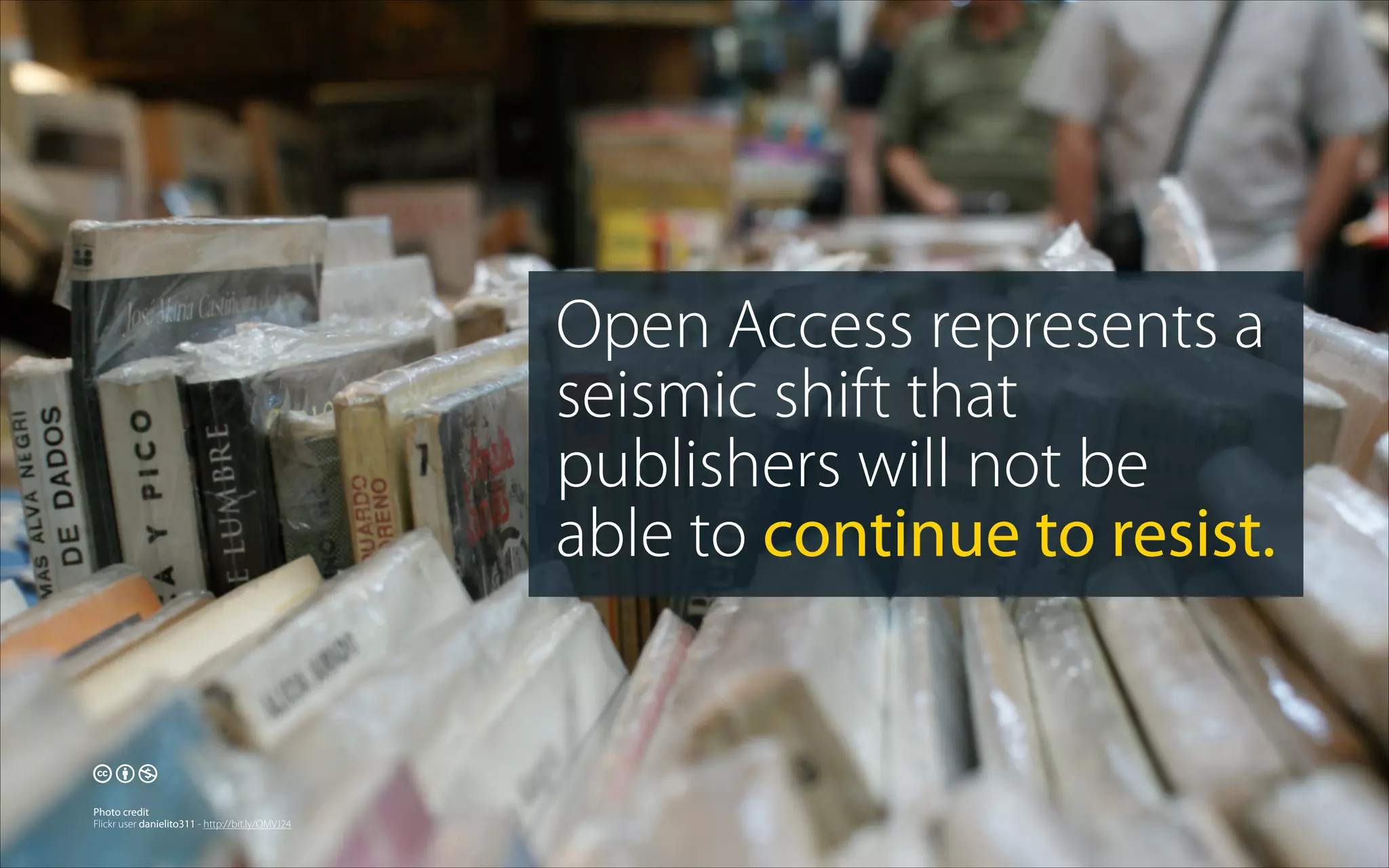
Open Access represents a
seismic shift that
publishers will not be
able to continue to resist.
🕅🕆🕇
Photo credit
Flickr user danielito311 - http://bit.ly/OMVJ24
“To invent a future that
doesn't exist, you really have
to understand what people
are doing today and
completely reimagine it”
– Bill Burnett: executive director of the design program at d.school, Stanford.
🕅🕆🕇🕋
Photo credit
Flickr user kakakakatie1983 - http://bit.ly/OMU2Sb
Innovation is driven
by design research
not market research.
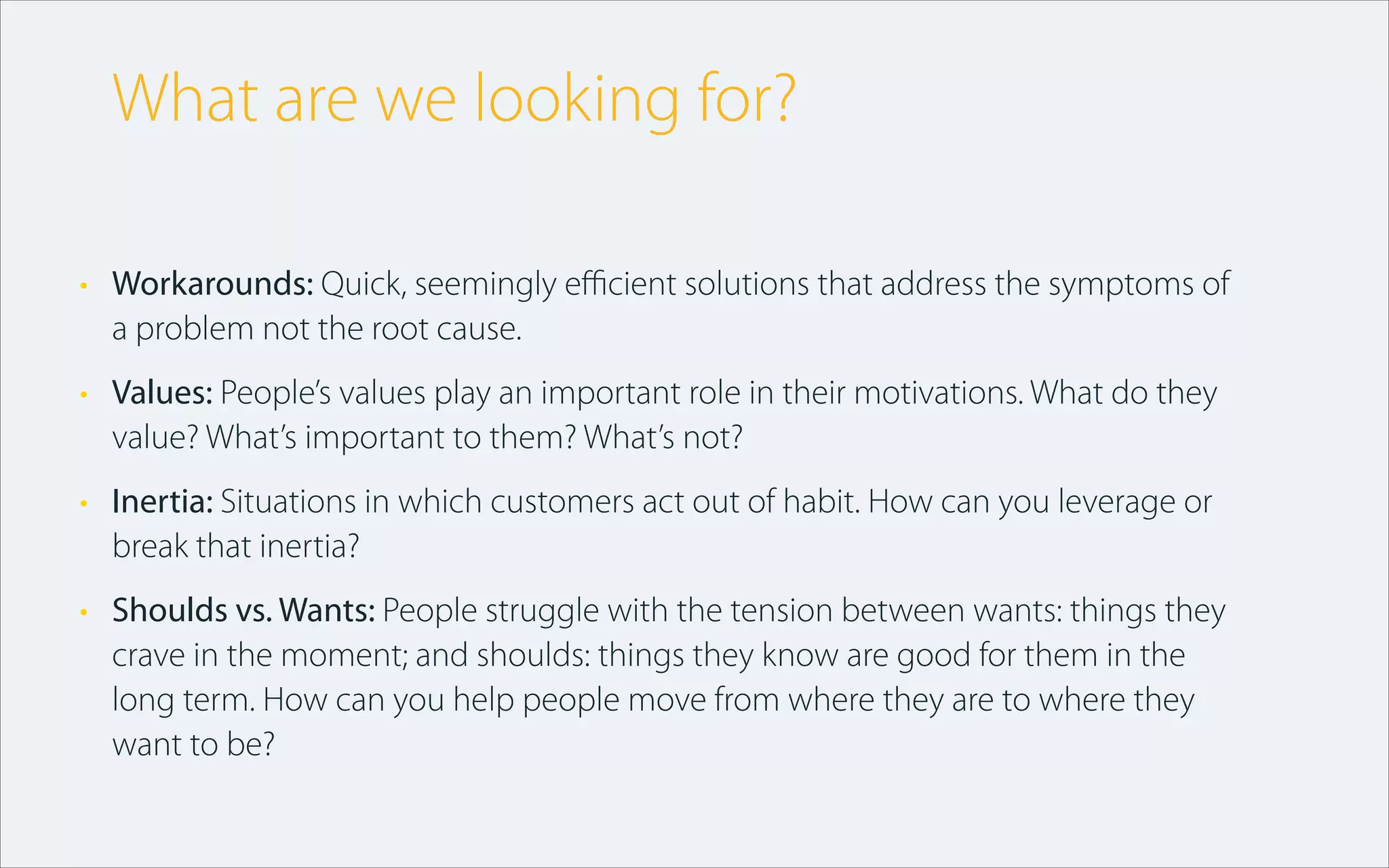
• Workarounds: Quick, seemingly efficient solutions that address the symptoms of
a problem not the root cause.
• Values: People’s values play an important role in their motivations. What do they
value? What’s important to them? What’s not?
• Inertia: Situations in which customers act out of habit. How can you leverage or
break that inertia?
• Shoulds vs. Wants: People struggle with the tension between wants: things they
crave in the moment; and shoulds: things they know are good for them in the
long term. How can you help people move from where they are to where they
want to be?
What are we looking for?
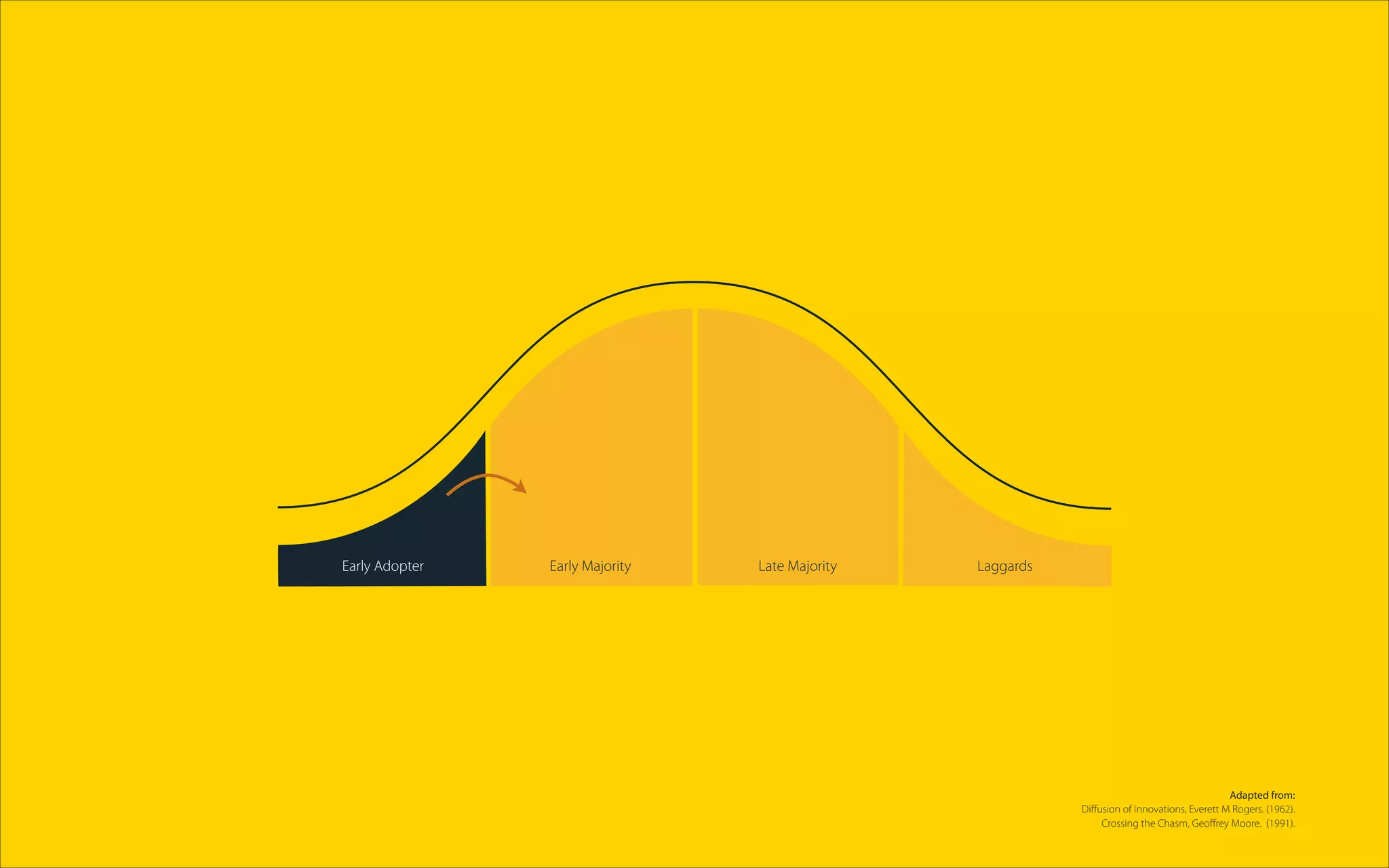
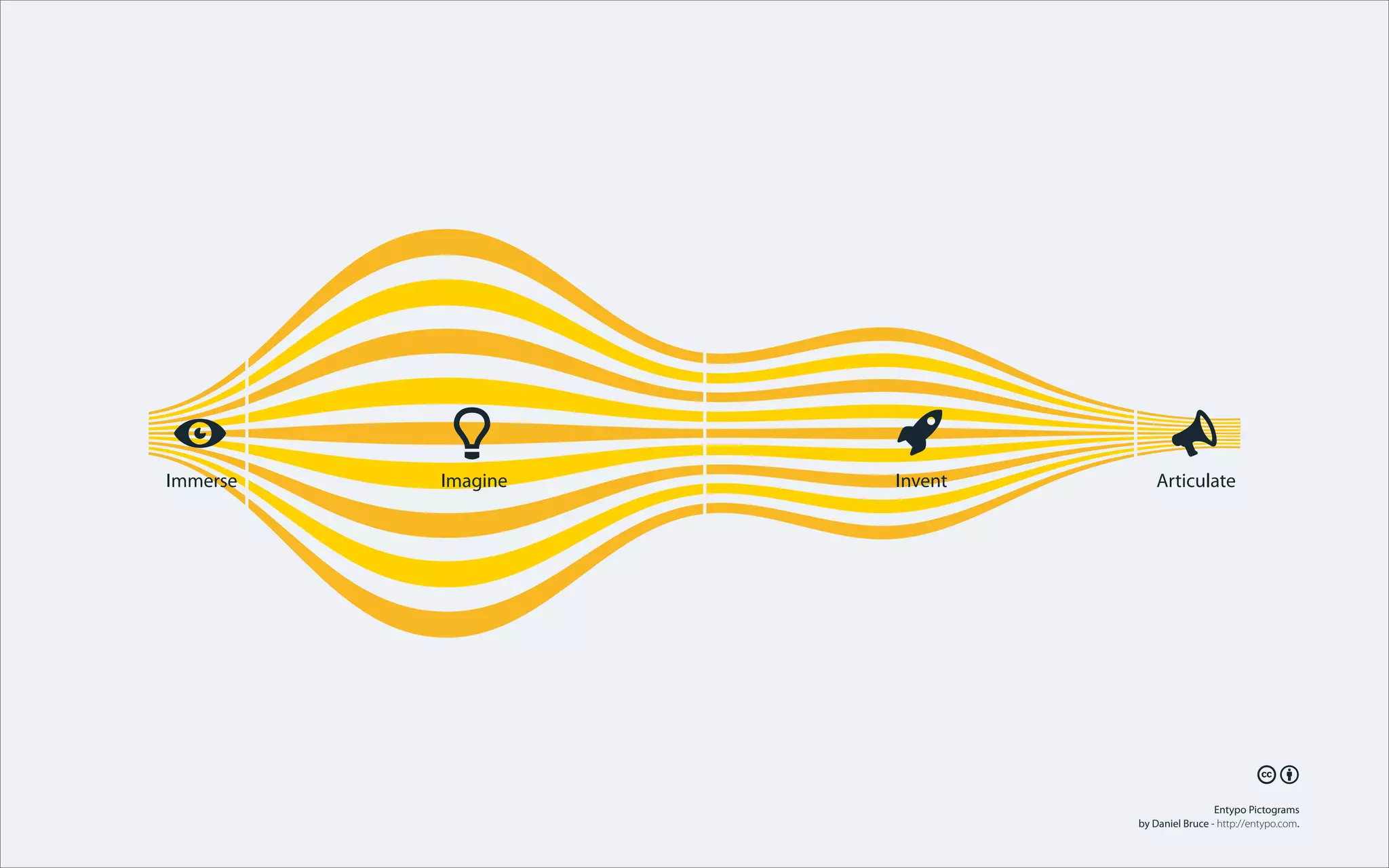
Adapted from:
Diffusion of Innovations, Everett M Rogers. (1962).
Crossing the Chasm, Geoffrey Moore. (1991).
Early Adopter Early Majority Late Majority Laggards
💡 🚀 📣Immerse Imagine Invent Articulate
🕅🕆
Entypo Pictograms
by Daniel Bruce - http://entypo.com.
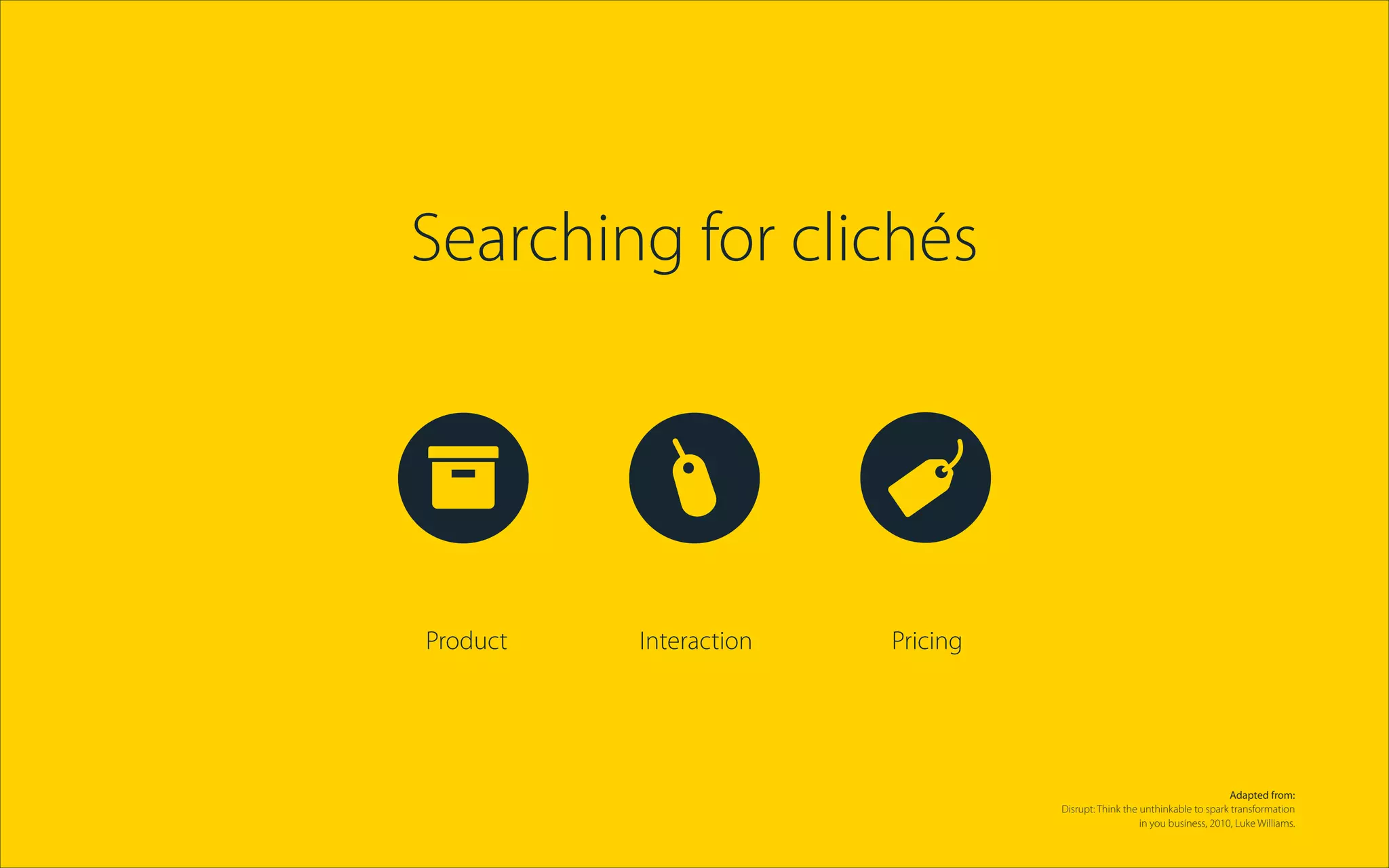
Searching for clichés
Product Interaction Pricing
📦
Adapted from:
Disrupt: Think the unthinkable to spark transformation
in you business, 2010, Luke Williams.
Let’s Design a Better World with
Everyone.
🕅🕆
Idea Jams enable
lots of people to
be involved in the
ideation process.
Photo credit
Flickr user asadotzler - http://bit.ly/15sTd0V
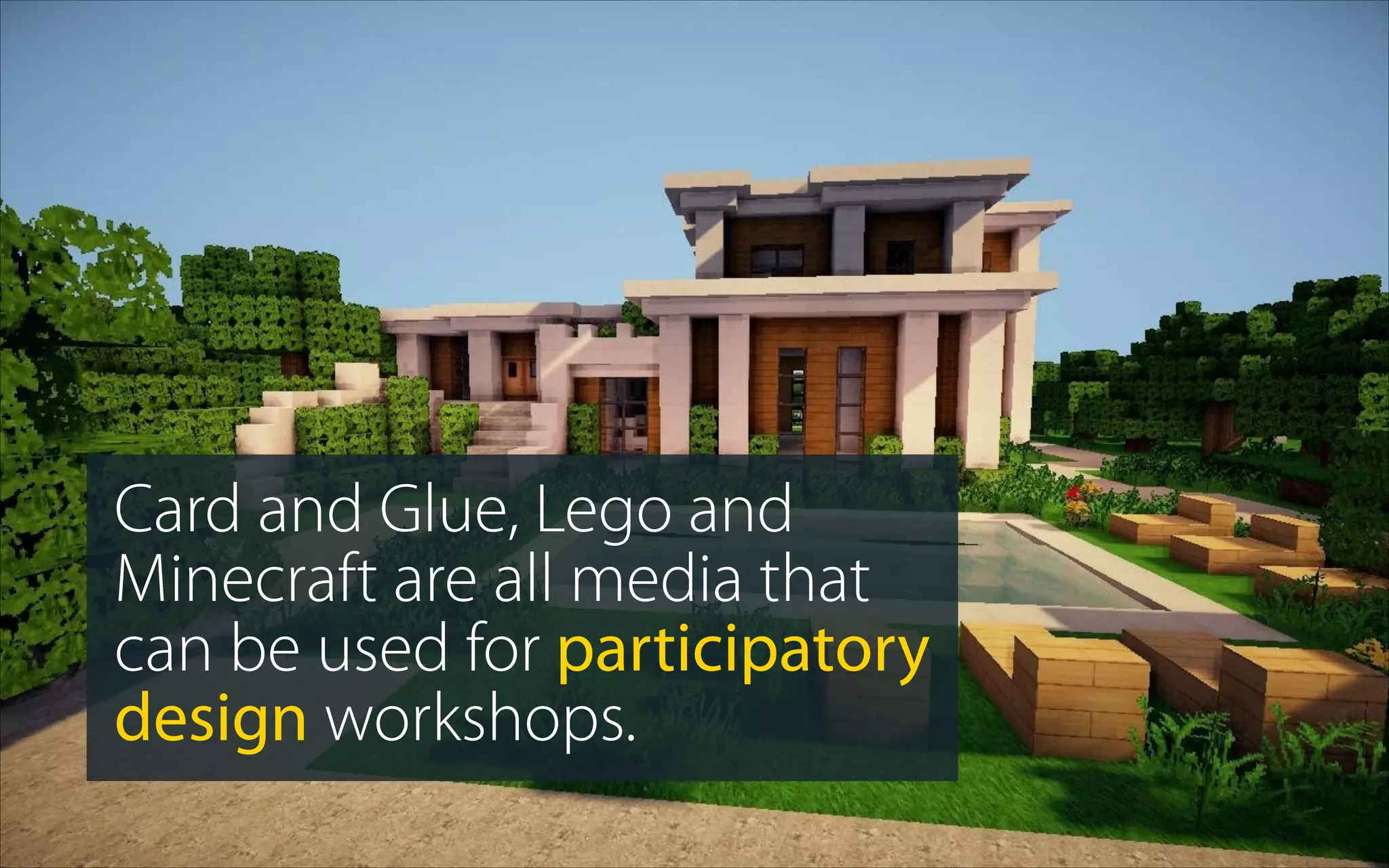
Card and Glue, Lego and
Minecraft are all media that
can be used for participatory
design workshops.
Architects vs. Scientists:
synthesis as a creative
problem-solving strategy.
🕅🕆🕇🕋
Photo credit
Flickr user kakakakatie1983 - http://bit.ly/OMU2Sb
CHAPTER TITLE.
Early stage prototyping
provides validated learning.
• Use prototypes to learn about user behaviour with your concept
• Validates emergent service against business objectives and goals
• Validates Concepts with Users
• Use Scenario Testing, Concept Probes, Cognitive Walkthroughs with Real
Users, Mock environments, Roleplay.
Experimenting with prototypes.
• Iteration is vital for success
• Treat the concept as a hypothesis not as a definitive solution
• Learn everything you can
• Adapt to what you learn
• Refine the concept, refine the prototype
• Test Again
Iterate and refine.
With University of
Cambridge we’re
using design thinking
to work out how we
address the challenges
of the 21st Century.
🕅🕆
Photo credit
Flickr user YLev - http://bit.ly/MDQTCh
• Change is coming and it looks exciting.
• Focus group are not design research and will not lead to innovation.
• Shadowing and diary studies help you understand people’s latent needs,
their behaviour and their motivations.
• Divergent thinking and convergent think are separate stages of creative
problem solving.
Wait, what did he say?
• Identifying clichés and turning them on their heads kick-starts creativity.
• Codesign involves everyone in coming up with solutions. It can be a
huge amount of fun and it’s massively valuable.
• Synthesis is just as valuable as analysis and leads to different solutions.
• Prototype as early as possible. Learn everything you can from your
prototypes.
Wait, what did he say?
Paul-Jervis Heath
paul@modernhuman.co
@pauljervisheath
MODERN
HUMAN.
We use human-centred design to help
businesses invent their future. We’re a
design practice & innovation consultancy.
Find out more at http://modernhuman.co

안­전­놀­이­터­추­천≥≥ WE49닷­ С­О­М ≤≤안­전­놀­이­터ミイ토­토­사­이­트­추­천

  • 1.
    A DESIGNER WALKS INTOA LIBRARY… Presented by Paul-Jervis Heath at I2C2 in Manchester on Thursday, 7 March 2014. MODERN HUMAN.
  • 2.
    Hello! I’m Pauland I’m a designer and innovation consultant.
  • 3.
    🕅🕆 Photo credit Flickr userAnna L Martin - http://bit.ly/1hOknrj 114 libraries 8m volumes in the University Library 6,000 academic staff 18,500 students
  • 4.
    Academic Libraries face aperfect storm. 🕅🕆🕋 Photo credit Flickr user Jerry Angelica Photography - http://bit.ly/1pKfZzc
  • 5.
    Consumer technology is drivingthe expectations of both students and faculty.
  • 6.
    The library isa natural home for an institutions eLearning platform, MOOC and the material it contains.
  • 7.
    Open Access representsa seismic shift that publishers will not be able to continue to resist. 🕅🕆🕇 Photo credit Flickr user danielito311 - http://bit.ly/OMVJ24
  • 8.
    “To invent afuture that doesn't exist, you really have to understand what people are doing today and completely reimagine it” – Bill Burnett: executive director of the design program at d.school, Stanford. 🕅🕆🕇🕋 Photo credit Flickr user kakakakatie1983 - http://bit.ly/OMU2Sb
  • 9.
    Innovation is driven bydesign research not market research.
  • 12.
    • Workarounds: Quick,seemingly efficient solutions that address the symptoms of a problem not the root cause. • Values: People’s values play an important role in their motivations. What do they value? What’s important to them? What’s not? • Inertia: Situations in which customers act out of habit. How can you leverage or break that inertia? • Shoulds vs. Wants: People struggle with the tension between wants: things they crave in the moment; and shoulds: things they know are good for them in the long term. How can you help people move from where they are to where they want to be? What are we looking for?
  • 13.
    Adapted from: Diffusion ofInnovations, Everett M Rogers. (1962). Crossing the Chasm, Geoffrey Moore. (1991). Early Adopter Early Majority Late Majority Laggards
  • 14.
    💡 🚀 📣ImmerseImagine Invent Articulate 🕅🕆 Entypo Pictograms by Daniel Bruce - http://entypo.com.
  • 15.
    Searching for clichés ProductInteraction Pricing 📦 Adapted from: Disrupt: Think the unthinkable to spark transformation in you business, 2010, Luke Williams.
  • 16.
    Let’s Design aBetter World with Everyone. 🕅🕆 Idea Jams enable lots of people to be involved in the ideation process. Photo credit Flickr user asadotzler - http://bit.ly/15sTd0V
  • 17.
    Card and Glue,Lego and Minecraft are all media that can be used for participatory design workshops.
  • 18.
    Architects vs. Scientists: synthesisas a creative problem-solving strategy. 🕅🕆🕇🕋 Photo credit Flickr user kakakakatie1983 - http://bit.ly/OMU2Sb
  • 19.
    CHAPTER TITLE. Early stageprototyping provides validated learning.
  • 20.
    • Use prototypesto learn about user behaviour with your concept • Validates emergent service against business objectives and goals • Validates Concepts with Users • Use Scenario Testing, Concept Probes, Cognitive Walkthroughs with Real Users, Mock environments, Roleplay. Experimenting with prototypes.
  • 21.
    • Iteration isvital for success • Treat the concept as a hypothesis not as a definitive solution • Learn everything you can • Adapt to what you learn • Refine the concept, refine the prototype • Test Again Iterate and refine.
  • 22.
    With University of Cambridgewe’re using design thinking to work out how we address the challenges of the 21st Century. 🕅🕆 Photo credit Flickr user YLev - http://bit.ly/MDQTCh
  • 23.
    • Change iscoming and it looks exciting. • Focus group are not design research and will not lead to innovation. • Shadowing and diary studies help you understand people’s latent needs, their behaviour and their motivations. • Divergent thinking and convergent think are separate stages of creative problem solving. Wait, what did he say?
  • 24.
    • Identifying clichésand turning them on their heads kick-starts creativity. • Codesign involves everyone in coming up with solutions. It can be a huge amount of fun and it’s massively valuable. • Synthesis is just as valuable as analysis and leads to different solutions. • Prototype as early as possible. Learn everything you can from your prototypes. Wait, what did he say?
  • 25.
    Paul-Jervis Heath paul@modernhuman.co @pauljervisheath MODERN HUMAN. We usehuman-centred design to help businesses invent their future. We’re a design practice & innovation consultancy. Find out more at http://modernhuman.co