MUSIC: MAJOR PROJECT
PERF2068
IAN ROGERS & GENE SHILL
ian.rogers@rmit.edu.au
gene.shill@rmit.edu.au
The one thing you need to know...
“ Many people seem to think that the
music industry exists to make music. In
fact, it exists to make money from music,
mostly by moving it from one place to
another.” - Charles Fairchild
Some realities...
● $0 price-point for recorded music : Premium for live music
● Traditional media still absolutely in play (VMDO)
● High volume of material to market : Low barrier to entry
● Cultural capital (leisure) : Capital (work)
● Australian market: LOTS of cultural capital.
● Export market / Visas : DIY International Touring
● Success = entrepreneurship (financially, creatively, etc.)
● Politics in play: identity, state policy, party politics, etc.
● Virtually no tier of Australian music unaffected by grant-
funding
● For some people, all this is fun.
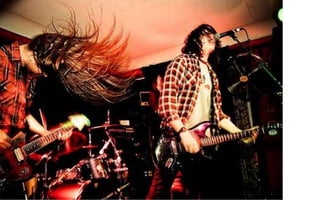
When I asked James Kritzler (2008) of Slug Guts
why bands usually break-up, he gave a simple
answer: ‘Because I’m in them.’
Interviewer: Why do bands normally break up?
Luke Boerdam: Because a band must be one of
the stupidest ideas of how to run something
logically. Who would have thought ‘Let’s put four
people together and make one whole piece of
music or art’? It’s one of the hardest things ever.
Your big advantages....
YOU CAN BEHAVE FASTER AND LOOSER THAN EVERYONE
ELSE.
SMASH OUT TRACKS. (Speed to market)
TAKE WILD CHANCES ON EVENTS, RECORDS, BANDS,
TOURS, STORIES, ETC. (Profit from risk / Can take the
knocks)
GO OUT EVERY NIGHT. (Build social capital)
PERCEIVED & REAL VALUE OF YOUTH (Yr own focus group)
TODAY
● Course Admin
● Assessment
● Cohort building
COURSE ADMIN
● CANVAS is the only place
● Class attendance is strongly
recommended (Peer review is 10%)
ASSESSMENT
3 pieces:
1. It’s all on Canvas
2. It’s all on Canvas
3. It’s all on Canvas
Let’s look.
Let’s do the form for Assessment 2.
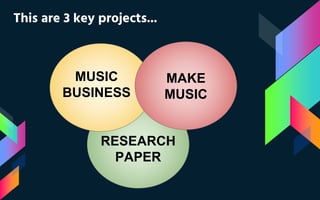
MAKE MUSIC
This are 3 key projects...
BUSINESS
PLAN
RESEARCH
PAPER
MAKE
MUSIC
MUSIC
BUSINESS
DOING MUSIC (GENE)
› 5 songs, ready for market by semester’s
end.
› You need demo’s TODAY!
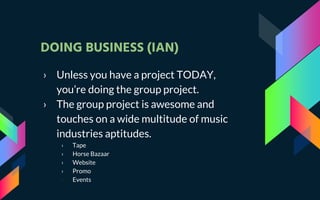
DOING BUSINESS (IAN)
› Unless you have a project TODAY,
you’re doing the group project.
› The group project is awesome and
touches on a wide multitude of music
industries aptitudes.
› Tape
› Horse Bazaar
› Website
› Promo
› Events
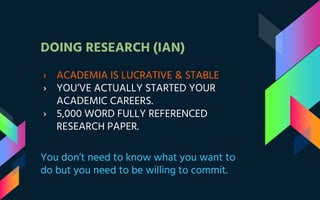
DOING RESEARCH (IAN)
› ACADEMIA IS LUCRATIVE & STABLE
› YOU’VE ACTUALLY STARTED YOUR
ACADEMIC CAREERS.
› 5,000 WORD FULLY REFERENCED
RESEARCH PAPER.
You don’t need to know what you want to
do but you need to be willing to commit.
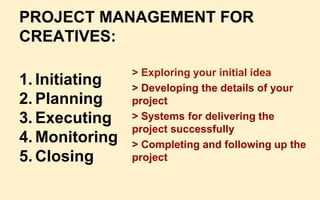
PROJECT MANAGEMENT FOR
CREATIVES:
1. Initiating
2. Planning
3. Executing
4. Monitoring
5. Closing
> Exploring your initial idea
> Developing the details of your
project
> Systems for delivering the
project successfully
> Completing and following up the
project
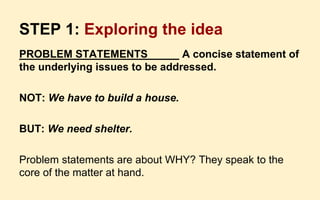
STEP 1: Exploring the idea
PROBLEM STATEMENTS A concise statement of
the underlying issues to be addressed.
NOT: We have to build a house.
BUT: We need shelter.
Problem statements are about WHY? They speak to the
core of the matter at hand.
LET’S
THINK OUT
LOUD
IN GROUPS OF 3-4, TALK ABOUT WHAT
YOU MIGHT DO. WRITE IT DOWN. BE
READY TO TELL THE CLASS. (10 MIN)
SPLIT UP
ASSIGN AS 2 GROUPS
ASSIGN AS 2 GROUPS
- Exchange contact details
- Brief discussion on how/when
you might work on the
assignment
- Take 5 minutes to bounce
around some ideas around?
BREAK OUT
TAKE 15 MINS & WRITE DOWN...
1. THE PROBLEM YOU ARE
SOLVING
2. THE GOAL (SIMPLE / START
BASIC)
3. THE OBJECTIVES
(SPECIFICS AND METRICS)

Week 1 2019

  • 2.
    MUSIC: MAJOR PROJECT PERF2068 IANROGERS & GENE SHILL ian.rogers@rmit.edu.au gene.shill@rmit.edu.au
  • 3.
    The one thingyou need to know... “ Many people seem to think that the music industry exists to make music. In fact, it exists to make money from music, mostly by moving it from one place to another.” - Charles Fairchild
  • 4.
    Some realities... ● $0price-point for recorded music : Premium for live music ● Traditional media still absolutely in play (VMDO) ● High volume of material to market : Low barrier to entry ● Cultural capital (leisure) : Capital (work) ● Australian market: LOTS of cultural capital. ● Export market / Visas : DIY International Touring ● Success = entrepreneurship (financially, creatively, etc.) ● Politics in play: identity, state policy, party politics, etc. ● Virtually no tier of Australian music unaffected by grant- funding ● For some people, all this is fun.
  • 7.
    When I askedJames Kritzler (2008) of Slug Guts why bands usually break-up, he gave a simple answer: ‘Because I’m in them.’
  • 9.
    Interviewer: Why dobands normally break up? Luke Boerdam: Because a band must be one of the stupidest ideas of how to run something logically. Who would have thought ‘Let’s put four people together and make one whole piece of music or art’? It’s one of the hardest things ever.
  • 11.
    Your big advantages.... YOUCAN BEHAVE FASTER AND LOOSER THAN EVERYONE ELSE. SMASH OUT TRACKS. (Speed to market) TAKE WILD CHANCES ON EVENTS, RECORDS, BANDS, TOURS, STORIES, ETC. (Profit from risk / Can take the knocks) GO OUT EVERY NIGHT. (Build social capital) PERCEIVED & REAL VALUE OF YOUTH (Yr own focus group)
  • 12.
    TODAY ● Course Admin ●Assessment ● Cohort building
  • 13.
    COURSE ADMIN ● CANVASis the only place ● Class attendance is strongly recommended (Peer review is 10%)
  • 14.
    ASSESSMENT 3 pieces: 1. It’sall on Canvas 2. It’s all on Canvas 3. It’s all on Canvas Let’s look. Let’s do the form for Assessment 2.
  • 15.
    MAKE MUSIC This are3 key projects... BUSINESS PLAN RESEARCH PAPER MAKE MUSIC MUSIC BUSINESS
  • 16.
    DOING MUSIC (GENE) ›5 songs, ready for market by semester’s end. › You need demo’s TODAY!
  • 17.
    DOING BUSINESS (IAN) ›Unless you have a project TODAY, you’re doing the group project. › The group project is awesome and touches on a wide multitude of music industries aptitudes. › Tape › Horse Bazaar › Website › Promo › Events
  • 18.
    DOING RESEARCH (IAN) ›ACADEMIA IS LUCRATIVE & STABLE › YOU’VE ACTUALLY STARTED YOUR ACADEMIC CAREERS. › 5,000 WORD FULLY REFERENCED RESEARCH PAPER. You don’t need to know what you want to do but you need to be willing to commit.
  • 19.
    PROJECT MANAGEMENT FOR CREATIVES: 1.Initiating 2. Planning 3. Executing 4. Monitoring 5. Closing > Exploring your initial idea > Developing the details of your project > Systems for delivering the project successfully > Completing and following up the project
  • 20.
    STEP 1: Exploringthe idea PROBLEM STATEMENTS A concise statement of the underlying issues to be addressed. NOT: We have to build a house. BUT: We need shelter. Problem statements are about WHY? They speak to the core of the matter at hand.
  • 21.
    LET’S THINK OUT LOUD IN GROUPSOF 3-4, TALK ABOUT WHAT YOU MIGHT DO. WRITE IT DOWN. BE READY TO TELL THE CLASS. (10 MIN)
  • 22.
  • 23.
    ASSIGN AS 2GROUPS - Exchange contact details - Brief discussion on how/when you might work on the assignment - Take 5 minutes to bounce around some ideas around?
  • 24.
  • 25.
    TAKE 15 MINS& WRITE DOWN... 1. THE PROBLEM YOU ARE SOLVING 2. THE GOAL (SIMPLE / START BASIC) 3. THE OBJECTIVES (SPECIFICS AND METRICS)

Editor's Notes

  • #9 Interviewer: Why do bands normally break up? Luke Boerdam: Because a band must be one of the stupidest ideas of how to run something logically. Who would have thought ‘Let’s put four people together and make one whole piece of music or art’? It’s one of the hardest things ever. We’ve never had a problem in our band, I think, because the other dudes are so good with letting me, primarily, get my vision across, my idea. The fact that they respect that and are kind of willing to go ‘Okay, I think it should be like this but fair enough’ means we don’t have problems with egos. I’m not saying I’m in control because I’m always willing to listen to everyone else. I think that’s been the key to keeping our band together for four or five years. Other bands break up because people have different ideas and maybe they shouldn’t be in (that) band.
  • #20 10:40
  • #21 10:45