WEB
DESIGN
3.0

  By Nakul Anand
Introduction Web 1.0

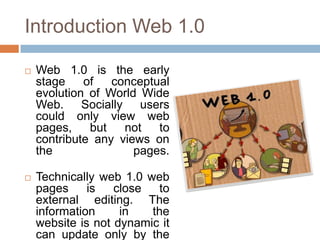
   Web 1.0 is the early
    stage    of   conceptual
    evolution of World Wide
    Web. Socially users
    could only view web
    pages,    but   not   to
    contribute any views on
    the               pages.

   Technically web 1.0 web
    pages     is   close  to
    external editing. The
    information     in   the
    website is not dynamic it
    can update only by the
Web 1.0 design elements
Some design elements of a Web 1.0 site include:
   Static pages instead of dynamic user-generated content.
   The use of frameset.
   Tags use like <Marquee> and <Blink>.
   The use of tables to position and align elements on a page.
   HTML forms sent via Email.
   Web 1.0 was dial-up, 50K average bandwidth.
Introduction Web 2.0
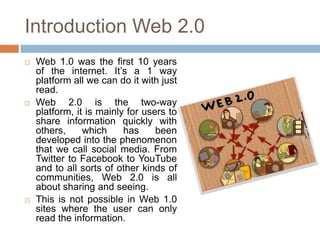
   Web 1.0 was the first 10 years
    of the internet. It’s a 1 way
    platform all we can do it with just
    read.
   Web 2.0 is the two-way
    platform, it is mainly for users to
    share information quickly with
    others,     which     has     been
    developed into the phenomenon
    that we call social media. From
    Twitter to Facebook to YouTube
    and to all sorts of other kinds of
    communities, Web 2.0 is all
    about sharing and seeing.
   This is not possible in Web 1.0
    sites where the user can only
    read the information.
Introduction Web 2.0
   By Darcy DiNucci a consultant on electronic
    information design the term "Web 2.0" was first
    used in January 1999.
   In 2004, the term began its rise in popularity
    when O'Reilly Media and MediaLive hosted
    the first Web 2.0 conference.
Features of web 2.0
Major features of Web 2.0 include
   Rich User Experience,
   User as a contributor,
   User participation,
   Social networking sites,
   User created web sites,
   Self-publishing platforms,
   Tagging, & Social bookmarking.
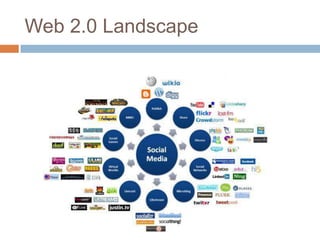
Web 2.0 Landscape
What is Web 3.0
     Web 3.0 is also known as Sementic Web.
     Web 3.0 is where "the computer is generating
      new information", rather than humans
i.    It is very difficult to imagine how the internet is going to top sites like
      Twitter and Facebook. In Web 2.0 we focused on the users’ interaction
      with others, now we are going to focus more on the users themselves,
      which is always a plus. But how is this going to happen?

ii.   Web 3.0 is being referred to by experts as the semantic web; semantic
      meaning data driven. The data will come from the user and the web will
      essentially adjust to meet the needs of the user.

Web Design 3.0

  • 1.
    WEB DESIGN 3.0 ByNakul Anand
  • 2.
    Introduction Web 1.0  Web 1.0 is the early stage of conceptual evolution of World Wide Web. Socially users could only view web pages, but not to contribute any views on the pages.  Technically web 1.0 web pages is close to external editing. The information in the website is not dynamic it can update only by the
  • 3.
    Web 1.0 designelements Some design elements of a Web 1.0 site include:  Static pages instead of dynamic user-generated content.  The use of frameset.  Tags use like <Marquee> and <Blink>.  The use of tables to position and align elements on a page.  HTML forms sent via Email.  Web 1.0 was dial-up, 50K average bandwidth.
  • 4.
    Introduction Web 2.0  Web 1.0 was the first 10 years of the internet. It’s a 1 way platform all we can do it with just read.  Web 2.0 is the two-way platform, it is mainly for users to share information quickly with others, which has been developed into the phenomenon that we call social media. From Twitter to Facebook to YouTube and to all sorts of other kinds of communities, Web 2.0 is all about sharing and seeing.  This is not possible in Web 1.0 sites where the user can only read the information.
  • 5.
    Introduction Web 2.0  By Darcy DiNucci a consultant on electronic information design the term "Web 2.0" was first used in January 1999.  In 2004, the term began its rise in popularity when O'Reilly Media and MediaLive hosted the first Web 2.0 conference.
  • 6.
    Features of web2.0 Major features of Web 2.0 include  Rich User Experience,  User as a contributor,  User participation,  Social networking sites,  User created web sites,  Self-publishing platforms,  Tagging, & Social bookmarking.
  • 7.
  • 8.
    What is Web3.0  Web 3.0 is also known as Sementic Web.  Web 3.0 is where "the computer is generating new information", rather than humans i. It is very difficult to imagine how the internet is going to top sites like Twitter and Facebook. In Web 2.0 we focused on the users’ interaction with others, now we are going to focus more on the users themselves, which is always a plus. But how is this going to happen? ii. Web 3.0 is being referred to by experts as the semantic web; semantic meaning data driven. The data will come from the user and the web will essentially adjust to meet the needs of the user.