Weathering – the physical & chemical breakdown of rocks.
Atmosphere (gas)
Lithosphere (solid)
Hydrosphere (liq.)
Involving an interaction
between the 3 spheres
of the earth.
Weathering – the physical & chemical
breakdown of rocks.
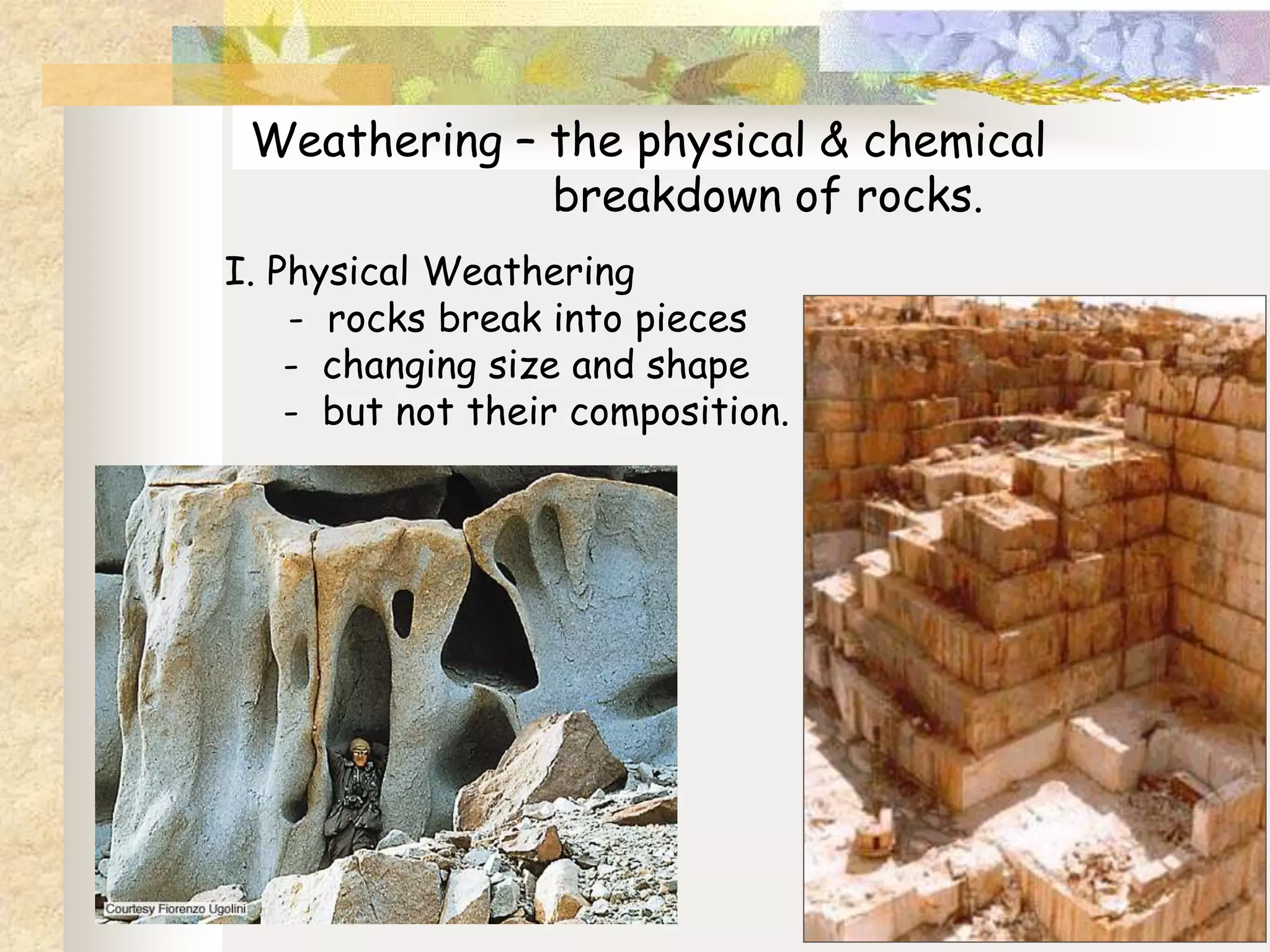
I. Physical Weathering
- rocks break into pieces
- changing size and shape
- but not their composition.
AGENTS OF PHYSICAL WEATHERING
1. Frost Action -The freezing and thawing causes alternate
expansion and contraction of rocks eventually breaking them
apart.
Dominate in
mountain or polar
regions.
More likely to
occur in winter
2. Plant Action “Biological Action” - With plant growth the
root system will increase in volume and cause cracks in
the rock to expand.
Lichens are primary soil producers
creating conditions for larger plant growth.
3. Abrasion- When ice, water, or wind causes sediments
to have collisions physical weathering results.
Wind abrasion is similar to
sandblasting and slowly
weathers the rock down.
Wind abrasion occurs
in arid environments
Note the lack of soil and
angular rock features.
Water abrasion occurs in moist and humid climates
Water produces rounded fragments as the sediments are
rolled and bounced along the stream bottom.
Glacial Abrasion occurs
when sediments are trapped
with in the ice and scrape
against the bedrock.
Forming Striations In the
Rock (Scratches)
Glaciers are found
in cold climates
high altitudes
latitudes
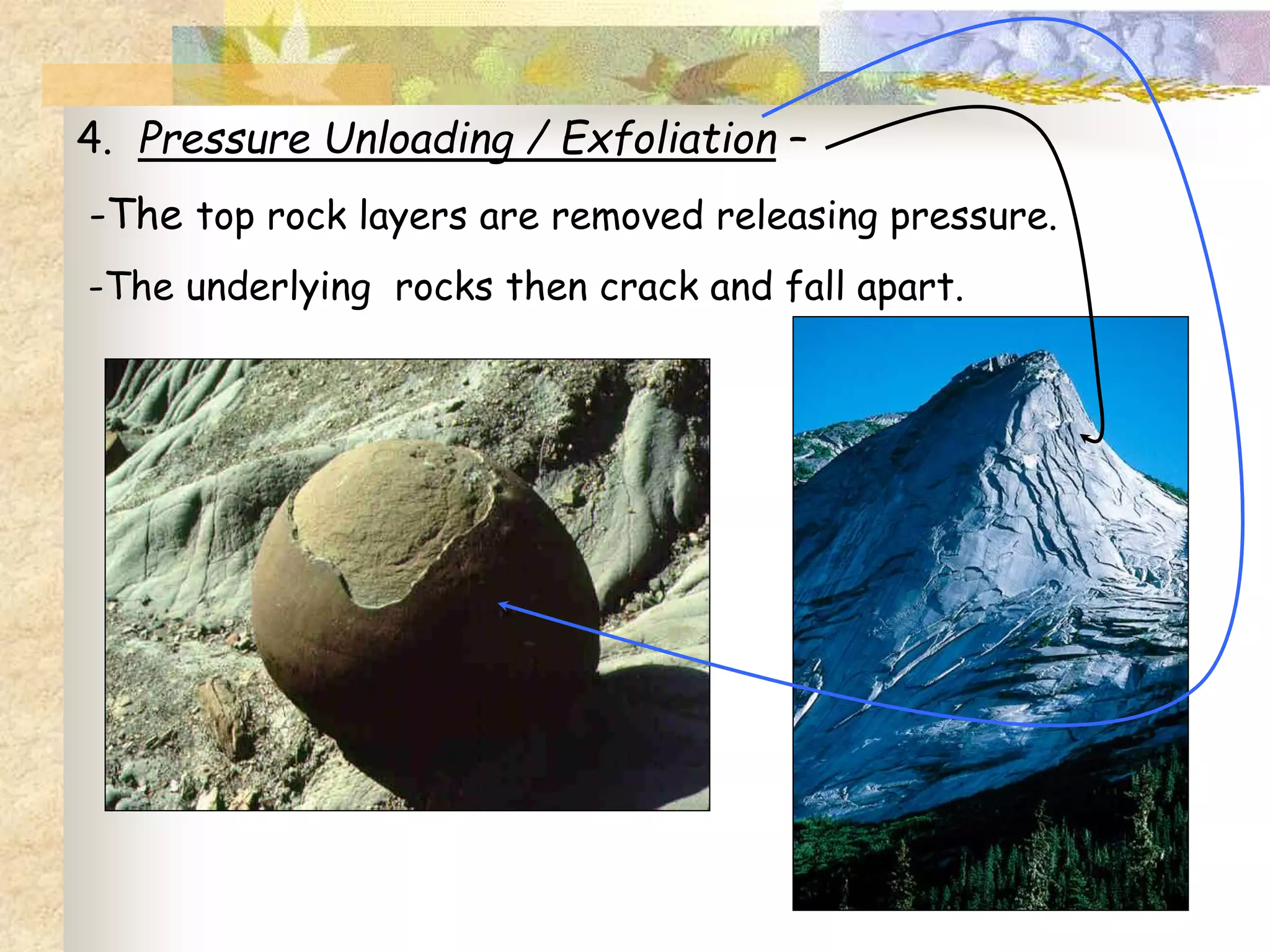
4. Pressure Unloading / Exfoliation –
-The top rock layers are removed releasing pressure.
-The underlying rocks then crack and fall apart.
Chemical Weathering - when agents of weathering
chemically change the composition of a rock.
II. AGENTS OF CHEMICAL WEATHERING
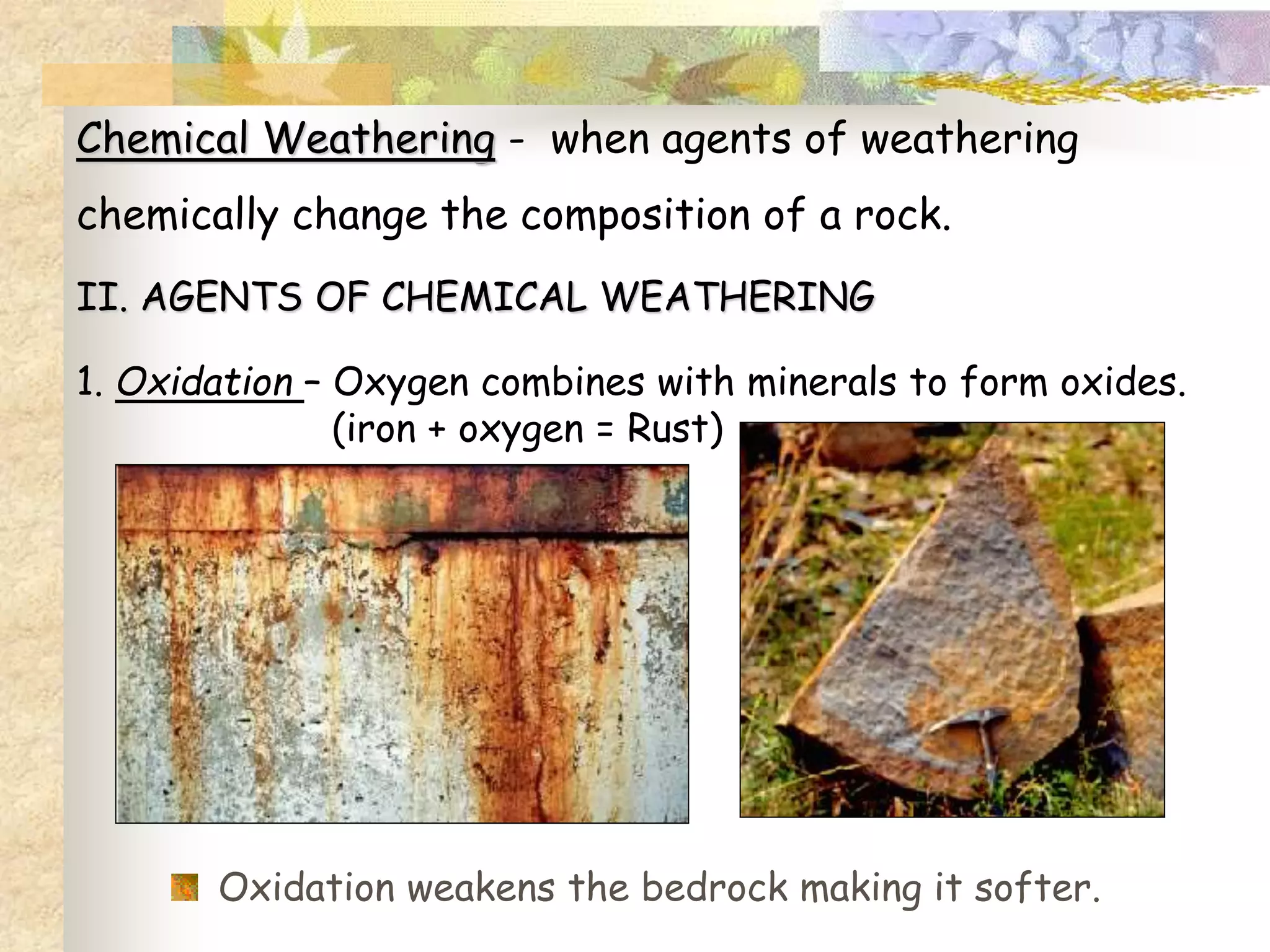
1. Oxidation – Oxygen combines with minerals to form oxides.
(iron + oxygen = Rust)
Oxidation weakens the bedrock making it softer.
2. Hydration- minerals absorb water and chemically
change the composition of the material
Ex. granite contains mica.
Mica has a weak chemical
composition and absorb water.
Turns into clay
3. Carbonation – When pollutants like Carbon Dioxide,
Nitrogen & Sulfuric Oxides mix with rain water creating
acid rain, which can dissolve limestone and harm the living
environment.
 Coal Burning For Electricity
 Fossil Fuel Consumption for Cars
4. Water - Is unique and dissolves most minerals and
metals in our environment.
(universal solvent).
III. FACTORS AFFECTING The Rates of WEATHERING.
1. Climate Differences
Arid Climates are very dry and the rate of weathering is slow.
Humid Climates are moist and the rate of weathering is fairly fast.
 Usually in the presence of heat weathering rates will also increase.
 Different climates and temperatures produce more favorable
forms of weathering.
Arid and Humid Climates cause different rates of weathering.
ex, Cleopatra's Obelisk
Egypt New York
Cold and Humid -Physical weathering is dominate at high
latitudes altitudes, or in the winter.
-Frost Action and Glacial Abrasion
Hot and Humid - Chemical weathering is dominate near
the equator and in the summer.
-Oxidation, Hydration
Humid climates also favor
chemical weathering and
increase the rate in which
water will dissolve minerals.
Hot & humid climates can also
increase the rate of physical
weathering by biological action.
In the mountains and at the
poles physical weathering like
frost action and abrasion are
more likely.
2.Particle Size and Shape as particle size decreases the
weathering rate increases
- When The Surface Area Increase
- More Sides Are Able To React
With The Elements
Angular Sediments have more surface area.
-weather at a faster rate.
Round sediments have less surface area
-weathering rate decreases.
3. Mineral Composition - some rocks are resistant to
weathering because of their composition
Less Resistant
Soft Rocks have Weak
chemical compositions
More Resistant
Hard Rocks have Strong
Chemical Compositions
Limestone w/ weak chemical
composition (soft rock)
Granite w/ strong chemical
composition (hard rock)
Rocks will weather at different rates due to
their chemical compositions.
IV. Products of Weathering - sediments and soils
1. Sediment Types
a. Solids – Are clastic sediments
such as pebbles, sand, silt, or clay
b. Colloids – Are suspended clay size particles
c. Ionic Solutions – Are dissolved compounds in water
2. Soil Types
a. Residual – Soils formed from the weathering of the local
bedrock and have the same mineral composition.
b. Transported - Soil that has been moved & the sediments
are not of the same composition as the local rock
Soil Horizons
A. Top layer rich in organics &
minerals from biologic activity.
B. Sediments with minerals
dissolved from above are found
here.
C. Mostly un-weathered bedrock.
Soil development from local bedrock.
Stage 1 Mostly un-weathered bedrock
Stage 2 Development of top soil by biologic activity
Stage 3 Mature thick and well developed soil horizons
Soil is non-renewable resource
1 inch is made for every 100 years in New York
Different climates produce different soil types
Form at different rates.

Physical and Chemical Weathering.ppt

  • 1.
    Weathering – thephysical & chemical breakdown of rocks. Atmosphere (gas) Lithosphere (solid) Hydrosphere (liq.) Involving an interaction between the 3 spheres of the earth.
  • 2.
    Weathering – thephysical & chemical breakdown of rocks. I. Physical Weathering - rocks break into pieces - changing size and shape - but not their composition.
  • 3.
    AGENTS OF PHYSICALWEATHERING 1. Frost Action -The freezing and thawing causes alternate expansion and contraction of rocks eventually breaking them apart. Dominate in mountain or polar regions. More likely to occur in winter
  • 5.
    2. Plant Action“Biological Action” - With plant growth the root system will increase in volume and cause cracks in the rock to expand. Lichens are primary soil producers creating conditions for larger plant growth.
  • 7.
    3. Abrasion- Whenice, water, or wind causes sediments to have collisions physical weathering results. Wind abrasion is similar to sandblasting and slowly weathers the rock down.
  • 8.
    Wind abrasion occurs inarid environments Note the lack of soil and angular rock features.
  • 9.
    Water abrasion occursin moist and humid climates Water produces rounded fragments as the sediments are rolled and bounced along the stream bottom.
  • 10.
    Glacial Abrasion occurs whensediments are trapped with in the ice and scrape against the bedrock. Forming Striations In the Rock (Scratches) Glaciers are found in cold climates high altitudes latitudes
  • 11.
    4. Pressure Unloading/ Exfoliation – -The top rock layers are removed releasing pressure. -The underlying rocks then crack and fall apart.
  • 12.
    Chemical Weathering -when agents of weathering chemically change the composition of a rock. II. AGENTS OF CHEMICAL WEATHERING 1. Oxidation – Oxygen combines with minerals to form oxides. (iron + oxygen = Rust) Oxidation weakens the bedrock making it softer.
  • 13.
    2. Hydration- mineralsabsorb water and chemically change the composition of the material Ex. granite contains mica. Mica has a weak chemical composition and absorb water. Turns into clay
  • 14.
    3. Carbonation –When pollutants like Carbon Dioxide, Nitrogen & Sulfuric Oxides mix with rain water creating acid rain, which can dissolve limestone and harm the living environment.  Coal Burning For Electricity  Fossil Fuel Consumption for Cars
  • 15.
    4. Water -Is unique and dissolves most minerals and metals in our environment. (universal solvent).
  • 16.
    III. FACTORS AFFECTINGThe Rates of WEATHERING. 1. Climate Differences Arid Climates are very dry and the rate of weathering is slow. Humid Climates are moist and the rate of weathering is fairly fast.  Usually in the presence of heat weathering rates will also increase.  Different climates and temperatures produce more favorable forms of weathering.
  • 17.
    Arid and HumidClimates cause different rates of weathering. ex, Cleopatra's Obelisk Egypt New York
  • 18.
    Cold and Humid-Physical weathering is dominate at high latitudes altitudes, or in the winter. -Frost Action and Glacial Abrasion Hot and Humid - Chemical weathering is dominate near the equator and in the summer. -Oxidation, Hydration
  • 19.
    Humid climates alsofavor chemical weathering and increase the rate in which water will dissolve minerals.
  • 20.
    Hot & humidclimates can also increase the rate of physical weathering by biological action.
  • 21.
    In the mountainsand at the poles physical weathering like frost action and abrasion are more likely.
  • 22.
    2.Particle Size andShape as particle size decreases the weathering rate increases - When The Surface Area Increase - More Sides Are Able To React With The Elements
  • 23.
    Angular Sediments havemore surface area. -weather at a faster rate. Round sediments have less surface area -weathering rate decreases.
  • 24.
    3. Mineral Composition- some rocks are resistant to weathering because of their composition Less Resistant Soft Rocks have Weak chemical compositions More Resistant Hard Rocks have Strong Chemical Compositions
  • 25.
    Limestone w/ weakchemical composition (soft rock) Granite w/ strong chemical composition (hard rock) Rocks will weather at different rates due to their chemical compositions.
  • 26.
    IV. Products ofWeathering - sediments and soils 1. Sediment Types a. Solids – Are clastic sediments such as pebbles, sand, silt, or clay b. Colloids – Are suspended clay size particles c. Ionic Solutions – Are dissolved compounds in water
  • 27.
    2. Soil Types a.Residual – Soils formed from the weathering of the local bedrock and have the same mineral composition. b. Transported - Soil that has been moved & the sediments are not of the same composition as the local rock Soil Horizons A. Top layer rich in organics & minerals from biologic activity. B. Sediments with minerals dissolved from above are found here. C. Mostly un-weathered bedrock.
  • 28.
    Soil development fromlocal bedrock. Stage 1 Mostly un-weathered bedrock Stage 2 Development of top soil by biologic activity Stage 3 Mature thick and well developed soil horizons Soil is non-renewable resource 1 inch is made for every 100 years in New York
  • 29.
    Different climates producedifferent soil types Form at different rates.