We are what
we eat: the
biochemistry of
life
(or the biochemistry of the
“operación bikini”)
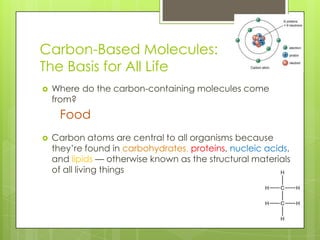
Carbon-Based Molecules:
The Basis for All Life
 Where do the carbon-containing molecules come
from?
 Carbon atoms are central to all organisms because
they’re found in carbohydrates, proteins, nucleic acids,
and lipids — otherwise known as the structural materials
of all living things
Food
Providing energy:
Carbohydrates
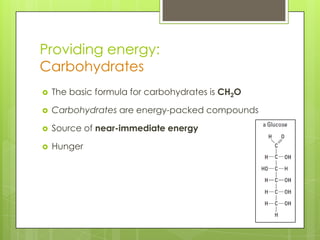
 The basic formula for carbohydrates is CH2O
 Carbohydrates are energy-packed compounds
 Source of near-immediate energy
 Hunger
Types of Carbohydrates
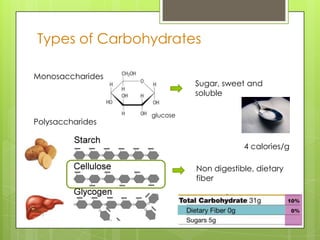
Monosaccharides
Polysaccharides
Non digestible, dietary
fiber
Sugar, sweet and
soluble
glucose
4 calories/g
Supplying structure, energy,
and more: Lipids
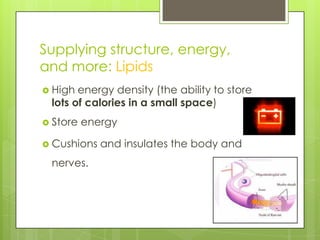
 High energy density (the ability to store
lots of calories in a small space)
 Store energy
 Cushions and insulates the body and
nerves.
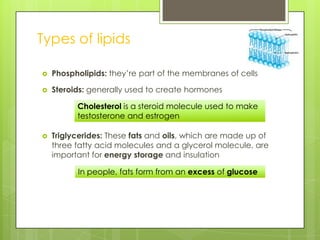
 Phospholipids: they’re part of the membranes of cells
 Steroids: generally used to create hormones
 Triglycerides: These fats and oils, which are made up of
three fatty acid molecules and a glycerol molecule, are
important for energy storage and insulation
Types of lipids
Cholesterol is a steroid molecule used to make
testosterone and estrogen
In people, fats form from an excess of glucose
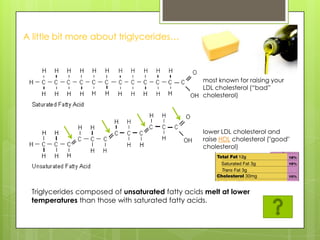
A little bit more about triglycerides…
Triglycerides composed of unsaturated fatty acids melt at lower
temperatures than those with saturated fatty acids.
most known for raising your
LDL cholesterol (“bad”
cholesterol)
lower LDL cholesterol and
raise HDL cholesterol ("good"
cholesterol)
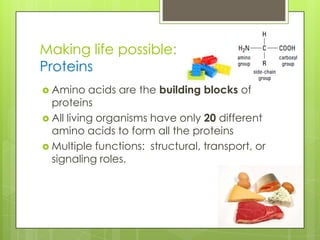
Making life possible:
Proteins
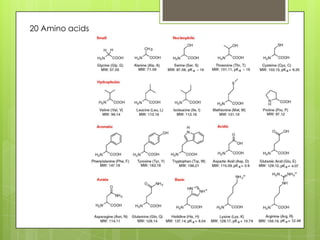
 Amino acids are the building blocks of
proteins
 All living organisms have only 20 different
amino acids to form all the proteins
 Multiple functions: structural, transport, or
signaling roles.
20 Amino acids
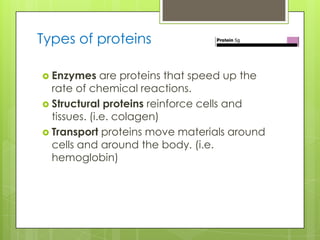
 Enzymes are proteins that speed up the
rate of chemical reactions.
 Structural proteins reinforce cells and
tissues. (i.e. colagen)
 Transport proteins move materials around
cells and around the body. (i.e.
hemoglobin)
Types of proteins
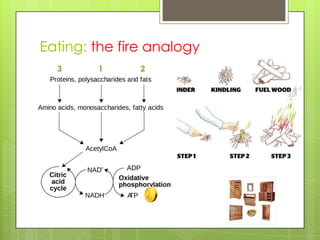
Eating: the fire analogy
1 23
Eating: some famous diets
 Low carb diet
 High protein diet
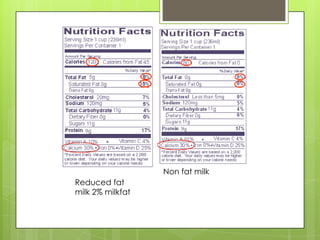
Non fat milk
Reduced fat
milk 2% milkfat
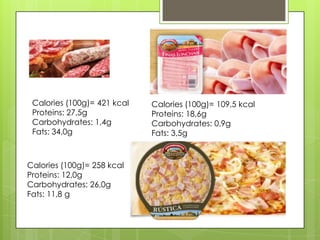
Calories (100g)= 421 kcal
Proteins: 27,5g
Carbohydrates: 1,4g
Fats: 34,0g
Calories (100g)= 109,5 kcal
Proteins: 18,6g
Carbohydrates: 0,9g
Fats: 3,5g
Calories (100g)= 258 kcal
Proteins: 12,0g
Carbohydrates: 26,0g
Fats: 11,8 g
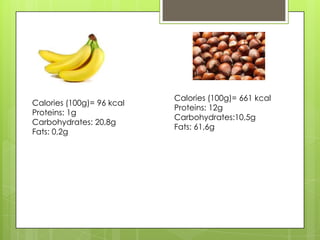
Calories (100g)= 96 kcal
Proteins: 1g
Carbohydrates: 20,8g
Fats: 0,2g
Calories (100g)= 661 kcal
Proteins: 12g
Carbohydrates:10,5g
Fats: 61,6g

We are what we eat

  • 1.
    We are what weeat: the biochemistry of life (or the biochemistry of the “operación bikini”)
  • 3.
    Carbon-Based Molecules: The Basisfor All Life  Where do the carbon-containing molecules come from?  Carbon atoms are central to all organisms because they’re found in carbohydrates, proteins, nucleic acids, and lipids — otherwise known as the structural materials of all living things Food
  • 4.
    Providing energy: Carbohydrates  Thebasic formula for carbohydrates is CH2O  Carbohydrates are energy-packed compounds  Source of near-immediate energy  Hunger
  • 5.
    Types of Carbohydrates Monosaccharides Polysaccharides Nondigestible, dietary fiber Sugar, sweet and soluble glucose 4 calories/g
  • 6.
    Supplying structure, energy, andmore: Lipids  High energy density (the ability to store lots of calories in a small space)  Store energy  Cushions and insulates the body and nerves.
  • 7.
     Phospholipids: they’repart of the membranes of cells  Steroids: generally used to create hormones  Triglycerides: These fats and oils, which are made up of three fatty acid molecules and a glycerol molecule, are important for energy storage and insulation Types of lipids Cholesterol is a steroid molecule used to make testosterone and estrogen In people, fats form from an excess of glucose
  • 8.
    A little bitmore about triglycerides… Triglycerides composed of unsaturated fatty acids melt at lower temperatures than those with saturated fatty acids. most known for raising your LDL cholesterol (“bad” cholesterol) lower LDL cholesterol and raise HDL cholesterol ("good" cholesterol)
  • 9.
    Making life possible: Proteins Amino acids are the building blocks of proteins  All living organisms have only 20 different amino acids to form all the proteins  Multiple functions: structural, transport, or signaling roles.
  • 10.
  • 11.
     Enzymes areproteins that speed up the rate of chemical reactions.  Structural proteins reinforce cells and tissues. (i.e. colagen)  Transport proteins move materials around cells and around the body. (i.e. hemoglobin) Types of proteins
  • 12.
    Eating: the fireanalogy 1 23
  • 13.
    Eating: some famousdiets  Low carb diet  High protein diet
  • 14.
    Non fat milk Reducedfat milk 2% milkfat
  • 16.
    Calories (100g)= 421kcal Proteins: 27,5g Carbohydrates: 1,4g Fats: 34,0g Calories (100g)= 109,5 kcal Proteins: 18,6g Carbohydrates: 0,9g Fats: 3,5g Calories (100g)= 258 kcal Proteins: 12,0g Carbohydrates: 26,0g Fats: 11,8 g
  • 17.
    Calories (100g)= 96kcal Proteins: 1g Carbohydrates: 20,8g Fats: 0,2g Calories (100g)= 661 kcal Proteins: 12g Carbohydrates:10,5g Fats: 61,6g