WAYS HOW INSECTS
DAMAGE PLANTS
1. BY CHEWING
Insects feed by chewing some portions of
the plants like leaves, stems, flowers and fruits.
They have horn-like jaws, which they use for
biting and chewing. Grasshoppers, caterpillars,
grubs and beetles are examples of theses
insects.
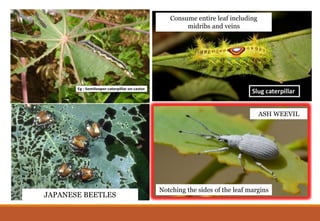
JAPANESE BEETLES
Consume entire leaf including
midribs and veins
Notching the sides of the leaf margins
ASH WEEVIL
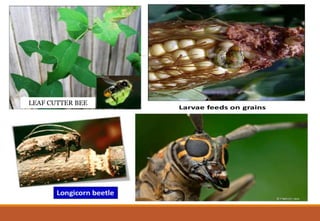
LEAF CUTTER BEE
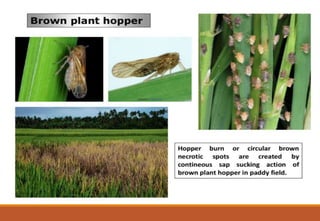
2. BY SUCKING
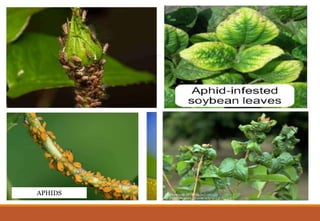
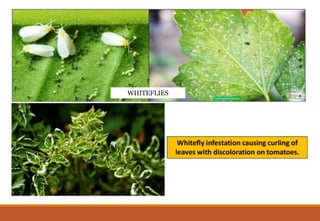
Insects also nourish themselves by sucking
plant juices and nectar. These are characterized
by sharp, slender, hollow beaks, which they insert
under the surface of plants to suck their juices.
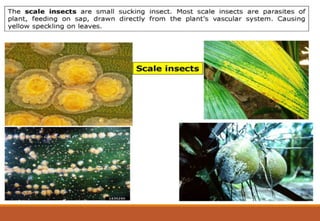
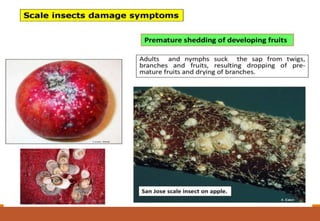
This mouth part is called the proboscis. San Jose
scales, aphids, plant lice, squash bugs and other
tree bugs are sucking insects
APHIDS
WHITEFLIES
3. BY LAPPING
Mouthparts of these insects enable them
to lap or lick liquids from the outer surfaces of
objects on what they feed. Apple maggots and
cherry fruit flies are example of lapping insects.
WAYS HOW INSECTS DAMAGE PLANTS.pptx

WAYS HOW INSECTS DAMAGE PLANTS.pptx

  • 1.
  • 2.
    1. BY CHEWING Insectsfeed by chewing some portions of the plants like leaves, stems, flowers and fruits. They have horn-like jaws, which they use for biting and chewing. Grasshoppers, caterpillars, grubs and beetles are examples of theses insects.
  • 3.
    JAPANESE BEETLES Consume entireleaf including midribs and veins Notching the sides of the leaf margins ASH WEEVIL
  • 4.
  • 5.
    2. BY SUCKING Insectsalso nourish themselves by sucking plant juices and nectar. These are characterized by sharp, slender, hollow beaks, which they insert under the surface of plants to suck their juices. This mouth part is called the proboscis. San Jose scales, aphids, plant lice, squash bugs and other tree bugs are sucking insects
  • 6.
  • 7.
  • 11.
    3. BY LAPPING Mouthpartsof these insects enable them to lap or lick liquids from the outer surfaces of objects on what they feed. Apple maggots and cherry fruit flies are example of lapping insects.