The Lake in its Catchment
Dr. Anant Maringanti, Siddharth Hande

Hyderabad Urban Lab                     March 20th
2013
Hyderabad Urban Lab

HUL is a multidisciplinary urban research initiative that is inspired
by the idea of the ‘right to the city’.

It aims to build an academically rigorous urban research program
that is responsive to the needs of new and emergent ‘communities of
practice’ in cities in India and elsewhere.

HUL is committed to

  Innovation in research

  Interdisciplinarity and collaborations

  Pursuit of ecological sustainability and social justice
Hyderabad Urban Lab


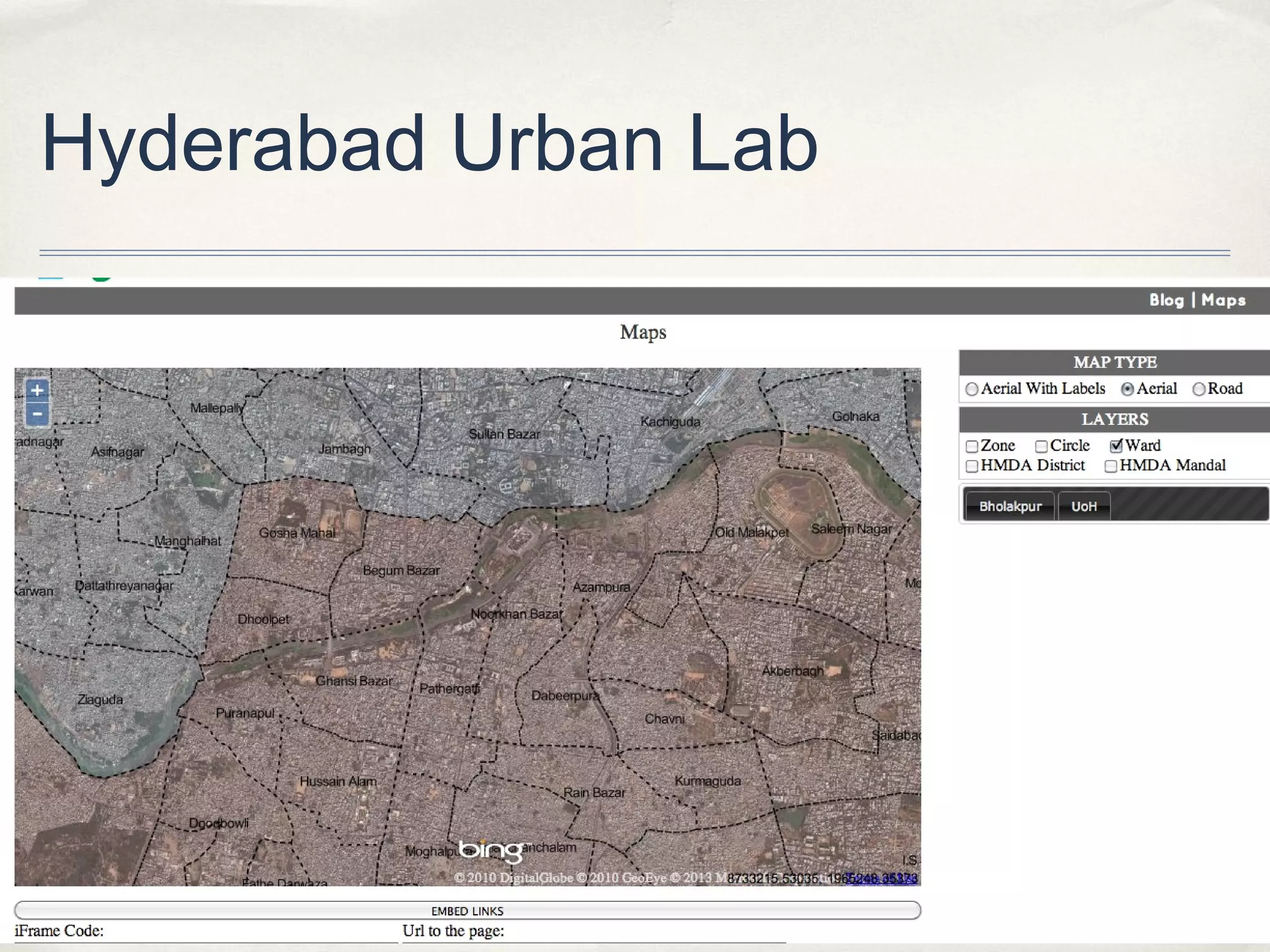
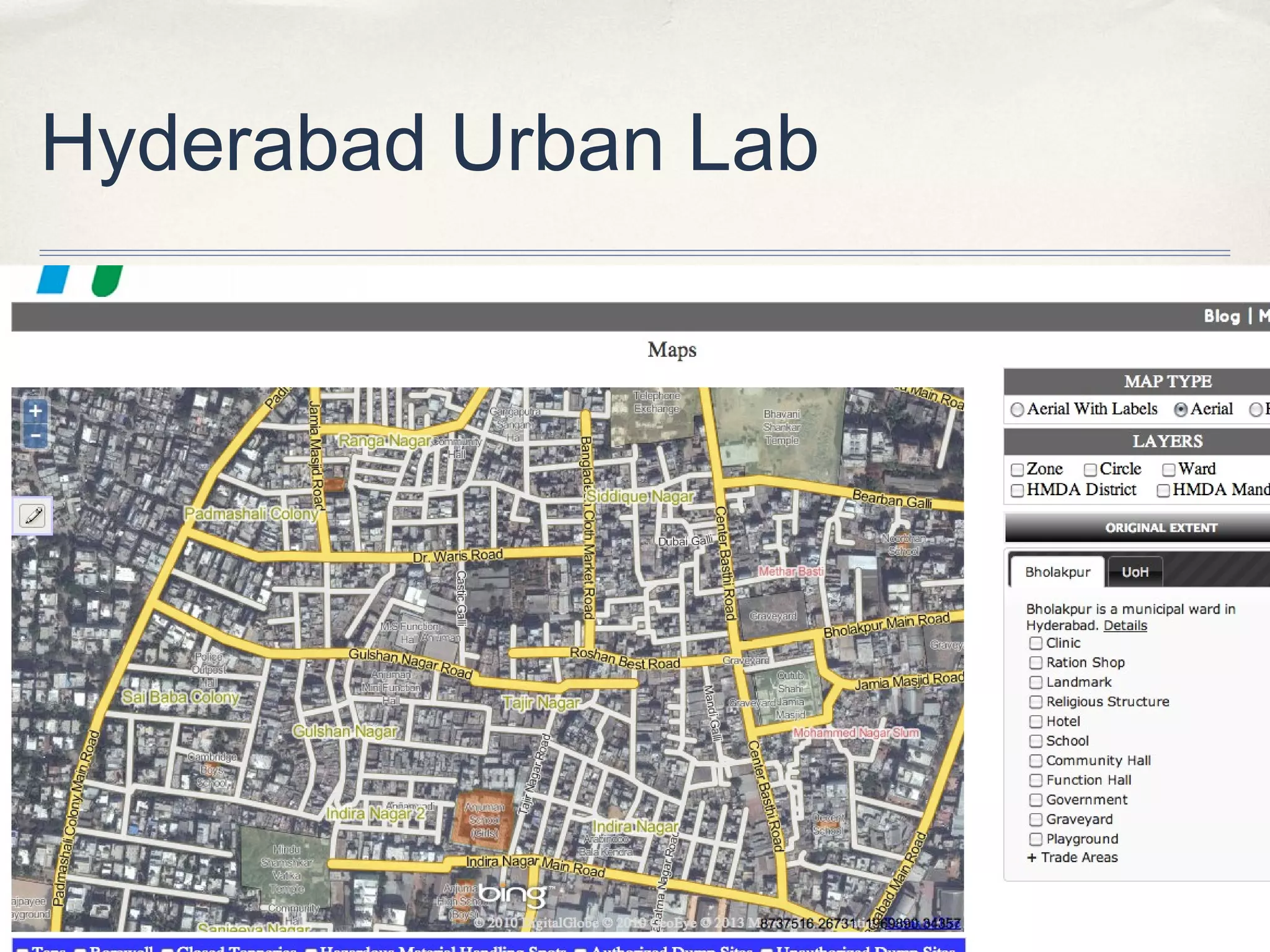
We are building an online platform for research, data sharing and
data generation customized for the city of Hyderabad

Our prime focus is on water & waste. But we are interested in all
things urban, urbanizing and globalizing.

We are committed to building new knowledge commons by
deploying new technologies and working with communities
Hyderabad Urban Lab
Hyderabad Urban Lab
Hyderabad Urban Lab
Some of our interests…
Creation of decision support systems for campaigners, institutions of
governance, and individual citizens

Thematically we are interested in

    crime and safety

    scrap markets

    transit information systems

    education and training on Right to the City

    urban archives
The lake in its catchment
    Ridge centric approach to lake protection:
         A people’s geography project ?
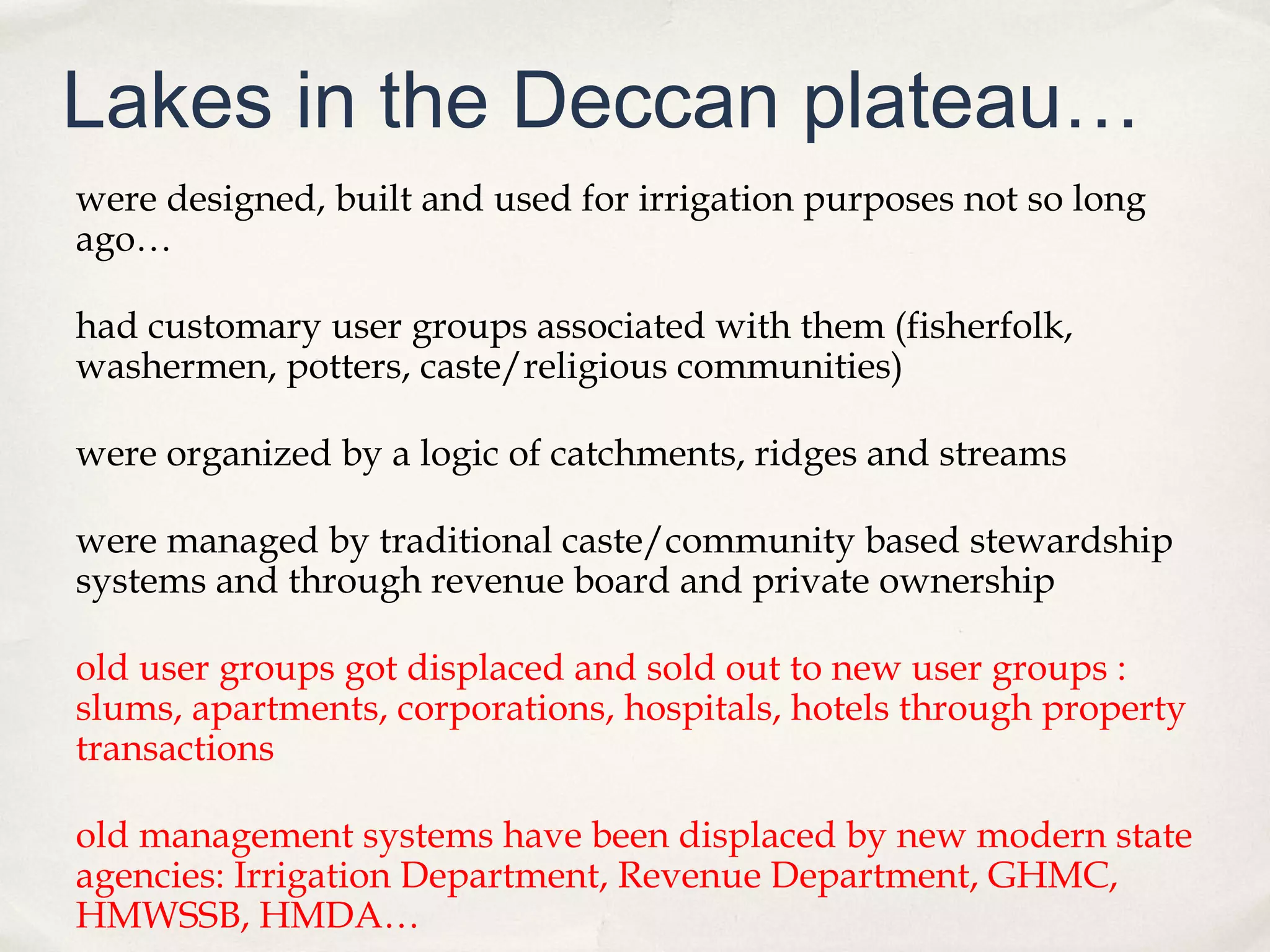
Lakes in the Deccan plateau…
were designed, built and used for irrigation purposes not so long
ago…

had customary user groups associated with them (fisherfolk,
washermen, potters, caste/religious communities)

were organized by a logic of catchments, ridges and streams

were managed by traditional caste/community based stewardship
systems and through revenue board and private ownership

old user groups got displaced and sold out to new user groups :
slums, apartments, corporations, hospitals, hotels through property
transactions

old management systems have been displaced by new modern state
agencies: Irrigation Department, Revenue Department, GHMC,
HMWSSB, HMDA…
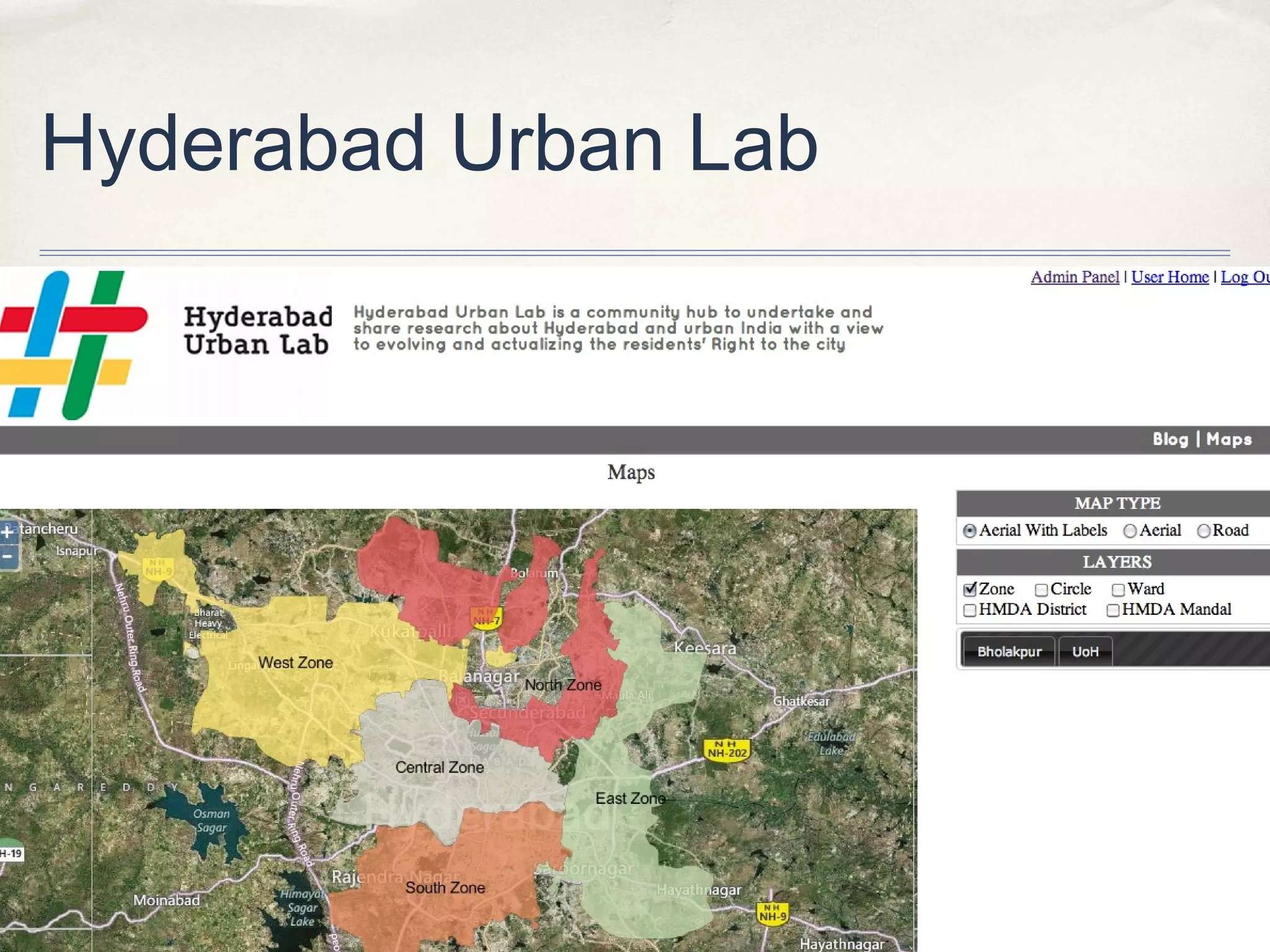
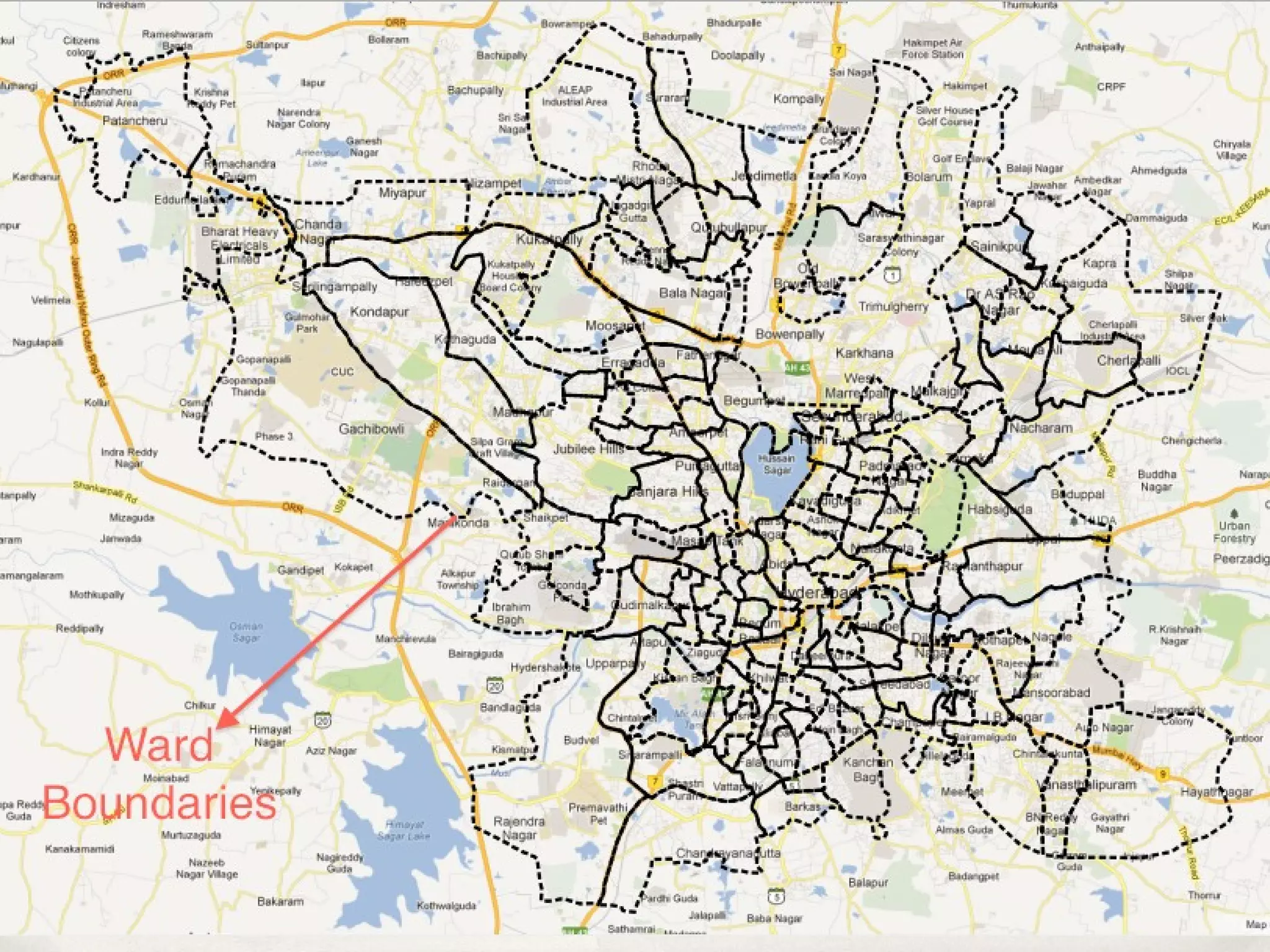
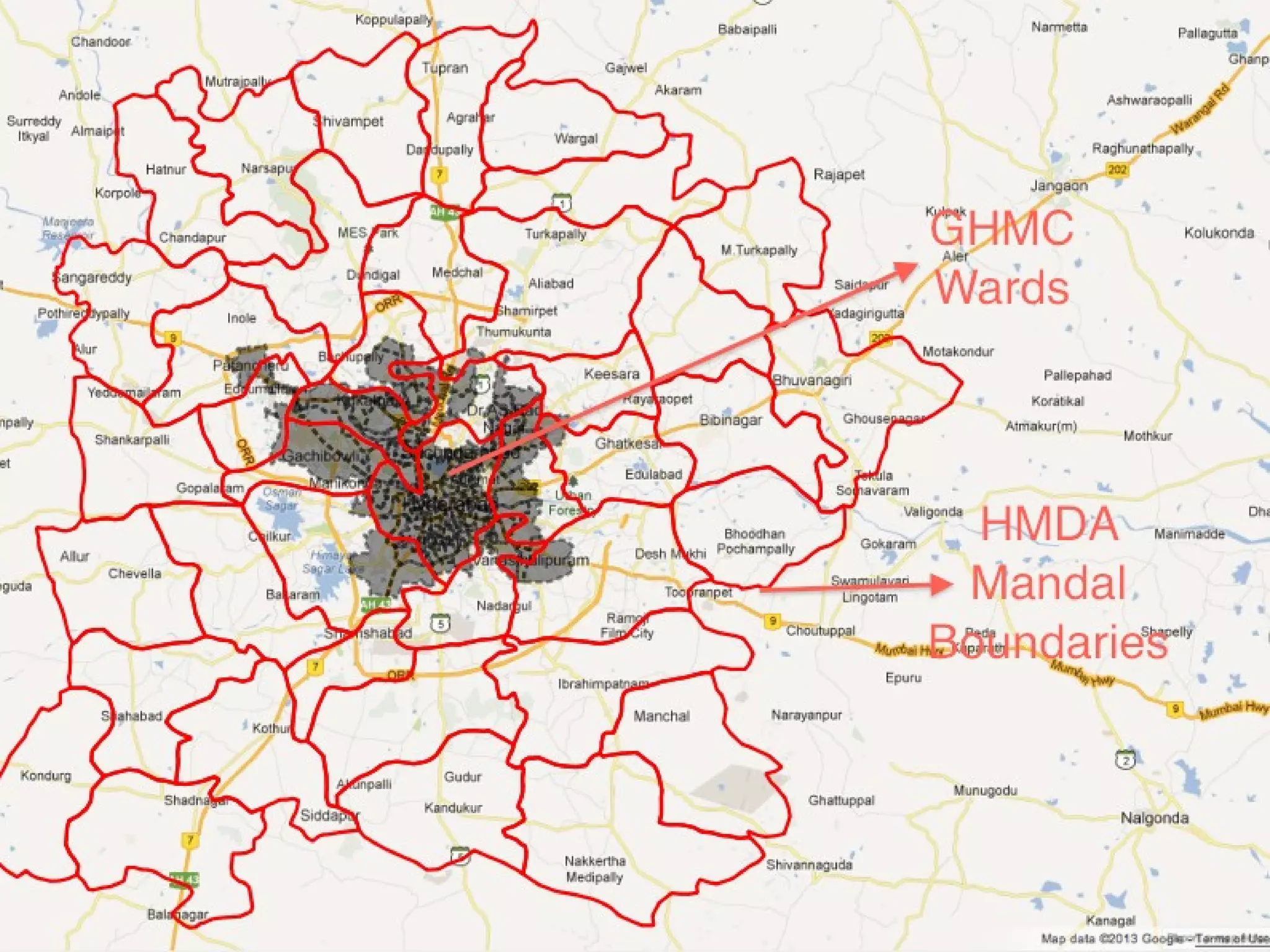
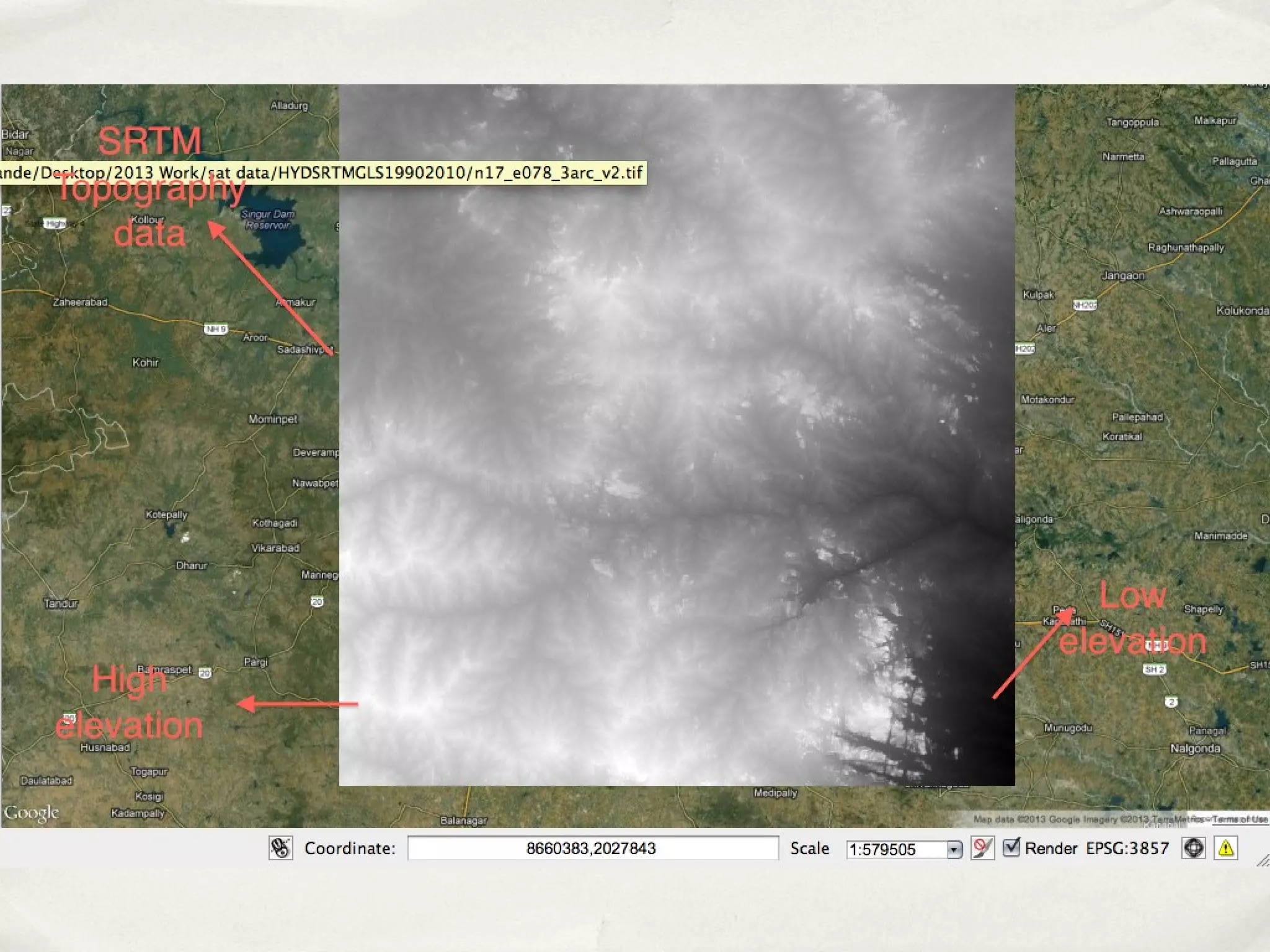
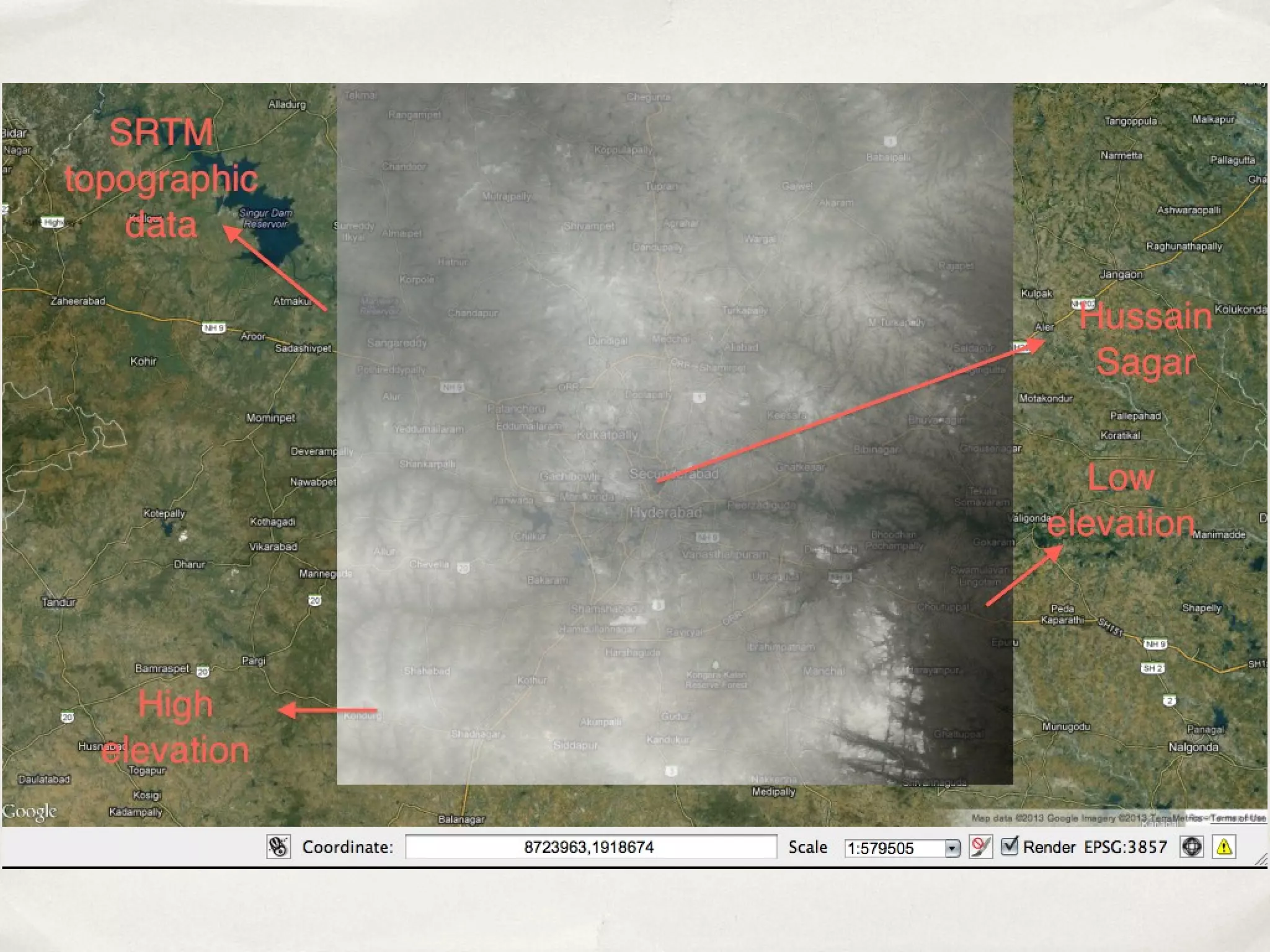
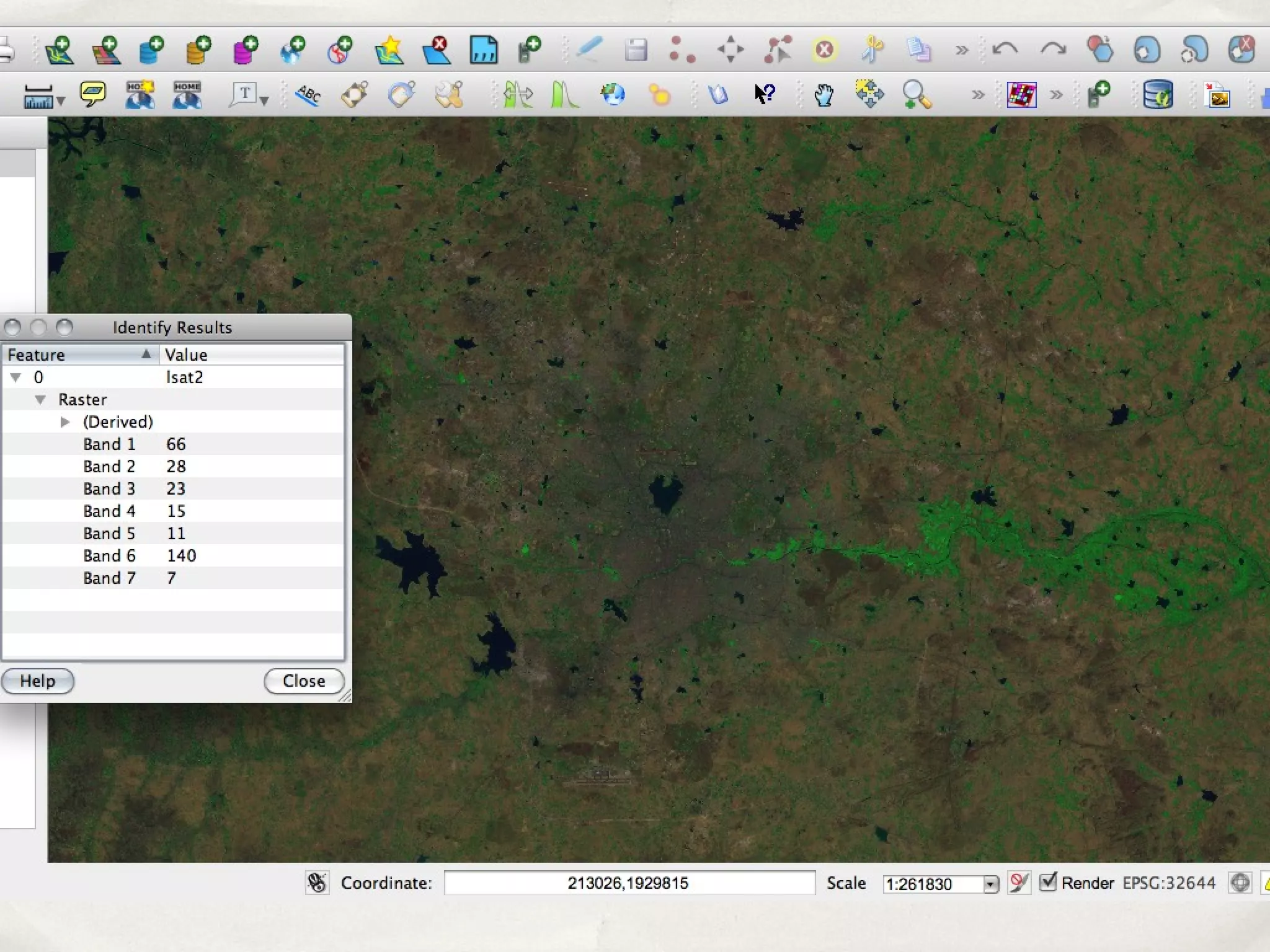
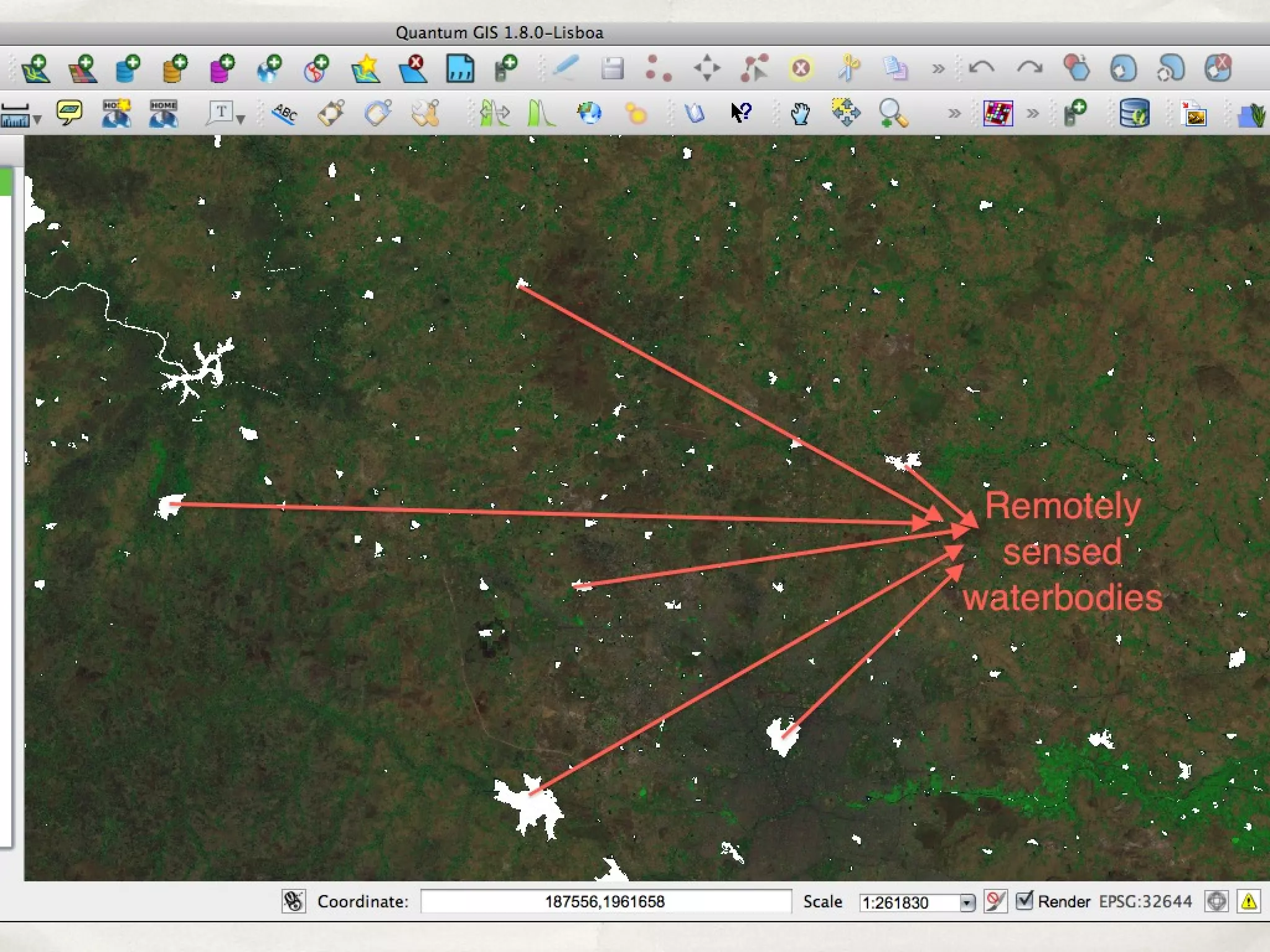
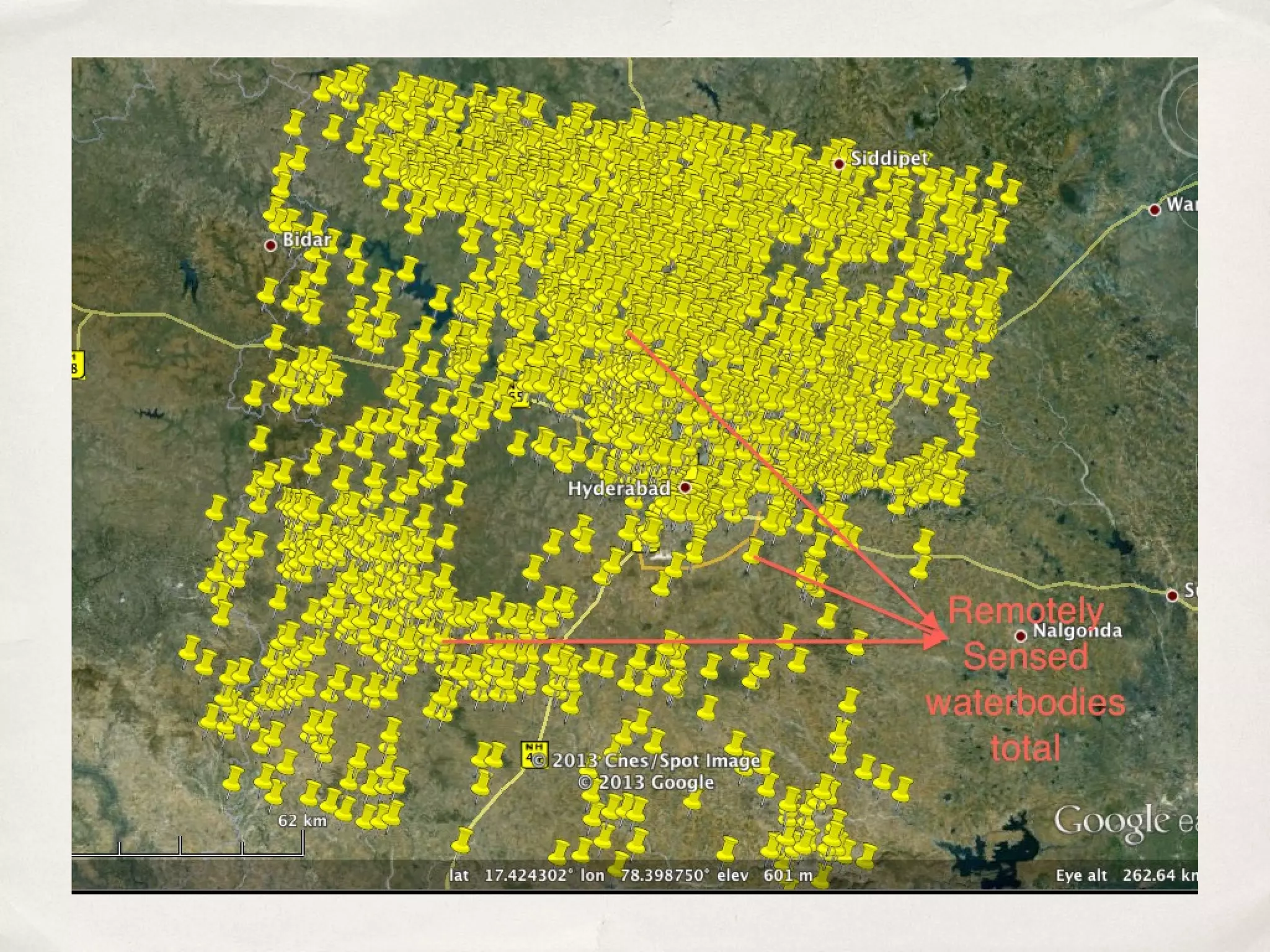
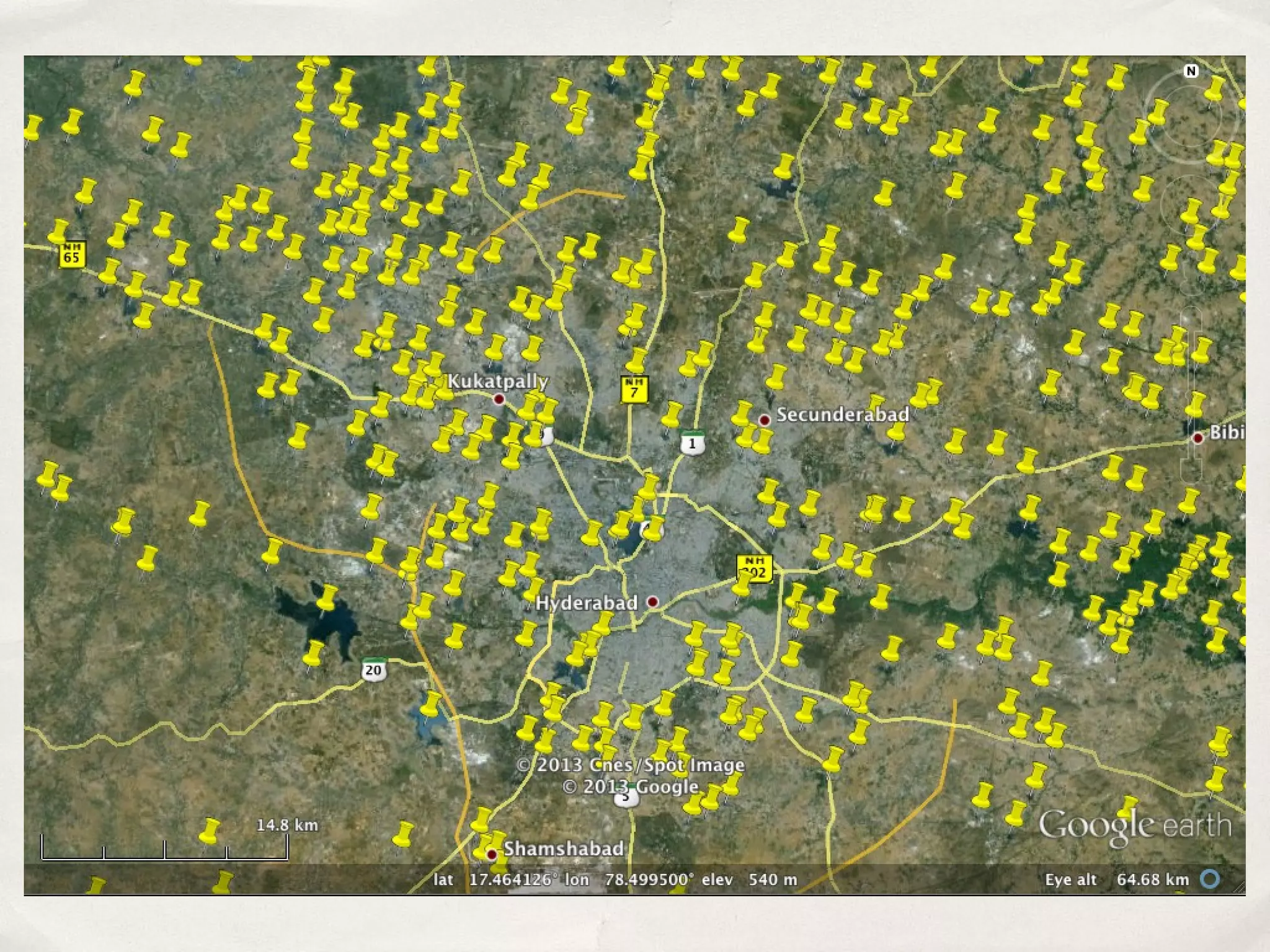
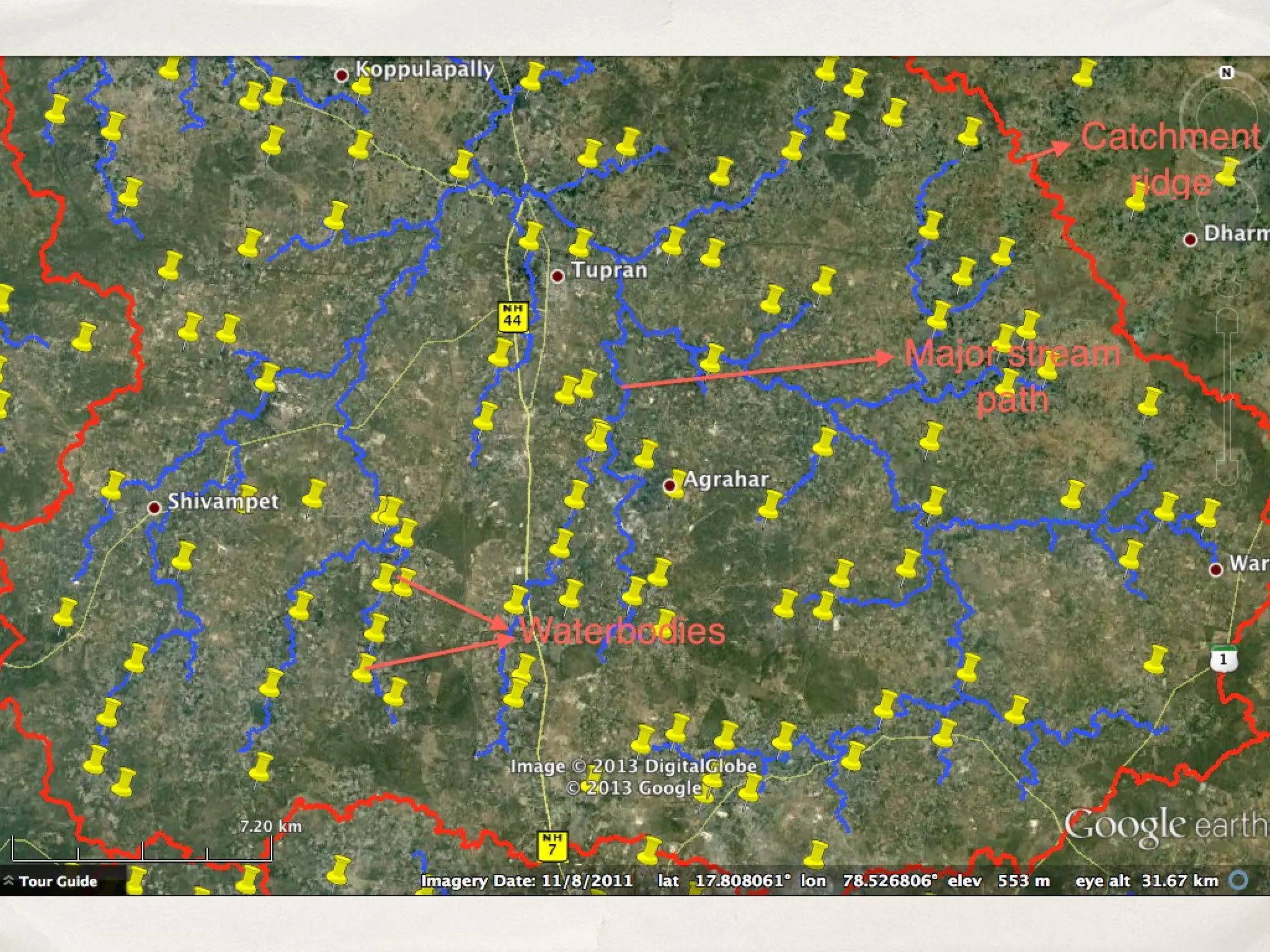
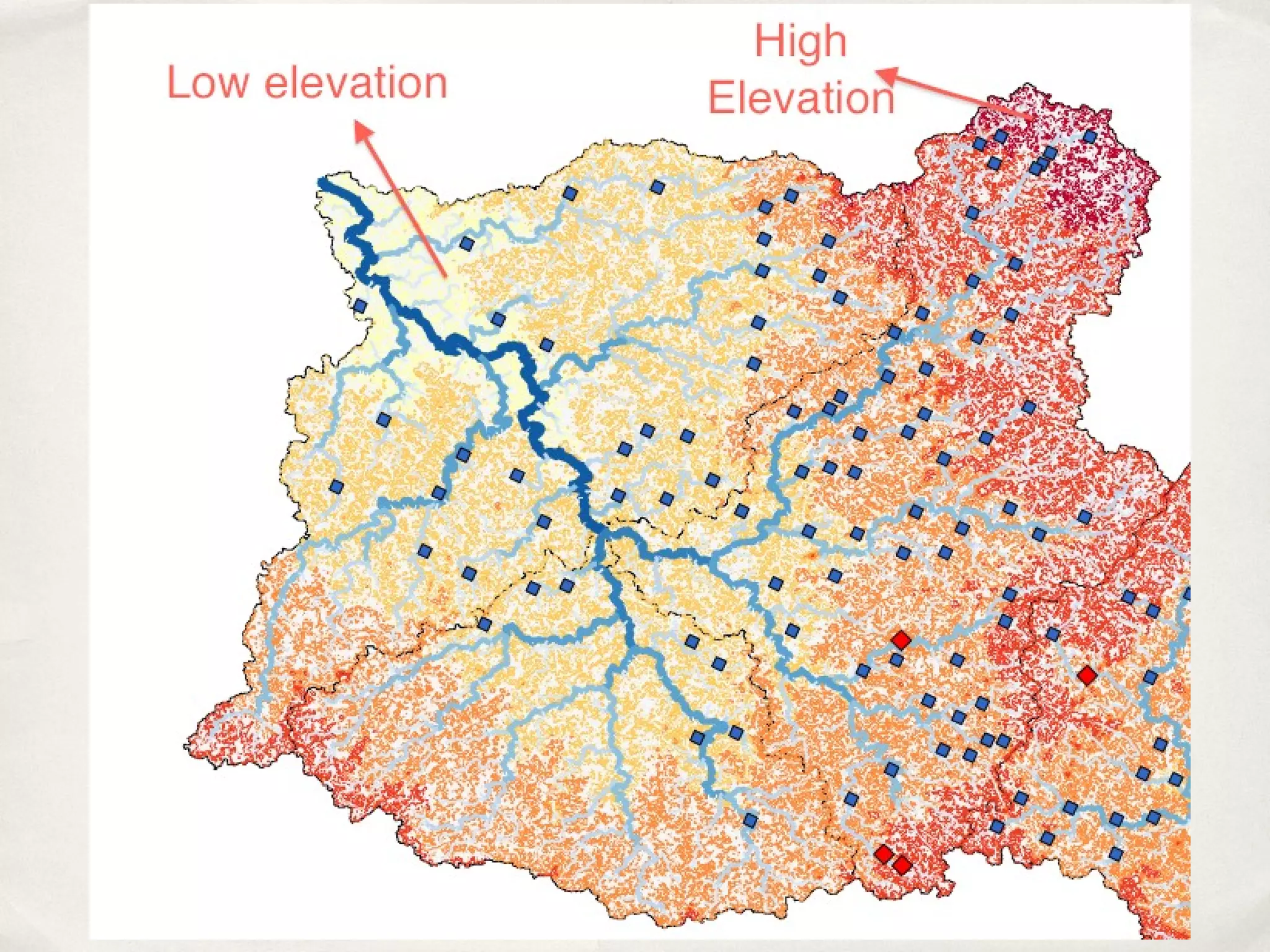
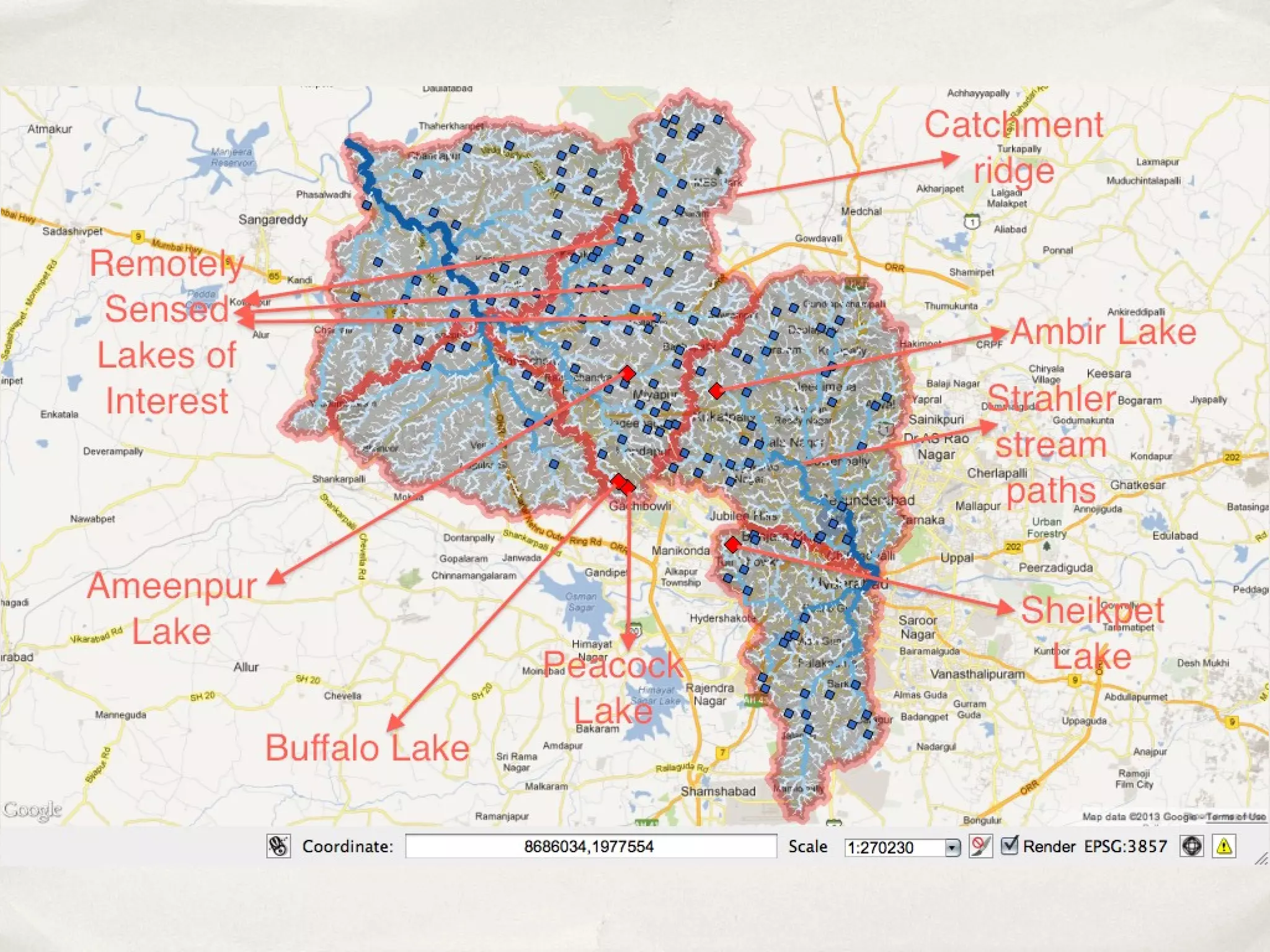
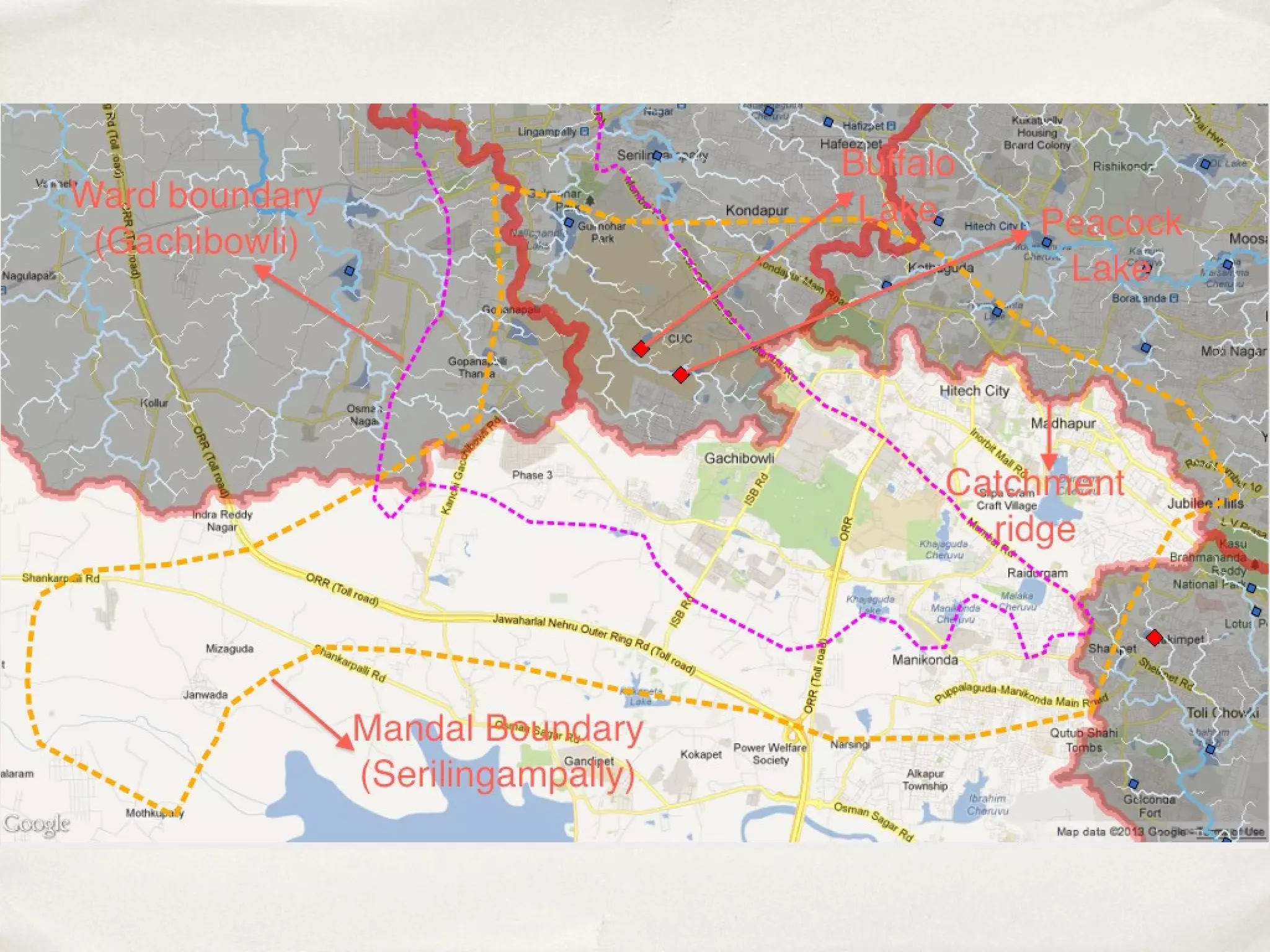
MAPS


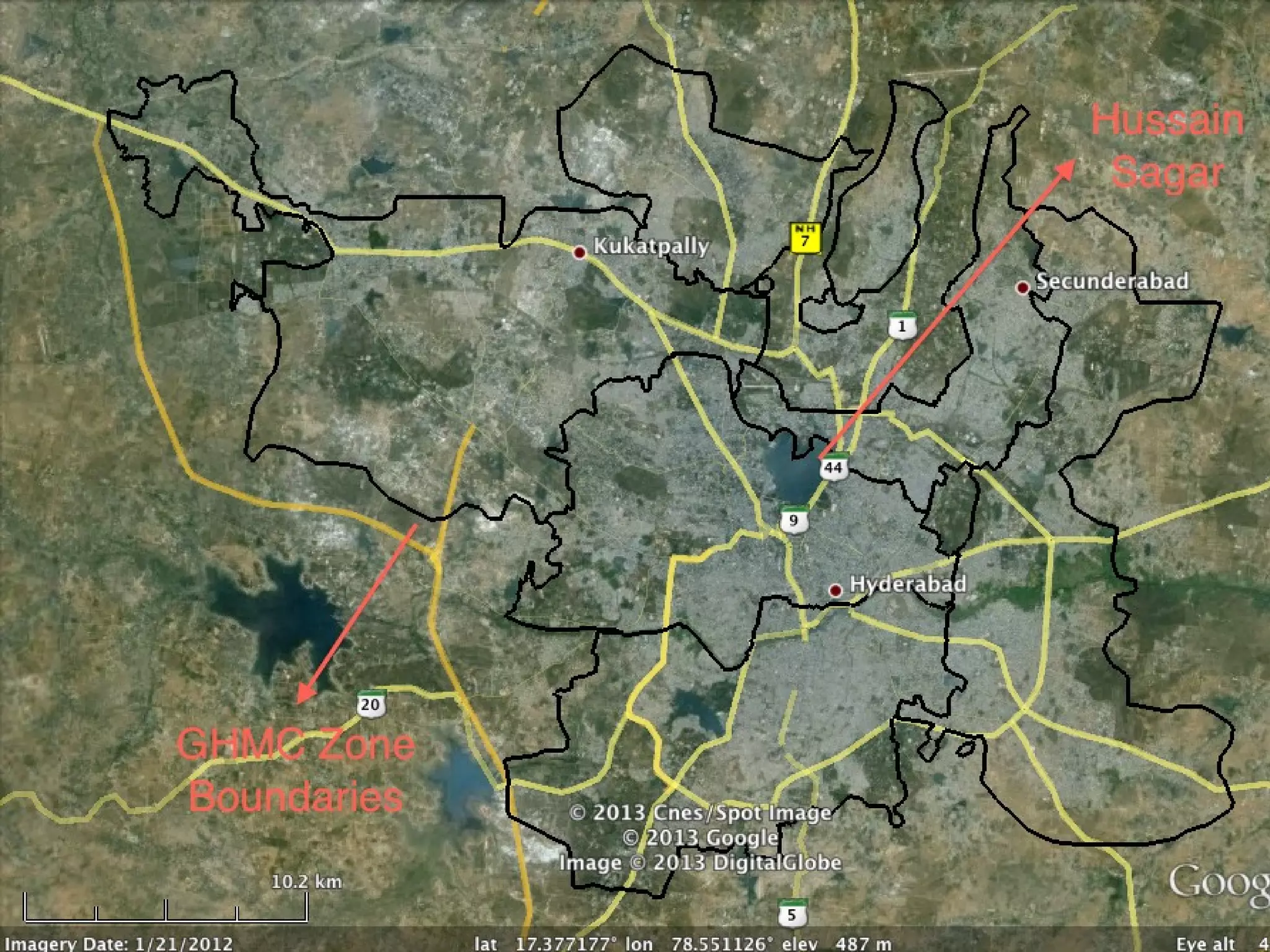
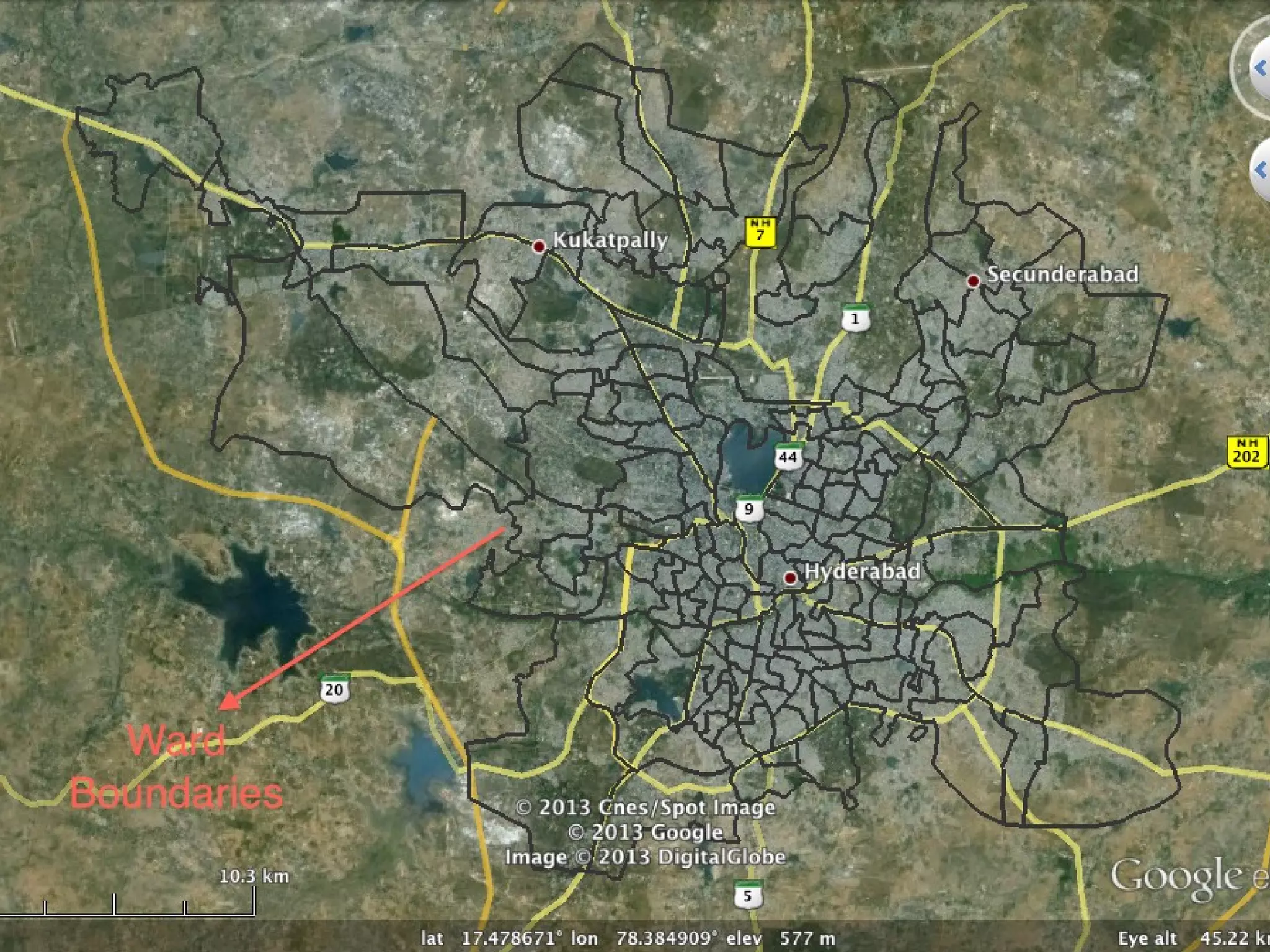
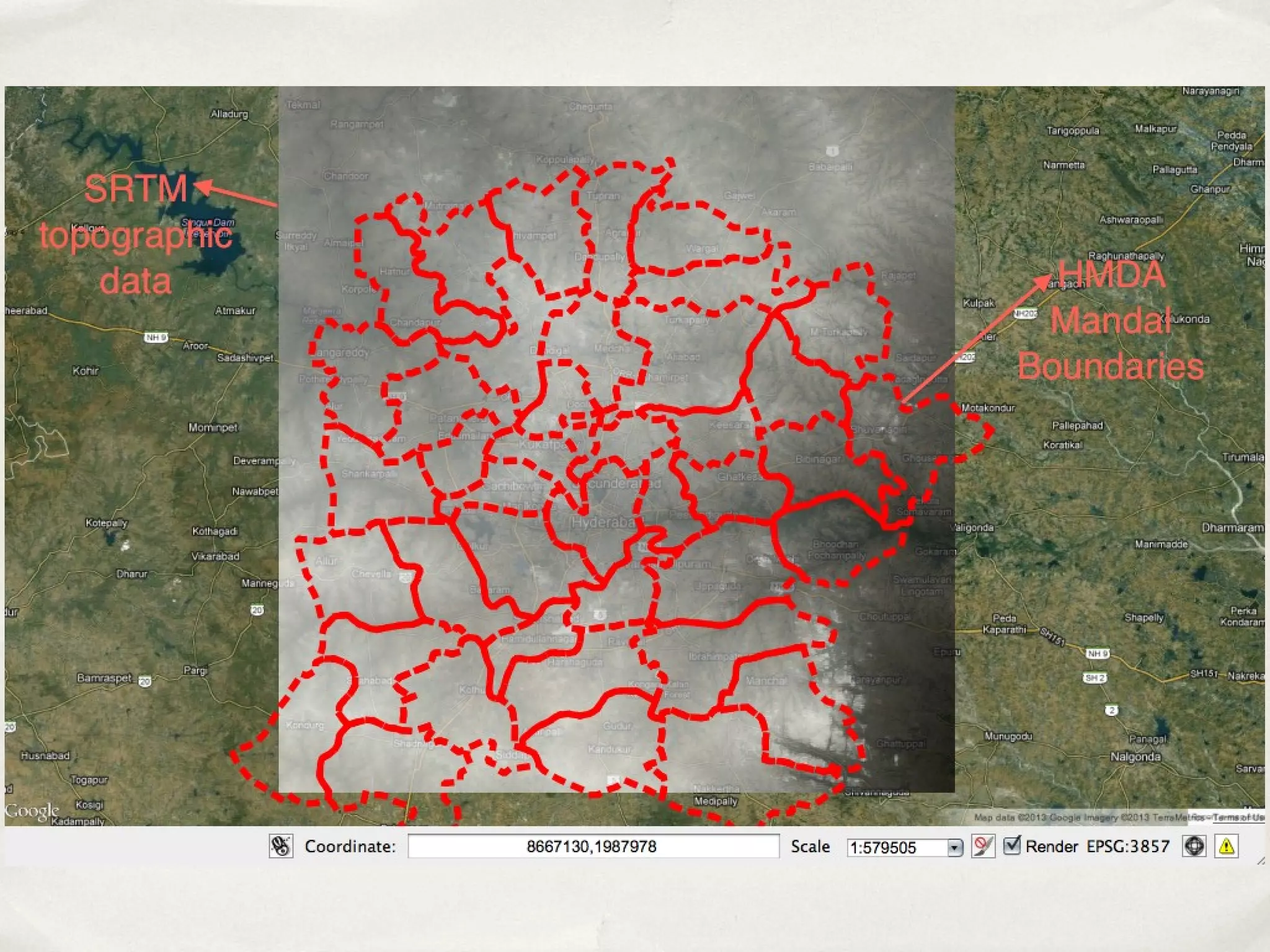
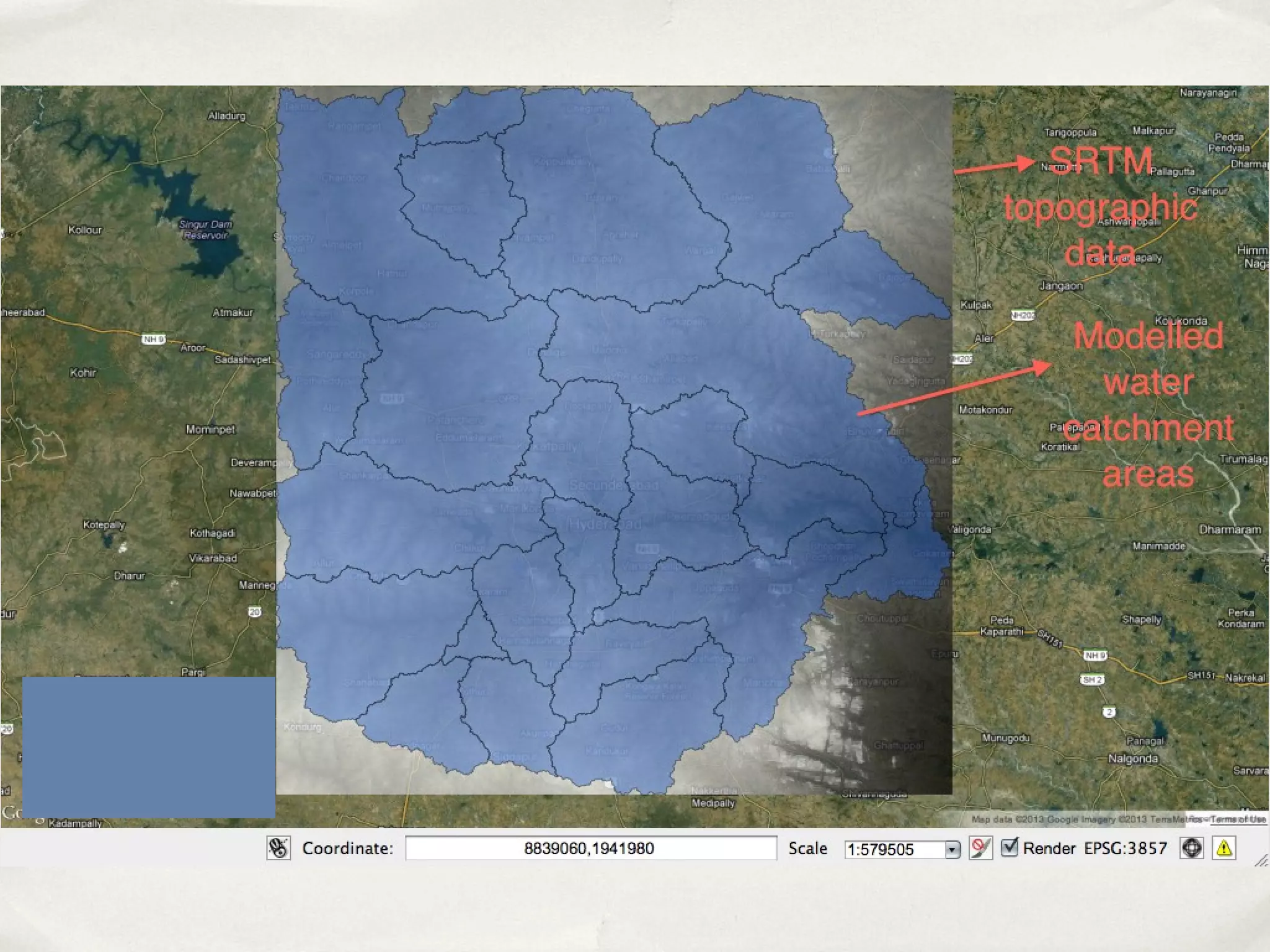
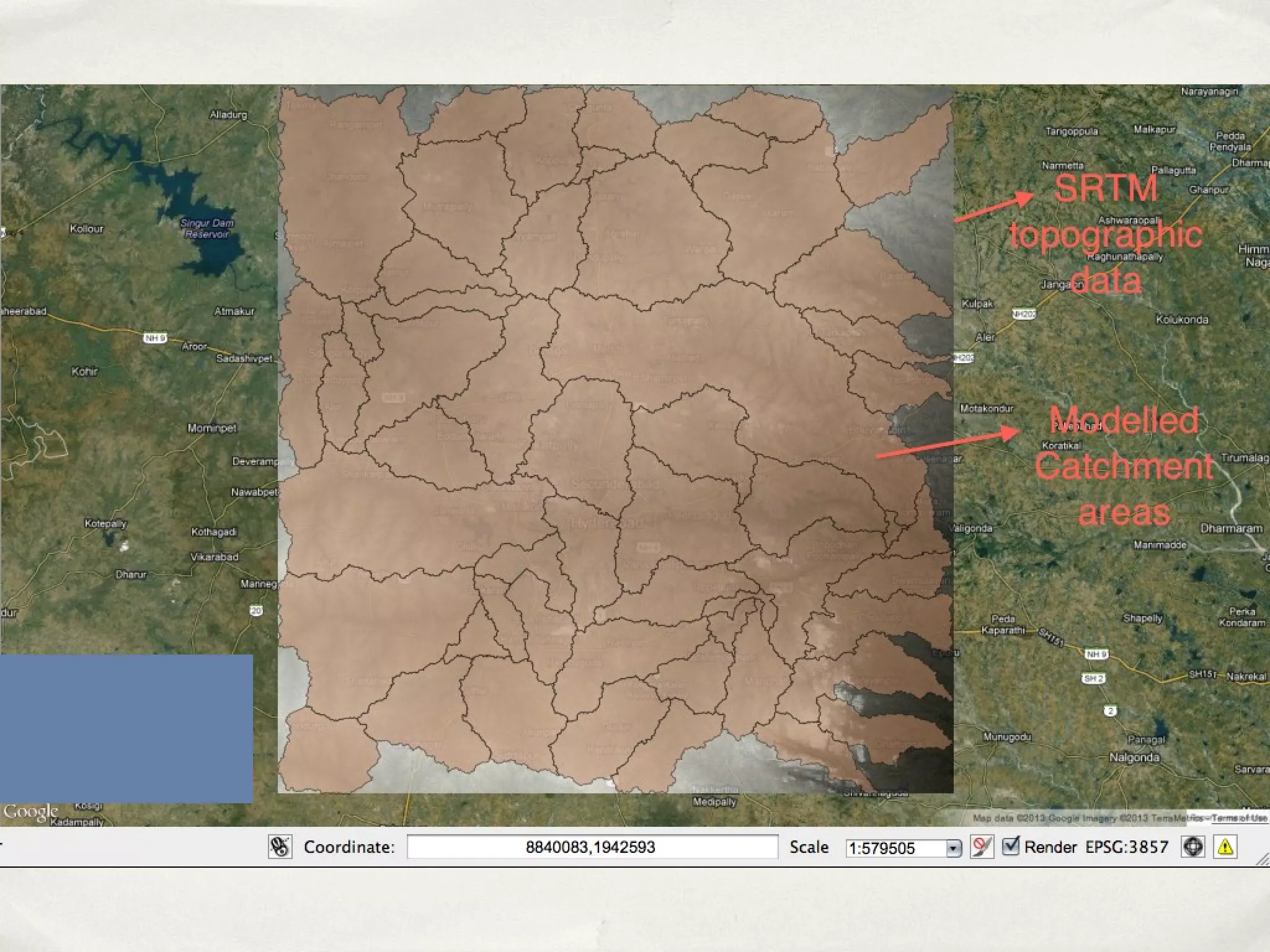
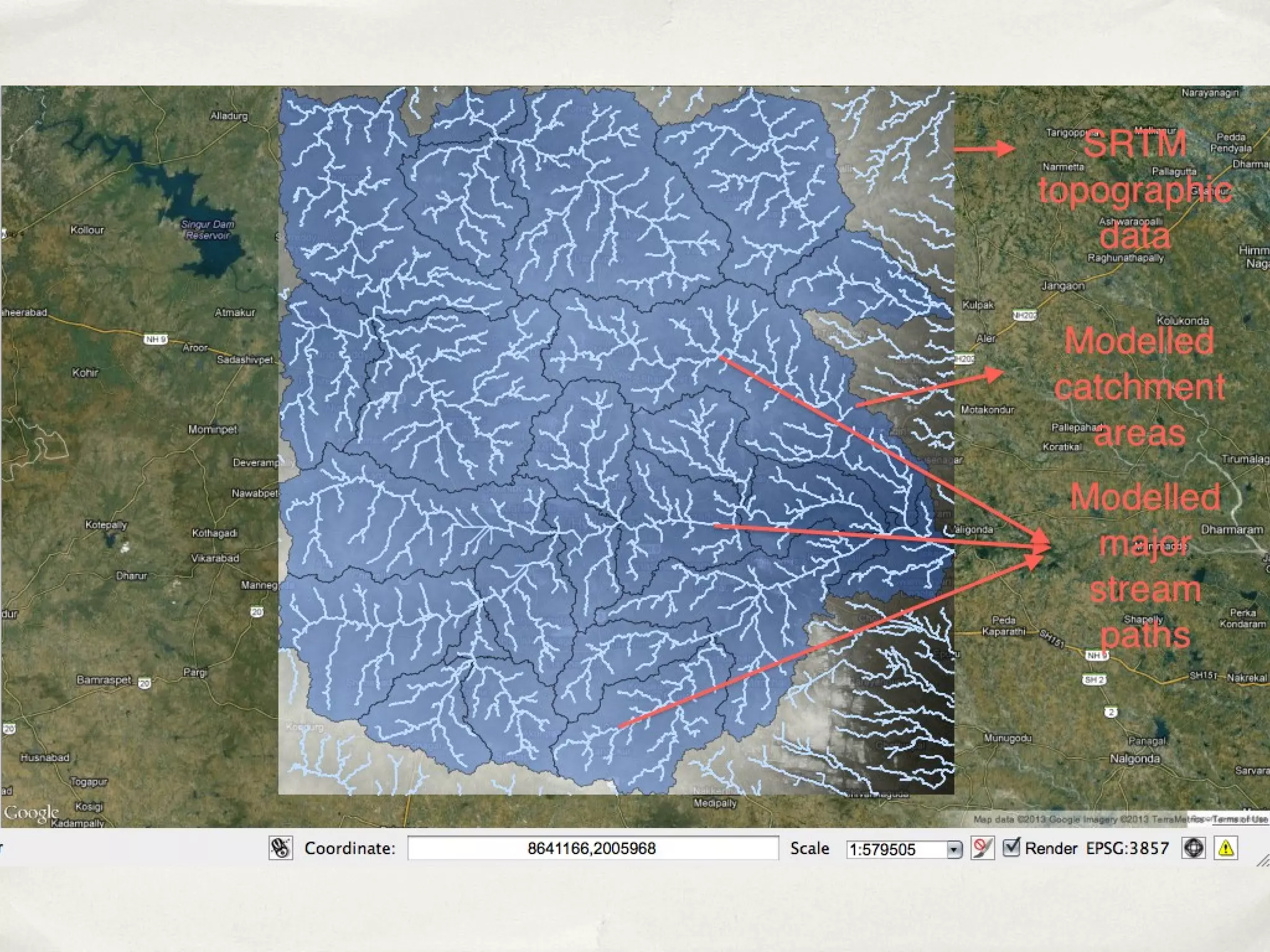
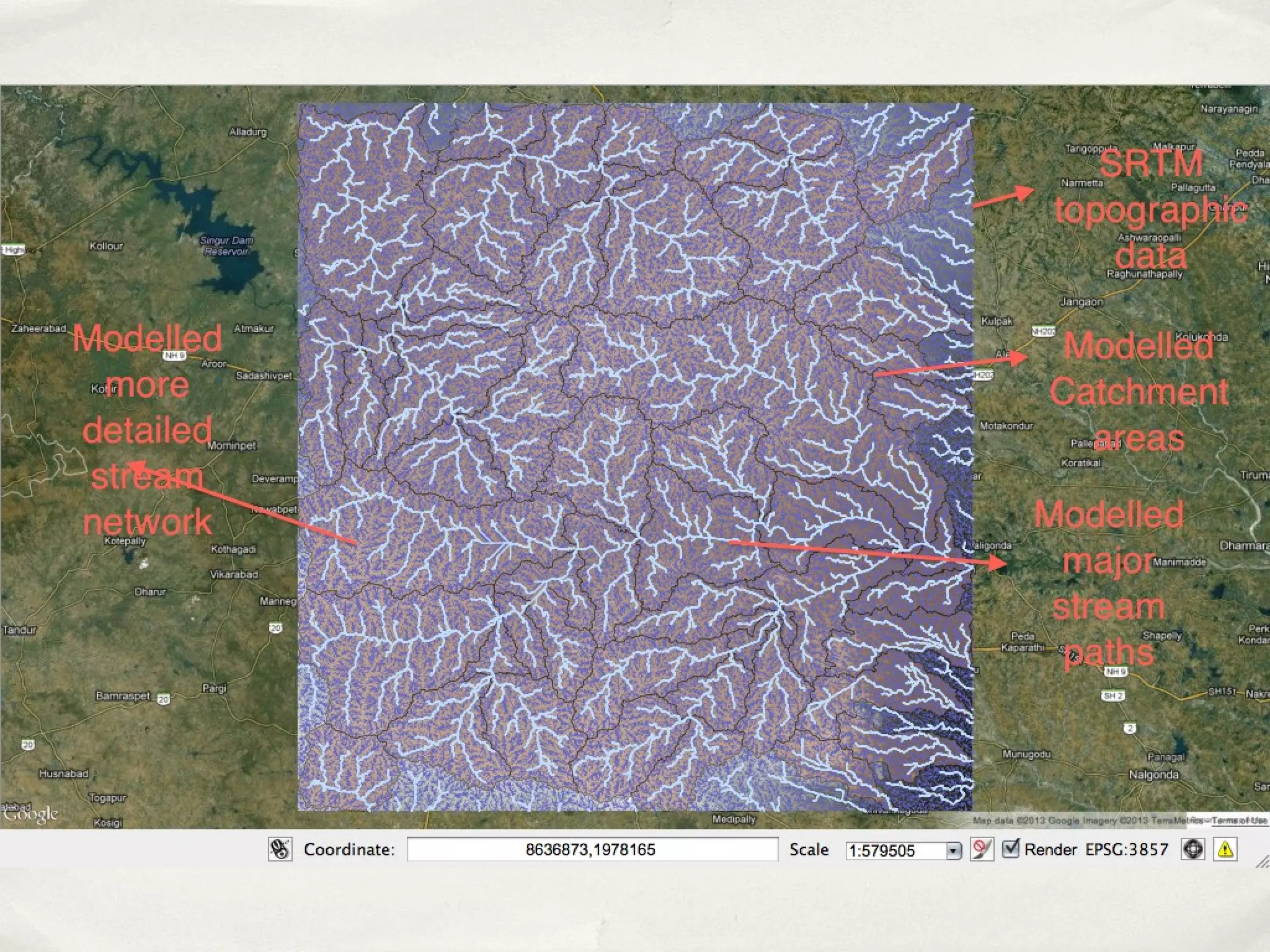
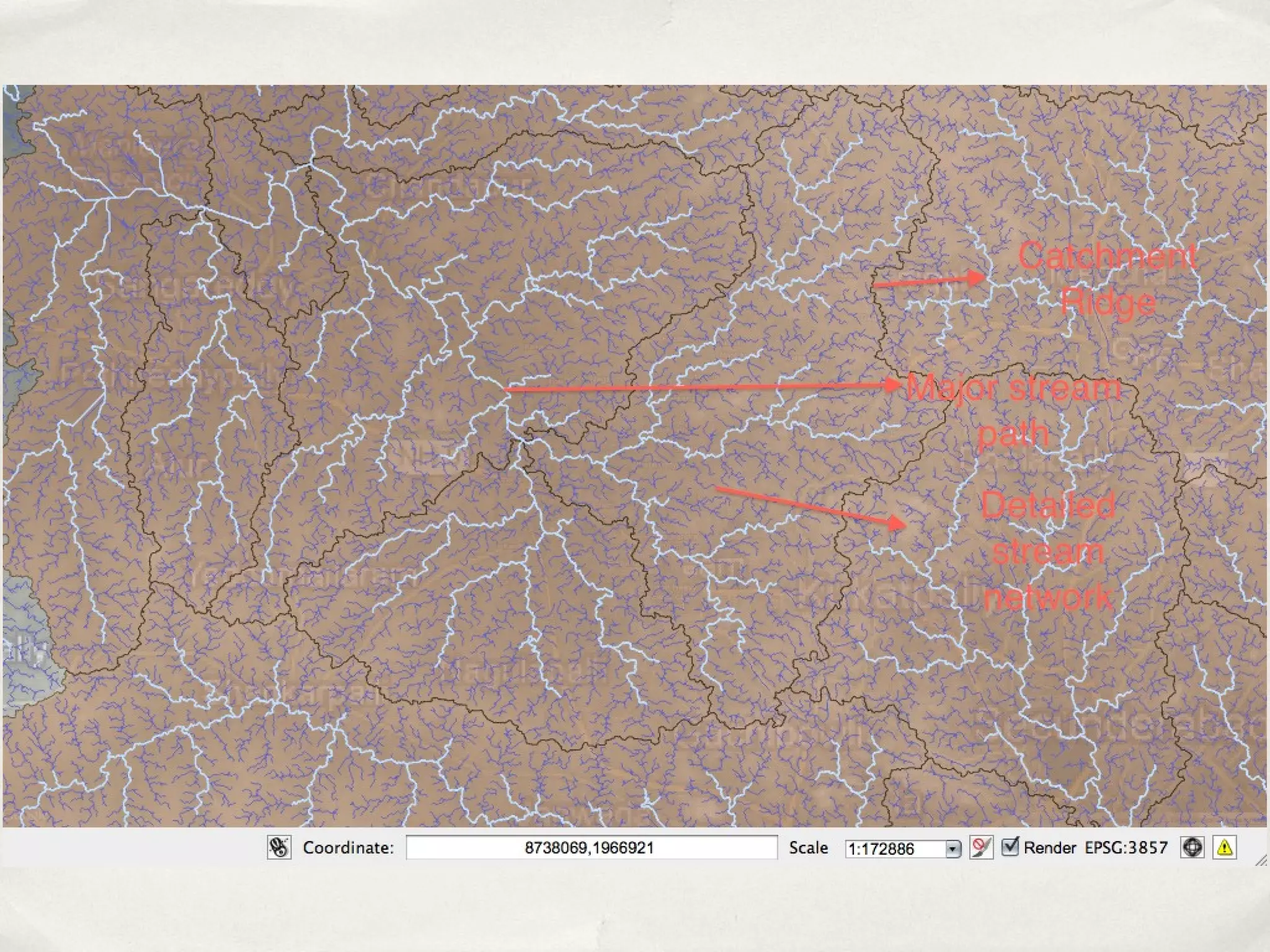
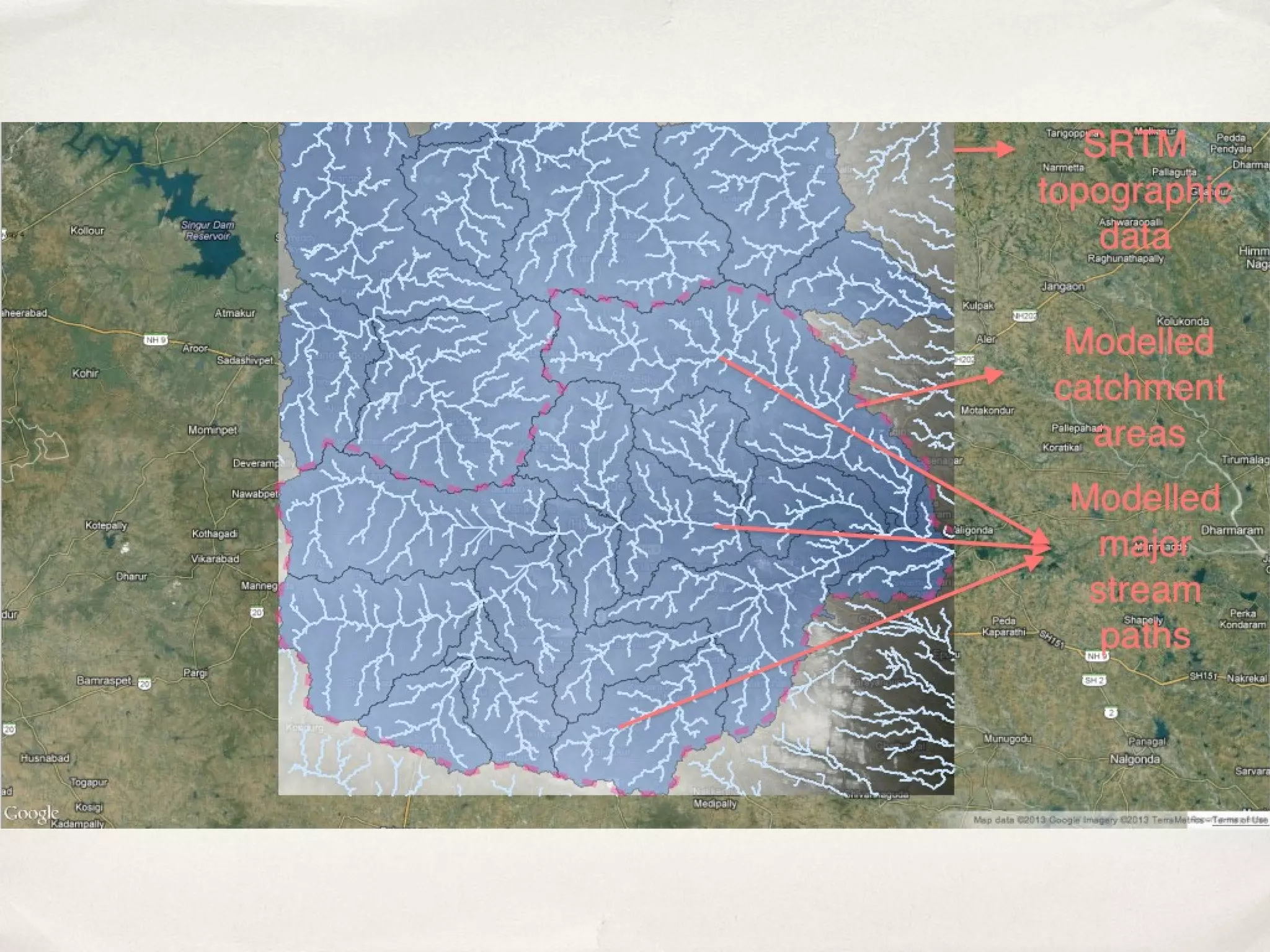
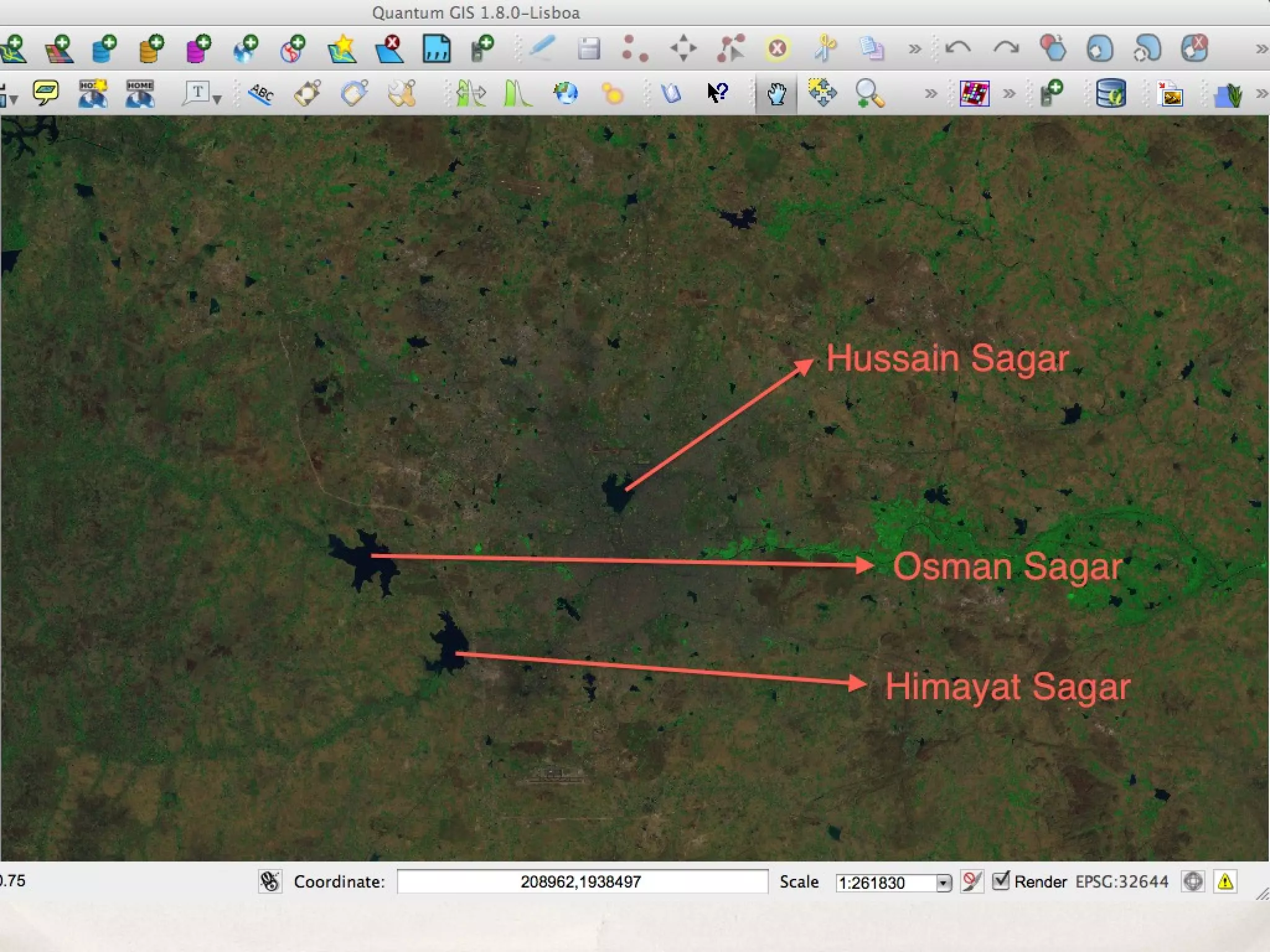
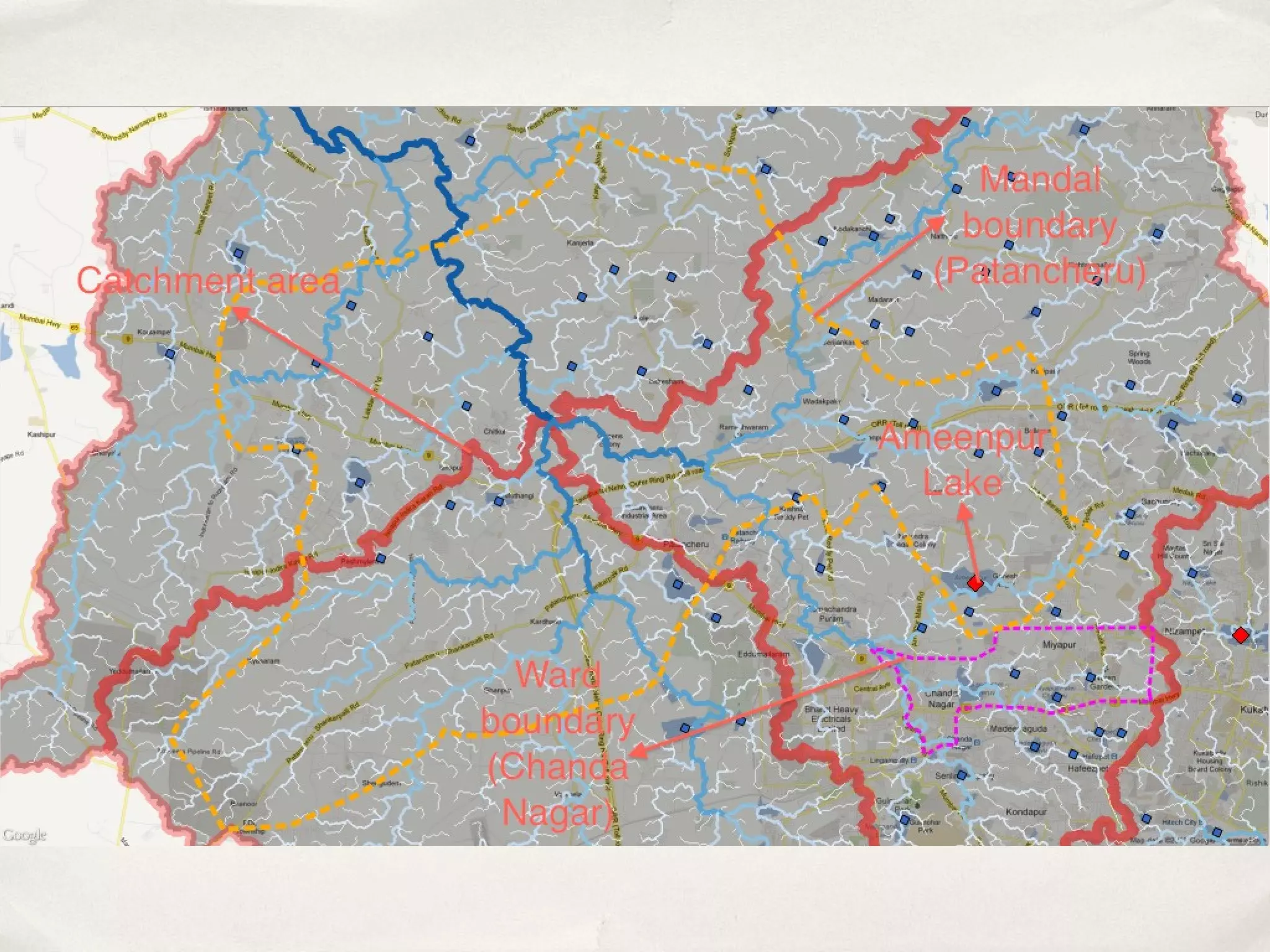
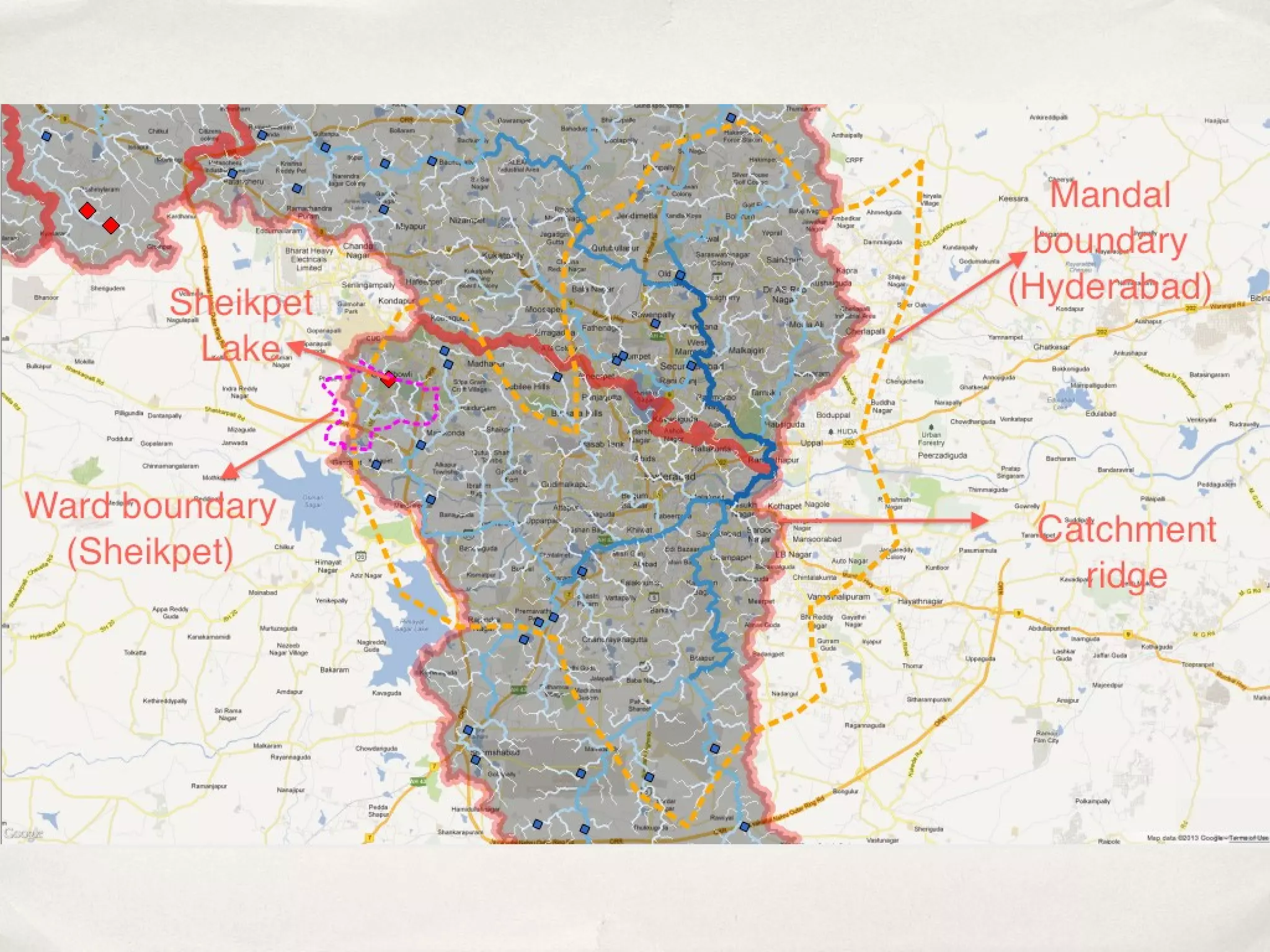
Introduction- Visualizing the GHMC zone, ward and HMDA mandal
administrative jurisdictions of Hyderabad - Visualizing water
catchment regions, stream networks and water bodies in Hyderabad

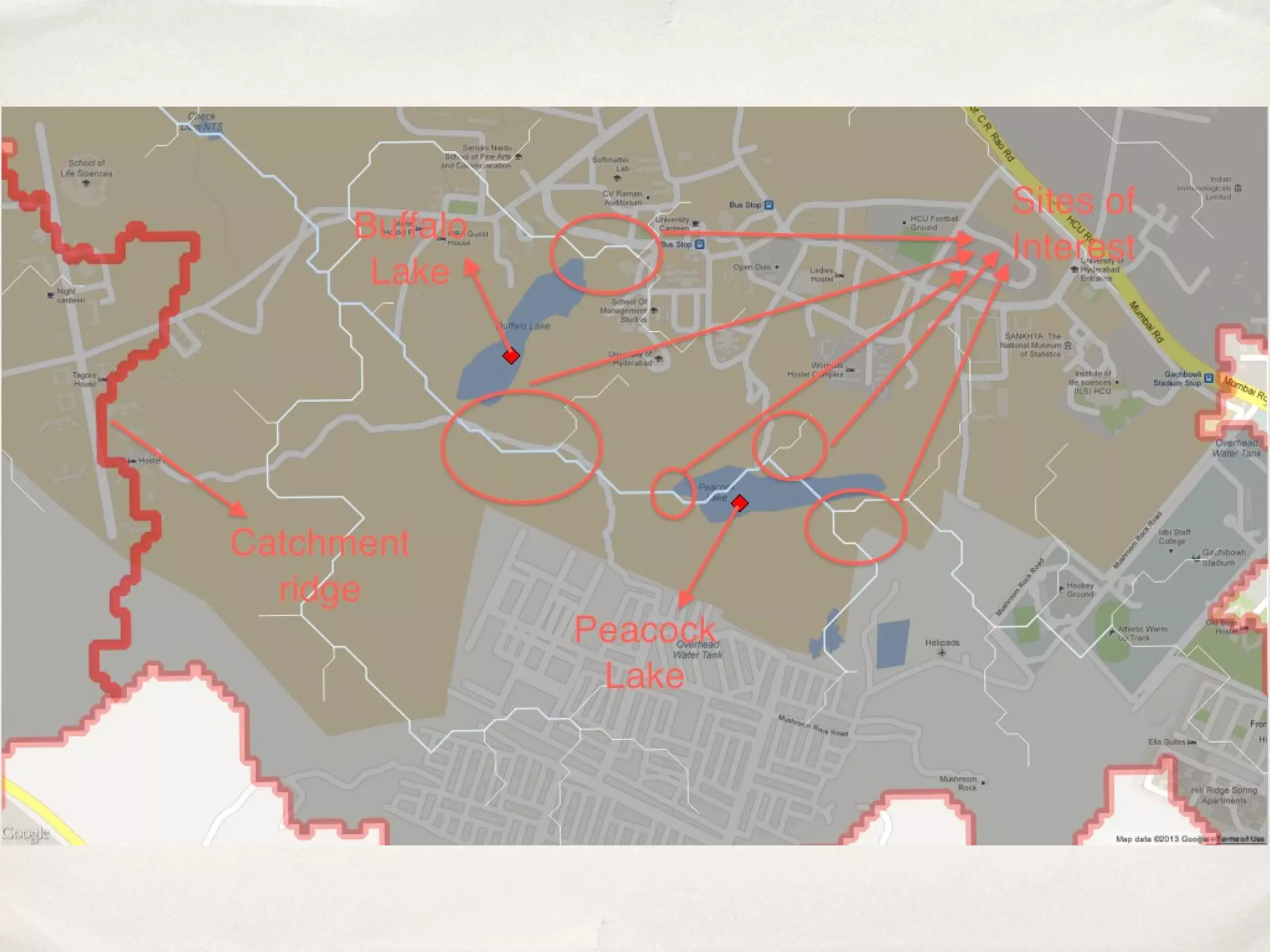
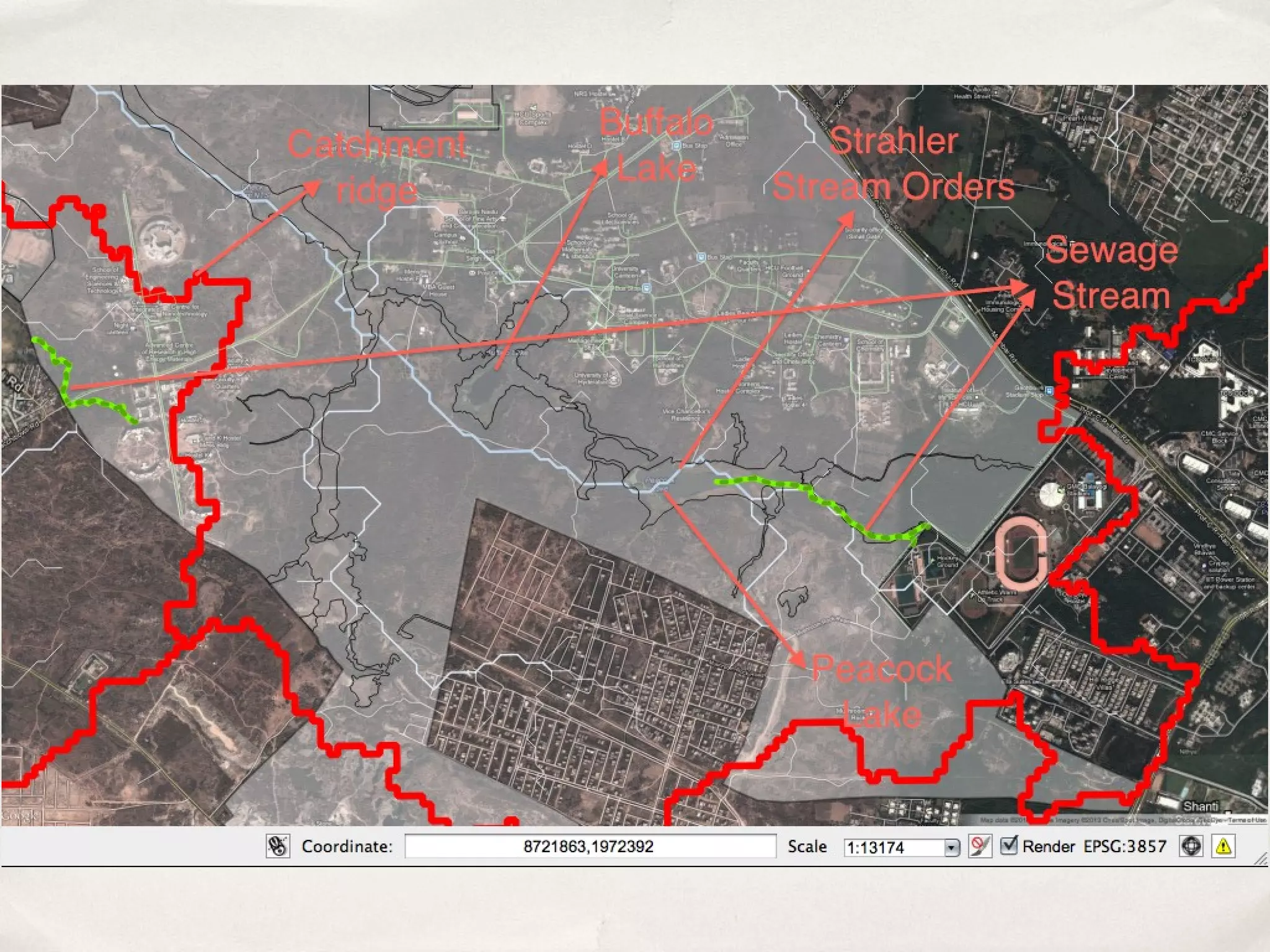
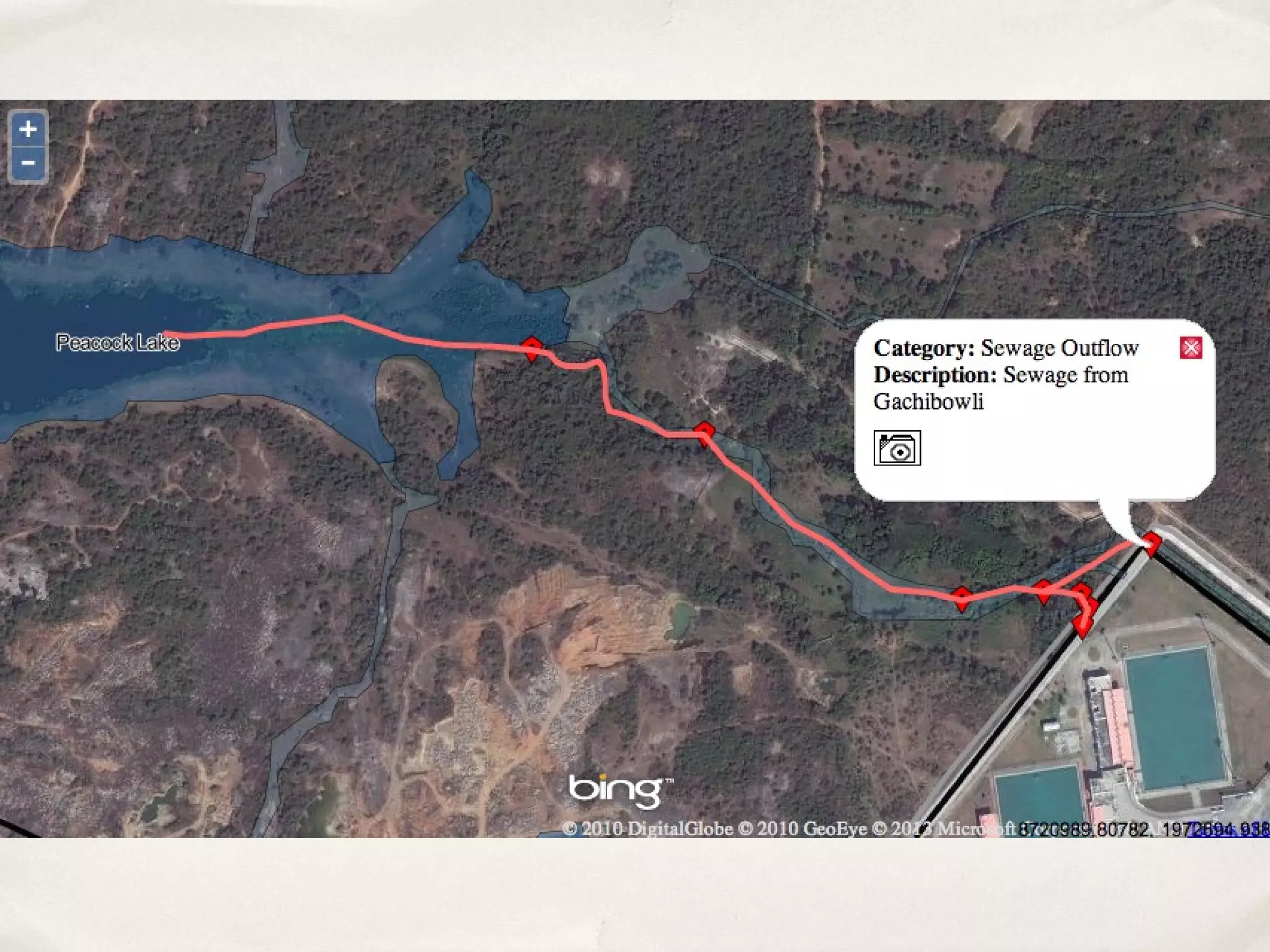
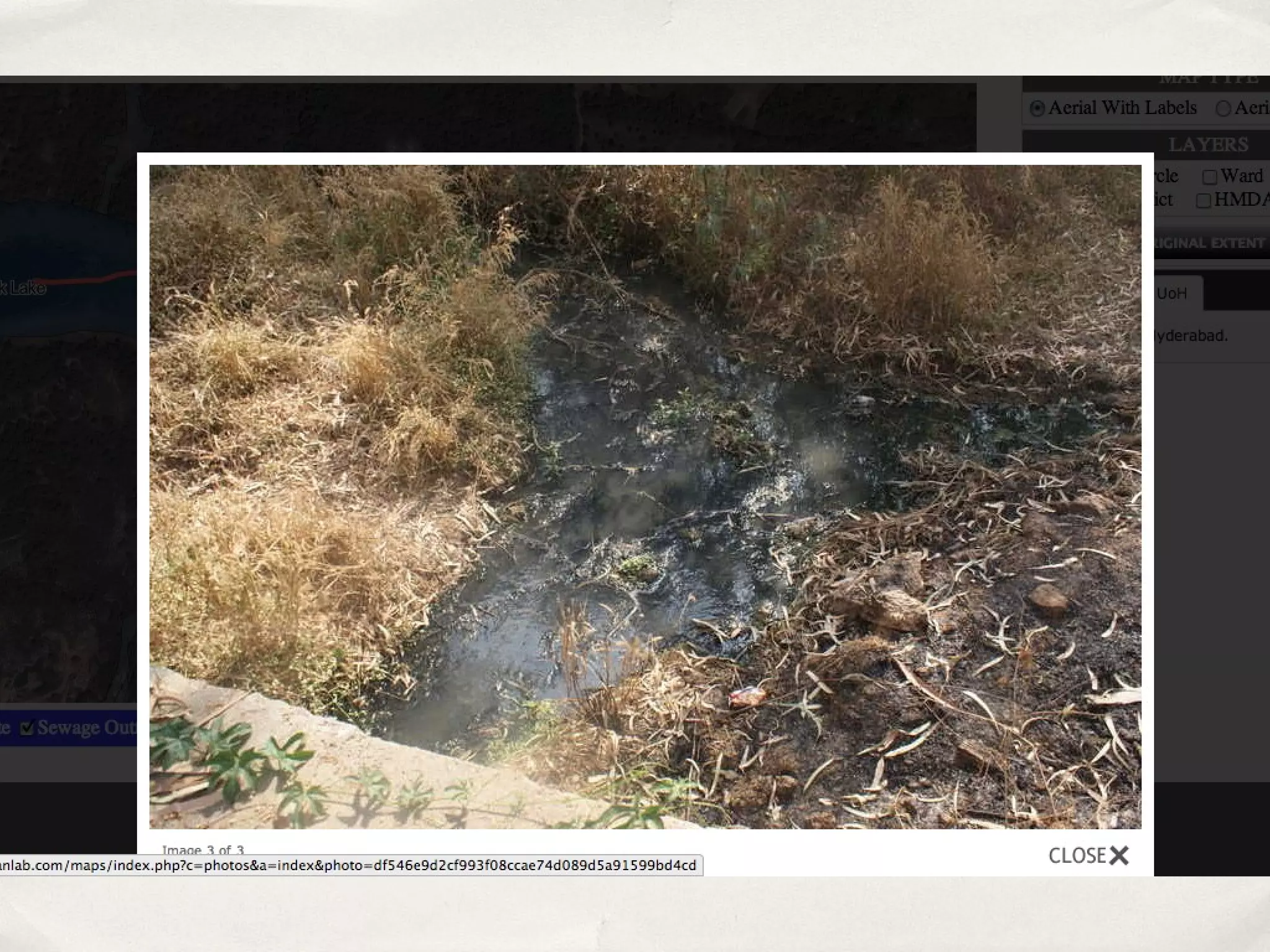
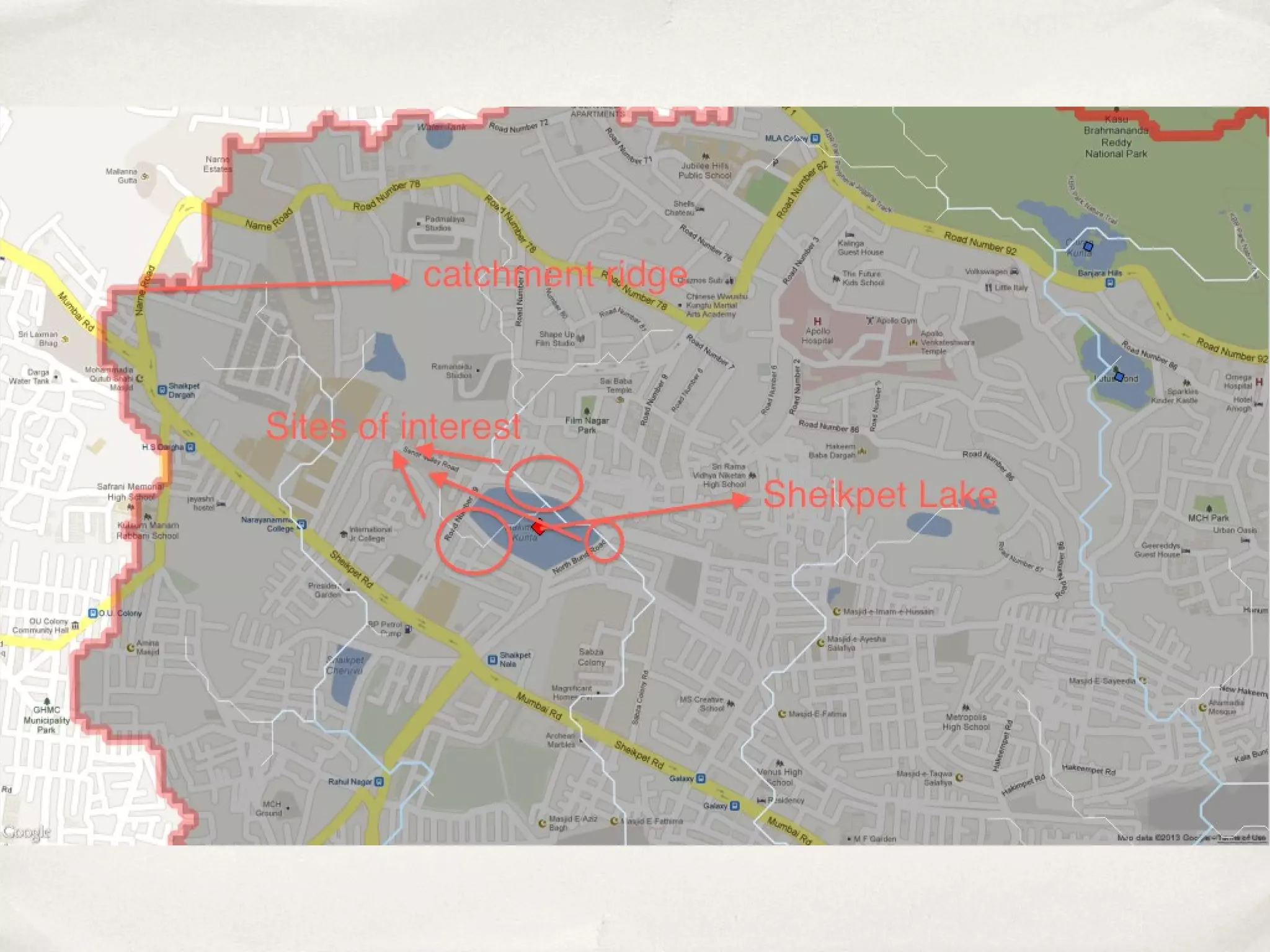
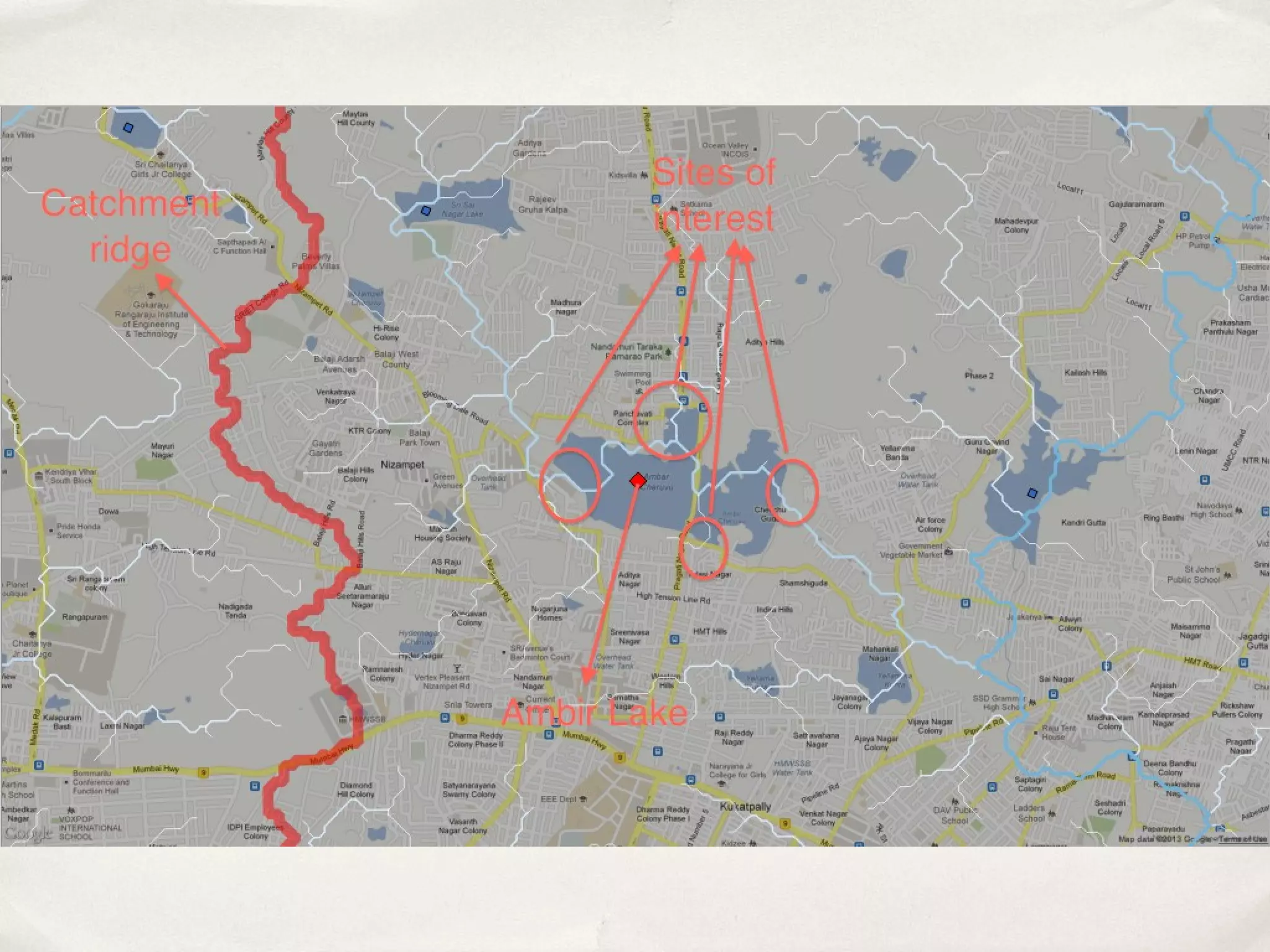
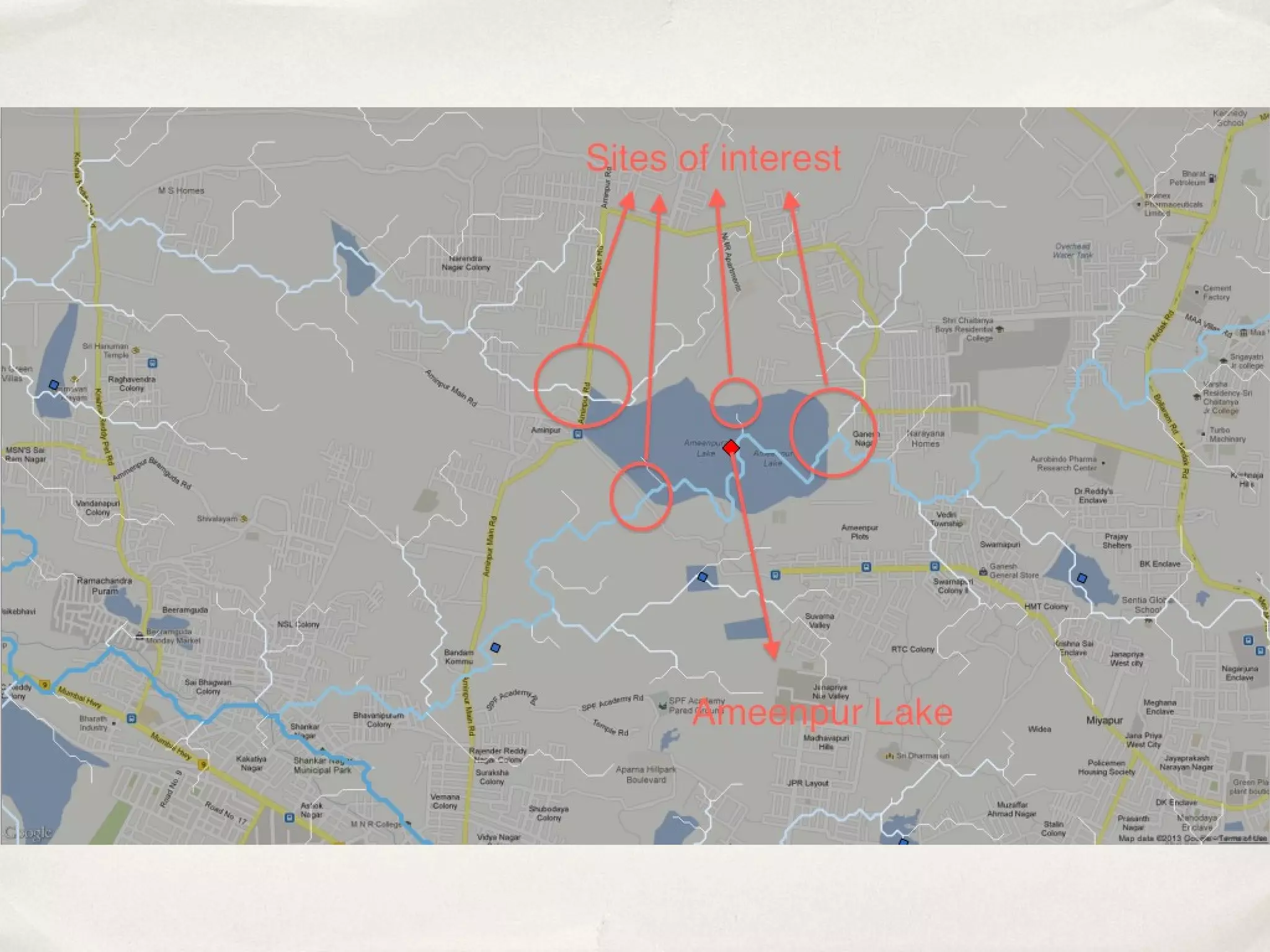
4 Case Studies- Ambir Lake, Ameenpur Lake, University of
Hyderabad Lakes (Peacock and Buffalo Lake) and Sheikpet Lake
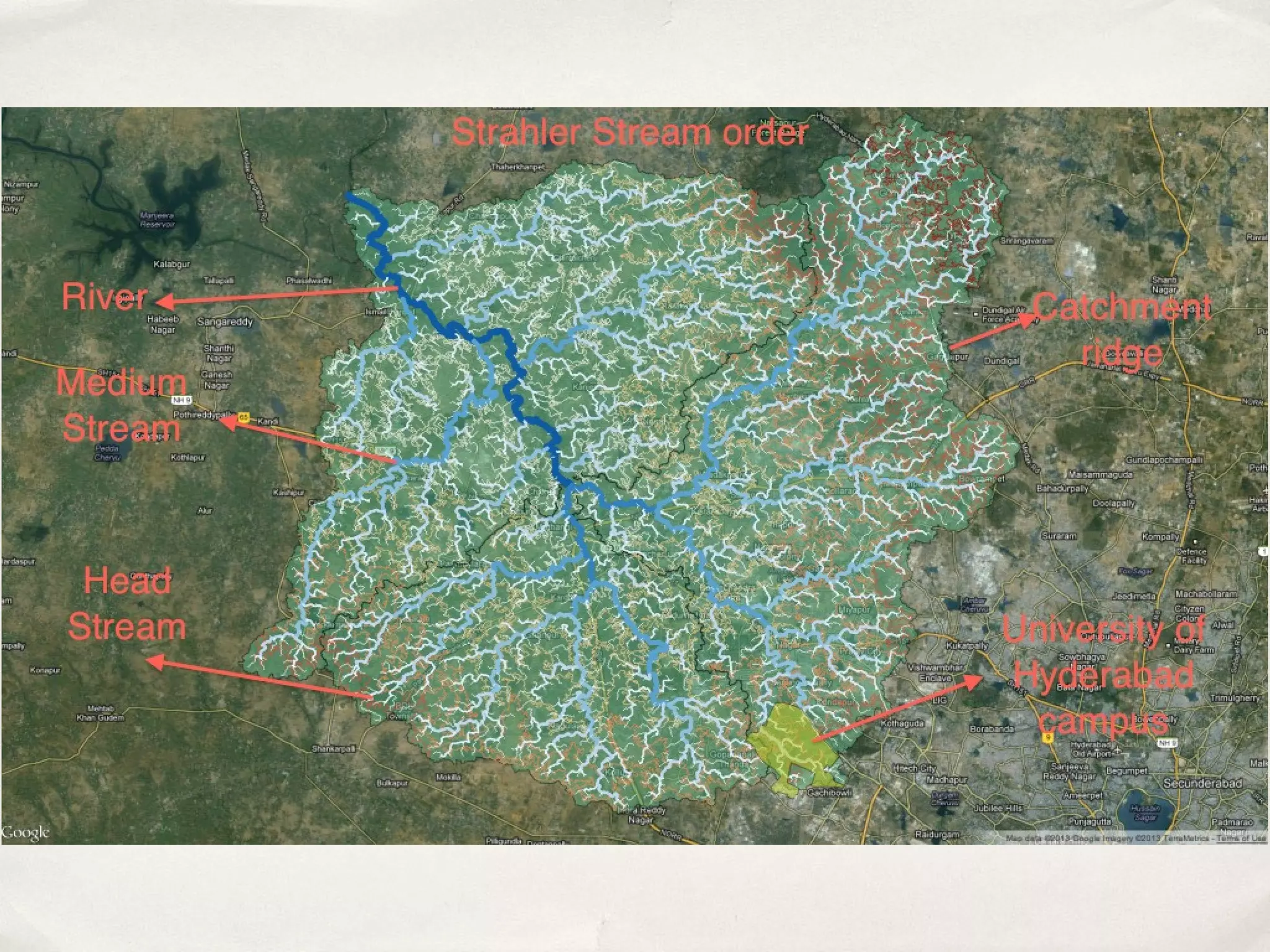
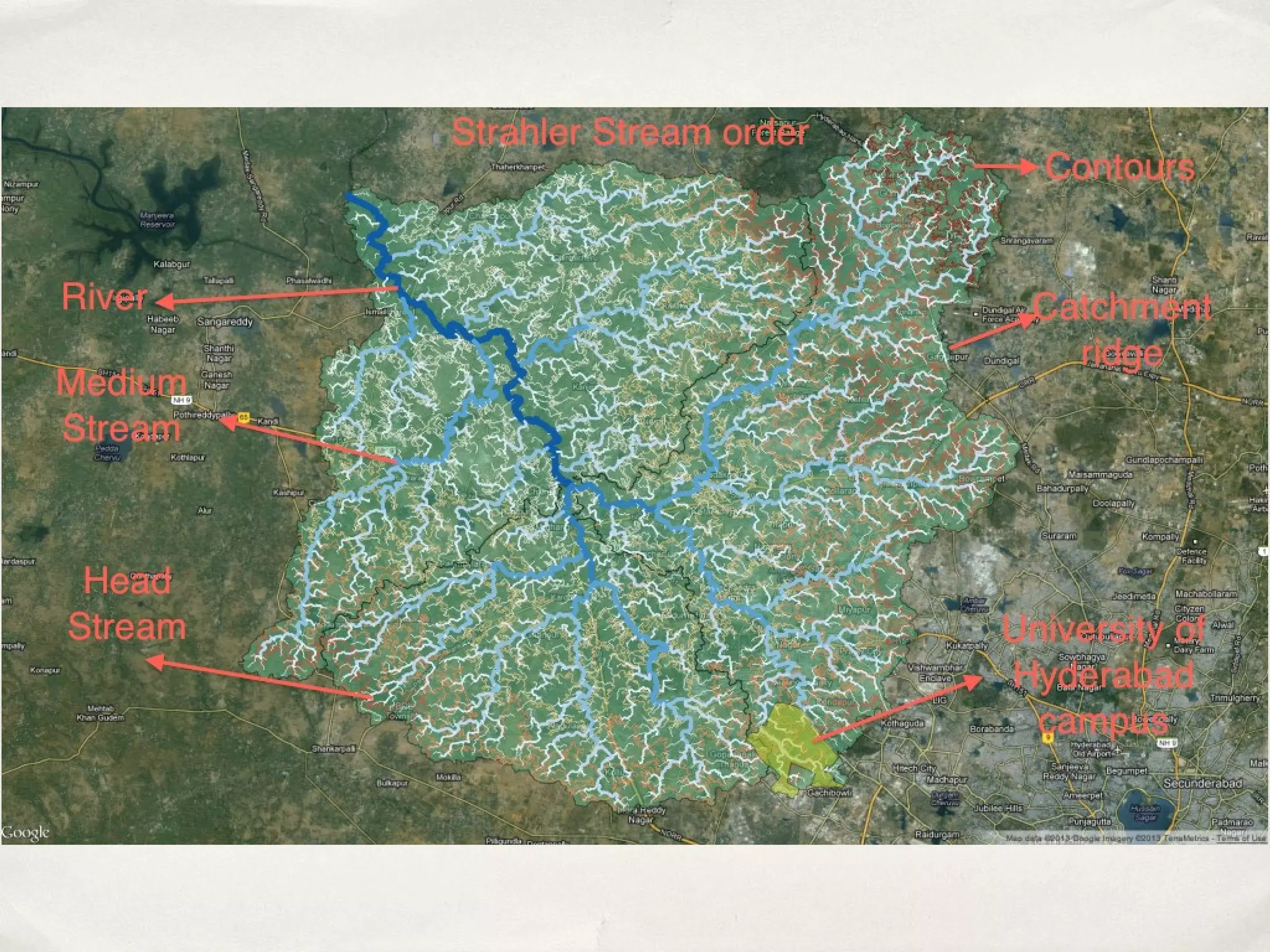
Strahler Stream Order- Amanda Briney

When using stream order to classify a stream, the sizes range from a first order
stream all the way to the largest, a 12th order stream.

A first order stream is the smallest of the world's streams and consists of small
tributaries. These are the streams that flow into and "feed" larger streams but do not
normally have any water flowing into them. In addition, first and second order streams
generally form on steep slopes and flow quickly until they slow down and meet the
next order waterway.

First through third order streams are also called headwater streams and constitute
any waterways in the upper reaches of the watershed. It is estimated that over 80% of
the world’s waterways are these first through third order, or headwater streams.

Going up in size and strength, streams that are classified as fourth through sixth
order are medium streams while anything larger (up to 12th order) is considered
a river.

Unlike the smaller order streams, these medium and large rivers are usually less steep
and flow slower. They do however tend to have larger volumes of runoff and debris as
it collects in them from the smaller waterways flowing into them.
Proposed action agenda
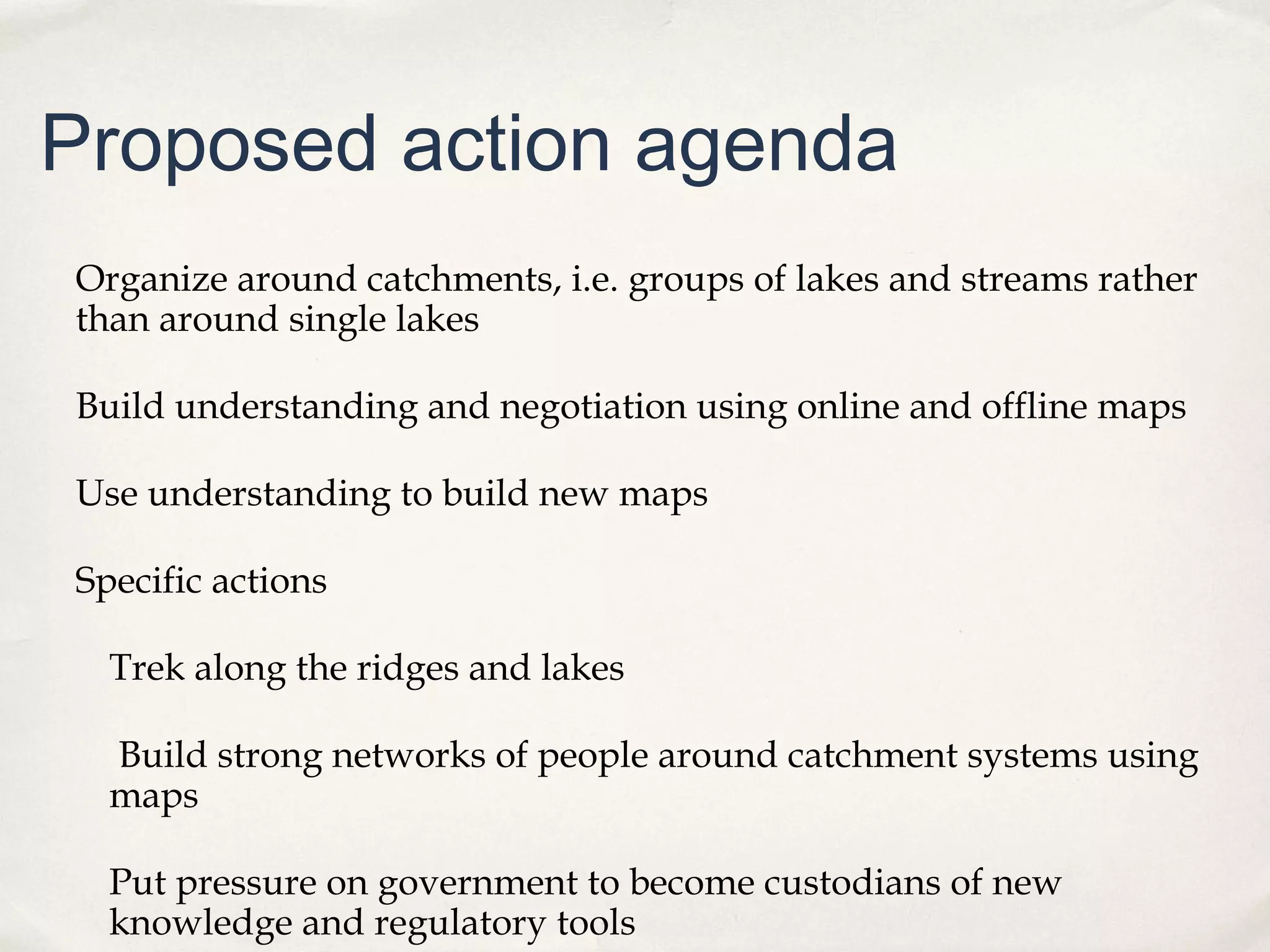
Organize around catchments, i.e. groups of lakes and streams rather
than around single lakes

Build understanding and negotiation using online and offline maps

Use understanding to build new maps

Specific actions

  Trek along the ridges and lakes

  Build strong networks of people around catchment systems using
  maps

  Put pressure on government to become custodians of new
  knowledge and regulatory tools
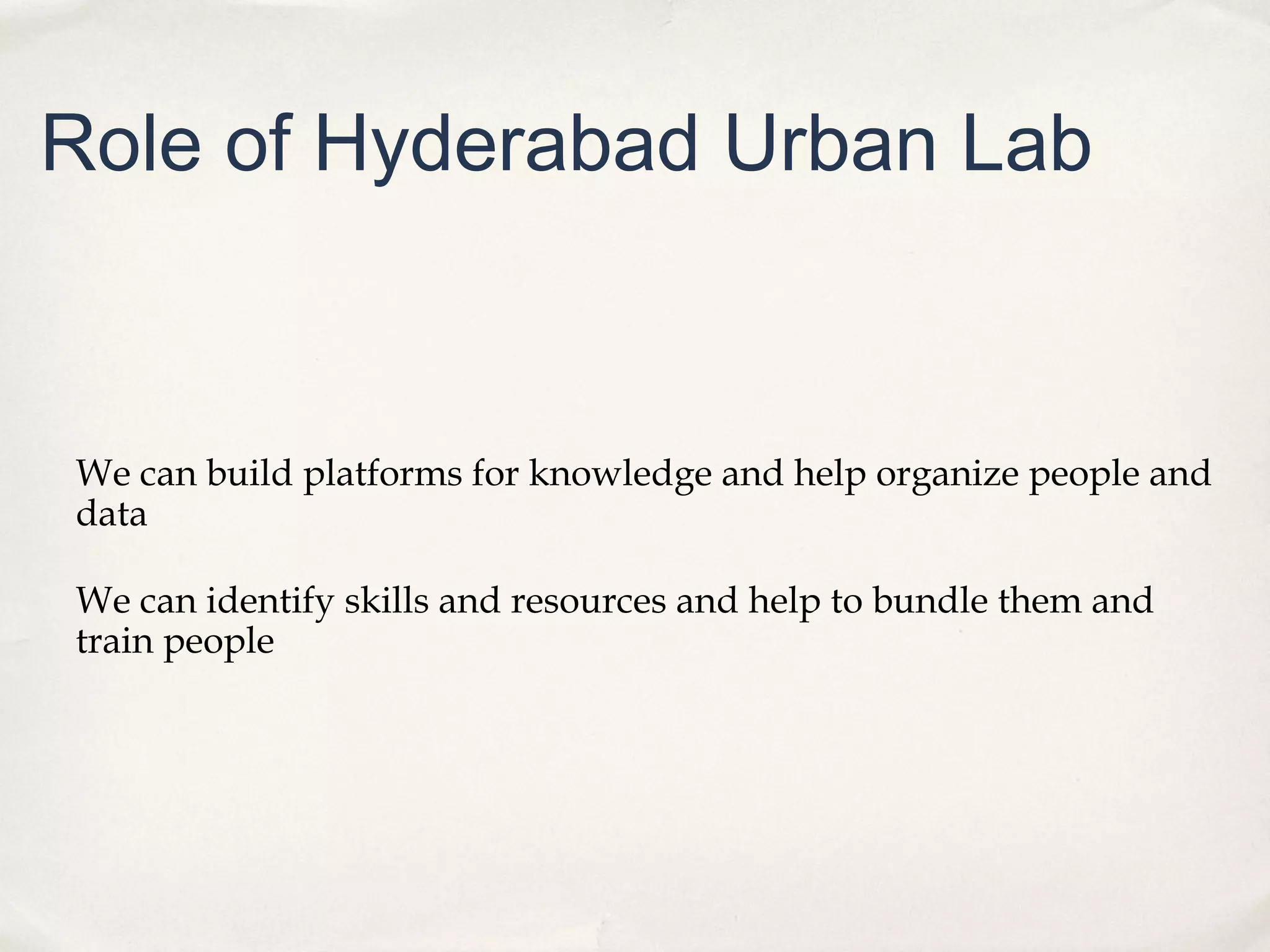
Role of Hyderabad Urban Lab


We can build platforms for knowledge and help organize people and
data

We can identify skills and resources and help to bundle them and
train people
What you can do with HUL


This work requires skills of various kinds in IT, media, social media,
GIS and of course, people skills. With HUL you can

  Volunteer

  Intern

  Develop new projects

Lake preservation and protection in Hyderabad: a watershed systems approach

  • 1.
    The Lake inits Catchment Dr. Anant Maringanti, Siddharth Hande Hyderabad Urban Lab March 20th 2013
  • 2.
    Hyderabad Urban Lab HULis a multidisciplinary urban research initiative that is inspired by the idea of the ‘right to the city’. It aims to build an academically rigorous urban research program that is responsive to the needs of new and emergent ‘communities of practice’ in cities in India and elsewhere. HUL is committed to Innovation in research Interdisciplinarity and collaborations Pursuit of ecological sustainability and social justice
  • 3.
    Hyderabad Urban Lab Weare building an online platform for research, data sharing and data generation customized for the city of Hyderabad Our prime focus is on water & waste. But we are interested in all things urban, urbanizing and globalizing. We are committed to building new knowledge commons by deploying new technologies and working with communities
  • 4.
  • 5.
  • 6.
  • 7.
    Some of ourinterests… Creation of decision support systems for campaigners, institutions of governance, and individual citizens Thematically we are interested in crime and safety scrap markets transit information systems education and training on Right to the City urban archives
  • 8.
    The lake inits catchment Ridge centric approach to lake protection: A people’s geography project ?
  • 9.
    Lakes in theDeccan plateau… were designed, built and used for irrigation purposes not so long ago… had customary user groups associated with them (fisherfolk, washermen, potters, caste/religious communities) were organized by a logic of catchments, ridges and streams were managed by traditional caste/community based stewardship systems and through revenue board and private ownership old user groups got displaced and sold out to new user groups : slums, apartments, corporations, hospitals, hotels through property transactions old management systems have been displaced by new modern state agencies: Irrigation Department, Revenue Department, GHMC, HMWSSB, HMDA…
  • 10.
    MAPS Introduction- Visualizing theGHMC zone, ward and HMDA mandal administrative jurisdictions of Hyderabad - Visualizing water catchment regions, stream networks and water bodies in Hyderabad 4 Case Studies- Ambir Lake, Ameenpur Lake, University of Hyderabad Lakes (Peacock and Buffalo Lake) and Sheikpet Lake
  • 31.
    Strahler Stream Order-Amanda Briney When using stream order to classify a stream, the sizes range from a first order stream all the way to the largest, a 12th order stream. A first order stream is the smallest of the world's streams and consists of small tributaries. These are the streams that flow into and "feed" larger streams but do not normally have any water flowing into them. In addition, first and second order streams generally form on steep slopes and flow quickly until they slow down and meet the next order waterway. First through third order streams are also called headwater streams and constitute any waterways in the upper reaches of the watershed. It is estimated that over 80% of the world’s waterways are these first through third order, or headwater streams. Going up in size and strength, streams that are classified as fourth through sixth order are medium streams while anything larger (up to 12th order) is considered a river. Unlike the smaller order streams, these medium and large rivers are usually less steep and flow slower. They do however tend to have larger volumes of runoff and debris as it collects in them from the smaller waterways flowing into them.
  • 47.
    Proposed action agenda Organizearound catchments, i.e. groups of lakes and streams rather than around single lakes Build understanding and negotiation using online and offline maps Use understanding to build new maps Specific actions Trek along the ridges and lakes Build strong networks of people around catchment systems using maps Put pressure on government to become custodians of new knowledge and regulatory tools
  • 48.
    Role of HyderabadUrban Lab We can build platforms for knowledge and help organize people and data We can identify skills and resources and help to bundle them and train people
  • 49.
    What you cando with HUL This work requires skills of various kinds in IT, media, social media, GIS and of course, people skills. With HUL you can Volunteer Intern Develop new projects