The Water Cycle
Adrian Parra
Amber Balladares
Period 4
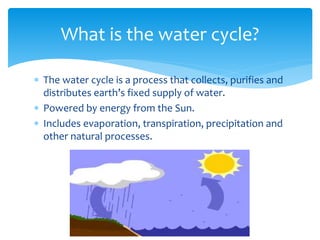
 The water cycle is a process that collects, purifies and
distributes earth’s fixed supply of water.
 Powered by energy from the Sun.
 Includes evaporation, transpiration, precipitation and
other natural processes.
What is the water cycle?
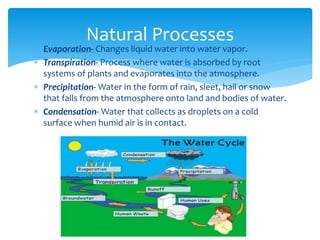
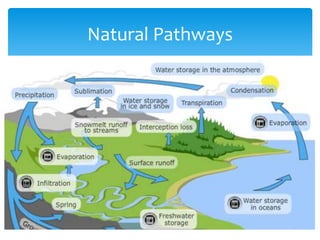
 Evaporation- Changes liquid water into water vapor.
 Transpiration- Process where water is absorbed by root
systems of plants and evaporates into the atmosphere.
 Precipitation- Water in the form of rain, sleet, hail or snow
that falls from the atmosphere onto land and bodies of water.
 Condensation- Water that collects as droplets on a cold
surface when humid air is in contact.
Natural Processes
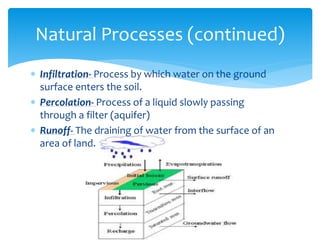
 Infiltration- Process by which water on the ground
surface enters the soil.
 Percolation- Process of a liquid slowly passing
through a filter (aquifer)
 Runoff- The draining of water from the surface of an
area of land.
Natural Processes (continued)
Natural Pathways
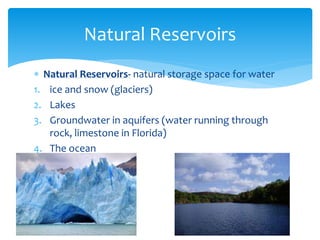
 Natural Reservoirs- natural storage space for water
1. ice and snow (glaciers)
2. Lakes
3. Groundwater in aquifers (water running through
rock, limestone in Florida)
4. The ocean
Natural Reservoirs
 Necessary for life on earth, without it there would be
no life.
 We withdraw water from aquifers for drinking water
as well as agriculture.
 Recycles necessary water and nutrients.
Importance
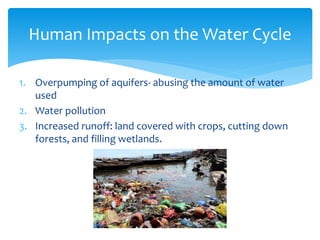
1. Overpumping of aquifers- abusing the amount of water
used
2. Water pollution
3. Increased runoff: land covered with crops, cutting down
forests, and filling wetlands.
Human Impacts on the Water Cycle
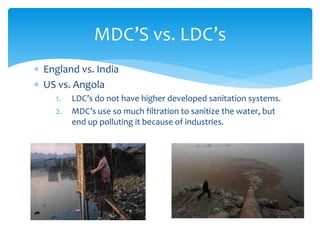
 England vs. India
 US vs. Angola
1. LDC’s do not have higher developed sanitation systems.
2. MDC’s use so much filtration to sanitize the water, but
end up polluting it because of industries.
MDC’S vs. LDC’s

Water cycle PERIOD 4

  • 1.
    The Water Cycle AdrianParra Amber Balladares Period 4
  • 2.
     The watercycle is a process that collects, purifies and distributes earth’s fixed supply of water.  Powered by energy from the Sun.  Includes evaporation, transpiration, precipitation and other natural processes. What is the water cycle?
  • 3.
     Evaporation- Changesliquid water into water vapor.  Transpiration- Process where water is absorbed by root systems of plants and evaporates into the atmosphere.  Precipitation- Water in the form of rain, sleet, hail or snow that falls from the atmosphere onto land and bodies of water.  Condensation- Water that collects as droplets on a cold surface when humid air is in contact. Natural Processes
  • 4.
     Infiltration- Processby which water on the ground surface enters the soil.  Percolation- Process of a liquid slowly passing through a filter (aquifer)  Runoff- The draining of water from the surface of an area of land. Natural Processes (continued)
  • 5.
  • 6.
     Natural Reservoirs-natural storage space for water 1. ice and snow (glaciers) 2. Lakes 3. Groundwater in aquifers (water running through rock, limestone in Florida) 4. The ocean Natural Reservoirs
  • 7.
     Necessary forlife on earth, without it there would be no life.  We withdraw water from aquifers for drinking water as well as agriculture.  Recycles necessary water and nutrients. Importance
  • 8.
    1. Overpumping ofaquifers- abusing the amount of water used 2. Water pollution 3. Increased runoff: land covered with crops, cutting down forests, and filling wetlands. Human Impacts on the Water Cycle
  • 9.
     England vs.India  US vs. Angola 1. LDC’s do not have higher developed sanitation systems. 2. MDC’s use so much filtration to sanitize the water, but end up polluting it because of industries. MDC’S vs. LDC’s