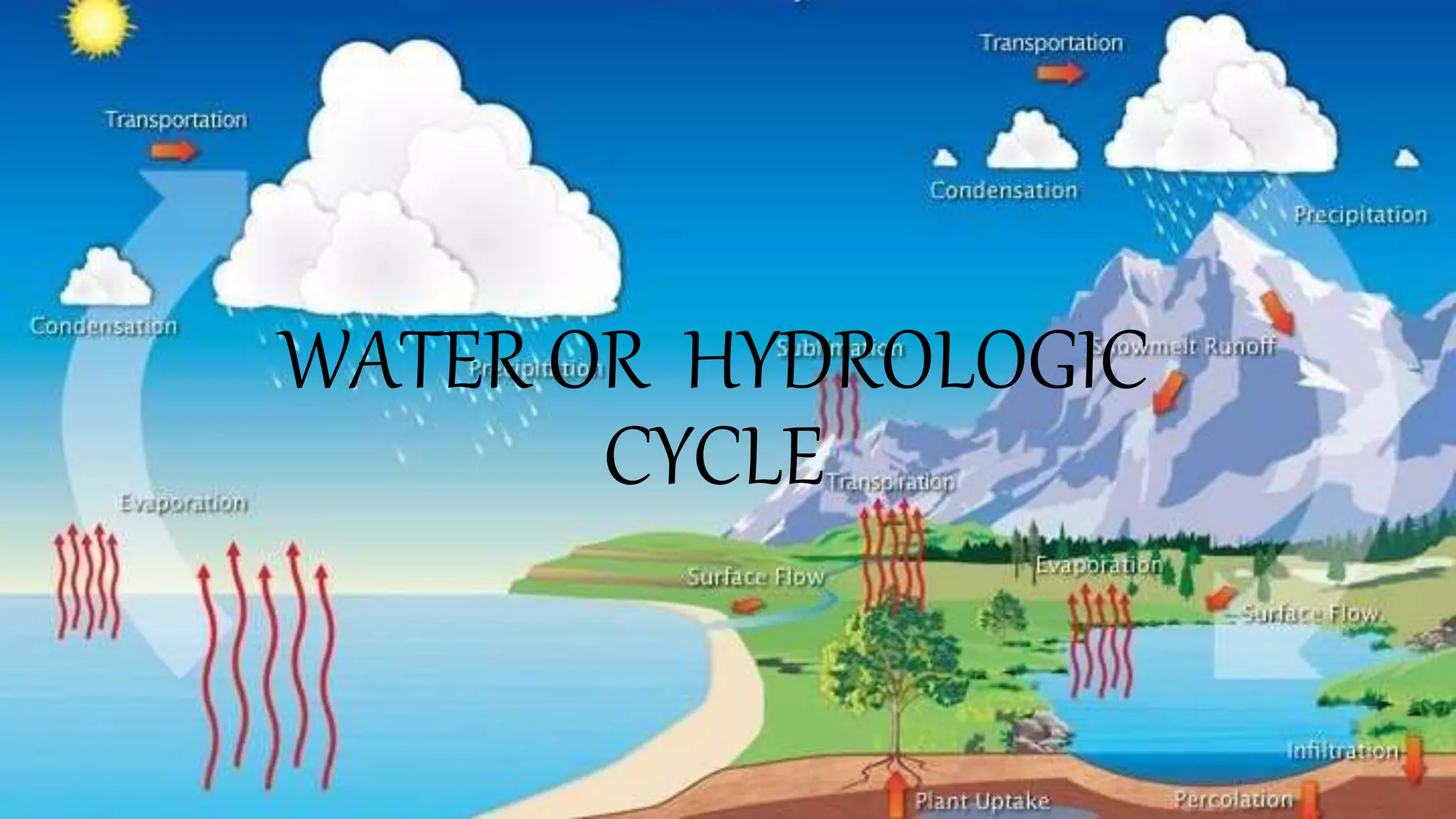
WATER OR HYDROLOGIC
CYCLE
Water never leaves the Earth. It is constantly being
cycled through the atmosphere, ocean, and land. This
process, known as the water cycle, is driven by
energy from the sun. The water cycle is crucial to the
existence of life on our planet.
What is the water cycle?
The water cycle is the name we give to describe the way water
moves throughout planet Earth. The water cycle has two other
names:
The hydrological cycle
•Water (H2O) is a chemical
compound with a lot of important
use to maintain stability in any
external or internal system within
Earth’s biosphere.
The H2O cycle
How does the water move in
a cycle?
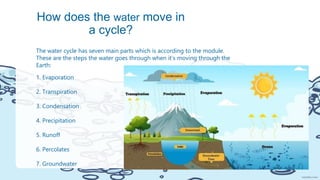
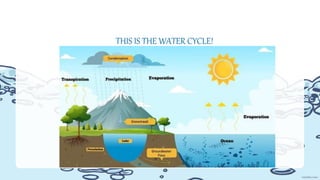
The water cycle has seven main parts which is according to the module.
These are the steps the water goes through when it’s moving through the
Earth:
1. Evaporation
2. Transpiration
3. Condensation
4. Precipitation
5. Runoff
6. Percolates
7. Groundwater
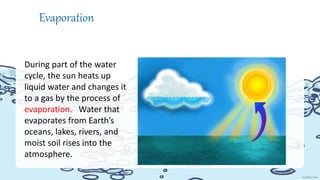
During part of the water
cycle, the sun heats up
liquid water and changes it
to a gas by the process of
evaporation. Water that
evaporates from Earth’s
oceans, lakes, rivers, and
moist soil rises into the
atmosphere.
Evaporation
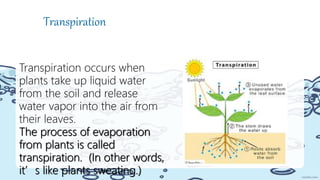
Transpiration
Transpiration occurs when
plants take up liquid water
from the soil and release
water vapor into the air from
their leaves.
The process of evaporation
from plants is called
transpiration. (In other words,
it’s like plants sweating.)
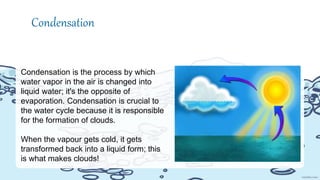
Condensation is the process by which
water vapor in the air is changed into
liquid water; it's the opposite of
evaporation. Condensation is crucial to
the water cycle because it is responsible
for the formation of clouds.
When the vapour gets cold, it gets
transformed back into a liquid form; this
is what makes clouds!
Condensation
Precipitation
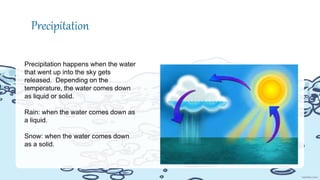
Precipitation happens when the water
that went up into the sky gets
released. Depending on the
temperature, the water comes down
as liquid or solid.
Rain: when the water comes down as
a liquid.
Snow: when the water comes down
as a solid.
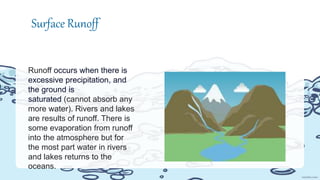
Runoff occurs when there is
excessive precipitation, and
the ground is
saturated (cannot absorb any
more water). Rivers and lakes
are results of runoff. There is
some evaporation from runoff
into the atmosphere but for
the most part water in rivers
and lakes returns to the
oceans.
Surface Runoff
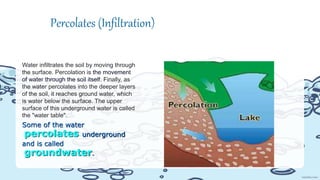
Percolates (Infiltration)
Water infiltrates the soil by moving through
the surface. Percolation is the movement
of water through the soil itself. Finally, as
the water percolates into the deeper layers
of the soil, it reaches ground water, which
is water below the surface. The upper
surface of this underground water is called
the "water table".
Some of the water
percolates underground
and is called
groundwater.
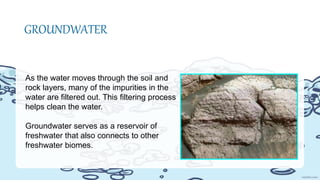
As the water moves through the soil and
rock layers, many of the impurities in the
water are filtered out. This filtering process
helps clean the water.
Groundwater serves as a reservoir of
freshwater that also connects to other
freshwater biomes.
GROUNDWATER
THIS IS THE WATER CYCLE!
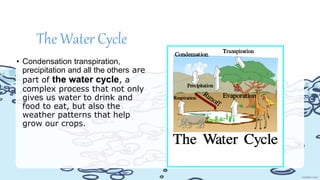
The Water Cycle
• Condensation transpiration,
precipitation and all the others are
part of the water cycle, a
complex process that not only
gives us water to drink and
food to eat, but also the
weather patterns that help
grow our crops.
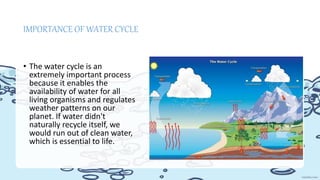
• The water cycle is an
extremely important process
because it enables the
availability of water for all
living organisms and regulates
weather patterns on our
planet. If water didn't
naturally recycle itself, we
would run out of clean water,
which is essential to life.
IMPORTANCE OF WATER CYCLE
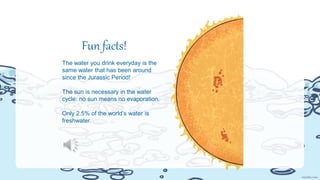
Fun facts!
The water you drink everyday is the
same water that has been around
since the Jurassic Period!
The sun is necessary in the water
cycle: no sun means no evaporation.
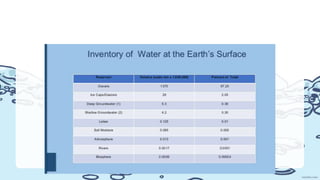
Only 2.5% of the world’s water is
freshwater.
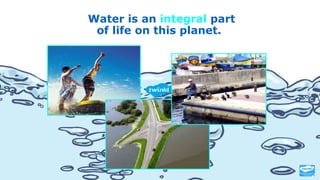
Water is an integral part
of life on this planet.
Name
Title
Name
Title
Name
Title
Name
Title
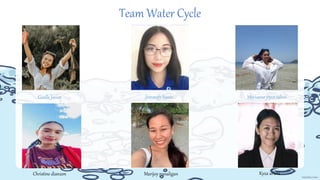
Team Water Cycle
Giselle Javier Jemmafe bauto Marianne joyce salvio
Christine dianzon Marijoy panaligan Kyza urieta
THANK YOU SO MUCh!

WATER CYCLEpptx

  • 1.
  • 2.
    Water never leavesthe Earth. It is constantly being cycled through the atmosphere, ocean, and land. This process, known as the water cycle, is driven by energy from the sun. The water cycle is crucial to the existence of life on our planet.
  • 3.
    What is thewater cycle? The water cycle is the name we give to describe the way water moves throughout planet Earth. The water cycle has two other names: The hydrological cycle •Water (H2O) is a chemical compound with a lot of important use to maintain stability in any external or internal system within Earth’s biosphere. The H2O cycle
  • 4.
    How does thewater move in a cycle? The water cycle has seven main parts which is according to the module. These are the steps the water goes through when it’s moving through the Earth: 1. Evaporation 2. Transpiration 3. Condensation 4. Precipitation 5. Runoff 6. Percolates 7. Groundwater
  • 5.
    During part ofthe water cycle, the sun heats up liquid water and changes it to a gas by the process of evaporation. Water that evaporates from Earth’s oceans, lakes, rivers, and moist soil rises into the atmosphere. Evaporation
  • 6.
    Transpiration Transpiration occurs when plantstake up liquid water from the soil and release water vapor into the air from their leaves. The process of evaporation from plants is called transpiration. (In other words, it’s like plants sweating.)
  • 7.
    Condensation is theprocess by which water vapor in the air is changed into liquid water; it's the opposite of evaporation. Condensation is crucial to the water cycle because it is responsible for the formation of clouds. When the vapour gets cold, it gets transformed back into a liquid form; this is what makes clouds! Condensation
  • 8.
    Precipitation Precipitation happens whenthe water that went up into the sky gets released. Depending on the temperature, the water comes down as liquid or solid. Rain: when the water comes down as a liquid. Snow: when the water comes down as a solid.
  • 9.
    Runoff occurs whenthere is excessive precipitation, and the ground is saturated (cannot absorb any more water). Rivers and lakes are results of runoff. There is some evaporation from runoff into the atmosphere but for the most part water in rivers and lakes returns to the oceans. Surface Runoff
  • 10.
    Percolates (Infiltration) Water infiltratesthe soil by moving through the surface. Percolation is the movement of water through the soil itself. Finally, as the water percolates into the deeper layers of the soil, it reaches ground water, which is water below the surface. The upper surface of this underground water is called the "water table". Some of the water percolates underground and is called groundwater.
  • 11.
    As the watermoves through the soil and rock layers, many of the impurities in the water are filtered out. This filtering process helps clean the water. Groundwater serves as a reservoir of freshwater that also connects to other freshwater biomes. GROUNDWATER
  • 12.
    THIS IS THEWATER CYCLE!
  • 14.
    The Water Cycle •Condensation transpiration, precipitation and all the others are part of the water cycle, a complex process that not only gives us water to drink and food to eat, but also the weather patterns that help grow our crops.
  • 15.
    • The watercycle is an extremely important process because it enables the availability of water for all living organisms and regulates weather patterns on our planet. If water didn't naturally recycle itself, we would run out of clean water, which is essential to life. IMPORTANCE OF WATER CYCLE
  • 16.
    Fun facts! The wateryou drink everyday is the same water that has been around since the Jurassic Period! The sun is necessary in the water cycle: no sun means no evaporation. Only 2.5% of the world’s water is freshwater.
  • 17.
    Water is anintegral part of life on this planet.
  • 18.
    Name Title Name Title Name Title Name Title Team Water Cycle GiselleJavier Jemmafe bauto Marianne joyce salvio Christine dianzon Marijoy panaligan Kyza urieta
  • 19.