Water and Wind Erosion &
Deforestation
Mohammad Ashfaq
Ikram ul Haq
Erosion
 Geological process in which earthen materials are worn away and
transported by natural forces such as wind or water.
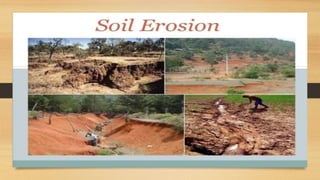
 Soil erosion is a process of moving soil by water or wind - when the soil
particles are detached and transported to a different location.
 Water, wind, ice, and gravity are involved in moving soil materials.
Water Erosion
 Removal of soil by water and transportation of the eroded materials away
from the point of removal.
 Water action due to rain erodes the soil.
 Causes activities like gully, rill, and stream erosion leading to the
downstream effects of flooding and sedimentation.
 The severity of water erosion is influenced by slope, soil type, soil water
storage capacity, nature of the underlying rock, vegetation cover, and rainfall
intensity and period.
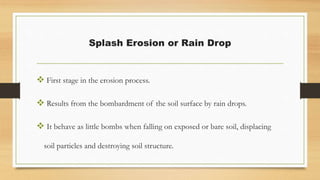
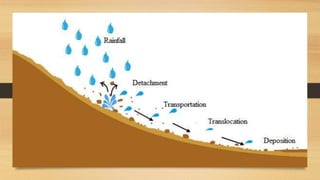
Splash Erosion or Rain Drop
 First stage in the erosion process.
 Results from the bombardment of the soil surface by rain drops.
 It behave as little bombs when falling on exposed or bare soil, displacing
soil particles and destroying soil structure.
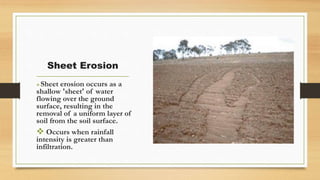
Sheet Erosion
 Sheet erosion occurs as a
shallow 'sheet' of water
flowing over the ground
surface, resulting in the
removal of a uniform layer of
soil from the soil surface.
 Occurs when rainfall
intensity is greater than
infiltration.
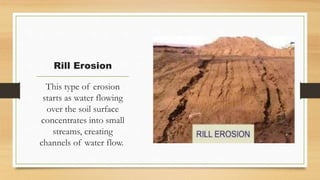
Rill Erosion
This type of erosion
starts as water flowing
over the soil surface
concentrates into small
streams, creating
channels of water flow.
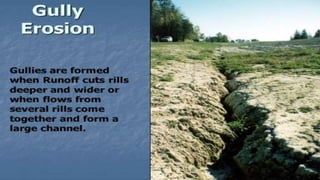
Gully Erosion
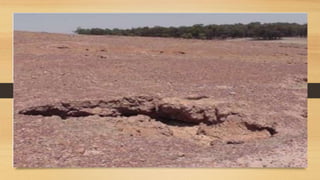
Tunnel Erosion
 The land in arid or semi arid areas are highly erodible and sodic B horizon
but have a stable A horizon.
 Also known as Pipe Erosion.
 Initiated by the runoff in natural crack and channel produce due to the
movement of borrowing animals in subsoil layers.
 Geo morphological characteristics of the area are affected.
 Reduced by deep rooted grass species and trees.
Controlling Erosion
 The best way to control water erosion involve slowing down the flow of
water and limiting soil detachment.
 Soil covered with either growing plants or residues from past crops.
 It is allow more time to have water infiltrate through the soil.
Using cover crops, filter strips, contour farming and mulching can help
reduce soil movement.
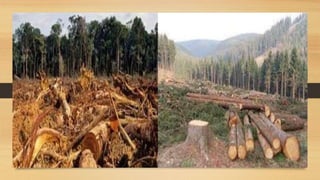
Deforestation
 Deforestation refers to the decrease in forest areas across the world that are
lost for other uses such as agricultural croplands, urbanization, or mining
activities.
 Greatly accelerated by human activities since 1960, deforestation has been
negatively affecting natural ecosystems, biodiversity, and the climate.
 The UN’s Food and Agriculture Organization estimates the annual rate of
deforestation to be around 1.3 million km2 per decade.
Causes of Deforestation
• Multiple factors, either of human or natural origin, cause deforestation.
• Natural factors include natural forest fires or parasite-caused diseases which
can result in deforestation.
• Nevertheless, human activities are among the main causes
of global deforestation.
Causes of Deforestation
 According to the Food and Agriculture Organization (FAO), the expansion
of agriculture caused nearly 80% of global deforestation, with the
construction of infrastructures such as roads or dams, together with mining
activities and urbanization, making up the remaining causes of deforestation.
Effects
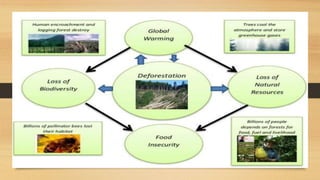
 The Effects of Deforestation on Biodiversity.
 The Effects of Deforestation on Local People and Their Livelihoods.
 Soil Erosion is One of the Consequences of Deforestation.
 Deforestation Affects and Contributes to Climate Change.
Solutions to Deforestation
 Plant a Tree where you can.
 Go paperless at home and in the office.
 Buy recycled products and then recycle them again.
 Buy certified wood products.
 Support the products of companies that are committed to reducing
deforestation.
 Raise awareness in your circle and in your community.
Water and Wind Erosion.pptx

Water and Wind Erosion.pptx

  • 2.
    Water and WindErosion & Deforestation Mohammad Ashfaq Ikram ul Haq
  • 3.
    Erosion  Geological processin which earthen materials are worn away and transported by natural forces such as wind or water.  Soil erosion is a process of moving soil by water or wind - when the soil particles are detached and transported to a different location.  Water, wind, ice, and gravity are involved in moving soil materials.
  • 5.
    Water Erosion  Removalof soil by water and transportation of the eroded materials away from the point of removal.  Water action due to rain erodes the soil.  Causes activities like gully, rill, and stream erosion leading to the downstream effects of flooding and sedimentation.  The severity of water erosion is influenced by slope, soil type, soil water storage capacity, nature of the underlying rock, vegetation cover, and rainfall intensity and period.
  • 6.
    Splash Erosion orRain Drop  First stage in the erosion process.  Results from the bombardment of the soil surface by rain drops.  It behave as little bombs when falling on exposed or bare soil, displacing soil particles and destroying soil structure.
  • 8.
    Sheet Erosion  Sheeterosion occurs as a shallow 'sheet' of water flowing over the ground surface, resulting in the removal of a uniform layer of soil from the soil surface.  Occurs when rainfall intensity is greater than infiltration.
  • 9.
    Rill Erosion This typeof erosion starts as water flowing over the soil surface concentrates into small streams, creating channels of water flow.
  • 10.
  • 11.
    Tunnel Erosion  Theland in arid or semi arid areas are highly erodible and sodic B horizon but have a stable A horizon.  Also known as Pipe Erosion.  Initiated by the runoff in natural crack and channel produce due to the movement of borrowing animals in subsoil layers.  Geo morphological characteristics of the area are affected.  Reduced by deep rooted grass species and trees.
  • 13.
    Controlling Erosion  Thebest way to control water erosion involve slowing down the flow of water and limiting soil detachment.  Soil covered with either growing plants or residues from past crops.  It is allow more time to have water infiltrate through the soil. Using cover crops, filter strips, contour farming and mulching can help reduce soil movement.
  • 14.
    Deforestation  Deforestation refersto the decrease in forest areas across the world that are lost for other uses such as agricultural croplands, urbanization, or mining activities.  Greatly accelerated by human activities since 1960, deforestation has been negatively affecting natural ecosystems, biodiversity, and the climate.  The UN’s Food and Agriculture Organization estimates the annual rate of deforestation to be around 1.3 million km2 per decade.
  • 16.
    Causes of Deforestation •Multiple factors, either of human or natural origin, cause deforestation. • Natural factors include natural forest fires or parasite-caused diseases which can result in deforestation. • Nevertheless, human activities are among the main causes of global deforestation.
  • 17.
    Causes of Deforestation According to the Food and Agriculture Organization (FAO), the expansion of agriculture caused nearly 80% of global deforestation, with the construction of infrastructures such as roads or dams, together with mining activities and urbanization, making up the remaining causes of deforestation.
  • 18.
    Effects  The Effectsof Deforestation on Biodiversity.  The Effects of Deforestation on Local People and Their Livelihoods.  Soil Erosion is One of the Consequences of Deforestation.  Deforestation Affects and Contributes to Climate Change.
  • 20.
    Solutions to Deforestation Plant a Tree where you can.  Go paperless at home and in the office.  Buy recycled products and then recycle them again.  Buy certified wood products.  Support the products of companies that are committed to reducing deforestation.  Raise awareness in your circle and in your community.