
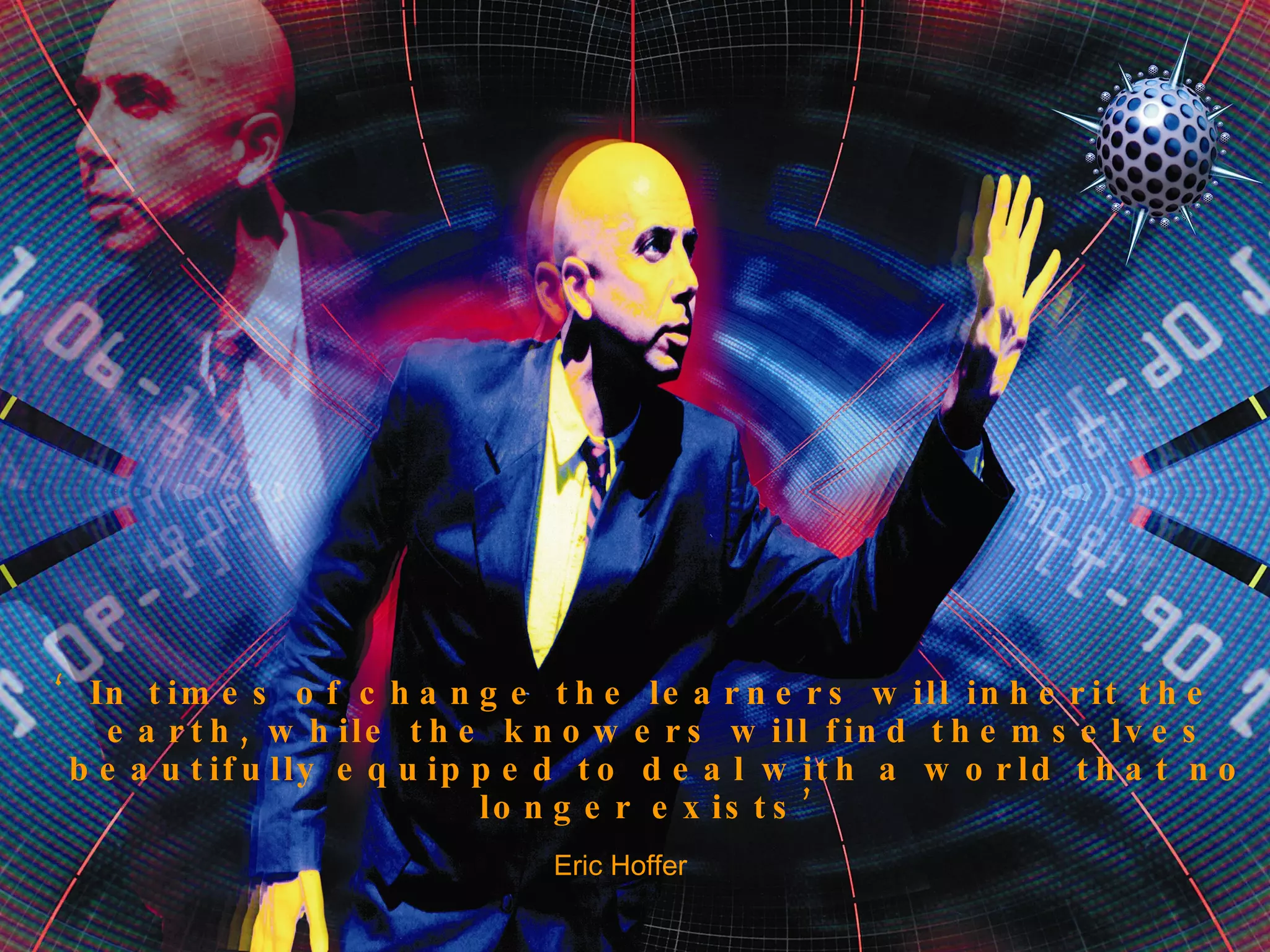
Eric Hoffer ‘ In times of change the learners will inherit the earth, while the knowers will find themselves beautifully equipped to deal with a world that no longer exists’ Eric Hoffer    
Learning, seven BIG messages Intelligence is not fixed Effort is as important as ability Learning is strongly influenced by emotion We all learn in different ways Deep learning is an active process Learning is messy We learn from the company we keep
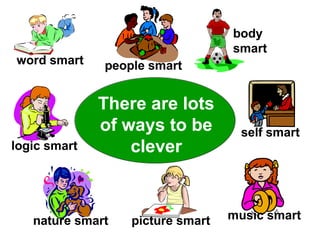
word smart There are lots of ways to be clever logic smart nature smart picture smart music smart body  smart self smart people smart
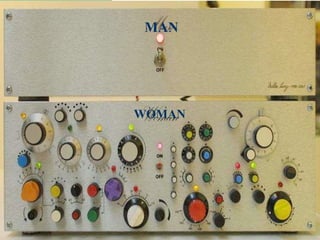
MAN WOMAN
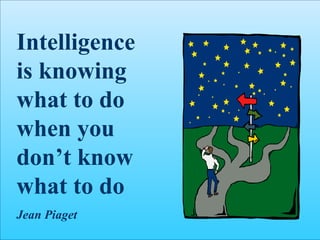
Intelligence is knowing what to do when you don’t know what to do Jean Piaget
‘ 80% of the jobs that current P 1    pupils will do, do not exist yet’ Our children’s future
By the age of sixteen, the average pupil has done 75% of the writing they will do  in their lifetime! Oxford University Research
The 5 r’s In a changing world 5 dispositions are worth securing:   Resilience Responsibility Resourcefulness Reasoning Reflectivity
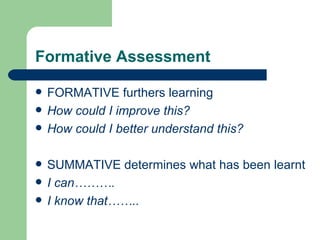
Formative Assessment FORMATIVE furthers learning How could I improve this? How could I better understand this? SUMMATIVE determines what has been learnt I can………. I know that……..
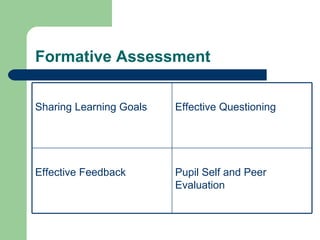
Formative Assessment Pupil Self and Peer Evaluation Effective Feedback Effective Questioning Sharing Learning Goals
Formative Assessment The active involvement of pupils in their own learning. What do you do?
Pupil Perspective Self and peer evaluation Talking partners Making decisions and choices Feeling confident to question, challenge, seek help Being allowed to think about and articulate ideas and opinions
Teacher Perspective Involving pupils in initial planning Sharing learning goals Negotiating success criteria Planning questions which further learning Using strategies which maximise pupil thinking and articulation
Teacher Perspective Modelling ideas by using real examples Making evaluation and analysis of these examples  part of the lesson Using such assessments as models for pupils analysing their own attempts Focussing feedback on success and improvement against learning objectives
Teacher Perspective Train pupils to make and suggest improvements Make self and peer evaluation integral to lessons
Teacher Perspective Not….. How can I fit all this in? But….. How can I think the whole format of a lesson?
Learning Objectives Success Criteria
Learning Objectives Balance skills, concepts and knowledge with applications The breakdown of long and short-term objectives needs to be planned and shared Separate the content from the objectives Link success criteria with the objective
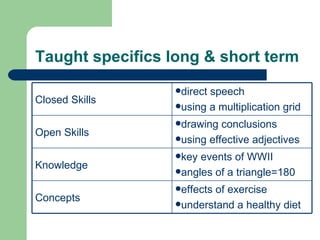
Taught specifics long & short term effects of exercise understand a healthy diet Concepts key events of WWII angles of a triangle=180 Knowledge drawing conclusions using effective adjectives Open Skills direct speech using a multiplication grid Closed Skills
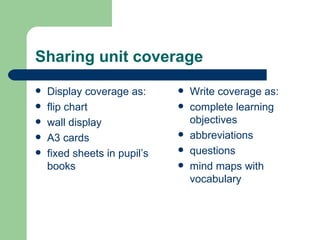
Sharing unit coverage Display coverage as: flip chart wall display A3 cards fixed sheets in pupil’s books Write coverage as: complete learning objectives abbreviations questions mind maps with vocabulary
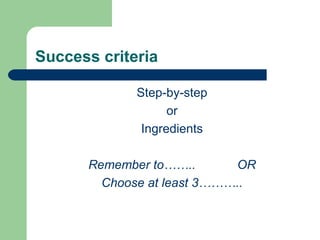
Success criteria Step-by-step or Ingredients Remember to……..  OR Choose at least 3………..
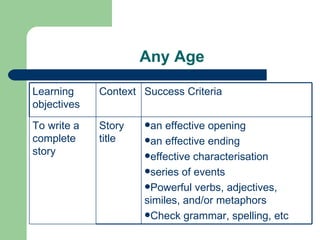
Any Age an effective opening an effective ending effective characterisation series of events Powerful verbs, adjectives, similes, and/or metaphors Check grammar, spelling, etc Story title To write a complete story Success Criteria Context Learning objectives
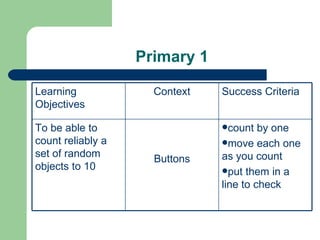
Primary 1 count by one move each one as you count put them in a line to check Buttons To be able to count reliably a set of random objects to 10 Success Criteria Context Learning Objectives
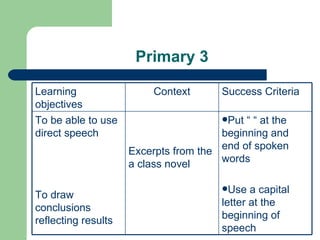
Primary 3 Put “ “ at the beginning and end of spoken words  Use a capital letter at the beginning of speech Excerpts from the a class novel To be able to use direct speech To draw conclusions reflecting results Success Criteria Context Learning objectives
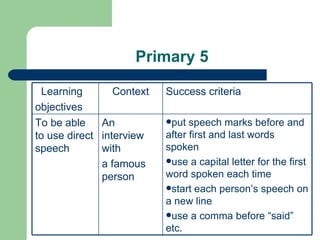
Primary 5 put speech marks before and after first and last words spoken use a capital letter for the first word spoken each time start each person’s speech on a new line  use a comma before “said” etc. An interview with a famous person To be able to use direct speech Success criteria Context Learning  objectives
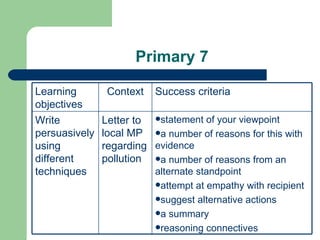
Primary 7 statement of your viewpoint a number of reasons for this with evidence a number of reasons from an alternate standpoint attempt at empathy with recipient suggest alternative actions a summary reasoning connectives Letter to local MP regarding pollution Write persuasively using different techniques Success criteria Context Learning objectives
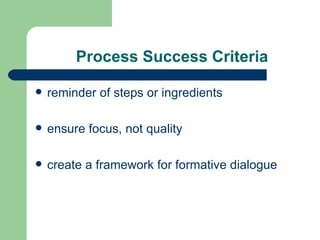
Process Success Criteria reminder of steps or ingredients ensure focus, not quality create a framework for formative dialogue
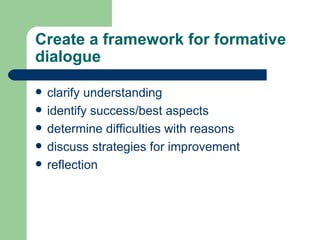
Create a framework for formative dialogue clarify understanding identify success/best aspects determine difficulties with reasons discuss strategies for improvement reflection
Generating and Writing up Success Criteria ask for children’s words before they work or as you go along What do you need to remember? generate form a given example What has been included in this stories opening? generate after children’s first attempts What did you have to do first…next? Keep/print/share success criteria for future use
Management Strategies wait time no hands up talking partners
Talking partners training set pairs/change regularly Check pairs for each lesson/day Model good/bad talking, listening Create class ground rules Magic  spots
Management strategies snowballing envoying jigsaw statements game information gap De Bono’s thinking hats
Good teaching matters more    than anything else
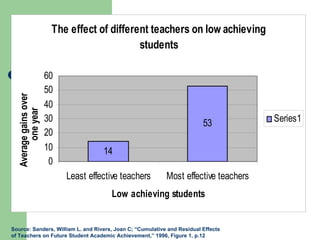
Source: Sanders, William L. and Rivers, Joan C; “Cumulative and Residual Effects of Teachers on Future Student Academic Achievement,” 1996, Figure 1, p.12
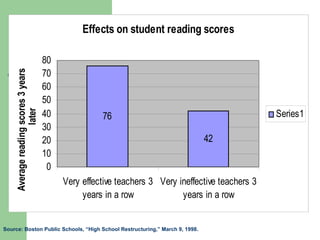
Source: Boston Public Schools, “High School Restructuring,” March 9, 1998.
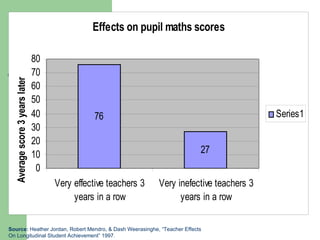
Source:  Heather Jordan, Robert Mendro, & Dash Weerasinghe, “Teacher Effects On Longitudinal Student Achievement” 1997.

Formative Assessmnet

  • 1.
    Eric Hoffer ‘In times of change the learners will inherit the earth, while the knowers will find themselves beautifully equipped to deal with a world that no longer exists’ Eric Hoffer    
  • 2.
    Learning, seven BIGmessages Intelligence is not fixed Effort is as important as ability Learning is strongly influenced by emotion We all learn in different ways Deep learning is an active process Learning is messy We learn from the company we keep
  • 3.
    word smart Thereare lots of ways to be clever logic smart nature smart picture smart music smart body smart self smart people smart
  • 4.
  • 5.
    Intelligence is knowingwhat to do when you don’t know what to do Jean Piaget
  • 6.
    ‘ 80% ofthe jobs that current P 1 pupils will do, do not exist yet’ Our children’s future
  • 7.
    By the ageof sixteen, the average pupil has done 75% of the writing they will do in their lifetime! Oxford University Research
  • 8.
    The 5 r’sIn a changing world 5 dispositions are worth securing: Resilience Responsibility Resourcefulness Reasoning Reflectivity
  • 9.
    Formative Assessment FORMATIVEfurthers learning How could I improve this? How could I better understand this? SUMMATIVE determines what has been learnt I can………. I know that……..
  • 10.
    Formative Assessment PupilSelf and Peer Evaluation Effective Feedback Effective Questioning Sharing Learning Goals
  • 11.
    Formative Assessment Theactive involvement of pupils in their own learning. What do you do?
  • 12.
    Pupil Perspective Selfand peer evaluation Talking partners Making decisions and choices Feeling confident to question, challenge, seek help Being allowed to think about and articulate ideas and opinions
  • 13.
    Teacher Perspective Involvingpupils in initial planning Sharing learning goals Negotiating success criteria Planning questions which further learning Using strategies which maximise pupil thinking and articulation
  • 14.
    Teacher Perspective Modellingideas by using real examples Making evaluation and analysis of these examples part of the lesson Using such assessments as models for pupils analysing their own attempts Focussing feedback on success and improvement against learning objectives
  • 15.
    Teacher Perspective Trainpupils to make and suggest improvements Make self and peer evaluation integral to lessons
  • 16.
    Teacher Perspective Not…..How can I fit all this in? But….. How can I think the whole format of a lesson?
  • 17.
  • 18.
    Learning Objectives Balanceskills, concepts and knowledge with applications The breakdown of long and short-term objectives needs to be planned and shared Separate the content from the objectives Link success criteria with the objective
  • 19.
    Taught specifics long& short term effects of exercise understand a healthy diet Concepts key events of WWII angles of a triangle=180 Knowledge drawing conclusions using effective adjectives Open Skills direct speech using a multiplication grid Closed Skills
  • 20.
    Sharing unit coverageDisplay coverage as: flip chart wall display A3 cards fixed sheets in pupil’s books Write coverage as: complete learning objectives abbreviations questions mind maps with vocabulary
  • 21.
    Success criteria Step-by-stepor Ingredients Remember to…….. OR Choose at least 3………..
  • 22.
    Any Age aneffective opening an effective ending effective characterisation series of events Powerful verbs, adjectives, similes, and/or metaphors Check grammar, spelling, etc Story title To write a complete story Success Criteria Context Learning objectives
  • 23.
    Primary 1 countby one move each one as you count put them in a line to check Buttons To be able to count reliably a set of random objects to 10 Success Criteria Context Learning Objectives
  • 24.
    Primary 3 Put“ “ at the beginning and end of spoken words Use a capital letter at the beginning of speech Excerpts from the a class novel To be able to use direct speech To draw conclusions reflecting results Success Criteria Context Learning objectives
  • 25.
    Primary 5 putspeech marks before and after first and last words spoken use a capital letter for the first word spoken each time start each person’s speech on a new line use a comma before “said” etc. An interview with a famous person To be able to use direct speech Success criteria Context Learning objectives
  • 26.
    Primary 7 statementof your viewpoint a number of reasons for this with evidence a number of reasons from an alternate standpoint attempt at empathy with recipient suggest alternative actions a summary reasoning connectives Letter to local MP regarding pollution Write persuasively using different techniques Success criteria Context Learning objectives
  • 27.
    Process Success Criteriareminder of steps or ingredients ensure focus, not quality create a framework for formative dialogue
  • 28.
    Create a frameworkfor formative dialogue clarify understanding identify success/best aspects determine difficulties with reasons discuss strategies for improvement reflection
  • 29.
    Generating and Writingup Success Criteria ask for children’s words before they work or as you go along What do you need to remember? generate form a given example What has been included in this stories opening? generate after children’s first attempts What did you have to do first…next? Keep/print/share success criteria for future use
  • 30.
    Management Strategies waittime no hands up talking partners
  • 31.
    Talking partners trainingset pairs/change regularly Check pairs for each lesson/day Model good/bad talking, listening Create class ground rules Magic spots
  • 32.
    Management strategies snowballingenvoying jigsaw statements game information gap De Bono’s thinking hats
  • 33.
    Good teaching mattersmore than anything else
  • 34.
    Source: Sanders, WilliamL. and Rivers, Joan C; “Cumulative and Residual Effects of Teachers on Future Student Academic Achievement,” 1996, Figure 1, p.12
  • 35.
    Source: Boston PublicSchools, “High School Restructuring,” March 9, 1998.
  • 36.
    Source: HeatherJordan, Robert Mendro, & Dash Weerasinghe, “Teacher Effects On Longitudinal Student Achievement” 1997.

Editor's Notes

  • #2 Eric Hoffer was an American social writer 1902-1983.