Wal-Mart
Sub-Regional Meeting
 Access Management
           ALDOT Permitting

   Jim Meads & Randy Braden


  Sain Associates, Inc.

                   May 2, 2007
What is Access Management?
 Access management preserves safe and
 efficient traffic movement, while allowing
 reasonable access to property.

 Sounds easy, but the application to
 individual cases is extremely difficult…
  especially without an access management
  policy.
What Does Access Management
            Do?
  Preserves street capacity.
  Reduces traffic accidents
  Preserves value of adjacent property
  Manages congestion
Access Management Techniques
 Increase spacing between signals and
  interchanges
 Driveway location, spacing and design
 Use of exclusive turning lanes
 Median treatments/channelization
 Use of service and frontage roads
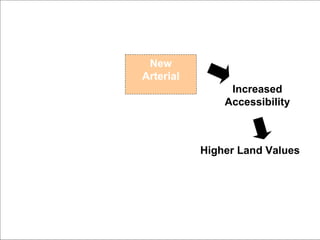
Typical Arterial
Highway Life Cycle

     New
    Arterial
                      Increased
                     Accessibility


               Higher Land Values
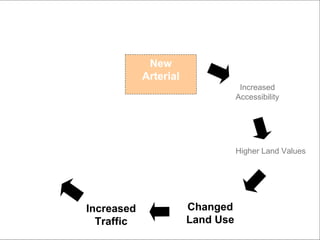
Arterial Life Cycle

             New
            Arterial
                                   Increased
                                  Accessibility


                                  Higher Land Values


Increased              Changed
  Traffic              Land Use
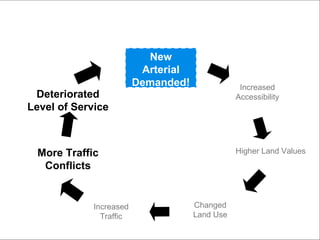
Arterial Life Cycle

                           New
                          Arterial
                         Demanded!               Increased
 Deteriorated                                   Accessibility
Level of Service


 More Traffic                                   Higher Land Values
  Conflicts


             Increased               Changed
               Traffic               Land Use
Preserving Traffic Flow
             Alabama in 2000

 Conclusions
     Alabamians are mobile
     Growing faster than national average
 Few Choices
  –Tolerate congestion and crashes
  –Massive road building (new revenues)
  –Other strategies… access management
The Effects of
    Poor Access Management
 Congestion, possible gridlock
 Frustrated drivers
 Frequent traffic accidents
 Continuous strip development
 Decreased property values
 Commercial establishments struggling to
  survive
 Complaints about congestion, noise, safety
 Pressure on government to improve street
The Effects of
 Effective Access Management
 Fewer and less severe crashes
 Less stop and go traffic, less delay
 Increased and preserved capacity
 More attractive corridors, livable
  communities
 Preservation of private investment in
  abutting properties
 Consistency in handling requests for
  driveways
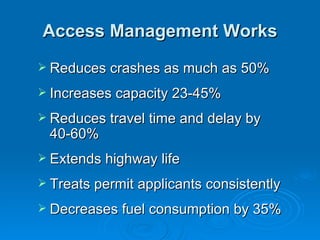
Access Management Works
 Reduces crashes as much as 50%

 Increases capacity 23-45%

 Reduces travel time and delay by
 40-60%
 Extends highway life

 Treats permit applicants consistently

 Decreases fuel consumption by 35%
How Do You Apply Access
         Management ?
 Limit the number of conflict points
 Separate conflict locations
 Remove turning vehicles from the through
  lanes
 Reduce turning movements
 Improve driveway operations
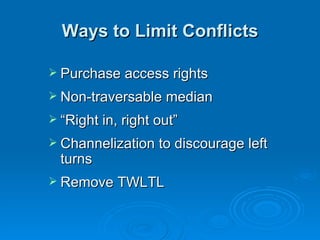
Ways to Limit Conflicts

 Purchase access rights

 Non-traversable median

 “Right in, right out”

 Channelization to discourage left
  turns
 Remove TWLTL
R

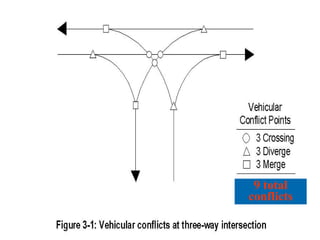
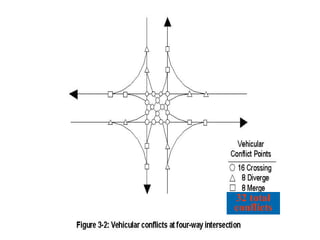
 Insert figs 3-1 and 3-2


                             9 total
                            conflicts
32 total
conflicts
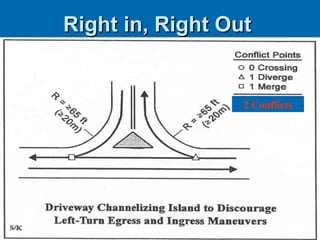
Right in, Right Out


                  2 Conflicts
Separating Conflicts

 Set minimum access spacing, corner
 distance, and property line clearance
 Limit number of egresses per
 property
 Designate driveway location
 Consolidate access driveways
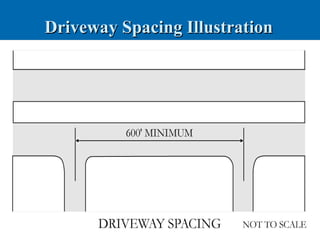
 Optimize driveway spacing
Remove Turn Vehicles
     From Thru Lanes
 Left turns are major cause of delay and
 major cause of accidents

 Turning vehicles have high speed
 differentials (severe collisions)
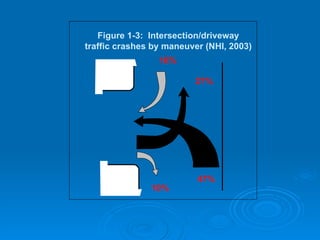
Figure 1-3: Intersection/driveway
traffic crashes by maneuver (NHI, 2003)
                 16%

                         27%


                          47%
               10%
Removing Turning Vehicles
 Install left-turn deceleration bay at existing
  median
 Install raised median with left turn-bays

 Install right-turn deceleration lane

 Install continuous right-turn lane
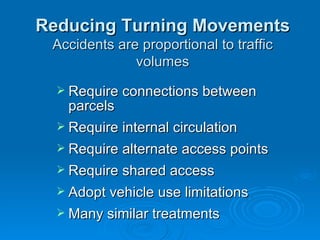
Reducing Turning Movements
 Accidents are proportional to traffic
              volumes
   Require connections between
    parcels
   Require internal circulation
   Require alternate access points
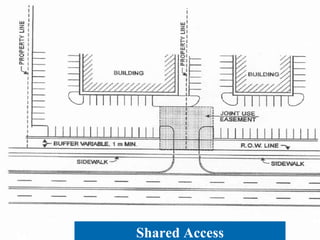
   Require shared access
   Adopt vehicle use limitations
   Many similar treatments
Shared Access
Improve Driveway Operations

  Adequate sight distance
  Smooth vertical geometry
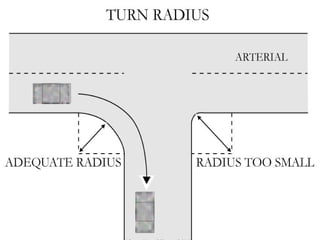
  Adequate radii
  Adequate throat width and length
  Well signed and marked
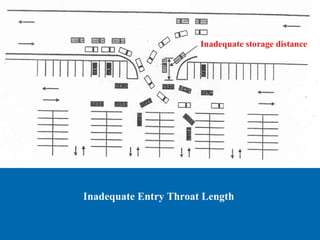
6) Improve Driveway Operations
      (sample of methods)
                            Inadequate storage distance


     Inadequate Entry Throat Length
Access Management Guidelines
  When, where and how to provide
   access

  3) Intersection functional area and
     sight distance
  4) Turn lanes
  5) Median openings
  6) Traffic signal spacing
  7) Driveway location and design
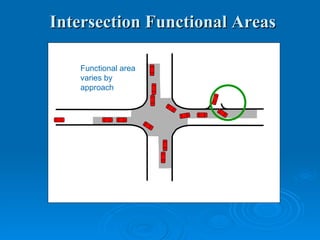
Intersection Functional Areas

   Functional area
   varies by
   approach
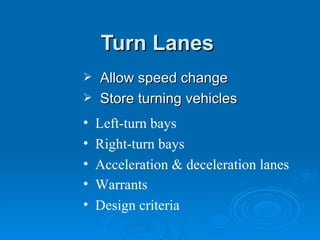
Turn Lanes
 Allow speed change
 Store turning vehicles

•   Left-turn bays
•   Right-turn bays
•   Acceleration & deceleration lanes
•   Warrants
•   Design criteria
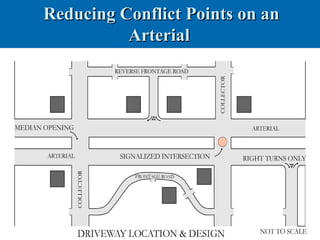
Reducing Conflict Points on an
          Arterial
Driveway Spacing Illustration
Driveways
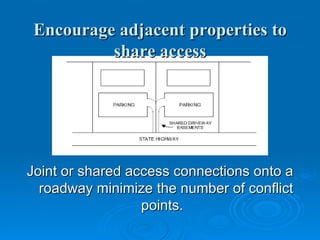
Encourage adjacent properties to
          share access


Joint or shared access connections onto a
  roadway minimize the number of conflict
                  points.
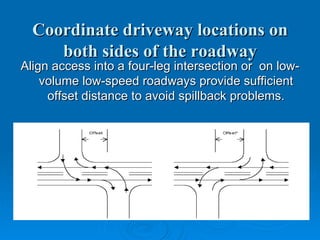
Coordinate driveway locations on
     both sides of the roadway
Align access into a four-leg intersection or on low-
    volume low-speed roadways provide sufficient
     offset distance to avoid spillback problems.
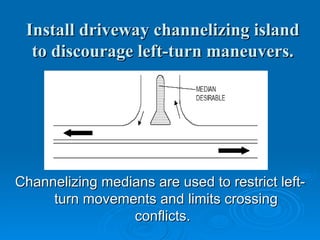
Install driveway channelizing island
  to discourage left-turn maneuvers.


Channelizing medians are used to restrict left-
     turn movements and limits crossing
                 conflicts.
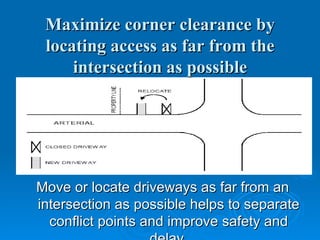
Maximize corner clearance by
 locating access as far from the
     intersection as possible


Move or locate driveways as far from an
intersection as possible helps to separate
  conflict points and improve safety and
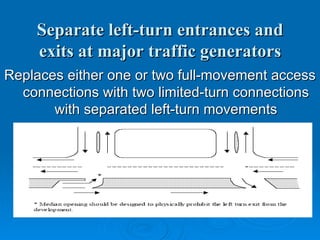
Separate left-turn entrances and
    exits at major traffic generators
Replaces either one or two full-movement access
  connections with two limited-turn connections
       with separated left-turn movements
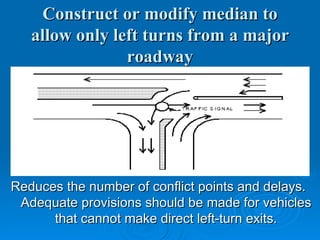
Construct or modify median to
   allow only left turns from a major
                roadway


Reduces the number of conflict points and delays.
 Adequate provisions should be made for vehicles
      that cannot make direct left-turn exits.
ALDOT GOALS
 SAFETY
 Improved access along State Routes
 Efficient permit process
 Clear guidelines
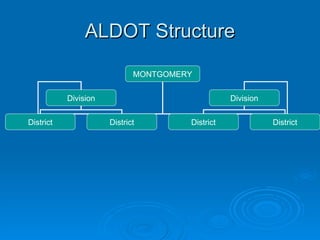
ALDOT Structure

                             MONTGOMERY


           Division                              Division


District              District        District              District
Key Items
   Does the District and/or Division have a checklist
    for Plans and Permitting? (See Handouts)
   How long does the review take?
   Who do we submit the plans to?
   How many sets?
   Who do we follow up with for status weekly
    status updates?

   If the final District Submittal has been there for
    longer than a month, call Randy Braden!
Best Permitting Practices
 Involve ALDOT EARLY and OFTEN
 Have  a site meeting in the concept phase
 with the following in attendance:
     Division Traffic Engineer
     District Engineer
     Division Maintenance Engineer
     State Permit Engineer
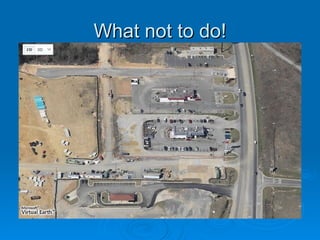
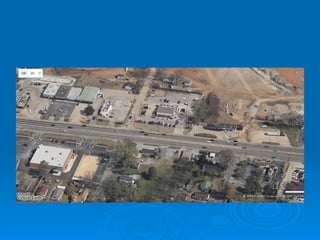
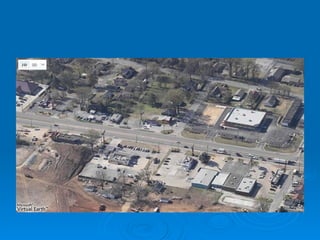
What not to do!
Wal-Mart Sub-Regional Meeting Access Management

Wal-Mart Sub-Regional Meeting Access Management

  • 1.
    Wal-Mart Sub-Regional Meeting AccessManagement ALDOT Permitting Jim Meads & Randy Braden Sain Associates, Inc. May 2, 2007
  • 2.
    What is AccessManagement?  Access management preserves safe and efficient traffic movement, while allowing reasonable access to property.  Sounds easy, but the application to individual cases is extremely difficult… especially without an access management policy.
  • 3.
    What Does AccessManagement Do?  Preserves street capacity.  Reduces traffic accidents  Preserves value of adjacent property  Manages congestion
  • 4.
    Access Management Techniques Increase spacing between signals and interchanges  Driveway location, spacing and design  Use of exclusive turning lanes  Median treatments/channelization  Use of service and frontage roads
  • 5.
    Typical Arterial Highway LifeCycle New Arterial Increased Accessibility Higher Land Values
  • 6.
    Arterial Life Cycle New Arterial Increased Accessibility Higher Land Values Increased Changed Traffic Land Use
  • 7.
    Arterial Life Cycle New Arterial Demanded! Increased Deteriorated Accessibility Level of Service More Traffic Higher Land Values Conflicts Increased Changed Traffic Land Use
  • 8.
    Preserving Traffic Flow Alabama in 2000  Conclusions  Alabamians are mobile  Growing faster than national average  Few Choices –Tolerate congestion and crashes –Massive road building (new revenues) –Other strategies… access management
  • 9.
    The Effects of Poor Access Management  Congestion, possible gridlock  Frustrated drivers  Frequent traffic accidents  Continuous strip development  Decreased property values  Commercial establishments struggling to survive  Complaints about congestion, noise, safety  Pressure on government to improve street
  • 10.
    The Effects of Effective Access Management  Fewer and less severe crashes  Less stop and go traffic, less delay  Increased and preserved capacity  More attractive corridors, livable communities  Preservation of private investment in abutting properties  Consistency in handling requests for driveways
  • 11.
    Access Management Works Reduces crashes as much as 50%  Increases capacity 23-45%  Reduces travel time and delay by 40-60%  Extends highway life  Treats permit applicants consistently  Decreases fuel consumption by 35%
  • 12.
    How Do YouApply Access Management ?  Limit the number of conflict points  Separate conflict locations  Remove turning vehicles from the through lanes  Reduce turning movements  Improve driveway operations
  • 13.
    Ways to LimitConflicts  Purchase access rights  Non-traversable median  “Right in, right out”  Channelization to discourage left turns  Remove TWLTL
  • 14.
    R  Insert figs3-1 and 3-2 9 total conflicts
  • 15.
  • 16.
    Right in, RightOut 2 Conflicts
  • 17.
    Separating Conflicts  Setminimum access spacing, corner distance, and property line clearance  Limit number of egresses per property  Designate driveway location  Consolidate access driveways  Optimize driveway spacing
  • 18.
    Remove Turn Vehicles From Thru Lanes  Left turns are major cause of delay and major cause of accidents  Turning vehicles have high speed differentials (severe collisions)
  • 19.
    Figure 1-3: Intersection/driveway trafficcrashes by maneuver (NHI, 2003) 16% 27% 47% 10%
  • 20.
    Removing Turning Vehicles Install left-turn deceleration bay at existing median  Install raised median with left turn-bays  Install right-turn deceleration lane  Install continuous right-turn lane
  • 21.
    Reducing Turning Movements Accidents are proportional to traffic volumes  Require connections between parcels  Require internal circulation  Require alternate access points  Require shared access  Adopt vehicle use limitations  Many similar treatments
  • 22.
  • 23.
    Improve Driveway Operations  Adequate sight distance  Smooth vertical geometry  Adequate radii  Adequate throat width and length  Well signed and marked
  • 24.
    6) Improve DrivewayOperations (sample of methods) Inadequate storage distance Inadequate Entry Throat Length
  • 25.
    Access Management Guidelines When, where and how to provide access 3) Intersection functional area and sight distance 4) Turn lanes 5) Median openings 6) Traffic signal spacing 7) Driveway location and design
  • 26.
    Intersection Functional Areas Functional area varies by approach
  • 27.
    Turn Lanes  Allowspeed change  Store turning vehicles • Left-turn bays • Right-turn bays • Acceleration & deceleration lanes • Warrants • Design criteria
  • 28.
  • 30.
  • 31.
  • 32.
    Encourage adjacent propertiesto share access Joint or shared access connections onto a roadway minimize the number of conflict points.
  • 33.
    Coordinate driveway locationson both sides of the roadway Align access into a four-leg intersection or on low- volume low-speed roadways provide sufficient offset distance to avoid spillback problems.
  • 34.
    Install driveway channelizingisland to discourage left-turn maneuvers. Channelizing medians are used to restrict left- turn movements and limits crossing conflicts.
  • 35.
    Maximize corner clearanceby locating access as far from the intersection as possible Move or locate driveways as far from an intersection as possible helps to separate conflict points and improve safety and
  • 36.
    Separate left-turn entrancesand exits at major traffic generators Replaces either one or two full-movement access connections with two limited-turn connections with separated left-turn movements
  • 37.
    Construct or modifymedian to allow only left turns from a major roadway Reduces the number of conflict points and delays. Adequate provisions should be made for vehicles that cannot make direct left-turn exits.
  • 38.
    ALDOT GOALS  SAFETY Improved access along State Routes  Efficient permit process  Clear guidelines
  • 39.
    ALDOT Structure MONTGOMERY Division Division District District District District
  • 40.
    Key Items  Does the District and/or Division have a checklist for Plans and Permitting? (See Handouts)  How long does the review take?  Who do we submit the plans to?  How many sets?  Who do we follow up with for status weekly status updates?  If the final District Submittal has been there for longer than a month, call Randy Braden!
  • 41.
    Best Permitting Practices Involve ALDOT EARLY and OFTEN  Have a site meeting in the concept phase with the following in attendance:  Division Traffic Engineer  District Engineer  Division Maintenance Engineer  State Permit Engineer
  • 42.