1	
  
Project Management &
Development Team Dynamics
Emilia D’Anzica, May 2015
Agenda
•  Introductions
•  My Program Charter & Objectives
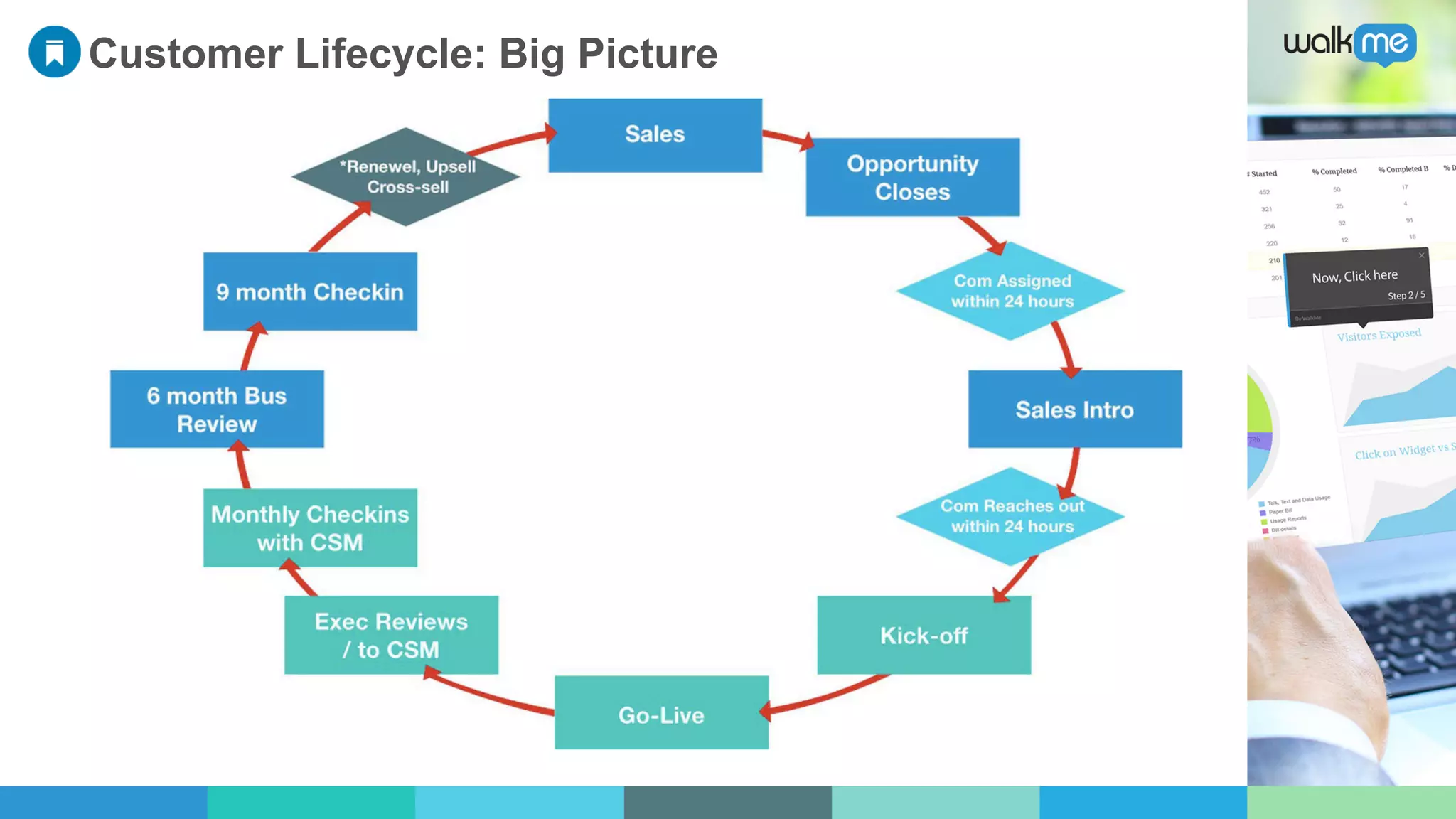
•  Development Lifecycle vs. Customer Lifecycle
•  How Development fits in Customer Success
•  Obstacles
•  What Works
•  V2MOM
•  Escalation Plans
•  Internal & Customer Communication
–  Respect, Tone, Audience
–  Forms of communication
–  Speed
•  Resources
•  Questions
Business	
  confiden-al.	
  All	
  rights	
  reserved.	
  ©	
  WalkMe.com	
  
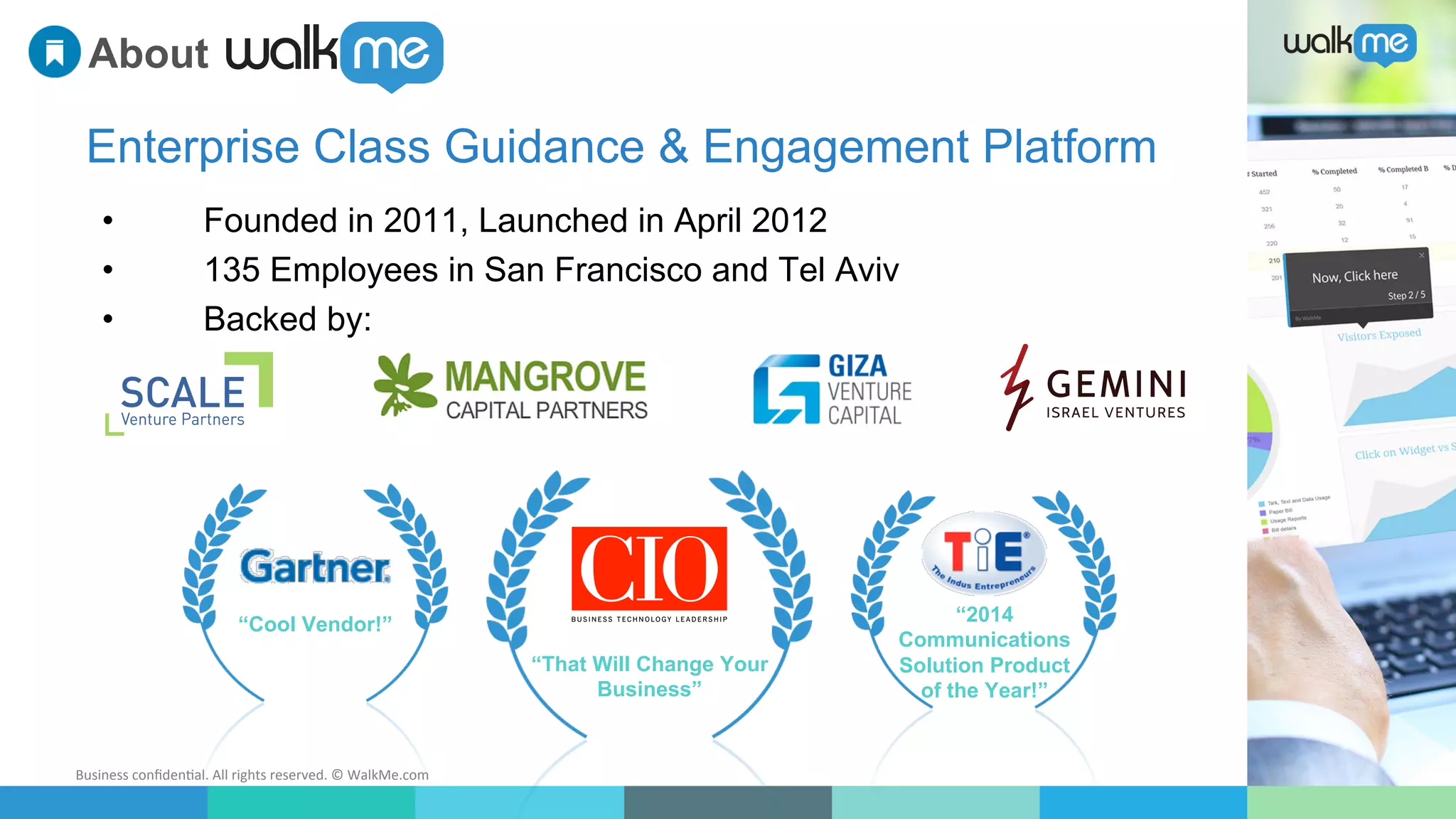
•  Founded in 2011, Launched in April 2012
•  135 Employees in San Francisco and Tel Aviv
•  Backed by:
Enterprise Class Guidance & Engagement Platform
About
“Cool Vendor!” “2014
Communications
Solution Product
of the Year!”
“That Will Change Your
Business”
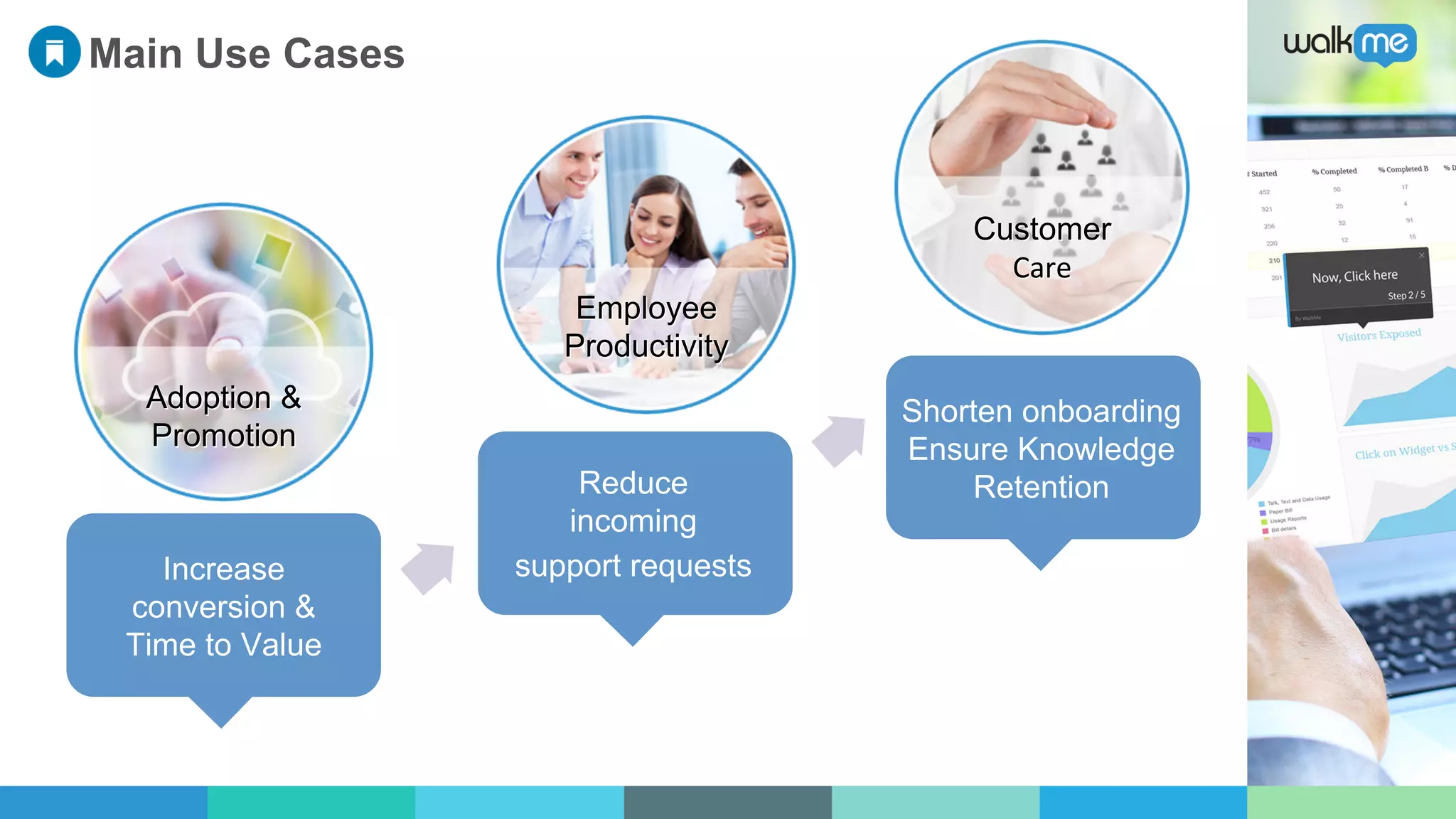
Adoption &
Promotion
Increase
conversion &
Time to Value
Employee
Productivity
Main Use Cases
Reduce
incoming
support requests
Shorten onboarding
Ensure Knowledge
Retention
Customer
Care	
  
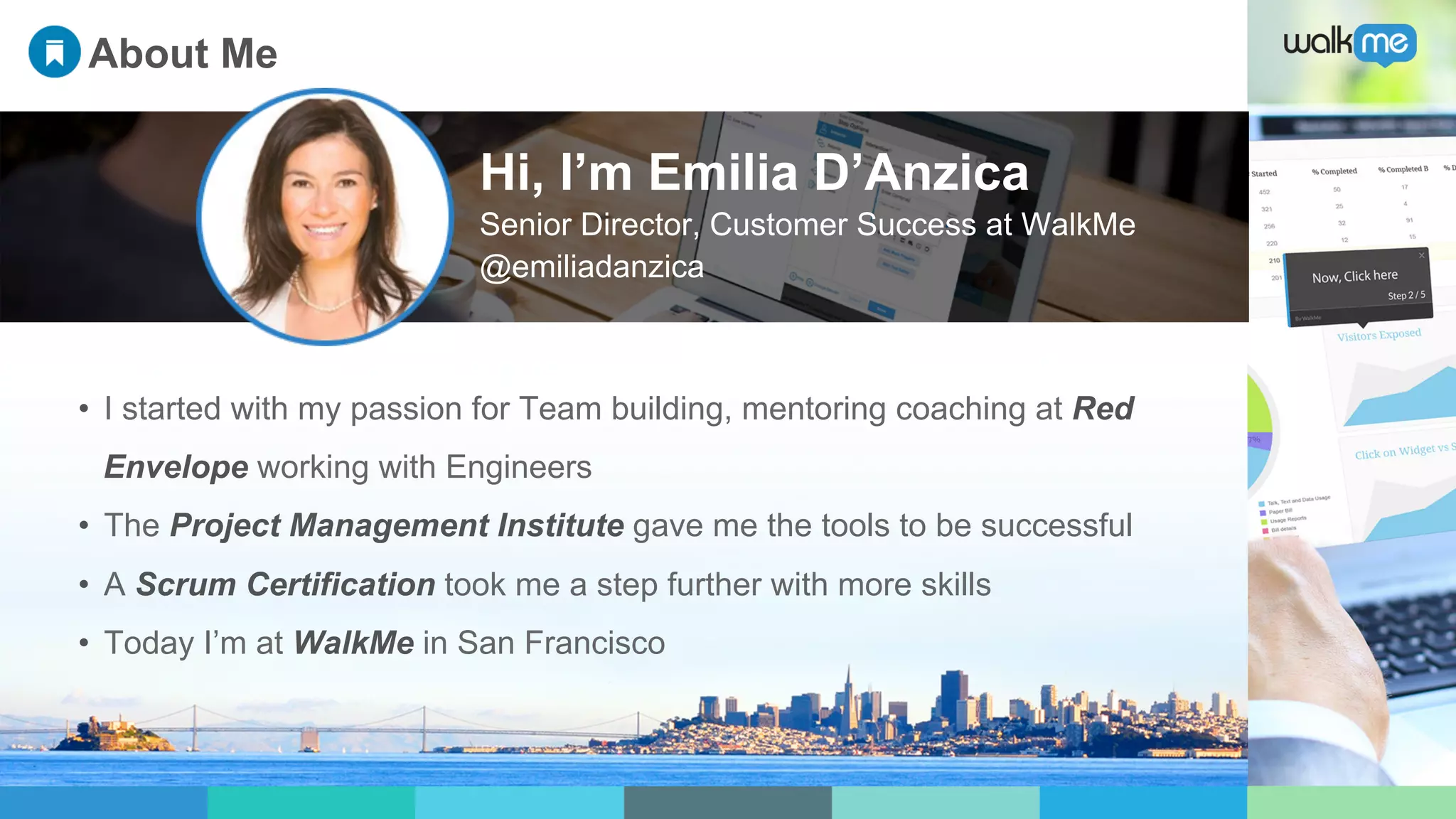
•  I started with my passion for Team building, mentoring coaching at Red
Envelope working with Engineers
•  The Project Management Institute gave me the tools to be successful
•  A Scrum Certification took me a step further with more skills
•  Today I’m at WalkMe in San Francisco
About Me
Hi, I’m Emilia D’Anzica
Senior Director, Customer Success at WalkMe
@emiliadanzica
Why Coding?
http://www.ted.com/talks/simon_sinek_how_great_leaders_inspire_action?language=en
✓  Value: Develop onboarding program to show WalkMe value immediately.
✓  Scale: Save CS team time, provide a consistent experience and enable better
communication between client & WalkMe.
✓  Implement onboarding: SLA with 60 days of 1-1 onboarding assistance in
order to maintain momentum and ensure a scalable program.
✓  Client Focus: Move away from ad hoc onboarding & instead, focus on faster
ROI that align with client goals and strategies.
✓  Education: WalkMe Education introduced early & completed in timely manner.
My Team Program Charter & Objectives
8
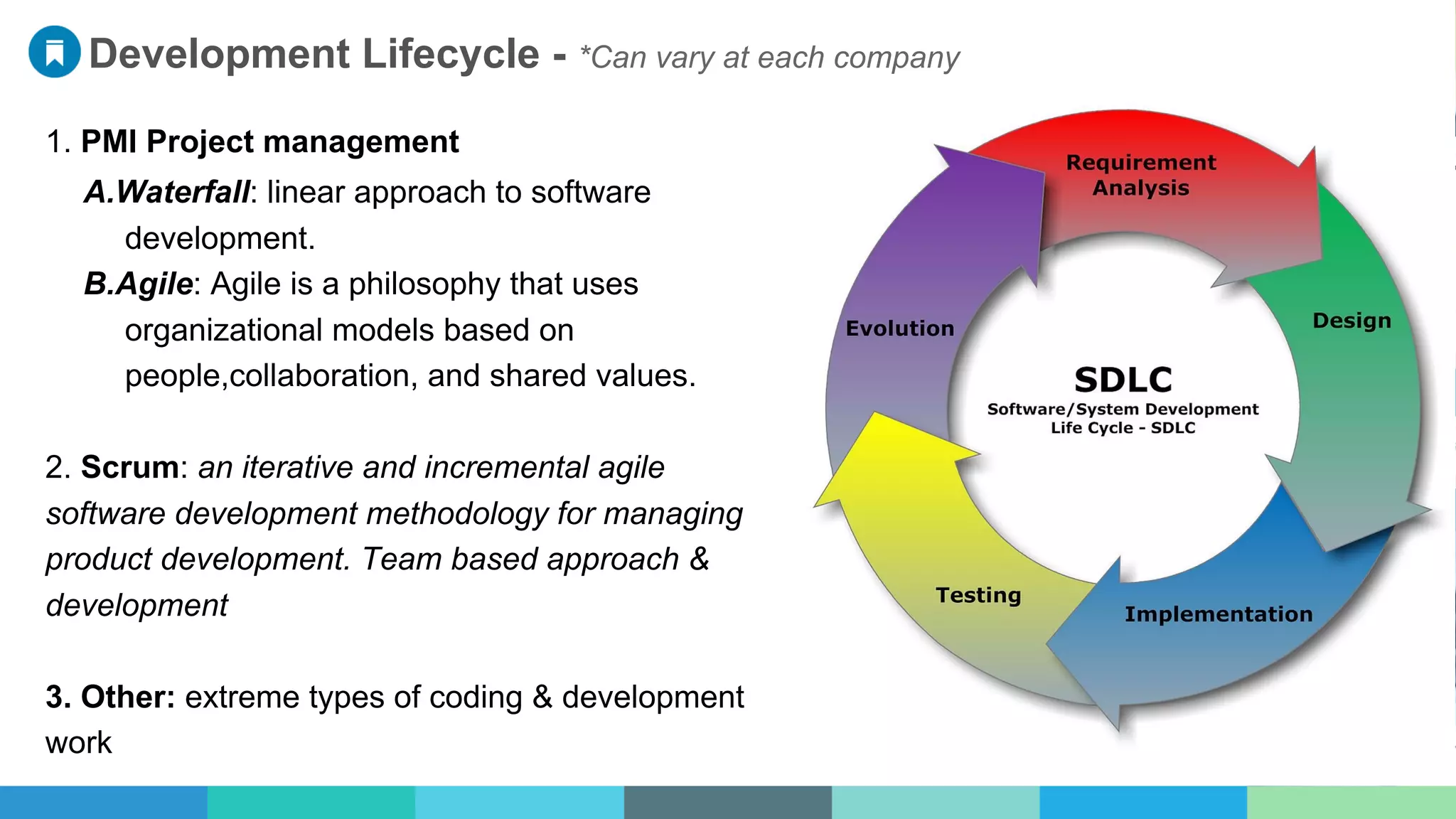
1. PMI Project management
A. Waterfall: linear approach to software
development.
B. Agile: Agile is a philosophy that uses
organizational models based on
people,collaboration, and shared values.
2. Scrum: an iterative and incremental agile
software development methodology for managing
product development. Team based approach &
development
3. Other: extreme types of coding & development
work
Development Lifecycle - *Can vary at each company
Customer Lifecycle: Big Picture
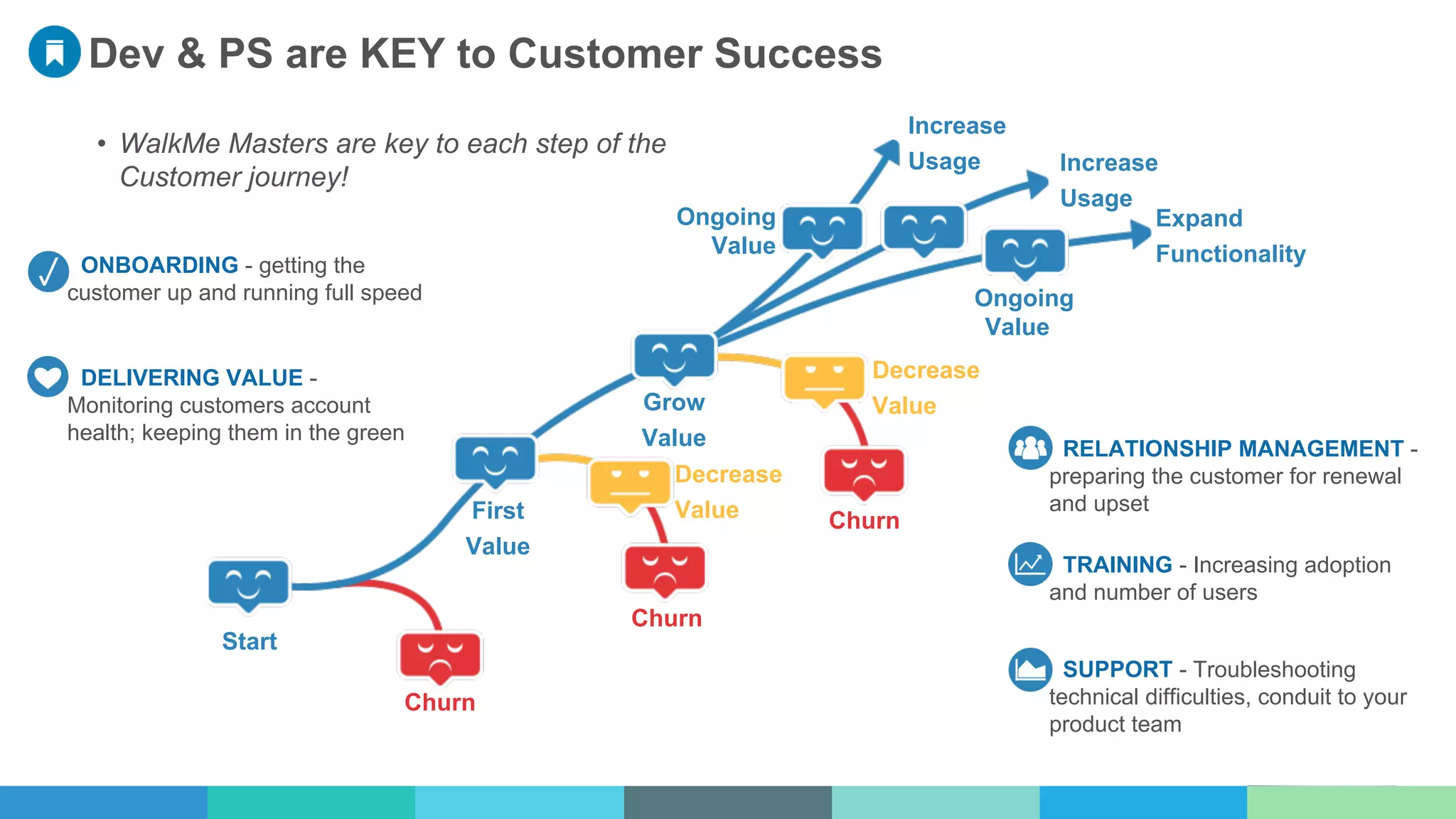
Dev & PS are KEY to Customer Success
First
Value
Grow
Value
Expand
Functionality
Increase
Usage
Increase
Usage
Ongoing
Value
Ongoing
Value
Decrease
Value
Decrease
Value Churn
Churn
Churn
•  WalkMe Masters are key to each step of the
Customer journey!
ONBOARDING - getting the
customer up and running full speed
DELIVERING VALUE -
Monitoring customers account
health; keeping them in the green
RELATIONSHIP MANAGEMENT -
preparing the customer for renewal
and upset
Start
TRAINING - Increasing adoption
and number of users
SUPPORT - Troubleshooting
technical difficulties, conduit to your
product team
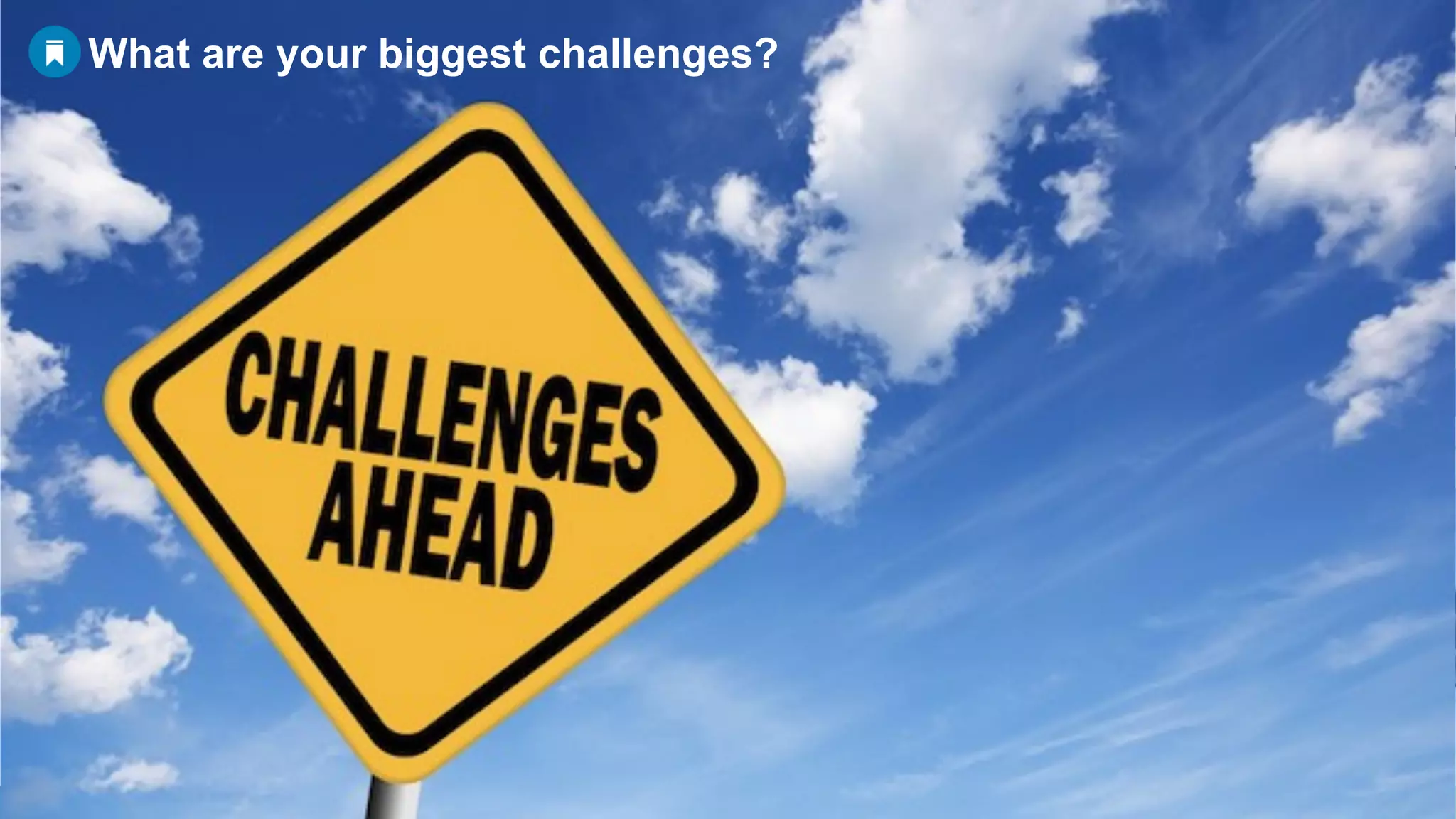
What are your biggest challenges?
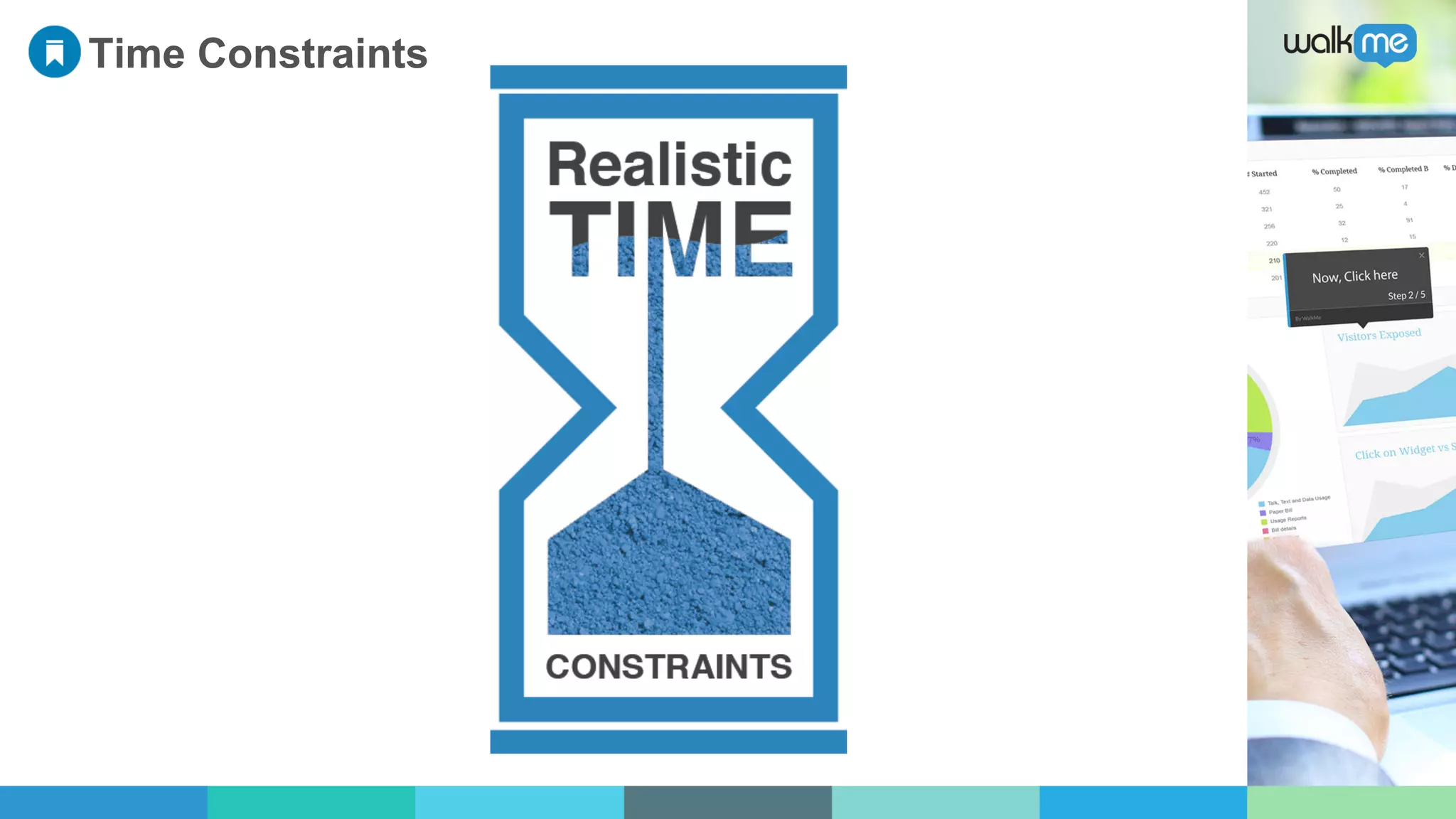
Time Constraints
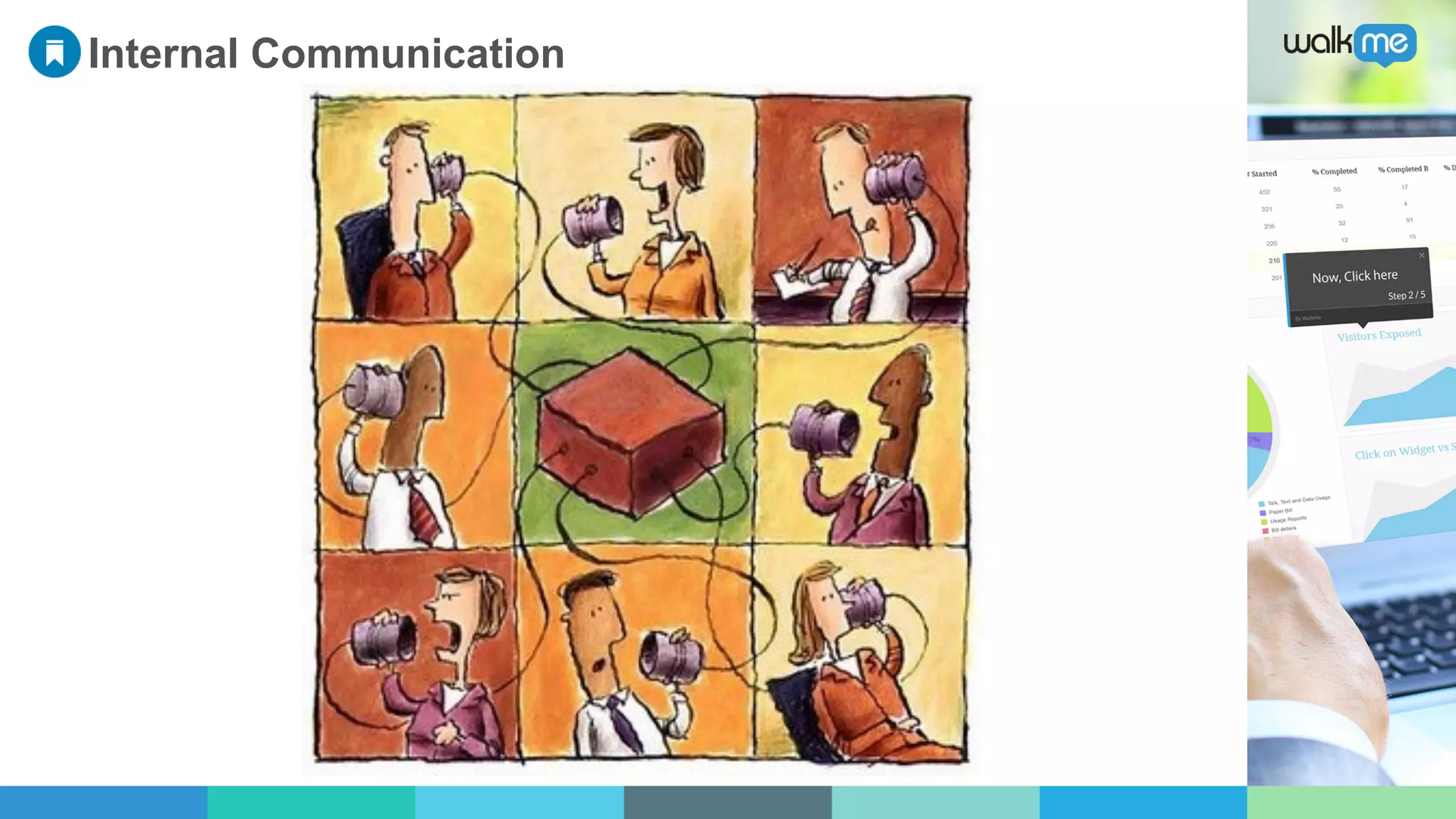
Internal Communication
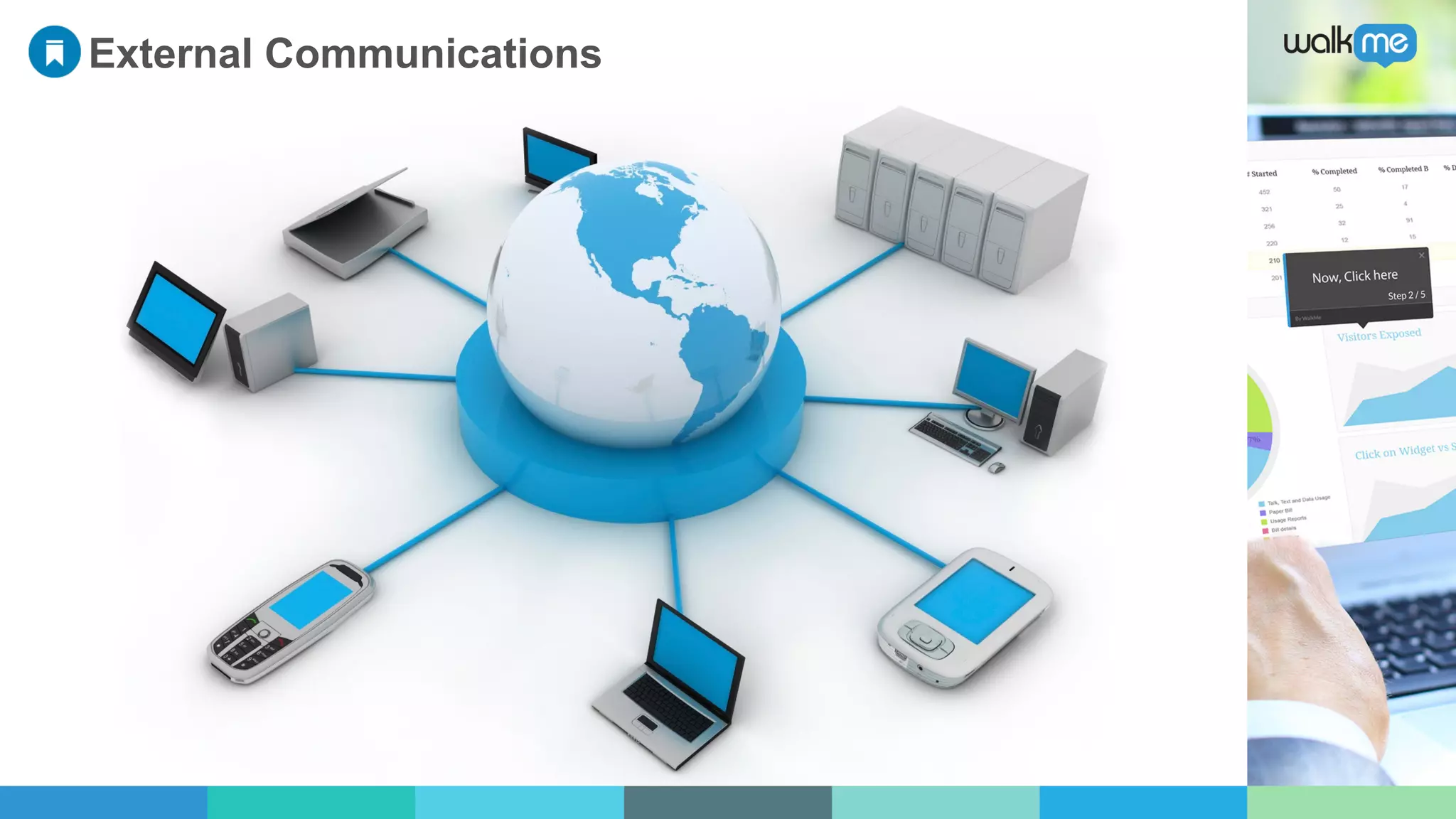
External Communications
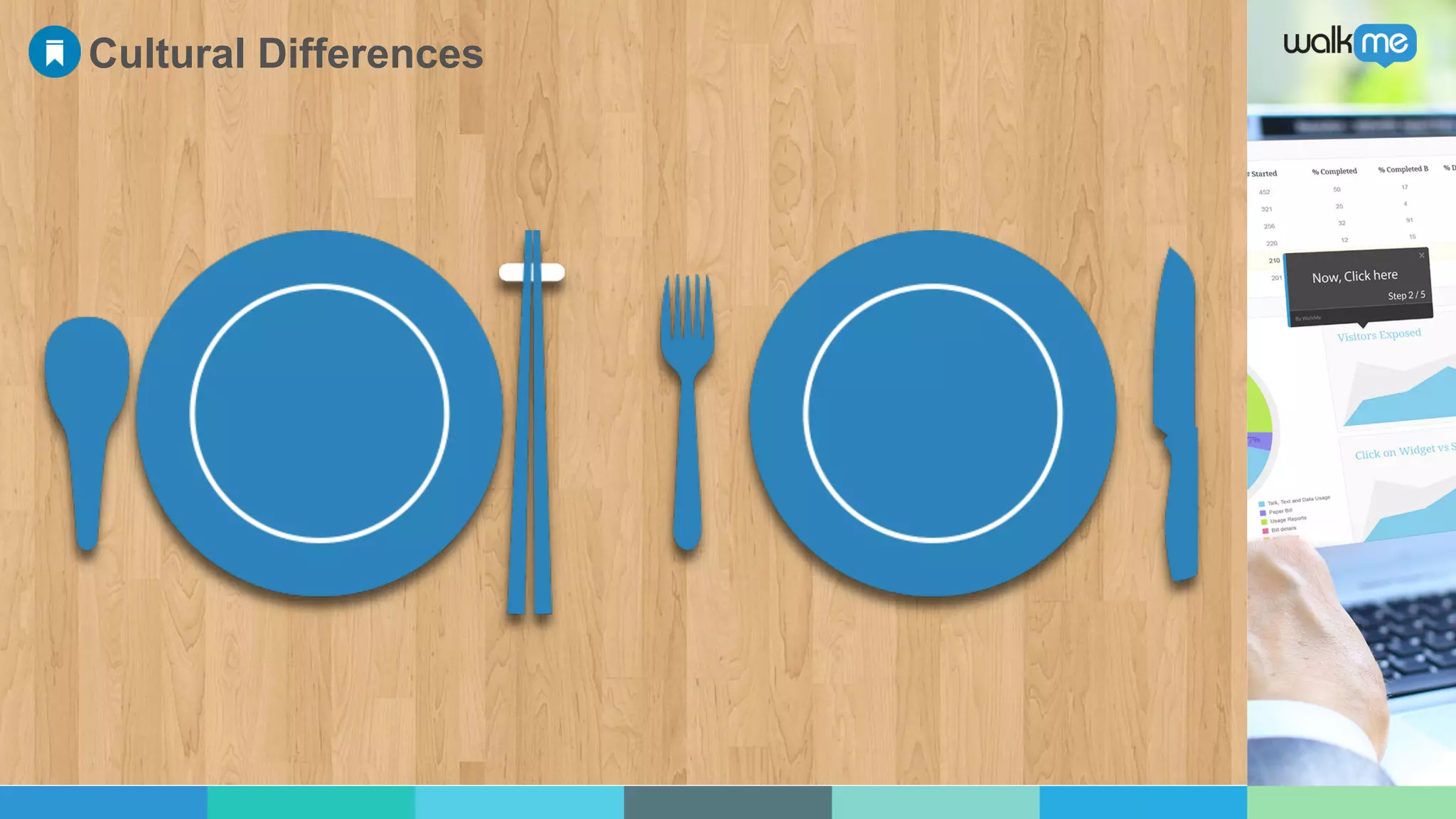
Cultural Differences
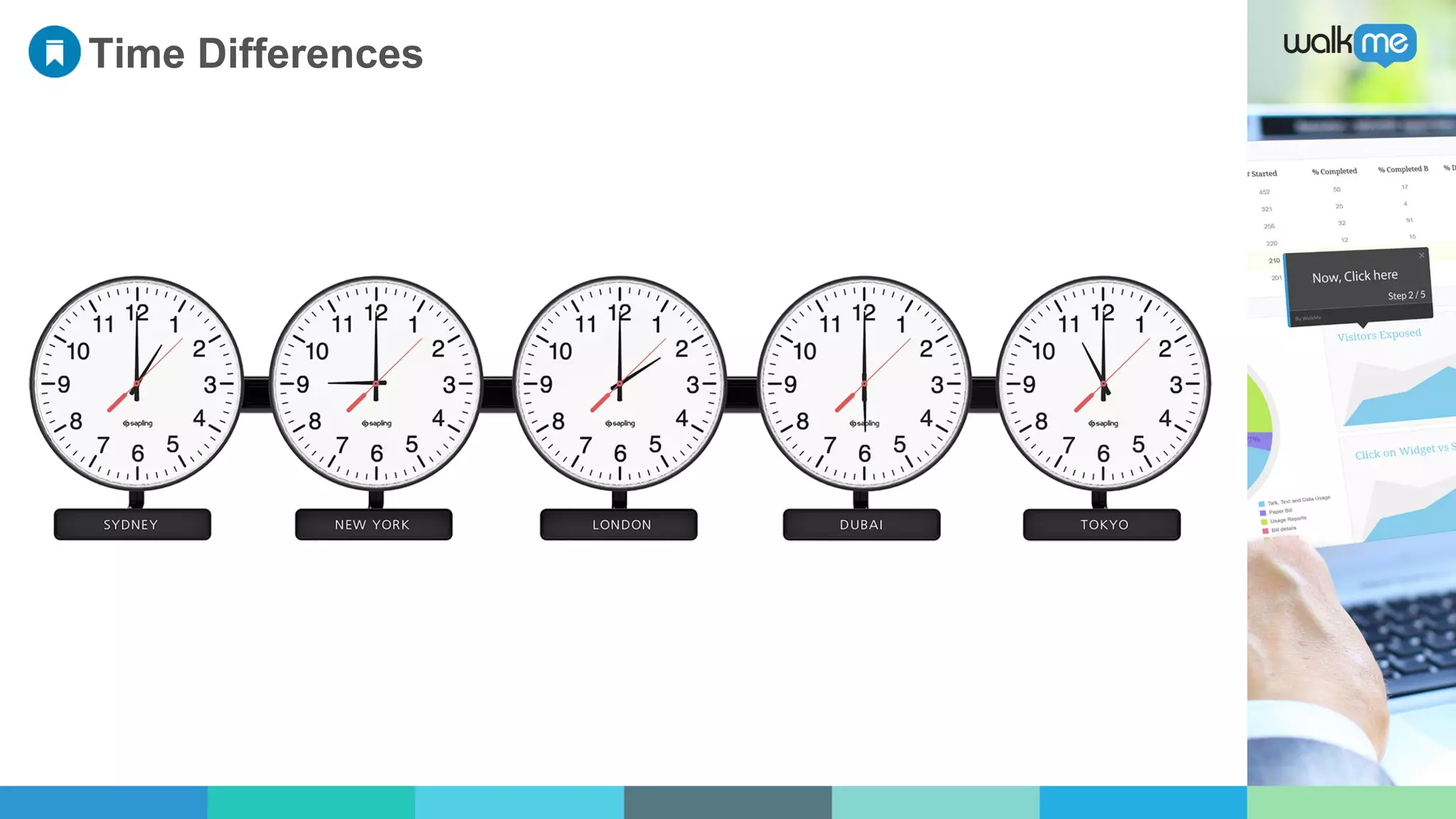
Time Differences
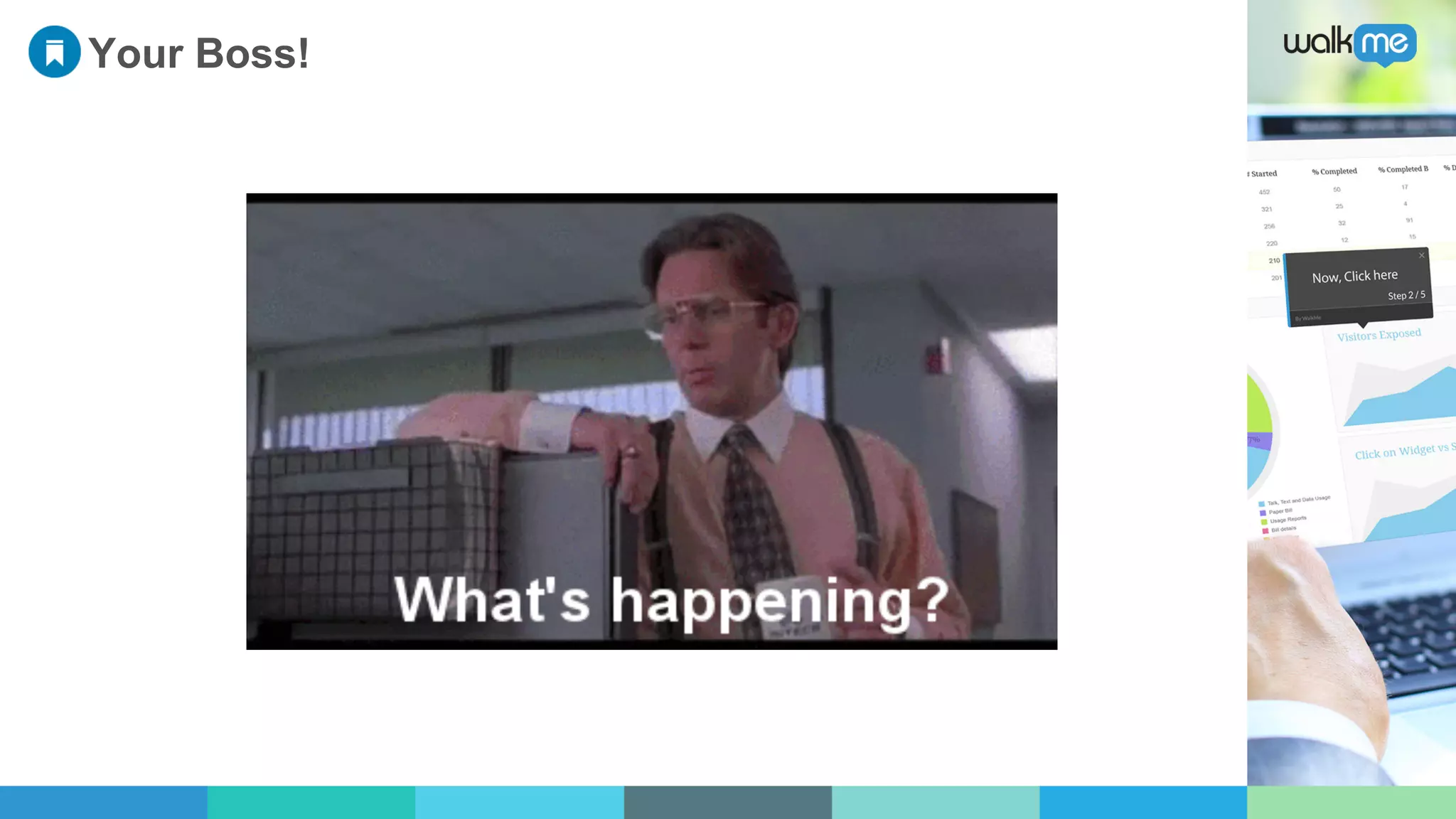
Your Boss!
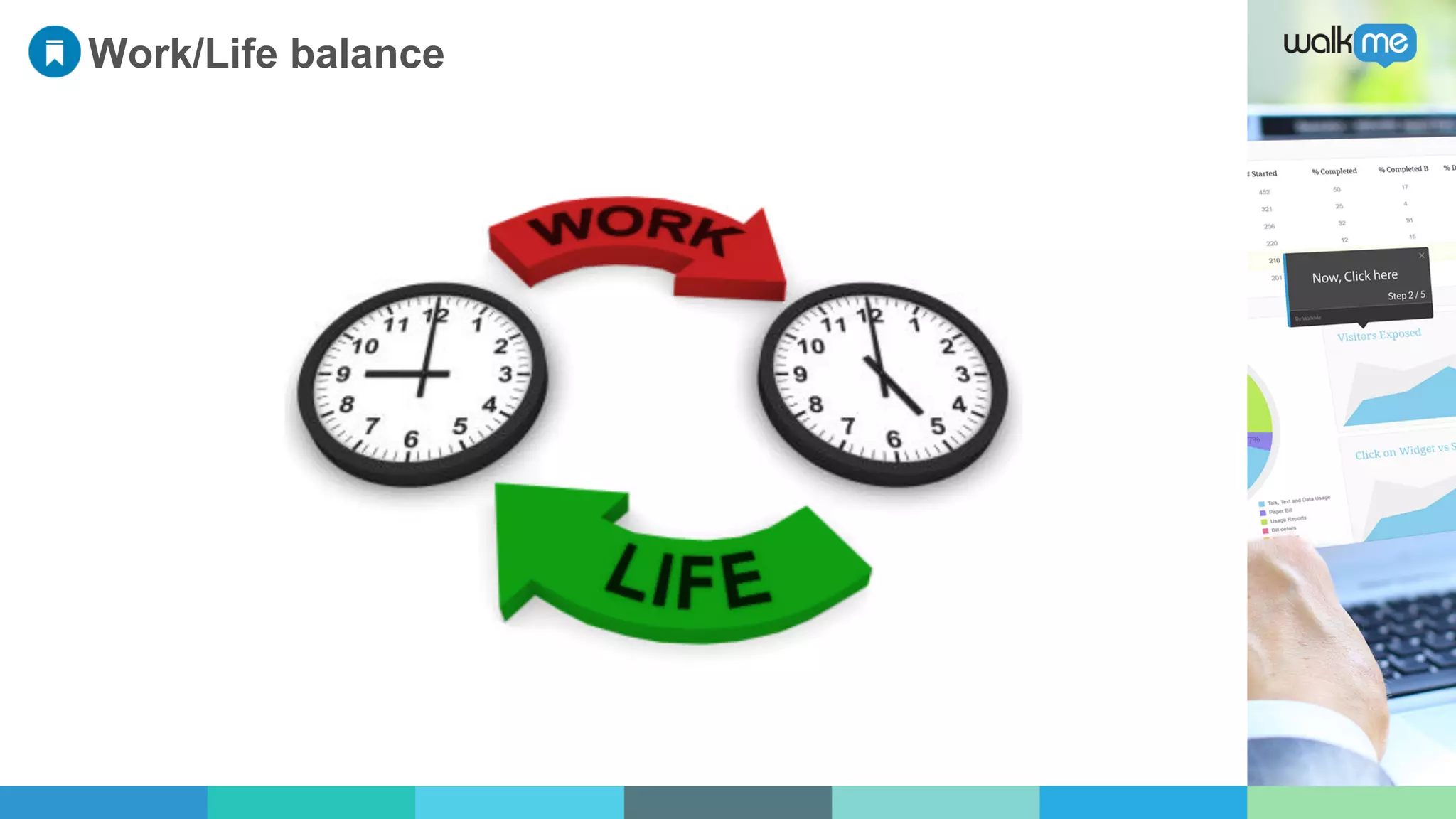
Work/Life balance
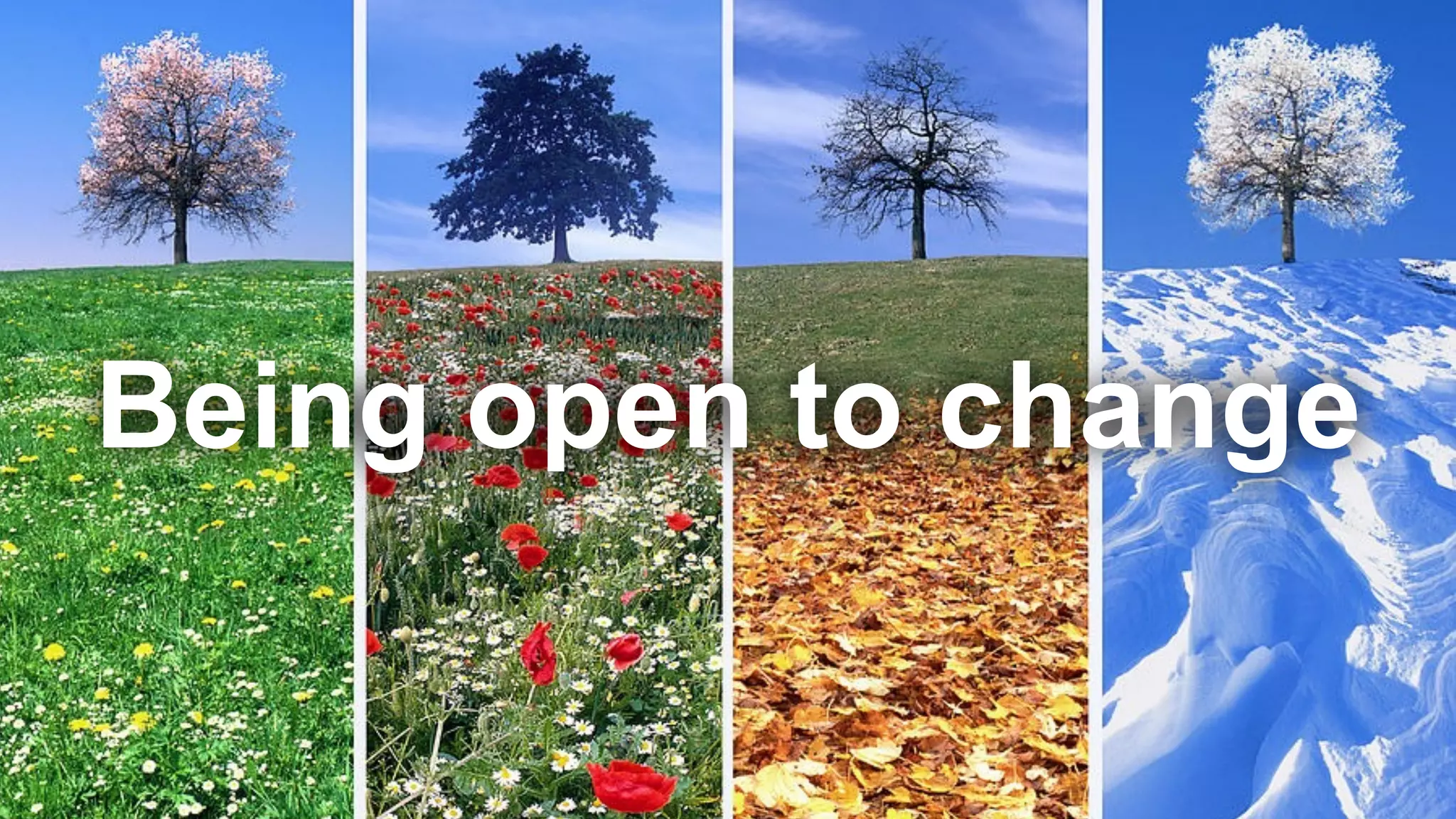
Being open to change
?
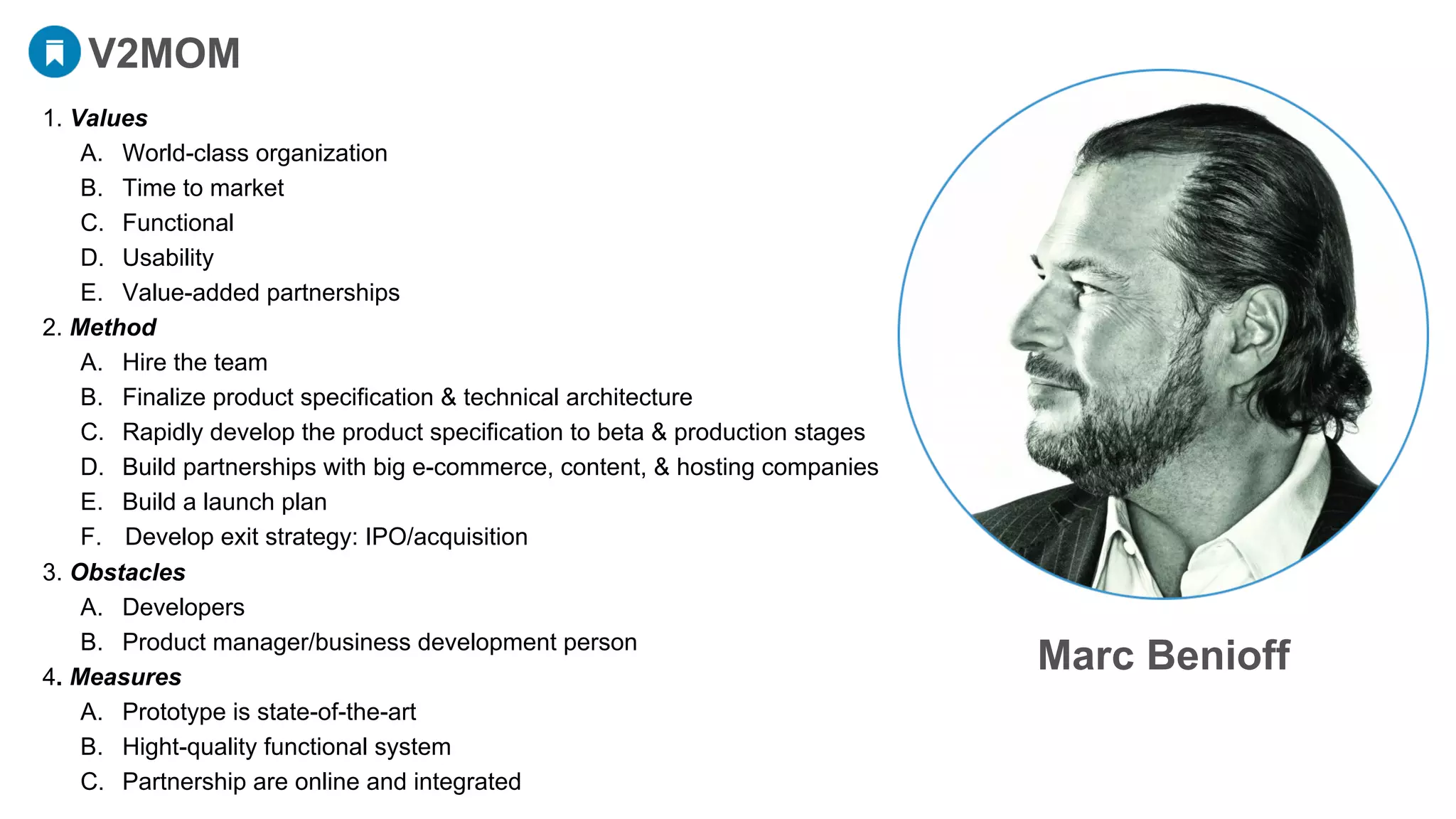
V2MOM
V2MOM
1. Values
A.  World-class organization
B.  Time to market
C.  Functional
D.  Usability
E.  Value-added partnerships
2. Method
A.  Hire the team
B.  Finalize product specification & technical architecture
C.  Rapidly develop the product specification to beta & production stages
D.  Build partnerships with big e-commerce, content, & hosting companies
E.  Build a launch plan
F.  Develop exit strategy: IPO/acquisition
3. Obstacles
A.  Developers
B.  Product manager/business development person
4. Measures
A.  Prototype is state-of-the-art
B.  Hight-quality functional system
C.  Partnership are online and integrated
Marc Benioff
Clear Escalation Plans
Clear Internal,
Cross-Functional
& Customer Communication
Respect, Tone, & Audience
SFDC, Chatter, Yammer,
& Bug systems
Speed!
Additional Dev Training
How to Write a Perfect Email in English!
•  How to communicate with customers is Key
•  ALL caps is equal to YELLING at your customers.
Although emails are often seen as less formal than printed business letters, in the
business world you cannot afford to let your language appear to be informal. Email may
be faster and more efficient, but your client or business partner will not easily forgive
correspondence that is too casual. Not to fear! Read on to discover simple secrets that
will add a high level of professionalism to your English emails.
1. Always include a relevant Subject Line:
Your Email needs to catch the attention of the reader explaining why you are emailing
them.
Example: Request for more information about your Editor Account at WalkMe
How to Write a Perfect Email in English! - Continued
2. Begin with a greeting:
It's important to always open your email with a greeting, such as "Dear Lillian,".
Thank the recipient: If you are replying to a client's inquiry, you should begin with a line of
thanks.
3. State your purpose:
If, however, you are initiating the email communication, it may be impossible to include a
line of thanks. Instead, begin by stating your purpose. For example, "I am writing to
enquire about …" or "I am writing in reference to …" It's important to make your purpose
clear early on in the email, and then move into the main text of your email. Remember to
pay careful attention to grammar, spelling and punctuation, and to avoid run-on
sentences by keeping your sentences short and clear.
Example: if someone has a question about your company, you can say, "Thank you for
contacting ABC Company." If someone has replied to one of your emails, be sure to say,
"Thank you for your prompt reply." or "Thanks for getting back to me." If you can find any
way to thank the reader, then do. It will put him or her at ease, and it will make you appear
more courteous.
How to Write a Perfect Email in English! - Continued
4. Closing remarks:
Before you end your email, it's polite to thank your reader one more time as well as add
some courteous closing remarks. You might start with "Thank you for your patience and
cooperation." or "Thank you for your consideration." and then follow up with, "If you have
any questions or concerns, don't hesitate to let me know." and "I look forward to hearing
from you."
5. End with a closing:
The last step is to include an appropriate closing with your name. "Best regards,"
"Sincerely," and "Thank you," are all professional. It's a good idea to avoid closings such
as "Best wishes," or "Cheers," as these are best used in casual, personal emails.
Finally, before you hit the send button, review and spell check your email one more time
to make sure it's truly perfect!
- See more at: Englishtown.com/community
Additional Resources
•  Agile vs. Waterfall :
http://www.seguetech.com/blog/2013/07/05/waterfall-vs-agile-right-development-methodology
•  PMI.org
•  Scrum.org
•  Ted talk by Amy Cuddy:
http://www.ted.com/talks/amy_cuddy_your_body_language_shapes_who_you_are?
language=en
•  Ted talk by Simon Senek:
http://www.ted.com/talks/simon_sinek_how_great_leaders_inspire_action?language=en
•  Meet Ups
•  LinkedIn resources
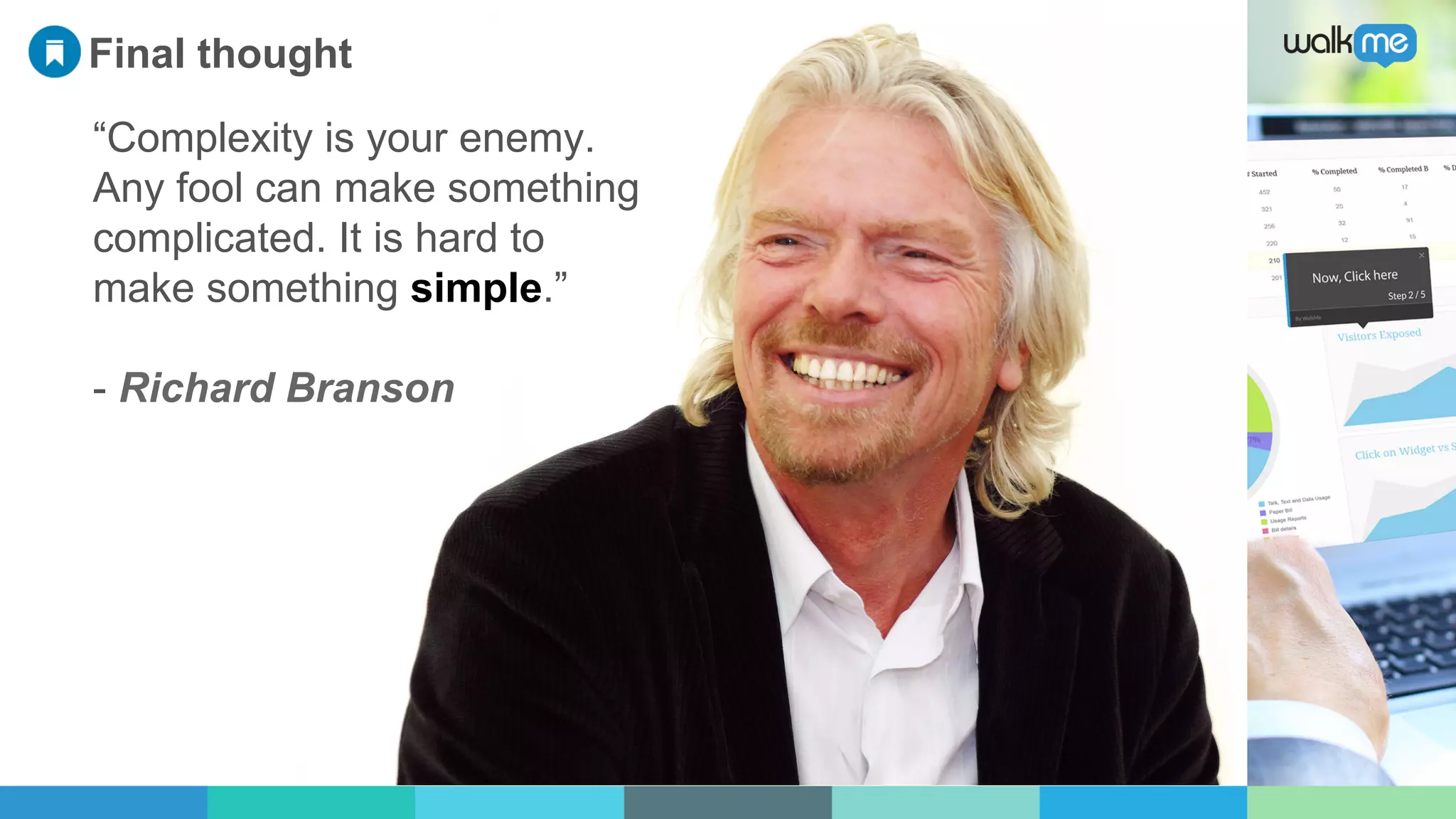
“Complexity is your enemy.
Any fool can make something
complicated. It is hard to
make something simple.”
- Richard Branson
Final thought
 ©	
  Copyright	
  2014	
  WalkMe	
  Inc.	
  Confiden-al	
  	
  
34

WalkMe CS, PS & Dev Team Dynamics

  • 1.
    1   Project Management& Development Team Dynamics Emilia D’Anzica, May 2015
  • 2.
    Agenda •  Introductions •  MyProgram Charter & Objectives •  Development Lifecycle vs. Customer Lifecycle •  How Development fits in Customer Success •  Obstacles •  What Works •  V2MOM •  Escalation Plans •  Internal & Customer Communication –  Respect, Tone, Audience –  Forms of communication –  Speed •  Resources •  Questions
  • 3.
    Business  confiden-al.  All  rights  reserved.  ©  WalkMe.com   •  Founded in 2011, Launched in April 2012 •  135 Employees in San Francisco and Tel Aviv •  Backed by: Enterprise Class Guidance & Engagement Platform About “Cool Vendor!” “2014 Communications Solution Product of the Year!” “That Will Change Your Business”
  • 4.
    Adoption & Promotion Increase conversion & Timeto Value Employee Productivity Main Use Cases Reduce incoming support requests Shorten onboarding Ensure Knowledge Retention Customer Care  
  • 5.
    •  I startedwith my passion for Team building, mentoring coaching at Red Envelope working with Engineers •  The Project Management Institute gave me the tools to be successful •  A Scrum Certification took me a step further with more skills •  Today I’m at WalkMe in San Francisco About Me Hi, I’m Emilia D’Anzica Senior Director, Customer Success at WalkMe @emiliadanzica
  • 6.
  • 7.
    ✓  Value: Developonboarding program to show WalkMe value immediately. ✓  Scale: Save CS team time, provide a consistent experience and enable better communication between client & WalkMe. ✓  Implement onboarding: SLA with 60 days of 1-1 onboarding assistance in order to maintain momentum and ensure a scalable program. ✓  Client Focus: Move away from ad hoc onboarding & instead, focus on faster ROI that align with client goals and strategies. ✓  Education: WalkMe Education introduced early & completed in timely manner. My Team Program Charter & Objectives
  • 8.
    8 1. PMI Projectmanagement A. Waterfall: linear approach to software development. B. Agile: Agile is a philosophy that uses organizational models based on people,collaboration, and shared values. 2. Scrum: an iterative and incremental agile software development methodology for managing product development. Team based approach & development 3. Other: extreme types of coding & development work Development Lifecycle - *Can vary at each company
  • 9.
  • 10.
    Dev & PSare KEY to Customer Success First Value Grow Value Expand Functionality Increase Usage Increase Usage Ongoing Value Ongoing Value Decrease Value Decrease Value Churn Churn Churn •  WalkMe Masters are key to each step of the Customer journey! ONBOARDING - getting the customer up and running full speed DELIVERING VALUE - Monitoring customers account health; keeping them in the green RELATIONSHIP MANAGEMENT - preparing the customer for renewal and upset Start TRAINING - Increasing adoption and number of users SUPPORT - Troubleshooting technical difficulties, conduit to your product team
  • 11.
    What are yourbiggest challenges?
  • 12.
  • 13.
  • 14.
  • 15.
  • 16.
  • 17.
  • 18.
  • 19.
  • 20.
  • 21.
  • 22.
    V2MOM 1. Values A.  World-classorganization B.  Time to market C.  Functional D.  Usability E.  Value-added partnerships 2. Method A.  Hire the team B.  Finalize product specification & technical architecture C.  Rapidly develop the product specification to beta & production stages D.  Build partnerships with big e-commerce, content, & hosting companies E.  Build a launch plan F.  Develop exit strategy: IPO/acquisition 3. Obstacles A.  Developers B.  Product manager/business development person 4. Measures A.  Prototype is state-of-the-art B.  Hight-quality functional system C.  Partnership are online and integrated Marc Benioff
  • 23.
  • 24.
  • 25.
  • 26.
  • 27.
  • 28.
  • 29.
    How to Writea Perfect Email in English! •  How to communicate with customers is Key •  ALL caps is equal to YELLING at your customers. Although emails are often seen as less formal than printed business letters, in the business world you cannot afford to let your language appear to be informal. Email may be faster and more efficient, but your client or business partner will not easily forgive correspondence that is too casual. Not to fear! Read on to discover simple secrets that will add a high level of professionalism to your English emails. 1. Always include a relevant Subject Line: Your Email needs to catch the attention of the reader explaining why you are emailing them. Example: Request for more information about your Editor Account at WalkMe
  • 30.
    How to Writea Perfect Email in English! - Continued 2. Begin with a greeting: It's important to always open your email with a greeting, such as "Dear Lillian,". Thank the recipient: If you are replying to a client's inquiry, you should begin with a line of thanks. 3. State your purpose: If, however, you are initiating the email communication, it may be impossible to include a line of thanks. Instead, begin by stating your purpose. For example, "I am writing to enquire about …" or "I am writing in reference to …" It's important to make your purpose clear early on in the email, and then move into the main text of your email. Remember to pay careful attention to grammar, spelling and punctuation, and to avoid run-on sentences by keeping your sentences short and clear. Example: if someone has a question about your company, you can say, "Thank you for contacting ABC Company." If someone has replied to one of your emails, be sure to say, "Thank you for your prompt reply." or "Thanks for getting back to me." If you can find any way to thank the reader, then do. It will put him or her at ease, and it will make you appear more courteous.
  • 31.
    How to Writea Perfect Email in English! - Continued 4. Closing remarks: Before you end your email, it's polite to thank your reader one more time as well as add some courteous closing remarks. You might start with "Thank you for your patience and cooperation." or "Thank you for your consideration." and then follow up with, "If you have any questions or concerns, don't hesitate to let me know." and "I look forward to hearing from you." 5. End with a closing: The last step is to include an appropriate closing with your name. "Best regards," "Sincerely," and "Thank you," are all professional. It's a good idea to avoid closings such as "Best wishes," or "Cheers," as these are best used in casual, personal emails. Finally, before you hit the send button, review and spell check your email one more time to make sure it's truly perfect! - See more at: Englishtown.com/community
  • 32.
    Additional Resources •  Agilevs. Waterfall : http://www.seguetech.com/blog/2013/07/05/waterfall-vs-agile-right-development-methodology •  PMI.org •  Scrum.org •  Ted talk by Amy Cuddy: http://www.ted.com/talks/amy_cuddy_your_body_language_shapes_who_you_are? language=en •  Ted talk by Simon Senek: http://www.ted.com/talks/simon_sinek_how_great_leaders_inspire_action?language=en •  Meet Ups •  LinkedIn resources
  • 33.
    “Complexity is yourenemy. Any fool can make something complicated. It is hard to make something simple.” - Richard Branson Final thought
  • 34.
     ©  Copyright  2014  WalkMe  Inc.  Confiden-al     34