Bioplastics
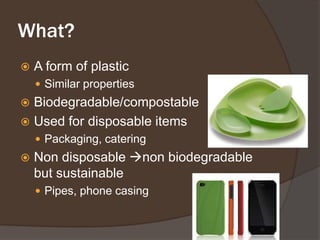
What?A form of plasticSimilar propertiesBiodegradable/compostableUsed for disposable itemsPackaging, cateringNon disposable non biodegradable but sustainablePipes, phone casing
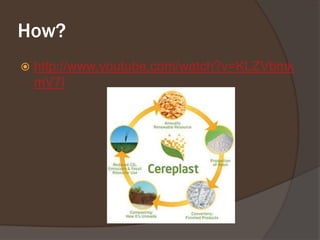
How?http://www.youtube.com/watch?v=KLZVbmkmV7I
Why?Reduce fossil-fuel use and CO2 release during manufacturingMade from renewable raw materialsSome are nontoxic and safe for medical and internal use
Why not?Higher cost—although this is relative to oil prices, which fluctuateIn some cases, lower quality and performance compared to standard plasticsComposting may be possible only in industrial composting processesCould interfere with standard plastic recyclingUse of plant sugar and starch sources could negatively impact food prices
Bioplastics for the futureRising oil pricesBioplastic consumption expected to reach 5 million tonnes in 2015Potential for crop producing countries
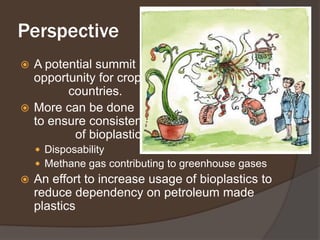
PerspectiveA potential summit 		           opportunity for crop producing 			     countries.More can be done 			                to ensure consistency 				       of bioplasticsDisposabilityMethane gas contributing to greenhouse gasesAn effort to increase usage of bioplastics to reduce dependency on petroleum made plastics
DiscussionWhat are the consequences of using more bioplastics in our lives?If you were given a choice between regular plastic and bioplastic, which would you choose? Why?
Referenceshttp://ecohearth.com/eco-zine/science-and-technology/1242-bioplastics-rumors-facts-and-future-potential.htmlhttp://www.nationmultimedia.com/home/2010/03/27/business/Bioplastic-the-wave-of-the-future-30125659.htmlhttp://plasticsandtheplanet.com/archives/182http://en.wikipedia.org/wiki/Bioplastic#Bioplastics_and_biodegradation

W7: Teddy - Bioplastics