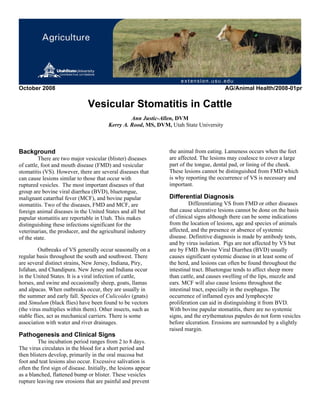
October 2008 AG/Animal Health/2008-01pr 
Vesicular Stomatitis in Cattle 
Ann Justic-Allen, DVM 
Kerry A. Rood, MS, DVM, Utah State University 
Background 
There are two major vesicular (blister) diseases 
of cattle, foot and mouth disease (FMD) and vesicular 
stomatitis (VS). However, there are several diseases that 
can cause lesions similar to those that occur with 
ruptured vesicles. The most important diseases of that 
group are bovine viral diarrhea (BVD), bluetongue, 
malignant catarrhal fever (MCF), and bovine papular 
stomatitis. Two of the diseases, FMD and MCF, are 
foreign animal diseases in the United States and all but 
papular stomatitis are reportable in Utah. This makes 
distinguishing these infections significant for the 
veterinarian, the producer, and the agricultural industry 
of the state. 
Outbreaks of VS generally occur seasonally on a 
regular basis throughout the south and southwest. There 
are several distinct strains, New Jersey, Indiana, Piry, 
Isfahan, and Chandipura. New Jersey and Indiana occur 
in the United States. It is a viral infection of cattle, 
horses, and swine and occasionally sheep, goats, llamas 
and alpacas. When outbreaks occur, they are usually in 
the summer and early fall. Species of Culicoides (gnats) 
and Simulum (black flies) have been found to be vectors 
(the virus multiplies within them). Other insects, such as 
stable flies, act as mechanical carriers. There is some 
association with water and river drainages. 
Pathogenesis and Clinical Signs 
The incubation period ranges from 2 to 8 days. 
The virus circulates in the blood for a short period and 
then blisters develop, primarily in the oral mucosa but 
foot and teat lesions also occur. Excessive salivation is 
often the first sign of disease. Initially, the lesions appear 
as a blanched, flattened bump or blister. These vesicles 
rupture leaving raw erosions that are painful and prevent 
the animal from eating. Lameness occurs when the feet 
are affected. The lesions may coalesce to cover a large 
part of the tongue, dental pad, or lining of the cheek. 
These lesions cannot be distinguished from FMD which 
is why reporting the occurrence of VS is necessary and 
important. 
Differential Diagnosis 
Differentiating VS from FMD or other diseases 
that cause ulcerative lesions cannot be done on the basis 
of clinical signs although there can be some indications 
from the location of lesions, age and species of animals 
affected, and the presence or absence of systemic 
disease. Definitive diagnosis is made by antibody tests, 
and by virus isolation. Pigs are not affected by VS but 
are by FMD. Bovine Viral Diarrhea (BVD) usually 
causes significant systemic disease in at least some of 
the herd, and lesions can often be found throughout the 
intestinal tract. Bluetongue tends to affect sheep more 
than cattle, and causes swelling of the lips, muzzle and 
ears. MCF will also cause lesions throughout the 
intestinal tract, especially in the esophagus. The 
occurrence of inflamed eyes and lymphocyte 
proliferation can aid in distinguishing it from BVD. 
With bovine papular stomatitis, there are no systemic 
signs, and the erythematous papules do not form vesicles 
before ulceration. Erosions are surrounded by a slightly 
raised margin.
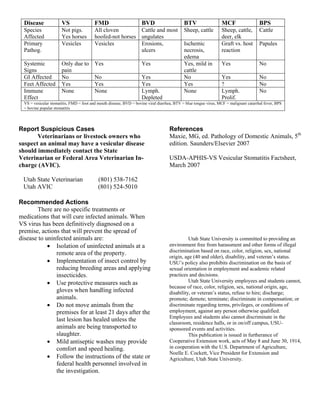
Disease VS FMD BVD BTV MCF BPS 
Species 
Not pigs. 
All cloven 
Cattle and most 
Sheep, cattle Sheep, cattle, 
Affected 
Yes horses 
hoofed-not horses 
ungulates 
deer, elk 
Cattle 
Primary 
Pathog. 
Vesicles Vesicles Erosions, 
ulcers 
Ischemic 
necrosis, 
edema 
Graft vs. host 
reaction 
Papules 
Systemic 
Signs 
Only due to 
pain 
Yes Yes Yes, mild in 
cattle 
Yes No 
GI Affected No No Yes No Yes No 
Feet Affected Yes Yes Yes Yes ? No 
Immune 
None None Lymph. 
None Lymph. 
No 
Effect 
Depleted 
Prolif. 
VS = vesicular stomatitis, FMD = foot and mouth disease, BVD = bovine viral diarrhea, BTV = blue tongue virus, MCF = malignant catarrhal fever, BPS 
= bovine popular stomatitis 
Report Suspicious Cases 
Veterinarians or livestock owners who 
suspect an animal may have a vesicular disease 
should immediately contact the State 
Veterinarian or Federal Area Veterinarian In-charge 
(AVIC). 
Utah State Veterinarian (801) 538-7162 
Utah AVIC (801) 524-5010 
Recommended Actions 
There are no specific treatments or 
medications that will cure infected animals. When 
VS virus has been definitively diagnosed on a 
premise, actions that will prevent the spread of 
disease to uninfected animals are: 
• Isolation of uninfected animals at a 
remote area of the property. 
• Implementation of insect control by 
reducing breeding areas and applying 
insecticides. 
• Use protective measures such as 
gloves when handling infected 
animals. 
• Do not move animals from the 
premises for at least 21 days after the 
last lesion has healed unless the 
animals are being transported to 
slaughter. 
• Mild antiseptic washes may provide 
comfort and speed healing. 
• Follow the instructions of the state or 
federal health personnel involved in 
the investigation. 
References 
Maxie, MG, ed. Pathology of Domestic Animals, 5th 
edition. Saunders/Elsevier 2007 
USDA-APHIS-VS Vesicular Stomatitis Factsheet, 
March 2007 
Utah State University is committed to providing an 
environment free from harassment and other forms of illegal 
discrimination based on race, color, religion, sex, national 
origin, age (40 and older), disability, and veteran’s status. 
USU’s policy also prohibits discrimination on the basis of 
sexual orientation in employment and academic related 
practices and decisions. 
Utah State University employees and students cannot, 
because of race, color, religion, sex, national origin, age, 
disability, or veteran’s status, refuse to hire; discharge; 
promote; demote; terminate; discriminate in compensation; or 
discriminate regarding terms, privileges, or conditions of 
employment, against any person otherwise qualified. 
Employees and students also cannot discriminate in the 
classroom, residence halls, or in on/off campus, USU-sponsored 
events and activities. 
This publication is issued in furtherance of 
Cooperative Extension work, acts of May 8 and June 30, 1914, 
in cooperation with the U.S. Department of Agriculture, 
Noelle E. Cockett, Vice President for Extension and 
Agriculture, Utah State University.

Vs تشخيصات

  • 1.
    October 2008 AG/AnimalHealth/2008-01pr Vesicular Stomatitis in Cattle Ann Justic-Allen, DVM Kerry A. Rood, MS, DVM, Utah State University Background There are two major vesicular (blister) diseases of cattle, foot and mouth disease (FMD) and vesicular stomatitis (VS). However, there are several diseases that can cause lesions similar to those that occur with ruptured vesicles. The most important diseases of that group are bovine viral diarrhea (BVD), bluetongue, malignant catarrhal fever (MCF), and bovine papular stomatitis. Two of the diseases, FMD and MCF, are foreign animal diseases in the United States and all but papular stomatitis are reportable in Utah. This makes distinguishing these infections significant for the veterinarian, the producer, and the agricultural industry of the state. Outbreaks of VS generally occur seasonally on a regular basis throughout the south and southwest. There are several distinct strains, New Jersey, Indiana, Piry, Isfahan, and Chandipura. New Jersey and Indiana occur in the United States. It is a viral infection of cattle, horses, and swine and occasionally sheep, goats, llamas and alpacas. When outbreaks occur, they are usually in the summer and early fall. Species of Culicoides (gnats) and Simulum (black flies) have been found to be vectors (the virus multiplies within them). Other insects, such as stable flies, act as mechanical carriers. There is some association with water and river drainages. Pathogenesis and Clinical Signs The incubation period ranges from 2 to 8 days. The virus circulates in the blood for a short period and then blisters develop, primarily in the oral mucosa but foot and teat lesions also occur. Excessive salivation is often the first sign of disease. Initially, the lesions appear as a blanched, flattened bump or blister. These vesicles rupture leaving raw erosions that are painful and prevent the animal from eating. Lameness occurs when the feet are affected. The lesions may coalesce to cover a large part of the tongue, dental pad, or lining of the cheek. These lesions cannot be distinguished from FMD which is why reporting the occurrence of VS is necessary and important. Differential Diagnosis Differentiating VS from FMD or other diseases that cause ulcerative lesions cannot be done on the basis of clinical signs although there can be some indications from the location of lesions, age and species of animals affected, and the presence or absence of systemic disease. Definitive diagnosis is made by antibody tests, and by virus isolation. Pigs are not affected by VS but are by FMD. Bovine Viral Diarrhea (BVD) usually causes significant systemic disease in at least some of the herd, and lesions can often be found throughout the intestinal tract. Bluetongue tends to affect sheep more than cattle, and causes swelling of the lips, muzzle and ears. MCF will also cause lesions throughout the intestinal tract, especially in the esophagus. The occurrence of inflamed eyes and lymphocyte proliferation can aid in distinguishing it from BVD. With bovine papular stomatitis, there are no systemic signs, and the erythematous papules do not form vesicles before ulceration. Erosions are surrounded by a slightly raised margin.
  • 2.
    Disease VS FMDBVD BTV MCF BPS Species Not pigs. All cloven Cattle and most Sheep, cattle Sheep, cattle, Affected Yes horses hoofed-not horses ungulates deer, elk Cattle Primary Pathog. Vesicles Vesicles Erosions, ulcers Ischemic necrosis, edema Graft vs. host reaction Papules Systemic Signs Only due to pain Yes Yes Yes, mild in cattle Yes No GI Affected No No Yes No Yes No Feet Affected Yes Yes Yes Yes ? No Immune None None Lymph. None Lymph. No Effect Depleted Prolif. VS = vesicular stomatitis, FMD = foot and mouth disease, BVD = bovine viral diarrhea, BTV = blue tongue virus, MCF = malignant catarrhal fever, BPS = bovine popular stomatitis Report Suspicious Cases Veterinarians or livestock owners who suspect an animal may have a vesicular disease should immediately contact the State Veterinarian or Federal Area Veterinarian In-charge (AVIC). Utah State Veterinarian (801) 538-7162 Utah AVIC (801) 524-5010 Recommended Actions There are no specific treatments or medications that will cure infected animals. When VS virus has been definitively diagnosed on a premise, actions that will prevent the spread of disease to uninfected animals are: • Isolation of uninfected animals at a remote area of the property. • Implementation of insect control by reducing breeding areas and applying insecticides. • Use protective measures such as gloves when handling infected animals. • Do not move animals from the premises for at least 21 days after the last lesion has healed unless the animals are being transported to slaughter. • Mild antiseptic washes may provide comfort and speed healing. • Follow the instructions of the state or federal health personnel involved in the investigation. References Maxie, MG, ed. Pathology of Domestic Animals, 5th edition. Saunders/Elsevier 2007 USDA-APHIS-VS Vesicular Stomatitis Factsheet, March 2007 Utah State University is committed to providing an environment free from harassment and other forms of illegal discrimination based on race, color, religion, sex, national origin, age (40 and older), disability, and veteran’s status. USU’s policy also prohibits discrimination on the basis of sexual orientation in employment and academic related practices and decisions. Utah State University employees and students cannot, because of race, color, religion, sex, national origin, age, disability, or veteran’s status, refuse to hire; discharge; promote; demote; terminate; discriminate in compensation; or discriminate regarding terms, privileges, or conditions of employment, against any person otherwise qualified. Employees and students also cannot discriminate in the classroom, residence halls, or in on/off campus, USU-sponsored events and activities. This publication is issued in furtherance of Cooperative Extension work, acts of May 8 and June 30, 1914, in cooperation with the U.S. Department of Agriculture, Noelle E. Cockett, Vice President for Extension and Agriculture, Utah State University.